Marine shrimp: The marine shrimp farm in Raviravi has encountered numerous problems (e.g. frequent equipment break-down, lack of cost-effective feed, acidity soil, etc.), therefore, farm production is far below the targeted level. The farm faces severe cash flow difficulties. The French Government will provide a grant of F$ 1.5 million* to purchase necessary equipment for up-grading the farm. It is expected that the production level would be much increased after the up-grading. Given the estimated production costs after up-grading and the farm price, the estimated break-even annual production level should be about 45 metric tonnes (mt) for the farm. Farm production higher than this level will realize a profit.
It seems pre-mature to expand the shrimp farm to 150 ha as proposed at this time. The expansion should be done when a high and consistent production level is achieved and all the major problems are solved after the up-grading. Also, a ready market should be available for the increased production. It is estimated that the local market may absorb at least 27 mt of locally produced shrimp which can be supplied from 12 ha of ponds under normal conditions. However, the market survey conducted by the Fisheries Department was not properly designed, therefore, the local market potential for shrimp estimated based on that survey should be used with caution. Another market survey may be needed.
Shrimp production in excess of the local demand must be exported at a competitive price. In order to export to Japan and the U.S., the local production costs have to be less than US$ 10 per kg. There may be a market in Australia/New Zealand for locally produced shrimp, but little information is available for evaluation. Further study is needed in this area.
Freshwater prawn: It is difficult to evaluate the economic viability of freshwater prawn farming at this time because no commercial farm has been operated yet. Based on the trial data, the estimated break-even production level is about 1,247 kg per ha per year. There is a local market for freshwater prawn, which may absorb up to 55 mt of cultured prawn annually. Again, the estimate is based on the previous market survey and it should be used with caution. The local demand maybe met by about 44 ha of ponds. However, before commercial development can be realized, more research is necessary to determine the optimum stocking density, develop a cost-effective feed and to establish the proper pond management methods.
Red Tilapia: There is one commercial farm which encountered many technical problems. However, if an annual production of 2.5 mt per ha can be achieved selling at F$ 2.50 per kg, the farm would be break-even. Farm production higher than this level will realize a profit. But red tilapia is a relatively new species, market development needs to be done and market potentials need to be carefully assessed. The local demand for red tilapia may be limited so that one farm may saturate the market.
Eucheuma Farming: Eucheuma culture seems a socio-economically feasible activity. All production of Eucheuma is exported. At the current farm price of F$ 350 per mt, the seaweed farmers realize a reasonable profit that improves the income of coastal communities. However, the number of buyers are limited and number of seaweed producing countries are increasing. It is anticipated that the price may fall or fluctuate in the future. Given the production level and the production cost, the calculated break-even farm price of dry seaweed is about F$ 250 per mt. This indicates that seaweed farming in Fiji would be profitable as long as the farm price exceeds the break-even price. When the industry expands, it may be justified to establish a seaweed processing plant in Fiji.
The species evaluated above are either for export (e.g. marine prawn and seaweed) or for domestic tourist oriented consumption (e.g. marine and freshwater prawn, and to some extent for red tilapia). The development of these species will of course benefit the local economy in terms of employment, income and foreign exchange earnings. To realize these benefits however, constraints of technical know-how, pond management, adequate feed formulation, etc. would have to be overcome first.
To benefit those rural/coasted families in need of additional animal protein, the rural aquaculture program (tilapia production) is an interesting project from socio-economic view point. Small scale integrated fish-agriculture farming may be also an appropriate project for rural development. A study on the socio-economic aspects of these aquaculture development programs in Fiji may be justified.
Fiji is an archipelago comprising of over 300 islands; some are high islands of volcanic origin. A fairly large reef system surrounds the islands and extensive coral reefs, both barrier and fringing, provide good fishing grounds. Shallower water and lagoons are found around the two largest islands, Viti Levu and Vanua Levu. The main island of Viti Levu is conveniently served by an infrastructure of maritime and aerial transport.
Fiji's population is about 773,000 with a growth of 2.1% per annum. The country's economy depends mainly on tourism, timber and sugar exports and fishing. In traditional lifestyle, especially in remote coastal villages, subsistence fishing provides an excellent source of animal protein. In the interior area of the two main islands, tilapia farming is becoming increasingly popular.
Aquaculture practices in Fiji include species such as giant clam, shrimp, tilapia and seaweed. A national giant clam hatchery as been established by the Fisheries Division in Makogai Island where mass seed production of giant clam Tridacna derasa and T. squamosa is carried out for re-stocking purposes. Shrimps Penaeus monodon and P. japonicus are cultured on a commercial basis at the Raviravi farm in Viti Levu. A rural fish farming project is implemented by the Fisheries Division in collaboration with the US Peace Corp in the interior of Viti Levu and Vanua Levu. Tilapia niloticus was the species of choice for pond culture. At present only one commercial tilapia farm in Viti Levu. Commercial sale trials have shown a satisfactory acceptance of tilapia. Commercial farming of seaweed, Eucheuma alvarezii has been proven to be an appropriate practice for coastal settlements in Fiji. Seaweed farming provides a wage level attractive for villagers and its practice requires only low capital investment and simple technology.
The following study is a preliminary economic evaluation of the species above listed.
The project is located at Raviravi, about 9.6 km South-West of Ba town, on the North-Western corner of Viti Levu. The area is located on the dry side of the island with a marked dry season from June to September. Rains and the occasional hurricanes prevail within the area for the rest of the year.
The area was initially covered by dense low cropped mangrove. The land extending from the bay to the base of the surrounding hill inland is utilized for sugar cane production. The reclamation was done by constructing a seawall some 30 m inside of the mangrove seaward margin from the hills on either side of the bay. Along the sea-wall were fitted two floodgates and several spillways for controlling the run-off from the catchment.
The Raviravi fish farm was initiated in June 1972 as a joint Land Department - Fisheries Division project to determine the potential of fish farming on reclaimed marshes. From 1972 to 1978 experimental fish culture was carried out at the site. Various species were tested including rabbitfish, mullet and milkfish. Though the technical feasibility of culturing these species was proven, the inability of making the transition to commercial viability led to the project being abandoned.
In 1981, the Fiji Government entered into a joint-venture agreement with France Aquaculture (FA, a French Government funded organization). The joint venture was to investigate the economic feasibility of marine shrimp farming at the site. This was a three year arrangement during which time France Aquaculture provided technical support while Fiji Government provided logistical support for the project. The objectives of Phase 1 were:
construction of 7 ha ponds;
grow-out trials;
hatchery construction and operation;
investigation of locally produced feed.
Post-larval forms of two species (Penaeus monodon and Penaeus indicus) air-freighted from Tahiti and New Caledonia were tested and the following problems were encountered:
excessive acidity of water in ponds;
leakage through pond walls;
growth of toxic mold on feed pellets during humid periods;
predation by milkfish and birds and losses through theft;
significant mortality of post larvae through transport;
poor survival and marketability of P. indicus.
The objectives of phase 1 were only partially met due primarily to the delay in connection of main power and the construction of the hatchery. Therefore, phase 1 was extended until December 1984, an additional 6 months.
In 1984, phase 2 was initiated with a duration of 2 years. Targets of this phase included:
expansion of farm to 20 ha (2 ha for nursery and 18 ha for grow-out);
expansion of hatchery to capacity of 4.5 million post-larvae per year;
total shrimp production of 25 to 30 mt per year to meet the local demand;
various capital improvements, e.g. new pumps, modification of water supply canals, purchase of new equipment, and construction of additional buildings.
In 1984, a management contract was established between France Aquaculture and the Government of Fiji. In May 1985, the Fiji Government assets for the project were transferred to the Fiji Development Bank Nominees Limited (FDBNL), which is a public enterprise of the Fiji Government. The project was renamed Prawns (Fiji), Ltd. and became a wholly owned subsidiary of FDBNL.
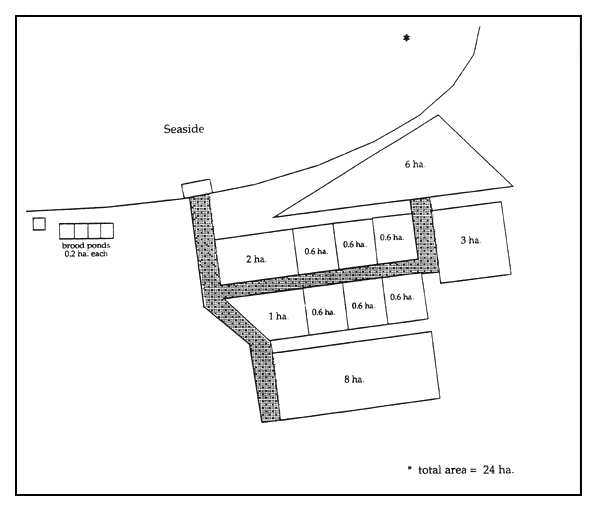
By the end of phase 2, there were 11 grow-out ponds ranging from 0.6 ha to 8 ha per pond with total pond area of 24 ha. In addition, there were 4 brood stock ponds of 0.2 ha each (Figure 1).
| Figure 1. Farm layout * |
 |
The project experienced numerous technical problems during phase 2 including the following:
flooding of the hatchery;
bacterial infestation of piping;
low temperatures of hatchery water that caused larval mortality;
toxic water of hatchery operation;
insufficient broodstock and high mortality;
flooding of ponds due to cyclones;
infiltration of fish eggs into ponds.
The stocking, survival and production of each pond is listed in Table 11. In spite of many problems encountered, the average production was about 1 mt per ha for one crop.
Table 1. 1986 Production.
| Pond No. | Area (ha) | Species | Stocking (P. L./m2)(*) | Survival (%) | Production (kg) |
| 12 | 0.6 | P.styli | 11.0 | 5.7 | 98 |
| 8 | 0.6 | P.mono | 6.7 | 70 | 674 |
| 10 | 0.6 | " | 8.4 | 75 | 880 |
| 9 | 0.6 | P.styli | 13.6 | 53 | 1,013 |
| 11 | 0.6 | " | 12.0 | 56 | 935 |
| 5 | 2.0 | " | 7.4 | 47 | 2,293 |
| 7 | 0.6 | P.mono | 11.3 | 34 | 597 |
| 6 | 1.4 | " | 12.8 | 19 | 750 |
| Total | 7.0 | 10.4 | 45 | 7,240 | |
| Average production: 1,034 kg/ha | |||||
(*) Post larvae prawns per square meter.
Source: Prawns Fiji Ltd. (PFL)
In 1986, Prawns (Fiji) Ltd. received a grant of about F$ 28,000. In addition, it received a short term loan of F$ 2,500 from FDBNL, and a loan of F$ 95,000 from FDB to keep the farm operating.
In 1987, the trial was continued with species of P. stylirostris and P. monodon. The exceptionally cold and long winter resulted in very poor growth. Also, high temperature fluctuations damaged stocks in many ponds. The production of 1987 is summarized in Table 2. The survival rate ranged from 2% to 74%. The average production was only about 648 kg per ha for one crop.
In 1988, the project encountered more problems such as:
pump problems: The constant breakdown or bad location of pumping resulted in the loss of larval production, low pond production, and the loss of broodstocks;
delays in pellet feed deliveries and low quality;
delays in hatchery equipment (such as water filter cartridges) and chemicals for water treatment;
pond leakages due to weather and erosion;
shortage of lime to treat acidity soil problem;
disease.
The total production from 13 ponds operated in 1988 was 8,831 kg with an average production of only 460 kg per ha per crop. (Table 3). It is far below the targeted farm production of 25 to 30 mt per year.
Table 2. 1987 Production.
| Pond No. | Area (ha) | Species | Stocking (P.L./m2) | Survival (%) | Production (kg) |
| 13 | 3.0 | P.mono | 10.0 | 2 | 140 |
| 7 | 0.6 | P.styli | 16.7 | 60 | 1,337 |
| 9 | 0.6 | " | 16.7 | 55 | 1,248 |
| 10 | 0.6 | P.mono | 24.7 | 29 | 732 |
| 11 | 0.6 | P.styli | 16.7 | 62 | 1,450 |
| 12 | 0.6 | " | 19.0 | 74 | 1,588 |
| 10 | 0.6 | " | 10.1 | 71 | 815 |
| 8 | 0.6 | " | 24.5 | 51 | 1,338 |
| 6 | 1.4 | P.mono | 15.0 | 20 | 1,197 |
| 5 | 2.0 | " | 17.5 | 24 | 1,875 |
| 7 | 0.6 | " | 23.1 | 21 | 595 |
| 13 | 3.0 | " | 9.9 | 12 | 815 |
| 15 | 8.0 | " | 17.4 | 18 | 1,257 |
| Total | 22.2 | 17.0 | 37.6 | 14,387 | |
| Average production: 648 kg/ha | |||||
Source: Prawn Fiji Ltd. (PFL)
Table 3. 1988 Production.
| Pond No | Area (ha) | Species | Stocking (P.L./m2) | Survival -(%) | Production (kg) |
| 6 | 1.4 | P. styli | 8.8 | 44 | 1,704 |
| 8 | 0.6 | " | 10.7 | 49 | 881 |
| 5 | 2.0 | P. mono | 11.8 | 16 | 956 |
| 12 | 0.6 | " | 11.0 | 23 | 424 |
| 10 | 0.6 | " | 11.0 | 40 | 523 |
| 11 | 0.6 | " | 12.0 | 9 | 109 |
| 9 | 0.6 | " | 11.0 | 23 | 442 |
| 7 | 0.6 | " | 12.0 | 15 | 331 |
| 13 | 3.0 | " | 11.2 | 11 | 526 |
| 15 | 8.0 | " | 7.1 | 15 | 2,182 |
| 7 | 0.6 | P. styli | 9.8 | 23 | 320 |
| 9 | 0.6 | " | 11.0 | 25 | 433 |
| Total | 19.2 | 10.6 | 24 | 8,831 | |
| Average production 460 kg/ha | |||||
Source: Prawn Fiji Ltd. (PFL)
Total loan from FDB as at June 30, 1988 amounted to F$ 286,988 (including interest) and the total debt to FA amounted to F$ 1,783,3150. Total loss during the 1987 to 1988 fiscal year (July 1987 to June 1988) was F$ 667,887. During July to December 1988, the FDB provided another loan in the amount of F$ 49,507 and the Fiji Government allocated F$ 70,000 for the farm.
The loss during this period was F$ 673,373. This project is not likely to survive without additional loans and grants and up-grading of the farm.
Fortunately, the French Embassy/Suva has agreed to provide a grant of F$ 1.5 million to PFL as an aid from the French Government to purchase necessary equipment. The Fijian Government is taking over 51% of PFL shares in 1989 and the farm will receive financial aid approved by the Ministry of Finance for the total amount of F$ 375,000. In addition, a General Manager will be assigned to PFL from the Fisheries Department, Fiji. With these supports, modification and up-grading of the farm can be started soon.
The costs and revenue data for 1987 to 1988 (Table 4) indicate that feed is the most important cost item accounting for about 27% of the total operating cost, for both hatchery and pond operation, followed by salaries (20%), depreciation (16.1%), utility (11%), loan interest (9.6%), etc.
Table 4. Revenue and cost, 1987 to 1988 fiscal year.
| Sales Revenue | F$ | 150,283 | ||
| Operating Costs | % of Total | |||
| Feed | 93,768 | 27.30 | ||
| Chemicals | 2,455 | 0.70 | ||
| Materials | 2,642 | 0.80 | ||
| Salaries | 69,105 | 20.00 | ||
| Utilities | 37,626 | 11.00 | ||
| Legal cost | 1,370 | 0.40 | ||
| Land rent | 2,310 | 0.70 | ||
| Cooler rent | 2,879 | 0.80 | ||
| Stationery/post | 1,007 | 0.30 | ||
| Repair & maintenance | 10,136 | 3.00 | ||
| Fuel & oil | 4,055 | 1.20 | ||
| Custom charges | 3,570 | 1.10 | ||
| Vehicle expenses | 3,885 | 1.10 | ||
| Audit fee | 2,000 | 0.60 | ||
| Payroll processing | 288 | -0 | ||
| Processing | 4,824 | 1.40 | ||
| Loan interest | 33,000 | 9.60 | ||
| Capital expenses | 7,347 | 2.20 | ||
| Depreciation | 55,446 | 16.10 | ||
| Others | 5,800 | 1.70 | ||
| F$ | 343,516 | |||
Source: Prawn Fiji Ltd. (PFL)
Based on the annual production cost of F$ 341,206 for 1987 to 1988 fiscal year and average farm shrimp price of F$ 12 per kg, the break-even production level can be calculated as:

This means that the farm is just break-even, no loss and no profit, when the total production reaches 28,434 kg. If the total shrimp production fell below the break-even production level, the farm would suffer a loss. On the contrary, when the total shrimp production is above the break-even level, the farm should be making profit. Since total production of the farm was 16,825 kg in 1987 to 1988, the farm suffered a loss of F$ 193,233.
A decrease in farm price will increase the break-even production level. At a farm price of F$ 10 per kg, for instance, the break-even production level would be:
On the other hand, increase in farm price will reduce the break-even production level. At farm price of F$ 14 per kg, for instance, the break-even production level would be 24,537 kg.
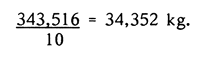
Given the actual production cost of F$ 343,516 and the production level of 16,825 kg for 1987 to 1988, the break-even price of shrimp can be calculated as:

Actually, the break-even price equals the production cost per kg of shrimp. Since the average current farm price of shrimp was about F$ 12 per kg, much less than the calculated break-even price, it again indicates that the farm suffered a loss.
Of course, reduction in production cost without change in price and production level will also improve the economic situation of the farm. Since feed is the most important cost item, effort to reduce the feed cost is essential. The simple economic evaluation leads to the conclusion that in order for this shrimp farm to be economically viable, pond productivities have to be substantially improved and production costs reduced.
With the installation of aerators and new pumping systems for both hatchery and pond operation, and the improvement of pond conditions, it is expected that the total production from the farm in 1990 may reach 60,000 kg with a revenue of about F$ 720,000 (at a farm price of F$ 12 per kg). After paying all the production expenses, the farm may enjoy a before tax profit of about F$ 177,000 (Table 5).
The level of production is one of the crucial factors in determining the profit level. Given the production cost of F$ 542,682 and the farm price of F$ 12 per kg, the break-even production level is calculated as:

If the farm production falls short of 45.2 mt, it will suffer a loss, unless the production cost can be reduced.
Table 5. Estimated annual costs and return after up-grading.
| Sales revenue | F$ | 720,000 | |
| Operating Costs | |||
| Prawn feed | 217,022 | ||
| Breeders feed | 6,000 | ||
| Larval feed | 3,600 | ||
| Artemia | 8,000 | ||
| Chemicals | 3,450 | ||
| Breeder purchase | 600 | ||
| Land improvement | 3,000 | ||
| Digger rent | 3,000 | ||
| Coral sand | 5,400 | ||
| Filter cartridge | 3,000 | ||
| Labour | 44,730 | ||
| Electricity | 69,437 | ||
| Telephone & telex | 4,200 | ||
| Land rent | 2,300 | ||
| Insurance | 8,400 | ||
| Fuel & Oil | 4,000 | ||
| Audit service | 3,100 | ||
| Custom/shipping | 4,698 | ||
| Vehicle expenses | 4,200 | ||
| Repair & maintenance | 6,840 | ||
| Stationary/post | 1,020 | ||
| Capital expenses | 3,000 | ||
| Depreciation | 113,685 | ||
| Miscellaneous expenses | 20,000 | ||
| Total | F$ | 542,682 | |
| Profit before tax | F$ | 77,318 | |
Source: Prawn Fiji Ltd. (PFL)
The decision to expand the shrimp farm from 24 ha to 150 ha should be done after the existing ponds are up-graded and high and consistent productivity demonstrated. Anyway, a preliminary economic evaluation of the expansion is provided in Tables 6 and 17.
An estimated production from the 150 ha ponds is about 346 mt of shrimp valued at about F$ 4.5 million. After paying all the expenses, the farm will enjoy a before tax profit of about F$ 968,480 annually. It represents about 27.4% of the investment and 21.5% of the sales. Such a large volume of production may result in a lower price (lower than F$ 12 per kg) in order to compete in the foreign market.
Given the production cost and production level, the calculated break-even price is about F$ 10.21 per kg. To realize a profit, the farm prices have to be more than F$ 10.21 per kg.
Table 6. Construction and equipment costs for a 150 ha farm.
| Cost | Useful life | Depreciation | |||
| Engineering | F$ | 196,290 | 15 | F$ | 13,086 |
| Hatchery facilities | 450,000 | 15 | 30,000 | ||
| Office/storage | 64,000 | 15 | 4,267 | ||
| Processing unit | 816,500 | 15 | 54,433 | ||
| Pumping station | 248,000 | 15 | 16,533 | ||
| Power station | 117,500 | 15 | 7,833 | ||
| Grow-out ponds | 760,800 | 15 | 117,387 | ||
| Equipment | 469,000 | 7 | 67,000 | ||
| Misc | 392,580 | 7 | 56,083 |
Source: Prawn Fiji Ltd. (PFL)
Table 7. Estimated operating cost for a 150 ha farm.
| Sales Revenue | F$ | 4,500,000 | |
| Operating Costs | |||
| Feed | |||
| Hatchery | 24,000 | ||
| Grow-out | 1,132,500 | ||
| Labor | |||
| Administration | 64,132 | ||
| Hatchery | 57,336 | ||
| Grow-out | 93,980 | ||
| Processing | 58,000 | ||
| Fringe benefits | 27,345 | ||
| Other | |||
| Maintenance | 112,872 | ||
| Electricity | 738,000 | ||
| Packing materials | 68,750 | ||
| Depreciation | 366,622 | ||
| Interest | 609,615 | ||
| Land lease | 10,200 | ||
| Misc. | 168,168 | ||
| Total cost | F$ | 3,531,520 | |
| Profit before tax | F$ | 968,480 | |
Source: Prawn Fiji Ltd. (PFL)
The marine shrimp project has potential for development only if there is a ready market for it at price level to make a reasonable profit and if the market infrastructures are adequate to handle the increased production efficiently.
In 1987, the amount of naturally caught freshwater and marine prawn sold was 17.53 mt. The actual amount sold should be much higher than this figure due to non-sale consumption and the amount not recorded. A high percentage of the locally caught prawns is sold to hotels and restaurants (Table 8). Based on a market survey conducted in 1986 by the Fisheries Department, 7 out of 9 hotels (or 78%), 7 out of 10 restaurants (or 70%) and 3 out of 5 shops (or 60%) interviewed used locally caught and/or imported marine prawn regularly (Table 9). Several respondents indicated that they used imported prawn only when local supply was not available. The amount used per month in each establishment ranged from 2 to 200 kg.
Table 8. Market outlets for locally caught prawns.
| Province | Hotels and Restaurants | Butcher | Shops and supermarkets | Road sides | NMA (*) |
| Central | 59% | 4% | 22% | 15% | 0 |
| Western | 53% | 15% | 1% | 31% | 0 |
| Northern | 10% | 14% | 49% | 4% | 23% |
(*) National Marketing Authority
Source:- Fisheries Department, Fiji.
Table 9. Market survey of marine prawn, 1986 (F$).
| No. of samples | % of total | %of the samples that used marine prawn | Average amount used per month per establishment | ||||
| Local | Imported | ||||||
| kg | price | kg | price | ||||
| Hotels | 9 | 9% | 78% | 20 | 12.5/kg | 43 | 32/kg |
| Rest. | 10 | 8% | 70% | 81 | 18/kg | 95 | 20/kg |
| Shops | 5 | 10%(*) | 60% | 30 | 11/kg | - | - |
Source: Fisheries Department, Fiji
The price paid ranged from F$ 8 to F$ 15 per kg for local prawn and from F$ 15.00 to over F$ 32 per kg for imported prawn (mostly headless or peeled). If the samples of the market survey conducted in 1986 were randomly selected, the market demand for imported marine prawns can then be projected (Table 10). Assuming that the locally farmed prawns can replace 100% of the imported ones, the market potential for locally farmed prawn is estimated to be about 27 mt annually. To penetrate the local market, locally produced prawns must have a consistent supply, high quality and competitive prices.
Table 10. Estimated market potential of marine prawn in the local market.
| Market | Estimated Demand (*) |
| Hotels | 6,552 kg |
| Restaurants | 18,480 kg |
| Shops | 2,160 kg |
| Total | 27,192 kg |
Fiji has the geographic advantage of being situated near the main prawn demanding countries such as Australia, New Zealand, Japan and Hawaii. To penetrate those markets, again the locally farmed prawns have to be in consistent supply, of high quality and competitive prices.
The average wholesale price of headless white shrimp for 26 to 30 counts in Japan was about US$ 13.00 per kg in February, 1989 and the ex-warehouse price of same type of shrimp in New York was US$ 12.68 per kg (Tables 11 and 12). In order to be competitive in these markets, the farm price in Fiji can be approximated by subtracting the freight charges, the handling expenses and duty charges from the average wholesale price in those export markets.
Then, the calculated farm prices have to be converted from headless into whole prawn (heads account about 35% of the total weight). Therefore, the farm price of heads-on prawn in Fiji should be less than US$ 10.00 per kg in order to be competitive. There may be a small market for fresh whole prawn commanding a higher price in Japan and Australia, but this needs to be studied further.
Table 11. Wholesale price of headless white shrimp (26 to 30 counts) in Japan.
| From | Price/kg | |
| India | US$ | 10.78 |
| Indonesia | 16.36 | |
| Thailand | 12.05 |
Source: Infofish Trade News, February 1989
Table 12. Ex-warehouse price of headless white shrimp (26 to 30 counts) in New York.
| From | Price/kg | |
| Mexico | US$ | 14.08 |
| Ecuador | 12.43 | |
| Panama | 12.21 | |
| China | 11.99 |
Source: Infofish Trade News, February 1989
As mentioned previously, there is a local market for fresh heads-on shrimp mainly for tourist consumption at a higher price than that in the international market. Shrimp production that exceeds the local demand has to be exported at a competitive price. In this case, improvements in farm efficiency is essential in increasing pond productivity and in reducing costs of production.
There are about 38,543 ha of mangrove area available, but much of it may not be suitable for shrimp farming due to physical, environmental, social and economic reasons. A balance in uses must be maintained.
As for human resources, the number of well trained and experienced technical personnel and extension workers are inadequate particularly in the area of hatchery operation, feed formulation, water quality management and disease control. With the expansion in production, domestic infrastructure for processing, transportation, cold storage and shipping have to be strengthened.
For the time being, P. stylirostris should be the major species to be cultured. This is due to the experiences gained at the Raviravi farm and since it is relatively easier to manage than P. monodon.
There are about ten Macrobrachium species which inhabit inland waters in Fiji. Local people who live along river sides catch the prawns for both subsistence consumption as well as for marketing. Among them, M. lar is widely distributed and abundant.
Rearing of M. lar larvae was attempted at the Naduruloulou Fisheries Station but failed to produce any post larvae. The species with potential for development in Fiji is M. rosenbergii.
In 1982, a five-year Japan/Fiji Aquaculture project started with the major activities undertaken at Naduruloulou. With the assistance of the Japanese freshwater prawn experts, the rearing of M. rosenbergii larvae to post larvae under local conditions has been accomplished. Clear water technique was utilized. Locally available feed and Artemia were used as larvae feed. Average production of 64 post larvae per liter was obtained. Production costs were calculated to be about F$ 7 per one thousand post larvae, of which labour accounts about 41% of the total cost, followed by power 28%, feed 25%, and transportation of sea water 6%. The mass production method of post-larvae has been established. Two million post-larvae can be produced with the present hatchery facilities.
Pond growout trials were carried out between 1982 and 1984 at Naduruloulou station and some ponds outside the station. Post larvae were stocked at densities of over 10 per m and2 reared for 6 to 8 months. Low survival, mostly 30 to 40%, were obtained and production ranged 200 to 1,100 kg per ha per year.
Thirteen pelleted diets formulated on available local materials were prepared and trials were conducted under laboratory conditions and in earthen ponds. A feed formulation based on 30% protein produced the best growth of prawn. The feed/prawn conversion ratio was about 4:1. The feed costs about F$ 0.40 per kg.
To offset the low survival rate in the growout ponds, trials of intermediate culture of post larvae were conducted from 1985 to 1987 with the purpose of providing healthy juveniles for pond stocking. The results of the trials were also poor with the mean survival rate of 47%. After the Japan/Fiji aquaculture project terminated in 1987, no active effort has been made in freshwater culture. The hatchery has been used mainly for production of tilapia fry. There is no commercial freshwater prawn farm in Fiji today.
Since there is no commercial freshwater prawn farm in Fiji, the costs and revenue data were based primarily on experimental trials. At the stocking rate of 7 post larvae per m and 2 survival rate of 35%, annual production is expected to be about 1,200 kg per ha (2 crops per year), and valued at about F$ 7,200 (at the farm price of F$ 6 per kg). After paying all the production costs, a loss of F$ 280 per ha will occur (Table 13).
Table 13. Estimated costs and returns (ha) of freshwater prawn farming in Fiji.
| Revenue (1,200kg/ha/year, F$ 6.00/kg) | F$ | 7,200.00 | |
| Production Costs | |||
| Post larvae (7/m2, 2 crops/yr, F$ 7.00/1,000) | 980.00 | ||
| Feed (FCR 4:1, F$0.40/kg) | 1,920.00 | ||
| Labor | 1,700.00 | ||
| Land lease | 200.00 | ||
| Depreciation (*) | 800.00 | ||
| Interest (**) | 1,200.00 | ||
| Misc (10% of production cost) | 680.00 | ||
| Total | F$ | 7,480.00 | |
| Profit before tax | F$ | - 280.00 | |
(*) Straight line depreciation on pond construction of F$ 12000.00 per ha for 15 years
(**) 8% interest on initial investment of F$ 15000.00 per ha
However, if the production level and/or the farm price received is increased, the prawn farm will enjoy a reasonable profit (Table 14). The higher the annual production, the higher the profit. This is also true for the farm price received.
Table 14. Sensitivity analysis of freshwater prawn farming.
| Production (kg/ha/yr) | Profit before tax by farm price/kg | ||||
| $6/kg | $7/kg | $8/kg | $9/kg | ||
| 1,200 | F$ | -280 | 920 | 2,120 | 3,320 |
| 1,400 | 600 | 2,000 | 3,400 | 4,800 | |
| 1,600 | 1,480 | 3,080 | 4,680 | 6,280 | |
As mentioned previously, there are catches from natural waters. Based on a market survey of freshwater prawn consumption conducted in 1986 by the Fisheries Department, 24 samples were selected and interviewed, these include 9 hotels (11% of the population), 10 restaurants (11% of the population) and 5 shops (assume 10% of the population).
The percentage of the 24 samples has used the freshwater prawn and the amount used per month are listed below:
| % of the sample that used freshwater prawns | Average amount used/month(kg) per establishment | |
| Hotels | 67% | 680 |
| Restaurants | 80% | 55 |
| Shops | 100% | 93 |
| Total | 828 |
Again, assuming the samples were randomly selected, the annual demand for freshwater prawn for the whole Fiji market is projected to be about 55 mt (the average monthly amount used by 12 month divided by the % of the sample to the population by the % of the sample used prawn). When asked whether the current supply met their demand, 11 samples answered yes seasonally and 12 said no. It implied that the local market could absorb more prawns if there was an adequate supply. When asked whether they were willing to buy prawns if there was a supply, all of them answered yes, but depending on price and consistent supply. The preferred prawn size and the price they were willing to pay are listed below:
| Preferred size | Number of samples (*) | Price willing to pay | |
small | 7 | F$ | 5.00 – 6.00/kg |
medium | 10 | 6.00 – 8.00/kg | |
large | 11 | 8.00 – 9.00/kg | |
(*) Several samples indicated more than one size
There is a ready local market for freshwater prawns. However, the culture technology has to be improved. Future research to improve the survival rate in growout ponds and in development of a cost effective prawn feed have to be conducted before commercial development is possible.
Most of the suitable land for freshwater prawn farming is natively owned. It is difficult to obtain a lease or to change the use of the land unless every member of the community agrees on it. This could be another constraint of the freshwater prawn farming.
In 1985, the red hybrid tilapia was started at the Naduruloulou freshwater hatchery under a Taiwanese expert to study the economic feasibility of culture the strain in Fiji.
Based on the trials of mass production of tilapia fry, it is estimated that 24,000 fry per year can be produced at the station. The estimated cost of production is about F$ 0.03 per fry. Growout trials were conducted. Results from the trials indicated that an average production of 4 mt per ha per year is achievable. A 23% protein content feed was used for growout.
There is one commercial red tilapia farm in Fiji. The farm consists of 18 ponds, 11 of them (about 1.5 ha) are under the supervision of the Fisheries Department as an experimental project, and 7 ponds are integrated with piggery operation. The farm has encountered many technical problems including slow growth, high mortality, shortage of fry, know-how, light color of fish with dots, lack of suitable feed, etc. Also the ponds were not properly designed and the berms were too low.
A preliminary cost and return evaluation is conducted based on the data available from the commercial farm and other sources. At a stocking rate of 1.5 fry per m2, the fish are expected to reach 150 g within 6 months. The production per ha would be about 1,350 kg at the survival rate of 60%. Two crops a year is possible. Total value of production would be about F$ 6,750.00 per ha per year at the farm price of F$ 2.50 per kg. After deducting the operating cost (F$ 5,900), the farm will earn a before tax profit of about F$ 850 per ha (Table 15). A higher survival rate will result in a higher profit.
This is also true for farm price received. At the present, red tilapia are sold at the same price as the black ones (F$ 3 per kg in large size, F$ 2.00 per kg in small size). With market promotion, it is expected that the red ones may command a better price than the black tilapia.
Market trials of red tilapia to some of the hotels and restaurants in Suva show excellent response for European and Chinese dishes including the Japanese “sashimi”. However, increase in productions would need market promotion in order to develop the market. Also, an adequate market channel has to be established.
In 1982, the Rural Aquaculture Program started with the assistance of the U.S. Peace Corps. The aim of the program is to establish fish ponds in rural areas, especially where animal protein sources were not sufficient. The species used in the rural ponds is tilapia (Oreochromis nilotica).
There are about 27 subsistence farms involved in this program with a total surface area of about 1.5 ha. Pond sizes ranged from 40 to 1000 sq. m with an average of 288 sq. m. Mixed sexed tilapia fry are produced and supplied by the Naduruloulou station. Peace Corps volunteers are working as extension agents.
This program is important to the rural dwellers in terms of protein supplementation and self-sufficiency. Preliminary results indicate that this program has potential for expansion. However, the social-economic impacts and feasibility of this program need to be assessed before expansion.
Table 15. Costs and returns (ha) of red tilapia farming.
| Revenue (1350 kg/ha × 2 crops × F$ 2.50/kg) | F$ | 6,750 | |
| Operating Costs | |||
| Fry (15000 f/ha × 2 crops × F$ 0.03/f) | 900 | ||
| Feed (FCR 2:1, cost of feed F$ 0.30/kg) | 1,620 | ||
| Manure | 73 | ||
| Labour | |||
| Feeding | 4870 | ||
| Harvesting | 293 | ||
| Maintenance | 117 | ||
| Truck renting | 147 | ||
| Selling | 103 | ||
| Depreciation (*) | 800 | ||
| Interest (**) | 960 | ||
| Land lease | 200 | ||
| Misc | 200 | ||
| Total | F$ | 5,900 | |
| Profit before tax | F$ | 850 | |
(*) Straight-line depreciation for pond construction (F$ 12,000/ha) for 15 gears
(**) 8% interest on borrowed capital
Seaweed farming in Fiji was initiated in 1984. It was started as a joint project between a New Zealand firm, Coast Biological, Inc., with the support of Fiji Fisheries Division in association with villagers in the coastal areas. From 1984 to 1985, Coast Biological, Inc., ran a pilot project at Rakiraki and Verata. Results indicated that the project has potential for development. Pilot farms were then established.
Coast Biological, Inc. set up the Fiji based firm and provided extension and support for seaweed farmers as well as a market for produced seaweed. The number of seaweed farms and total area of production, as well as the quantity of production, were all increased significantly from 1986 to 1987 and then declined in 1987 as a result of the political instability (Table 16). There was a trade embargo imposed by the New Zealand Government on exports from Fiji. During this period farmers were provided with a “receipt” but were not paid for their seaweed. When the trade embargo was lifted in late 1987, Coast Biological, Fiji, was able to export its accumulated stocks to New Zealand.
In June 1988, Coast Biological, Fiji, notified seaweed farmers and the Fiji Government that it would stop purchasing dried seaweed from Fiji due to the stronger NZ dollar (as compared to the U.S. dollar), high freight cost, etc.
From September 1988, the Fisheries Department directly handled the extension, buying and selling of seaweed. Marketing is handled by the National Marketing Authority (NMA). Recently, a new market for dry seaweed has been found through a Philippine Co (Marine Colloid), which owns processing plants in Boston and Denmark. NMA purchases dry seaweed from the farmer paying F$ 350 per mt and sell at F$ 450 per mt, F.O.B. The first order from Marine Colloid is 100 mt but NMA could only provide 50 mt at this time.
Table 16. Seaweed Production in Fiji, 1986 to 1988.
| Farms | Area(ha) | Production(kg) | Value | ||
| 1986 | 158 | 15 | 188,053 | F$ | 73,542 |
| 1987 | 216 | 27 | 220,200 | 83,747 | |
| 1988 | 260-(35)(*) | 23-6(**) | 60,000 | 21,000 |
* Number of farms declined from 260 at the beginning of the year to 35 by the end of the year
** Area declined from 23 to 6 ha
Eucheuma is farmed in shallow waters around Tavua, Rakiraki, Moturiki and Kaba. The seaweed cuttings are tied to a nylon line and strung out between two stakes. Requiring only sunlight and naturally available nutrients, it matures in 10 weeks. Seaweed farms were typically 0.5 ha in size and were operated by family members. There are about 10 blocks of 1000 lines in each typical farm of 0.5 ha.
The initial investment and the costs/returns of a 0.5 ha seaweed farm are estimated in Tables 17 and 18 respectively. Under a normal condition, a 0.5 ha farm can produce 12,000 kg of dry seaweed per year valued at about F$ 4,200. After deducting all the operating expenses, a return to family labour and management of F$ 860 may be realized.
The world price of dry seaweed is not stable. With the increase in seaweed production in many countries, the price may fall or fluctuate in the future. Given the operating cost and the unit production level in Fiji listed in Table 18, the break-even farm price of dry seaweed is calculated to be F$ 0.28 per kg (F$ 3,340 per 12,000 kg). This indicates that seaweed farming in Fiji would be profitable as long as the farm price is over F$ 0.28 per kg.
The social-economic impact of seaweed farming on the income of coastal families would be significant. A socio-economic study is recommended to compare the family income before and after the introduction of seaweed farming.
Table 17. Initial investment of a 0.5 ha seaweed farm.
| Material | Cost | Useful life | Annual depreciation | ||
Stakes | F$ | 0 | - | F$ | 0 |
Nylon | 240 | 2 | 120 | ||
Packing | - | - | - | ||
Twine | 92 | 1 | 92 | ||
Dry rack | 600 | 5 | 120 | ||
Tools | 40 | 5 | |||
Boat | 3,000 | 10 | 300 | ||
| Total | F$ | 3,972 | F$ | 632 | |
Table 18. Costs and returns of a 0.5 ha seaweed farm.
| Revenue (300 kg/block × 10 blocks × 4 crops × F$ 0.35/kg) | F$ | 4,200 | |
| Operating costs | |||
| Fuel | 768 | ||
| Interest (8%) and principle and payment for boat loan | 1,740 | ||
| Depreciation | 632 | ||
| Misc | 200 | ||
| Total | F$ | 3,340 | |
| Return to family labor and management | F$ | 860 | |
Foreign investment, land use and credit are the major institutional factors affecting aquaculture development. This section reviews the guidelines and regulations of these institutional factors related to aquaculture development.
The Fiji government realizes that foreign capital, management, and technology contribute to its economic and social development, therefore offers a range of incentives as listed below:
Work permits: Permits are generally given for a three year period initially. Seven year permits may be granted to persons whose investments amount to $200,000 or more;
Income tax concession: An income tax concession of up to five years from start of the production is available for approved enterprises. A three year extension may be granted;
Export incentive relief: No tax on the export profits;
Export promotion incentive: To provide additional encouragement to exporters in the form of a tax deduction equal to 150% of the amount of any expenditure incurred in the promotion and marketing of exports;
Exemption of duties: Import duties on imported equipment and raw materials (such as fish feed) not available locally can be exempted;
Investors are allowed to remit profits out of Fiji without limitations.
Joint ventures are encouraged (not required) in order to stimulate local entrepreneurship.
Land in Fiji is owned by three types of owners: state (about 8% of total land area), native communities (84%) and private owners (8%). Any land under high water mark belongs to the state. To acquire or reclaim foreshore including mangrove, the following is required:
Applicant has to apply to Land Department which consults all other relevant departments and institutions;
Fisheries Department is required to provide a loss of fishing right assessment;
A fishing rights tribunal is convened and a monetary value of the fishing right is awarded (usually called recompense);
The developer has to pay for recompense and a lease is granted if there is no public objections;
For agricultural or aquaculture use, the length of lease can be up to 30 years;
Annual lease is calculated at 2.5% of the unimproved land value for agricultural or aquaculture use;
The land rent should be subject to reassessment every 5 year, or up to 10 years for a special lease such as the one for shrimp farming;
The lease shall not be transferred, sublet, mortgaged or assigned without the written consent of the lessor.
To use native land for aquaculture purpose, an application should be made to the Native Land Trust Board which consults with land owners. It is difficult to get a lease unless agreeable by all of the common owners.
Credit from the Fiji Development Band (FDB) is provided to start, improve or enlarge farms and fishing business. The FDB is a government organization with directors who set landing policies within the context of Fiji's national development plans. The FDB was formed in 1967 to finance agriculture, forestry, fishing, commerce and industry development.
The Bank provides:
short, medium and long-term loans;
guarantees and underwriting services to assist the launching of new business or to expand existing business;
low interest loans and other special assistance for Fijian borrowers.
Generally, the Bank will support any project likely to benefit Fiji's economy. The Bank's funds come from two sources: Government grants and money raised by the Bank locally or overseas through direct lending or by the issue of bonds.
Loans can be obtained from the Bank for commercial farming. A borrower must:
show that he has already made an initial investment of his own money or labor;
be a full-time farmer;
have sufficient freehold or leased land and be up to-date with rent payments;
have a good idea about the type of development planned;
show that the project can be profitable and that it has a ready market.
Repayments are fixed according to a farmer's earning capacity and his farm development plan. The Bank charges a subsidized interest rate of 8% yearly for loans of up to F$ 20,000 to develop and increase the productivity of land. Interest of 13.5% is charged on any balance over F$ 20,000. Security is usually in the form of a notification over the land to be developed.
| Mr. Hideyuki Tanaka | Project Manager, |
South Pacific Aquaculture Development | |
| Project | |
| Mr. Surendra Sewak | Director of Fisheries |
| Mrs. Veikila Vuki | Fisheries Research Officer |
| Mr. Krishna Swamy | Fisheries Research Officer |
| Mr. Satya Nand Lal | Senior Fisheries Assistant |
| Mr. David Huntly | U.S. Peace Corps |
| Mr. Sec Foo Fong | Red Tilapia farmer |
| Mr. Ravin Swamy | Senior Officer, Fiji Trade and Investment Board |
| Mr. Mohammed Jaffor | Assistant Director of Land |
| Mr. Jean-Mar Delaune | Export, Raviravi Prawn Farm |
| Mr. Vijendra Lal | Prawn farmer |
| Mr. Ramesh Chand | Fisheries Officer |
| Mr. Vietu | Fiji Development Bank |
| Mr. Maciu Lagibalavu | General Manager, Raviravi Prawn farm |
| Mr. Ram Padarath | Prawn dealer |
| Mr. Jayant Prakash | Fisheries Officer |
| Mr. Roberto Foscarini | Associate Professional Officer |