


FOREWORD
In the elaboration of this document, the following previous existing sources have been considered:
- Project Document RAB/83/016-RER/83/001, 1984, (MEDRAP PhaseI).
- Report on Socio-Economic Aspects of Aquaculture Development in the Mediterranean Countries held in Tunisia (November 1985).
- Project Document RAB/89/005/A01/12 - RER/89/009/F/01/12, 1990. (MEDRAP Phase II).
- Report on the Steering Committee Meeting, 1st session, held in Tunis (April 1991)
- Report on Diversification of Aquaculture Production Workshop held in Malta (July 1991)
- Report on Aquaculture Research Subnetworking Seminar held in Cyprus (October 1991)
- Report of the Seminar on Planification held in Algiers, (June, 1992)
- “Third Phase of the Mediterranean Aquaculture Cooperation”, ad hoc Committee report, (June 1992).
- MEDRAP II proposed future organisational structure, activities and budget, report of a consultancy to MEDRAP II by Z.H. Shehadeh, July 1992.
- Report of the MEDRAP II Network Steering Committee held in Tirana, (December 1992).
The Mediterranean region presents the following characteristics:
- Total population of 364 million (1985, World Bank).
- Total consumption of fishery products:5 140 000 t.
- Net deficit in fishery products consumption is around 1 200 000 t, that is closed to 3.4 Kg per capita per year.
- Most part the natural fisheries are not at their upper limit of exploitation.
- Most of the countries involved in a process of rapid development of aquaculture, backed by the demand of the regional market for high quality sea-products, by the need to make the best use of certain coastal areas and at last by the need to create employments in these areas.
- Regional aquaculture production estimated at a rounded yearly average of 700 000 t.
Common concerns and interests (needs, priorities, problems and opportunities) between the Mediterranean countries have provided basic reasons to start a regional programme, under the name of MEDRAP, Mediterranean Regional Aquaculture Development Project, funded by UNDP, to help countries to become more self-supporting in their ability to train and manage human resources for aquaculture development support, in their capability for the supply of essential physical inputs for aquaculture and in their ability to supply good fish products to the consumer.
After two preparatory phase over the years 1979 (RER/78/004) and 1980–1983 (RER/7/004 and RAB /79/033) during which the activities and priorities of the Mediterranean countries have been reviewed and a programme of activities selected, the projects RAB/83/016 and RER/83/001 have been decided, with FAO as the implementing agency.
Total contribution of UNDP for these projects, implemented over the years 1984–1986 has been over 1 400 000 USD. In addition Italy has contributed with important funds (3 000 000 USD) and permanent experts, as well as, to a lesser extent, France (around 250 000 USD in trust funds, experts and kind) and Spain (around 50 000 USD in kind). Tunisia as hosting country for the headquarters (Institut National Scientifique et Technique pour l'Oceanographie et les Peches) has contributed for an amount estimated at 50 000 TND. Other participating countries (Algeria, Cyprus, Egypt, Greece, Malta, Marocco, Portugal, Syria, Turkey, Yougoslavia) have also contributed in kind at their national level.
During this phase, now called MEDRAP I, the stategy has been:
- to select pilot projects in each country: Nador lagoon in Marocco, El Kaia (lake Mellah and Oubeira) in Algeria, Monastir in Tunisia, Raswa in Egypt, Latakia in Syria, Beymelek lagoon in Turkey, Paphos in Cyprus, Kyparissi in Greece, Rovinj (Limsky Kanal) and Dubrovnik (Ston) in Yougoslavia, Mistra in Malta, Olean (Faro) in Portugal,
- to organize training session in the participating countries (6 sessions on applied hydrobiology, aquaculture and environment, pathology, nutrition, 6 sessions on aquaculture technology, 1 session on socio-economics aspects, 3 study tours),
- to provide technical assistance to the pilot projects from a small permanent team, to the training session with consultants from the region and to the national administrations for the formulation of aquaculture development plans when relevant.
At the end of MEDRAP I, Italy was considering an increase in its involvment in a regional project, under the name of AQUAMED, which would have been a continuation, giving special emphasize to the information aspect.
This project never began, and UNDP thus decided to finance (RAB: 1 830 000 USD, RER: 400 000 USD) a second phase of MEDRAP for the “Promotion of aquaculture development through the establishment of a permanent mechanism for cooperation/ coordination in the Mediterranean region. The project aims at the creation of networks of regional aquaculture development institutions together with the strengthening of such institutions and aquaculture inputs supply industry”.
The strategy of MEDRAP II in supporting aquaculture development is the establishment of a permanent regional mechanism, conceived as a complement to national efforts and intended to mobilize regional capabilities and financial resources.
The MEDRAP II Project Document has initially foreseen the establishment of the following specific regional networks:
- Research
- Training
- Extension
- Production
During its first session, the Network Steering Committee decided to add the Information System Network.
In Research field, some specific sub-networks have been created and others are planned to be constituted with focal points in selected countries:
Lagoon Management, in Morocco
Environmental aspects of Aquaculture, in Tunisia
Diversification of Production, in Cyprus
Pathology, in Malta
Nutrition, in Portugal
Freshwater Culture, in Egypt
A project core team at the MEDRAP Coordination Centre, together with national staff in four subregions (see paragraph 4.1), supported by FAO Headquarters, the Associated Countries and consultants, organize the activities, by using the facilities, personnel and equipment available. The main activities for the year 1993 are presented in Page 16A.
The various MEDRAP activities and the national priorities led to the amendment of the initial options regarding the Networks. The following networks have been retained for a permanent regional cooperation:
GLOBAL ACTIVITY PROGRAM 1993
| PERIOD | ACTIVITY | VENUE | PARTICIPANTS | RESPONSIBLE PARTY | EXPERTS |
| APRIL 1–2 | Seminar on Constitution of “Information System” Network (SIPAM) | TUNISIA | - Representatives of member and associated countries | MEDRAP PC in collaboration with Tunisian N C and F A O | Consultant from FAO. notably for the elaboration of the project document |
| Review and adoption of the Project Document | - Representatives of concerned organisations and institutions | ||||
| May 10 – 21 | Training course on Advanced technics in Mediterranean marine hatcheries | TUNISIA | - Selected by CIHEAM | CIHEAM + INSTOP (TUNISIA) in collabo. with MEDRAP | |
| May 19 – 20 – 21 | Seminar on Constitution of “Technology and Economics”Networks | TUNISIA | - 2 Representatives of member and associated countries (1 expert in technology and 1 in economics) | MEDRAP PC in collaboration with CIHEAM | Consultant notably. for the elaboration of the project document |
| Review and adoption of the Project Documents | - Representatives of concerned organisations and institutions | ||||
| May 26 – 28 | Participation to World Aquaculture 93 (Congresso y Exposicion | SPAIN | - 2 Repre. / country | PC in collaboration with Europ. Aqua. Soc.(EAS) Spanish Fish Farm Ass.World Aqua. Soc. (WAS)etc… | |
| JUNE 14 – 15 | Seminar on Constitution of “Aquaculture and Environment” Network (PAP/RAC) | GREECE | - Representatives of member and associated countries | MEDRAP PC in collaboration with PAP/RAC | Consultant.notably for the elaboration of the project document |
| Review and adoption of the Project Document | - Representatives of concerned organisations and institutions | ||||
| POSTPONED TO SEPTEMBER | - Workshop on Fresh water culture | EGYPT | - Expert or researcher in fresh water culture from member and associated countries | PC + NC Egypt | Consultant.if necessary |
- Constitution of the Subnetwork on fresh water culture | |||||
| JUNE 23 – 24 – 25 | Workshop on Aquaculture engineering and off shore culture | FRANCE | - Engineer or Aquaculturist from member and associated countries | Fresh N C in collaboration with MEDRAP PC | |
| CANCELLED | Training course on Bact. diagnosis in Mediterranean marine aquaculture industry | SPAIN or PORTUGAL | - Members of the Subnetworks on pathology | Subnetwork Coordinator on pathology in collab. with Global Fish disease information exchange and diaçnosis system (FAO)(GCP/INT/526/JPN) | |
| PC to follow up | |||||
| OCTOBER 19 – 21 | - workshop on Food Production and Feeding Technics | PORTUGAL | - Expert or researcher in the field of Nutrition from member and associated countries | PC + NC Portugal | consultant if necessary |
| NOVEMBER 3–4–5 | STEERING COMMITTEE MEETING | LEBANON | - NCs + SRCs - UNDP + FAO - EEC - PAP/RAC - CIHEAM - SIPAM | PC + NC Lebanon |
- Technology: to promote mainly the Research and Training activities related to Aquaculture technology,
- social, Economic and Legal Aspects of Aquaculture: to develop activities on the economic, marketing, financial, and planning aspects,
- Environmental Aspects of Aquaculture Management: to support the programmes related to aquaculture and environment.
- Information: to develop a system of collecting, processing, storing and reporting of data and information.
3.1. MEDRAP II Structure
- National Coordinators : in each participating country, there is an overall focal point of national coordination activities in aquaculture development. With a view to coordinate action within the country and between the Project and the participating countries, the Governments have each appointed a National Project Coordinator who is a member of the Network Steering Committee.
- Network Steering Committee : overall responsibility for decision-making concerning common action under the Project is vested in the Network Steering Committee, who meet periodically, at least once a year, and in which all concerned parties including members and associated countries participate in addition to UNDP and FAO.
- Project Coordination Center : is located in Tunis and provides overall coordination, secretarial and information services to the member and associated countries. Because of the diversity of subjects and long range difficulties, the participating countries are grouped into four sub-regions and sub-centres.
- Subregional Centers : for each sub-regional centre, a sub-regional coordinator is designated to ensure the promotion, the organisation, the management and the follow-up of the Project's activities. The subregional Centers are located in:
• Algiers for the subregion of Algeria, Morocco Tunisia and Portugal;
• Tripoli for Lybia, Egypt and Malta;
• Nicosia for Cyprus, Lebanon and Syria;
• Dubrovnik for Croatia, Turkey, Bulgaria and Albania.
3.2. The organisation of the Mediterranean Aquaculture Networks
Taking in account the need of a mechanism to link permanent activities of the regional programme with those funded by donors though other channels and a focal point for external assistance to regional activities, and after review by an ad hoc committee, it has been confirmed that the best way towards perennity, at the end of MEDRAP II, was to relay on the existing institutions, namely General Fisheries Council for the Mediterranean (GFCM), Mediterranean Action Plan /Priority Action programme/Regional Activity Centre (MAP-PAP/RAC) and Centre International des Hautes Etudes Agronomiques pour la Mediterranee (CIHEAM), who undertake to support the Networks and coordinate their activities. (a detailed presentation of these organizations is given in annex 1).
At the third session of the Steering committee (Tirana, December 1992), the following recommendations concerning the future structure of the Mediterranean Cooperation in Aquaculture were adopted:
Thus the organisational framework consists of:
- General Coordinating Body: The GFCM, through it permanent overall coordinating mechanism, will allow all the parties involved in the cooperation, to be regularly in consultation. In addition and when relevant, the GFCM will be assigned the task of collecting the funds available from Donors to support the activities of the Networks.
- Coordinating Unit: GFCM Secretariat.
- Network Coordinators:
• CIHEAM: to coordinate the Networks on:
- Technology of Aquaculture in the Mediterranean (TECAM) and,
- Social, Economic and Legal Aspects of Aquaculture in the Mediterranean (SELAM).
• MAP/PAP/RAC: to coordinate the Network on:
- Environmental Aspects of Aquaculture Management in the Mediterranean (EAM)
• TUNISIA: to host the Network on:
- System of Information for the Promotion of Aquaculture in the Mediterranean (SIPAM)
- Sub-Committee on Aquaculture: to be established as an Advisory Committee under the GFCM. Members of the Sub-Committee on Aquaculture are all member countries representatives, along with FAO, the Network Coordinators and delegates from other Organisations/Institutions concerned. The Sub-Committee on Aquaculture will hold, at least, one regular session each year.
The networks are complementary. Each network coordinator nominate a representative who will be the operational correspondent with GFCM and other networks.
This framework is presented in figure 1.
INSTITUTIONAL FRAMEWORK
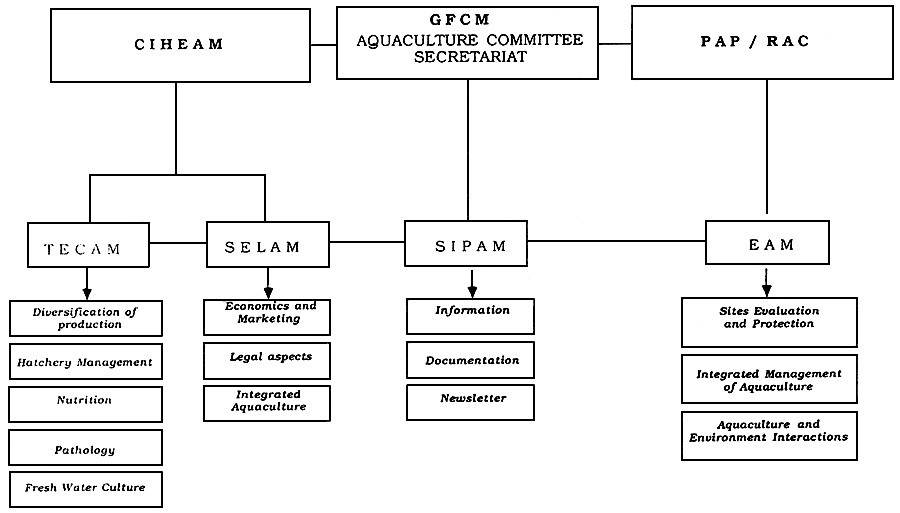
Figure 1
CIHEAM has considerable experience in the planning, execution and monitoring of cooperative research networks in the Mediterranean area, as well as in the development of post-graduate training curricula.
CIHEAM is more than competent to gradually promote aquaculture technology within an appropriate socio-economic framework, and to coordinate networks in charge of aquaculture development.
The technical success of aquaculture has brought the sector much attention and has attracted a great deal of private and public investments. Scientific and technical progress have expanded significantly over recent years.
It is in the direct interest of aquaculturists to be more receptive to newer aquaculture systems, technical, inputs and effective management.
This document encompass two networks:
the Technology of Aquaculture (TECAM) will deal with the biological and technical basis, and
the Social, Economic, and Legal Aspects (SELAM) will concern the socio-economic environment of aquaculture. Both Networks will allow the transfer of knowledge and the dissemination of outputs resulting from the various development activities.
A currently running, self-sufficient and permanent, networks for a sustainable development of aquaculture within the socio-economic context of the Mediterranean Region.
the promotion of adapted technologies for fry production, aquaculture engineering, fish food technology, feeding technics, pathology, fish farm management, etc…
the set up of guidelines and data base on products' specifications, quality control, fish pathology (diagnosis technics, disease control), farm management, etc…
the set up of Market Information Systems to favour aquaculture products' outlets.
the elaboration of socio-economic and legal framework and data base for the promotion of aquaculture within the development of national plans.
Public and private investors, producers, researchers, economists, managers, who are concerned by the technical, socio-economical and legal aspects of aquaculture.
Scientists and administrators involved in planning and promoting of aquaculture development at national and regional levels.
The Regional Centre of TECAM and SELAM Networks will be located at CIHEAM/Mediterranean Agronomic Institute of Sarragoza and will be responsible for coordination of activities in the field of the Networks.
The Regional Centre may assign temporary or permanent specific activities to some national institutions to support the activities of the Networks.
In this respect, and since four specific activities related to TECAM network were identified in the research field (see para 2 - Mediterranean Aquaculture Cooperation): Diversification of production, in Cyprus, Pathology, in Malta, Nutrition, in Portugal, and Freshwater culture, in Egypt, the Regional Centre should involve the national institutions concerned in Cyprus, in Malta, in Portugal and in Egypt, in the implementation of these activities.
Each Network will be developped in 3 phases:
- a first phase, to elaborate the Networks' strategy and to start-up the respective programmes.
- a second and third phase, to develop the activities and to set up the relevant guidelines and to collect the data base.
During the first phase of TECAM and SELAM, the concerned institutions from MEDRAP Member and Associated Countries may participate in the activities of each Network. From the second phase, any of those institutions, and any other institutions or persons from the Mediterranean countries, interested to support the networks and to benefit from their services and/or activities, should notify the Network Manager (CIHEAM) of their willingness to be associated to participate in the Networks' activities.
From each Mediterranean Country, one institution called the National Institution will be selected by the Management Board as the vis-a-vis of each Network.
TECAM and SELAM will be managed:
- by MEDRAP, with the support of CIHEAM, at their first phase,
- by CIHEAM, with the support of MEDRAP, at their second phase,
- by CIHEAM, as Network Manager, and their respective Management Boards, at their third phase.
The Management Board of both Networks will be composed of:
On a permanent basis:
- The Representative (s) of each National Institution
- The Representative of the Coordinating Unit (GFCM Secretariat)
- The Network Manager
When needed:
- The Representatives of the other Network Coordinators (MAPPAP/RAC, SIPAM)
- Representatives of any other institutions invited
The Management Board of both Networks will hold a meeting at least once every other year.
Several meetings and seminars during MEDRAP I and II have allowed the identification of activities according to priorities selected among the countries' needs, to be developped in both Networks (TECAM and SELAM).
Three main priorities in the fields of Research and Training, related to TECAM Network were identified (see enclosed tables 1 and 2, pages 23 A and 23 B):
- Diversification
- Pathology
- Nutrition
The main priorities related to SELAM Network, notably identified in the Seminar on Planification of Aquaculture Development held in Algiers on June 1992, are as follows:
- Marketing
- Integration of Aquaculture in development plans
- Legislation
The objectives and activities of TECAM and SELAM Networks presented in annexes 2 and 3, are basically proposed as a general framework. They are not definitive and may be subject to further proposals.
The diversification of production, the hatchery management, nutrition requirements and feed production, reduction of pathological hazards, and freshwater culture constitute the main items developped in the annexed proposed activities of TECAM.
The Economic framework for management and marketing in Aquaculture, the Strategy for integrated aquaculture and the Legal framework and regulation of aquaculture constitute the main items developped in the annexed proposed activities of SELAM.
A first analysis of these activities shows that they could be grouped into three main blocks:
- production bottlenecks,
- optimisation of production,
- and activities for a sustainable development in the future,
that could help when list of work plan activities will be produced for consideration by the Management Board.
Table 1: Synthesis of Aquaculture Research Priorities in the MEDRAP II Region, based on on-going and Planned Research Activities
| RESEARCH AREA | MEDRAP II ZONES* | MEDRAP II REGION (All zones) | |||
| I | II | III | IV | ||
| 1. Diversification of Species and Technology | 4(100) | 2(67) | 1(33) | 4(100) | 11(79) |
| 2. Breeding/Hatchery Management | 2(50) | 1(33) | 2(67) | 1(25) | 6(43) |
| 3. Nutrition | 2(50) | - | 3(100) | 3(75) | 8(57) |
| 4. Pathology | 4(100) | - | 2(67) | 2(50) | 8(57) |
| 5. Offshore Aquaculture | - | - | - | 2(50) | 2(14) |
| 6. Environmental Aspects of Aquaculture | 3(50) | 2(67) | - | 2(50) | 7(50) |
| 7. Lagoon Ecosystems | 1(25) | - | - | 3(75) | 4(29) |
| 8. Genetics | 1(25) | - | 2(67) | - | 3(21) |
Source of data: MEDRAP II. 1991. Seminar on Aquaculture Research Sub-Networking. Nicosia, Cyprus, 22–25 October 1991.
Table 2: Synthesis of Training Priorities in the MEDRAP II Region
| TRAINING AREA | MEDRAP II ZONES* | MEDRAP II REGION (all zones) | |||
| I | II | III | IV | ||
| Pathology | 3(75) | 3(100) | 2(67) | 1(25) | 9(64) |
| Nutrition/Feed Technology | 2(50) | 3(100) | 1(33) | 2(50) | 8(57) |
| Breeding/Hatchery Technology | 2(50) | 2(67) | 1(33) | 2(50) | 7(50) |
| Farm Management | 1(25) | 2(67) | 1(33) | 1(25) | 5(36) |
| Planning | 1(25) | 2(67) | 1(33) | 1(25) | 5(36) |
| Production Technology | 1(25) | 1(33) | 1(33) | 2(50) | 5(36) |
| Environment | 2(50) | 3(100) | - | - | 5(36) |
| Marketing/Financial Analysis | 1(25) | 2(67) | - | - | 3(21) |
| Engineering | - | 2(67) | (1(33) | - | 3(21) |
| Genetics | 1(25) | - | - | 1(25) | 2(14) |
Source of data: MEDRAP II, 1991. Aquaculture Training in the Mediterranean. MEDRAP II Seminar, Montpellier, 11–14 September, 1991.
Due to the considerable volume of work which would result from the implementation of all the activities with limited available funds, a selection has to be undertaken in order to sort out a limited number of activities to be implemented as the first step in the development of the networks.
In addition, as the degree of their complexity is variable, some activities require heavy means in finance and in time, and others are relatively easy to implement. Thus, another classification should be considered:
- activities to the implemented with existing funds and,
- activities applying additional external funds.
Taking in account the priorities and the balanced repartition hereabove mentioned, Workgroups of concerned experts should prepare a selection of activities to be presented to the Management. Board.
The Management Board and the Coordination Unit of TECAM and SELAM will ensure the concretisation of the activities for which funds are available. They will proceed, with the support of GFCM, when relevant, to seek additional funds for the implementation of the remaining foreseen activities.
1. CIHEAM will provide, for the Regional Centre, the basic necessary operation facilities, administrative personnel and funds to support the activities of both Networks.
2. The National Institutions associated to the Network activities will provide the necessary facilities professional staff, information and funds for jointly agreed activities.
3. FAO should allocate funds to allow the proper functioning of the GFCM Aquaculture Sub-Committee, if and when established by the Council, and its participation in activities related to the work of the Management Board.
An evaluation report should be prepared, after completion of Phase II, by MEDRAP in concert with CIHEAM and FAO. the report will be submitted to the TECAM and SELAM Management Board.
1. Proposed Budget basis
The proposed estimated budget for each network has been calculated on the following basis:
- Lump sums for items: Missions, Consultants, Reports and Publications.
- Cost basis for the following activities:
| I. For first phase (1993): | |||
| a) | One Seminar: | ||
| 30,000 × 1 | = | 30,000 $ | |
| b) | Two Workshops and working group meetings: | ||
| 30,000 × 2 | = | 60,000 $ | |
| Total estimation | = | 90,000 $ | |
| II. For second phase (1994) | |||
| a) | Two Seminars, Workshops or Training Session | ||
| 30,000 × 2 | = | 60,000 $ | |
| b) | Three working group meetings | ||
| 10,000 × 3 | = | 30,000 $ | |
| Total estimation = 90,000 $. | |||
III. For third phase (annual budget)
Due to the uncertaincy in predicting funding available for Phase III (after the closure of MEDRAP II) an indicative figure has been calculated of what it would cost to maintain the same number of activities as foreseen for the MEDRAP contribution to Phase II.
| a) | Two Seminars, Workshops or Training Sessions | ||
| 40,000 × 2 | = | 80,000 $ | |
| b) | Three Working group meetings | ||
| 10,000 × 3 | = | 30,000 $ | |
| Total estimation | = | 110,000 $. | |
Proposed Budget Table
| ITEMS | Phase 1 1993 (7 months) | Phase 2 1994 | Phase 3 (annual) |
| MISSIONS | |||
| - Mangt Board Meetings | 10000 | 10000 | 10000 |
| - Evaluation Group | 5000 | ||
| - Others | 8000 | 8000 | 10000 |
| CONSULTANTS | 3000 | 10000 | 12000 |
| ACTIVITIES: SEMINARS, WORKSHOPS TRAINING, ETC… | 90000 | 90000 | 110000 |
| REPORTS AND PUBLICATIONS | 2000 | 5000 | 8000 |
| TOTAL | 118000 | 123000 | 142000 |
N. B.: The contributions of CIHEAM and National Institutions for facilities, administrative support, and necessary professional staff and equipment will be evaluated at a later stage.
2. SOURCE OF FUNDS FOR:
1) Phase 1: MEDRAP II
2) Phase 2: CIHEAM, MEDRAP, and DONORS
3) Phase 3: Participating Institutions supported by CIHEAM and Donors
The General Fisheries Council of the Mediterranean (GFCM)
The GFCM has been in existence for about 40 years and is coordinated by the FAO. Membership includes all countries of the Mediterranean rim as well as those bordering the Black Sea. (Therefore, all current member countries of MEDRAP are represented in the Council.) A modest membership fee is paid by all country members in support of the Secretariat.
The organizational structure includes the Council, the Secretariat and the Fisheries Management Committee. The Council is the governing body and is constituted by one representative of each country, FAO, associates and observers. The Secretariat is provided and supported by FAO; it receives technical support from various technical divisions of FAO's Fisheries Department. The Secretariat is responsible for carrying out activities approved by the Council and for the planning of all meetings of the Council, its Executive Committee and the Fisheries Management Committee. The Fisheries Management Committee is an advisory technical body to the Council. It convenes Ad Hoc working groups and expert consultations to deal with matters referred to it by the Council. Many of these activities are supported by external donors through the efforts of the Secretariat. At present, the GFCM does not include an aquaculture committee, but it can be established with the Council's approval.
The GFCM had been active in promoting research cooperation in aquaculture in the Mediterranean through the Cooperative Programme of Research on Aquaculture (COPRAC). The COPRAC was discontinued largely due to the lack of an action programme to underpin the meetings of researcher workers, and because of the development of regional aquaculture activities through MEDRAP I, which was coordinated by the FAO/UNDP Aquaculture development and Coordination Programme (ADCP). Unfortunately, the ADCP replaced rather than strengthened, for GFCM's role in aquaculture research and development in the region. As a result, the opportunity to create a permanent coordination mechanism under the GFCM was temporarily lost and MEDRAP activities were continued as a fixed-term field activity under MEDRAPII.
The Rules of Procedure of the GFCM permits to undertake activities in order “to encourage, recommend, coordinate and, as appropriate, undertake research and development activities, including cooperative projects in the area of fisheries (includes aquaculture) and the protection of marine resources” (Article III, Agreement and Rules of Procedure of the General Fisheries Council of the Mediterranean, as amended on 23 May 1963; FAO, 1977. Basic Texts, Volume III, Fascicle 7).
The GFCM Secretariat also has the authority to establish project or programme accounts outside the Funds-In-Trust as long as the found are allocated for a specific activity (special studies, projects and/or programmes).
The Centre International des Hautes Etudes Agronomique pour la Mediterranee (CIHEAM)
The centre was established by the OECD and the Council of Europe on the request of the General Directors of Agriculture of Southern Europe, and has been in operation since 1962. Its membership has expanded with time and now included Spain, France, Greece, Italy, Portugal, Turkey, Yugoslavia, Albania, Egypt, Lebanon, Algeria, Tunisia, and Morocco. Of the MEDRAP II countries, Syria, Libya, Bulgaria and Cyprus are not members, though Syria is expected to join shortly.
The organizational structure consists of the Board of Directors, the Scientific Advisory Committee and the four Regional Institutes. The Board of Directors is the governing body; its constituted by one representative from each of the member countries, representatives of the Secretary General of the OECD and the Council of Europe, which also have advisory status. The Scientific Advisory Committee is composed of a variable number of persons appointed by the Board. Members are selected mainly from agricultural research institutions in the member countries, from country representatives and other institutions that contribute to the center.
The committee convenes on the request of the Board to discuss and provide opinions on matters referred to it by the latter. Ad Hoc Groups composed of specialists assist the committee in its tasks. The General Secretariat is composed of the Secretary General (appointed by the Board), the Directors of the four Institutes and support personnel. It carries out the activities approved by the Board, prepares the plan of work and budget and plans the meetings of the Board, its Advisory Committee and the latter's Ad Hoc groups. The Institutes (one in each of Spain, France, Italy and Greece) carry out programme of work through networking. Their directors are appointed by the Board.
All members pay an annual fee in support of the General Secretariat; in addition, countries which host the Institutes provide all financial support for their respective institute.
The Center provides post-graduate training in agricultural research for higher level staff and conducts research through networks managed by its four regional centers. Programmes are focused on (a) rural development and economics (France), (b) irrigation and virology (Italy), (c) forestry, sub-tropical green house practices (Greece) and (d) plant genetic improvement and animal production(Spain). The Center currently manages 20 research networks. It has carried out short training courses in aquaculture through its Institute in Zaragoza, Spain, and is in the process of expanding this activity. It has not carried out any research on aquaculture topics and its infrastructure does not at present include specialised institutes for this purpose.
The Center has cooperative agreements with the FAO, the CEC (Commission of European Communities) and the AOAD (Arab Organization for Agricultural Development). Observers from these organisations participate in the meetings of the Board. There are also strong linkages with donors, especially in Europe, and many activities have been supported with external funds.
The Mediterranean Action Plan (MAP)
The MAP was established in 1976 by the Barcelona Convention for the Protection of the Mediterranean Sea Against Pollution and became operational in 1978. It has 18 members, including all countries of the Mediterranean rim and the EEC. Of the MEDRAP II countries, only Bulgaria is not a member.
The organizational structure is composed of the following units: (a) the Ordinary Meeting of the Contracting Parties which is the governing body. It is constituted by one representative from each of the member countries and meets biennially, (b) the Bureau which is the equivelant of an executive committe (4 members) which meets in between the meetings of the Contracting Parties to deal with urgent matters; (c) the Scientific and Technical Committee and the Socio-Economic Committee which meet annually to consider technical matters and draft recommendations to the member countries, for approval by the Contracting Parties, and to review the programme of work and budget (biennially); (d) the Coordination Unit (MEDU, Athens), charge of implementation and coordination of the work programme approved by the Contracting Parties; (e) the Regional Activity Centers (RAC) -- four; one in each of France, Croatia, Malta and Tunisia, which coordinate activities in their respective fields and (f) the National Focal Points constituted by individuals nominated by member countries to coordinate activities with the Centres.
The Action Plan has four components:
(a) Socio-Economic: implemented by BP/RAC, France and PAP/RAC, Croatia.
(b) Scientific & Techical: MEDPOL, implemented by MEDU, Greece.
(c) Legal: implemented by REMPEC, Malta and SPA/RAC, Tunisia.
(d) Institutional: which consists of MAP's institutional arrangements.
The MAP has a substantial action programme in aquaculture which includes all the priority interests of MEDRAP II. (In fact, cooperation with MAP/PAP-RAC environmental matters of mutual concern was initiated during phase I of the MEDRAP Project). The aquaculture element of MAP is the responsibility of the PAP/RAC in Split, Croatia, although MEDPOL, in Athens (MEDU) also deals with technical aspects related to the impact of aquaculture on the environment.
TECHNOLOGY OF AQUACULTURE IN THE MEDITERRANEAN (TECAM)
OBJECTIVE 1:
Increase of production by means of biological and technical diversification.
The activities held in the framework of MEDRAP Project have led to identify two main priorities: the first on diversification of cultured species, the second one on diversification of culture systems.
OUTPUT 1.1: Culture of species with high production yield.
Activity 1.1.1: Development of joint research programme on specific topics directed towards biological diversification, with priority on:
| - | Fish | : | Puntazzo puntazzo, Dentex dentex, Pagrus pagrus, Solea sp., Coryphaena sp. |
| - | Crustacea | : | Penaeus sp. |
| - | Molluscs | : | Mytilus edulis |
Activity 1.1.2: Development of research towards strains and hybrids of species with favourable culture characteristics.
OUTPUT 1.2: Extension of existing culture systems and development of new appropriate systems.
Activity 1.2.1: Seminar and study tour on fish cage culture and long-line for shellfish culture offshore: site conditions, architecture of structures, legal aspects.
Activity 1.2.2: Identification of suitable site for offshore culture and farm design.
Activity 1.2.3: Set-up of global information related to offshore technologies, with special emphasis to equipment.
Activity 1.2.4: Development of extensive culture systems.
OBJECTIVE 2:
Hatchery management.
OUTPUT 2.1: Guidelines for broodstock management.
Activity 2.1.1: Broodstock conditions: feeding, hygiene conditions, handling,…
Activity 2.1.2: Genetic broodstock improvement
Activity 2.1.3: Spawning control.
OUTPUT 2.2: Guidelines for larvae and fingerlings production.
Activity 2.2.1: Optimization of the procedures and protocoles for cysts desinfection and hatching.
Activity 2.2.2: Development of diagnosis and prophylaxy in larval stages.
Activity 2.2.3: Set-up of criteria for selection of fingerlings.
Activity 2.2.4: Training in advanced techniques in marine hatcheries.
OUTPUT 2.3: Live food production
Activity 2.3.1: Bank of species to be used as live food
Activity 2.3.2: Chemostat for live food production
Activity 2.3.3: Enrichment technics for larvae: improvement of nutritional value by pre-feeding with rich diet.
OBJECTIVE 3
Nutrition requirements and feed production.
OUTPUT 3.1: Manufacturing and utilization of appropriate feed.
Activity 3.1.1: Meetings and workshops. A first meeting on food production and feeding technics will include the constitution of a workgroup on the subject.
Activity 3.1.2: Identification and analysis of localy suitable available feed ingredients:
- chemical analysis: the analysis has to be as complete as possible (including toxic and antinutritional factors) and has to be performed, possibly in different countries, with the same intercalibrated methods.
- In a second step chemical analysis should be followed by in vivo measurements such as digestibility. These again need standardisation of methods and the work shared among countries.
OUTPUT 3.2: Qualitative and quantitative feeding requirements
Activity 3.2.1: compilation of existing data on different species, including the ones considered in the diversification objective. (Objective 1).
Activity 3.2.2: completion of scientific data on requirements on main nutrients (energy, proteins, main amino acids, lipids essential fatty acids) on one fish (Sparus aurata).
Activity 3.2.3: Formulation, preparation and experimenting of feeds.
Activity 3.2.4: Training of technicians and scientists.
OUTPUT 3.3: Establishment of a data base on nutritional aspects.
Activity 3.3.1: Inventory of: aquafeed manufacturers existing at regional level, institutions involved in aquafeed research and development, feed equipment manufacturers.
Activity 3.3.2: Integration of information resulting from the activities of the previous outputs.
OBJECTIVE 4
Reduction of pathological hazards.
The main problem in this area experienced by most member countries have been identified as follows:
- The relatively minor production level of aquaculture till now has resulted in low incentive to invest in back-up pathology R & D work at the national level. Therefore, the information available at present is fragmentary and the prospect of cooperation such as networking is well adapted for improving this situation.
- A deficiency in the number of fish veterinarians and pathologists in the region.
- A lack of data collection, documentation and dissemination facilities.
OUTPUT 4.1: Establishment of a data base on Mediterranean Fish and Shellfish Disease.
Activity 4.1.1: Collecting and updating the information on fish and shellfish diseases: listing of institutions involved in research and control in fish pathology, facilities and equipments, projects and research programmes, country desease status, control measures, drug and chemical use in aquaculture, legal aspects, etc.
Activity 4.1.2: Dissemination of information with the scope to create a permanent forum of rapid exchange of ideas and developments throughout the region by means of all available support including SIPAM Newsletter.
OUTPUT 4.2: Standardisation and uniformity in pathological methodologies: diagnostic technics and desease control.
Activity 4.2.1: Initiation of common operations with existing institutions with interests that are applicable to the Mediterranean region.
Activity 4.2.2: Workshop and meetings on intercalibration of methodologies and exchange of information (prophylaxis, diagnosis, treatments, etc…).
Activity 4.2.3: Publication on Mediterranean fish deseases: compreensive review of the state of knowledge on marine fish pathology emphasizing current diagnostic methodology and its application to the Mediterranean region.
Activity 4.2.4: Monitoring in order to prevent deseases appearance and spreading.
Activity 4.2.5: Training on specialized diagnostic methodology.
OUTPUT 4.3: Establishment of a regional reference collection of aquatic animal pathogens, reference antisera, etc.
Activity 4.3.1: Identification, collection and classification of material.
OBJECTIVE 5
Culture of living resources in inland waters.
Freshwater aquaculture is playing an important role in the aquaculture of several Mediterranean countries and has been considered as an integral part of the programme to be enhanced at regional scale. Five major areas have been identified that cover the interest of most of the countries:
- Ecological studies on freshwater areas in order to introduce or develop fish culture in natural waters,
- Technology in pond fish farming with special regards to tilapia and carp production,
- Development on the production technology of high value freshwater species,
- Engineering and design of integrated systems,
- Processing and marketing of freshwater fish species.
Therefore, the following programmes are proposed as start-up activities :
OUTPUT 5.1: Restocking programmes for the establishment of permanent stocks capable of sustaining fishery activities.
Activity 5.1.1: Review of inland waters suitable for restocking and collection of data on their physical and biological charateristics.
Activity 5.1.2: Introduction in lakes and reservoirs of species appropriate to their environment conditions.
Activity 5.1.3: Extension and training of local fisherman on fishery technics.
Activity 5.1.4: Follow-up of fishery yield and stock management.
OUTPUT 5.2: Development and extension of technology in pond fish farming particularly for tilapia and carp production.
Activity 5.2.1: Establishment of seed production systems: broodstock management, propagation, larvae rearing and nursing.
Activity 5.2.2: Integrated small scale aquaculture in rural communities in view to achieve food security and increase the availability of low cost aquaculture products.
Activity 5.2.3: Development of research towards strains and hybrids with favourable culture characteristics.
OUTPUT 5.3: New culture systems.
Activity 5.3.1: Development of joint research programme on the valorization of used waters by aquaculture.
Activity 5.3.2: Development of polyculture production systems.
Activity 5.3.3: Development of research towards strains and hybrids of species with favourable culture characteristics.
OUTPUT 5.4: Value-added products resulting from the processing of freshwater production.
Activity 5.4.1: Review of previous works on the subject (carp, tilapia, etc.),
Activity 5.4.2: Assesment of the market for new products.
Activity 5.4.3: Pilot unit for product development and market testing.
OUTPUT 5.5: Data base on Mediterranean freshwater culture.
Activity 5.5.1: Collecting and updating the information on freshwater species, listing of institutions involved in research and development, projects and research programmes, country production status, etc.
SOCIAL, ECONOMIC AND LEGAL ASPECTS OF AQUACULTURE (SELAM)
OBJECTIVE 1
Economic framework for management and marketing in aquaculture
OUTPUT 1.1: Economic viability of farming systems.
Activity 1.1.1: Selection of farming systems for pilot operations permitting to study and to determine the technical and the economic viability.
Activity 1.1.2: Standard investment criteria.
Activity 1.1.3: Code of conduct for the management of aquaculture facilities.
OUTPUT 1.2: Product specifications and new products development.
Activity 1.2.1: Compemdium of regional and international product specifications.
Activity 1.2.2: Updating of norms and practices for names, quality, freshness, packing, labelling, etc…
Activity 1.2.3: Identification and development of new products according to targeted markets.
OUTPUT 1.3: Marketing information systems
Activity 1.3.1: collection and dissemination of information on markets prices.
Activity 1.3.2: Identification of market forces and characteristics.
Activity 1.3.3: Identification of economic advantages of aquaculture practices: programming the productions in order to be adapted to local and foreign market conditions.
OBJECTIVE 2
Strategy for integrated aquaculture
OUTPUT 2.1: Integration of aquaculture in national development plans.
Activity 2.1.1: Elaboration of guidelines for planners and managers for project formulation and implementation.
Activity 2.1.2: Evaluation of training programme needs.
OUTPUT 2.2: Socio-economic aspect of integrated aquaculture.
Activity 2.2.1: Integration of aquaculture in the activities of existing fishermen communities as a positive factor on employment.
Activity 2.2.2: Food supply and increase of income in rural communities.
OUTPUT 2.3: Integration of aquaculture in the environment.
The concept should involve the durable utilization of resources in harmony with the environment and by using aquaculture technologies which should not endanger the qualities of the ecosystem and its resources. This activity is covered by the EAM network.
OBJECTIVE 3
Legal framework and regulation of aquaculture.
Legislation constitutes one of the needs for national management of aquaculture. Action is required at inter-regional level to identify and classify any legislation or regulation aspect related to aquaculture activities.
OUTPUT 3.1: Legal requirements for the establishment of an aquaculture enterprise
Activity 3.1.1: Collection and comparative assessment of legal frameworks concerning aquaculture development in Member Countries: access to and use of land and waters, rules concerning the used water quality, etc…
Activity 3.1.2: Organisation of meeting on legal aspects and discussion on issues of common interest to be considered as basic reference at national level.
OUTPUT 3.2: Compendium of directories of regional and international normes related to aquaculture development.
Activity 3.2.1: Normes for the quality control of end products.
Activity 3.2.2: Normes for environmental safeguards in relation with aquaculture development: water quality policies and hygiene criteria.
Activity 3.2.3: Normes on trade of aquaculture products related to the regulations on fish desease and food inspection systems.
