


The upazila and district level workshops with government and non-government agency representatives and the in-depth interviews with various key informants during fieldwork have revealed several layers of major finding of the institutional domain of the study area. The extensive discussions in uapzila and district level workshops, in particular, have uniquely targeted to elaborate on issues as the institutional capacities, mandates, functional roles, services-deliveries, management and coordination operandus and suggestions relating to the institutional domain.
On the other hand, the interviews with the selected key informants at the community level have produced significant findings regarding the community and social institutions and the reach of the institutional functioning at grass-root level.
The local institution’s (including local government agencies and self-help groups) role in the disaster management (also climate risk management) at a local level has also been looked at from both the ends.
In the whole exercise of institutional assessment and evaluation in the study area, several types of stakeholders have been consulted extensively. They are representatives and members of:
Department of agriculture in respective upazila and blocks;
Other government line agencies;
Non-government orgnizations (NGOs);
Civil society (e.g. local knowledgeable people, journalists);
Livelihood group members (includes farmers); and
Others.
In the four study upazilas and in particular in the study villages, existence of several types of institutions has been identified. In a more concise manner these institutional presences can be classified in four generic types:
Government and local government agencies;
Non-government organizations (NGOs);
Social, informal and private institutions; and
Farmers/water user groups.
Unlike the other districts in the northwestern part of the country, most of the government departments in the study area have an operational structure upto the upazila level. It was observed during the fieldwork that the government line agencies have upazila officers and representatives posted in their respective upazilas. Almost a number of more than twelve upazila level government and other line agencies are found operating in the field. Among these agencies Barind Multipurpose Development Authority (BMDA) and Department of Agricultural Extension (DAE) has block level presence in all four upazilas.
All these government line agencies at upazila level has sectoral mandates of their own and have distinctive work-plans. A list of the major agencies operating at upazila level with their mandates and activities are outlined in the Table 8-1.
Table 8-1. Upazila level government agencies working in the area
| Agencies | Mandates | Activities |
| Barind Multipurpose Development Authority (BMDA) | Multi-purpose development including irrigation and agricultural development. | Canal excavation, installation of DTW, drinking water supply through over head tanks, eco-village establishment, seed and fertilizer supply; provide sanitary latrine; small pond/retention pond excavation; farmers group formation, training and awareness programme, electricity supply for irrigation, tree plantation, etc. |
| Department of Agricultural Extension (DAE) | Agricultural extension and development. | Agricultural advice and extension, suggestions for drought management, HYV rice cultivation; IPM, plot boundary management; training and awareness programme; tree plantation etc. |
| Department of Fisheries | Fisheries development and extension. | Covering water surface by water hyacinth, drought resistant fish species identification, pond fish culture, fish fry discharge in govt. open water body; advice for fish safety and diseases, Small pond/retention pond excavation ideas; training and awareness programmes. |
| Department of Livestock | Livestock, poultry-birds development and extension. | Public awareness for rain water harvesting; spray water in broiler shed; use multivitamin for animals; vaccination programme etc. |
| Bangladesh Rural Development Board (BRDB) | Rural development. | Loan for irrigation from DTW and STW; Supply of water to ponds and canal; training programme. |
| Bangladesh Water Development Board (BWDB) | Water resources development | Flood control, river training, erosion protection and drainage related activities. |
| Local Government and Engineering Department (LGED) | Local government and engineering development. | Employment of disaster victims in road maintenance and tree plantation programme; Improve irrigation through canal excavation; Tree plantation |
| Directorate of Relief and Rehabilitation (DRR) | Food and disaster management. | Food for Work (FFW); Test Relief (TR); Provide relief during and after disaster, rehabilitation of disaster victims. |
| Department of Public Health Engineering (DPHE) | Public health services. | Health care services, supply sanitary latrines; safe drinking water supply (STWs). |
| Department of Youth Development (DYD) | Youth development and training services. | Loan for poultry, agriculture, training and public awareness programmes. |
| Department of Forest | Development of forest services. | Embankment to protect soil and plantation; Pond re-excavation and plantation; Tree plantation |
| Ministry of Education | Development of educational activities | Operation and monitoring of educational services, development and supervision of education related activities. |
| Department of co-operatives | Cooperative services and development. | Registration of cooperatives, capacity/skill development and awareness building activities. |
| Department of Statistics | Statistical survey and data collection | Collection of survey, census, and other statistical data collection activities for central reporting |
| Government banks (Sonali and Krishi) | Banking and financial management | Retail banking, credits, financing, property development etc. |
Source: CEGIS fieldwork 2005.
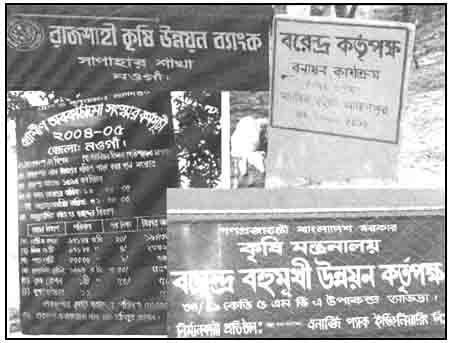
Figure 8-1. Some of the govt. agency activities were found demonstrated in billboards
Union parishad (Union Council) or UP in short remained as the major existing entity of local government in the study area. In all the upazilas the strong presence of UP in people’s life is evident. The union level decisions are found to be resulted through the members and chairmen of the respective Ups. These members and chairmen are the elected public representatives.
Along with the government line agencies, some non-government agencies areas are operating in the four upazilas of the study area. Comparing to the other districts of the country, presence and number of non-government agencies working in this area is quite low. Some national NGOs such as BRAC, PROSHIKA, GRAMEEN BANK, ASA have relatively greater operation and establishment in the study upazilas but the presence of local level or even the district level NGOs are even lower in number. Most of the activities performed by the NGOs are related to micro finance distribution or relevant to awareness for human development issues such as sanitation, healthcare and so forth. Some of the names of the NGOs operating in the area are shown in the Table 8-2.
Table 8-2. NGOs working in the area
| Agencies | Major activities |
| ASA | Micro credit distribution for poultry, agriculture, relief work etc. |
| ASOD | Public awareness and motivation etc. |
| ASRAY | Micro credit distribution, public awareness etc. |
| BRAC | Micro credit distribution for poultry, agriculture, relief during disaster etc. |
| CARITAS | DTW establishment and management, pond excavation, tree plantation etc. |
| PROSHIKA | Training on environmental friendly agriculture, micro credit distribution etc. |
| GRAMEEN BANK | Loan for poultry, agriculture, relief work etc. |
| RIC | Credit distribution and income generating activity etc. |
| TMSS | Loan for poultry, agriculture, credit distribution, relief work etc. |
| TRINAMUL | Public awareness, tree plantation etc. |
| Others NGOs | Also there are some other NGOs working in the area largely on credit services, income generating activities and or some human development activities such as sanitation etc. |
Source: CEGIS fieldwork 2005.
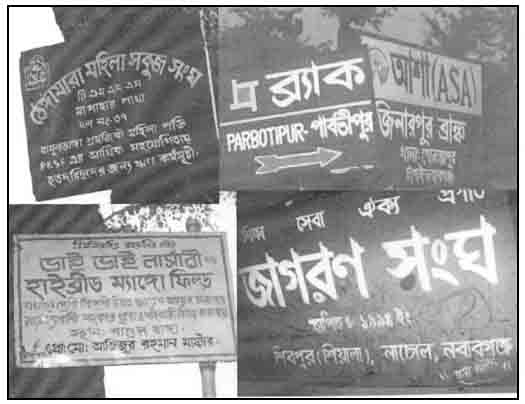
Figure 8-2. Billboards of some NGOs, informal, private institutions in the study area
Other than the formal government and NGOs activities, some informal institutions are also found operating in the study area. Most of these informal institutions are associated with the social or religious activities. Some local youth clubs were also found but it was observed that these informal institutions are more operating as recreational activities of youth and not been involved with any development activities in an effective manner.
A small number of private entrepreneurs are also operating in some part of the study upazilas. Particularly in the Porsha and Sapahar upazila some privately owned farms are enterprenuring the mango orchards and their production. Similar activities relating to nursery development, agricultural machinery and input supplies are also found in various parts of these upazilas.
Beside these externally need based formation of institutions, the existence of traditional social instructions such as the kinship based gosthi (i.e. lineage) identity has been found in operation. In all the villages the existence of kinship based gosthi identity was found as a strong form of relationship that has a strong hold on the formation of the livelihood activities and copings in the area. The strong boding of such nature often in some cases are also observed to be materialized as a strong social capital as well.
Some of activities of such type of social, informal and private entrepreneurial institutional entities observed in the area are outline in the Table 8-3.
Table 8-3. Activities of informal institutions
| Informal institutions | Activities |
| Religious leaders | Religious activities. |
| Local clubs | Youth sports and recreational activities. |
| Nurseries | Seed and plant selling and development. |
| Agricultural shop owners and machinery distributors | Selling of agricultural and associated equipments and inputs. |
| Fruit marketing entrepreneurs | Purchase and develop market for mango and other fruits. |
| Political party | Local political activities. |
| Ethnic minority associations | Advocacy for ethnic minority rights and development issues. |
| Informal money lenders | Informal loan distribution and mortgaging. |
| Social institutions (i.e. goshti) | Local social safety and crisis support |
Source: CEGIS fieldwork 2005.
In the study area, a formation of water user or farmers group was formed by the BMDA in each of their DTW command areas. These user groups are departmentally managed with the help of local farmers groups and water user associations.
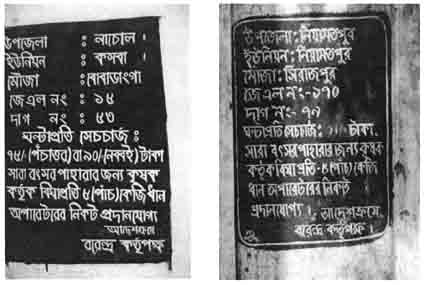
These water user association and farmer groups have implemented a coupon based water charge system and charge taka seventy five per hour for distributing irrigation water to the general farmers. For guarding the DTW pump the farmers pay five kilogram of paddy per bigha to the tube-well operator. Usually a trained (or licensed) operator is recruited locally for distributing the water and collecting the payments from the farmers in a more organized manner.
The institutions existing in the study area (discussed in the previous section) are coordinated under some specific mechanisms. The coordination mechanisms of both of these government and nongovernment institutions have differences. The vertical and horizontal interrelationships of these institutions are discussed in this section.
The government agencies in the study upazilas are largely dependent on the vertical linkages with their respective district offices where the major financial and planning decisions are made for development and coordination.
In the four study upazilas, the upazila level line agencies remained largely reported to their agency or departmental superiors at district level. For example, most of operations for Department of Fisheries in the study area were found to be driven by the decisions held at district levels.
At operational tier the upazila was found as the core hub of functional activation or execution of activities. At this level, an operational vertical and horizontal coordination of activities were found in the four upazilas. At this level, in all four study upazilas an active coordination has been found operational where the upazila level line agency official maintain a close liason. The relationship with upazila administration seems quite evident among the line agencies in all four study upazilas. However, the unfortunate issues is that often some uncoordinated action derived from the district level often remain very difficult to re-coordinate at upazila level.
At union level gradually the coordination among the government agencies was found to be comparatively week. Most of the line department were found to have good networks up to the upazila level while beyond the upazila level except the upazila administration, BMDA and DAE all other departments evidently have a shortage of manpower or staffs thereby functioning of many executions remained case specific or work specific.
However, besides the upazila administration DAE was found to have the block level representatives where the Sub Assistant Agriculture Officers (SAAOs) operate with the community. It was observed that a regional multi-purpose government development agency, BMDA has been established in 1992 for socio-economic development and disaster management in the region. BMDA was found has gradually grown a wide network at upazila level along with district administration and DAE. Major role of BMDA is to develop infrastructure for communication, installment of DTW for irrigation and drinking water supply and provide facilities for agriculture.
On the other hand the vertical linkage of the NGOs operating in the study area seems quite week. Excepting few national NGOs such as ASA, PROSIKA, BRAC, GRAMEEN BANK most of the other NGOs lack wider networks above the community level. However, although a limited number of NGOs (comparing to the other parts of the Northwestern districts such as Borga or Rajshahi) the NGOs have community level presence.

Figure 8-4. A metaphor of lack of coordination among national NGOs at local level is shown
The coordination among the NGOs and between the government and NGO activities relating to disaster or climatic risk management in the area is largely absent. At upazila level the coordination meeting in the study upazilas are called but the empirical operation or the practical execution of work rarely reflect any coordinated action against the climate risk management at ground level.
The local government coordination, in this regard, was observed largely missing. The UP functionalities in the study area remained largely non-related to any organized adoption of any feasible adaptation measures at a local level. However, this local level ancient institution (i.e. UP) remained largely functional in political manifestation and activation.
The national disaster management institutional structure acknowledges the importance of the institutional presence up to local level for comprehensive disaster management. The existing structure has formal provision of disaster network upto union level. In this structure the line agencies actually participates under the coordination of either UNO (the upazila administrative head) or at union level through the coordination of Union Parishad Chairman (which is a elected position). The composition of these union disaster management committees is shown in the table below.
Table 8-4. Generic composition of union disaster management committee
| SL. | Union disaster management committee | Designation |
| 1. | Chairman of Union Parishad | Chairman |
| 2. | All Members of the Union Parishad | Member |
| 3. | Teacher representative | Member |
| 4. | Officials/ staffs of the respective departments | Member |
| 5. | Team Leader of the CPP in cyclone prone unions | Member |
| 6. | Representative of Bangladesh Red Crescent Society | Member |
| 7. | NGO/ CBO representative | Member |
| 8. | Two female representatives (at least 2) | Member |
| 9. | Secretary of the Union Parishad | Member - Secretary |
Source: DMB, 1997.
However, in the study area this local level structure of union disaster management committee was also found official functional but after consultation with the local people it emerged that many common people are not aware of the institutional structure or the functioning of this structure in particular. Local people particularly of vulnerable livelihood groups also suggested that they have a very poor access even in the union disaster management discussions. This largely signify that the local vulnerable group members have a very limited information about the role, mandates and functioning of these disaster management committees in the ground level.
During the institutional assessment the issues of disaster related information flow, awareness and dissemination has been looked at in a brief manner. It emerged from the fieldwork that some information regarding weather, agriculture and disaster are disseminated from government assisted national and regional new media such as Bangladesh Betar (Radio), Bangladesh Television (BTV) and so forth.
The national and regional newspapers have reasonable access upto upazila level which gives some information on weather, agriculture and disasters.
As DAE has presence upto block level they carry out some extension information through the SAAOs in respective blocks and at farmer level. The local market places, religious places, educational institutions, upazila and union parishads are found some locations from which information spreads to the community and household level. However, it was found that farmers and other livelihood group members hardly find these information in time or assisted with right kind of “know hows” to take any preparedness initiative effectively.
Some of the information flow, extent and effectiveness at various levels are schematically shown in the Table 8-4.
Table 8-5. Information sources, flow and level of dissemination
| Sources | Level/ Extent | ||
| Divisional/district | Upazila | Village/community | |
| National and regional radio | 1,2,3 | 1,2,3 | 1,2,3 |
| National and regional TV | 1,2,3 | 1,2,3 | 1,2,3 |
| National and local newspapers | 1,3 | 1,3 | 1,3 |
| DAE | 2 | 2 | 2 |
| BMDA | 2 | 2 | 2 |
| Other GO-NGO institutions | 1,3 | 1,3 | |
Source: CEGIS fieldwork 2005.
Legends:
 Comparatively useful and timely information flow and dissemination.
Weak flow or dissemination of information.
During the upazila and district level workshops the professionals who have experiences working in the study area have put forwarded several suggestions that have scope in considering the livelihoods adaptation and management of climatic risks in the area. As these suggestions came in various forms these are largely clustered in four major types: a) agricultural improvement, b) infrastructure development, c) institutional development, and d) socio-economic development. The suggestions outlined in following four clusters in the Table 8-6.
| Agricultural | Infrastructural | ||
| • | Change in existing cropping pattern to drought resistant pattern | • | Ensure electricity supply |
| • | Diversify crop for boro season | • | Excavation of ponds/dighes/canals/kharis |
| • | Drought resistant crop cultivation | • | Installation of DTW |
| • | Irrigation from Mahananda river | • | Pond/canal re-excavation |
| • | Irrigation through hosepipe | • | Drinking water supply through over head tank using DTW |
| • | Mulching to reduce evapo-transpiration | • | Construction of concrete canal |
| • | Use effective pesticides | • | Agro-based industry installation |
| • | Use green manure | • | Improve road communication system |
| • | Alternatives for integrated crop-fish cultivation | • | Provide govt. storage facility to the farmer groups |
| • | Rain water harvesting | • | Provide solar PVC and biogas plants to the poor and landless |
| • | Pond-side vegetation/ agro-forestry | • | Extension of water retention canals from major rivers |
| • | Provide loan with simple conditions to small and marginal farmers | ||
| • | Tree plantation for reducing evaporation rate | ||
| • | Control exotic tree species plantation | ||
| Institutional | Socio-economic | ||
| • | Coordination among different GOs and NGOs | • | Land tenure/leasing/sharecropping arrangements |
| • | Develop integrated plan for resource and disaster management | • | Access rights to irrigation and drinking water |
| • | Ensure supply of agri-equipments | • | Provide credit with simple conditions to vulnerable groups |
| • | Increase subsidy in agriculture | • | Lowest level of wage fixation |
| • | Improve technical facilities | • | Leasing of water bodies to the vulnerable groups/poor people. |
| • | Improve marketing system of agri-products | • | Alternative labour employment opportunities creation. |
| • | Provide adequate loan to farmers | • | Setting up facilities for cottage industries |
| • | Provide subsidy in irrigation | • | Introduction of crop/disaster insurance scheme. |
| • | Provide loan with simple conditions | • | Ensure successful seasonal migration |
| • | Provide facilities for poultry and live stock farming | • | Control markets for adequate price |
| • | Reduce fuel scarcity for irrigation pump | ||
| • | Training and awareness programme on drought mitigation and preparedness | ||
Source: CEGIS fieldwork 2005.
From the overall exercise of the assessment and review of the institutional domains and their functioning several sets of evaluation emerged. The synergic evaluations of institutional assessment finding are sequentially structured below and termed as ‘conclusions’:
Conclusion 1. Institutional coordination for creating “physical adaptation options”.
The observation and consultation with the agency professionals suggest that the agencies operating in the study area have differences both in roles, capacities and how-hows to deal with climatic risks. In this case primarily to deal with the drought situation and with the associated other physical and anthropogenic factors.
However, few agencies are found largely working with a mandate to overcome this climatic variation. Among these, BMDA remained as the “spearhead” with their mandate to expand ground water irrigation coverage to the non-irrigated areas. The authority has a larger capacity comparing to the others working in the field. However, the operation of this agency is heavily dependent on the ground water availability and access to it.
Some limited attempts to retain surface water are in operation but these are highly insufficient considering the demand of water in the area. In this situation, BMDA is offering only a little to the areas where the ground water is not accessible. One such example is the case of Malpur village or the area between Baradadpur village to Sapahar.
In this context, a more concerted focus on the innovative retention of surface water is needed. In this respect, agencies such as Bangladesh Water Development Board (BWDB) and Local Government Engineering Department (LGED) can play a major role. In diversion of surface water from the major rivers, extension of water retention facilities are also needed as identified by both the institutional representatives and the community itself.
Considering this issue the inter-agency coordination (both horizontally and vertically) is needed to consider the improved adaptive practices of physical nature. This has large potential for livelihoods adaptation but needs a greater institutional coordination.
Conclusion 2. Institutional collaboration with research agencies for finding alternative crops.
In the study are, DAE also has a wide network. The presence of professional SAAOs up to the block level takes DAE to the farmer level. However, although DAE has this mandate of agricultural extension in the study area, it was found that the department is largely dependent over the availability of water in certain crops to the farmers.
In this situation, the agency in the field is providing various suggestions to consider the drought resistant crop or alternative cropping pattern, demonstration of low irrigation crop and so forth. But the varied climatic conditions and lack of access to ground water in non-irrigable areas are not quite permitting any of these agricultural suggestions.
In this respect, the institutional collaborations with firstly with the research agencies those who can suggest a suitable alternative crop instead of boro crop needs to be collaborated with.
Secondly, sharing of experiences with other drought prone areas of the sub-continent such as Bihar or several provinces in Pakistan can possibly be looked at for sharing ideas. This would give a better know-hows of adapting to the climatic variations of similar nature.
Conclusion 3. Institutional strengthening for growing awareness, negotiation and motivation.
At this point of dealing with climatic variations needs a greater awareness and preparedness measure. This starts with a community level awareness and understanding the risk itself and also the urgency of advance planning.
Awareness generation has a multiple benefit for the livelihood groups. Firstly, this can better prepare the farmers and agriculturally based livelihoods for considering needed agricultural adaptive measure(s). Secondly, this can sharply reduce the level of loss due to the aversive climatic conditions. One can go for quick adaptive solutions such as in consecutive non-rainy day one can adjust the timing of the crop and reduce the loss. Thirdly, the awareness has an added advantage and a planning opportunity for the poorer and vulnerable households for considering a non-agricultural coping measures that can reduce other kind of risks to one’s life and livelihoods (e.g. one can take up a planned migration in a boro season and reduce the level of household food and income insecurity).
In all thee considerations, the level of awareness towards planned climate risk management can be developed by channelizing awareness and motivational programs through the various line agencies operating in the upazila and union level. In addition to agriculture related four departments (agriculture, fisheries, livestock and BMDA) other departments associated with education, forestry, youth development, banks can be used at upazila level for creating necessary awareness and campaign for climatic risks management. In this regard, the networks of local and community based NGOs, informal institutions can successfully be utilized for reaching the awareness up to the very community and firm level.
Conclusion 4. Institutional and policy reforms need to be taken from consideration of varied level of awareness, concerns and adaptive capacity.
The institutional assessment and the livelihoods profiling results suggested that at present the community have relative perceptions towards understanding the risk itself and to construct their adaptive measures for considering livelihoods adaptation.
The primary producing vulnerable groups are more concerned with the climatic conditions and the more well offs are quite aware as well.
However, the relatively poor primary producing vulnerable groups such as small and marginal farmers are concerned about both climatic conditions and about the anthropogenic factors (e.g. access to agricultural input or availability of electricity). These groups are facing a dual vulnerability and are concerned about both the climatic and non-climatic situations in a dual manner.
The poorer groups such as the wage labour groups or very poor business/traders are more concerned with the societal and anthropogenic factors and rest the climatic conditions as a covariant factor that is beyond their adaptive capacity (e.g. god’s will, allar hatey).
Considering these differences of degree in perceiving climatic risks and subsequent adaptive capacity the institutional and policy reforms should be devised.
For large farmers development the initiatives could be for developing facilities relating to the natural resources, but for the small and marginal farmers the prospective measures should be comprising of socio-economic in nature along with the support for natural resources enhancement. On the other hand, the livelihood adaptation for the poor wage laborers in the study area could be more socio-economic and then of improving the conditions for mitigating climatic variability.
Conclusion 5. Strengthening the disaster management committees with the support from specialized departments.
The mainstreaming livelihoods adaptation to climate change/variations at local level is a necessity for future success. And the very existence of the local level disaster risk management would be the strengthening the hands of Union Disaster Management Committee (UDMC). The union level committees with the niche of the ancient local institution of union parishad is a major need.
It emerged from the institutional assessment that at the moment the union parishads in the study area do not have enough coverage and functioning for a concerted local level adaptive management of climatic risks. This needs to be strengthened in fast pace. The linkage development of BMDA farmers groups and water user associations with the local union parishads and consecutively with the UDMCs needs to be piloted.
If the union parishads and their respective UDMCs with an active linkages among the BMDA, DAE, DOE initiatives, and other local line agencies and local based NGOs can be coordinated together and with the support from the respective specialized departments UDMCs can be strengthened.
Conclusion 6. Development of ‘functional’ institutional coordination and communication is a prerequisite to avoid overlaps of mandates and duplications.
During the institutional assessment the overlaps of many institutional activities were found among various agencies. At the same time, in the community level the lack effectiveness and absence of functional coordination emerged as well.
A major institutional conclusion emerges from this is the prospective scope of improvement of institutional coordination. Improvement of the ‘functional coordination’ of various agency activities, planning, communication, and operation at field level is highly needed for devising long term livelihoods adaptation. In this respect, functional coordination among government line agencies/departments, among NGOs and among GO-NGO agencies are largely a prerequisite.
