


Material. Mild steel 25 x 12 mm flat is suitable for practice, but any reasonable size will do.
Additional tools. None, but a flatter will give a better finish.
METHOD
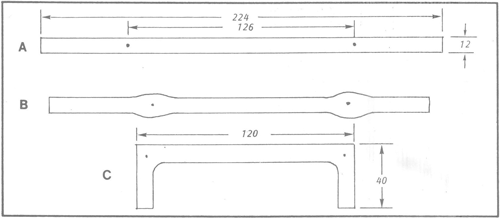
Additional metal is required to form this kind of bend, and it is obtained by upsetting. It is usual to add a quarter of the metal thickness to the outside dimension for each bend (Fig. 57). The outside dimension is 120 mm and metal thickness is 12 mm, so 3 mm is added for each bend, making a total of 126 mm. The metal is then upset to one-and-a-half times its thickness where the bend is to be (Figs 57A and B). Cut off a piece of 25 x 12-mm bar 224 mm long. Lightly mark the centre of the length on one edge, then mark off 63 mm from the centre toward each end to give a total length of 126 mm in the centre of the piece. Centre-punch these positions on one edge of the bar (Fig. 57).
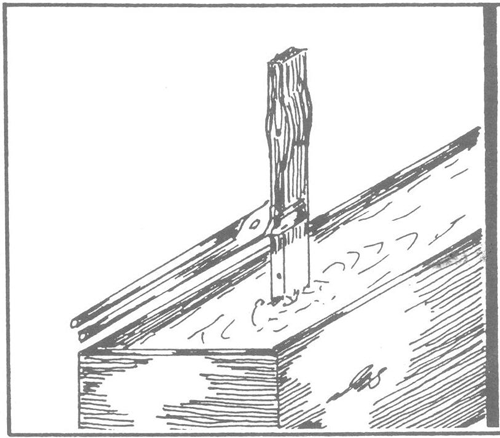
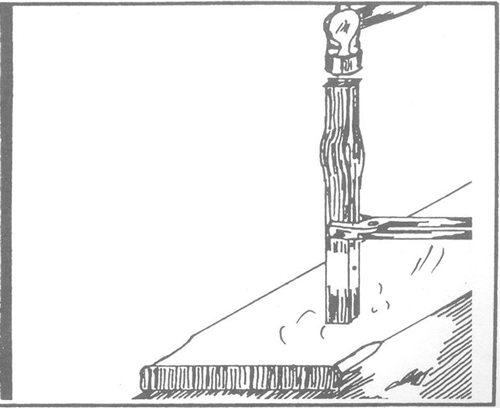
Heat the bar to a bright yellow heat in the position of the first bend and control the heated area by cooling to about 15 mm on each side of the mark (Fig. 58). Upset one end (Fig. 59). Take care to keep the swelling equal on both sides of the workpiece and do not allow bending to occur. Straighten any bending as soon as it becomes obvious. Upset the second bend position equally (Fig. 57B). Take a bright yellow heat in one bend position, control the length of the heat by cooling and bend over the beak (Fig .60).
<DATA MISSING Page.no.20,21>
