


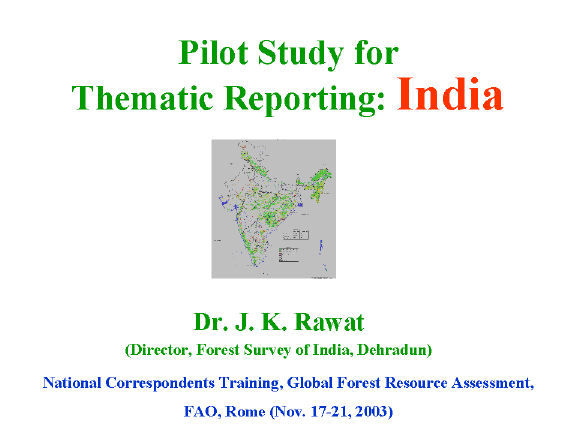
Pilot Study for
Thematic Reporting: India
Dr. J. K. Rawat
(Director, Forest Survey of India, Dehradun)
National Correspondents Training, Global Forest Resource Assessment,
FAO, Rome (Nov. 17-21, 2003)
Slide 2
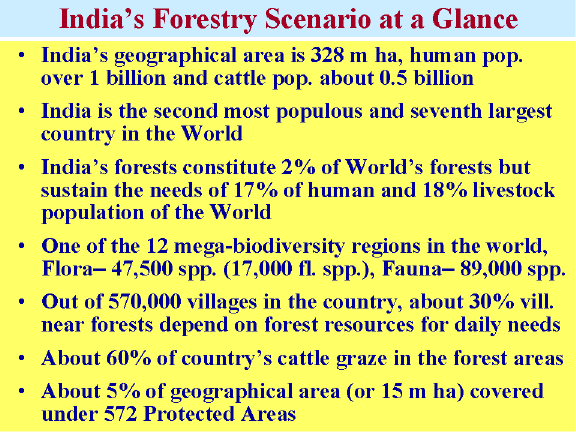
India’s Forestry Scenario at a Glance
• India’s geographical area is 328 m ha, human pop. over 1 billion and cattle pop. about 0.5 billion
• India is the second most populous and seventh largest country in the World
• India’s forests constitute 2% of World’s forests but sustain the needs of 17% of human and 18% livestock population of the World
• One of the 12 mega-biodiversity regions in the world, Flora– 47,500 spp. (17,000 fl. spp.), Fauna– 89,000 spp.
• Out of 570,000 villages in the country, about 30% vill. near forests depend on forest resources for daily needs
• About 60% of country’s cattle graze in the forest areas
• About 5% of geographical area (or 15 m ha) covered under 572 Protected Areas
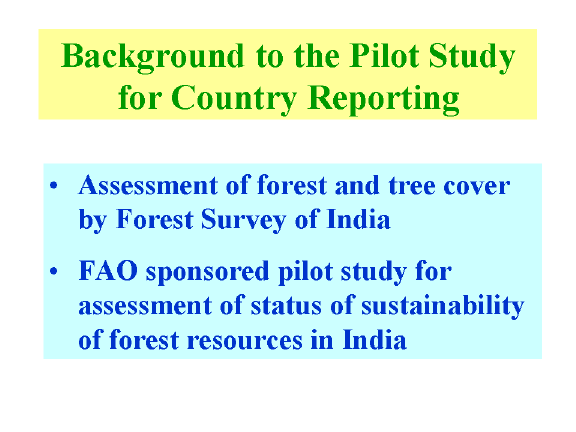
Background to the Pilot Study for Country Reporting
• Assessment of forest and tree cover by Forest Survey of India
• FAO sponsored pilot study for assessment of status of sustainability of forest resources in India
Slide 4
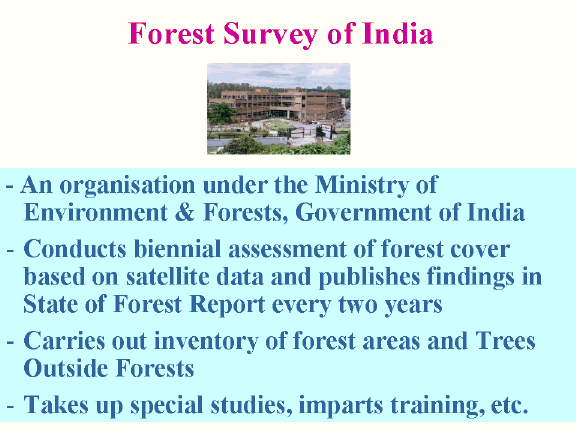
Forest Survey of India
- An organisation under the Ministry of Environment & Forests, Government of India
-Conducts biennial assessment of forest cover based on satellite data and publishes findings in State of Forest Report every two years
-Carries out inventory of forest areas and Trees Outside Forests
-Takes up special studies, imparts training, etc.
Slide 5
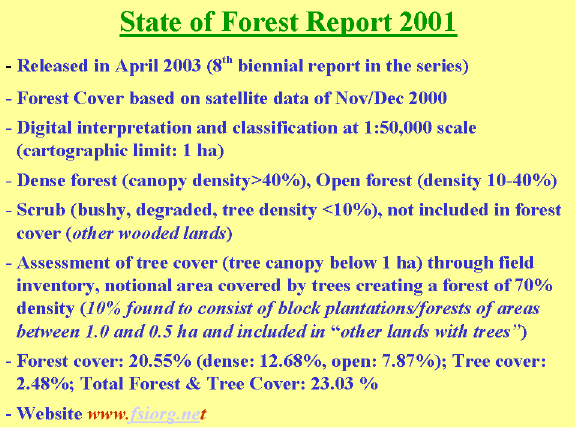
State of Forest Report 2001
- Released in April 2003 (8th biennial report in the series)
- Forest Cover based on satellite data of Nov/Dec 2000
- Digital interpretation and classification at 1:50,000 scale (cartographic limit: 1 ha)
- Dense forest (canopy density>40%), Open forest (density 10-40%)
- Scrub (bushy, degraded, tree density <10%), not included in forest cover (other wooded lands)
- Assessment of tree cover (tree canopy below 1 ha) through field inventory, notional area covered by trees creating a forest of 70% density (10% found to consist of block plantations/forests of areas between 1.0 and 0.5 ha and included in “other lands with trees”)
-Forest cover: 20.55% (dense: 12.68%, open: 7.87%); Tree cover: 2.48%; Total Forest & Tree Cover: 23.03 %
-Website www.fsiorg.net
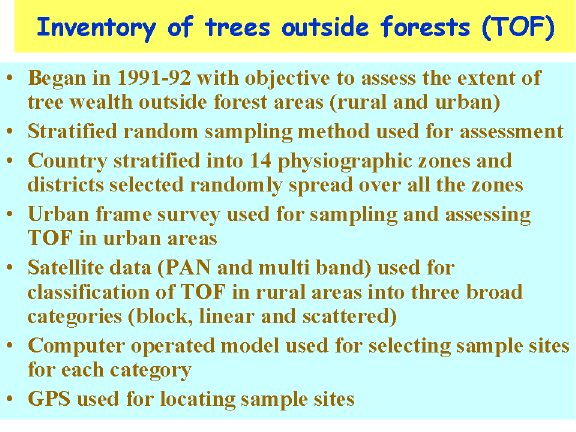
Inventory of trees outside forests (TOF)
• Began in 1991-92 with objective to assess the extent of tree wealth outside forest areas (rural and urban)
• Stratified random sampling method used for assessment
• Country stratified into 14 physiographic zones and districts selected randomly spread over all the zones
• Urban frame survey used for sampling and assessing TOF in urban areas
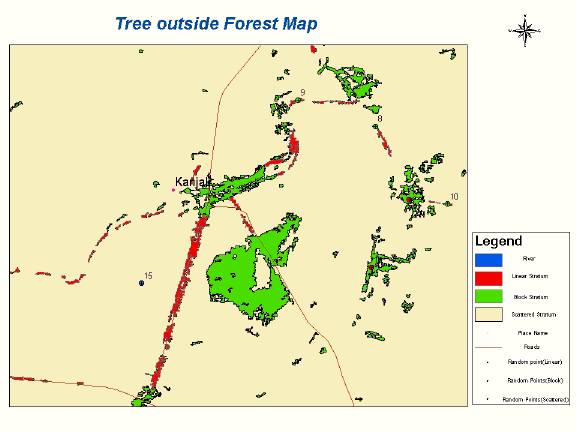
• Satellite data (PAN and multi band) used for classification of TOF in rural areas into three broad categories (block, linear and scattered)
• Computer operated model used for selecting sample sites for each category
• GPS used for locating sample sites
Slide 7
Slide 8
Pilot Study
for
Assessment of the Status of Sustainability
of
Forest Resources in India
Sponsored by FAO, Rome
Conducted by Forest Survey of India, Dehradun
Slide 9
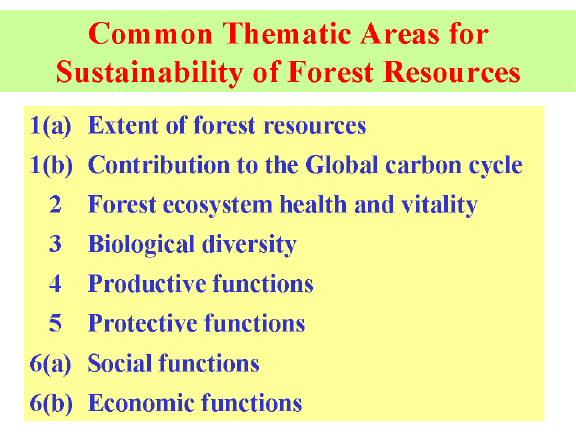
Common Thematic Areas for Sustainability of Forest Resources
1(a) Extent of forest resources
1(b) Contribution to the Global carbon cycle
2 Forest ecosystem health and vitality
3 Biological diversity
4 Productive functions
5 Protective functions
6(a) Social functions
6(b) Economic functions
Slide 10
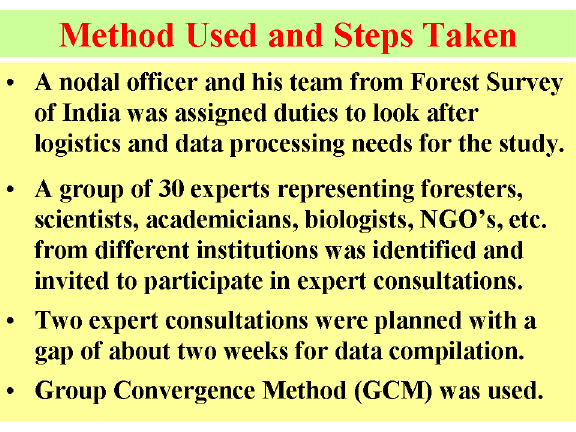
Method Used and Steps Taken
• A nodal officer and his team from Forest Survey of India was assigned duties to look after logistics and data processing needs for the study.
• A group of 30 experts representing foresters, scientists, academicians, biologists, NGO’s, etc. from different institutions was identified and invited to participate in expert consultations.
• Two expert consultations were planned with a gap of about two weeks for data compilation.
• Group Convergence Method (GCM) was used.
Slide 11

During First Expert Consultation:
(Feb. 14-15, 2003)
1. Variables were identified for each thematic area
48 variables were finalised for 8 criteria
2. Relative weights were assigned to each thematic area and variable using GCM
• Resource persons from among the experts were identified to compile data on these 48 variables
25 resource persons assigned duties
Slide 12
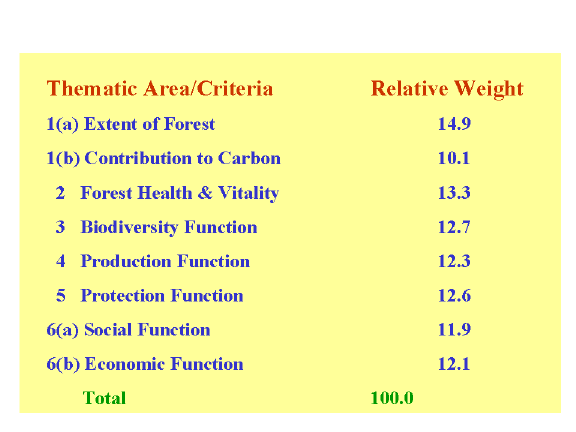
Thematic Area/Criteria Relative Weight
1(a) Extent of Forest 14.9
1(b) Contribution to Carbon 10.1
2 Forest Health & Vitality 13.3
3 Biodiversity Function 12.7
4 Production Function 12.3
5 Protection Function 12.6
6(a) Social Function 11.9
6(b) Economic Function 12.1
Total 100.0
Slide 13

……. An illustration
Thematic Area 1a: Extent of Forests
Variable Relative Weight
1. Forest area 22.0
2. Forest cover 23.9
3. Diversion of forest lands 16.8
4. Trees Outside Forest (TOF) 19.2
5. Forest under management plans 18.1
Total 100.0
Slide 14
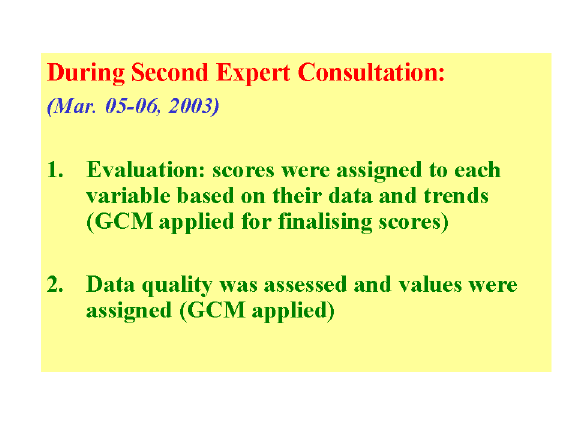
During Second Expert Consultation:
(Mar. 05-06, 2003)
1. Evaluation: scores were assigned to each variable based on their data and trends (GCM applied for finalising scores)
2. Data quality was assessed and values were assigned (GCM applied)
Slide 15
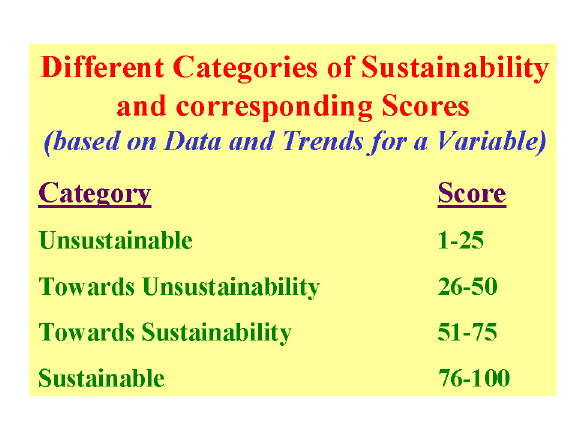
Different Categories of Sustainability and corresponding Scores
(based on Data and Trends for a Variable)
Category Score
Unsustainable 1-25
Towards Unsustainability 26-50
Towards Sustainability 51-75
Sustainable 76-100
Slide 16
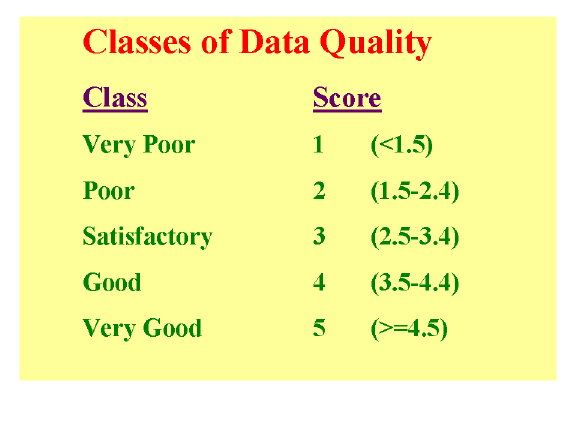
Classes of Data Quality
Class Score
Very Poor 1 (<1.5)
Poor 2 (1.5-2.4)
Satisfactory 3 (2.5-3.4)
Good 4 (3.5-4.4)
Very Good 5 (>=4.5)
Slide 17
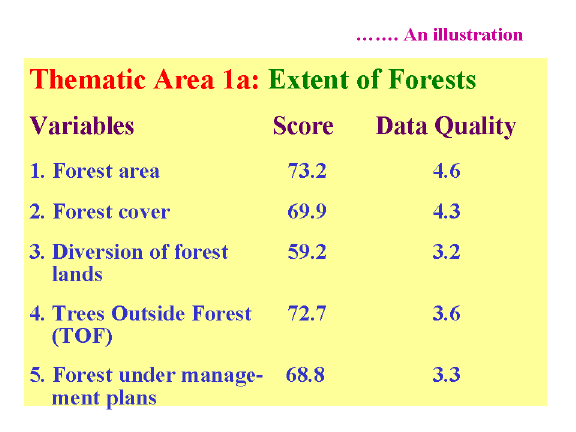
……. An illustration
Thematic Area 1a: Extent of Forests
Variables Score Data Quality
1. Forest area 73.2 4.6
2. Forest cover 69.9 4.3
3. Diversion of forest 59.2 3.2
lands
4. Trees Outside Forest 72.7 3.6
(TOF)
5. Forest under manage- 68.8 3.3
ment plans
Slide 18
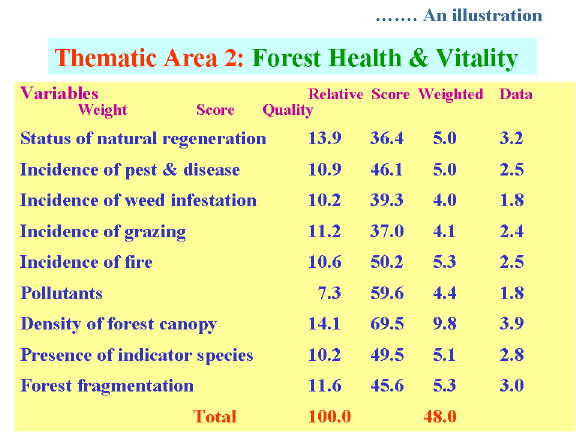
……. An illustration
Thematic Area 2: Forest Health & Vitality
Variables Relative Score Weighted Data Weight Score Quality
Status of natural regeneration 13.9 36.4 5.0 3.2
Incidence of pest & disease 10.9 46.1 5.0 2.5
Incidence of weed infestation 10.2 39.3 4.0 1.8
Incidence of grazing 11.2 37.0 4.1 2.4
Incidence of fire 10.6 50.2 5.3 2.5
Pollutants 7.3 59.6 4.4 1.8
Density of forest canopy 14.1 69.5 9.8 3.9
Presence of indicator species 10.2 49.5 5.1 2.8
Forest fragmentation 11.6 45.6 5.3 3.0
Total 100.0 48.0
Slide 19
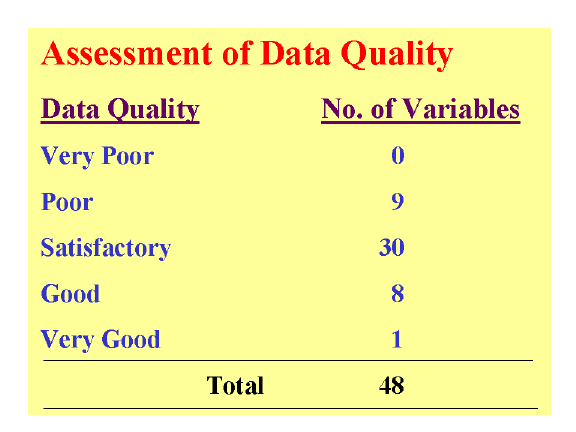
Assessment of Data Quality
Data Quality No. of Variables
Very Poor 0
Poor 9
Satisfactory 30
Good 8
Very Good 1
Total 48
Slide 20
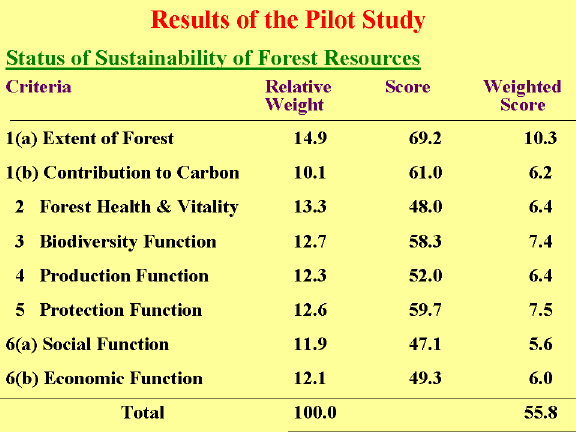
Results of the Pilot Study
Status of Sustainability of Forest Resources
Criteria Relative Score Weighted
Weight Score
1(a) Extent of Forest 14.9 69.2 10.3
1(b) Contribution to Carbon 10.1 61.0 6.2
2 Forest Health & Vitality 13.3 48.0 6.4
3 Biodiversity Function 12.7 58.3 7.4
4 Production Function 12.3 52.0 6.4
5 Protection Function 12.6 59.7 7.5
6(a) Social Function 11.9 47.1 5.6
6(b) Economic Function 12.1 49.3 6.0
Total 100.0 55.8
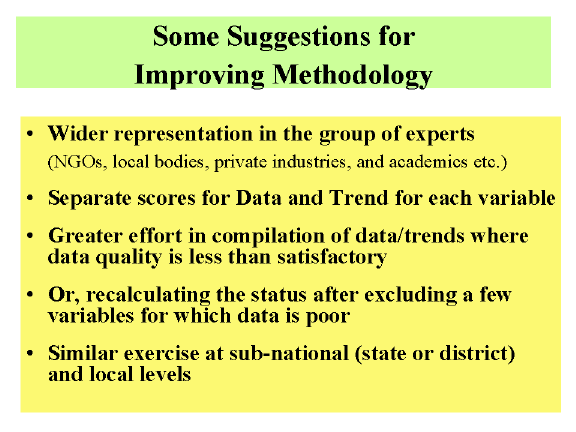
Some Suggestions for
Improving Methodology
• Wider representation in the group of experts
(NGOs, local bodies, private industries, and academics etc.)
• Separate scores for Data and Trend for each variable
• Greater effort in compilation of data/trends where data quality is less than satisfactory
• Or, recalculating the status after excluding a few variables for which data is poor
• Similar exercise at sub-national (state or district) and local levels
Slide 22
THANKS
