


Slide 1
FAO REGIONAL OFFICE
FOR AFRICA
Accra, Ghana
Slide 2
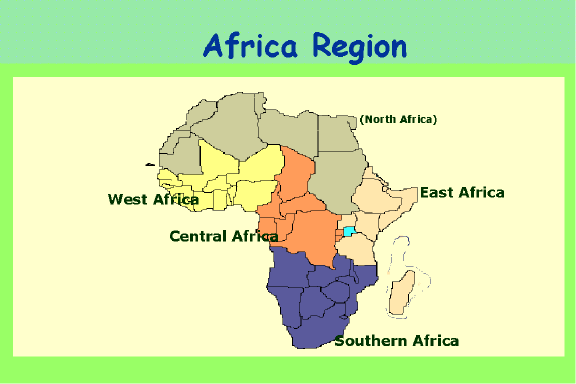
Africa Region
(North Africa)
West Africa
East Africa
Central Africa
Southern Africa
Forestry Group (RAFO)
Peter Lowe Forestry Planning Officer
Pape Djiby Koné Senior Forestry Officer
Fernando Salinas National Forest Programmes Advisor
Ada NdesoAtanga National Forest Programmes Facility
Michel Laverdière Forestry Conservation Officer (Sub-reg. Office)
Atse Yapi IUFRO
Catherine & Aimee - Group Secretaries
RAFO - Mandate
Frontline contact with member countries and Sub-regional Organisations
Local knowledge – reality check
Field Programme Development & Implementation
African priorities
African Forestry & Wildlife Commission
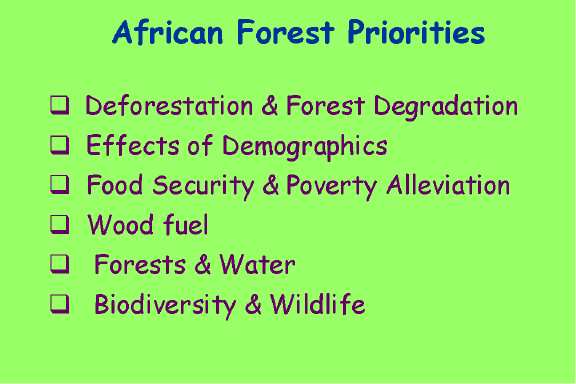
African Forest Priorities
Deforestation & Forest Degradation
Effects of Demographics
Food Security & Poverty Alleviation
Wood fuel
Forests & Water
Biodiversity & Wildlife
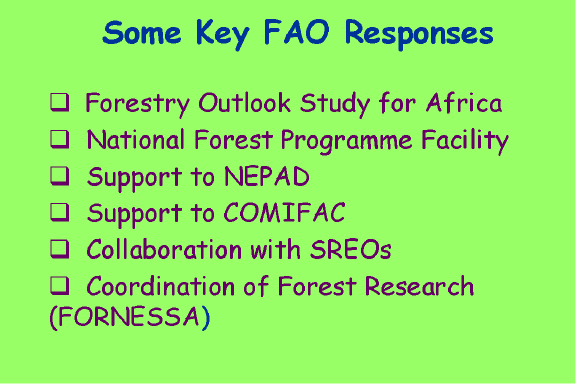
Some Key FAO Responses
Forestry Outlook Study for Africa
National Forest Programme Facility
Support to NEPAD
Support to COMIFAC
Collaboration with SREOs
Coordination of Forest Research (FORNESSA)
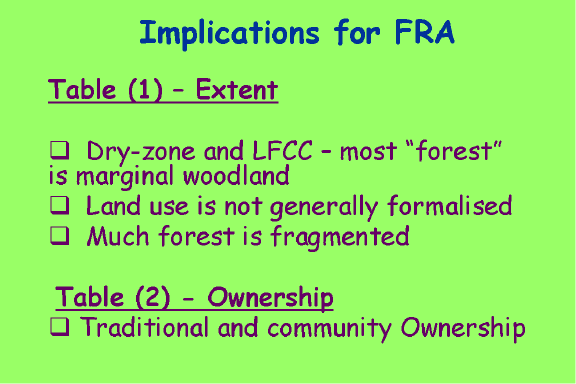
Implications for FRA
Table (1) – Extent
Dry-zone and LFCC – most “forest” is marginal woodland
Land use is not generally formalised
Much forest is fragmented
Table (2) - Ownership
Traditional and community Ownership
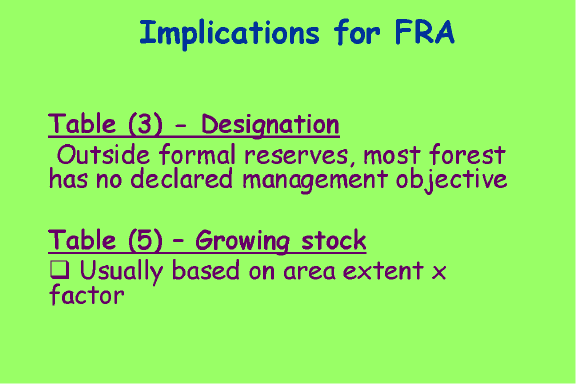
Implications for FRA
Table (3) - Designation
Outside formal reserves, most forest has no declared management objective
Table (5) – Growing stock
Usually based on area extent x factor
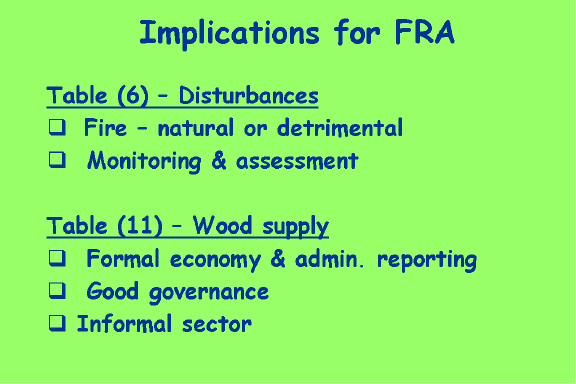
Implications for FRA
Table (6) – Disturbances
Fire – natural or detrimental
Monitoring & assessment
Table (11) – Wood supply
Formal economy & admin. reporting
Good governance
Informal sector
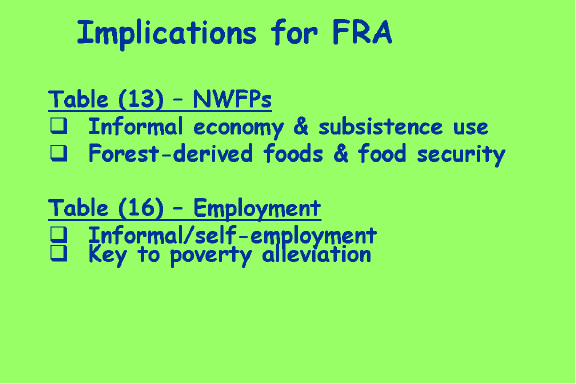
Implications for FRA
Table (13) – NWFPs
Informal economy & subsistence use
Forest-derived foods & food security
Table (16) – Employment
Informal/self-employment
Key to poverty alleviation
