A. The region's characteristics
Back to contents - Previous file - Next file
1.
Physical aspects
2.
Population
(a) Area
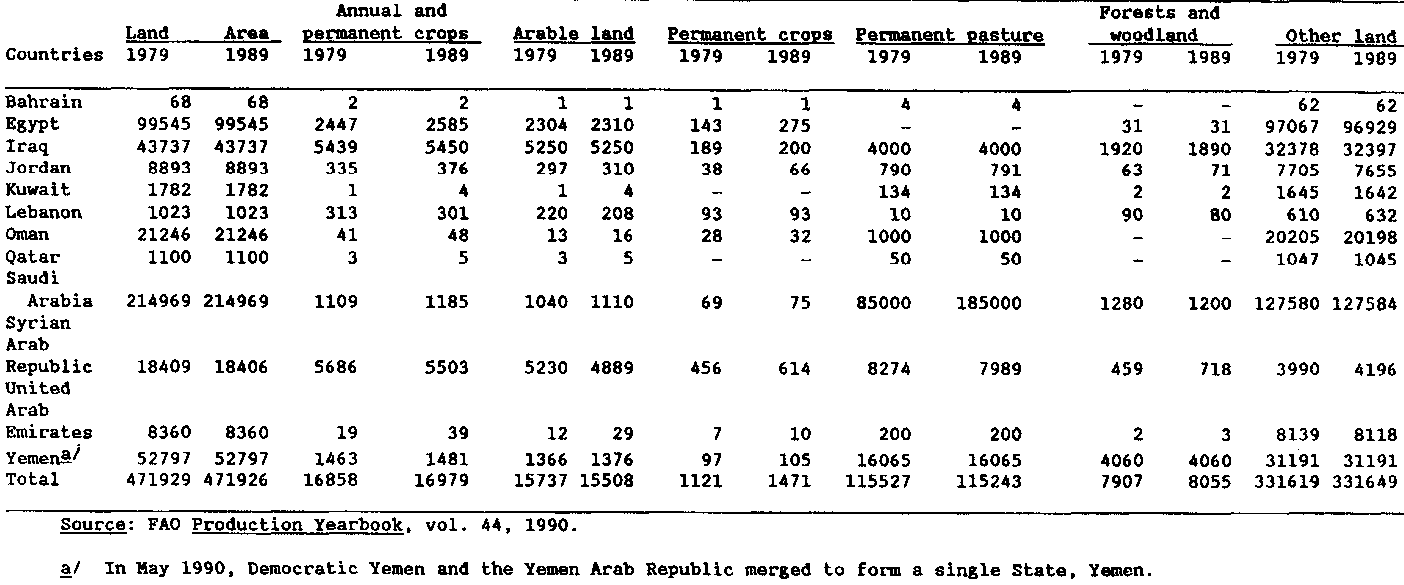
The ESCWA region covers an area of about 473 million ha distributed over 12 Arab countries, excluding Palestine. Table 1 shows areas of land categories and plant cover in all countries of the region.
(b) Physiography
The ESCWA region exhibits a great variety of land forms and physiographic zones, ranging from alpine habitat to that of true desert. The region consists of mountains, steppes, flood plains, marshes, coastal plains, sand dunes and deserts.
(c) Climate
The climate in the region is characterized by long, hot and dry summers with short, cool and somewhat wet winters, separated by short and not too distinct spring and autumn seasons. The air temperature over most parts is usually high, reaching 45°C or more during the hot summer days and dropping to less than 30°C at night. In winter, the temperature drops to 10°C or lower in the day but may plunge to below freezing at night in many localities.
The total annual rainfall, which falls chiefly in winter with little in autumn and spring, varies markedly from one country to another. Total precipitation (rain and snow) may exceed 1,000 mm annually over some areas in north-eastern Iraq, while it amounts to less than 50 mm in many areas, especially in the Gulf and Arabian Peninsula Ordinarily, total annual precipitation in the northern parts of the Fertile Crescent subregion is over 400 mm and is sufficient for winter cereal production.
Owing to high air temperature and low rainfall, relative humidity is very low over most parts, especially in the inland portions of the region. Consequently, the potential evapotranspiration rate is extremely high, climbing to over 2,000 mm annually in most parts of the region.!/
The population situation in the ESCWA region is characterized by a high rate of growth due to the high birth rate and the ever-decreasing rate of infant mortality. While there is a continued overall increase, the rate of population growth varies from one country to another. The region's population increased by about 32 million, from 89.5 million in 1980 to about 121.5 million in 1990. The average annual population increment in the region for the decade 1980-1990 was about 31 per cant.
The percentage of the rural population has decreased in all countries of the region in varying degrees. During 1980-1990, the rural population in the region declined by about 5 per cent, from 40 per cent in 1980 to 35 per cent in 1990. Although they were predominantly rural a few decades ago, all ESCWA countries, except Oman and Yemen, have now became more urbanized than rural.
The migration of increasing numbers of farm workers to urban centres, where more remunerative jobs and opportunities are available, has led to a continuous attrition of the agricultural labour force which has significantly affected the efficiency of agricultural operations and practices as well as agricultural production. As a result selfsufficiency in food and other agricultural commodities is progressively decreasing in most countries of the region.
The livestock owners who follow a nomadic pattern are found mainly in the extremely arid and arid zones of Saudi Arabia, Iraq, Jordan and the Syrian Arab Republic. The tendency, however, is towards sendentarization and, therefore, nomadism is gradually fading away. Sedentary rural livestock farmers are found chiefly in Egypt and to some extent in the Syrian Arab Republic, Lebanon, Jordan, Iraq, Qatar and Yemen. Transhumance is practiced mainly in Iraq, but also to some degree in Jordan, the Syrian Arab Republic and Lebanon.