I Haque, Mesfin Abebe, Tekalign Mamo and Asgelil Dibabe
Introduction
Physico-chemical characteristics
Phosphorus management
Nitrogen management
Secondary and micronutrients
Crop management for sustained productivity
Summary
Vertisols are used for both crop production and animal grazing. In the highlands, crops such as cereals (teff, oats, barley, durum wheat, finger millet, sorghum), pulses (horse beans, chickpeas, lentils, field peas, rough peas, fenugreek) and oil crops (linseed, noug and safflower) are often produced on well-drained Vertisols. Grazing is the dominant use of the poorly drained valley bottoms and depressions (Westphal, 1975; Berhanu Debele, 1985).
The traditional highland farming system is confronted with several major problems and limitations. The poor drainage of Vertisols restricts farming operations awing the rainy season, especially if rainfall is excessive and the slope of the land is steep. The cultivars of traditional crops grown on Vertisols have limited yield potential and little ability to respond to fertilisers (Berhanu Debele, 1985).
The most serious problem of the traditional fallow system awing the rainy season in most of the highland Vertisol areas is soil, water and nutrient erosion. Nitrogen and P deficiencies are the major constraints to crop production and will become increasingly important with high yielding crops and cropping systems (Kamara and Haque, 1988; Tekalign Mamo et al, 1988; Haque, 1992).
The highland farmers use little fertiliser. For power, they use animal and human resources (Jutzi and Goe, 1987). The general crop yields at the farm level are low (Berhanu Debele, 1985; Getachew Asamenew et al, 1988). Thus the traditional system of Vertisol utilisation gives low yields and promotes soil, water and nutrient erosion resulting in low productivity.
Considering the large available moisture capacity (Virgo and Munro, 1978; Kamara and Haque, 1988) and relatively high natural fertility of Vertisols, it is unfortunate that these soils are underutilised. There is sufficient evidence that Vertisols are capable of producing many times more food and feed than they do today provided they are adequately and properly managed.
Soils differ in their physical chemical and mineralogical properties and hence their suitability for different forages and crops. Determining the soil physico-chemical characteristics and relating these to known plant requirements can indicate the potential fertility of the soil and ascertain whether sites are useful for screening certain plant groups (ILCA, 1988).
Morphology and characteristics of soils of the central highlands of Ethiopia are described by Kamara and Haque (1988) and Mitiku Haile (1987) while the physical properties of Vertisols and their implications for management are reviewed by Kamara and Haque (1988). These aspects are reviewed separately in this report, while only chemical properties will be highlighted in this Chapter.
Chemical properties
A generalised statement of the chemical properties of Ethiopian Vertisols is that they have low organic matter total nitrogen, are near neutral or alkaline with high exchangeable bases, Ca being the most dominant. They have a high CEC. The chemical properties of Ethiopian Vertisols from four study sites are shown in Tables 1 and 2.
Mineralogy
The clay mineralogy of highland Vertisols has been studied by Mitiku Haile (1987), Sahlemedhin Sertsu (1987), Fisseha Itanna (1992) and Ahmad and Haque (unpublished data). The main conclusions can be drawn as follows:
· The dominant clay mineral in most of the Vertisols is the 2:1 expanding smectite. This, coupled with high a clay content, is the main reason for the high water-holding capacity of Vertisols.· Illite is present in small quantities as a smectite/illite intergrade.
· Mica is present in some profiles as a smectite/mica intergrade.
· Amorphous (non-crystalline) materials increase with depth and there is a virtual absence of kaolinite and illite at these deeper depths. The amorphous material includes imogolite like allophane as the predominant mineral (Table 3).
· The x-ray diffraction intensity values in Table 4 show the devastating effect of high temperature on crystallinity of most of the clay minerals from cover to the burned layer.
· After spreading and mixing the "guie" mounds, the crystallinity of almost all the minerals at Sheno and Chekie were highly reduced.
· On the third year after "guie", the x-ray diffraction impulse values of most of the clay minerals approached those of the "non-guied" soils.
Table 1. Chemical properties of Ethiopian Vertisols of eastern Ethiopia
|
Depth (cm) |
(a) Alemaya Vertisol |
|||
|
0-25 |
25-50 |
50-100 |
100-150 |
|
|
OM (g/kg) |
19.5 |
18.5 |
12.2 |
11.1 |
|
Total N (g/kg) |
1.03 |
1.18 |
1.11 |
0.72 |
|
C/N |
11.0 |
6.54 |
6.35 |
8.90 |
|
pH |
7.93 |
7.46 |
7.58 |
7.18 |
|
Exch. bases (mMc/kg) |
||||
|
Na |
5.57 |
4.64 |
3.13 |
3.70 |
|
K |
3.05 |
3.60 |
9.53 |
5.38 |
|
Ca |
300 |
295 |
271 |
258 |
|
Mg |
146 |
80.6 |
80.8 |
74.7 |
|
Cation exch. Capacity |
455 |
384 |
364 |
391 |
|
Depth (cm) |
(b) Wachu Vertisol |
|||
|
|
0-25 |
25-50 |
50-100 |
100-150 |
|
OM (g/kg) |
19.0 |
18.8 |
18.3 |
16.9 |
|
Total N |
0.96 |
1.04 |
0.73 |
0.49 |
|
C/N |
11.5 |
10.5 |
14.5 |
20.0 |
|
pH |
6.16 |
6.39 |
6.90 |
6.60 |
|
Exch. bases (mMc/kg) |
||||
|
Na |
3.49 |
4.49 |
5.01 |
5.81 |
|
K |
4.11 |
3.09 |
2.52 |
3.58 |
|
Ca |
266 |
240 |
244 |
183 |
|
Mg |
67.9 |
103 |
141 |
112 |
|
Cation exch. capacity |
342 |
351 |
393 |
304 |
Source: Ali Yimer (1992).
Table 2. Chemical properties of Ethiopian Vertisols of central Ethiopia.
|
Depth (cm) |
(a) Debre Zeit |
|||
|
0-25 |
25-50 |
50-100 |
100-150 |
|
|
OM (g/kg) |
18.6 |
17.3 |
16.3 |
12.2 |
|
Total N (g/kg) |
0.63 |
0.5 |
0.62 |
0.51 |
|
C/N |
17.1 |
20.1 |
15.30 |
13.9 |
|
pH |
6.38 |
6.67 |
06.82 |
7.09 |
|
Exch. bases (mMc/kg) |
||||
|
Na |
15.40 |
6.21 |
8.91 |
8.78 |
|
K |
3.04 |
3.15 |
6.95 |
7.49 |
|
Ca |
187 |
187 |
179 |
178 |
|
Mg |
88.5 |
117 |
141 |
131 |
|
Cation exch. capacity |
293 |
313 |
337 |
325 |
|
Depth (cm) |
(b) Akaki |
|||
|
0-25 |
25-50 |
50-100 |
100-150 |
|
|
OM (g/kg) |
12.7 |
12.0 |
11.6 |
10.6 |
|
Total N (g/kg) |
0.52 |
0.47 |
0.41 |
0.32 |
|
C/N |
14.2 |
14.8 |
16.4 |
19.2 |
|
pH |
7.52 |
7.79 |
8.10 |
8.09 |
|
Exch. bases (mMc/kg) |
||||
|
Na |
11.8 |
13.6 |
9.81 |
12.1 |
|
K |
5.76 |
5.92 |
6.68 |
8.01 |
|
Ca |
583 |
595 |
675 |
666 |
|
Mg |
211 |
216 |
184 |
183 |
|
Cation exch. capacity |
812 |
830 |
875 |
879 |
Source: Ali Yimer (1992).
Available phosphorus
Next to N. P is the most limiting nutrient element in the highland Vertisols of Ethiopia. Available P seems to be low (Olsen, Bray I & II) in most of the surface soils. Using the Olsen method, which is often regarded as the most appropriate for Ethiopian soils (Tekalign Mamo and Haque, 1991), the maximum P content was observed in Wereta soil and the minimum in soils at Shola.
Higher values of Bray II extractable P were observed at lower depths than at the surface for each of the profiles (Tekalign Mamo et a, 1988). This may be due to the abundance of Ca-P and the dissolution of Ca-P by the Bray II extractant at lower depths. Similar trends were also observed by Piccolo and Gobena Huluka (1986) in their P studies of seven Ethiopian soils.
The status of available P in soils is normally related to the different active inorganic P forms (Al-P, Fe-P and Ca-P). Based on the results of 15 Vertisols (Tekalign Mamo et al, 1988), the low Al-P and the Ca-P contents reported in the surface soils are indicative of the limited capacity of the inorganic forms to act as a liable pool to supply available P to the plants.
In another survey of nutrient availability, 350 surface soil samples in the Shewa region of Ethiopia, Pulschen (1987) found that the mean Olsen extractable P in 165 Vertisols or soils with vertic properties was 11.6 ppm but less than that in light soils (16.9 ppm) and reddish brown soils (13.9 ppm). Presence of P deficiency in Ethiopian soils is also reported by Desta Beyene (1982).
Guie (soil burning)
In the high altitude areas of Ethiopia a cultural practice, called 'guie', is followed for growing barley on Vertisols (Mesfin Abebe, 1981; Roorda, 1984). Although it is very labour-intensive, it initially gives good crops, considerably above those that can be achieved using alternative cultural practices. During the process, which involves burning dung within heaps of soil, available P and K in the soil are increased and the structure of the surface horizon is altered facilitating better water movement in the plough layer. Using fertilisers permits yields to be sustained for longer periods, but farmers continue to prefer their traditional method which seems likely to continue as long as land is plentiful enough to afford the long fallow period (10 - 15 years) (Mesfin Abebe, 1981 and 1982; Sahlemedhin Sertsu, 1987). Some chemical properties of guied samples are given in Table 5.
Table 3. Oxalate (o) and pyrophosphate (p) extractable sesquioxides of Debre Zeit Andosols.
|
Depth (cm) |
Sio |
Alo |
Feo |
Alp |
Alo-Alp |
Alo-Alp/sio |
Allophane |
|
Per cent |
|||||||
|
DZ-I Summit (Vitric Andosol) |
|||||||
|
0-15 |
0.11 |
0.27 |
0.39 |
0.005 |
0.26 |
2.4 |
1.23 |
|
15-55 |
0.11 |
0.29 |
0.34 |
0.005 |
0.28 |
2.5 |
1.28 |
|
22-32 |
0.12 |
0.26 |
0.35 |
0.003 |
0.26 |
2.2 |
1.23 |
|
32-40 |
0.12 |
0.25 |
0.34 |
0.005 |
0.24 |
2.0 |
1.12 |
|
DZ-II Shoulder (Mollic Andosol) |
|||||||
|
0-15 |
0.11 |
0.23 |
0.48 |
0.020 |
0.21 |
1.9 |
0.98 |
|
|
0.11 |
0.24 |
0.62 |
0.025 |
0.21 |
1.9 |
0.98 |
|
DZ-III Backslope (Mollic Andosol) |
|||||||
|
0-16 |
0.11 |
0.26 |
0.57 |
0.023 |
0.24 |
2.2 |
1.13 |
|
16-58 |
0.11 |
0.24 |
0.57 |
0.020 |
0.22 |
2.0 |
1.02 |
Source: Fisseha Itanna (1992).
Table 4. The x-ray diffraction impulses of different minerals in Ca-saturated, glycerol-solvated clays from the different layers of a "guie" mound at Sheno.
|
"Guie" treatments |
Kaolinite (7.15 Å) |
Illite (9.9 Å) |
Transition minerals (10-14 Å) |
Al-chl (13.8 Å) |
Transition minerals (14-18 Å) |
Smectites (17-6 Å) |
Total |
|
Cover layer |
14 |
96 |
16 |
19 |
108 |
271 |
524 |
|
Heated layer |
13 |
85 |
9 |
4 |
84 |
218 |
413 |
|
Carbonised layer |
3 |
72 |
12 |
13 |
80 |
171 |
351 |
|
Burnt layer |
1 |
64 |
5 |
2 |
23 |
54 |
149 |
Source: Sahlemedhin Sertsu (1987).
Table 5. Exchangeable bases and cation capacities of soil within burnt heap and soils of "guie" area after different periods of fallow.
|
Sample |
MJkg soil |
||||||
|
Na |
K |
Mg |
Ca |
CEC |
TN1 |
Av.P2 |
|
|
1 |
7.6 |
16.8 |
33.9 |
131 |
190 |
0.2 |
ND |
|
2 |
7.3 |
17.6 |
29.8 |
127 |
143 |
0.25 |
35.0 |
|
3 |
7.3 |
20.0 |
26.7 |
87.5 |
120 |
0.06 |
ND |
|
4 |
8.4 |
7.7 |
70.9 |
170 |
234 |
0.19 |
ND |
|
5 |
8.1 |
9.7 |
72.1 |
181 |
227 |
0.24 |
ND |
|
6 |
7.5 |
10.3 |
75.2 |
192 |
261 |
0.23 |
ND |
|
7 |
7.9 |
13.2 |
76.5 |
187 |
276 |
0.25 |
ND |
|
8 |
8.3 |
9.8 |
78.2 |
179 |
286 |
0.26 |
3.21 |
|
9 |
8.6 |
9.1 |
73.1 |
196 |
275 |
0.27 |
2.63 |
|
10 |
6.8 |
8.6 |
65.1 |
187 |
252 |
0.28 |
2.33 |
1 = Total N (g/kg).
2 = Available Phosphorous (mg/kg).
ND = Not detrmined.
Samples:
|
1 |
= |
Heated. | |||
|
2 |
= |
Carbonised. | |||
|
3 |
= |
Ashed. | |||
|
4 |
= |
Bottom. | |||
|
5 |
= |
One year after "guie". | |||
|
6 |
= |
Two years after "guie" | |||
|
7 |
= |
Five |
" |
" |
" |
|
8 |
= |
Ten |
" |
" |
" |
|
9 |
= |
Fifteen |
" |
" |
" |
|
10 |
= |
Twenty |
" |
" |
" |
Source: Ali Yimer (1992).
Phosphorus nutrition of forage legumes and crops
Phosphorus is the most important nutrient in the successful establishment of legumes. Phosphorus often increases dry matter, modulation, nitrogen fixation, P uptake and protein yields of legumes (Haque et al, 1986).
Effect of TSP and Egyptian rock phosphate (ERP) was compared on clovers grown on highland Vertisols. The cumulative effect of TSP and Egyptian rock phosphate on clover dry-matter production over six years showed linear and quadratic increases with increasing rates of TSP and ERP, respectively (Haque, 1992).
The efficiency of unacidulated and partially acidulated rock phosphates was compared with that of TSP when applied on Trifolium quartinianum (ILCA 6301) on a highland Vertisol. Application of TSP significantly increased dry-matter yield relative to the control (1273 kg/ha). Clover dry-matter yield showed a quadratic response to TSP. Applying 50% acidulated rock phosphate (50% ARP) significantly increased dry-matter yield relative to the control at all rates of application; dry matter yield increased linearly with increased rates of 50% ARP applied. Applying 25% acidulated rock phosphate (25% ARP) also significantly increased dry matter yield relative to the control, except at 20 kg P/ha. Dry-matter yield showed a linear increase with increasing rates of 25% ARP application. Applying untreated rock phosphate did not have a significant effect on clover yield, indicating the non-reactivity of this P source on the Vertisol (Haque, 1992).
In a greenhouse trial, the effect of management (P. rhizobium and their combination) was investigated on Sesbania goetzei grown on highland Vertisol. Phosphorus application and inoculation with an effective rhizobium significantly increased shoot, root and total dry matter relative to other treatments. Highest N derived from fixation was achieved with P and rhizobium treatment as compared with other treatments (Luyindula and Haque, unpublished data).
In another greenhouse experiment the effect of management (rhizobium, P and N) was investigated on the growth and N fixation by Leucaena paniculata and L. leucocephala on highland Vertisol. Unacidulated plants at 0-10 mg N/kg and all inoculated without P had poor growth compared to other treatments. Leucaena paniculata had higher height and more dry matter than L. leucocephala. Plants treated with P and rhizobium performed better than others. Uninoculated plants, especially L. paniculata had a few nodules suggesting the occurrence of native rhizobia on highland Vertisol. However, nodulation and growth were more in P plus rhizobium treatments than others. This shows the need for inoculation and P application for growing Leucaena on this soil (Luyindula and Haque, unpublished data).
Response of field crops to P fertiliser in Vertisols of Ethiopia are reported in Table 6. A notable case is the lack of response to P at Debre Zeit. Further studies carried out on durum wheat, teff, chickpea and lentils around Debre Zeit did not show any response to P on Vertisols, although empirical values show a low level of P in the soils. The response was not improved by improved drainage either as shown in Table 7 for chickpea. The possible reason for the lack of P response is given as increased root proliferation in the soil thereby enabling the plants to explore large volume of soil.
Mycorrhizae and phosphorus nutrition
Vesicular arbuscular mycorrhizal (VAM) fungal inoculation enhances plant growth and the uptake of mineral nutrients especially P (Tinker, 1978). VAM fungal inoculation also enhances the solubility of rock phosphate (CIAT, 1985; Islam et al, 1980; Tekalign Mamo and Haque, 1986).
In work conducted at ILCA headquarters the effects of inoculation with VAM fungus and fertilisation with either triple superphosphate (TSP) or Egyptian RP on the nodulation, growth and major the nutrient elements on nutrition of lucerne grown in a Vertisol was studied under greenhouse conditions. Results (Table 8) showed that mycorrhizal (M) plants flowered earlier and produced more nodule and shoot dry matter than control plants or those supplied with either form of P. Maximum weights occurred in plants that were both inoculated and fertilised. In all cases TSP was more effective than RP, but the effect of the latter was, nevertheless, impressive when combined with mycorrhiza.
Although there were some practical problems in the use of VAM technology, it is evident that in tropical soils, with their tendency to fix P. VAM fungal inoculation has considerable potential for legume enhancement and hence benefitting both livestock and overall food production.
Species and varietal variation in response to phosphorus
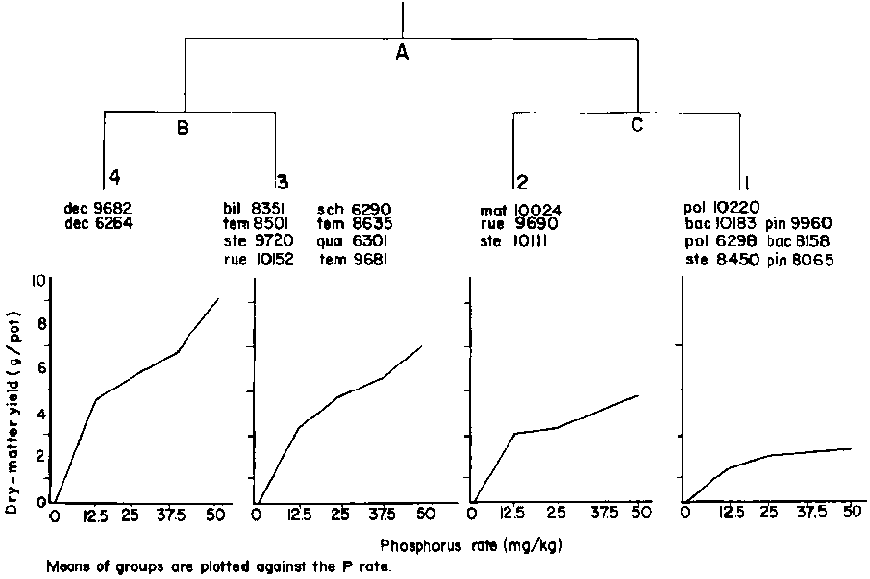
Problems of legume production caused by the mineral stresses can be alleviated by chemical amendments and fertilisers although both of these methods are costly and beyond the buying ability of the farmer (Bumb, 1991). Screening for tolerance to low soil fertility and use of cheaper sources of nutrients especially P may be similar and a less expensive method for overcoming the low P status. Large differences in the response of clover species and varieties to P on Shola Vertisol are shown in Figure 1. The use of varieties more tolerant to low levels of available P will result in more efficient use of fertiliser P. Clovers tolerant to low P are likely to have lower P concentration in their tissues. Their nutritive value may thus be lower than other cultivars/species. Direct P supplementation to livestock in the form of salts to offset deficiency may be needed.
Phosphorus sorption isotherms
Soil testing service in Ethiopia is minimal because of the cost of setting up such services and the time involved in making correlation studies of crop yields and various chemical extractants. The P sorption approach provides a basis for estimating P needs of crops for a given soil-crop combination (Fox and Kamprath, 1970; Memon and Pox, 1983) which is not the case for most conventional methods. Phosphorus sorption isotherms have found increasing use in evaluating the P status of forage legumes. Based on this, external P requirements (the P concentration in soil solution that will give near maximum yield, usually 95 to 90%) have been determined for some forage legumes (Nnadi and Haque, 1985). The very low P requirements of these legumes indicate that they can attain maximum yield with little P fertilisation and can compete effectively with grasses for P uptake.
Table 6. Response of field crops to phosphorus fertiliser in Vertisols of Ethiopia.
|
Location |
Crop |
Applied P (kg/ha) |
||||||
|
0 |
13 |
20 |
26 |
40 |
53 |
Source |
||
|
Grain yield (kg/ha) |
||||||||
|
Ginchi |
Noug |
670 |
- |
900 |
- |
920 |
- |
2 |
|
Ginchi |
Linseed |
750 |
- |
1010 |
- |
960 |
- |
2 |
|
Ginchi |
Teff |
380 |
- |
970 |
- |
1220 |
- |
2 |
|
Ginchi |
Bread wheat |
1690 |
- |
2590 |
- |
2250 |
- |
2 |
|
Holetta |
Coloured Guinea |
673 |
- |
1434 |
- |
2767 |
- |
3 |
|
Holetta |
Phalaris |
3794 |
- |
4610 |
- |
4570 |
- |
3 |
|
Holetta |
Faba bean |
2870 |
3420 |
- |
3730 |
3960 |
- |
3 |
|
Holetta |
Bread wheat |
1500 |
1690 |
- |
1910 |
1890 |
- |
4 |
|
Holetta |
Barley |
2560 |
2900 |
- |
3590 |
3560 |
- |
3 |
|
D/Z |
Chickpea |
1910 |
1470 |
- |
2120 |
1930 |
- |
5 |
|
D/Z |
Lentils |
513 |
515 |
- |
472 |
576 |
- |
5 |
|
Sheno |
Barley |
1743 |
2057 |
- |
1856 |
1843 |
1678 |
6 |
a. Forage yield; D/Z = Debre Zeit; - = N not applied.
|
Sources:
|
1. Desta Beyene (1988). |
|
2. IAR (1977). |
|
|
3. IAR (1976). |
|
|
4. Desta Beyene (1986). |
|
|
5. AAU (1983). |
|
|
6. IAR (1972). |
Table 7. Effects of seedbed preparation and phosphorus application on chickpea grain yield (kg/ha) grown at three locations (1991).
|
Location |
Seedbed |
P rates (kg P/ha) |
Mean |
||||
|
0 |
10 |
20 |
30 |
40 |
|||
|
Debre Zeit |
Flat |
2927 |
2600 |
2508 |
2601 |
2630 |
2653a |
|
BBF |
3239 |
3005 |
2939 |
3147 |
3168 |
3099b |
|
|
Mean |
3083 |
2802 |
2723 |
2847 |
2895 |
|
|
|
Akaki |
Flat |
3307 |
3215 |
3121 |
3084 |
2991 |
3144a |
|
BBF |
3792 |
4044 |
3731 |
3874 |
3972 |
3883b |
|
|
Mean |
3549 |
3629 |
3426 |
3479 |
3581 |
|
|
|
Dembi |
Flat |
973 |
1043 |
1026 |
1144 |
989 |
1035a |
|
BBF |
1799 |
1579 |
1551 |
1462 |
1285 |
153b |
|
|
Mean |
1386a |
1311a |
1289a |
1303a |
1137a |
|
|
For each location, means followed by a common letter are not statistically different at P.
Source: Tekalign Mamo (Alemaya University of Agriculture, Debre Zeit, Ethiopia, unpublished data).
Phosphorus fertilisation on forage-based cropping systems
For efficient use of nutrients, fertiliser recommendations on Vertisols should take into account the cropping system as a whole rather than individual crops. This is particularly important in the case of P. where utilisation in the year of application is rather low (15-20%) and residual effects are considerable on Vertisols. The residual effect of P and the differential capacities of plants to utilise soil and fertiliser P should be taken into account in making P recommendations for forage-based cropping systems on highland Vertisols.
Nitrogen is one of the major plant nutrients and satisfactory levels of grain and forage crop production on Vertisols depends on its adequate supply. While the N status of soils can be improved by the addition of N fertiliser, it is an expensive input and this is reflected in its low consumption in the Ethiopian highlands (Mesfin Abebe, 1980).
Table 8. Effects of G. macrocarpus inoculation phosphorus fertilisation on root infection and nodule and shoot dry-matter yields of M. sativa grown on a sterile Vertisol.1
|
Treatment |
Root infection (%) |
Nodule DM (mg/pot)2 |
Shoot DM (g/pot)2 |
|||
|
1st cut |
2nd cut |
1st cut |
2nd cut |
1st cut |
2nd cut |
|
|
Control |
0 |
0 |
1a |
2a |
0.02a |
0.02a |
|
RP |
0 |
0 |
3b |
5b |
0.43b |
0.48b |
|
TSP |
0 |
0 |
6c |
21c |
2.24c |
2.01c |
|
M |
49a |
71a |
7c |
67d |
2.90c |
1.71c |
|
M + RP |
60b |
73a |
146d |
159e |
6.11d |
4.30d |
|
M + TSP |
69c |
78a |
177d |
213e |
7.89d |
4.58d |
1 Shoot dry-matter yields from the first nut are means of four replicates. All other values are means of two replicates, since plants from two replicates had to be uprooted in order to determine root infection at 90 days.2 LSD calculated from log-transformed values since standard deviation increased with increase in nodule and shoot dry-matter yields. In each cut, values followed by the same letter are not significantly different at the 5% level.
Note: M = mycorrhizae; RP = rock phosphate; TSP = triple superphosphate.
Source: Tekalign Mamo and Haque (1986).
A more effective and cheaper way of raising the N status of the soil is to exploit the ability of forage legumes to fix appreciable quantities of N. This N accumulates in the soil and is released over several seasons to non-legume crops if the soil is cultivated, or to companion grasses in pasture land. Thus forage legumes can indirectly boost crop yields and directly resolve feed quantity and quality problems in Ethiopian highlands (Haque and Jutzi, 1984).
Response to nitrogen by various crops
Crop response to N fertilisation at various locations is summarised in Table 9. There was a marked N response in most of the crops tested. Maximum barley yields at Sheno and maximum grain yields for noug, linseed, teff and bread wheat, barley and faba bean at Holetta, were all obtained with 90 kg N/ha. Similar results were found for teff grown at Debre Zeit, Akaki, Chefe Donsa and Dankaka (AAU, 1983). Trials carried out at Tafki, Inewari and Bichena also showed significant yield increases in bread wheat, durum wheat, teff and faba beans as a result of N fertiliser application (Adugna Haile and Hiruy Belayneh, 1986). For the forage grasses (Guinea and Phalaris) studied at Holetta maximum forage yield was found when 46 kg N/ha was applied. In a recent study conducted on Vertisols N use efficiency durum wheat was increased by improved drainage as shown in Table 10. This was further proved by the work of All Yimer (1992) who reported that durum wheat N use efficiency was high on broad beds as compared to plants grown on flat. In addition, total mineral soil N was low in the BBF plots due to enhanced uptake by plants (Table 11).
Figure 1. Hierarchy for the classification of dry-matter yield of clover tops on a Vertisol.
Source: Mugwira and Haque (1991).
Table 9. Response of rainfed field crops to nitrogen fertiliser in Vertisols of Ethiopia1.
|
Location |
Crop |
Applied N (kg/ha) |
Sources |
||||
|
0 |
30 |
46 |
60 |
90 |
|||
|
Grain Yield (kg/ha) |
|||||||
|
Ginchi |
Noug |
750 |
- |
860 |
- |
880 |
2 |
|
Ginchi |
Linseed |
800 |
- |
960 |
- |
970 |
2 |
|
Ginchi |
Teff |
720 |
- |
730 |
- |
1120 |
2 |
|
Holetta |
Coloured Guinea |
673 |
- |
1920 |
- |
1827 |
3 |
|
Holetta |
Phalaris |
3794 |
- |
4216 |
- |
3630 |
3 |
|
Holetta |
Bread wheat |
2900 |
3410 |
- |
3540 |
4110 |
3 |
|
Holetta |
Barley |
3001 |
2960 |
- |
3200 |
3480 |
3 |
|
Holetta |
Faba bean |
1360 |
1830 |
- |
1790 |
2020 |
4 |
|
Sheno |
Barley |
1448 |
1716 |
- |
2018 |
2164 |
5 |
- = N not applied.
a Forage yield.
|
Sources:
|
1. Desta Beyene (1988). |
|
2. IAR (1977). |
|
|
3. IAR (1976). |
|
|
4. Desta Beyene (1986). |
|
|
5. IAR (1972). |
Table 10. Effects of seedbed preparation methods and nitrogen application rates on the grain yield (kg/ha) of durum wheat grown at Akaki (1990).
|
Seedbed |
N rates (kg N/ha) |
Mean |
||
|
0 |
60 |
120 |
||
|
BBF |
689 |
2591 |
2923 |
2068 |
|
Flat |
496 |
1352 |
1667 |
1172 |
|
Mean |
592 |
1972 |
2295 |
|
LSD (0.05): N = 180.5; seedbed = 147.4.
Source: Tekalign Mamo (Alemaya University of Agriculture, Debre Zeit, Ethiopia unpublished data).
Table 11. The apparent recovery of nitrogen in the above-ground portions of the crop and soil and per cent of applied fertiliser recovered.
|
A |
B |
C |
D |
E |
F |
G |
H |
|
Flat |
0 |
11.5 |
4.80 |
-- |
16.3 |
-- |
|
|
60 |
32.5 |
10.5 |
21.0 |
5.70 |
42.8 |
44.2 |
|
|
120 |
47.5 |
15.6 |
36.0 |
10.8 |
63.1 |
39.0 |
|
|
BBF |
0 |
15.4 |
4.40 |
-- |
-- |
19.8 |
-- |
|
60 |
55.2 |
6.90 |
39.8 |
2.50 |
62.1 |
70.5 |
|
|
120 |
74.8 |
9.92 |
59.4 |
5.52 |
84.7 |
54.1 |
A = Seedbed preparation.
B = N applied kg/ha.
C = Total N in grain and straw (kg/ha).
D = Total mineral N in soil.
E = Apparent N recovery in crop (%).
F = Apparent N soil in crop.
G = Total N in crop and soil (%).
H = Applied fertiliser recovered (%).Source: Ali Yimer (1992).
The presence of appropriate rhizobium
The presence or absence of an appropriate rhizobium in the soil dictates whether inoculation of the legume seed is required. Those species or varieties which do not require inoculation have obvious advantages at the farm level. Obviously some tropical forage legumes exhibit rhizobium strain specificity comparable to that commonly associated with the temperate legumes.
Various strains of rhizobium (USDA 3786, 3110, 3781, 3782 and 3117) were compared on Sesbania sesban grown on highland Vertisol. Strain 3117 significantly increased the number of nodules and shoot dry weight relative other strains. On the other hand, no significant effect of various strains was noticed on shoot dry weight as compared with control (ILCA, 1989).
The effect of management on growth and N fixation by Sesbania sesban and Sesbania goetzei grown on a Vertisol was investigated in a greenhouse experiment using 15N labelled urea. Plants were inoculated with rhizobium strain USDA 3117 at two N levels with or without P. Results showed a near-absence of Sesbania active native rhizobia in Shola Vertisol, suggesting that rhizobia strains effective on Sesbania spp. were absent or are insufficient in number in this soil. Inoculated plants with applied P had very high % Ndfa (Nitrogen derived from the atmosphere). Our results suggest that P was limiting for rhizobium infectivity and/or efficiency (Luyindula and Haque, 1992).
Rhizobium inoculation studies on faba bean, lentils and chickpeas were carried out at Denbi Holetta Sheno, Gohatsion, Bekoji and Ginchi. No significant responses to inoculation were noticed indicating the presence of active rhizobia in these Vertisols (Desta Beyene and Augaw Tsige, 1986; IAR, 1989 and 1990).
Microbial studies
Since the extent to which organic N is released to plants in available forms depends, in part, on the activity of soil micro-organisms, investigations on the microbial population of soils is important. In an attempt to address this problem, five highland Vertisol surface samples were studied for their microbial population. Results shown in Table 12 revealed that bacteria outnumbered both actinomycetes and fungi with the highest variation among sites, 303 x 106 at Debre Zeit to 36 x 106 at Alemaya. Actinomycetes were second in terms of abundance and variation was 660 x 105 at Alemaya to 105 x 103 at Wachu. Fungi were the least in terms of abundance with a three-fold variation among the five sites.
In a related study (All Yimer, 1992) the net increase or decrease in mineral N was studied in two Vertisols (Akaki and Debre Zeit). Samples were incubated for 28 days at 25 and 40°C and 60% field capacity. Results showed that apart from the Akaki soil incubated at 25°C, the increase was greatest in the 0-25 cm depth range. The Debre Zeit soil showed a larger amount of mineralisable total mineral N than the Akaki soil. In all cases except the Akaki soil at 40°C there was a decrease in NH4 and an increase in NO3 - N over the incubation period; thus net nitrification occurred at a faster rate than net mineralisation.
Table 12. Total count of bacteria, fungi and actinomycetes in five different highland Vertisols.
|
Locations |
Bacteria (cells/g) (x106) |
Fungi (cells/g) (x102) |
Actinomycetes (Cells/g) (x105) |
|
Debre Zeit |
303 |
908 |
200 |
|
Wachu |
109 |
305 |
105 |
|
Akaki |
75 |
400 |
170 |
|
Shola |
67 |
505 |
380 |
|
Alemaya |
36 |
898 |
660 |
Source: Ali Yimer (1992).
Biological nitrogen fixation and its cycling in Vertisol cropping
Table 13 shows the effect of previous cropping on sorghum grain yields on a soil with vertic properties. The yield of sorghum after Trifolium steudneri was double that after oats (Avena sativa).
The residual effects of 15 vetch lines on the grain yield of oats on a Vertisol were investigated at Shola in the 1983/84 cropping season. The results showed that ILCA accession no. 5219 and 5219 benefit a subsequent oats crop: in both cases the cereal yielded grain at more than 2000 kg/ha, indicating the potential contribution of the legume to N fertility (Nnadi and Haque, 1988).
In another trial at Shola the grain yield of oats following Medicago truncatula cv Jamalong was higher than that of oats following pure wheat or wheat/medic mixture (Nnadi and Haque, 1988). In a study at Debre Zeit, the grain yield of wheat crop grown on Vertisol broadbeds increased when it followed forage legumes. However, the results were not significant compared with the control oats (Table 14) which might be due to a higher initial amount of available N.
The effect of P fertilisation on biological nitrogen fixation was studied on a Vertisol at Shola in 1983/84. Following 22 Trifolium accessions, oats were planted in plots that had received P at either 0 or 41 kg/ha as TSP. The increase in the grain yield of oats over the control (legume without P) varied from 28.2 to 100.2%. Different Trifolium accessions contributed different amounts of N to the following oats crop, but the effects of the legume and P were confounded. Nevertheless, the results showed the importance of P fertilisation for biological nitrogen fixation and, consequently, for increasing cereal grain yields on Vertisols (I Haque, unpublished data).
Table 13. Effect of preceding crops on grain yields of sorghum on a soil with vertic properties, Debre Zeit, Ethiopia.
|
1984 crops |
Sorghum yield (kg/ha) |
|
Trifolium steudneri |
2632.0a |
|
Vicia dasycarpa |
2130.3a |
|
Lablab purpureus |
1549.7b |
|
Trifolium tembense |
842.0ab |
|
Avena saliva |
1571.3c |
Within columns, values followed by the same letter are not significantly different at the 5% level (Duncan's Multiple Range Test).Source: I Haque (ILCA, Addis Ababa, Ethiopia, unpublished data).
A field experiment was conducted on Vertisols at Shola to determine the amount of nitrogen fixed by eight accessions of five Trifolium species (T. quartinianum, T. steudneri, T. decorum, T. rueppellianum and T. tembense). The amount of nitrogen fixed was estimated using both the N difference method, with oats as the nitrophilous reference crop, and the 15N method.
The two methods gave similar results and ranking, but the 15N method indicated slightly larger amounts of nitrogen fixed. Trifolium quartinianum (ILCA 6301) and T. decorum (ILCA 6264) fixed more N (Table 15). Fixation contributed from 84 to 89% of the N needs of the various species and accessions.
Effect of drainage and P was investigated on clover grown on Ginchi Vertisol. No significant effect of drainage was noticed in various treatments and interaction between drainage and various treatments was also non-significant with respect to dry-matter yield, N derived from fertilisers and biological nitrogen fixation. Phosphorus application to clover significantly increased dry-matter yield. Phosphorus application also significantly increased N derived from fixation and biological nitrogen fixation relative to no P application (Table 16). Phosphorus deficiency seems to be the main constraint for dry-matter yield and N fixation by clover on this soil which will have implications for feed output and N contribution to the following wheat crop.
Green manuring consists of ploughing in whole green plant as fertiliser at flowering stages of plant growth. Results have shown that yields increased three-fold without fertiliser application when vetch was ploughed under at flowering stage. Response to N and P was higher on the vetch-wheat plots indicating increased efficiency as a result of green manuring.
Table 14. Effect of previous cropping on wheat grain yields on a Vertisol, Debre Zeit, Ethiopia, 1986.
|
1985 crops |
Wheat yield (Kg/ha) |
|
Medicago sativa |
2034.3 |
|
Vicia dasycarpa |
1689.3 |
|
Lablab purpureus |
1685.3 |
|
Trifolium steudneri |
1427.0 |
|
Arena sativa |
1357.3 |
Note: Because of high coefficient of variation, the differences in wheat yields after the forage legumes and the control (Avena sativa) were not significant.Source: I Haque (ILCA, Addis Ababa, Ethiopia, unpublished data).
Potassium
Laboratory studies were conducted to determine the status of K in 32 Ethiopian soils. Results showed that K values determined by all the methods (except water extraction) were within the adequate range (0.1 me/100 g) in all but soils from Afdeyu and Debre Sina.
All the soils could fix K but with variable capacity. Generally, the highest fixation was observed in Vertisols. Fixation was correlated with a percentage of clay of the soils. It is thought that in addition to montmorillonite, K fixation was promoted by the presence of amorphous materials in the soils (Tekalign Mamo and Haque, 1988).
Sulphur
Ten Ethiopian soils were studied with respect to their S status and highly significant correlations were observed among C, N and S in these soils indicating that most of the S was in the organic form. Sulphate sorption was significantly correlated with extractable Al and organic matter content of the soils, indicating that both are important factors controlling S sorption in these soils. The results also indicated that mineralizable S may serve as a potential source of S to plants and it should be considered in soil test studies for available sulphur (Tekalign Mamo and Haque, 1987).
Table 15. Bioloigical nitrogen fixation by various clover accessions grown on a Shola Vertisol, Ethiopia.
|
Treatments |
15N technique method |
N difference N fixed (kg/ha) |
|
T. quartinianum (ILCA 6301) |
122a |
100a |
|
T. decorum (ILCA 6264) |
112ab |
104a |
|
T. rueppellianum (ILCA 6260) |
100bc |
91ab |
|
T. decorum (ILCA 9447) |
89cd |
80bc |
|
T. tembense (ILCA 7102) |
84d |
77bcd |
|
T. quartinianum (ILCA 9379) |
81d |
66cd |
|
T. steudneri (ILCA 9720) |
75d |
63d |
|
T. steudneri (ILCA 6253) |
55e |
45e |
Within columns, values followed by the same letter do not differ significantly (P < 0.05) Duncan's Mutiple Range Test.Source: ILCA (1988; 1989).
Micronutrients
Micronutrient status of some Ethiopian soils and plants have been reviewed by Desta Beyene (1983) while the micro and macronutrient distributions in Ethiopian Vertisol landscapes is presented by Fisseha Itanna (1992). However, the micronutrient status of Ethiopian soils seems to be cloudy and review in progress on micronutrient status in soils-crops-livestock continuum will clear the picture (Haque et al, in progress).
Residue management
Mulching is the covering of the soil with crop residues such as straw, cereal stalks and standing stubble etc. The cover protects the soil from rain-drop impact and reduces the velocity of runoff and wind. It contributes organic matter, which stabilises soil structure and thus increases infiltration. From a conservation view point, a mulch simulates the effect of a plant cover. It is most useful as an alternative to cover crops in dry areas where prolonged dry season prevents the establishment of ground cover before the onset of the main rains. A mulch should cover 70 to 75% of the soil surface. An application rate of 0.5 kg/m2 is sufficient to achieve this (Morgan, 1980). A lesser covering does not adequately protect the soil whilst a greater covering suppresses plant growth.
Table 16. Effect of drainage and phosphorus on dry-matter yield and biological nitrogen fixation by clover on Ginchi Vertisol, Ethiopia.
|
Treatments |
BBF |
Flat |
Mean |
|
T. quartinianum |
Dry matter (kg/ha) | ||
|
|
455 |
418 |
436b |
|
T. quartinianum + P |
2508 |
2185 |
436b |
|
Wheat |
622 |
847 |
2347a |
|
Wheat + P |
1794 |
1657 |
735b |
|
Mean |
1345a |
1277a |
1725a |
|
Fixed (kg N/ha) | |||
|
T. quartinianum |
111.48 |
10.35 |
10.91b |
|
T. quartinianum + P |
71.57 |
64.46 |
68.01a |
|
Mean |
41.52a |
37.40a |
|
Within columns or rows, values followed by the same letter do not differ significantly (P < 0.05) according to Duncan's Multiple Range Test.Source: I Haque (ILCA, Addis Ababa, Ethiopia, unpublished data).
A study of soil erosion on Vertisols of the Easter Darling Downs, Australia, by Freelain and Wockner (1986) showed that soil cover with crop residue reduced sediment concentrations while higher rainfall intensity increased concentrations, especially at low cover levels. When cover levels are high (50%), there is little variation in concentrations regardless of rainfall intensity. This probably demonstrates the combined effects of surface protection from rain drop impact (energy interception) maintained surface storage and greater flow. Rose (1960) showed the detachment of soil by rain drops to be proportional to rainfall intensity, and cover levels of 20-30% have brought significant reductions in suspended sediment concentrations. These levels may be obtained with 0.15-0.2 kg/m2 of wheat stubble which is much less than Morgan (1980) recommended.
At Hermitage Research Station, Australia, soil chemical and physical properties of black cracking clay soils were measured after five years under stubble retention trial by Lock and Coughlan (1984). The results showed that increased organic carbon under stubble retention was the only measured changes that coda be considered in the long term but the increase of the organic carbon after five years was still small.
In Ethiopia almost all crop residue is used as animal feed. Even small amounts of different crop stubbles left on the fields are grazed and the fields left bare for most of the dry season which could go up to seven months. The Vertisols are no exception to this practice and the main incidences of erosion happens at the start of the main rains even at low rainfall intensities. Mulch maintains soil moisture to a certain extent: this might contribute to waterlogging.
Forage-based cropping systems
Highland Vertisols have high potential productivity because of their large water-holding capacity which allows crops to survive drought periods or to grow long after the rains have ended (Probert et al, 1987; Kamara and Haque, 1988). The length and reliability of the rainy season determine the cropping options. Cropping options for highland Vertisols are given by Westphal (1975). It is possible to grow two crops a year, one in the rainy season and a second on stored water after the rains (Nnadi and Haque, 1988; Abate Ted a and Mohamed-Saleem, 1992; Abate Ted a et al, 1992).
One of the main objectives of forage-based cropping systems should be the maintenance and improvement of soil fertility and protecting the soil surface from erosion to ensure sustained productivity of highland Vertisols. Forage-based cropping systems need to be given top priority in the Ethiopian highlands where soil degradation is a severe problem due to intense use of these soils. Studies at ILCA have shown that the use of high yielding legume-crop species and varieties in rotations, inter-relay cropping and undersowing allows a reduction of pronounced seasonality of animal feed of the traditional system protects the soil surface and increases water-use efficiency (Haque, unpublished data; Abate Ted a et al, 1992; Kamara and Haque, 1991). However, harvesting such legume-crop production options deplete the soil of nutrients which needs to be systematically replaced through crop residues, manure and fertiliser.
Integrated crop management systems including contour planting, early sowing, balanced fertiliser application and weed and pest control promote good crop growth and provide an early ground cover. The choice of an appropriate crop rotation and crop combination is equally important in soil conservation (Lal, 1984). Cropping systems with multicanopy structure and those that provide continuous vegetative cover throughout the year protect the soil against raindrop impact and reduce runoff and soil erosion.
Agroforestry
Growing Acacia albida as a permanent tree crop, on farmlands with cereals and legumes underneath or in between, is an indigenous agroforestry system in the central highlands of Ethiopia Recent reports reveal that the tree thrives well in highlands up to 2300 m asl (Mieche, 1986). The supply of fuelwood, provision of dry season fodder and soil condition improvement are the principal benefits derived from the presence of the Acacia albida tree. Improved growth and yield of crops under Acacia albida compared to areas outside these trees has been used to infer soil condition improvement including soil fertility and some physical conditions.
In the Hararghe highlands of Ethiopia, 40-year-old Acacia albida growing on Entisols and Inceptisols with low to medium N and P have been reported to improve the yields of maize and sorghum that grow under it above those outside the tree (Poschen, 1986). Though the superior growth and yield of maize and sorghum under the Acacia albida were attributed to improved soil fertility and soil physical condition status of the soil by the trees, there were no data on the improved properties.
The distribution of Acacia albida trees was measured on 14-ha plot at ILCA's Debre Zeit Station. The area had tree densities of 6.52 trees/ha, mean tree heights of 7.81 m and trunk diameter of 0.60 m. Organic matter was apparently higher on the West side of the tree than the East due to accumulated wind blown litter by the prevalent wind direction. Organic matter, N. P and K levels were higher under the tree than outside for all depths and directions. A significant increase relationship between organic matter, N. P. K levels and distance away from the tree was obtained for each soil depth samples. Soil pH, exchangeable Na, Ca and Mg under and outside the trees were similar (Kamara and Haque, 1992).
Data on improved physical, chemical and biological properties of soils under Acacia albida tree are required. Such data are needed under traditional management system to fully understand the soil improving potential of the tree. The data should provide guidelines for extending and intensifying the inclusion of Acacia albida and other trees in smallholder farmlands on highland Vertisols.
Vertisols and soils with vertic properties are an important soil group in the Ethiopian highlands. Poor drainage, soil, water and nutrient erosion are the most serious problems on highland Vertisols. Due to their high moisture-storage capacity, they have high production potential and this potential remains underutilised because of the difficulty of managing these soils.
This paper summarises available information on chemical properties, N. P and mineralogy. Literature on the P status of soils, P nutrition of forage legumes and crops, mycorrhizae and P nutrition, species and varietal variation in response to P. P sorption isotherms and P fertilisation based on forage-based cropping systems is reviewed.
The review also highlights the response of various crops to N in the presence of appropriate rhizobium, microbial studies and biological nitrogen fixation and its cycling in Vertisol cropping.