Cassava production in Tanzania
Cassava processing in Tanzania
Cassava-based diets for pigs
Cassava-based diets for poultry
Cassava a feed source for ruminants
Present and potential roles of cassava as a livestock feed
Why cassava is not widely used for livestock feeding
Conclusion
References
F. P. Lekule and S. V. Sarwatt
Results of studies on feeding mainly cassava roots to nonruminants indicate that cassava is comparable to other energy sources but requires protein, mineral, and vitamin fortifications when fed to pigs and poultry. Research on the use of cassava for ruminants, especially dairy cattle, needs greater attention. It is however noted that the high market value of fresh cassava hinders its use for feeding livestock. It is concluded that the promising potential of cassava as a livestock feed must be examined in the context of other factors, e.g. market price of cassava, alternative feeds available, storage and transportation problems, availability and prices of protein supplements.
Cassava, a tropical crop and one of the twelve most important food crops grown in the world, provides subsistence to as many as 500 million people (Boccas 1987). Tanzania produces about 6.8 million tonnes of cassava annually (FAO 1983), which is 5.5 % of total world cassava production (or 14% of Africa's). In contrast, maize production is about 2 million tonnes per annum and production of other food crops is even much lower. The adverse climatic conditions in most parts of the country favor production of cassava which can tolerate drought, poor soils, many pests and diseases and not compete with other food crops for inputs and time during planting and harvesting.
The potential of cassava as a livestock feed has been well reviewed by Müller et al. (1975). In Tanzania, there is substantial information on cassava and its feed value for pigs (Wyllie and Lekule 1980, Babyegeya 1980, Kakala 1981, Sarwatt et al. 1988 and Lekule 1988), poultry (Kinabo 1977) and for ruminants (Massawe 1977 and Mngulwi 1983). In spite of this information on the utilization of cassava as a livestock feed, its adoption in the livestock feeding systems in Tanzania has been very low. This paper reviews various ways of processing cassava and examines some of the factors limiting the utilization of cassava in livestock diets.
Cassava production trends in Tanzania is shown in tables 1 and 2. The area under cassava cultivation has been increasing by 10 000 hectares every year since 1967 while yields have been increasing by 50 000 tonnes a year. Based on these figures, the 1988 cassava production can be estimated at about 7 million tonnes. "Kilimo Bora Mkoa wa Tanga" in 1980 reported that yields of fresh cassava in the region were between 5-10 tonnes/ha. These values are low when compared with high yielding varieties that can give 15-25 tonnes/ ha or selected varieties that have given 30-35 tonnes/ha (Hahn 1986). It is therefore possible to double or triple cassava yields with appropriate inputs.
Table 1. Cassava production trends In Tanzania
|
Year |
Area harvested (1000 ha) |
Yield (kg/ha) |
Production (1000 tonnes) |
|
1967-71 |
695 |
4854 |
3373 |
|
1979 |
930 |
4892 |
4550 |
|
1980 |
940 |
4894 |
4600 |
|
1981 |
950 |
4895 |
4650 |
|
1983 |
1300 |
5231 |
6800 |
Source: FAO 1983
Table 2. Cassava purchases from farmers In Tanzania
|
Year |
Quantities purchased (metric tonnes) |
|
1974/75 |
18 621 |
|
1975/76 |
17 635 |
|
1976/77 |
19 746 |
|
1977/78 |
36 937 |
|
1978/79 |
63 767 |
|
1979/80 |
44 015 |
|
1980/81 |
7 516 |
|
1981/82 |
-9 223 |
|
1982/83 |
18 764 |
|
1983/84 |
30 687 |
|
1984/85 |
19 824 |
Source: FAO 1983
Leaves: Cassava leaves are normally sun-dried in the open or may be dried in ashes but this takes a longer time (10-15 days). The resulting hay is then mixed in the diets in the proportions required. In the dried form, cassava leaves can be stored for a long time. Drying the leaves also reduces HCN content. Mngulwi (1983) reported HCN content of 1210 ppm of DM for fresh leaves and 30 ppm for dried leaves.
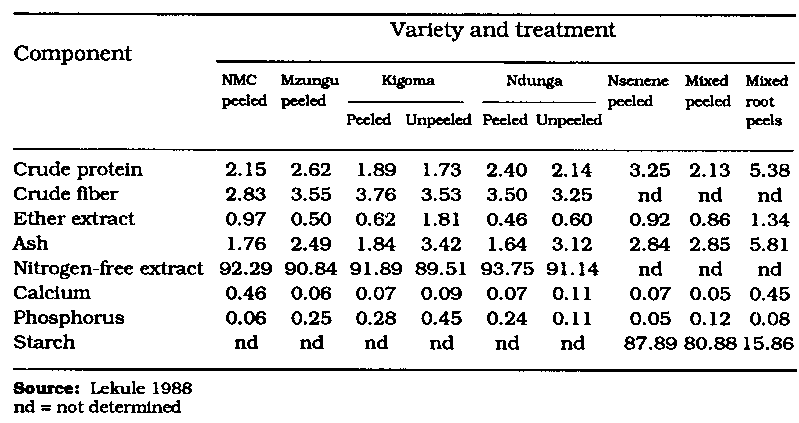
Roots: It is a common practice to sun-dry the roots when they have been chopped into small pieces. Peeled roots are normally fed to pigs and poultry while unpeeled roots are fed to cattle. The peel is rich in protein, fat and ash (table 3). Peeled fresh roots can be fed to pigs and poultry at low levels without any signs of toxicity.
The first serious scientific work in Tanzania on substituting cereals (mainly maize) with cassava in pig diets was initiated at the Sokoine University of Agriculture in the seventies (Wyllie and Lekule 1980). Subsequent work was conducted by Babyegeya (1980), Kakala (1981) and Lekule (1988).
Wyllie and Lekule (1980) found no significant differences in average daily weight gain, feed conversion efficiency or carcass characteristics when cassava replaced 0 to 54 % of maize in diets of growing-finishing pigs. In another trial, the same authors found that replacement of cassava by cane molasses resulted in a linear decrease in liveweight gain and feed conversion efficiency. In both cases, energy sources intake were restricted to about 50% of recommended values by NRC (1979). Kakala (1981) used fresh cassava leaves and raw cassava tuberous roots as substitutes for a mixture of sorghum and wheat bran. Inclusion of cassava leaves at 30% in the ration was observed to depress the growth of young pigs. However, overall growth and feed efficiency from 18 kg to 80 kg were not influenced by the level of cassava products.
In a series of experiments using fresh cassava tuberous roots and cassava root meal as the only source of energy (Lekule 1988), average growth ranged from 533 to 566 g/day for restricted pigs and from 55 1 to 737 g/day for ad-lib fed pigs. There was no significant difference in daily weight gain and feed conversion efficiency between pigs fed the cassava-based cites and the commercial pig feed. Feed conversion efficiency was improved by feed restriction. Carcass characteristics were not significantly influenced. Similar results had been obtained by Kakala (1981) but Babyegeya (1980) reported improved dressing percentage with increase in cassava levels. Although most of the workers have not found any significant effect of cassava inclusion on growth and feed efficiency (Wyllie and Lekule 1980, Babyegeya 1980), Kakala (1981) found that cassava products depressed digestibility of dry matter and energy. It is possible that the depression was caused by the cassava leaves which are known to be high in crude fiber content. Results of recent experiments have shown that cassava root diets are highly digestible (over 80% dry matter digestibility) and are similar to cereal-based diets (tables 4 and 5).
Table 4. Composition of diets containing varying amounts of cassava roof meal
|
Composition |
Treatment |
||||
|
1 |
2 |
3 |
4 |
||
|
Ingredients |
|||||
|
Cassava root meal |
0 |
20 |
40 |
60 |
|
|
|
Maize meal |
45 |
30 |
15 |
0 |
|
|
Cottonseed cake |
10 |
15 |
20 |
25 |
|
|
Rice polishings |
20 |
25 |
15 |
0 |
|
|
Kapok cake |
11 |
6 |
6 |
11 |
|
|
Fish meal |
2.5 |
2.5 |
2.5 |
2.5 |
|
|
Limestone |
1.0 |
1.0 |
1.0 |
1.0 |
|
|
Vitamin-mineral mixture |
0.5 |
0.5 |
0.5 |
0.5 |
|
Dry matter composition |
90.5 |
90.2 |
89.7 |
91.6 |
|
|
% dry matter |
|||||
|
|
Crude protein |
17.7 |
16.2 |
16.2 |
16.8 |
|
|
Crude fiber |
6.5 |
6.4 |
6.6 |
8.9 |
|
|
Ether extract |
6.3 |
5.8 |
5.5 |
5.1 |
|
|
Nitrogen-free extract |
64.6 |
66.4 |
66.2 |
64.2 |
|
|
Ash |
5.3 |
5.2 |
5.2 |
5.1 |
|
|
Calcium |
0.7 |
0.7 |
0.8 |
0.9 |
|
|
Phosphorus |
0.7 |
0.9 |
0.8 |
0.9 |
|
|
Lysine |
0.8 |
0.7 |
0.7 |
0.6 |
|
|
Methionine + cystine |
0.7 |
0.6 |
0.5 |
0.4 |
Substitution of maize by cassava root meal as a cheap source of energy in broiler rations have been carried out by Kinabo ( 1977), who reported that in 0-2 weeks, body weighs gains increased as the cassava level in the rations rose from 17 to 34 %, but at 41 % and 51 % levels body weight gains decline. The differences between the body weight gains of chicks fed the high cassava diets (41 % and 51 %) and the control were however not significant. Feed conversion ratio of chicks fed diets containing 34 %, 41% and 51 % cassava was significantly poorer (P < 0.01) than either the control or the diet with 17% cassava.
There is a very limited research on the use of cassava as ruminant feed in Tanzania, probably because ruminants are mainly raised on pasture. In one study, Massawe ( 1977) replaced maize bran with cassava and recorded lower milk yield when cassava was the only supplement, probably due to the low level of protein in cassava.
However, because home-grown cassava is relatively cheaper than purchased concentrates for dairy cattle, the potential of cassava as an alternative energy source in dairy feeding systems needs more research. More attention should be paid to those areas of the tropics with a tradition of cassava cultivation.
Table 5. Effect of level of cassava root meal on digestibility and nitrogen retention by pigs
|
Item |
Level of cassava root meal (%) |
||||
|
0 |
20 |
40 |
60 |
±SE |
|
|
Dry matter (%) |
78.5 |
80.2 |
79.3 |
79.1 |
0.7 |
|
Organic matter (%) |
80.5 |
82.3 |
81.9 |
81.1 |
0.7 |
|
Crude protein (%) |
77.3 |
76.0 |
76.5 |
76.0 |
1.7 |
|
Crude fiber (%) |
25. la |
34.3ab |
24. 1a |
37.5b |
3.3 |
|
Ether extract (%) |
77.9a |
78.8a |
88. 1b |
85.9b |
1.3 |
|
Nitrogen-free extract (%) |
87.2 |
89.1 |
88.3 |
88.1 |
0.9 |
|
ME (MJ/kg DM)a |
14.7 |
14.8 |
14.8 |
14.7 |
0.1 |
|
Nitrogen balance (g/day) |
10.9 |
7.3 |
11.3 |
9.3 |
1.7 |
|
N-retention (% intake) |
29.0 |
21.2 |
33.3 |
26.3 |
3.2 |
|
N-retention (% digested) |
41.1 |
28.8 |
43.6 |
33.9 |
4.4 |
|
Average daily gain (g/day) |
286.0 |
249.0 |
392.0 |
383.0 |
67.9 |
Notes: Values in the same row bearing different letters are significantly different (P < 0.05)
a ME = Metabolizable energy
In areas where cassava is a staple food, there is always an excess of production which is sold to the National Milling Corporation. The quantities indicated as purchased (table 2) reflect cassava production over and above the demand for human consumption. Most of this excess is exported while the rest is utilized for industrial starch production. Hence, such quantities could be available for livestock feeding to replace some of the imported yellow maize commonly included in poultry and pig feeds. At present, it is only when grains are in very short supply that small amounts of cassava are included in feeds.
The main reasons for limited use of cassava for livestock feeding can be summarized as follows:
1. Cassava is produced in dry areas where intensive livestock production is not practiced and the main livestock species are ruminants.2. The high price of cassava makes its use in livestock feeds uneconomical.
3. Cassava low nutritive value hence diets from it require high protein fortification or amino acid supplementation due to the low content of amino acid (table 6). This would therefore make cassava diets too expensive.
4. Harvesting, processing and handling of cassava is difficult and incovenient, and this discourages large scale farmers from planting cassava for live-stock feeding.
Table 6. Amino acid composition of common cassava varieties In Tanzania
|
Amino acid (g/kg dry matter) |
CRM, peeled (Kigoma variety) |
CRM, peeled (Mzungu variety) |
CRM, peeled (sweet varieties) |
|
Alanine |
1.26 |
0.63 |
2.10 |
|
Arginine |
1.98 |
0.50 |
1.55 |
|
Aspartic acid |
1.63 |
0.89 |
3.56 |
|
Cystine - |
0.25 |
0.14 |
0.54 |
|
Glutamic acid |
4.23 |
2.91 |
4.08 |
|
Glycine |
0.71 |
0.51 |
1.79 |
|
Histidine |
0.38 |
0.17 |
0.71 |
|
Isoleucine |
0.58 |
0.43 |
1.90 |
|
Leucine |
0.91 |
0.69 |
2.95 |
|
Lysine |
0.88 |
0.27 |
1.29 |
|
Methionine |
0.23 |
0.17 |
0.55 |
|
Phenylalanine |
0.55 |
0.41 |
1.87 |
|
Proline |
0.75 |
0.51 |
1.93 |
|
Serine |
0.73 |
0.45 |
2.00 |
|
Threonine |
0.61 |
0.29 |
1.71 |
|
Tryptophan |
0.35 |
0.16 |
0.48 |
|
Tyrosine |
0.25 |
0.14 |
1.28 |
|
Valine |
0.73 |
0.54 |
2.33 |
Note: CRM = cassava root meal
In many parts of Tanzania, only one energy source is available as livestock feed and this could be cassava. As an energy source, cassava root is an excellent livestock feed, but it must-be processed to reduce the HCN content to nontoxic levels. For nonruminants, the diets must be formulated with care, paying attention to the balance of limiting amino acids, minerals, vitamins and essential fatty acids. Despite being rich in amino acids, vitamins and minerals, cassava leaves do not at the present time, offer much promise as livestock feed.
The price structure of cassava roots has been one of the mad or limitations to its use in animal feeds since economic considerations are of prime importance and the use of cassava will only be feasible when cassava-based diets are cheaper than diets based on other energy sources. Where other energy sources are not available, the value of the livestock products must be weighed against the market price of cassava.
More research is required to stimulate the use of cassava for feeding dairy cattle, pigs and poultry especially in rural areas which are out of the reach of commercial feeds.
Babyegeya W.B.M. 1980. Cassava root meal as a source of energy for growing and finishing pigs. MSc thesis. University of Dar es Salaam, Tanzania
Boccas, B. 1987. Cassava staple food crop of prime importance In the tropics. The Courier 101: 72-73. ACP-EEC.
FAO (Food and Agriculture Organization). 1983. Production yearbook Vol. 37. Rome.
Hahn, S.K. 1986. IITA's role In cassava Improvement for Africa. Report of the Seminar on Cassava Research In Africa, 14-15 May 1986, Brussels, Belgium.
Kakala, S.N. 1981. Feed value of Cassava tuberous roots and leaves for growing and fattening pigs. MSc thesis. University of Dar es Salaam, Tanzania.
Kinabo, J.P. 1977. The substitution of cassava root meal for maize meal as energy source for broiler chickens and ducks. BSc special project. University of Dar es Salaam, Tanzania.
Lekule, F.P. 1988. Investigations on the nutritive value and practical ways of feeding cassava roots to pigs. PhD thesis. Sokoine University of Agriculture, Tanzania.
Massawe, E. 1977. The effect of replacing maize bran with cassava in the diet of lactating cows. BSc special project. University of Dar es Salaam, Tanzania.
Mngulwi, K.G.J. 1983. The digestibility and net energy gain from cassava crops. MSc thesis. University of Dar es Salaam, Tanzania.
Müller, Z., KC. Chou, and KC. Nah. 1975. Cassava as a total substitute for cereals in livestock and poultry rations. Pages 85-95 in Proceedings, Conference on Animal Feeds of Tropical and Subtropical Origin, 1-5 April 1974. Tropical Products Institute, London.
NRC (National Research Council). 1979. Nutrient requirement of swine. 7th revised edition. National Academy of Sciences, Washinton, DC, USA.
Sarwatt, S.V., S.N. Kakala, end J.A. Kategile. 1988. Performance of growing finishing pigs when fed diets containing fresh cassava leaves and roots. East African Agriculture and Forestry Journal 53:3.
Wyllie, D., and F.P. Lekule. 1980. Cassava and molasses for fattening pigs under village conditions in Tanzania Tropical Agriculture-Trinidad 57 (3):267-276.