Calculated across 39 countries of tropical Africa, Ethiopia has 17% of the ruminant Tropical Livestock Units (TLUs, where 1 TLU = 250 kg live weight (Jahnke, 1982)) and about 60% of the equines (Jahnke, 1982: pp 13-14). Ethiopia thus has the largest national totals of these animals in tropical Africa. This is related to Ethiopia's large area (1224000 km2), high ecological diversity, large human population and historical and cultural factors.
Ethiopia can be divided into highlands (39%) and lowlands (61%) using 1500-m elevation as a crude threshold. While the highlands typically have higher annual rainfall than the lowlands, this is not always the case. The highlands are characterised by relatively low mean temperatures during growing periods (Jahnke, 1982: p 16). The highlands have climates that vary from semi-arid to humid (i.e. sufficient moisture for 90 to over 270 growing days per year) and contain nearly all of the important areas for cereal cultivation and mixed crop-livestock enterprise (Westphal, 1975). The lowlands, in contrast, are dominated by arid to semiarid climates (i.e. up to 180 growing days and 700 mm of precipitation per year). The lowlands are home to a diverse array of pastoral people who depend to a high degree on livestock for their sustenance. These livestock, in turn, depend nearly exclusively on native vegetation for forage, and net primary production is highly variable over time and space. The lowland regions that support wildlife and extensive livestock operations on native vegetation can also be referred to as rangelands (Pratt and Gwynne, 1977: p 1).
The uncertainties of rainfall and primary production in the rangelands have promoted animal-based life-styles that enable people to be mobile and opportunistic. Pastoralists typically rely on milk for food and also use animals to store and generate wealth. Animals are consequently important in social value systems. Pastoral social systems also commonly emphasise decentralized leadership that promotes flexibility in resource use (Jahnke, 1982; Coppock et al, 1985). Ethiopia's lowlanders are derived from 29 Nilotic and Cushitic ethnic groups. It has been estimated that 93% of these people are pastoralists or agropastoralists, with the remainder being hunter-gatherers or pure cultivators (UNDP/RRC, 1984).
It was recently reported (FLDP, nd: p 22) that Ethiopia had about 29 million cattle, 24 million sheep and 18 million goats in 1987-88. Jahnke (1982: p 14) estimated 6.8 million equines from FAO data for
Ethiopia in 1979. Distribution of animals differs sharply with elevation. The highlands have 80% of the cattle and 75% of the sheep but only 27% of the goats (FLDP, nd: p 22). Assuming two-thirds of the equines occur in the highlands (with a TLU equivalent of 0.6 each), this translates into a total of 44 TLUs/km2 in the highlands with 76% cattle, 14% equines, 8% sheep, and 2% goats. For the lowlands about one million camels need to be figured in (Jahnke, 1982: p 13), which brings the lowland total to 11 TLUs/km2 with 49% came, 16% goats, 16% equines, 12% camels and 7% sheep. Thus, despite being over 50% larger in area than the highlands, the lowlands have only about 40% as many TLUs at one-quarter the density. Lowland livestock, however, are more diverse in terms of species composition.
The subsistence character of the livestock contribution to rural economies of Ethiopia is illustrated by ratios of animals to people. Considering that the human population is currently 42 million, with 12% in the lowlands and 95% in rural areas (EMA, 1988), the rural highlands support some 72 people/km2 on average, with 1.6 people/TLU. In contrast, the lowlands support about six people/km2 with 1.8 TLU/person. Other estimates have ranged from 1 TLU/person in the highlands to 5 TLU/person in the lowlands (FLDP, nd: p 22). These ratios differ markedly from those of developed commercial systems. For example, successful commercial beef operations in Kenya may require a herd size of 70 head/person employed (Pratt and Gwynne, 1977: p 201). Even pastoral systems may require at least 5 TLU/person for subsistence (Pratt and Gwynne, 1977: p 38), which challenges the commonly held view that the lowlands have a large, marketable surplus of animals (FLDP, nd: p 22).
Despite the low level of commercialization, livestock production in Ethiopia overall contributed about 33% of the gross value of annual agricultural output and 15% of gross domestic product during the mid-1980s (IBRD, 1987). The per capita consumption of animal protein is relatively high for Africa and averages up to 13 kg/person annually, with 51% consisting of beef (IBRD, 1987). Improved livestock marketing is viewed as an important national development strategy to increase both rural incomes and foreign exchange. A rising domestic demand is expected to compete more in the future with demand for live animal exports (FLDP, nd: pp 1, 10). During the mid-1980s coffee contributed about 60% of gross annual export revenue for Ethiopia, followed by hides and skins (12%). Revenue from live animals was far behind at 1% (IBRD, 1987). The recent volatility in coffee markets has probably increased the relative importance of livestock products in Ethiopia's exports, but room for improvement exists in absolute terms. It is anticipated, for example, that expansion of live animal and carcass exports to Yemen, Saudi Arabia and the United Arab Emirates now offers one of the best opportunities for increased trade; the major competitor in this market has traditionally been Somalia (FLDP, nd: pp 2-4). Australia has also recently become a competitor (Solomon Desta, TLDP economist, personal communication).
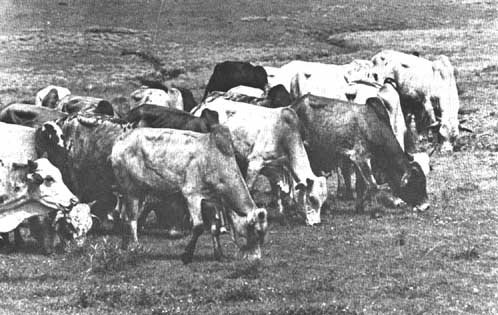
Plate 1.1. Indigenous Boran cattle of the southern rangelands. - Photograph: JEPSS
Although the lowlands have fewer animals than the highlands, the lowlands still play an important role in the national livestock economy. Overall, the Ethiopian highlands are considered as livestock-deficit areas with the lowlands as the major source of supply (FLDP, nd: p 29). Twenty per cent of the highland draught came are thought to come from the lowlands (Girma Bisrat, PADEP Coordinator, personal communication). Lowland breeds of cattle (e.g. unimproved Boran; Plate 1.1) and sheep (e.g. Somali blackheaded) are often regarded as superior to indigenous highland breeds in terms of size, durability, productivity and/or consumer preferences in the Middle East (Alberro, 1986; Girma Bisrat, PADEP Coordinator, personal communication; Solomon Desta, TLDP Economist, personal communication). As a consequence, lowland stock may comprise over 90% of export animals (Girma Bisrat, PADEP Coordinator, citing unpublished data from the Ethiopian Livestock Marketing and Development Corporation). Boran cattle have also played an important role in cross-breeding programmes with Friesians to provide dairy came for smallholders in the Rift Valley and highlands (Kiwuwa et al, 1983). Finally, lowland animals contribute to a very large flow of income from illegal exports, since all of Ethiopia's international borders occur in lowland areas. This trade may involve on the order of 150000 cattle and 300000 small ruminants per annum, and is encouraged by external prices averaging up to 150% higher than those within Ethiopia in recent years (FLDP, nd: p 33).
Livestock in the lowlands provide subsistence employment and investment opportunities for around five million people and a source of meat, milk and fibre for residents of some two dozen major towns and cities within and adjacent to lowland areas (Girma Bisrat, PADEP Coordinator, personal communication). It has been estimated that the human population in the lowlands will grow at an average of 2.1 % per year with a doubling time of 26 years (EMA, 1988). Although this is lower than the 3 to 4% growth rates of the highlands (EMA, 1988), it will still produce marked pressure on the less-productive resource base. As will be discussed, economic interaction between the highlands and lowlands will probably have to be intensified in response to population pressure. One objective for national development should be to strengthen interregional linkages to help buffer populations from local droughts and other perturbations. The lowlands can thus be expected to play a larger role in the national economy in the future. As elsewhere in Africa, however, livestock development in the lowlands will often occur in situations where human populations are rapidly increasing, prime grazing lands are being lost to cultivation, traditional leadership and cultural value systems are being diminished and where land in general may be increasingly under threat of degradation (Swift, 1977; RRC, 1985; Moris, 1988).