4.3.1 General household structure and economy in average rainfall years
4.3.2 The encampment and the role of cooperative labour
4.3.3 The labour of married women
4.3.4 Livestock marketing
4.3.5 Dairy processing and marketing
4.3.6 Cultivation
The following results attempt to profile various aspects of Borana household economy. The attempt to convey information in a straightforward way, however, sometimes erroneously infers that household features are relatively static. In reality, the Borana system is exceedingly dynamic and household attributes vary from year to year. This dynamic nature of the system is profiled in Section 7.2: A theory of local system dynamics.
Production units were defined by Negussie Tilahun (1984) as households consisting of a male herd owner, his wife, two to three children and up to four other relatives who lived and ate with the herd owner's family, for an average of 8.5 people/household (N = 49 households). These persons shared management duties for the family's livestock and were the prime recipients of the products from these animals.
A Borana man could have more than one spouse if he is wealthy enough. However, the vast majority of them today have only one wife (Cossins and Upton, 1987). One major exception to the household leadership and composition noted above are widows who had typically married much older men and now preside over households in the intermediate or poor economic strata. Negussie Tilahun (1984: pp 6,9-10) reported 20% (N = 49) of households headed by women while Holden (1988) found 25% (N = 105) headed by women in pert-urban locations. These women apparently controlled their livestock and other household resources as male heads of households do, but may seek advice or help from senior male relatives when necessary (D. L. Coppock, ILCA, personal observation).
The first survey by Negussie Tilahun (1984) revealed a wide range in household statistics (Table D1, Annex D). His average sample household in the early 1980s had 5.6 AAME, 77 LSU and a ratio of LSU:AAME of 13.8:1. A high degree of wealth stratification was also evident: 3 of 49 households reported over 300 head of livestock. Annual reported income averaged EB 803 (US$ 392).
Subsequent research which incorporated wealth stratification into the study design suggests that reported annual income levels in Negussie Tilahun (1984) may be biased on the high side in favour of wealthier households. Mulugeta Assefa (1990) surveyed 633 households in the Did Hara and Dubluk madda and considered 51% as poor, 31 % as intermediate and 18% as wealthy. These categories corresponded to 0.8,2.9 and 6.0 milk cows per family member, or 2.3,7.3 and 14.2 head per family member when the entire inventory was considered for a subsample (see Table 5.5 in Section 5.3.3: Cattle production and pastoral wealth). Holden and Coppock (1992) reported annual income ranging from EB 93 to 445 and 784 for poor, intermediate and wealthy households, respectively, based on stratified random sampling in the vicinity of Dubluk and Mega towns. When results of Mulugeta Assefa (1990) and Holden and Coppock (1992) are combined, a weighted mean annual income of EB 326 is obtained, which is 40% of the figure from Negussie Tilahun (1984).
The grand total of reported income for the 49 families during 1981-82 was EB 78694. Sources of income detailed in Negussie Tilahun (1984: p 15) were: (1) cattle (90.9% of annual income); (2) other livestock products (milk, butter, hides, etc) at 5.3% of annual income; (3) small ruminants (1.2%); and (4) camels and camel products (0.9%).
An average of 52% of total income was accounted for in detailed expenditures, with high variability (17 to 93%) among locations (Table D1, Annex D). On average, 39% of documented expenses were on food, with nearly half of this (17%) for grain and the remainder for sugar, tea, coffee and miscellaneous items. The remaining 61% was spent on replacement livestock and household items with clothing making up nearly three-fourths of this total (Negussie Tilahun, 1984: p 16). There was significant (P£ 0.05) regional variation among households in absolute monthly expenditure on clothing, grain and other foodstuffs. This was speculated to be due to regional variation in cultivation and proximity to markets: Families able to cultivate likely spent less on grain while those closer to market spent more on consumer goods (Negussie Tilahun, 1984: pp 17-19). A pie chart of dietary patterns for years of average rainfall is contrasted with that which occurred during the 1983-84 drought in Figure 6.2 a,b. Diets in average rainfall years were dominated by milk (55%) and cereal grains (32%) on a gross-energy (GE) basis, most of the latter was inferred to have been purchased and not home grown. Milk was almost exclusively from cows.
Negussie Tilahun (1984) found a significant and positive correlation (N = 49; r2 = 0.54; P = 0.01) between the size of the household in AAME (x) and reported herd size in LSU(y):
Log y = 2.59 + 0.18x
This was interpreted to illustrate a positive relationship between herd size and labour requirements: If well endowed with cattle, a herd owner can marry additional women and/or recruit relatives to improve his management capability (Negussie Tilahun, 1984: pp 12-13).
In contrast to findings of Negussie Tilahun (1984), a combination of aerial survey and more extensive household data collected from 1982-85 revealed that the average Borana family in the study area consisted of only three AAME, dependent upon 14.6 cattle (with eight milk cows) and seven small ruminants for food and income generation plus an occasional camel or equine for transport (Cossins and Upton, 1987). This roughly translates into 66000 people (4.3/km2), 325000 cattle (21/km2), 100000 small ruminants (6.5/km2), 7500 camels (0.5/km2), and 2500 equines (0.2/km2) for the 15475-km2 study area in 1981-82. Population dynamics are reported elsewhere (Section 6.3.1.1: Livestock dispersal and herd composition and Section 7.2: A theory of local system dynamics).
Donaldson (1986: pp 13-14) and Cossins and Upton (1987: pp 131,212-213) compiled an annual energy budget for an eight-cow household for an average rainfall year. Given a live weight of an adult Borana male as 55 kg, and considering additional energy expenditure for work, the daily energy demand for such a person is on the order of 10.6 MJ GE based on nutritional costs in FAO (1973). Assuming this person represents AMME, the model household with 3 AAME would require 11607 MJ GE per year. Domestic production, dominated by cow milk, would account for 64% of this requirement based on 75% of cows in milk and production levels determined by Nicholson (1983a; see Section 5.3.2: Calf growth and milk offtake). Most of the remaining energy (4178 MJ GE) would have to be obtained from cultivation and/or bought grain because other livestock sources of food production are nominal. Assuming that the balance was obtained from grain purchases (Cossins and Upton, 1987), this means that 278 kg of maize grain would be required with an energy content of 15 MJ GE/kg (Cossins and Upton, 1987). One kilogram of cattle live weight was exchanged for 2.5 kg of grain in an average rainfall year in the early 1980s (Cossins and Upton, 1987); so this implies that each household would have to sell at least 111 kg of live weight. On a TLU per household basis, this represents an offtake of 3% per year, or 9750 head out of 325000 head for the study area. While this rate agrees with estimates of 5% per annum by FLDP (nd), it is less than one-sixth of the rate of 19% estimated by Donaldson (1986) for 1981-82 from herd monitoring. One source of variation is that additional offtake is required for purchases of other goods besides food, but at most this would probably double the offtake estimate to 6%. This discrepancy is explored further in Section 4.4.2: Economic comparisons among pastoral systems.
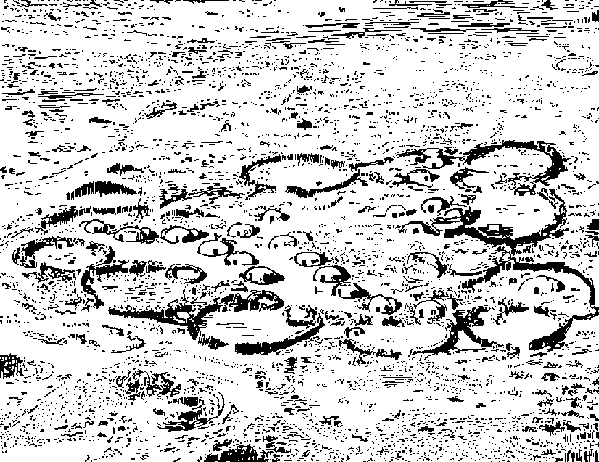
Cossins and Upton (1987: pp 209-210, 213) reviewed some general aspects of labour allocation and relationships of labour to the organisation of households into encampments (olla). A typical olla is depicted in Figure 4.1.
Although the household is the basic unit of production and consumption, some types of work are carried out cooperatively by households. These labour-sharing activities include herding, watering animals, marketing dairy products and constructing corrals and fences. Advantages in terms of social activities, group security and information sharing are likely to have played important role in the development of the encampment as the next level of social organisation after the household.
Herding may involve males and females from 6 to 25 years of age. Younger children, and females in general, do most of the tending of small ruminants and calf herds near encampments while young men and older boys are more responsible for warra (resident milking cattle) and forra (dry cattle that are far-ranging; see Section 5.3.1: General aspects of cattle management). Older girls (in their late teens) may herd warra animals if labour is in short supply (Cossins and Upton, 1987: p 209).
Watering animals from the deep wells (see Section 2.4.1.7: Water resources) is an arduous dry-season activity which is the responsibility of mainly young men, but it is also common to see older youths of both sexes involved. Labour allocation and watering schedules are complicated schemes committed to memory by leaders who regulate and coordinate water access. This is a major form of labour sharing in an encampment.
Women share marketing duties especially if they reside far from market and thus have a large opportunity cost in terms of the time needed to walk to market (Holder, 1988: p 22). Women rotate market duty and the designated woman will take dairy products and other items to sell on behalf of friends. Cooperation among women and youths in the construction of communal corrals and bush fence to protect encampments and cultivated plots is also important (Mulugeta Assefa, 1990).
Figure 4.1. Schematic depiction of a Borana encampment or olla with huts and corrals. - Drawing: Courtesy of Jill Last.
Encampments are named for a wealthy and/or influential male individual called the aba olla (see Section 2.4.2.2: Some cultural and organisational features) who may have herds large enough that he requires labour beyond the capability of his immediate family. Recruitment of families, poor in livestock but able to work, into an encampment is thus related to whether they could provide labour to wealthier households in return for food or other compensation. For example, a poorer neighbour may take care of a milk cow for a wealthier family and receive the milk offtake and a future male calf in return (Cossins and Upton, 1987: p 210). Cash remuneration for labour is rare but small payments have been reported (Mulugeta Assefa, 1990). Poor families are taken into an encampment undoubtedly because of other considerations such as kinship. Clan networks offer possibilities that allow access to different resources that reduce vulnerabilities (see Section 2.4.2.2: Some cultural and organisational features).
A general labour budget for the major cooperative tasks of herding and watering animals can be crudely estimated for an encampment to illustrate the potential labour constraints. A typical encampment may contain from 10 to 30 households (Cossins and Upton, 1987: p 209; Coppock and Mulugeta Mamo, 1985). Taking the larger number as an example, the total work force for one encampment could thus consist of about 30 adult males, 30 adult females and around 75 youths, based on demographic data in Negussie Tilahun (1984: p 8). Of the youths (defined as less than 25 years old) about 20 would be under six years of age. This leaves 55 available for substantive work.
This typical encampment could have two to three resident forra herds and five to seven far-ranging warra herds with a maximum of 70 head/herd (Milligan, 1983, cited in Cossins and Upton, 1987: p 210). This gives a grand total of 630 head over one year old and about 250 nursing calves. About 70% of these calves would be old enough to require herding (see Section 5.3.1: General aspects of cattle management) could be grouped into about three herds of 60 animals each. This estimate of calf numbers is based on 55% of all cattle over one year of age being mature cows and 75% of these having a calf in an average rainfall year (Cossins and Upton, 1987: p 207). The ratio of lactating cows to AAME would be 2.3:1. The total small ruminants would be about 200 (Cossins and Upton, 1987: p 213) herded perhaps as two flocks. The few camels and equines (see below) may not require herding except when they go to water. Camels may be hobbled so they browse near the encampment and equines seem to stay in the vicinity without much supervision (D. L. Coppock, ILCA, personal observation). Cattle herding for the typical encampment would thus require about 20 young men and boys for all the warra and forra herds, with two to three per herd on a rotating basis (Cossins and Upton, 1987: p 209). Tending calves and small ruminants, respectively, requires another six and four young boys or older girls.
In sum, a minimum of 30 persons are required only for herding, which is nearly 60% of the youth work force. If it is further assumed that females over the age of 11, and comprising 28% of all youths between the ages of 6 to 25 (Negussie Tilahun, 1984: p 8), then herding could fully occupy 75% of the available pool of 40. Labour allocation for herding would thus be consistently demanding regardless of season, but the need to look for adequate grazing in dry periods would heighten labour requirements then (see Section 5.3.1: General aspects of cattle management).
During the later stages of the cool dry season (August through September) and throughout most of the warm dry season (December to March), the high demands of watering livestock at the wells are superimposed upon routine duties of herding and household chores. Cossins and Upton (1987: p 210) noted that the number of livestock watered at the wells per man-day worked ranged from 15 to 155 livestock units. This high variation is due to differing flow rates of water in wells, variable efficiency of raising water to the surface and well depth which determines the number of people required to do the job. Data concerning animals watered at wells and regional labour allocation to well operations are shown in Tables 2.2 and 2.3.
If the average family owns about 12 livestock units Cossins and Upton, 1987: p 213) and on average these are watered once every three days (see Section 5.3.4: Water restriction and cattle productivity), the family needs at most to supply about one man-day of labour twice/week based on a minimal watering rate of 15 head/man/day. For an entire encampment of 500 livestock units, the labour force required would be about 67 man-day/week. The 10 youths remaining after herding needs are filled (see above) could provide a maximum of 70 man-day/week, assuming they worked in the wells every day (but they do not; Cossins, 1983c). A key factor in these calculations is the watering rate/man-day. If an average of 85 livestock units/man-day is assumed (as the mean of 15 and 155), then the 500 livestock units only require about 12 man-day of labour/week for watering. This stipulation giving 35 man-day week is more consistent with the capability of the 10 youths working on an alternate-day basis. Such calculations also reveal the labour-saving advantages of watering once every three days versus once daily or once every other day (Nicholson, 1987a). Using the 500 livestock units with 85 watered/man-day, the once-every-third-day watering regime requires, respectively, only 28 and 58% of the labour needed for a daily or alternate-day watering.
In sum, this analysis is interpreted to show that encampment labour schedules in dry seasons are likely to be tight. As will be shown, married women may have the most demanding work schedules and thus are unable to assist in most of the tasks described thus far. Senior men spend more time dealing with herding strategies, cattle marketing and related issues and usually do not perform menial labour unless they are poor (D. L. Coppock, ILCA, personal observation).
Married women are critical to the household economy. They have the major role in determining milk offtake (Holder, 1988: p 66), carry on the home-based forage feeding and health management of nursing calves (Mulugeta Assefa, 1990: p 65; D. L. Coppock, ILCA, personal observation). They may also be increasingly important as herd managers and decision makers in the society (see Section 4.3.1: General household structure and economy in average rainfall years).
Composited activity budgets reported by women in two locations are shown in Tables D2 and D3, Annex D, for the long rains and warm dry seasons, respectively. Time budgets were similar across locations in terms of seasonal work priorities and total worked hours reported for each season. On average, over 14 important activities were reported for each season. When averaged across all rainy periods women reportedly worked 10.7 hours/day, increasing to an average of 14.1 hours/day in dry seasons. The warm dry season required the greatest reported work commitment at 15.8 hours/day, while work priorities were similar for both locations within seasons. Not surprisingly, milking cattle was ranked as the most important activity in nearly all instances, but the absolute time required for milking varied seasonally. The highest time needed for milking was reported in the long rainy season and the least in the warm dry season.
Other dominant activities in wet seasons included collecting fuelwood (more fires being needed due to cooler air temperatures) and churning milk to make butter (due to a higher milk volume). In contrast, priorities during dry periods commonly involved the more time-consuming and arduous tasks of collecting water for people and calves, getting forage for calves and taking other animals to water. Food preparation, going to market and cleaning and repairing pond catchments, corrals and huts were apparently common throughout the year.
4.3.4.1 Suppliers
4.3.4.2 Buyers
4.3.4.3 Composition of animals purchased
4.3.4.4 Other features of livestock market supply
4.3.4.5 Traders
4.3.4.6 Prices
4.3.4.7 Marketing attitudes
The following categorisations of livestock supply were based on a sample of 67803 animals marketed from 1981 to 1984. Much of the information was originally compiled by Negussie Tilahun (nd) but was later consolidated and analysed by Dyce (1987: pp 35-57).
The dominant ethnic group supplying livestock to market were the Boran, with 48% of the total (32545 head). They were followed by the Gujji agropastoralists with 12% (8136 head) which were mostly marketed at northern centres in the periphery of the study area such as Agere Mariam. Other local groups supplying much smaller numbers were the urban Amhara (6%) and Konso, Burji and Gabra with 2% each. Most of the remainder were supplied by Somali, Arsi and Walayita groups (Negussie Tilahun, nd: p 2).
Nearly all of the Boran and Gujji suppliers were breeders producing stock under low-input range conditions. Breeders supplied 46% of the 26991 animals brought to primary collection markets in Teltele, Yabelo and Negele and 82% of 17538 animals brought to primary collection markets at Hidi Lola and Mega.
Traders, people dealing in livestock exclusively for business purposes, were more common among the Amhara and other local urban minorities. Traders supplied 59% of the 28306 animals brought to secondary collection markets that bordered the rangelands such as Moyale and Agere Mariam. Sixteen per cent of the 7109 animals supplied to Moyale were from Borana breeders. Many of the suppliers to Moyale markets were traders from Somalia and Kenya. The highest concentration of traders was in Agere Mariam (Negussie Tilahun, nd: pp 2,6).
Overall, the most common reason for breeders selling an animal was to engage in animal trading (34% of 67803 responses). This was followed by the need to acquire money to purchase clothing (26%) or food grain (17%). Payment of taxes, purchase of breeding stock and household items or other nonessential commodities were the other minor reasons for selling stock. At Hidi Lola and Mega the Borana suppliers of marketed livestock reported purchase of clothing (43%) and grain (15%) as the most important reasons for animal sales, out of 35181 responses.
Based on a sample of 25312 head 60% traveled for less than one day to reach market (most of the immatures were in this category), 11% traveled one day and the rest took from 1.5 to 4 days (nearly all matures). In an extreme case for Agere Mariam (to the north of the rangelands), 60% of mature cattle had to travel four days or more to reach market.
The Boran were the leading ethnic group buying all types of livestock (21% of a sample of 98213 purchases) followed closely by the Amhara (17%). Thirty-eight per cent of all purchased stock were bought by traders, followed by breeders seeking replacements (19%) with the remainder by butchers and others (Negussie Tilahun, nd: pp 6-7). Breeders and traders were the most prevalent at primary collection markets while traders and urban consumers were more prevalent at secondary markets. Traders bought the highest proportions of animals in the primary markets of Yabelo (40% of 5112 observed), Negele (40% of 6993 observed), Mega (64% of 6680 observed) and Teltele (37% of 2330 observed). Breeders bought a high percentage of the animals in the primary markets at Hidi Lola (45% of 6225 observed), Teltele (28% of 1794 observed) and Moyale (23% of 1710 observed).
Purchases for butchering were the most common at secondary markets such as Agere Mariam (50% of 12045 observed), Moyale (15% of 1109 observed) and Negele (14% of 2502 observed). Most of the animals bought by butchers in Agere Mariam were slaughtered in Dilla, a large urban centre 200 km further north (Negussie Tilahun, nd: p 15). About 5% (5000) of all marketed animals (namely cattle) made it to a terminal market in Addis Ababa for slaughter (Negussie Tilahun, nd: pp 10, 15). In summary, for animals headed northwards, markets such as Yabelo, Mega and Hidi Lola serve as collection centres from smaller local markets in the interior of the southern rangelands. These intermediate markets then channel animals to secondary markets such as Agere Mariam (Negussie Tilahun, nd: p 18).
Cattle purchases (69% of all animal purchases or 67767 observations) were dominated by mature males over four years of age (52% or 35238) bought primarily for trading (54% of transactions). They were followed by mature females (39% or 2678) which were usually cull cows procured for slaughter. Immature males came next (8% or 5431) with immature females the most rare (1 % or 680). Immature cattle were usually purchased by breeders for herd building or to bring up for resale (91 % or 5561).
Goats comprised 25% of total animal sales (24553 observed), sheep 5% (4910 observed) and camels negligible at less than 1 % (558 observed). Mature male goats were purchased for trading while others were for breeding and growing out. Mature male sheep were mainly purchased for direct consumption while other sheep were bought for breeding and growing out. The small number of camel transactions were not analysed. More details are available in Negussie Tilahun (nd) and Dyce (1987).
Summary of the relative contribution of each livestock species to the seven markets with about 23 months of data collection is provided in Table 4.1. The monthly average flow of recorded animals ranged from 847 (Agere Mariam) and 731 (Negele) to 401 to 475 for Mega, Hidi Lola and Yabelo (401 to 475) with Moyale and Teltele less than 300 each. Except for Moyale, Mega and Hidi Lola where both cattle and goats were equally dominant, cattle were typically by far the dominant species marketed.
Detailed analyses of animal trade only used data from the six markets at Negele, Moyale, Mega, Hidi Lola, Agere Mariam and Yabelo (Dyce, 1987: p 41). Time series of livestock supply at these markets are shown in Figure 4.2 a-c. Although cattle were usually supplied in the greatest numbers, they showed the most fluctuation. Maximum monthly variation in throughput calculated across the six markets indicated that cattle numbers fluctuated almost eightfold, followed distantly by sheep (tenfold) and goats or camels (sixfold). The average monthly supply was 4076 head and coefficients of variation varied nearly 13 percentage points (Table 4.2).
Except for Hidi Lola where immatures commonly comprised up to 50% of the monthly cattle market supply, immatures usually made up a small proportion of the cattle, although patterns were variable (Dyce, 1987: pp 50-53). Moyale consistently received the lowest proportion of immature cattle of all markets (<1%). The supply of immature cattle to Negele was also consistent and low (5 to 10%) while that for Mega was low and more variable (usually less than 5%, but sometimes 20 to 40%). The number of immature male cattle was always greater than that of immature females. The overall ratio of male to female immatures was 7.6:1 (Dyce, 1987: p 54). In contrast, while males usually outnumbered females in the market supply of immature small ruminants, the ratios of males to females were typically 1.3:1 (goats) and 3:1 (sheep) (Dyce, 1987: p 71).
The average price for mature cattle was calculated for Moyale, Hidi Lola, Mega, Yabelo and Agere Mariam where suitable data were obtained from August 1981 to April 1983. Twenty-five correlations (N = 21 each) were conducted to test for intermarket price relationships (Dyce, 1987: pp 56-57). The highest correlation coefficient was r = 0.5 (for Mega and Hidi Lola), which was significant (P<0.05) (Steel and Torrie, 1980: p 597).
Table 4.1. Relative contributions (%) of livestock species on a numerical basis for seven markets in the southern rangelands during 1981-82.
|
Market |
Species |
Number |
|||
|
Cattle |
Sheep |
Goat |
Camel |
||
|
Negele |
70.7 |
6.8 |
21.1 |
1.3 |
17549 |
|
Moyale |
36.9 |
11.1 |
48.7 |
3.3 |
7345 |
|
Mega |
46.1 |
16.8 |
36.6 |
0.5 |
10443 |
|
Hidi Lola |
49.7 |
11.7 |
38.6 |
|
13918 |
|
Agere Mariam |
81.1 |
0.5 |
18.4 |
|
23730 |
|
Yabelo |
59.4 |
6.6 |
34.0 |
|
12851 |
|
Teltele |
57.9 |
11.5 |
30.5 |
|
6374 |
Source: Dyce (1987).
Figure 4.2 Temporal dynamics of monthly livestock supply to markets at Moyale during 1981-82. - Source: Dyce (1981).
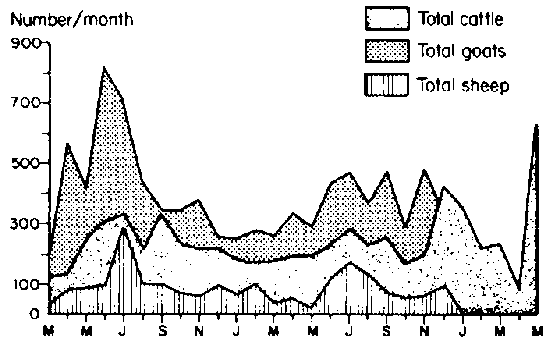
Figure 4.2 Temporal dynamics of monthly livestock supply to markets at Hagere Mariam during 1981-82. - Source: Dyce (1981).
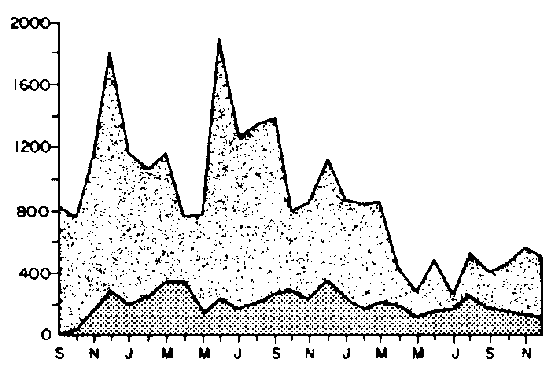
Figure 4.2 Temporal dynamics of monthly livestock supply to markets at Yabelo during 1981-82. - Source: Dyce (1981).
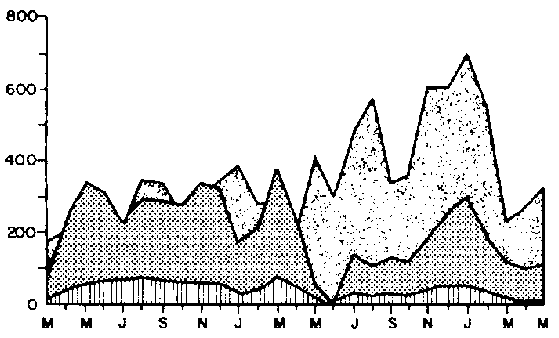
Table 4.2. Statistics of monthly supply of livestock to nine markets in the southern rangelands during 1981-82.
|
Species |
Statistics |
||||
|
Maximum |
Minimum |
Mean |
CV (%)1 |
Months |
|
|
Cattle |
5610 |
71 |
2466 |
54.6 |
35 |
|
Sheep |
680 |
70 |
323 |
51.2 |
35 |
|
Goats |
2034 |
315 |
1248 |
42.1 |
35 |
|
Camels |
69 |
12 |
39 |
45.5 |
28 |
1 Coefficient of variation.
Sources: Dyce (1987).
The types of traders operating in the southern rangelands are reviewed by Negussie Tilahun (nd: pp 28-34). He distinguished between part-time and full-time (i.e. small, medium and large-scale) traders. The scale of trading was associated with the time invested, amount of working capital and the number of buying agents employed.
Investment was increased to enable operation in remote primary or secondary markets. A medium-scale trader in a secondary market like Agere Mariam is one that can deliver from 30 to 50 head of cattle at one time. The large-scale traders may also operate butcher shops and may also lend operating funds to medium and small-scale traders. Traders may sell inventories on credit depending on the uncertainties of the market and scarcity of forage or water along trekking routes or at holding grounds. More details on traders are provided in Negussie Tilahun (nd: pp 28-34).
Negussie Tilahun (nd: pp 72-79) gives average monthly price estimates for various age and sex classes of livestock purchased at seven markets from March 1981 to January 1984. Immature males and females were sold for an average of EB 106 and 129, respectively; mature males and females sold for an average of EB 251 and 205, respectively. These price patterns were related to the higher value of immature females than males and the greater demand for mature males (as slaughter stock) than cull cows (Negussie Tilahun, nd: pp 49-50). Average prices for sheep or goats ranged from about EB 12 for immatures to EB 32 for matures. Camel prices ranged from EB 198 to 412 for immature males and mature females, respectively. There appeared to be a gradual increase in the price/head of all livestock (EB 7.30), cattle (EB 6.44) and small ruminants (EB 0.43) during the study period. This was interpreted as resulting from an increased demand due to favourable rainfall and production conditions throughout the Borana Plateau at this time (Negussie Tilahun, nd: p 46).
Seasonality in cattle prices, given a general upward trend across years, are also described in Negussie Tilahun (nd: pp 46-47) and they showed a rise at the beginning of the long rains (April) until the middle of the cool dry season (June or July) followed by a variable decline from July until the middle of the warm dry season (February). This was interpreted as a tendency for demand for cattle to rise during favourable rainfall periods and decline during dry periods. Deviations from this general pattern could be related to variation in rainfall during the long and short rains. Different patterns among some markets are discussed by Negussie Tilahun (nd: pp 47-48).
Marketing attitude study results are detailed in Coppock (1992b). Only highlights will be presented here with conclusions based on a sample of Borana leaders who were independently interviewed.
Cattle production objectives: The prevailing view of respondents was that Borana herd owners seek to accumulate cattle as social and economic assets rather than to generate cash income. They realise, however, that herd building is becoming increasingly difficult under today's conditions of higher population and restricted resources in the southern rangelands, while increasing food deficits force them to dispose more of their herd to buy food (see Section 7.2: A theory of local system dynamics). Despite this situation, increasing herd size is still seen by most herd owners as the main means available to generate wealth and attain prestige. A far less important reason is to have large numbers of animals to endure drought; respondents stated that a household doesn't actually need many animals to purchase grain to last it through a two-year drought (see Section 7.3.3.7: Mitigation of drought impact) so that the primary reason for selling an animal is to meet an acute need of money in general. This usually arises when milk production drops and food is needed, and is why herd owners always wait until a dry period to sell animals even though they realise terms of trade are less favourable than compared to other times of the year (see Section 6.4.3: Decline in terms of trade). Their attitude may be best described as "optimistic gambling": hope that the unfavourable weather or economic straits will break before they have to sell an animal (Coppock, 1992b). Households will thus undergo great deprivation before they succumb to selling cattle (see Section 6.3.2.2: Human welfare)
Priority ranking of animals for sale: A compiled ranking by 30 herd owners was as follows: (a) As long as cash demands are modest (less than US$ 40), the top priority is to sell a sheep or goat. These species are valued because they can substitute for sales of cattle and there are fewer social regulations that constrain their sale; (b) when cash demands are higher then cattle can be sold. The sale of cattle usually requires deliberations within the extended family before it can proceed. Priority sale cattle were as follows (from highest to lowest): (i) cull cows (10+ years old); (ii) mature males in descending order of age (from 10 to 5 years old); (iii) immature males (1 to 4 years old); (iv) male calves (<1 year old); (v) female calves (<1 year old); (vi) immature females (1 to 4 years old); (vii) heifers (4 to 5 years old); and (viii) prime cows (5 to 9 years old). Wealthy herd owners would have all these classes of cattle at their disposal. The poor, however, may only have a few cows and immatures (see Section 5.3.3: Cattle production and pastoral wealth). Animals are thus reportedly sold in reverse order of their importance to herd generating capacity. Larger males tend to be sold as a priority because the price received is the highest and permits the purchase of the needed goods plus one or more replacement calves thereby attaining two objectives simultaneously. The poor, in contrast, may often be forced to selling immatures to buy commodities only.
Perceptions of perverse supply: If cattle prices were to double and the prices of goods were to remain constant, the 30 leaders concurred that the net result over time would be for marketed throughput of cattle to decrease. They felt that this was largely because poor and intermediate households seek to build their herds and would sell cattle only to meet their acute needs for money. The wealthy, however, may move more animals to market initially in the hope that they could buy up more immatures per adult animal sold and build their herds. For small ruminants in contrast, all respondents said that under the same scenario the net result would be a higher marketed throughput. The Boran would move these animals to market because they are riskier to produce (because of disease susceptibility), lack the social and economic utility of cattle in the culture and do not require family negotiations to approve a sale. Despite the view that market throughput would decline over the long term, this does not imply that producers do not seek higher prices; they do, to reduce the numbers they have to sell. That is reportedly why a thriving black market exists for Ethiopian cattle in northern Kenya (FLDP, nd; Hodgson, 1990). The herd owners noted, however, that should Ethiopian prices become similar to those offered from Kenya, they would prefer to sell to Ethiopian buyers because of lower marketing risks. Ethiopian prices have been held to below-market levels in the past (FLDP, nd; Hodgson, 1990).
Animal condition and sale: The herd owners all appreciated that better conditioned animals bring higher prices. Most agreed that they would sell a bull in an excellent condition in a dry season to obtain more money; this would reduce the chance of having to sell more. Herd owners attempt bulls in an opportunistic fashion depending on rainfall. Calves and other immatures are not fattened for marketing as everyone wants to avoid their sale.
Social and economic change: Despite the traditional "barriers" to commercialization reported above, the 30 leaders unanimously attested to the effects of markets and a changing generation in altering traditional attitudes. They felt that younger herd owners within a day's walk to a market did not "behave" like Boran anymore: they use money more freely, are more aware of prices and tend to be more active livestock traders.
4.3.5.1 Milk processing procedures
4.3.5.2 Seasonality and milk allocation for processing
4.3.5.3 Effects of distance to market, wealth and season on dairy marketing
4.3.5.4 Dairy marketing, human welfare and calf management
Aspects of traditional milk processing by the Boran are reviewed in Ephraim Bekele and Tarik Kassaye (1987), Coppock et al (1992) and Coppock et al (in press). Results of studies of pert-urban dairy marketing on the Borana Plateau are reviewed in Holden (1988), ILCA (1990: pp 12-14), Coppock et al (in press), and Holden and Coppock (1992). Some of the main findings are summarised here.
The Borana system for milk processing was first described by Ephraim Bekele and Tarik Kassaye (1987). Cows are the main source of milk and it is cow's milk that is the focus of processing. Milk from other livestock species plays little or no role in processing here. Milk from small ruminants or camels may occasionally be added to top-up a larger volume of cow's milk when it is to be sold or consumed (S. J. Holden, ILCA, personal communication) and thus some of this milk probably gets processed. Although camels produce large quantities of milk, this is considered unsuitable for making butter (see Section 7.3.3.3: Dairy processing and marketing).
The Boran use four types of milk containers that are illustrated in Ephraim Bekele and Tarik Kassaye (1987). These include the okole, gorfa, golondi and amuyou and are described as follows:
The okole is used for collecting milk. These are traditionally made from the skin of buffalo, giraffe or the neck hide of oxen. They are sturdy and stout "buckets", roughly cylindrical, around two litres capacity, and have a large mouth and finger holes at one of two pinched comers surrounding the mouth. Okoles serve "double duty" as they are also commonly used far lifting water from the deep wells. Before being used, Okole are rinsed with milk and smoked with wood chips from Balanites aegyptica. This likely has a sterilization effect and coats the inside of the okole with a charcoal sealant, which also flavours the milk.
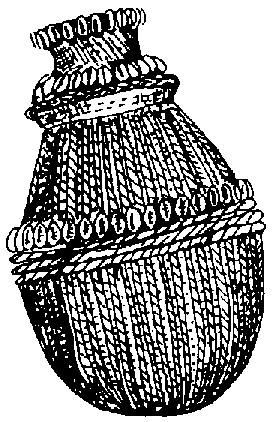
The gorfa is a pear-shaped, ridded container woven from root fibres of Asparagus sp. Gorfa also have an average capacity of about two litres and are used for storing (souring) and churning milk (Figure 4.3). They are smoked using a variety of charcoals (from Acacia nilotica, Cordia gharaf, Cordia ovalis, and Combretum molle). This also probably serves to sterilise and seal the container and burns off loose fibres on the inside to create a smooth surface. Smoking and rinsing the gorfa with milk occurs just prior to adding fresh milk that is to be stored for several days. The process of smoking and rinsing is repeated prior to pouring the next batch of fresh milk.
Figure 4.3. Depiction of a gorfa, a traditional container for churning and short-term storage of cow's milk. - Drawing: Courtesy of Jill Last.
The golondi is a vase-shaped vessel made by carving trunk sections of Erythrina abyssinica. It has a lid and is enclosed in fresh animal skin. It can also be smoked and rinsed prior to receiving up to five litres of fresh milk. These are primarily carried by herders to provide milk during their time away from the encampment.
The amuyou is a larger bottle-shaped vessel with a lid that is used for souring and churning milk, and it is also carved from E. abyssinica. These hold up to 15 litres of milk and are found most often in households that have a large number of milk cows.
Milk is consumed fresh in the household daily. Surplus milk may be given to relatives and neighbours or be stored as the first step in processing (Ephraim Bekele and Tarik Kassaye, 1987). Soured milk is referred to as ititu in the Borana vernacular and refers to all milk that is soured. Information on the microbiological and biochemical aspects of the souring process is available (Tarik Kassaye, 1990). General observations of milk processing reported by Ephraim Bekele and Tarik Kassaye (1987) suggest that the pastoralists are very skilled in milk processing and able to manipulate efficiently a variety of subtle factors despite their lack of sophisticated technology.
After a minimum of one day of fermentation, milk is churned to make butter. Milk is usually churned in the morning during warm weather, as the Boran appreciate the role of cooler temperatures in butter production. The gorfa is filled to 50-70% capacity with fermented milk and is cradled by a woman who gently rocks it back and forth. Pressure in the gorfa is occasionally released by removing a small wooden plug in the centre of the lid. This also releases a small drop of milk, which when rubbed between the fingers indicates whether butter grains have formed. The presence of butter is also indicated by a change in the pitch of the churning sound. Churning takes less than one hour (also see Section 7.3.3.3: Dairy processing and marketing). Butter is removed from the gorfa using a wooden spoon. The butter is used as a cosmetic for the skin and hair of both sexes, for roasting coffee beans, as food, or sold. The low-fat buttermilk that remains may be consumed by children or adults, used for rinsing milk containers, or given to animals. A small quantity of buttermilk that remains in the gorfa acts as a "starter" for the next batch of soured milk. The process is repeated about every 15 days, during which time four to five batches of butter prepared. After this the gorfa is washed with hot water, dried and smoked before being used for another cycle.
Butter may also be melted in a clay saucepan over fire, with fresh leaves and stems of Ocimum basilicum added for flavour, to make a dehydrated butter (ghee). The moisture is driven off and before the liquid clarifies a handful of maize, sorghum or other cereal flour is added along with some clean fresh grass and a pinch of salt. The mixture is then poured into a cattle horn or a small wooden container with a tight lid. This product is reported to keep up to three years. The long shelf life may be due to the hygienic handling of the milk, absence of moisture and/or the addition of salt (Ephraim Bekele and Tarik Kassaye, 1987). Ghee can be used in the dry season to prepare porridge or is consumed alone or as a supplement to coffee or tea.
For milk fermented from 5 to 60 days, surplus fresh milk is added to a designated gorfa or amuyou each day. As the curd coagulates, serum is removed by women using a wooden pipette (Ephraim Bekele and Tarik Kassaye, 1987). The serum is drunk. This process is repeated until the container is full of curds and all of the serum has been removed. The curds are then occasionally checked for mould. When mould forms the surface of the curd is removed and the lid is washed with hot water and cleaned with the leaves and stems of O. basilicum. When the lid is replaced some smoke from a charred piece of wood is captured in the container; this is repeated once in a while to help keep the surface of the curds free from undesirable microbes. Before consumption, the curd must be stirred to liquify it.
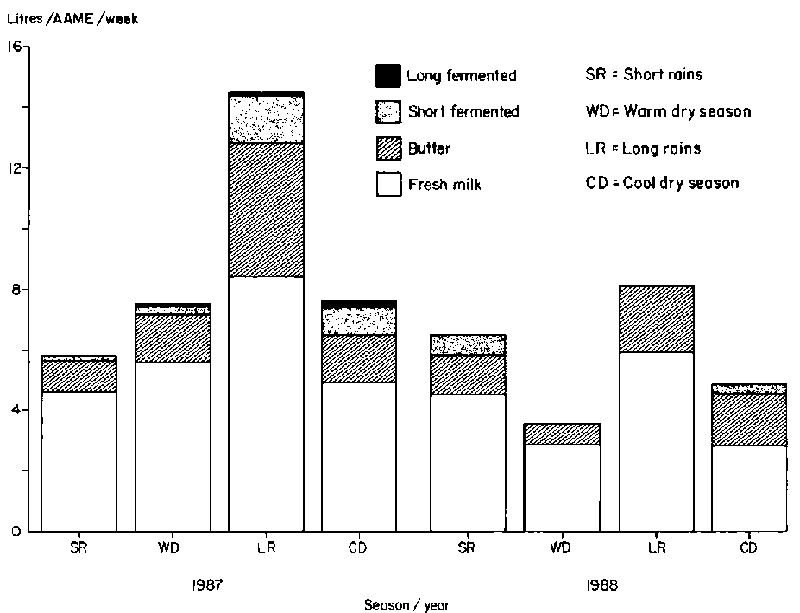
Milk allocation patterns were analysed for eight households over two years (1987-88) of average rainfall. Details of this study are reported in Coppock et al (1992) and Coppock et al (in press). The average milk offtake in litre/AAME/week ranged from 5.5 in the warm dry seasons to 11.5 during the long rains (Figure 4.4). Over eight consecutive seasons the average offtake was 7.3 litres/AAME/week. Sixty-nine per cent of total offtake was variously used as fresh milk, 24% stored and soured to make butter, 6% used otherwise as short-term soured milk and 1% was used as long-term soured milk (>5 days of fermentation). Seasonal means indicated that the amount of milk allocated for fermentation and processing (y) was positively related to milk offtake and thus to potential surplus (x) by the equation: y = 0.484(x)+1.152 (r2 = 0.91; P<0.01; df = 6). Seasonal patterns suggested that when there was surplus milk, butter making took precedence over other uses of short-term fermented milk, which in turn took priority over the production of long-term fermented milk (Coppock et al, in press).
The long rains and warm dry periods of 1987 provided the best contrast of seasonal quantities and uses of milk products (Table 4.3). Daily milk offtake ranged from 14.7 litres/AAME/week in the long rains to 7.5 litres/AAME/week during the preceding warm dry season. Although absolute quantities of products varied by season, the relative allocation tended to be consistent for a given product across seasons. Fresh milk was usually consumed and sold/gifted; long-term fermented milk was consumed; short-term fermented milk was mostly processed to make butter; and buttermilk was consumed by children in both seasons but also given to calves during the long rains. Respondents also indicated that in times of plenty, buttermilk may be given to dogs and cats. Butter allocation was poorly documented in the study, but interviews confirmed that butter is used as a hair dressing and skin cosmetic by both sexes, for roasting coffee beans, direct consumption or sale (D. L. Coppock, ILCA, unpublished data).
The 108 sample families surveyed in Holden (1988) and Holden and Coppock (1992) averaged 3.6 AAME/family and the mean annual ratio (±SE) of LLU:AAME ranged from 2 ± 0.1 (wealthy) to 1.1 ± 0.1 (intermediate) and 0.5 ± 0.1 (poor) overall, with the ratio increasing during the wet and transition periods compared to dry periods. Over 90% of LLUs were cows.
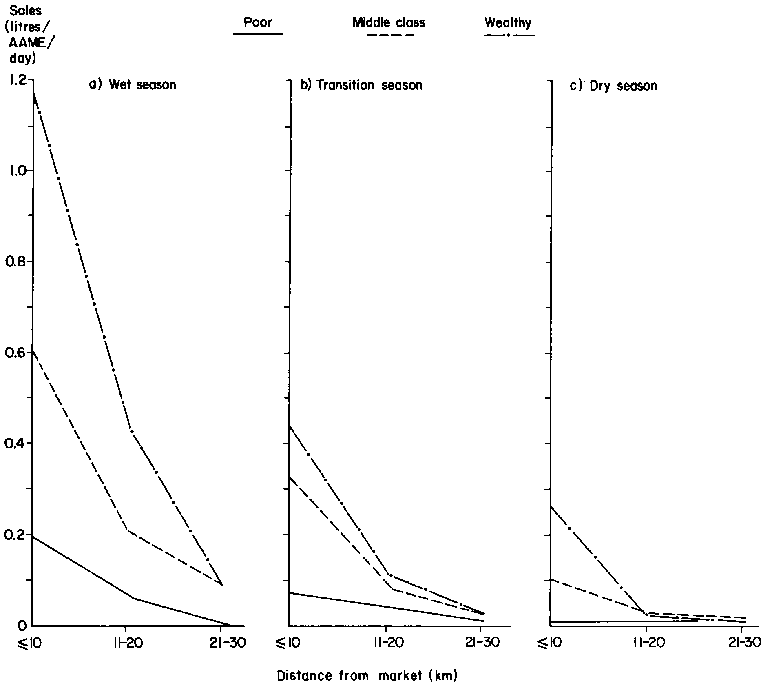
The ANOVA for daily dairy sales/AAME revealed a significant (P = 0.002) three-way interaction with no influence of market site. The interaction is shown in Figure 4.5 (a-c) and was caused by differences in supply by the different wealth classes in connection with interrelated effects of season on milk production and distance on marketing behaviour. Averaged across all distances to market, wealthy households sold six times more products than poor households in the wet season (0.56 vs 0.09 litre/AAME/day), but this difference increased another eightfold in the dry season. When distance to market was reduced from 21 to 30 km to <10 km, the dry-season effect ranged from nil within poor households to plus fourfold and 18-fold within middle-class or wealthy households, respectively.
Calculated across seasons and distances, wealthy families marketed about two to seven times more dairy products (0.26 litre/AAME/day) than the middle-class (0.14 litre/AAME/day) or poor (0.04 litre/AAME/day) ones, respectively. Across all wealth classes and distances, sales in wet periods (x = 0.28 litre/AAME/day) were over two to five times greater than those of transition x = 0.12) or dry (x = 0.05 litre/AAME/day) seasons, respectively. Dairy sales within a market radius of 10 km averaged 0.32 litre/AAME/day overall, which was over 3 to 16 times greater than that for the distance class of 11 to 20 km (x = 0.10 litre/AAME/day) or 21 to 30 km (x = 0.02 litre/AAME/day). These main effects were highly significant (P<0.001) and are reported in detail in Holden and Coppock (1992).
Table 4.3. Milk allocation patterns for eight Borana households during 1987-88 in the southern rangelands.
|
Product1 |
Long rains |
Warm dry season |
||||||||
|
Volume (ml/AAME/wk) |
Consumed (%) |
Sold/given2 (%) |
Calf (%) |
Other3 (%) |
Volume (ml/AAME/wk) |
Consumed (%) |
Sold/given2 (%) |
Calf (%) |
Other3 (%) |
|
|
Fresh milk |
8541 |
66 |
24 |
0 |
10 |
5428 |
69 |
20 |
|
11 |
|
Short-term |
|
|
|
|
|
|
|
|
|
|
|
Fermented milk |
5869 |
11 |
12 |
0 |
77 |
1871 |
6 |
1 |
7 |
86 |
|
Buttermilk |
4170 |
85 |
0 |
12 |
3 |
1485 |
93 |
|
|
7 |
|
Butter |
336 |
|
|
|
|
120 |
|
|
|
|
|
Long-term |
|
|
|
|
|
|
|
|
|
|
|
Fermented milk |
219 |
|
|
|
|
39 |
|
|
|
|
1 Sold/gift could not be adequately segregated in the data. Fresh milk, however, tended to be sold or gifted to relatives and neighbours while short-term fermented milk was gifted only.2 "Other" was poorly documented for most milk products. Other uses of short-term fermented milk, however, were largely comprised of milk churning for butter production.
3 Where buttermilk and butter (i.e. milk volume "lost" in the production of butter) were componenets of other uses for short-term fermented milk. See the text for descriptions of different milk products.
Source: Coppock et al (in press).
Linear correlations revealed several important features of marketing behaviour (Holder and Coppock, 1992). Considered across all households, total annual quantity of dairy products sold was positively correlated with total annual frequency of sales (r2 = 0.90; P<0.0001; N = 95). The total annual frequency of dairy sales was negatively correlated with distance from market (r2 = -0.60; P<0.0001; N = 95). On an annual basis, households within 10 km of market sold dairy products twice/week on average, whereas those beyond 20 km only sold once/month. The quantity of products sold appeared to remain constant across distance overall, but as families became wealthier they tended to sell more/market trip (r2 = 0.60; P = 0.0001; N = 95; Holden and Coppock, 1992).
Dairy income as a per cent of annual income was highly variable. Total average income reportedly ranged from EB 93445 and 784 for poor (N = 37), intermediate (N = 39) and wealthy families (N = 19), respectively. Distribution of results for poor and middle-class households was sharply divided into those who derived a minor (<10%) or major (>80%) proportion of their income from dairy marketing. The
ANOVA revealed only a significant (P = 0.002) main effect of distance on dairy income as a per cent of total income; the proportion increased from 10% (21 to 30 km) to 17% (11 to 20 km) and 30% (<10 km) across all wealth classes throughout the year. Although not significantly different (P>0.05), calculations were interpreted to suggest that the different wealth classes derived varied proportions of their annual income from dairy sales. The poor derived 24% over all seasons while the wealthy and middle class derived 16% and 17%, respectively.
The contribution of dairy sales to seasonal cash income showed a significant (P = 0.007) interaction of wealth and season that occurred only because the poor and middle class appeared to rely more on dairy sales throughout the year compared to the wealthy. The poor derived 58, 56 and 24% of their income from dairy sales in the wet, transition and dry seasons, respectively. For the same sequence the middle class derived 67, 21 and 12%, while the wealthy derived 38, 24 and 11 %. Across all households dairy sales contributed 57,35 and 16% to total income in the wet, transition and dry seasons, respectively (Holder and Coppock, 1992).
Income from dairy sales belonged to the women and appeared to be their only regular source of money (Holder and Coppock, 1992). All women, but especially the poor, used some of this money to buy grain. Overall, purchase of grain tended to increase in the dry season relative to other times of the year. Purchase of non-food items was more common among the wealthy or middle-class women than the poor ones as higher milk supply allowed the former more discretionary use of dairy income (Holder and Coppock, 1992).
Wealth and distance to market also influenced the types of dairy products sold (Coppock et al, in press). To illustrate the overall pattern using some extreme examples, poorer households closer to market tended to sell relatively more fresh milk while wealthier households far from market tended to sell relatively more butter. This is because of product shelf life and household surplus. Families tend to sell more butter if they live over 20 km from market because it doesn't spoil during the two-hour walk to town. So butter has a low marketing risk and is easy to sell at a good price. This is not the case with fresh milk. Because butter-making requires the accumulation and storage of about two litres of soured milk for up to five days, the production and sale of butter is done more by wealthy and middle-class families who have daily surpluses. In contrast, the poor may be forced to sell fresh milk because their milk supply can be insufficient for subsistence and must be traded for a greater supply of energy as grain. Holden et al (1991) noted that about 3.5 kg of grain (52.5 MJ GE) can be purchased from the sale of 1 litre of milk equivalent (3.3 MJ GE) in the dry season. Poor families close to town can sell fresh milk every day if necessary; this may be an important reason for the poor to reside closer to market centres (Coppock et al, in press).
The implications of dairy marketing for the welfare of humans and calves were illustrated by Holden et al (1991). The main points are summarised here.
Milk offtake and calf welfare
Across all families the average rate (x± SE) of milk offtake/cow was 4 litre 2.5% (N = 45) with 5.2 cows documented for each household. Significant (P£ 0.02) main effects on milk offtake rate were revealed for wealth class (N = 15 each), cow class (N = 77 each) and distance to market (N = 15 each). The poor took a higher rate (53%) than the middle class (36%) or wealthy (34%). The best-producing cows had higher rates of offtake (54%) than average cows (49%), which in turn had higher rates than cows that were poor producers (20%). Across all wealth strata and cow classes, offtake rates were highest within 5 km of market (44%) compared to within 6 to 10 km (40%) or 11 to 15 km (37%).
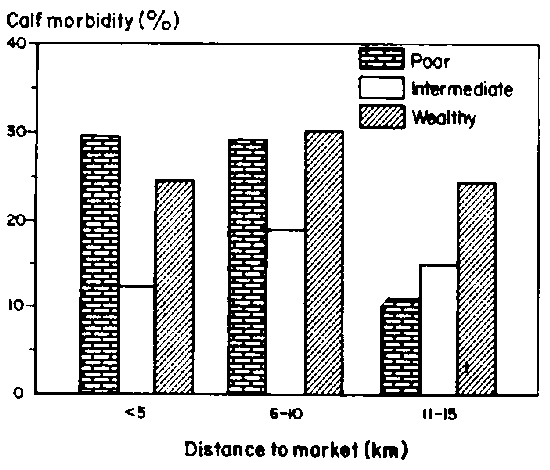
There were no significant effects of any factors on rates of calf mortality (P³ 0.56) with annual mortality averaging 18%. In contrast, there were significant (P£ 0.05) main effects of wealth and distance to market on calf morbidity rates which were based on an average of 17 calves/family over three years for a total of 750 observations. Morbidity rates were higher in: (1) wealthy (28%) and poor (25%) households than the middle class ones (16%) and (2) households <10 km from market (24% morbidity) versus those between 11 to 15 km (17%).
The three-way interaction of wealth × cow class × distance was significant (P = 0.01) which indicated that the incidence of morbidity increased among calves of lower-producing cows held by poorer households as distance to market decreased to less than 10 km (Figure 4.6). Overall morbidity rates averaged 23%.
Dairy marketing and human welfare
The reported daily intakes of dairy products by women or young children were not significantly affected by distance to market (P >0.05), but they were affected by wealth class (P£ 0.03). With each increase in wealth level (N = 18 each) intake of dairy products rose 120% for women and 45% for children but only wealthy families were significantly different (P£ 0.05) from the others (Holder et al, 1991).
In contrast, grain intake for women was significantly affected (P = 0.001) by distance to market, as women residing within 5 km of town reportedly consumed about 50% more grain than those living further away. Intake of grain energy as a proportion of total energy intake showed no significant effects among children (x = 16%; P³ 0.56) and only the main effect of wealth was significant among the women (P = 0.035). Poor, middle-class and wealthy women got 97, 92 and 87% of their energy intake as grain, respectively, and only the poor and wealthy differed significantly (P = 0.01).
Figure 4.6. Per cent incidence of reported calf morbidity for Borana households as affected by distance to market and family wealth. Source: Holden et al (1991).
The general pattern of cultivation by pastoralists on the Borana Plateau suggests a relatively recent increase in cropping activities. Apparently the pastoralists learn rapidly what crops are more appropriate for long or short rainy seasons, and adopt new methods such as animal traction (Hodgson, 1990).
EWWCA (1987) conducted some preliminary surveys with ILCA and CARE- Ethiopia concerning farming practices around the towns of Yabelo and Mega in the upper semi-arid and subhumid zones (see Section 3.3.1: Ecological map and land use). Towns such as these provide the focal point for the introduction of cultivation into the rangelands. From a sample of 38 pert-urban farmers, 21 were Boran, 10 Burji and the rest Amhara, Somali, Konso and Oromo. The mean duration of their farming activity was 32 years. They all worked plots about one hectare in size and held an average of six cattle and four small ruminants. Six of these farmers relied on handtools for land preparation while the rest used draft oxen for ploughing. Preferred crops were maize, teff (Eragrostis tef) and wheat.
In their field survey of 60 olla in four madda during November 1985, Coppock and Mulugeta Mamo (1985) found 49 olla had some area under cultivation. Maize, cowpea (Vigna unguiculata), haricot bean, sorghum and teff were commonly observed. informants reported that cultivation had been going on for two years. Seed was purchased from markets and ground preparation was done with sticks and hoes. Crops were frequently seen on heavily manured corrals that were recently made available because of dispersal and the high mortality of cattle during the 1983-84 drought (see Section 6.3.1.1: Livestock dispersal and herd composition). Despite the unanimous appreciation of the beneficial effects of fertilization on crop yields, none of the respondents took the trouble to use manure on their fields even though every encampment had tonnes of manure piled next to corrals from years of corral cleaning. Regional variation in cultivation was indicated because nearly all of the encampments in Did Hara, Web and Melbana were farming, but only 7 of 15 were doing so in drier Medecho. Out of the 49 encampments farming, 10 reported feeding crop residues to calves.
Holden and Coppock (1992) reported from their survey of pert-urban dairy marketing that 33% of 108 households were involved in grain cultivation in 1987. These were mainly middle-class and poor households.
Other cropping surveys were conducted by CARE-Ethiopia and ILCA in Web, Medecho, Melbana and Did Hara madda during the long and short rains of 1986 (D. L. Coppock, ILCA, unpublished data; R. J. Hodgson, CARE-Ethiopia, unpublished data). Questionnaires on farming practices were conducted on a larger sample of families while a subset of households were randomly selected to measure the size of their fields and estimate maize production using counts of cobs/stalk and stalk density.
In sum, the questionnaires during the long rainy season (N = 50) indicated that most sites had been cultivated from one to four years. All family members participated in land clearing, seedbed preparation, weeding and harvest. Men commonly took the lead in these activities. Women constructed elevated storage bins for maize. Manual work was usually done with digging sticks and hoes (66% of respondents) with the remainder using oxen or camels for ploughing. Harnesses were locally designed. Eight olla in four madda were selected for detailed analysis. In these, 35 of 77 families were farming. Plot size averaged 0.42 ha and over 95% of the area under cultivation was planted with maize, with traces of cowpea, haricot bean, sorghum and teff. Seed was procured from markets, neighbours and Pastor__al Associations (PAs; see Section 1.4.3: The SERP and the Pilot Project). Crop residues were fed to young calves. Like in the 1985 survey, crops were planted in abandoned corrals when possible, but no effort was made to add manure to fields. Crude estimates of maize density and cobs/stalk suggested that grain production was low and on the order of 1100 kg/ha on an air-dried basis (D. L. Coppock, ILCA, unpublished data).
Surveys in the same eight olla during the short rains of 1986 indicated that 53 of 60 families were farming and the average plot size was about 0.15 ha. Crop composition of cultivated area shifted to 82% cowpea, 15% maize, and 3% other minor crops. Increases in the proportion of legume was apparently due to the perception that probability of a successful harvest being greater for these species during the less predictable short rains (D. L. Coppock, ILCA, personal observation). Crop yields were not measured.
In the upper semi-arid zone near Beke Pond, Coppock (1988: pp 19-20) found that 17 out of 24 Gabra and 19 23 Borana households were farming and these represented all wealth strata. Fourteen of the Borana households reported that they had farmed for an average of 10 years (range: 1 to 27 years). They started either out of the necessity for food (8 of 13) or by seeing others (5 of 13). Fifteen Gabra households reported that they had farmed for an average of five years (range: 1 to 7 years). Six reported that they started to farm because of famine and nine because they had learned it from the Pastoral Association. Three of 18 Gabra families said that they hoped to stop farming when their herds build to a satisfactory level. The rest of the Gabra and all of the Borana respondents (20) indicated they would continue to farm regardless of the status of their livestock holdings.
On a regional scale, there is evidence that the area under cultivation had increased during the 1980s, it being speculated that this is directly related to impacts of the 1983-84 drought (see Section 3.3.1: Ecological map and land use). Citing aerial survey data collected from the 15475-km2 study area, Cossins and Upton (1988b: pp 272-273) noted that cultivated area increased fivefold (from 44 to 220 km2, or from 0.3 to 1.4% of the total land area) between pre-drought 1982 and post-drought 1986. Seventy per cent of the total 220 km2 under cultivation in 1986 was associated with towns and villages, while the remainder consisted of about 5300 plots scattered throughout the rangelands at an average of 3.2 plots/km2 (Assefa Eshete et al, 1987: pp 12-13).