5.3.1 General aspects of cattle management
5.3.2 Calf growth and milk offtake
5.3.3 Cattle production and pastoral wealth
5.3.4 Water restriction and cattle productivity
5.3.5 Weight gain patterns for bulls and steers on a ranch
5.3.6 Cattle health and sources of mortality
5.3.7 Ancillary livestock
The Boran manage cattle in a traditional pastoral fashion. Nursing calves are kept separate from their dams except when calves are used to stimulate let-down of milk when they share milk production with people at usually two (or rarely three) milkings per day. Bulls are commonly run with cows all year and breeding is thus uncontrolled. Periodicity of breeding, however, is strongly influenced by seasonal fluctuations in nutrition (see Section 2.4.1.5: Native vegetation). As will be shown, seasonal breeding results in seasonal patterns of calving and milk production. Based on preliminary data collected at Did Hara madda in 1983, Belete Dessalegn (1983) noted that adult cattle were corralled an average of 11 hours per 24-hour day and spent 50% and 22% of the remainder of the time grazing and traveling, respectively. Cows were milked in the early morning and evening. Cattle were recorded to walk up to 27 km for a round trip on a grazing day and up to 46 km on a watering day during a dry season. Grazing time on the watering day was compensated by a shorter time in the corral (Belete Dessalegn, 1983). Local crude salt from Chewbet (near Mega) with composition of 41% NaCl and minor quantities of macro and trace minerals is frequently provided to cattle in corrals (Kabaija and Little, 1987). Cattle spend 98% of their feeding time on grasses and other herbaceous plants and 2% on browse (see Section 3.3.5.1: Livestock food habits).
Where water and grazing resources permit, the Boran lead a semi-settled existence (Cossins and Upton, 1987). The household may remain sedentary throughout a given year or succession of years and family residences in a given madda may last for generations. Cattle are herded either as less mobile warra groups or far-ranging forra groups, depending on conditions of the resource base, availability of labour and according to the sex and age class of animals and whether or not cows are in milk. As described by Donaldson (1986: pp 9-10, 31-36), the primary purpose of the warra-forra system is to distribute animals away from the home area during times of restricted availability of forage (and sometimes water). Strong and less-productive animals are sent with the forra herds that are usually managed by older boys and young men (Cossins and Upton, 1987: p 210). At the extreme, warra herds are comprised of milking cows and some weak or sick yearlings that return to the encampment each night. These are kept within closer grazing orbits whose radii vary depending on whether the day is used for grazing or grazing and watering (Figure 2.12a, b). In contrast, the forra herd is composed of dry cows and males of diverse ages and ranges widely (sometimes across the Kenya border if the local resource base is depleted). The composition and size of warra and forra herds is dynamic across seasons and type of average rainfall, dry or drought years. Years of high rainfall may be characterised by warra herds of larger size and a more heterogeneous composition while the inverse holds for forra herds. Examples of the dynamic nature of assigning animals to warra or forra herds in response to drought are given in Section 6.3.1.1: Livestock dispersal and herd composition.
Both warra and forra herds may be watered once every three to four days during dry periods. This is considered a management adaptation to minimise labour required to raise water from the deep wells (see Section 2.4.1.7: Water resources) and maximise size of grazing orbits (Nicholson, 1987a).
Calf management was initially described by Donaldson (1986: pp 34-36). During the first 7 to 12 months of life the calf diet consists of milk from restricted suckling and a combination of grazed and cut-and-carry forage. Nursing calves may be tethered near the hearth in the main room of the family hut or in special pens near corrals. Pens are constructed from wood and are often topped by a mud roof. The amount of milk a calf receives varies with season, milking class of the dam (high, average or low) and human demand for milk. In general, milk intake for calves will be the highest during wet seasons for those born to high-producing dams owned by wealthier families that put less demand on the milk supply because the ratio of milk cows to people is high (see Section 5.3.3: Cattle production and pastoral wealth).
The married women are mainly responsible for day-to-day management of nursing calves. This includes construction, maintenance and cleaning of calf pens, forage collection, removal of external parasites, transport of water for calf consumption during dry seasons and the allocation of milk to calves and people (see Section 5.3.3: Cattle production and pastoral wealth). The household heads (usually male) receive the income from the sale of cattle and they can oversee day-to-day management of calves, especially in the case of a new and inexperienced wife (Holder, 1988: p 40). Women control income from sales of dairy products (see Section 4.3.5.3: Effects of distance to market wealth and season on dairy marketing).
The household investment in calf rearing varies depending on the health and vigour of the calf, work-force available and the season when the calf is born. If a calf is sickly there will typically be a higher investment in hand-rearing for as long as necessary. The innovation of the Borana kalo (fodder bank), described in Section 7.3.1.2: Grazing management, is in part a strategy to facilitate access to grazing by sick or injured immatures that cannot travel far. The calf-management pattern is thus highly variable but generally has these features:
1) During the first one or two months calves are continuously tethered inside the family hut or in pens except the when they suckle in the morning and evening or allowed to bask in the sunshine and wander around the encampment. All of their food at this time is milk Under restricted access. Calves are typically allowed to suckle two teats while the women milk the other two. Calves are always used to stimulate milk let-down (Donaldson, 1986: p 34). If a calf dies the skin may be stuffed and used to stimulate milk let-down (Donaldson, 1986). Milk intake by calves is regulated to ensure that they don't get too much milk and become ill (D. L. Coppock, ILCA, personal observation; Roy, 1980);2) Calves born during the long rains (April to early June and a time of high forage quality, abundance and diversity), in the third month of life they may be allowed to graze around the encampment and/or receive cut-and-carry forage in addition to restricted access to milk. Donaldson (1986: p 35) estimated the average (±SE) daily quantity of cut-and-carry forage to be 0.22-0.07 kg/calf on an as-fed basis (N = 10). This feeding pattern continues until weaning at 7 to 12 months of age. Forage from grazing gradually makes up a larger proportion of the diet until weaning. Grazing may be initially delayed during the wet season if local outbreaks of ticks or other parasites are considered too risky for calf health.
3) If calves are born during the short rains (October and November) or in either dry season, the reliance on cut-and-carry forage may be much greater. These calves may not graze until the following long rains. Women may spend many hours per week collecting forages for calf feeding, an investment of time and energy that can substantially increase during dry seasons (see Section 4.3.3: The labour of married women). The greater emphasis on hand-feeding young calves during stressful periods is probably because by the time dry seasons are well underway, forages in proximity to encampments become heavily grazed. Another reason for hand-feeding at the height of the warm dry season may be to minimise exposure of young calves to excessive heat and possible dehydration while grazing (D. L. Coppock, ILCA, personal observation).
4) Depending on health and general condition, a calf as young as four months of age can join a calf herd (supervised by children) that roams within a kilometer of the encampment. By the time the calf is one year old and able to travel greater distances, it may join the forra herd (Donaldson, 1986: P 34).
Given limited resources, rearing by the Boran is relatively intensive. Efforts to keep animals under confinement during most of their first year is important in helping calves themmoregulate in what can often be a cold and windy environment during rainy periods. This minimises risks of predation. Manure is regularly removed from calf pens and women attend to health problems such as removal of ticks using kerosene application and traditional remedies to heal wounds and internal ailments (see Section 3.3.5.2: Household use of plants and pastoral perceptions of range trend).
Another major activity is bringing water to young immobile calves during dry periods. During wet seasons local ponds fill up and calves can either walk short distances to water or it can be brought to them by women or older children using traditional containers or plastic jerry cans. During dry seasons, however, milk yields drop, forage dries out and it becomes necessary for women to haul water from distant wells. In an analysis of management for seven calves, Donaldson (1986: pp 34-35) estimated that on average (±SE), calves received their first hand-carried water at 59±17 days of age, were watered once every 5.5±0.6 days and consumed 278±78 ml of water/day. Menwyelet Atsedu (1990) found that 86% of 67 respondents stated that calves were watered every other day in dry periods. The range of distances from encampments to wells (7 to 16 km) is probably dictated to a large extent by how far women and calves can walk in dry seasons to get to water supplies and cut-and-carry forage (Cossins and Upton, 1987; Hodgson, 1990).
Average live weights of nursing calves reared under pastoral management during 1981-82 are shown in Table 5.1, and suggest that prior to weaning at 210 days of age, animals gained only 28.6 kg for an overall average daily gain (ADO) of 136 g/headtday. At 90 days of age only 15 of 106 calves were growing at or above a rate of 1 % of live weight per day (Nicholson, 1983a: p 17). Births (N = 133) were seasonally distributed. Most (65%) occurred during March to May (before and during the long rains) followed by another 17% during the short rains in October and November (Nicholson, 1983a: p 16). Significant main effects and interactions among location, birth month, and birth season on calf weight up to 210 days were evident (Nicholson 1983a: pp 9, 16-19). Effects of location were speculated to be related to differences in local pastoral management and/or ecology that influenced animal health, milk production, watering frequency and/or forage intake. Effects of time of birth were attributable to seasonal effects on the nutrition of dams during their last few weeks of pregnancy and during lactation. Calves born during the long rains thus tended to have higher birth weights than those born during dry seasons when dams were under more stressful nutritional conditions. Likewise, compared to those born in the middle of the long rains, calves born during the short rains had access to a milk yield that would be substantially modified by harsh nutritional conditions as a result of the following warm dry season from December through March. Growth curves for calves from the different regions are provided in Nicholson (1983a: pp 10-15) and are quite variable.
Table 5.1. Average calf live weights and average daily gain (ADG) at five ages prior to weaning in the southern rangelands during 1982.1
|
Category |
Age (days) |
||||
|
1 |
30 |
90 |
150 |
210 |
|
|
Live weight (kg) |
18 |
25.2 |
35.3 |
44 |
46.6 |
|
ADG (g) |
|
240 |
192 |
240 |
136 |
1 N = 133,133,106,91 and 37 for animals at 1,30,90,150 an.
Source: Nicholson (1983a).
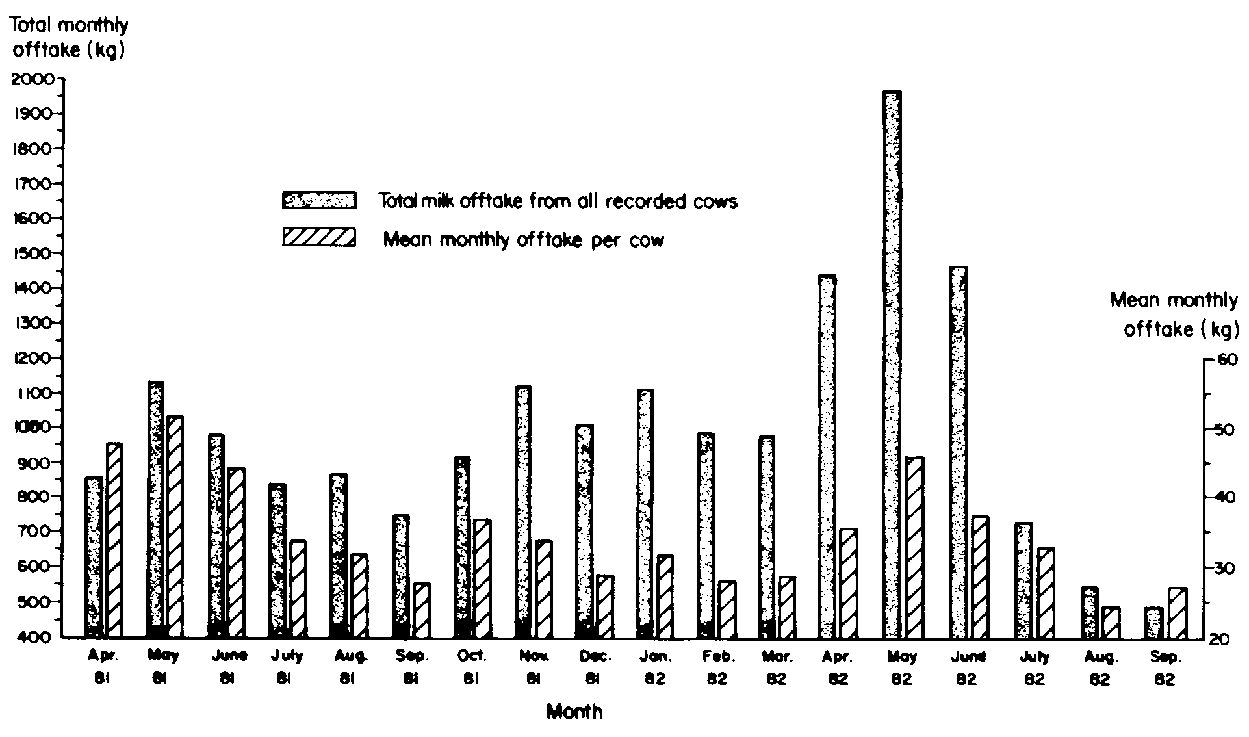
In relative and absolute terms, milk offtake for human consumption varied according to season, stage of lactation, location, cow, and the time of day that milking was done (Nicholson, 1983a: p 20). Evening offtake averaged 18% greater than morning offtake probably as a result of the longer interval between morning and evening milking than the reverse (i.e. 14 vs 10 hours, respectively). Mean monthly offtake/cow (±SE) varied from 39-15.9 (Melbana madda; N = 60) to 25±16.8 kg (Hobok madda; N = 76). Total offtake for 51 lactations (x±SE) averaged 313±15.2 kg. Total offtake appeared to increase as duration of lactation increased; this is illustrated in Table 5.2. Influence of season and year on total and mean offtake is shown in Figure 5.1. Maximum deviations occurred between the long rains and the end of the dry periods. For example, the mean offtake/cow during the month of May in 1981 (52 kg) was over twice that of September 1981(27 kg), at the end of the cool dry season. Similarly, values for May 1982 (46 kg) were 64% higher than those in February 1982, at the end of the warm dry season.
Table 5.2. Milk offtake features for 51 Boran cows under traditional management in the southern rangelands during 19 months in 1981-82.
|
Offtake range (kg) |
No. lactations within range |
Mean lactation length (months) |
|
100-149 |
2 |
7 |
|
150-199 |
6 |
7 |
|
200-249 |
3 |
8.7 |
|
250-299 |
17 |
8.5 |
|
300-349 |
10 |
8.3 |
|
350-399 |
4 |
8.8 |
|
400-449 |
2 |
9 |
|
450-499 |
3 |
14.7 |
|
500-549 |
2 |
14 |
|
550-600 |
2 |
13.5 |
Source: Nicholson (1983a).
The peak cumulative milk offtake in May 1982 (nearly 2000 kg) reflected a higher number of cows in milk (43 out of 51) compared to May 1981 (22 out of 51). The low cumulative yields in dry seasons reflected more of a reduction in output/cow rather than a large decline in numbers lactating (usually around 30). Nicholson (1983a: pp 25-26) also noted that offtake followed a bimodal distribution in reflection of the strong nutritional effects on lactation in different seasons (Figure 5.2 a, b). If a cow gave birth in the long rains, offtake would have a pronounced early peak soon after calving and a smaller secondary peak during the short rains in October and November. However, if a cow calved in the short rains, the first peak would be smaller, followed by a larger peak during the subsequent long rains. This seasonal effect obscured effects of stage of lactation on milk yield.
Median and mean lactation lengths of 23 cows were 250 and 320 days, respectively (Nicholson, 1983a: p 33). The highest total milk yield was 1952 kg over 13 months (5 kg/day) while the lowest was 554 kg over 7 months (2.6 kg/day). The mean yield (±SE) was 922 66.7 kg over 10.6 months (2.9 kg/head/day). However, Nicholson (1983a: p 38) considered the median value of 843 kg to be the best estimate because it was not unduly biased by a few excessively large lactations. Table 5.3 gives the distribution of milk yields and duration of lactation for the 23 cows. For lactations longer than seven months or shorter than 11 months, season of birth strongly affected milk yield; lactations that started in March or April were 31 % higher than those started in October or November (Nicholson, 1983a: p 33). Ratios of milk used for human offtake versus calf intake across location and month of lactation are presented in Nicholson (1983a: pp 36-37). Overall, the offtake rate (±SE) was 39±0.24% for lactations that began in the long rains and 29±0.12% for those which began in the short rains.
Figure 5.2 Examples of bimodal lactation curves for two Boran cows under pastoral management in the southern rangelands during 1981-82. - Source: Nicholson (1983a).
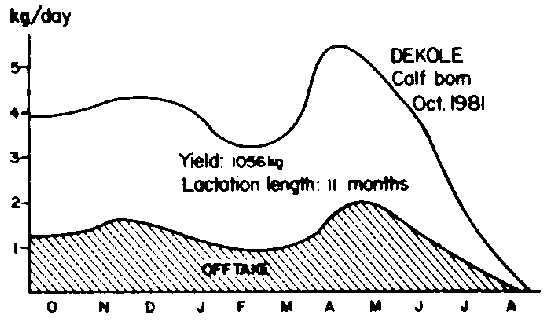
Figure 5.2 Examples of bimodal lactation curves for two Boran cows under pastoral management in the southern rangelands during 1981-82. - Source: Nicholson (1983a).
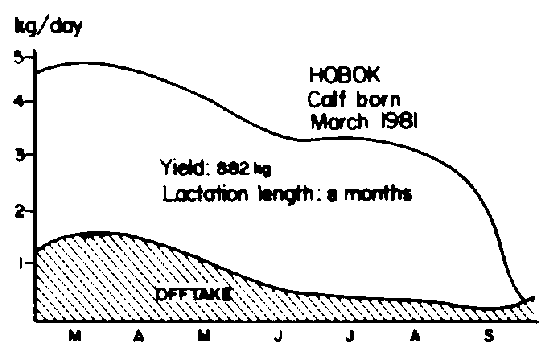
Table 5.3. Estimated milk yields and duration of lactation for 23 Borana cows under traditional management in the southern rangelands during 1981-82.a
|
Milk yield (kg) |
Average duration of lactation (months) |
Frequency |
|
501-600 |
7 |
3 |
|
601-700 |
7.3 |
2 |
|
701-800 |
6.5 |
3 |
|
801-900 |
7.8 |
5 |
|
901-1000 |
8.2 |
4 |
|
1001-1100 |
8.4 |
1 |
|
1101-1200 |
10 |
3 |
|
1201-1500 |
10 |
1 |
|
1501-2000 |
13 |
1 |
a Where milk yields were estimated from offtake for human consumption plus milk intake required for observed growth of calves. See also Figure E1.Source: Nicholson (1983a).
There were 24 calves with complete records for milk intake and growth (Nicholson, 1983a). A comparison of the actual weights of calves at an average of 250 days of age with their estimated weights based on consumption of milk otherwise "lost" to humans is presented in Table 5.4. The actual weight (x±SE) averaged 61±2.6 kg while the projected weights based on an additional milk intake of 312 kg were 131 6.6 kg, an increase of 115%. This reflected an increase in milk intake from 195 kg (35% of yield) to 607 kg (100% of yield). Conversion of the additional milk to live weight incorporated estimates of milk composition (Nicholson, 1983a: p 33). Total solids comprised 14.54% and fat 5.4%. The remaining composition was nonfat solids (9.14%), protein (3.3%), lactose (4.9%) and ash (0.8%). Conversion of offtake into predicted calf growth suggested that calf growth was considerably retarded by a restricted nutrient intake and it was hypothesised that such nutritional stress could result in delayed pubertal development with negative consequences for lifetime productivity of females (Nicholson, 1983a: p 26).
The 30 encampments studied by Mulugeta Assefa (1990) included a total of 633 households of which 113 (18%) were classified as wealthy, 200 (31 %) as middle class and 320 (51%) as poor (see Section 4.3.1: General household structure and economy in average rainfall years). Results from statistical analyses of effects of household wealth on family size, cattle holdings and production parameters are given in Table 5.5. Sampled households of different wealth strata varied in the number of family members and absolute and per capita holdings of cattle. Wealthy households had 7 and 2.6 times the number of cattle that poor or middle-class households held in absolute terms. The ratio of total cattle per person varied from 14.2:1 (wealthy), 7.3:1 (middle class) to 2.3:1 (poor) and the ratio of milk cows to person tripled from poor to middle class and doubled from middle class to the wealthy (Table 5.5). The percentage of female cattle for all herds was estimated at 74% (Mulugeta Assefa, 1990: p 22).
Although no significant differences (P>0.05) were observed among cattle of the various wealth classes in terms of reported age at first calving, calving interval, or daily milk offtake per cow for human consumption, all other aspects did vary. In general, poorer households had fewer cows and these reportedly had lower calving rates, longer lactation periods, lower daily milk production and lower milk intake for calves. Poorer families also milked their cows more frequently and intensively. Poorer families had the highest rates of calf mortality averaged across all types of rainfall years but rates were similar to those of wealthy families when average rainfall, dry and drought years were considered separately. Middle-class families had the lowest rates of calf mortality in dry and drought years (Table 5.5).
Table 5.4. Actual calf live at weaning under traditional pastoral management and predicted live weights given hypothetical access to total milk production in the southern rangelands.1
|
Age (months) |
Live weights (kg) |
Age (months) |
Live weights (kg) |
||
|
Actual |
Predicted |
Actual |
Predicted |
||
|
7 |
53 |
113 |
6 |
41 |
91 |
|
8 |
54 |
124 |
7 |
74 |
131 |
|
8 |
54 |
137 |
7 |
53 |
102 |
|
13 |
72 |
155 |
8 |
56 |
129 |
|
14 |
97 |
239 |
8 |
42 |
98 |
|
10 |
65 |
128 |
7 |
58 |
99 |
|
8 |
68 |
159 |
11 |
65 |
141 |
|
9 |
49 |
103 |
8 |
57 |
124 |
|
11 |
60 |
137 |
10 |
66 |
112 |
|
8 |
61 |
135 |
11 |
65 |
153 |
|
6 |
44 |
100 |
10 |
72 |
176 |
|
12 |
72 |
125 |
7 |
68 |
142 |
1 Predicted calf weights were based on an equation converting milk offtake to live weight (see Figure E1).Source: Nicholson (1983a).
Table 5.5. Household wealth effects on family size per capita cattle holdings and herd size, composition and various production aspects of cattle in the southern rangelands during 1985-89.1
|
Variable |
Units |
Wealth class2 |
||
|
Wealthy |
Middle class |
Poor |
||
|
Family size |
no |
6.4x |
4.8y |
5.6z |
|
Cattle herd |
no |
91x |
35y |
13z |
|
Mature male cattle |
no |
24x |
9y |
3z |
|
Female cattle (<4 years old) |
no |
27x |
12y |
5z |
|
Mature cows |
no |
39x |
14y |
5z |
|
Cows: person |
ratio |
6x |
2.9y |
0.8z |
|
Age at first calving |
years |
4.5x |
4.5x |
4.4x |
|
Calving rate |
% |
71x |
70x |
56x |
|
Calving interval |
days |
455x |
454x |
462x |
|
Lactation period |
mo |
7.5x |
8.2x |
8.4y |
|
Daily total milk yield |
ml |
1983x |
1899x |
1570y |
|
Daily milk offtake |
ml |
864x |
836x |
832x |
|
Daily milk intake by calves |
ml |
1119x |
1063x |
737y |
|
Daily milking frequency/cow |
no |
1.4x |
1.7y |
1.8z |
|
Average teats milked/cow/day |
no |
1.4x |
1.6y |
1.8z |
|
Calf mortality3 |
|
|
|
|
|
All years |
% |
23.9x |
16.5y |
30.4z |
|
Average rainfall year |
% |
19.4x |
18.4x |
25.1x |
|
Dry year |
% |
21.4x |
11y |
25.7x |
|
Drought year |
% |
69.2x |
50y |
89x |
1 Where tabulated data are based on interviews of 90 households regarding production history of 482 cows and 1540 calves. Entries in the same row accompanied by a different letter (x, y, z) were significantly different (P£ 0.06).2 Where wealth classes are based on ratios of cattle to people per household.
3 Where an average rainfall year has 600 mm or more of rainfall, a dry year has 460 mm or less and a drought year is a second consecutive dry year.
Source: Mulugeta Assefa (1990).
Productivity parameters of cattle were also affected by the productivity class (high, medium or low) to which they were assigned by the Boran (Table 5.6). These categories seemed to be determined by milking characteristics such as length of lactation, daily milk output as measured by daily milk offtake. Animals in the high producer class were consequently milked more frequently and more intensively, with more milk still remaining for calves compared to low producing cows. Paradoxically, however, compared to low-producing cows, the high producers were reported to have their first calf slightly later and a slightly longer calving interval over their lifetime (Table 5.6). Overall, the 482 cows had an average of 3.2 calves at the time of the survey. With an average age at first calving of 4.46 years and an average calving interval of 15 months, the average age of cows surveyed was about nine years. The Boran reported that a cow may continue to calve until it is 17 years old (Mulugeta Assefa, TLDP/ILCA postgraduate researcher, personal communication).
Using interviews and empirical methods, Nicholson and Cossins (1984) and Cossins and Upton (1987: p 207) reported results similar to those of Mulugeta Assefa (19903 for average age at first calving (four years), annual calving rate (75%), calving interval (15 months) and mortality rate of nursing calves (25%).
Results similar to those from Nicholson (1983a) were also obtained by Mulugeta Assefa (1990) regarding seasonal effects on calving and milk production (Table 5.7). Out of the 1549 calves in the cow history analysis, 69% were reportedly born in the long rains, 17% in the short rains and the remaining 14% during the dry periods. Reported milk production, offtake per cow, and milk intake per calf all roughly doubled in wet compared to dry periods, while offtake rate averaged 46% in each season. The average total milk production per cow over a 7.9-month lactation was estimated as 436 kg, with 201 kg (46%) for people and the rest for the calf (Mulugeta Assefa, 1990: p 20).
5.3.4.1 Effects on calves
5.3.4.2 Effects on cows
5.3.4.3 Intake of water, feed and milk
Varying watering frequencies had no effect on calving percentage as the means for all four treatments over the two calving seasons in 1984 and 1985 ranged from 74 to 78.5% (Nicholson, 1987a: p 121). Average birth weight of calves overall was 26.4 kg (N = 398). Birth weights of calves whose dams were in the daily watering treatment were only about 10% higher on average than those from other treatments in 1984-85 (25.8 kg vs an average of 23.4 kg, respectively), a negligible difference (Nicholson, 1987a: p 121). More resolution into treatment effects was provided by 210-day calf weights at weaning (Table 5.8). Compared to daily watering, trends indicated that when watering was limited to once every three days, 210-day weights decreased on the order of 12% across all three years. The animals watered ad libitum could not be followed after the first year, so only live weights of the remaining treatments Up to two years of age are available (Table 5.9). Despite an apparent spread of 21 kg (11 % of the overall mean) at one year of age, weights of animals from all treatments had converged by two years of age with a spread of 6 kg (2% of the overall mean).
Table 5.6. Influence of cow-productivity class (high, medium or low) on various aspects of production in the southern rangelands during 1985-89. 1
|
Variable |
Units |
Cow-productivity class |
||
|
High |
Medium |
Low |
||
|
Age at first calving |
years |
4.54x |
4.47xy |
4.38y |
|
Calving interval |
days |
478x |
449y |
445y |
|
Lactation period |
months |
8.7x |
8.2x |
7.1y |
|
Daily milk yield |
ml |
2309x |
1684y |
1460z |
|
Daily milk offtake |
ml |
1239x |
789y |
505z |
|
Daily milk intake by calves |
ml |
1070x |
895y |
955y |
|
Daily milking frequency |
no |
2x |
1.8y |
0.9z |
|
Average teats milked/cow/day |
no |
2x |
1.8y |
1.5z |
1 Where tabulated data are based on interviews of so households regarding production history of 482 cows and 1549 calves. Cow productivity classes were defined by the respondents. Entries in the same row accompanied by a different letter (x, y, z) were significantly different (P£ 0.05).Source: Mulugeta Assefa (1990).
Seasonal weights of lactating cows changed markedly and ranged from around 400 kg during and soon after wet seasons to about 320 kg at the end of the long dry season. As a per cent of live weight prior dry season, the variation in weight loss was from about 20% for groups watered daily or every other day to 27% for those watered once every three days (Nicholson, 1987a: p 123). Weight dynamics were confounded by pregnancies. Time-series graphs indicated no clear differences among treatments. During the wet season all groups regained weight that they had lost in the previous dry season. Non-lactating cows also showed seasonal changes in live weight but these fluctuations were not as dramatic as those of the lactating ones. Time-series graphs suggested that when these cows were watered daily, they were only 20 kg heavier than those watered once every three days (415 vs 395 kg, respectively). The group watered every second day had weights that fell in between the two groups. Differences in live weight were most apparent during the height of the dry season when cows watered daily weighed about 405 kg vs an average of 375 kg for the others (Nicholson, 1987a: p 124). Condition scores for both lactating and non-lactating cows suggested that animals watered daily were usually in a higher plane of condition throughout the trial than animals in other groups (Nicholson, 1987a: p 125).
Table 5.7. Reported calf birth frequency, milk production and allocation and milking intensity of cows during four seasons in the southern rangelands during 1985-89.1
|
Category |
Season2 |
|||
|
Warm dry |
Long rains |
Cool dry |
Short rains |
|
|
Number of births |
161 w |
1078x |
43y |
267z |
|
Daily milk production per cow (ml) |
1023w |
2619x |
1342y |
2286z |
|
Daily milk offtake (ml) |
467w |
1216x |
625y |
1069z |
|
Daily milk intake by calves (ml) |
556w |
1403x |
717y |
1226z |
|
Daily milking frequency per cow |
1.4w |
1.6x |
1.5y |
1.6x |
|
Average number of teats milked/cow/day |
1.4w |
1.6x |
1.5y |
1.6x |
1 Based on a sample of 482 cows and 1549 calves. Entries in the same row accompanied by a different letter (w, x, y, z) were significantly different (P£ 0.05).2 Where the wamm dry season occurs from December to March, the long rains occur from April to June, the cool dry season from July to September and the short rains from October to November.
Source: Mulugeta Assefa (1990).
Table 5.8. Live weights of calves (±SD) at 210 days of age whose dams were subjected to various levels of water restriction at Abemosa ranch in the Ethiopian Rift Valley during 1983-84.1
|
Water-access treatment |
Calves born in |
||
|
1983 |
1984 |
1983-84 |
|
|
Ad libitum |
147.3 ± 19.61 |
143.9 ± 18.83 |
146.2 ± 17.44 |
|
Once daily |
142.1 ± 20.81 |
139.8 ± 14.3 |
139.6 ± 18.69 |
|
On alternate days |
136.5± 18.78 |
133.8± 16.48 |
130.8± 17.91 |
|
Every third day |
132 ± 18.67 |
125.6± 16.86 |
125.5 ± 18.03 |
1 Where N = 98, 101 and 199 for calves born in 1983, 1984 and both years, respectively.Source: Nicholson (1987a).
Table 5.9. Live weights of weaned immature cattle (± SD) at various ages whose dams had been subjected to different levels of water restriction at Abernosa ranch in the Ethiopian Rift Valley during 1983-84. 1
|
Water-access treatment |
Age (months) |
|||
|
12 |
15 |
18 |
24 |
|
|
Once daily |
209.9±24.64 |
218.7±23.32 |
230±27.8 |
312.8±19.65 |
|
Alternate day |
188±6.99 |
210.2±15.99 |
216.3±14.76 |
308.4±14.37 |
|
Every third day |
191.4±13.99 |
215.5±23.5 |
215.5±27.1 |
306.1±17.7 |
1 Where N = 74 calves born in 1983 with an average of 25 per group.
Source: Nicholson (1987a).
Relative water consumption per unit live weight of cows in the dry season is shown in Table 5.10. Maximum observed intake was 90 litres/head for a lactating cow with a dehydrated weight of 301 kg. Maximum water intake as a percentage of dehydrated weight was 34.4%. Cows under restricted watering were more efficient in their water use. Water consumption by lactating cows watered once every three days was up to 34% lower compared to those watered daily. For non-lactating cows the same contrast varied by 22%.
Faecal output and estimated feed intake are presented in Table 5.11. These data were interpreted to suggest that subjecting cattle to restricted watering depressed dry-maker intake by 13 to 20% for steers.
Results for milk intake by calves in the third month of lactation shown in Table 5.12 suggested that milk intake was depressed by about 12 to 14% in animals whose dams were watered once every three days compared to the others.
Of the 1535 animals in Group 1 (see section 5.2.3 above), only 1179 (77%) were analysed because these had complete data on sex (entire or castrate), purchase origin and herder group (Nicholson, 1983b: p 4). Over seven months (212 days), from November 1980 during the short rains right through the long dry season to June 1981 (the end of the long rains), all animals on average gained about 40 kg from an initial weight of 167 kg (Table 1, Annex E). Weight gains of bulls and steers were similar, but there were significant effects (P<0.001) due to origin and herder group. Nicholson (1983b: p 9) noted some minor data problems of where animal was purchased and herd groups as well as some initial differences in weight, but pointed out differences in weight gain that could have been influenced by location of purchase. Animals from Mega and Marmaro regions had similar initial weights (Table 1, Annex E) and were evenly distributed among herd groups. However, the animals from Mega gained only 140 g/day versus 237 g/day for those from Marmaro. Nicholson (1983b: p 9) hypothesised that this difference was related to interactions between genotype and environment. Animals from Mega (located in a mountain range at 1900 m in the upper semi-arid and subhumid zones) were supposed to have been crosses of local Borans and highland zebus that were less adapted to the arid conditions of Sarite. In contrast, animals from Maramaro were presumed to have been reared under conditions similar to those at Sarite. Other superior performers (in terms of ADG) came from Orbati and Hobok which are also hot and dry areas. The second worst performers after those from Mega came from Dubluk located at 1500 m and only 40 km from high-altitude Mega.
Table 5.10. Average warer consumption (±SD) of lactating (LC) or dry cows (DC) subjected to various levels of water restriction at Abemosa ranch in the Ethiopian Rift Valley during the dry season (September to March) in 1983.1
|
Water-access treatment |
Water consumption |
Per cent of dehydrated weight |
|||
|
Cow class |
Per drinking event |
Per day (ml/kg) |
|||
|
(litre/head) |
(ml/kg) |
||||
|
Once daily |
LC |
28.7±10.1 |
79.4 ±17.6 |
79.4 ±17.6 |
7.9 |
|
DC |
23.3±7.8 |
57.3±11.3 |
57.3±11.3 |
5.7 |
|
|
Alternate days |
LC |
54.6±12.6 |
151.0±42 |
75.5±9.0 |
15.1 |
|
DC |
42.0±9.7 |
108.2 ±28.3 |
54.1±14.7 |
10.8 |
|
|
Every third day |
LC |
65.3±14.2 |
156.7±50 |
52.2±14.7 |
15.7 |
|
DC |
49.4±10.9 |
133.5±32.3 |
44.5±12.5 |
13.4 |
|
1 Where N = 26 per treatment.
Source: Nicholson (1987a).
Table 5.11. Faecal output and estimated feed intake for steers subjected to various levels of water restriction at Abernosa ranch in the Ethiopian Rift Valley in 1983. 1
|
|
Observed faecal output (g/kg0.75/day) |
Calculated feed intake (g/kg0.75/day) |
Mean live weight (kg) |
|
Once daily |
35.9 |
52.9 |
248 |
|
Alternate days |
30.6 |
42.3 |
238 |
|
Every third day |
31.6 |
46.1 |
231 |
|
|
(SE = 1.27) |
(SE = 2.44) |
(SE = 2.4) |
1 Where N = 54. For methods see the text.
Source: Nicholson (1987a).
Of the 1104 animals purchased for Group 2 between January 1982 (the warm dry season) and March 1982 (beginning of the long rains), only 734 (65%) had complete records on weight, purchase origin, herd group and purchase and sale price. Whether or not an animal had been castrated was not recorded (Nicholson, 1983b: p 15). Although weights were recorded several times, the final analysis of ADG used only the second weight after entry into the (22 March) and the final sale weight in the cool dry season two months after the long rains had ended (around 15 August 1982). This was intended to standardise the time frame of the analysis since animals had variable weight dynamics as a result of their time of arrival during the previous dry season (Nicholson, 1983b: p 15). Weight gains significantly varied (P<0.001) according to origin over the 143-day period as calculated by least-squares regression.
In contrast to the previous analysis, a clear pattern of ADG that varied according to climate (place of origin) was not evident. This was likely due in part to the less stressful production conditions during this seasonal sequence as well as a low number and small sample sizes of animals from high-altitude sites. In addition, there was some confounding of animal origin and date of entry into the (Nicholson, 1983b: p 23). The live weight at which the best price was received was predicted from differentiation of a least-squares quadratic equation fit (P<0.001) to the final sale data (Nicholson, 1983b: pp 27, 37). The most profitable sale weight was about 410 kg with EB 1.26/kg received. This was only 9% higher, however, than the EB 1.15/kg received for an average-sized animal of 282 kg. Differentiation of another least-squares quadratic equation significantly fitted to purchase data (P<0.001) suggested that the most profitable purchase weight was 211 kg (Nicholson, 1983b: pp 38-39).
From cow-history questionnaires, Mulugeta Assefa (1990) noted general sources of calf mortality according to: (1) purely disease-related factors; and (2) nutrition-related factors that included deaths caused by interactions of disease with a low plane of nutrition. Calculated across all pastoral wealth classes, disease alone may have been responsible for about half of the annual calf mortality of 22% in an average rainfall year (Table 5.5). As annual rainfall declines, the importance of purely disease-related mortality may also decline. In an isolated dry year, disease may account for only one-third of the 21% annual calf mortality. Disease alone may account for only a negligible number of calf deaths in a multiple-year drought. Health problems reported by the Boran as most important overall were calf scours, black leg, pasteurolosis and foot-and-mouth disease (Mulugeta Assefa, 1990).
Table 5.12. Milk intake of calves (kg/head/day; ±SD) whose dams were subjected to various levels of water restriction at Abemosa ranch in the Ethiopian Rift Valley during 1983.
|
Water-access treatment |
Analytical method1 |
|
|
Weighing |
Water turnover |
|
|
Once daily |
4.93 ± 0.34 |
5.10±0.52 |
|
Alternate days |
4.82 ± 0.32 |
4.78±0.37 |
|
Every third day |
4.19±0.40 |
4.36±0.40 |
1 See text for experimental details.
Source: Nicholson (1987a).
Tables 2 to 4, Annex E, enumerate causes of death for mature cattle calves during average rainfall dry, and drought years on the Borana Plateau from 1976-1987. Results suggest that deaths of adult cattle from pasteurolosis, black leg and anthrax occur in all types of rainfall years while tick-related diseases may increase in years of average or above average precipitation. Strongy-losis also appeared to be more common in dry years. For calves, calf scours, foot-and-mouth and black leg were commonly reported in all years. Deaths due to poor nutrition were far more prevalent in calves than adult cattle.
After they reach two years of age, cattle have relatively low rates of mortality during years of average rainfall or during isolated dry years. Cossins and Upton (1987: p 207) gave annual mortality rates of 5% and 2% for cattle aged two to three and three to four years, respectively.
Complications from tick bites on sensitive tissues like cow udders have important implications for milk production (Coppock, 1990b). The inspection of 560 randomly selected cows from 63 herds in four madda revealed that 291 out of 2240 teats (13%) were badly damaged by complications from tick bites, some being completely sealed off.
5.3.7.1 Sheep and goats
5.3.7.2 Camels
5.3.7.3 Other livestock
Cattle are undoubtedly the most important ilvestock species in the Borana system, but other species play useful secondary roles. The next most important animals that produce food and generate income are small ruminants, which comprise about 7.4% of the TLUs on the Borana Plateau overall (Cossins and Upton, 1987: p 208). An average Borana household may have seven small ruminants of which 70% are goats (Cossins and Upton, 1987: p 213), that add to about 6% of an average families' TLUs and livestock capital value based on 14.6 cattle/family (Cossins and Upton, 1987: p 215) and average prices reported in Negussie Tilahun (nd: p 71). The dominant breed of sheep is the fat-rumped, black-headed Somali while the goats consist of both the Somali and small East African breeds. The Somali goat is distinguished from the small East African one by its white coat and larger body size (Pratt and Gwynne, 1977: p 163).
Sheep and goats are very important to the household economy in terms of providing a source of convenient amounts of cash (about EB 50/head) on a more frequent basis. This can partially substitute for sales of cattle (Coppock, 1992b; see Section 4.4.4: Traditional marketing rationale). Like the case of cattle, however, the main decision maker and beneficiary of a sale of a goat or sheep is probably the male head of household (C. Fütterknecht, CARE-Ethiopia, personal communication). Small quantities of milk from goats provide a useful supplement for children during average rainfall years and for all family members during drought (Cossins and Upton, 1987: p 208). It may also be expected that small ruminants are relatively more important for poorer families with few cattle (Coppock, 1992b). Despite the ability of small ruminants to proliferate better than larger stock they are probably more susceptible to disease, especially in the wetter parts of the Borana Plateau, thus making their production a more risky enterprise (Cossins and Upton, 1987: p 208).
Day-to-day management of small ruminants is usually performed by women and children. Children act as herders (Cossins and Upton, 1987: p 208) while women build and clean corrals of adult animals and construct elevated wooden pens in the family hut for kids and lambs. Sheep and goats may be watered once every five days during the dry season (Donaldson, 1986: p 8; Cossins and Upton, 1987: p 208). Belete Dessalegn (1985: pp 41-55) noted that goats were corralled about 14 hours per day and spent an average of eight hours per day feeding throughout the year (with 15% more feeding time in wet seasons). They were observed to travel on average 5.7 and 13 km/day during the long rains and warm dry seasons, respectively (Belete Dessalegn, 1985).
Preliminary production data for small ruminants are presented in Belete Dessalegn (1985: pp 2538) who monitored animals at a Gabra encampment in the Beke Pond area from May 1984 to May 1985, a drought year in the southern rangelands (see Chapter 6: Effects of drought and traditional tactics of drought mitigation). A sample of 59 does and 60 ewes produced 1.4 and 0.9 young each, with twinning in 7% and 4% of goat and sheep parturitions, respectively. Animals were born throughout the year, especially goats. Age at first parturition was about 17.5 months for both species. Average birth weights were 2.4 kg for both kids (N = 93) and lambs (N = 56). Both species were weaned at about five months of age. Average daily weight gains of nursing young ranged from 82 g/day (sheep) to 76 g/day (goats). Parturition interval (x±SD) averaged 219±27 days for goats and 248±36 days for sheep. Milk offtake averaged 46 kg for goat lactations over an average of 147±31 days (N = 5). Sheep were not milked. Milk offtake for humans followed stimulation of milk let-down by the young. Offtake appeared to be the highest during rainy periods (Belete Dessalegn, 1985: p 38). The average daily offtake throughout all lactations and seasons was 0.32 kg/head. This decreased to 0.26 kg/head/day at the height of the long dry season in 1985.
Mortality of nursing young was 32% (N = 83) for goats and 45% for sheep (N = 54). Post-weaning mortality 10% (N = 57) for goats and 12% for sheep (N = 30). Total losses added to 39% (N = 83) for goats and 46% (N = 54) for sheep. Belete Dessalegn (1985: pp 36-37) enumerated sources of mortality for these 57 animals plus 62 others in the same encampment. Disease apparently killed 80% (N = 119) of animals of both sexes of all age classes, with minor losses from accidents or predators. Contagious caprine pleuropneumonia (CCPP) was diagnosed as the cause of at least 12 of 95 deaths from disease. Internal parasites were also thought to be a major factor limiting production, aggravated perhaps by the unsanitary conditions under which small stock were reared (Belete Dessalegn, 1985: p 40).
Dromedary camels constitute a very small fraction of livestock on the Borana Plateau (Cossins and Upton, 1987: 208-209), although they serve very useful functions for several pastoral groups. On the central plateau the Gabra minority rely on camel milk as the mainstay of their diets. The Gabra also use camels to transport their portable huts when they need to move. The locations of Gabra and Gari settlements largely account for the pockets of camels on the central plateau. Camels become more abundant as one travels eastwards past Negele where Somali pastoralists become dominant. It has been speculated that camels have become more abundant on the Borana Plateau as a result of bush encroachment during the last 200 years (ERP, 1984: p 29).
Even though camel management has not been studied in detail, nursing camels are usually corralled separately from the adults and herded near encampments by children. Belete Dessalegn (1985: pp 10-17) noted that camels were corralled about 12 in/day. Distance traveled by adult camels varied from about 7 km/day in rainy periods to 26 km/day in the warm dry season. Travel in the dry season comprised almost 30% of diurnal activity. Daily feeding time ranged from about 7.5 h (long rains) to 5.2 h (warm dry season). Camels are watered once every 7 to 15 days in dry seasons (Donaldson, 1986: p 8). Feeding wise they were observed to be exclusively browsers with diets dominated by Acacia brevispica, Rhus natalensis, Cadaba farinosa and Balanites spp (Woodward, 1988; see Section 3.3.5.1: Livestock food habits).
Interviewees of Gabra herd owners from the Beke Pond region ranked various diseases and ailments as the most important constraints in camel production affecting both immatures and matures, although the rank order differed (Tables 5.13 and 5.14). Trypanosomiasis, otherwise rare on the plateau, is reportedly picked up by camels when they travel east along the Dawa river to browse in gallery forests during the dry season (Sileshi Zewdie, SORDU veterinarian, personal communication).
Table 5.13 Perceived production problems for mature camels as ranked by 24 Gabra herd owners in the Beke Pond region in the southern rangelands during 1987. 1
|
Number |
Mean rank2 |
Disease/symptoms3 |
|
1 |
2.88w |
Trypanosomiasis |
|
2 |
3.06wx |
Thick nasal discharges |
|
3 |
4.0wx |
Swelling of lymph nodes |
|
4 |
5.0wx |
Chronic respiratory ailments |
|
5 |
5.54xy |
Abscesses |
|
6 |
7.56yz |
POX |
|
7 |
7.67yz |
Boils |
|
8 |
8.13z |
Nervousness |
|
9 |
8.13z |
Lameness |
|
10 |
8.6z |
Diarrhoea/emaciation |
|
11 |
8.6z |
Rabies |
|
12 |
8.65z |
Infected ear wounds |
1 Derived from household interviews. Problems were listed and ranked from most common (1) to least common (12). Only health problems were mentioned.2 Entries accompanied by the same letter (w, x, y, z) were not ranked differently (P>0.05) according to Friedman's test (Steel and Torrie, 1980).
3 Translations of terminology in Oromigna and Somaligna were provided by Abakano Kereyu (TLDP Animal Health Coordinator, personal communication).
Source: Coppock (1988).
Most Borana encampments in the central region have at least one camel. A survey of 60 encampments in four madda indicated that 56 had at least one camel, with an overall average of three/encampment (Coppock and Mulugeta Mamo, 1985). The Boran use camels mainly as work animals (Cossins and Upton, 1987: p 209), in commercial operations for hauling salt mined from volcanic craters to markets or for just domestic needs such as: (1) carrying grain and other commodities from market; (2) carrying large quantities of drinking water from wells for both people and calves in dry seasons; and (3) ploughing fields. Camels are not ridden by the Boran or Gabra. The most important uses or values of camels were ranked by 24 Gabra herd owners (Table 5.15). Camels on the central plateau may represent two races, the smaller slender geleb and the large quorti (D. L. Coppock, ILCA, personal observation). Mature specimens of the quorti may weigh over 500 kg and are heavily built.
In an analysis limited to three camels during 18 months of the 1983-84 drought, Belete Dessalegn (1985: p 3) reported a mean offtake (±SD) of 1045±58 litre/lactation that lasted an average ±SD) of 430±35 days. Camels were milked three times/day (morning, afternoon and evening) when forage conditions were favourable, but this changed to twice/day (early morning and late evening) when they had to travel longer distances to feed. This translated into about 3.6, 3 and 1.7 litres of daily offtake during the first month, second to sixth months and seventh to fourteenth of lactation, respectively (Belete Dessalegn, 1985: p 4). Laboratory analysis revealed an average composition of camel's milk as 14.1 % total solids, 4.6% fat, 3.6% protein, 4.6% lactose and 0.8% ash (Belete Dessalegn, 1985: p 3). Camel milk is apparently unsuitable for making marketable butter (see Section 7.3.3.3: Dairy processing and marketing).
Table 5.14. Perceived production problems for immature camels as ranked by 24 Gabra herd owners in the Beke Pond region in the southern rangelands during 1987.1
|
Number |
Mean rank2 |
Disease/symptoms3 |
|
1 |
2.33v |
Oedema |
|
2 |
2.52v |
Diarrhoea |
|
3 |
4.31 vw |
Thick nasal discharges |
|
4 |
5.19wx |
Swelling of lymph nodes |
|
5 |
5.23wx |
Pox |
|
6 |
5.52wxy |
Boils |
|
7 |
6.94xyz |
Muzzle dryness/head swelling |
|
8 |
7.29xyz |
Pox-like disease |
|
9 |
7.83z |
Bloat |
|
10 |
7.83z |
Sarcoptic mange |
1 Derived from household interviews. Problems were listed and ranked from most common (1) to least common (10). Only health problems were mentioned.2 Entries accompanied by the same letter (v, w, x, y, z) were not ranked differently (P>0.05) according to Friedman's test (Steel and Torrie, 1980).
3 Translations of terminology in Oromigna and Somaligna were provided by Dr Abakano Kereyu (TLDP Animal Health Coordinator, personal communication).
Source: Coppock (1988).
Table 5.15. Priority attributes of camels as ranked by 24 Gabra households in the Beke Pond region in the southern rangelands in 1987.1
|
Number |
Mean rank2 |
Attribute |
|
1 |
1.14x |
Milk production |
|
2 |
2.29xy |
Transport of goods |
|
3 |
3.67yz |
Market ability |
|
4 |
4.24z |
Drought resistance |
|
5 |
4.55z |
Rental for transport |
|
6 |
5.12z |
Meat |
1 Derived from household interviews. Attributes were listed and ranked from most important (1) to least important (6).2 Entries accompanied by the same letter (x, y, z) were not ranked differently (P>0.05) according to Friedman's test (Steel and Torrie, 1980).
Source: Coppock (1988).
Equines are also found in small numbers on the plateau (see Section 4.3.1: General household structure and economy in average rainfall years). A survey of 60 encampments (Coppock and Mulugeta Mamo, 1985) indicated that 45 had donkeys (with an average of four each), 34 had mules (two each) and only 13 had horses (seven each; these results were skewed by four encampments at Medecho madda that had 10,12,15 and 35 horses).
Donkeys are used as pack animals and may haul water, firewood, cut-and-carry forage for calves and salt. Mules are routinely ridden by men, using locally made saddles and bridles. Mules may also be used as pack animals. Horses are primarily reared as a prestige animal (Cossins and Upton, 1987: p 209) and are ridden by wealthy men to important meetings and ceremonies. Equines are not ridden by women. Horses and donkeys are watered once every two or three days in dry seasons, respectively (Donaldson, 1986: p 8).
Chickens are common at Borana encampments and the women build elevated hen houses out of local materials. Women manage chickens and sell them to town dwellers (C. Fütterknecht, CARE Ethiopia, personal communication). Chickens thus could be an important (and often overlooked) source of women's income. It is unclear whether the pastoralists ever eat mature birds or the eggs, as this has never been recorded in household surveys (Negussie Tilahun, 1984; Donaldson, 1986; Holden, 1988). Chickens are probably most valuable as marketable commodity.