6.3.1 Drought effects in the lower semi-arid zone
6.3.2 Drought effects in the upper semi-arid zone
6.3.3 Drought effects in 1990-91
6.3.1.1 Livestock dispersal and herd composition
6.3.1.2 Cattle productivity
6.3.1.3 Small ruminant productivity
6.3.1.4 Human diet and mortality
6.3.1.5 Household economy
6.3.1.6 Post-drought recovery of cows
Cattle herd dynamics at encampments
The following results are primarily based on monitoring that began with pre-drought cattle holdings of 4143 head in March 1982. The drought from April 1983 to March 1985 was characterised by cattle death and offtake from the pre-drought inventory as well as the birth of 650 calves that experienced very high rates of mortality. Results were compiled mainly from Donaldson's (1986) study. An earlier synthesis is reported in Cossins and Upton (1988a).
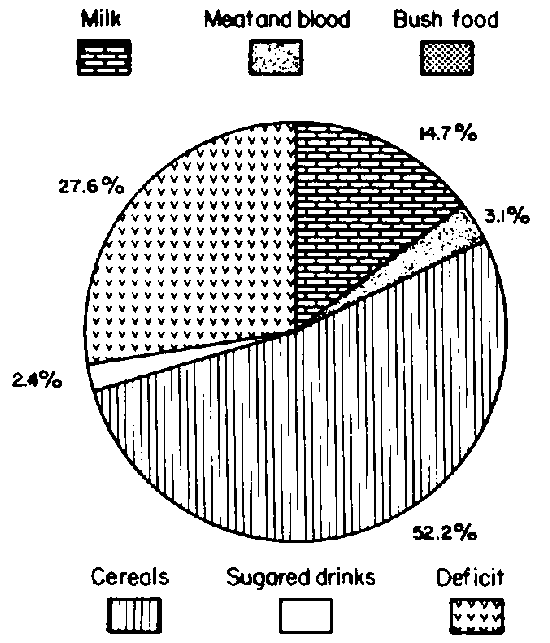
The initial effects of the drought were felt within a short time after the failure of the long rains in April 1983. An early response was to move a portion of warra animals to join forra herds (Donaldson, 1986: pp 33-34). Records on the dispersal of 289 head from warra to forra indicated that 91 % of the animals were moved in response to a depleted base of local forage. While the net trend was for warra animals to move to forra, it is notable that cattle were occasionally moved back from forra to warra throughout the drought. From 817 records, cattle were returned to warra herds if local access to forage improved temporarily (57% of records), labour shortages occurred on forra (18% of records) or when animals had become weakened and required hands-on care by the householder (15% of records).
The drought was characterised by a relatively rapid shift of warra animals to forra early on. The pre-drought allocation of 71 % of all cattle to warra and 29% to forra in 1982 (N = 4143) had shifted to 34% (warra) and 66% (forra) by November 1983, only seven months into the drought. Subsequent shifts were minor; the peak allocation to forra was 69% by November 1984. Within three months after average rainfall returned in April 1985, the warra:forra allocation had shifted back to 45:55. Data collection was terminated at this time.
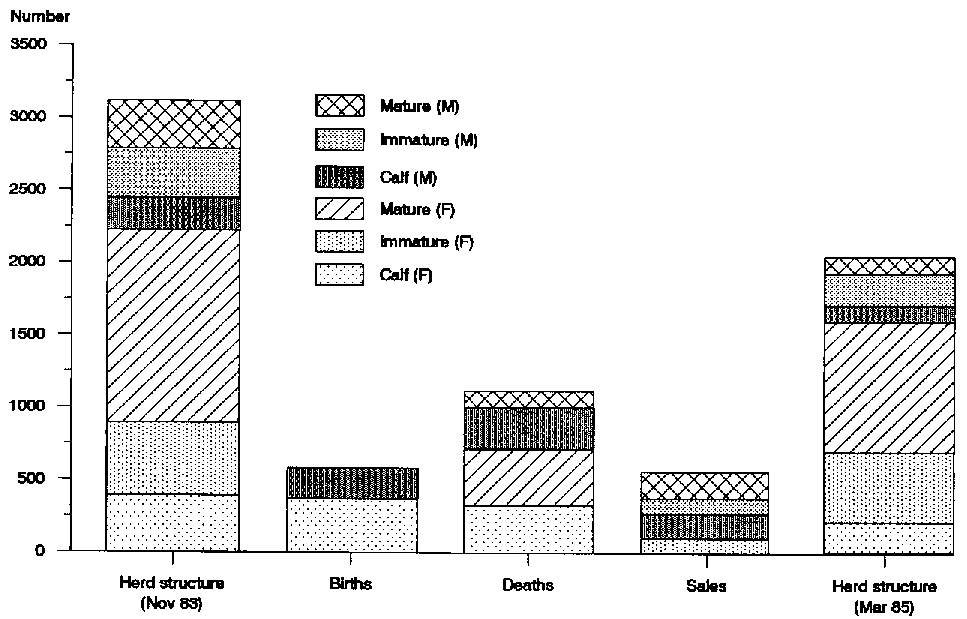
As a result of shifts in cattle allocation between warra and forra, partuition and differential rates of sex and age-specific mortality and offtake and the sex and age composition of warra and forra herds also changed in a dynamic fashion (Donaldson, 1986: pp 29-31). The pre-drought structure of warra herds (N = 2941) was 51% mature cows, 8% mature males, 6% immature males (1-4 years old) 10% immature females (1-4 years old) and 25% calves of both sexes (<1 year old). Nineteen months into the drought (i.e. by November 1984) this had changed to 52% cows, 3% mature males, 15% immature males, 28% immature females and 2% calves (N = 323). The composition of warra herds became similar to that for pre-drought holdings by June 1985, although the numbers of animals had decreased significantly (see below). For forra herds the pre-drought composition (N = 1201) was 38% cows, 15% mature males, 26% immature females, 9% immature males and 12% calves. This shifted to 34% cows, 8% mature males, 38% immature females, 17% immature males and 3% calves by November 1984 (N = 913). Overall dynamics for warra and forra herds are shown in Figure 6.1.
Estimates of cattle mortality were based on records of individual animals at the five olla commencing in November 1983. Although this study neglected the first seven months of the drought, animal losses should be expected to be lower during this time compared to those occurring during the ensuing 17 months. Thus, based on a total herd size of 3493 cattle in November 1983 plus 650 calves born between November 1983 and March 1985 a total of 1738 animals subsequently died giving an overall drought-induced mortality rate of 42%. Mortality rates for various age and sex classes were as follows: (1) calves, 443 of 777 or 57%; (2) immature females 196 of 728 or 27%; (3) immature males, 225 of 511 or 44%; (4) mature cows, 791 of 1759 or 45%; and (5) mature males 83 of 368,22%. Mature cows constituted 45% of the 1738 cattle deaths followed by calves (25%), immature males (13%), immature females (11%) and mature males (6%).
Donaldson (1986: pp 77-78) derived cattle mortality rates for 10 age and sex classes in a drought year based on observed herd structure changes in 1984. For females categorised as mature (i.e. four years old), 3-4, 2-3, 1-2 and <1 year old, he calculated annual mortality rates of 20, 10, 5, 10 and 90%, respectively. For males in the same age classes he calculated annual mortality rates of 7, 5, 5,10 and 90%.
The death of 78 cattle in the warra and forra herds was witnessed, and the leading cause of death for adult cattle was speculated to be starvation (67%); mortality rates were probably higher for lactating cattle under severe nutritional stress (Donaldson, 1986: pp 39-40). The leading causes of calf mortality were speculated to be starvation and the interaction of poor nutrition with diarrhoeal diseases (Donaldson, 1986: p 40).
Based on data of Donaldson (1986), Cossins and Upton (1985: pp 141-143) noted that cattle mortality appeared to occur in "waves" and a depiction of this is shown in ILCA (1986: p 25). The most vulnerable adults were postulated to have died during December March 1984 less than a year after the drought commenced and this was followed by smaller peaks in July October 1984 and December-March 1985. This pattern is also reflected in calf mortality data (ILCA, 1986: p 25). Cossins and Upton (1985: pp 142, 144) hypothesised that the most productive animals died in the first couple of waves and the net result was a smaller population of hardy, but less productive, cows by June 1985. Some support for this hypothesis comes from Mulugeta Assefa (1990: pp 1-26) who recorded three classes of milking cows recognised by the Boran. In cow-history questionnaires he found that the highest producers were commonly regarded as being most susceptible to drought (see Section 5.4.2: Cattle production). The best explanation for this hypothesis is that higher-producing animals are more susceptibile because their higher nutritional requirements are more quicky compromised.
Cattle were also sold to purchase grain and occasionaly slaughtered. Roughly 584 of 4143 animals, or 14%, were reportedly sold. These were mainly older stock. Another 158 mature males were unaccounted for, and these were presumably sold or slaughtered. Based on herd structure analysis by Donaldson (1986: pp 77-78), offtake rates for females in a drought year were estimated to be 5% for those 2-4 years old, with no offtake for other age classes. For males, he estimated that 35% of mature males were taken off, followed by 20% and 10% of those 3-4 and 2-3 years old, respectively. The total reduction of inventory not attributable to mortality was on the order of 18%.
In sum, total herd inventory was reduced by around 60% from the combined effects of mortality, sale and slaughter. Importantly, such dramatic losses of animals may not be representative for the study area as a whole, as these study olla were primarily located in the central zone, which was among the worst-hit regions (Donaldson, 1986: p 30).
Regional dynamics of livestock populations
Aerial survey results combined for all regions of the 15475-km2 study area from 1983 to 1985 are shown in Tables 6.1 and 6.2 and demonstrate large species differences in the maintenance of population density on the plateau during drought. These data suggest that cattle density declined by 54% from March 1983 to the end of the drought in March 1985 and subsequently recovered to 88% of the 1983 numbers by June 1985. In contrast, the small ruminant population appeared less affected in a negative fashion. Cossins and Upton (1985: p 139) noted that flocks may have immigrated to the plateau during the drought. Compared to 1983, camel numbers (from a base level of around 4000 head; dynamics are not tabulated) increased by 46% during the drought and returned to 94% of pre-drought numbers by June 1985. This was probably also owing to migration of camels into the study area (Cossins and Upton, 1985: p 139).
Table 6.1. Cattle population dynamics in a 15475-km2 study area in the southern rangelands, 1983-85. 1
|
Region |
Sample date |
|||||||||
|
March 1983 |
March 1984 |
Sept 1984 |
March 1985 |
June 1985 |
||||||
|
Number |
(%)2 |
Number |
(%)2 |
Number |
(%)2 |
Number |
(%)2 |
Number |
(%)2 |
|
|
Northern |
||||||||||
|
Did Hara |
64775 |
|
47083 |
|
79292 |
|
23408 |
|
42117 |
|
|
Sarite |
38925 |
|
31158 |
|
50533 |
|
26250 |
|
36675 |
|
|
Total |
103700 |
(41) |
78241 |
(34) |
129825 |
(49) |
49658 |
(42) |
78792 |
(35) |
|
Eastern |
||||||||||
|
Web |
31492 |
|
49759 |
|
52333 |
|
9108 |
|
56025 |
|
|
Gayu |
60592 |
|
61083 |
|
33583 |
|
29617 |
|
41133 |
|
|
Total |
92085 |
(36) |
110842 |
(48) |
85916 |
(33) |
38725 |
(33) |
97158 |
(43) |
|
Central |
||||||||||
|
Medecho |
28292 |
(12) |
18192 |
(8) |
28358 |
(11) |
10933 |
(9) |
23892 |
(10) |
|
Western |
|
|
|
|
|
|
|
|
|
|
|
Dilo |
31958 |
(12) |
21958 |
(9) |
18250 |
(7) |
19275 |
(16) |
26579 |
(12) |
|
Total |
256034 |
|
229233 |
|
262349 |
|
118591 |
|
226421 |
|
|
Per cent3 |
100 |
|
89 |
|
102 |
|
46 |
|
88 |
|
1 Figures derived from Systematic Reconnaissance Flights (SRF). See text for methods.2 Percentages in columns indicate the relative breakdown of the cattle population by region on any given sample date.
3 Percentages in this row used March 1983 as the baseline.
Source: Cossins and Upton (1985).
Table 6.2. Population dynamics of small ruminants (sheep and goats) in a 15475-km2 study area in the southern rangelands, 1983-85. 1
|
Region |
Sample date |
|||||||||
|
March 1983 |
March 1984 |
Sept 1984 |
March 1985 |
June 1985 |
||||||
|
Number |
(%)2 |
Number |
(%)2 |
Number |
(%)2 |
Number |
(%)2 |
Number |
(%)2 |
|
|
Northern |
||||||||||
|
Did Hara |
9717 |
|
19725 |
|
56800 |
|
32392 |
|
25021 |
|
|
Sarite |
6225 |
|
4708 |
|
9667 |
|
4458 |
|
8275 |
|
|
Total |
15942 |
(16) |
24433 |
(27) |
66467 |
(32) |
36850 |
(35) |
33296 |
(35) |
|
Eastern |
||||||||||
|
Web |
28016 |
|
9367 |
|
37017 |
|
3625 |
|
18442 |
|
|
Gayu |
24525 |
|
19858 |
|
12108 |
|
28942 |
|
18550 |
|
|
Total |
52541 |
(54) |
29225 |
(33) |
49125 |
(24) |
32567 |
(31) |
36992 |
(38) |
|
Central |
||||||||||
|
Medecho |
10192 |
(11) |
12500 |
(14) |
28958 |
(14) |
15175 |
(14) |
17053 |
(18) |
|
Western |
|
|
|
|
|
|
|
|
|
|
|
Dilo |
18900 |
(19) |
23417 |
(26) |
62925 |
(30) |
21025 |
(20) |
8696 |
(9) |
|
Total |
97575 |
|
89575 |
|
207475 |
|
105617 |
|
96037 |
|
|
Per cent3 |
|
100 |
|
92 |
|
212 |
|
108 |
|
98 |
1 Figures derived from Systematic Reconnaissance Flights (SRF). See text for methods.2 Percentages in columns indicate the relative breakdown of small ruminant populations by region on any given sample date.
3 Percentages in this row used March 1983 as the baseline.
Source: Cossins and Upton (1985).
The lack of agreement between cattle losses observed at the household level of resolution versus net changes observed by aerial survey is unexplained. Cattle losses for households, however, were recorded for encampments in the hardest-hit regions. Migration of cattle from adjacent areas may also have influenced the aerial survey results.
Another comparison of livestock populations between 1982 and after one year of post-drought recovery in 1986 is provided in Table 6.3. These data are interpreted to indicate that the net change in population due to drought was on the order of minus 24% (cattle), plus 7% (small ruminants), minus 38% (camels) and minus 60% (equines).
In their analysis of regional data, Cossins and Upton (1985: pp 138-142) noted the redistribution of remaining cattle within the plateau during drought. Forra cattle were dispersed to the periphery of the plateau during the first year of drought; subsequent population declines in these regions during the second drought year likely indicated that many animals died and/or were moved out of the study area entirely. Donaldson (1986: p 32) reported that forra cattle ranged as far north as the southern Ethiopian highlands and as far south as Marsabit in Kenya. Cossins and Upton (1988a: p 127) noted that up to 75% of forra herds had moved off the central plateau during 1984. Numbers in Did Hara (to the north-east) increased from 65000 head in March 1983 to 79000 head by September 1984 and declined to 23000 head by March 1985. Similar temporal patterns, respectively, were evident for Web to the east (31000, 52000 and 9000 head) and Sarite to the north-west (39000, 51000 and 26000 head). The initial flow of animals in March 1983 was likely from the central zone (Medecho), the west (silo) and the south-east (Gayu) as these zones experienced linear declines in livestock populations as the drought progressed (Cossins and Upton, 1985: p 139). The attraction of these regional forra areas probably lay in the availability of forage and water, particularly in the case of Web which has many reliable wells. Scattered rain to the north in Did Hara during the middle of the drought in September 1984 attracted cattle herds (Cossins and Upton, 1988a: p 126).
Table 6.3. Contrast of livestock populations in a 15475-km2 study area in the south rangelands pre-drought 1982 and post-drought 1986 periods.1
|
Category |
Sample date |
|||
|
June 19822 |
July 19863 |
|||
|
Number |
Per cent4 |
Number |
Per cent4 |
|
|
Cattle |
324267 |
74.4 |
247507 |
68.3 |
|
Sheep/goats |
101825 |
23.3 |
109225 |
30.1 |
|
Camels |
7558 |
1.7 |
4692 |
1.3 |
|
Equines |
2450 |
0.6 |
999 |
0.3 |
1 Figures derived from Systematic Reconnaissance Flights (SRF). See text for methods.2 Data from Milligan (1983).
3 Data from Assefa Eshete et al (1987).
4 Percentages calculated on per-head (not livestock-unit) basis.
Source: Assefa Eshete et al (1987).
Cow productivity is primarily a function of herd calving rate, the calving interval and individual milk production (Mukasa-Mugerwa, 1989). Seasonal weight dynamics and conditions can also be useful performance indices. All these production aspects were profoundly affected by the low level of nutrition caused by drought.
Donaldson (1986: p 41) noted from cow-history interviews that the calving interval for 61 cows in four encampments was at least 18 months during the drought, about 20% longer than the pre-drought value of 15 months. Calving percentage (the proportion of cows that produce a calf per year) declined dramatically however, from 75% before the drought to 9% (15 of 176 cows) during the drought (Donaldson, 1986: pp 22, 42).
The percentage of lactating cows averaged 20% (36 of 176) during the second year of the drought, considerably lower than the 75% in average rainfall years (Donaldson, 1986: pp 22, 42). Average daily milk offtake per cow during the height of the drought (based on four daily milk-yield measurements of 36 cows per month) dropped from about 500 ml/head/per day from November 1984 through January 1985 to about 260 ml/head per day in March 1985 just before the drought ended (Donaldson, 1986: pp 43-44).
Compared to the total daily milk offtake for an average family in the dry season of an average rainfall year (i.e. about five litres/family per day), daily offtake during the worst time of the drought was reduced by about 92% (i.e. about 416 ml/family per day). This calculation assumes that an average, eight cow family in an average rainfall year has six lactating animals (Cossins and Upton, 1987: pp 207, 213) and that each cow has an offtake of about 830 ml/head per day in the warm dry season (Nicholson, 1983a: p 21). The low calving rate during the drought suggests that only 1.6 cows were lactating. The drop in offtake of 4584 ml/family per day is thus mostly due to the drop in calving rate (accounting for 80% of the decline in milk offtake with the reduction in yield per cow accounting the remaining 20%. It is difficult to generalise too broadly, however, as regions varied in terms of drought impact on milk production. Other calculations of drought impact on milk production are provided in Donaldson (1986: p 47).
Donaldson (1986: pp 42-43) reported monthly live-weight dynamics, based on heart-girth measurements, of eight age and sex classes of cattle during the last five months of the drought through the end of the long rains in June 1985. Mature cattle (275 to 325 kg in December 1984) lost 11 to 14% of their live weight by April, but regained most of this by June. Young calves (averaging 27 kg from December to January) lost about 20% of their weight by April, but also regained it quickly after the rains. Paradoxically, immature animals 1-4 years of age appeared either to grow slowly or maintain their weight over the same period (Donaldson, 1986: p 43).
This is reviewed by Donaldson (1986: pp 53-54) and Cossins and Upton (1988a: pp 127-128). Based on an initial population of 788 goats and sheep (63% goats) at five encampments in November 1983, small ruminant mortality during the next 18 months was relatively low with an average rate across both species of 16% (126 total). About 15% were sold and 7% were slaughtered. The net reduction in flock size by March 1985, however, was only 3%, suggesting that about 275 animals were born or otherwise acquired during the drought. Roughly 60% of the 200 mature female goats were lactating during the height of the drought (i.e. November 1984 to March 1985), versus about 50% of the 113 mature female sheep. Although sheep are not milked and goat's milk provides little more than a dietary supplement for children under average rainfall conditions (see Section 5.3.7.1: Sheep and goats), during the height of the drought the importance of these products increased (Cossins and Upton, 1988a). Mean milk offtake from goats ranged from 4.4 to 6.3 litres/head per month while for sheep it was 2 to 5.3 litres/head per month. The total daily yield of 28 litres/day from 177 small ruminants provided from 10 to 16% of total food needs on a gross energy basis in encampments in the central region, but only two to three per cent of that elsewhere (Cossins and Upton, 1988a: p 128).
Because of their small numbers, camels were not significant food producers in the five Borana encampments studied in the lower semi-arid zone. However, as will be described, camels were important milk producers for the Gabra in the upper semi-arid zone.
A comparison of the aggregate human diet (on an energy basis) for an average household before (N = 20) and at the height of the drought (N = 20) is shown in Figure 6.2 a,b. These estimates are based on food intake values of individuals who lived in encampments and thus do not include forra herders, whose diet would have higher proportions of bush foods and cattle products such as blood (Cossins and Upton, 1988a: p 129). In contrast to the pre-drought diet dominated by milk, the drought diet was composed mostly of grain and was substantially below minimum daily energy requirements (Figure 6.2a,b). Thus, purchased grain only partially compensated for the drop in milk consumption (Cossins and Upton, 1988a: p 130). Consumption of meat and blood increased in absolute terms during the drought and occasionally these goods provided up to 40% of the daily energy intake for adults. Many animals died far from encampments and could not be retrieved, so wastage of meat was probably significant (Cossins and Upton, 1988a: pp 129-130). Consumption of blood is rarely reported in household surveys in average rainfall years (D. L. Coppock, ILCA, personal observation). During the height of the drought, however, Donaldson (1986: pp 47-48) reported that about 7% of warra and 28% of forra cattle were bled monthly and yielded around 2000 litres of blood in total for human diets. Both male and female cattle were bled.
Figure 6.2 Composited average diets on a gross energy basis for 20 Borana household in pre-drought 1982. - Source: Cossins and Upton (1988a).
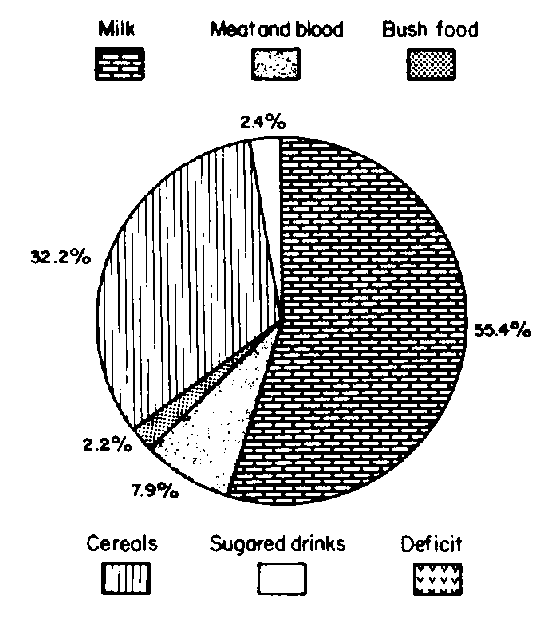
Figure 6.2 Composited average diets on a gross energy basis for 20 Borana household during the height of the 1984-85 drought. - Source: Cossins and Upton (1988a).
Donaldson (1986: pp 52-53, 85-86)and Cossins and Upton (1988a: p 130) noted that children under five years old received milk on a priority basis during the drought. In addition, it was speculated that adults restricted their food ration and altered their diet to permit these children to have what they needed. This is illustrated by Donaldson (1986: p 85) who found that the gross energy (GE) total daily intake for children under five years ( = 10.96 MJ GE; N = 18 individuals each observed for 20 days) was 54% higher compared to that for four groups of older youths and adults ( = 7.14 MJ GE; N = 18 individuals per group with each observed for 20 days). Children under five also appeared to receive the highest percentage of their dietary energy from milk (40%) and this steadily declined to 33, 13, 7 and 4%, respectively, for youths aged 6-10, 11 -16, adult males and adult females. Consequently, across the same sequence the per cent grain consumed increased from 56% to 62,82, 83 and 83%, respectively. Older family members had more diverse diets to help them compensate for a restricted intake of milk. Adults consumed more meat and blood (7% of GE intake for both sexes) and sugared tea (5% of GE intake for both sexes).
During the last six months of the drought, milk and grain constituted about 21 and 72%, respectively, of the average diet for the five sex and age classes and the mean daily-energy intake was 7.9 MJ GE. Energy intake increased and diet composition shifted rapidly after the drought ended. From April to June 1985 the average GE intake per person increased by 26% (to 9.99 MJ GE); milk made up 59% of the total, while grain declined to account for 25% of energy intake (N = 1080 person observation days; Donaldson, 1986: p 85). During the cool dry season from July to September 1985 average energy intake (8.78 MJ GE) declined again by 13% compared to the wet season, milk dropped to account for 41 % of energy intake and grain rose once again to account for 54% (N = 1080 person observation days; Donaldson, 1986: p 86).
Cossins and Upton (1988a: p 130) reported that, on an annual basis, about 5% of the human population at the five encampments died during the 18 months of observation and that most of these persons were elderly. It is unclear, however, what proportion of these deaths was directly attributable to famine. Coppock and Mulugeta Mamo (1985) in a survey of 60 encampments in the same region reported that only one person apparently died in each encampment as a result of hunger. They also reported that local movement of families on the central plateau was significant; an average of four out of 15 households per olla (or 27%) left their encampment to search for grazing and food elsewhere. Human morbidity levels were assessed during the drought surveys. It is speculated, however, that incidence of morbidity was high.
The general picture presented thus far indicates that the Boran experienced a dramatic shortfall of milk during the drought and a major response to this was to increase the purchase of grain through priority sale of male animals. The reported cash budgets for 15 families were recorded during the last five months of the drought and are summarised by Donaldson (1986: pp 50-51) and Cossins and Upton (1988a: pp 128-129).
From November 1984 to March 1985 the mean cash income from products sold for each household was EB 384, with 62% derived from castle, 8% from other stock (probably small ruminants or poultry) and 30% from milk, butter, hides, handicrafts and other miscellaneous items. All this money was reportedly spent, with 43% used to purchase grain followed by sugar (10%), clothing (10%), other foods and beverages (13%), other items (7%); 17% was unaccounted for. Donaldson (1986: pp 13-14) noted that a household budget in an average rainfall year of EB 570 (for 12 months) was spent mostly on clothing (38%), followed by grain (17%), sugar (7%), other food and beverages (7%) and other goods (16%), savings accounted for 16%. It was noted that the expenditure on food at the height of the drought was 66%, considerably more than during the average rainfall year (30%). Donaldson (1986) speculated that absolute and relative food expenditures increased as milk production declined. Goods such as clothing were obviously given lower priority in a drought year. Trade-offs in budget priorities, expenditures and animal offtake occur among average, dry and drought years (Cossins and Upton, 1988a: p 125). Routine animal sales in an average rainfall year provide funds for clothing, food and miscellaneous items (see Section 4.3.1: General household structure and economy in average rainfall years). In an isolated dry year the same number of animals may be sold, but income is used primarily to buy food. This results in a temporary drop in living standards. During drought, however, the increase in animal deaths and in animal sales necessary for the purchase of the minimum amount of food have short and long-term effects on the household. Changing economic terms of trade between grain and livestock in different types of rainfall years also have a significant effect on pastoral welfare (Cossins and Upton, 1988a).
During a multi-year drought economic strategies vary each year. Cossins and Upton (1988a: p 129) noted that, during the first drought year (1983), the Boran were able to maintain their energy intake by selling the routine number of animals and spending most of their income on grain. However, during the second drought year of 1984, sales of all livestock had to be increased by 0.75 to 1.25 head per person, with about 70% of this consisting of cattle.
With a deficit in milk offtake of over 90%, the main survival option for the Boran is to trade animals and animal products in the market place for grain to secure adequate energy. Donaldson (1986: p 15) and Cossins and Upton (1987: p 213) noted that the price for cattle during pre-drought 1981-83 was around EB 1/kg live weight versus EB 0.40/kg for maize. Assuming 5.4 MJ GE/kg for livestock (Cossins and Upton, 1987: p 213) and 15 MJ GE/kg for maize (Holden, 1988), livestock cost EB 0.19/MJ GE whereas grain costs about EB 0.03/MJ GE. Selling 1 kg of live weight at 5.4 MJ GE thus yields money to purchase around 38 MJ GE of energy as grain. At 10.6 MJ GE/day required for one AAME, 1 kg of live weight would provide sustenance for about half a day, versus about 3.5 days for the monetary equivalent in grain. Thus, the availability of grain at favourable terms of trade enables a higher number of people to subsist than if they lived off of livestock alone (Donaldson, 1986: p 15; Cossins and Upton, 1988a: p 128). This simple relationship also explains why animals are not routinely slaughtered for food.
The decline in terms of trade between livestock and grain during the 1983-84 drought was documented by Donaldson (1986: pp 49-50) and Cossins and Upton (1988a: pp 128-129). After one year of drought the dramatic increase in number of cattle marketed and reduction in local demand forced cattle prices down from about EB 1/kg in November 1982 to EB 0.30/kg in March 1984. Over the same period grain prices rose from EB 0.40/kg to EB 1/kg (Donaldson, 1986: pp 49-50). Prices for other commodities such as sugar and coffee also increased (Cossins and Upton, 1988a: p 128). The terms of trade for grain:cattle calculated in Megajoules general energy (MJ GE) therefore fell from a pre-drought value of 7:1 to 0.8:1 at the height of the drought in mid-1984, a decline of nearly 90%. Terms of trade were more favourable between dairy products and grain, as pre-drought market prices for butter (EB 3.67/kg) and milk (EB 0.4/litre) increased by 300 and 250%, respectively, in 1984 (Cossins and Upton, 1988a: p 128). Few families, however, had reliable access to markets or sufficient milk to benefit from this option (Cossins and Upton, 1988a: p 128-129).
Cossins and Upton (1988a: p 124) used a herd growth model (Upton, 1986b) with parameters for cattle production levels during years of average rainfall (Cossins and Upton, 1987: p 207) to predict the length of time required for the mature cow class to regain their numbers after the 1983-84 drought. Drought mortality for cows in different regions was calculated from data of Donaldson (1986) and yielded rates of 25% (north) to 35% (east) and 50% (central). Assuming a series of average rainfall years post-drought, the model predicted that complete recovery in cow numbers would take from six years in the north to nine and 14 years in the east and central regions, respectively.
The modeling assessment by Cossins and Upton (1988a) was probably too conservative. Some results from Solomon Desta (nd) are shown in Table 1, Annex F. as they are the most comprehensive data on livestock populations ever collected in the southern rangelands. Results were interpreted by Solomon Desta (nd) to show that the cattle population was well on the way to full recovery from drought as early as 1987. This was confirmed by interviews of Borana leaders who contended in 1989 that the cattle population had already recovered from drought and was again vulnerable to future perturbation from a year of below-average rainfall (D. L. Coppock, ILCA, unpublished data; see Section 7.2: A theory of local system dynamics).
In a combined survey of 96 households by Coppock (1988) and Webb et al (1992), pastoral households in the Beke Pond region were divided into economic classes on the basis of reported TLU/AAME ratio before the 1983-84 drought. For camel-keeping Gabra the groups were defined as: (1) wealthy (i.e. having a ratio >5; N = 13); (2) intermediate (2< ratio <5; N = 20), and (3) poor (ratio <2; N = 14). For cattle-keeping Boran, the groups were defined as: (1) wealthy (ratio >9; N = 11); (2) intermediate (4< ratio <9; N = 22); and (3) poor (ratio <4; N = 14).
Reported livestock holdings across all wealth classes were distinct between ethnic groups before the drought. The average of 22.6 TLUs held by the Gabra (3.86 TLU/AAME) were composed of an even balance of cattle (50%) and camels (47%), with a few small ruminants (3%). In contrast, the average of 36.1 TLUs held by the Boran (6.56 TLU/AAME) were dominated by cattle (93%), with a few small ruminants (6%) and an occasional camel (1 %). These figures suggest that the Boran in this sample were wealthier in animal holdings than the Gabra. Reportedly in possession of far more animals in the mid-1970s, these Gabra claimed to have been impoverished as a result of warfare and relocation from the Moyale area during the conflict between Ethiopia and Somalia in 1978-79 (Coppock, 1988: p 4; Hodgson, 1990). The following are notable points from the analysis.
Cattle: Based on a reported pre-drought population of 3144 head, 1066 (or 34%) were lost during the drought as a result of mortality, sale and slaughter when calculated across all 96 households. Out of these 1066 head, 759 (or 24% of the pre-drought number) died, 136 (or 4% of the pre-drought number) were sold and 171 (or 5% of the pre-drought number) were slaughtered. Wealth had a significant effect on cattle losses. Overall, the wealthy lost 28%, the middle class lost 35% and the poor lost 54% (P<0.001). Because the wealth classes differed in absolute numbers of cattle before the drought (i.e. from 53 head for wealthy Boran to four and 13 head for poor Gabra and Borana households, respectively), the absolute impacts were greater on the wealthy. Compared to the wealthy and middle class, the herds of the poor experienced greater losses from mortality (i.e. 30% versus an average of 23% for the others; P<0.001), slaughter (i.e. 9% versus an average of 5%; P = 0.02), and sales (15% versus an average of 3%; P<0.001). The poor also lost more mature cows overall (i.e. 39% versus an average of 29%; P = 0.002). Ethnic group was an important factor. The Boran lost relatively more cattle than the Gabra overall (i.e. 36% versus 28%; P = 0.03), but the Boran held roughly 3.5 times more cattle per household before the drought (i.e. an average of 51 versus 15 head).
Small ruminants Based on a reported pre-drought population of 530 head, 135 (or 25%) were lost during the drought as a result of mortality, sale and slaughter when calculated across all 96 households. Of these 135 head, 108 (or 20% of the pre-drought number) died, 21 (or 4% of the predrought number) were sold and only six (or 1% of the pre-drought number) were slaughtered. There were no apparent effects related to ethnic group or wealth class in the breakdown of these data. This was attributable to the consistently small number of small ruminants held per household and high variability in the data.
Camels: Based on a reported pre-drought population of 933 head, 436 (or 47%) were lost during the drought as a result of mortality, sales and slaughter when calculated across all 96 households. The vast majority (i.e. 90%) of camels were held by the Gabra. Of these 436 head, 391 (or 42% of the pre-drought number) died, 35 (or 4% of the pre-drought number) were sold and 10 (or 1% of the pre-drought number) were slaughtered. Wealth had a significant effect on camel losses. Overall, the wealthy lost 26%, the middle class lost 32% and the poor lost 44% (P<0.001). Because wealth classes differed in numbers of camels held before the drought (i.e. from 19 head for wealthy Gabra to 6 for poor Gabra, respectively), the absolute loss in assets was greater for the wealthy. Compared to the wealthy and middle classes, the herds of the poor experienced relatively higher losses from mortality (i.e. 64% versus an average of 40% for the others; P<0.001) and slaughter (i.e. 4% versus an average <1%; P = 0.04). Sale data were equivocal among wealth classes.
These data provide evidence that drought has a differential impact on the herd assets of various wealth classes. In relative terms, the poor appeared to be hardest hit. There was no evidence, however, that herd assets of the camel-keeping Gabra were affected much differently from those of the cattle-keeping Boran. The advantages of having camels during a drought relate probably more to grain-transport capability, milk production for household consumption and sale in Urban markets (see below). The apparent vulnerabilty of camels to drought, despite their seemingly abundant browse resources, may have been exacerbated by disease (Section 5.3.7.2: Camels).
The reported duration of hunger (x±SE) was consistent among all wealth classes of both ethnic groups (32±0.5 months; N = 48; Coppock, 1988: p 4). People reportedly started to experience hunger by August 1983 (five months after the first failure of the long rains in April and May), and the hunger ended by April 1986 (i.e. one year after the return of average precipitation). Movement of people into or out of the area was apparently minimal. A net gain of six people for 48 families was calculated based on reported migration during the drought (Coppock, 1988: p 7). There were no human deaths reported as resulting from hunger. Paradoxically, family size actually increased for both Boran and Gabra households largely from births. The average Borana family size of 7.42 before the drought increased to 8.46 after the drought, the net result of an average of 1.21 births, 0.25 deaths, 0.04 departures and 0.08 immigrants (N = 24). A similar pattern was evident for the Gabra. The pre-drought average family size of 8.29 increased to 9.42 by the end of the drought, the net result of 1 birth, 0.04 death, 0.04 departure and 0.13 immigrant (N = 24).
During the height of the drought, Borana families (N = 8 per wealth class) reported median numbers of lactating cattle and milk yields as: (1) 18.6 cows each giving 177 ml of offtake for a total of 3.29 litres/household per day (wealthy); (2) 6.4 cows each giving 154 ml of offtake for a total of 0.99 litre/household per day (intermediate); and (3) three cows each giving 95 ml of offtake for a total of 285 ml/household per day (poor). Median reported lengths of lactations ranged from 7.1 months (wealthy) to 6.4 months (intermediate) and 3.9 months (poor). All families reported a negligible amount of daily milk offtake from small ruminants or from the very few camels (Coppock, 1988: pp 9-12).
During the same period, Gabra families (N = 8 per wealth class) reported median numbers of lactating camels and milk yields as: (1) 4.3 camels each giving 1 litre of offtake for a total of 4.3 litres/household per day (wealthy); (2) 1.9 camels each giving 620 ml of offtake for a total of 1.2 litres/household per day (intermediate); and (3) 1.3 camels each giving 700 ml of offtake for a total of 880 ml/household per day (poor). Median reported length of lactations ranged from 10 months (poor) to 8.7 months (intermediate) and 7.4 months (wealthy). Gabra families also reported receiving total offtakes of: (1) 700 ml/household per day from four cows (wealthy); (2) 400 ml/household per day from two cows (intermediate); and (3) 116 ml/household per day from one cow (poor). The Gabra reported that they received a negligible amount of milk from small ruminants during the height of the drought (Coppock, 1988: pp 9-12).
Priority foods for adults or children (Coppock, 1988: pp 14-15) were similar between both ethnic groups and thus were composited for the final analyses shown in Tables 6.4 and 6.5. Particularly noteworthy was the high reliance on false banana (enact or quocho (Ensete ventricosum)) by adults and use of powdered milk for children. False banana was procured from trade with farmers in the adjacent southern highlands and was probably not readily available in other regions of the central plateau.
Table 6.4. Common food items for adults during drought as ranked by 46 Borana and Gabra households in the Beke Pond region in the southern rangelands in 1987.1
|
Number |
Mean rank2 |
Item |
|
1 |
1.66 x |
Maize grain |
|
2 |
2.68 x |
Enset |
|
3 |
4.54 y |
Tea |
|
4 |
5.55 yz |
Sorghum grain |
|
5 |
6.04 z |
Tea ± milk |
|
6 |
6.08 z |
Milk |
|
7 |
6.12 z |
Sugar |
|
8 |
6.15 z |
Wild "onion"3 |
|
9 |
6.16 z |
Wheat grain |
1 Derived from household interviews. Foods were listed and ranked from most common (1) to least common (9). Ranks by ethnic groups did not appreciably differ.2 Entries accompanied by the same letter (x, y, z) were not ranked differently (P>0.05).
3 Bulbs of Vigna vexillata.
Source: Coppock (1988).
Table 6.5. Common food items for young children during drought as ranked by 48 Borana and Gabra families in the Beke Pond region in the southern rangelands in 1987.1
|
Number |
Mean rank2 |
Item |
|
1 |
2.05x |
Porridge (grain ± milk/water) |
|
2 |
2.69x |
Milk |
|
3 |
3.51 xy |
Tea |
|
4 |
4.89y |
Tea ± milk |
|
5 |
4.89y |
Enset |
|
6 |
4.9y |
Powdered milk |
|
7 |
5.0y |
Sugar |
1 Derived from household interviews. Foods were listed and ranked from most common (1) to least common (7). Ranks by ethnic groups did not differ appreciably.2 Entries accompanied by the same letter (x, y) were not ranked differently (P>0.05) according to Friedman's test (Steel and Torrie, 1980).
Source: Coppock (1988).
During the height of the drought in 1984, only two of 44 families reported receiving relief grain (Coppock, 1988: p 18). Famine relief did not reach the study area in large quantities until late 1985 (D. L. Coppock, ILCA, personal communication) so it can be inferred that much of the powdered milk referred to in Tables 6.4 and 6.5 was probably purchased in local shops. Famine relief was delayed, in part, because of the emergency famine situation in the highlands (RRC, 1985). The majority of sample households at Beke Pond had gained access to famine relief, Food-for-Work and donated agricultural inputs by 1986 (Webb et al, 1992). Pastoralists at Beke Pond, however, were probably better off than most in the study area because of their proximity to Yabelo town and the main tarmac road.
Except for the wild onion, bush foods did not appear to rank as important compared to foods produced in the home or purchased in the marketplace. Eight common foods from native vegetation are listed in Table 6.6. Hunting was not mentioned as a viable option. Animal hides were reportedly boiled and eaten on occasion (D. L. Coppock, ILCA, unpublished data). Consumption of blood by Gabra households but not by Borana households was reported by Webb et al (1992).
For both Borana and Gabra households, trends suggested that milk, mainly from camels (Gebra) or cattle (Boran), was the most important item for market (Table 6.7). Natural gum from trees, household utensils, firewood and charcoal rounded out priority items for sale. Opinion was unanimous that no credit was available from merchants during the drought for purchasing food. Interestingly, livestock did not appear in these ranking exercises, suggesting that livestock were not primarily held for sale to purchase food during drought (see Section 4.3.4.7: Marketing attitudes).
Only 4 of 23 Gabra households had a member who found employment during the drought, while 9 of 24 Borana households were able to do so (Coppock, 1988: p 17). All jobs were taken by men between the ages of 20 and 60. Jobs included pond digging, road maintenance, farm labour, urban construction and tree planting. Duration of employment averaged 29 days for the Boran and ranged widely from 12 days to 10 months for the Gabra (the 10-month job was working on construction in the town of Moyale). Wages varied from Food-for-Work (i.e. 2.75-4 kg grain per day) to EB 1.50-3.00 per day.
Table 6.6. Wild plant material reportedly used as food during drought as ranked by 20 Borana and Gabra households in the Beke Pond region in the southern rangelands during 1987.1
|
Number |
Mean rank |
Vernacular |
Latin name |
Edible portion |
|
1 |
4.95x |
Singo |
Vigna vexillata |
Bulbs |
|
2 |
5.38x |
Buri |
Mimusops kummel |
Fruit |
|
3 |
6.63xy |
Medera |
Cordia gharaf |
Fruit; gum |
|
4 |
6.82xy |
Fulesa |
Acacia drepanolobium |
Gum |
|
5 |
7.1 xy |
Ogomdi |
Grewia |
Fruit |
|
6 |
8.63y |
Chame |
Vigna sp |
Roots |
|
7 |
8.65y |
Kakalla |
Ceropegia sp |
Roots |
|
8 |
8.65y |
Gora gel |
Capparis tomentosa |
Fruit |
1 Bush foods ranked from highest (1) to lowest (14) in importance during drought. Mean rank values followed by the same letter (x, y) were not significantly different (P>0.05) according to Friedman's test. Vernacular is Borana Oromigna. See also Table B7.Source: Coppock (1988).
Table 6.7. Important items produced for sale during drought as reported by 24 Borana and 24 Gabra households in the Beke Pond region in the southern rangelands in 1987.1
|
Boran |
Gabra | ||||
|
Number |
Mean rank2 |
Item |
Number |
Mean rank2 |
Item |
|
1 |
3.17x |
Cow milk |
1 |
3.18x |
Camel milk |
|
2 |
4.0x |
Gums |
2 |
6.37xy |
Firewood |
|
3 |
4.93x |
Utensils |
3 |
7.35xy |
Utensils |
|
|
|
|
4 |
7.87xy |
Gums |
|
|
|
|
5 |
8.18y |
Charcoal |
1 Derived from household interviews. Items were listed and ranked from most important (1) to least important (9). Gums are extracts from trees. Utensils included hand-carved pots, stools, milk chums and ornate walking sticks. That Gabra could transport firewood and charcoal to market may have reflected use of camels. Milk sales were important because these households lived within 80 km of the town of Yabelo.2 Entries within the same column that are accompanied by the same letter (x,y) were not ranked significantly different (P>0.05) according to Friedman's test (Steel and Torrie, 1980).
Source: Coppock (1988).
Webb et al (1992) reported that during the drought pastoralists at Beke Pond assisted each other to a higher degree than did to highland farmers. Sixty-one per cent of pastoral households (N = 48), versus 41% of farming households, commonly borrowed money or food from neighbours and relatives, and 90% of the pastoral households reported that this networking occurred to a greater degree during the drought than during years of average rainfall. Ninety per cent of pastoral households reported no internal conflicts over resource allocation; the few problems included disputes over water rights. External altercations occurred between the Boran and agropastoral Gujji to the north, when the Gujji attempted to move livestock into the Beke Pond area (Webb et al, 1992).
During interviews with 30 Borana leaders during September 1989, many expressed a concern that the cattle density was high enough so that the production system was again vulnerable to a year of below-average rainfall (D. L. Coppock, ILCA, unpublished data). One key insight from respondents was the observation that the average to above-average level of rainfall received during the long rains of 1989 had been insufficient in eliciting "normal" rates of milk production or compensatory growth in cattle recovering from the 1988-89 dry season. This was interpreted as suggesting that the cattle population density had grown to the extent that forage competition among cattle was acting as a major force and that this would have repercussions for cattle survival in the coming dry season of 1989-90. Indeed, during the 1989-90 dry season at least 15000 head of cattle reportedly died in the ILCA study area as enumerated in extensive surveys by SORDU (unpublished data). This was interpreted to be a density-dependent population response in an average rainfall year, with more of a "fine-tuning" character in which about 5% of the cattle population died. In contrast, no significant cattle die-off had occurred since the second drought year in 1984.
The Borana leaders also expressed concern about maintaining the integrity of traditional drought reserves (D. L. Coppock, ILCA, unpublished data). According to respondents, drought reserves surrounding large well systems to the east had been recently subjected to unrestricted grazing in dry seasons of average rainfall years and were also the focal points for new settlements. This, in part, was a reflection of seasonal forage deficits in support of a high density of cattle and dwindling settlement options for larger numbers of people. Depletion of the forage in these reserves would then restrict use by forra cattle during the first year of a drought and perhaps lead to a more precipitous decline in the cattle herd.
There are no formal data available to document the effects of the 1990-91 drought, but it was reported that losses of cattle were on the order of 50% of pre-drought holdings (C. Fütterknecht, CARE-Ethiopia, personal communication). The short rains of 1992 were also deficient and led to more deaths of immature cattle (C. Fütterknecht, CARE-Ethiopia, personal communication). Part of this massive cattle die-off had been speculated to be related to the coincidence of drought with an epidemic health problem, but this has not been confirmed (C. Schloeder, Ethiopian Wildlife Conservation Organisation, personal communication). Emergency feeding for the Boran was re-instated by CARE-Ethiopia in 1991 and is expected to continue into 1993; 100000 people were receiving food aid in November 1992 (C. Fütterknecht, CARE-Ethiopia, personal communication). Problems for people were compounded by proliferation of weapons resulting from the demise of the previous government in June 1990. Numerous and violent clashes among a half dozen ethnic groups have been reported, including skirmishes between the Gabra and Boran and the Garri and Boran (C. Fütterknecht, CARE-Ethiopia, personal communication; Eshetu Zerihun, ILCA, personal communication). Lack of vehicles and fuel in 1990-91 also hindered delivery of food relief and cut market linkages between the southern rangelands and southern highlands. Local farmers in the rangelands were observed to deplete their seed reserves and prices for maize reportedly exceeded EB 6/kg the highest price in recent times (C. Fütterknecht, CARE-Ethiopia, personal communication).