Part A: The role of on-station research
Part B: On-farm trials
Part C: Implementation
Part D: Evaluation and re-design
Appendix 1: On-farm feeding trials: Additional considerations
Appendix 2: On-farm animal health trials: Additional considerations
References
In this module, the role of on-station research in the design and adaptation of technologies relevant to the target group has been emphasised The discussion below focuses on the basic principles which need to be understood when livestock on-farm trials are being designed, implemented and evaluated. Additional considerations specific to on-farm feeding and animal health trials are discussed in Appendix 1 and 2 to this module.
On-station research plays an important role in technological development and evaluation, and access to research-station facilities and personnel will often decide the ultimate success of an on-farm trial project. There may be situations when livestock on-station research will be more practical and relevant to the prevailing circumstances than livestock on-farm research. This may be the case when:
· the circumstances favour rapid adoption of technologies developed on-station· new technologies need to be developed before on-farm testing
· technical relationships need to be clearly understood
· long periods are required to develop technologies relevant to the target area, and
· the research team has insufficient resources to guarantee the implementation of useful on-farm trials.
Adoption of technologies without on-farm testing. There have been instances in sub-Saharan Africa when conditions were amenable to a rapid adoption of technologies developed on-station without carrying out on-farm trials. Examples of such technologies are zero grazing of grade dairy cattle in the high-potential areas of Kenya (Kenya Government, 1985) and the introduction of crossbred cattle for dairying in Malawi (Agyemang and Nkhonjera, 1986).
For instance, the rapid adoption of zero grazing in the high potential areas of Kenya might have been expected because:
· land was in limited supply
· small-scale dairying was well established within the region
· grade dairy animals were readily available' and
· formal and informal market outlets for milk were well developed.
This is not to decry the value of on-farm trials. It simply demonstrates the need to take full account of the situation before moving forward to implement an on-farm trial project. A thorough understanding of the characteristics of the system could lead to the identification of technologies which need not be tested on-farm before they are widely adopted.
Development of new technology before on-farm testing. Technologies may not always be available-for adaptation within the system under study, and an initial period of on-station research may thus be needed to develop (or further screen) innovations which are broadly applicable to the problems identified during diagnosis (Gilbert et al, 1980).
However, it is not always possible to tailor this kind of research to the requirements of a particular target group, and on-farm trials to test the applicability of the technology (or technologies) developed will probably be required at a later date.
In these circumstances, the systems research team should maintain close contact with station researchers to ensure that all the important issues (e.g. constraints) are properly considered. The value of the on-station research will depend largely on the extent to which experiments are designed to correspond to smallholders' conditions within the target area.
The following general principles taken from Partenheimer (1983) should be borne in mind when advising on the design of on-station trials intended to help traditional production systems:
· Where possible, trials should be designed with a well defined group of farmers in mind and based on a particular constraint which had been clearly defined by diagnostic research.· The experimental variables used in on-station trials should be at levels attainable by the target group.
· Non-experimental or 'fixed' variables should, where possible, be held at levels which correspond to those found on farms. With livestock it will often be very difficult to achieve this, particularly where more extensive production systems are involved.
Clear understanding of technical relationships. Relationships of a complex technical nature are best researched under station conditions where adequate control over both experimental and non-experimental variables can be ensured.
For instance, in area X, on-far. supplementary feeding significantly improved cattle liveweight gains, but researchers were unable to determine whether the improvement resulted from the addition of energy or protein to the diet.Since it would have been extremely difficult to obtain the level of control required to determine the independent effects and interactions between the two factors, on-station trials under controlled conditions were conducted. After isolating the important determinants affecting weight gain, the supplement was altered and responses to the new ration were again tested on-farm.
The same reasoning applies to experiments which aim to show how output (e.g. milk production) changes as the amount of an input (e.g. concentrate)1 changes. From such experiments, it is often possible to approximate input requirements for trials conducted on-farm. On-station research can, therefore, play an important complementary role to on-farm research in refining technologies to suit farmers' requirements.
1 In literature on farming systems research, such trials are known as 'levels' trials.
Development of technologies relevant to the target area. Certain types of livestock technology require long periods of research before their relevance can be ascertained (e.g. breed improvement schemes). Research of this kind is unsuited for on-farm testing for the reasons discussed above under 'Development of new technology before on-farm testing'.
Insufficient resources. Even if on-farm trials are considered necessary, there will be little point in conducting them if the livestock systems research team cannot ensure useful results because the resources available are inadequate to supervise farmers and to collect meaningful data. On-station trials which attempt to simulate farm conditions as nearly as possible may, in these circumstances, be the next best option.
On-farm research will, nevertheless, be justified in many circumstances. There are numerous reasons given in the literature and some of these are listed in the 'Introduction' to this section.
The need to maintain close links with on-station research facilities and to draw on all sources of available expertise during on-farm trials is also emphasised in the literature (e.g. Harrington, 1980; Gilbert et al, 1980; Stroud, 1985; Norman and Collinson, 1985; von Kaufmann, 1986). It can, however, be quite difficult to develop and maintain these links, and formal mechanisms to strengthen collaborative efforts between on-station and on-farm researchers are required. A detailed discussion of what this implies in practice is given by Merrill-Sands and McAllister (1988).
By working through the specific objectives and requirements of a trial before its implementation, initial designs can often be adjusted to account for difficulties which might arise. They should never be so rigid as to prevent adjustments being made even during implementation.
Irrespective of the type of on-farm trial being envisaged, one should begin by carefully considering:
· objectives of the research
· resources
· management and supervision, and
· selection of trial participants.
Objectives. Research without a clearly defined set of objectives is likely to be wasteful in terms of resources and to result in data collection which has no specific purpose. For any trial, one should specify the distinct phases into which the trial can be divided, the types of data to be collected, the frequency of data collection, the levels of researcher/farmer involvement, and the methods of analysis in each phase. One should also be clear about what constitutes the 'experimental' or 'observation units'. Such units could, for instance, be individual animals, groups of animals, plots of land, farmers or households.
Resources. To a large extent, trial objectives will be determined by the financial and manpower resources available and the ability of the livestock systems research team to access a research station and mobilise the support of extension officers on a continuing basis. Requirements such as trial equipment, vehicles, laboratory and computer facilities may not be easily met, and this can also influence the trial approach adopted (von Kaufmann, 1986).
Management and supervision. The responsibilities of the researcher and the participating farmers as regards trial management must be clearly defined. Before the trial starts, farmers must be made fully aware of their obligations and agree to abide by the conditions set.
In practice, however, it is extremely difficult to bind farmers to agreements like this, particularly when livestock are concerned. Thus, while it may be considered desirable to implement a 'statistical' trial (see page 7), attempts to do so will be futile if adequate supervision cannot be assured. In such cases, 'monitoring' trials (see page 26) may have to be implemented instead. Alternatively, it may be better to abandon attempts to conduct on-farm trials of any sort.
For the purposes of this module, three levels of supervision and farmer involvement are considered relevant (von Kaufmann, 1983). The trials are classified accordingly as:
· Researcher-managed/researcher-executed trials in which the researcher controls the application of trial inputs (i.e. such experimental variables as feed or veterinary inputs), while the farmer controls other factors affecting animal performance (i.e. non-experimental variables, such as grazing time and watering frequency). Superimposed trials and cohort epidemiological studies fall under this category.
In superimposed trials, the researcher adopts the farmer's management practices and adds an input or alters the system otherwise (Stroud, 1985). Trials like this are kept fairly simple and are used when the researcher wants to evaluate the effect of an input under normal management conditions.
In cohort epidemiological studies, the animals selected for the study are assigned to two or more groups or cohorts and subjected to different treatments (e.g. vaccination or dipping or a combination of both).
In cohort studies, one group is always kept free and used as a control for the purposes of comparison (Putt et al, 1987) (Module 8, Section 1).
· Researcher-managed/farmer-executed trials in which the farmer administers the experimental inputs as prescribed by the researcher and controls all other factors related to livestock management.· Farmer-managed/farmer-executed trials in which the farmer manages all experimental inputs in the manner in which he or she sees fit and the researcher observes the manner in which the technology is applied. In terms of the terminology used elsewhere in this module, such trials would usually be classified as 'monitoring' trials.
Selection of trial participants. This involves two steps:
· selection of households within the target area, and
· selection of members within those households that will actually implement the trial.
With the first, the households selected should be as representative of the area as possible if the technology is to have wide acceptance (Gilbert et al, 1980).2 With the second, both the decision-maker and the user of the technology should be involved (where possible) in the testing process, if the implications of the on-farm trial are to be properly understood.
2 Some authors (e.g Barlow et al, 1986) counter this view, advocating that progressive farmers are general!, preferred when selecting trial participants "since vest adoption studies show that less advanced farmers follow the technological lead of their sore advanced colleagues". Other authors (e.g. Sidahmed et al, 1985) suggest the use of farmers who have already participated in baseline or diagnostic surveys, because they will understand the purpose of the study and are, therefore, more likely to be willing to participate.
In many African societies, investment decisions related to technological adoption are made by men even when women are ultimately responsible for the manner in which the technology is applied. In such cases, attempts should be made to involve both parties in the trial. Failure to do so could mean that important aspects affecting a household's ability to adopt a technology (e.g. the availability of female labour) will not be adequately accounted for.
It may, however, be difficult to identify the actual decision-maker and to ensure his or her involvement in the trial.
For instance, in countries where out-migration of males for urban or nine employment is common (e.g. Swaziland, Lesotho, Botswana, Mozambique), it is often difficult to know whether the woman has de facto decision-raking rights or whether the Dan, though absent, makes the final choice about technological adoption or even the manner in which a new technology will be applied.
Furthermore, it cannot be assumed that technical information will be passed between household members in the manner desired by the researcher.
For instance, men offering to participate in a goat-feeding trial in western Kenya often failed to pass on information to their wives who bore ultimate responsibility for the management of smallstock (Sidahmed et al, 1985).
The practicality of conducting on-farm statistical trials will mainly be determined by the ability of the research team to:
· obtain large enough samples which would enable meaningful statistical conclusions, and· supervise farmers adequately so that treatment effects are not distorted and the collected data are accurate.
Each of these will, in turn, depend on such things as:
· the characteristics of the system being studied (e.g. sedentary versus pastoral)· the characteristics of the variable being measured (e.g. its inherent variability)
· the complexity of the trial envisaged (e.g. the number of treatments per farm and the possible interactions between them)
· the resources available to the livestock systems research team, and
· the cooperation of the farmers involved.
All these are reflected in the three basic aspects influencing statistical on-farm trials with livestock, namely:
· determination of sample size
· specification of treatment characteristics, and
· farmers' behaviour.
Determination of sample size: Theoretical aspects
When determining sample size, it is necessary to distinguish between continuous and discrete data.
For continuous variables (e.g. weight, condition, milk production), the record obtained can take on a range of values.
For discrete variables, the record obtained can only take on one of two values (or a small number of values).
For instance, when mortalities are measured, the sample animal either lives or dies. Similarly, when reproduction is being measured, the animal either reproduces or fails to reproduce. If technology adoption is being measured, a farmer nay adopt the technology or he may not
In general, much larger sample sizes are required when studying discrete variables. The question of sample sizes for discrete data is discussed on page 16.
CONTINUOUS VARIABLES. The sample size required for a trial with continuous variables will depend on two quantities:
· the required precision of the experimenti.e. what size of difference should the experiment be able to detect, as measured by the least significant difference.· the inherent variability in the experimental material due to unknown or uncontrollable factors (random variation)
which is measured by the standard deviation or the coefficient of variation.
Least significant difference (LSD). This is defined as the smallest difference between two treatment means which is statistically significant. This difference can be expressed either in absolute terms (i.e. in the same units as the relevant measurement) or in relative (percentage) terms3. The smaller the difference the researcher wishes to detect, the larger the experiment will need to be.
3 For the purposes of this module, differences "ill be expressed in relative terse.
Coefficient of variation (CV). This is a measure of the variability of the experimental units expressed in percentage terms (Module 11, Section 1). To estimate the required sample size corresponding to a given least significant difference, the coefficient of variation for the particular variable being measured (e.g. daily liveweight gain) will need to be determined. Results from-previous experiments in the target area may provide the necessary data. Alternatively, guesstimates based on research done elsewhere may be used. The larger the coefficient of variation, the larger the trial will need to be to detect a given difference.
The coefficients of variation will vary considerably, depending on:
· the variable being studiedFor instance, milk yield per lactation say have & higher coefficient of variation than birth weight.· the type of experimental unit
For instance, the coefficients of variation for mature sheep will be different from those for calves.· the selection criteria used
For instance, if a trial is restricted to, say, animals of a given age, breed and sex, the coefficient of variation will be lower than if the trial included Dale and female animals of many ages and breeds. Also, if a study is limited to households with a given number of adults and children (and animals), the coefficients for the various measurements will be lower than for a study involving a cross-section of households.· the design of the experiment, in particular, whether effective 'blocking' is used.
Table 1 gives coefficients of variation for selected production performance variables for cattle in sub-Saharan Africa.
Table 1. Coefficients of variation (CV) for selected cattle productivity variables.
|
Variable |
Mean CV (%) |
Range of CV |
Number of estimates | |
|
Weight at | ||||
|
|
birth |
15 |
12-17 |
12 |
|
|
90 days |
17 |
11-20 |
9 |
|
|
180 days |
18 |
16-20 |
6 |
|
|
270 days |
18 |
18-19 |
4 |
|
|
1 year |
18 |
16-19 |
6 |
|
|
2 years |
14 |
9-20 |
5 |
|
|
3 years |
11 |
9-13 |
3 |
|
|
>3 years |
13 |
10-20 |
5 |
|
|
weaning |
11 |
8-13 |
3 |
|
|
Daily weight gain to 1 year |
32 |
14-49 |
5 |
|
Age first calving |
14 |
8-17 |
18 | |
|
Calving interval |
24 |
9-35 |
11 | |
|
Lactation length |
29 |
16-36 |
6 | |
|
Extracted milk yield/lactation |
41 |
24-52 |
5 | |
|
Total milk yield/lactation |
35 |
22-51 |
3 | |
|
Productivity index |
45 |
26-76 |
6 | |
Table 2 gives production coefficients for small ruminants in two African countries (Mali and Sudan). The figures are indicative of what would be expected for small ruminants elsewhere in Africa.
Table 2. Coefficients of variation (CV) for selected productivity variables for sheep (Sudan) and goats (Mali).
|
Sheep |
Goats | |||
|
Variable |
CV (%) |
Variable |
CV (%) | |
|
Weight at |
Weight at | |||
|
|
birth |
18 |
birth |
27 |
|
|
30 days |
22 |
30 days |
22 |
|
|
120 days (weaning) |
20 |
150 days (weaning) |
20 |
|
Age at | ||||
|
|
1st conception |
18 |
Parturition interval |
34 |
|
|
1st lambing |
14 |
Litter size |
32 |
|
|
1st parturition |
31 |
Annual reproduction rate |
34 |
|
Litter size |
33 |
| ||
|
Lambing interval |
35 |
| ||
|
Annual reproduction rate |
47 |
| ||
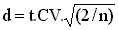
Calculation of sample size for continuous variables. The formula, in percentage terms, for a least significant difference (d) is:
where
n = the number of experimental units per group, andt = the tabulated t-value. For reasonable sample sizes (total number of units >20), t is approximately 2.0 at the 5% significance level.
If a guesstimate of the CV is available, and the desired least significant difference (d) is specified by the researcher, then the needed sample size (n) can be calculated as:
n = 2 x (t.CV/d)2
For testing at the 5% level, t is approximately equal to 2, and then:
n = 2 x (2 CV/d)2
which is the same as
n = 8 x (CV/d)2
|
Example: A researcher wishes to conduct a trial to determine the effect of two dry-season feed supplements on the weights of male calves at 90 days of age. He wishes to detect a difference of 10% between the two feeds (using a significance test at the 5% level). The coefficient of variation for weight gain in similar animals obtained from previous experiments in the area is 20X. Estimate the sample size required to detect the specified difference. If difference (d) = 10% Then n = 2 x (2.0 x 20/10)2 = 2 x 16 = 32 i.e. 32 animals would be needed in each feed group. With two feed treatments, this would give a total of 64 calves required to detect a 10% difference. |
The probability of detecting a difference needs to be considered in this context. The formula given for difference (d) = t.CV. calculates the least significant difference (d) for a given CV and experiment size (n). This is the smallest difference between treatment means in the experiment which will be declared statistically significant. The experimental treatment means are, however, only estimates of the 'true' means, and the experimental difference is only an estimate of the 'true' difference.
For any unbiased experiments, 50% of the experiments will overestimate the true difference and 50% will underestimate it.
For instance, if the 'true' difference between two treatments is 10%, and if a large number of identical experiments were carried out, then half the experiments will estimate the difference as less than 10%. If an experiment is large enough to detect a 10% difference, and the true difference is, in fact, 10%, then there is only a 50% chance that the experimental difference will be declared statistically significant,
Most researchers would not be satisfied with an experiment which has only a 50% chance of detecting a difference. The formula for the needed sample size (page 11) can easily be modified to increase this probability. This is done when
n = 8 x (CV/d)2 is generalised ton = k.(CV/d)2
where the value of k is determined by both the significance level for statistical testing, and the probability of detecting a difference. Table 3 gives a range of values of k.
Table 3. Values of the constant k in the formula for sample size estimation.
|
Probability of detecting a difference |
Significance level |
||
|
1% |
5% |
10% |
|
|
50% |
13 |
8 |
5 |
|
80% |
23 |
16 |
12 |
|
90% |
30 |
21 |
17 |
|
95% |
36 |
26 |
22 |
1 n = k.(CV/d)2.
|
Example: The coefficient of variation is 20% and difference (d) is 10%, i.e. we wish to detect a difference of 10% between two treatments. If we carry out significance tests at the 5% level and wish to have an 80% chance of detecting a difference when the 'true' difference is d, then the value of k from Table 3 is 16 and the number of experimental units required per treatment is: n = k.(CV/d)2 = 16 x (20/10)2 = 64 |
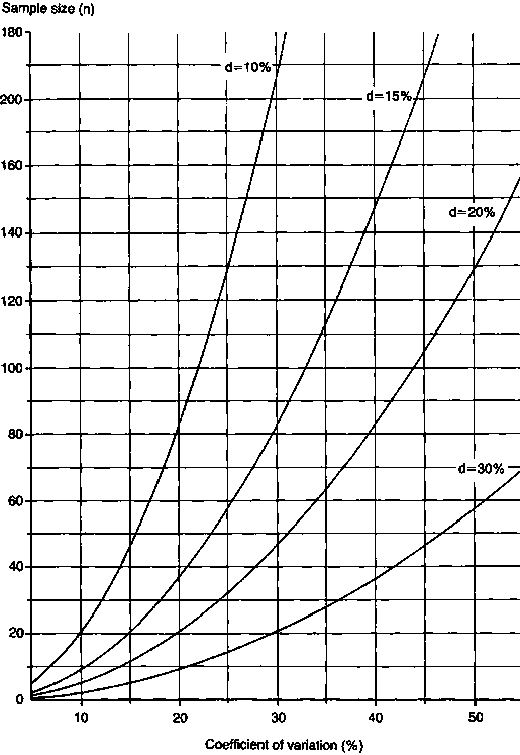
Figures 1 and 2 relate sample size to the coefficient of variation and difference (d). When significance tests are done at the 5% level, for instance, Figure 1 shows an 80% chance of detecting a difference and Figure 2 a 90% chance.
Figure 1. Sample size required per treatment for an 80X probability of detecting a difference at the 5% level.
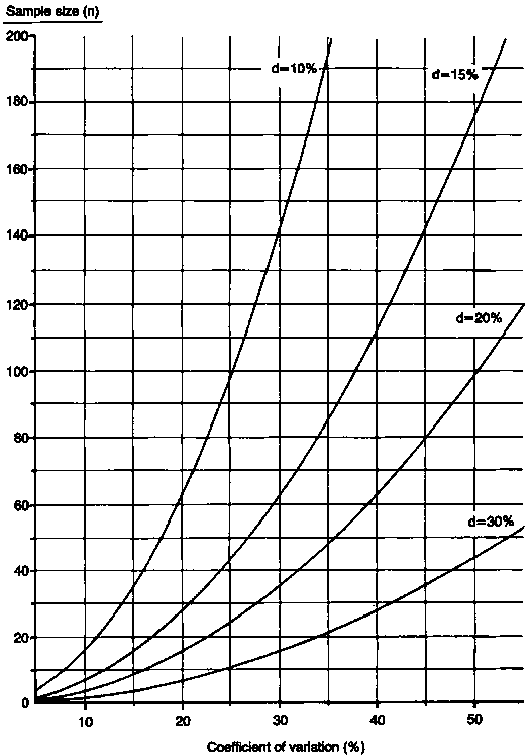
Figure 2. Sample size required per treatment for a 90% probability of detecting a difference at the 5% level.
|
Example: Suppose the coefficient of variation is 25% and we want the trial we are designing to have an 80% chance of detecting a difference between treatments of 15%. The correct figure to use in this case is Figure 1. Locate the coefficient of variation of 25% on the bottom axis of the figure and then follow the vertical line until it reaches the curve for d = 15%. The samples size (read from the vertical axis) is about 45. |
DISCRETE VARIABLES. Similar considerations apply when determining sample size for discrete data. For instance, when comparing the effect of two treatments on calf mortality, the researcher will have to specify the size of the difference to be detected and he will have to guesstimate the likely level of mortality.
The calculation of the sample size for discrete variables depends on two proportions:
- P1, which is the proportion for treatment (group) 1, and
- P2, which is the proportion for treatment 2.
|
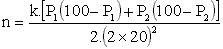
Example. We wish to detect a difference between two groups of animals which have mortality rates of 20% (P1) and 40% (P2), respectively. An approximate formula for calculating the minimum needed sample size is:
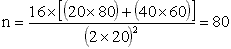
where k is taken from Table 3. If we wish to have an 80% chance of detecting a difference between the 20% and 40% mortality rates (at the 5% significance level), the required sample size per treatment group is:
Thus we will need at least 80 animals per group to detect the difference in mortalities at the specified 5% significance level. |
REDUCING SAMPLE SIZE. Each of the factors used to calculate sample size offers some scope for manipulation if the size of the sample needs to be reduced. This is particularly true about the level of precision required and the coefficient of variation for the measured variable.
Lever of precision. Factors such as the chosen least significant difference, the required level of statistical significance and the probability of detecting a difference are all a matter of choice. By opting for lower levels of precision (and accepting a greater risk that the difference wanted will not be detected), the researcher will be able to reduce sample size.
In most cases, larger sample sizes imply greater difficulties of supervision and hence, higher costs in terms of resource use. Any trade-off between precision and cost should always be balanced against the original objectives of the research project. With livestock on-farm trials in Africa, where control over non-experimental factors tends to be very difficult, high levels of precision will generally be impractical.
The coefficient of variation can be manipulated by:
· experimenting only with variables which have inherently lower coefficients of variation
· strict selection of experimental units
· 'blocking' experimental units, and
· data adjustment.
Variables with low coefficients of variation. For continuous variables, coefficients of variation differ markedly according to the type of variable being measured. For instance, the coefficients of variation for cattle weights at different ages tend to be much lower than those obtained for variables such as lactation length, milk production and calving interval (see Table 1).
This suggests that on-farm statistical trials may need to be confined to those variables whose coefficients of variation are relatively low. If we plan to experiment with variables which have high coefficients of variation (e.g. milk production), then we will probably have to accept either larger trials or lower levels of precision.
Selection of experimental units. The coefficients of variation of the data can be reduced by selecting only a narrow range of experimental units.
For instance, animals of only a particular breed, age and sex say be selected, or only households with a certain number of animals may be eligible for inclusion Since these experimental units are deliberately chosen to be reasonably homogeneous, the measured characteristics should have less variability than in wider groups
The drawback of this approach is that the results of the study will have a more limited interpretation, since they apply only to the kind of units chosen (which may not be representative of the whole population). Sometimes it is necessary to make a choice between precise results which can be applied to a limited section of the target population, or vaguer results with wider applicability.
Blocking experimental units. Blocking means grouping experimental units on the basis of important characteristics (e.g. sex, breed, weight, household size). The number of experimental units (e.g. animals or households") per block should, ideally, be equal to the number of treatments. Each treatment is then allocated to one unit in each group. This reduces inter-unit variation within a block and lowers the coefficient of variation accordingly (see 'Analysis of variance for a randomised block design' in Module 3 of this section).
Practical problems of blocking are:
· the availability of relevant information at the design stage of the trial· the practical difficulty in the field to allocate animals or households to blocks and treatment groups, and
· the difficulty which may sometimes occur in obtaining the correct number of units per block.
If the number of animals or households per block does not equal the number of treatments, the statistical analysis becomes more complicated.
The use of the technique to remove sources of variation is discussed in detail on pages 24 - 25.
Data adjustment. Even if blocking is used, there will be other sources of variation which may not be easily accounted for during experimental design. Covariance analysis4 can sometimes be used to remove the effects of these factors at the data analysis stage, thus increasing the precision of the results obtained.
4 Covariance analysis is not discussed in this manual, Statistical references which deal with the analysis in detail are Cochran and Cox (1957), Snedecor and Cochran (1961) and Mead and Curnow (1983).For instance, blocking ewes on the basis of parity and breed in a feeding trial would remove two sources of potential variation If weight at the end of the trial is also affected by initial weight, blocking on the basis of initial weight would remove yet another source of variation
This is likely to be impractical in a typical African setting, since, normally, it would be extremely difficult to obtain enough animals of the same breed, weight and parity in each treatment Alternatively, treatment scans could be adjusted using covariance analysis, to take account of the effects of initial "eight after the trial has been conducted
Determination of sample size: Practical aspects
In practice, the ability of the livestock systems research team to obtain a large enough sample will be influenced by such factors as number of treatments, farmers' willingness to cooperate, animal species and system and treatment characteristics.
· Number of treatmentsSimpler trials with fewer treatments offer scope for reducing the total number of animals or households required They are also easier for the farmer to understand and for the researcher to supervise.· Contingency allowances
Determining the number of animals required per treatment is only the start. Because animals die or are sold to meet cash needs, some allowance must be made for losses which are likely to occur during the implementation of the trial Reynolds (1989), for instance, reports that for statistical trials with small ruminants in southern Nigeria, samples of 70 animals would need to be increased to 120 to cover such contingencies
|
Note Sample estimates derived by the formulae given above should, therefore, be regarded as minima. Specific recommendations about the relative size of the contingency allowance cannot be made since this will depend on such things as farmers' cooperation, system characteristics and resource availability |
· Farmers' cooperationThis affects such things as the sire of the contingency allowance required and the number of farmers who "ill be willing to offer their livestock in the first instance· Animal species
In most cases, cattle will be more difficult to obtain for a trial than smallstock, Ibis is largely because of the high unit value attached to cattle in most societies, Farmers are usually reluctant to commit the, to experimentation if they consider the risks too great.· System characteristics
This is largely -a logistical problem, The sore extensive and mobile the system, the more difficult and costly it is to obtain the number of animals or households required, In closely settled areas, obtaining the required number is generally less difficult because farmers and livestock are concentrated in a relatively small area,· Treatment characteristics (for details see below).
|
Summary The total number of animals required for an on-farm statistical trial is a function of the following five factors: · the number of treatments in the experiment · the least significant difference specified by the researcher · the level of confidence required in order to be able to declare that the difference obtained is statistically significant · the probability of detecting a difference, and · the coefficient of variation for the variable being measured, which may depend on the design of the experiment. |
Specifying treatment characteristics for statistical trials
When designing statistical on-farm livestock trials, careful consideration should be given to the number and complexity of treatments to be used and to sources of variation.
NUMBER AND COMPLEXITY OF TREATMENTS. In general, on-farm livestock trials should be kept simple, involving not more than four treatments. More complex trials should be carried out on-station.
For instance, experiments conducted to determine ho" output (e.g. weight) changes as the amount of a given input (e.g. feed supplements changes should initially be conducted on-station). After this, it is often possible to guesstimate a range of input levels relevant to farm circumstances and to confine on-farm treatments within these limits. Three or four treatments within the range prescribed may normally be sufficient.
Another essential principle is to use fewer treatments as the level of farmers' involvement in trial management increases. They should also be less complex. Two levels of management are considered appropriate to statistical trials with livestock. They are:
· researcher-managed/researcher-executed trials, and
· researcher-managed/farmer-executed trials.
Researcher-managed/researcher-executed trials. Up to three or four treatments can be recommended for such trials. Treatments may be specified in terms of the level of a given input (e.g. feed supplement) or they may involve combinations of a number of different factors thought to influence animal performance (so-called 'factorial' trials). In either case, animals should be randomly allocated to the different treatments used. (If blocking is used, this randomisation should be done within blocks.)
|
Example: With livestock, nutrition and health are often linked. Low levels of nutrition may predispose an animal to disease or, conversely, disease may affect intake. The independent effect of each factor on performance, as well as the manner in which they interact, can be studied by a factorial experiment. A 2 x 2 health/nutrition trial might be arranged in the following manner: | |
|
| |
|
CONTROL |
HEALTH |
|
(no treatment) |
treatment only |
|
NUTRITION |
NUTRITION x HEALTH |
|
treatment only |
treatment |
On-farm factorial trials under researcher-managed/researcher-executed conditions should, as a general rule, have no more than four treatments, and the interactions examined should be simple and easy for the farmer to understand. More complex arrangements tend to confuse the farmer and are more difficult to supervise.
Factorial trials are 'efficient' in the see-se that they enable the researcher to examine both the independent and the interaction effects of several factors at once (see example above)5. Compared with trials which examine factor effects separately, they can also be used to increase the precision of the results obtained.
5 For an explanation of an interaction, see Module 3 of this section.
|
Example: Suppose a researcher wishes to examine the effect of water and nutrition on calf growth. If for some reason, he decides not to use a factorial experiment, he could control the watering regime and set up an experiment to test the effect of different levels of feed supplementation on growth. He could then vary the watering level in a second experiment, holding feed constant at the level identified as 'best' in the first experiment. Assume now that two levels of supplementation (F1 and F2) and two watering regimes (W1 and W2) are being considered and that 18 animals are available for each experiment. In the first experiment, the researcher decides to hold water constant (e.g. at W1) in order to isolate the 'best' of the two feed alternatives. Two treatments would then be required: Treatment 1: W1 F1 Having isolated the 'best' feed in this experiment (say F1), the two watering regimes could then be compared. This trial would have the following two treatments: Treatment 3: W1 F1 If 36 animals are available, only 9 could be used per treatment. The interaction effects of water and feed on calf weight could thus not be examined in an experiment like this. Alternatively, all watering and feeding levels could be compared in a factorial experiment with four treatments, using the same 36 animals. Treatment 1: W1 F1 With this arrangement, more animals (18) are available to examine the main effects of water and feed, resulting in higher levels of statistical precision (i.e. there are 18 animals for each of the two water regimes and 18 for each of the two feed supplementation options). Examining all four treatments in one experiment reduces the time required for testing. In addition, the interaction effects of water and feed on calf weight could be examined by using the analysis of variation (ANOVA) technique (Module 3 of this section). |
Researcher-managed/farmer-executed trials. As a general rule, not more than two treatments per farmer are recommended for this type of trial. Treatments should also be simple in themselves to ensure that they are easily understood (e.g. tests with complex feeding rations should be avoided), and animals should be randomly allocated between treatments. This randomisation should be done within each 'block' if blocking is used. Superimposed trials involving one treatment plus a control are an example of researcher-managed/farmer-executed trials.
The analysis of results is generally simple, involving the use of basic statistical techniques such as the t-test (Module 11, Section 1) or the paired t-test (Module 3 in this section).
BLOCKING - A METHOD TO REMOVE SOURCES OF VARIATION. If random variation in the experimental material can be reduced during the design of statistical trials, then this will either increase the precision of the experiment or reduce the number of replicates required per treatment.
As a general rule, because management practices tend to vary widely within any given area, selected farmers should each receive or be responsible for all experimental treatments. If this can be done, the effects of farmer variability (e.g. in terms of management) can be 'blocked out' in the analysis of variance, and treatment effects can be more clearly identified (Module 3 of this section).
In a situation such as this, each farmer comprises a 'block' of the experiment. Comparisons are made for each farmer, and so variation between farmers is excluded from the treatment comparison. However, this can be extremely difficult to achieve in practice, because farmers are rarely able (or willing) to assign the required number of animals to each treatment.
For instance, in sedentary systems where herds and flocks tend to be small, obtaining the required number of animals per far' can be problematic, particularly if small farmers (i.e. those who are representative of the system under study) are chosen to participate. If only the larger herd/flock owners are chosen to overcome the problem, results are likely to be biased and inapplicable to the target group as a whole. In extensive systems, herds and flocks tend to be larger but logistical difficulties can make trial administration impractical.
Also, farmers may not be able to manage trials where it is desirable to feed one diet consistently to some animals, while maintaining traditional practice with other animals.
Finding enough animals per farmer'' becomes even more difficult when additional blocking to reduce within-treatment variation is planned. Synchronisation on the basis of age, sex, weight, stage of lactation and parity can be difficult within an area as a whole, let alone on a per-farm basis (Gryseels, 1986). If, in addition, the farmer is made responsible for all the treatments in the experiments, blocking on the basis of such characteristics (particularly with cattle) is normally impractical.
However, since blocking on the basis of animal characteristics is desirable, researchers are often forced to obtain their trial animals from many different farmers. Often, it will not be practical to have one farmer using more than one treatment. If the sample required is large (say 100 animals) and farmers have only a few animals of the same class, a large number of farmers (say 40 to 50) may need to be involved just to obtain the required sample size. If the households are widely dispersed, trial supervision then becomes a major problem. There is also a risk that animals selected over a wide area may not come from the same population and that the resources of the participating farmers may be very different as a result.
When a farmer becomes responsible for only one treatment, management effects become a major source of variation which cannot be blocked out in the analysis of variance (Module 3 of this section). The residual variance and coefficient of variation for the experiment therefore tend to be high, requiring large samples to determine differences resulting from treatment effects.
Thus, trials like this are only likely to be practical when animals and households are highly concentrated (e.g. at village centres). Obtaining the required number of animals in each class will probably be less difficult and trial supervision less complicated.
For instance, ILCA conducted a successful on-fare feeding trial with livestock in The Gambia. It was a researcher-managed/researcher-executed trial in which animals were blocked on the basis of age, sex and liveweight. Supervision and the ability to obtain sufficient animals within each class were enhanced by the fact that animals were tethered each evening at the same village site (ILCA/ILRAD, 1988).
Farmers' behaviour
Apart from the problems associated with getting an adequate sample size and blocking out sources of variation, problems related to farmers' behaviour are commonly encountered in statistical livestock trials. They include:
· unwillingness to participateThe larger and more wealthy farmers are often the ones who show greatest interest in the trial, but this can result in conclusions which have narrow applicability within the areaAlso, when superimposed trials are planned to test the effect of different animal health treatments on productivity, it can be very difficult to get farmers to cooperate and assign animals to the control (untreated) group.
· moving animals across treatments
Irrespective of the type of management involved, farmers are apt to move animals across treatments if they observe that a particular treatment is having a comparatively beneficial effect (e.g. control animals may be given a feed supplement) (Appendix 1). Such movements are difficult to monitor, even hen the application of trial inputs is administered by supervising enumerators, There may also be cases when researchers unconsciously pass on their expectations to the participating farmers, who then give more attention to a particular group of animals so that a management effect rather than a treatment effect is recorded.· disposal of trial animals
Farmers will often sell trial animals because the, need the cash, This is unlikely to introduce bias into the results of the trial and affect the inferences made, unless the disposal of an animal is somehow related to a particular treatment effect (e,g, if in a feeding trial, treated animals were sold because they were in better condition than control animals) (McIntire, 1986), When there is no relationship, the chief problem is to ensure that the sample size is large enough to account for contingencies resulting from sale, transfers or deaths.· loss of interest
With long-term trials, farmers are inclined to lose interest and, With time, to become less conscientious about the application of treatment inputs (Appendices I and 2). Such trials are thus better suited to on-station research.
When statistical trials are impractical, because adequate supervision cannot be ensured or because the samples are not large enough to give meaningful results, 'monitoring' trials may be an appropriate alternative, at least during the initial stages of on-farm research.
The broad objectives of monitoring trials are to:
· improve contacts between researchers and farmers· increase the researchers' understanding of the farming system (diagnostic function)
· introduce technology thought to be appropriate to the target area (extension function)
· monitor farmers' reactions to the technology, and
· adapt and refine technology (through the above process) to suit better farmers' circumstances and objectives.
Monitoring trials have been used by ILCA in Nigeria for the extension and refinement of fodder banks and alley farming (von Kaufmann et al, 1984; Atta-Krah, 1985). They were also used to introduce new dairy and draught technologies in the Ethiopian highlands (Gryseels, 1986). The approach whereby diagnostic surveys are used to identify a suitable technology which is then progressively adapted as farmers' reactions become known through monitoring trials, is essentially an iterative approach to on-farm research.
Efficient communication among all the parties involved (i.e. the participating farmers, the livestock systems research team, on-station researchers and extension agents) is thus a prerequisite to the long-term success of monitoring trials (Atta-Krah, 1985; von Kaufmann, 1986; Waters-Bayer and Bayer, 1987). Refinements identified by the systems research team or suggested by the farmer will often need to be tested on-station before new adaptations can be re-tested on-farm. Access to research-station facilities must, therefore, be assured right from the beginning. As the emphasis shifts during the process of adaptation, a change in the composition of the livestock systems research team will often be required.
Monitoring trials are farmer-managed/farmer-executed and should be simple, particularly during the initial stages (i.e. they should have no more than one or two treatments). Farmers should be allowed to use and adapt the technology in the manner they see fit, with the researcher playing the role of an observer. On-farm statistical trials may come at a later point in the process, when adequate samples or supervision can be assured and when there is more certainty about the applicability of the technology. Specific quantification of treatment differences may then be attempted under more controlled on-farm conditions.
Since statistical analysis of the results is not initially the objective, the introduction and testing of the technology can begin with just a few cooperative farmers. Ultimately, however, wider adoption of the technology in the area would be necessary if meaningful comparisons between adopters and non-adopters are to be made. Simple techniques of analysis such as the ordinary t-test (Module 11, Section 1), gross margins, partial budgets, whole-farm budgets and cash-flow budgets (Module 3 of this section) can then be applied to compare production performance. Other more complex techniques such as linear programming and simulation can also be used to examine the impact of changes introduced and to identify constraints (Gryseels, 1986).
Making meaningful comparisons will, however, be very difficult if cooperating farmers choose to apply the technology differently. In such circumstances, reasons for the different approaches used should be ascertained in diagnostic surveys. To minimise this problem, farmers selected for participation should have similar resource and objectives.
An additional problem with monitoring trials is that the livestock systems research team can become preoccupied with extension. Being convinced of the validity of the technology in the first place, they may be more concerned with promotion rather than with the observation of technology adoption and adaptation.
Having decided on the approach to adopt, the research project needs to be implemented. During implementation, the major concerns are the phasing of various operations data collection.
The researcher should be conscious of time throughout the entire systems research process. In on-farm trials, the starting and ending times of operations should be specified. By doing this, the research team is forced to think through the activities and requirements of the project in a sequential manner and to decide on those operations which are critical to its success. Operations will also need to be scheduled to suit seasonal conditions and coincide with periods when the farmers themselves are available and willing to cooperate (Sidahmed et al, 1985).
Identifying participating farmers and informing them of their obligations is one operation which will have an important bearing on the results obtained. Sample animals also need to be selected and positively identified (e.g. by ear-tagging). The need to allocate sufficient time to preparatory work of this nature should not be underestimated. Failure to start a trial on time because of inadequate preparation can delay actual implementation for periods of up to one year (e.g. when seasonal feeding trials are being planned).
At this stage, it is also important to assign responsibilities to different members of the livestock systems research team. Each member needs to understand his/her obligations with respect to the trial and the time at which those responsibilities will become effective. Where external sources of support are envisaged (e.g. on-station staff), such personnel (and their activities) should also be included in the implementation plan.
Simple bar charts can be used to itemise and schedule crucial operations (Module 2, Section 1). Although in practice it may be difficult to adhere to an originally planned schedule (particularly as the level of farmers' involvement increases), attempts should, nevertheless, be made to keep operations under a reasonably tight control.
|
Example: |
||||
|
|
||||
|
Figure 3. Schedule of operations for a dry-season feed supplementation trial in The Gambia, 1987. |
||||
|
|
||||
|
Month |
M J J A S O N D J F M A M J J A S |
|||
|
Farm operation |
Plough Weed Harvest |
|||
|
Season |
Wet season |
Dry Seasons |
||
|
Trial activities |
||||
|
1. Planning |
||||
|
Select farmers |
-- |
|||
|
Instruct farmers |
------------------------------------------ |
|||
|
Build fence |
-- |
|||
|
Store residues |
-------------- |
|||
|
Select animals |
-- |
|||
|
Weigh animals |
-- |
|||
|
2. Implementation |
||||
|
Start supplement |
-- |
|||
|
Weigh animals |
|
----------- |
||
|
late ring/feeding |
|
----------- |
||
|
End trial |
|
- |
|
|
|
3. Analysis |
|
------ |
|
|
|
|
||||
|
|
Note that while the actual trial took less than five months, the overall time involved (including planning and analysis) took approximately 11 months. Also' trial activities were scheduled to coincide With farm operations and-seasonal conditions. |
|||
The first task here is to define the methods which will be used to collect data. The type of data collected will depend on the objectives of the trial, which, in turn, will be reflected in the level of farmers' involvement.
Statistical trials. In researcher-managed/researcher-executed trials, assessment of treatment effects is the main objective. Therefore, emphasis is given to the measurement of production performance in the farm environment, but under carefully supervised conditions of trial management. The various methods used to collect animal production data are described in Module 5 (Section 1) which also specifies how often measurements should be made for each performance variable.
In researcher-managed/farmer-executed trials, the measurement of performance is also important, but the effect of the technology on the use of farm resources (e.g. family labour and its allocation to other enterprises) requires more careful monitoring. Data on labour use and cropping patterns should be collected in farmer-executed trials to ensure that all issues affecting adoption are properly understood. However, as the farmers' involvement in trial management increases, so will also the requirements of data collection.
When statistical trials are being attempted in highly mobile production systems (e.g. superimposed trials using veterinary inputs in a pastoral area) there is always the risk that treatment effects may be confounded by variations in the grazing environment (McIntire, 1986). Grazing behaviour may then need to be monitored as part of the trial6. The same principle applies to other situations in which potentially confounding factors can be identified before the trial begins.
6 Methods used to monitor grazing behaviour are discussed in Nodule I (Section 1).
Monitoring trials. In farmer-managed/farmer-executed trials, the chief objective is to monitor farmers' reactions to the technology being tested. Again, besides measuring production performance, the researcher should also try to understand the interactions in resource use on the farm.
Farmers' opinions become more important as the level of farmers' involvement increases, and simple questionnaires need to be designed to ensure that information of this kind is collected both during and after the trial. Mutsaers et al (1986) suggest that these should be used:
· when selecting farmers and livestock for the trialFor instance, the information collected at this stage will include the name of household head, household size and structure, livestock owned or held by age, sex and productive function, cropping practices, other sources of income and assets Information on animal characteristics (such as weight, sex, age) and means of identification can also be obtained.· during the trial
During the trial, data should be collected on performance, inputs applied to each treatment group (if relevant) and on animal losses (deaths, sales, transfers). Other relevant data at this stage are farmers' observations and information on labour allocated to the trial and other activities, on potentially confounding factors (e.g. grazing resources, seasonal conditions) and on other problems (e.g. cooperation by farmers, logistics and supervision of enumerators).· at the end of the trial
The data collected at this stage will include final records of performance and farmers' observations about the trial.
When enumerators are involved in the trial, periodic checks should be made to ensure that the right methods are being used and that data are being recorded correctly (Module 2, Section 1). Finally, weighing scales and other equipment should be regularly calibrated.
Evaluation is a step-wise process, ending with an assessment of the manner in which the technology has been adopted within (and outside) the target area. It will generally involve the need to consider some or all of the following issues:
Statistical significance. For on-farm statistical trials, treatments will initially be evaluated on the basis of their effects on production performance. The methods used to test the statistical significance of trial results are discussed in Module 3 of this section.
Financial attractiveness. A treatment may have a statistically significant effect on production without it being financially attractive to the farmer. The financial implications of the innovation should, therefore, be analysed at the farmer's level. In an appraisal of this kind, the main considerations are:
· the manner in which the inputs and outputs resulting from the application of a technology are valued, and· the effect of adoption on the allocation of household resources to farm and non-farm activities, as well as its overall impact on farm income.
The methods commonly used to evaluate the financial attractiveness of an innovation at the farmer's level are discussed in Module 3 of this section, which also deals with the valuation of inputs and outputs.
Evaluation by farmers. While the productivity and financial effects of an innovation are important, they are not the only factors considered by the farmers. Issues such as the risks associated with adoption, the effect on intra-household control over resources and cultural acceptability will come into the decision as well.
Farmers must be involved in the whole process of design and evaluation. There are numerous cases in Africa where apparently attractive technologies have not been adopted because these issues have not been adequately considered. This is particularly true for livestock-related technology (Behnke, 1984).
Adoption. The general applicability of an innovation for the target area will be indicated by the proportion of households which accept and adopt it, and by the rate of adoption.
Farmers' perception of the relevance of the technology will only be one of the factors affecting adoption. Other factors such as institutional and infrastructural support will also determine how widely and how rapidly the technology will be adopted.
Acceptability can be assessed in terms of an 'acceptability index'. The index is obtained by multiplying the percentage of farmers who adopt the new technology by the proportion of their livestock so affected, and by dividing the product by 100.
|
Example: In an area A, 10% of the farmers have adopted a particular health measure (e.g. the use of a vaccine) and 90% of the cattle owned or held by these farmers have been treated. Calculate the acceptability index. Acceptability index = 10 x 90/100 = 9 |
The acceptability index provides a measure of the importance of the technology to those who have actually adopted and of its potential for replication within the area (Shaner et al, 1982, p. 141). However, it can only be properly interpreted by examining the components used in its derivation.
For instance, the index calculated above indicates that only a small proportion of farmers have been impressed with the technology, but these have been convinced of its effectiveness. An index of 9 could also be derived if 90X of farmers used the treatment on only 10% of their animals. This would indicate wide use but cautious acceptance on the part of most households. A given value of the acceptability index can thus have many different interpretations.
Furthermore, the overall proportion of livestock affected ('coverage') will depend on the distribution of livestock holdings in the area concerned. If complete coverage is the aim (as would be the case with a vaccine), the acceptability index does not tell you much about the coverage actually achieved.
|
Example: If the 10% of the households which had accepted the use of a particular vaccine owned or held 50% of all the cattle in the area, and if they used the vaccine on 90% of their cattle, then the proportion of cattle actually affected would be: Coverage (%) = (per cent of animals held by adopters x per cent of these affected)/100 = 45% |
When high coverage is associated with a low acceptability index (as in the above example), the benefits would seem to be going to the wealthier cattle holders in the area, which may be considered undesirable on equity grounds.
Other evaluation criteria. The issues raised above show that an overall evaluation of the benefits of a technology needs to take into account all the factors influencing adoption, including equity and environmental effects. Equity relationships in livestock systems research can be examined using the Lorenz curve (Module 11, Section 1). Environmental issues are discussed in Module 6 (Section 1).
Consideration of all the factors mentioned above may indicate the need for a re-design or modification of the technology. This may involve the use of research-station facilities to refine the innovation or further on-farm testing. The process of technological design is thus iterative and dependent on continuous feedback from the farmer to the systems research team and the research station.
The principles outlined in Modules 1 and 2 of this section are generally applicable to all types of livestock on-farm trial. Nevertheless, there are six additional considerations specific to on-farm feeding trials which need to be borne in mind when planning the experiments. They relate to:
· supplementation, adjustment and compensatory gain
· seasonal effects
· feed variability
· interactions
· typical problems, and
· valuing feeds.
Supplementation, adjustment and compensatory gain
Animals often require some time to adjust to a supplement before its effects can be positively stated. Periods of up to two months may be needed to allow such adjustment to take place. Several points can be made in this context:
· Unsupplemented control animals may perform better than supplemented animals during the initial stages of the trial (e.g. in terms of weight gain). The trial should, therefore, be long enough to allow supplemented animals time to adjust to the treatment (Riley et al, 1988).· After adjustment, a period of compensatory gain among supplemented animals will often follow (Module 7, Section 1). If performance is being measured in terms of body weight, differences between treated and untreated groups may be temporarily distorted because of the effects of compensatory growth.
· Alternatively, the relative gains resulting from supplementation during periods of feed shortage (e.g. during the dry season) may only be temporary if compensatory growth occurs in unsupplemented animals during subsequent periods when grazing is relatively abundant (e.g. during the wet season).
This subsequent compensatory growth among unsupplemented animals will be irrelevant when dry-season supplementation is geared towards either end-of-season market opportunities or the improvement of the body condition of draught animals at ploughing time. However, it becomes very important if the objective is to improve growth and condition in the longer term. However, in overgrazed environments, the potential for compensatory gain during the growing season may be very limited (Module 10, Section 1).· Comparisons on the basis of liveweight alone can be misleading, since changes in weight can result from variations in gut or bladder fill rather than from changes in fat or muscle.
This problem can be mitigated by complementing weight measurements with condition scoring (Module 5, Section 1). Condition scoring is generally applied to cattle (Nicholson and Butterworth, 1986), but scoring techniques have recently been developed for small ruminants as well.· The length of the trial period will depend on the objectives of the trial. For trials which aim to improve the growth performance of ruminants, periods of up to 100 days may be needed to account adequately for the effects of adjustment and compensatory gain.
Seasonal effects
Results can be markedly affected by inter-year or inter-season variations in moisture conditions when trial animals have access to communal grazing or other feed sources (e.g. crop residues) influenced by such conditions.
During dry seasons or years of low rainfall, for instance, differences between supplemented and unsupplemented animals may be highly significant. During wet seasons or years of high rainfall, unsupplemented animals Day perform as well or even better than supplemented animals.
Feed variability
The nutritive value of locally available feed supplements tends to be highly variable within and between farms. Crop residue quality, for instance, can be affected by:
· seasonal conditions
· time of harvest
· the time lag between harvest and storage, and
· storage techniques.
Thus, treatment effects can be confounded by differences in the quality of the traditional feed supplement used by the farmers participating in a trial. To minimise this, attempts should be made to select farmers with feed supplements (e.g. hay, crop residues) of similar quality. Feed resources on each farm would thus need to be sampled and tested before commencing the trial (Module 7, Section 1).
Treatment effects can also be confounded by variations in animal characteristics (e.g. age, weight and sex).
Where possible, the researcher should attempt to remove, by blocking, potential sources of variation caused by:
· differences between feeds
· differences between animals, and
· differences between farmers.
However, this is likely to prove very difficult in practice.
For instance, blocking on the basis of animal characteristics often implies the need to select more farmers over a wider geographical area. However, the wider the area of selection, the greater the chances of variation in the traditional supplement used.
Thus, blocking on the basis of one factor (e.g. animal characteristics) may increase the likelihood of greater variation in another factor (e.g. feed supplement or farmer). In such cases, the residual variation in ANOVA is likely to be high, reducing the chances of obtaining a significant result.
Covariance analysis could be used to remove the effects of feed variability on individual trial farms if, for instance, a measure of 'average' quality per farm could be obtained by laboratory analysis. This would, of course, require periodic sampling of the supplement used and ready access to laboratory facilities.
Interactions
Responses to improved nutrition will often be determined by factors other than the feed itself. Intake, for instance, is affected not only by the digestibility and palatability of the feed given but also by such factors as disease, the availability of water, temperature, humidity and the physiological status of the animal (Module 7, Section 1).
Thus, nutrition trials are often more useful if attempts are made to understand the independent effects of influencing factors (including feed) on animal production performance and to determine the manner in which these different factors interact. Factorial trials are suitable for these purposes (Modules 2 and 3 of this section).
In order to determine the relative importance of the different factors and the interactions which occur between them, an initial period of on-station research will probably be required. Subsequently, when the important factors have been isolated, simple factorial trials (under researcher-managed conditions) could be used to examine their effects and interactions in the farm environment.
Typical problems
The problems most commonly confronted in feeding trials are:
· a tendency, on the part-of farmers, to move animals across treatments
· loss of interest
· difficulties in providing purchased supplements over long periods, and
· free provision of inputs.
Farmers switch livestock between treatments because they observe differences between supplemented and unsupplemented animals.
Such behaviour sabotages statistical trials, and implies the need for a high degree of supervision by the researcher to prevent it. But with monitoring trials, where the aim is to observe how farmers use supplements and to understand the reasons for any changes made, moving animals from one treatment to another may be less serious, provided that the researcher is aware that it is being done.
When trials extend over prolonged periods, farmers tend to lose interest and are more likely to switch the treatment to the control group (as the effects of supplementation become more obvious) or to dispose of animals as and when the need for cash or food arises. Improvements which take a long time to take effect are also likely to be of less interest (Part B. Module 1, Section 2).
Purchased supplements, which were used in the trial, may not always be available on a continuing basis. As a result, the technology tested on-farm will have a limited period of applicability. Forecasting the availability of purchased feeds in the long term may not be easy, but an examination of sources of supply and their present and past reliability should provide a reasonable guesstimate.
Farmers' participation in a trial is often conditional upon the research team providing the required feed inputs free of charge. Such expectations then make it doubtful whether the farmers will continue to use the technology when they have to purchase the inputs themselves.
Valuing feeds
Module 3 in this section deals with the valuation of outputs which is necessary to assess the financial attractiveness of a new technology.
Feeding trials will essentially involve the use of home-grown feeds (e.g. hay, crop residues, grain, pasture, other forages) and purchased feeds (e.g. grains, agricultural byproducts). When valuing homegrown feeds as production inputs, the following principles should be borne in mind:
Grain products. If the household is a surplus producer, the amount of grain fed should be costed at:
· the price per unit at which it could be sold to a buyer, or
· its market price less the cost of taking it to the market, if this can be estimated.
If the household is a deficit producer (i.e. it has to buy grain on a regular basis), grain fed to animals should be costed at the price at which it can be purchased if delivered to the purchaser's farm.
Crop residues. Where there are formal or informal market outlets for crop residues, the value of the crop residue fed to animals is computed as indicated above for grain. Where no such outlets exist, crop residues should be given an imputed market value. This is done by converting the feed into nutrient equivalents (e.g. energy or protein equivalents) and valuing it at the market price per unit for that particular nutrient. For very low-quality roughages, the value assigned will be close or equal to zero.
Home-grown forages. Where the land used to grow forages could be allocated to other cropping activities (e.g. grain cropping), the forage can be costed at its opportunity cost, i.e. in terms of the income which the farmer forgoes by using land for forage, not crop, production.
The valuation of forage legumes should also include the benefits of nitrogen fixation, improved soil structure and easier land preparation for subsequent cropping, all of which makes it more complex. Methods of analysis such as linear programming can be used to provide a unit value for forage legumes. However, these are beyond the scope of this manual.
Purchased feeds, such as molasses and cottonseed cake, are valued at the market price paid per unit of feed purchased.
When planning on-farm animal health trials, we will need to consider carefully such issues as:
· participation
· incentives and expected assistance
· disposal of animals
· efficacy and availability of vaccines and drugs
· immunity and trial effects
· interactions, and
· prospective animal health studies.
Participation
When the effect of an animal health intervention is not clearly understood, or when exposure to veterinary services has been limited, it can be difficult to obtain the required number of farmers to participate in the trial. Fear of losing animals subjected to a particular treatment (e.g. a new vaccine) can also result in reticence on the part of farmers. Farmers are also reluctant to have some of their animals treated for a disease, while the others (the control group) remain untreated.
Incentives and expected assistance
Because of the difficulties involved in getting the required number of participants, trial inputs (e.g. drugs) often need to be provided free of charge, at least initially. Additional incentives (e.g. in the form of general veterinary care) have sometimes been offered by researchers to ensure continued cooperation or to maintain credibility.
This can be both costly and time consuming, diverting resources away from the originally prescribed tasks. It is also unlikely that NARS research teams will be able to offer such support because of the limited resources they usually have at their disposal. Therefore, government veterinarians should be involved in the trial programme, where possible.
During the trial-, other issues may arise, including:
· requests for and purchase of treatment for control animals
· tempering with treatments
· dwindling interest in the trial, and
· unhelpful attitudes by veterinarians.
Treatment for control animals. Farmers with control animals often request that their animals be treated as well, when the benefits of the treatment become evident (e.g. reduced mortality or increased productivity). In such a case, the researcher can take one of two possible courses of action.
If the treatment is a vaccination, he may give the animals placebo (saline solution) injections instead of the real treatment. Of course, the danger here is that the farmer will detect the deception (e.g. if the animals die of the disease being 'treated') and refuse to cooperate. Needless to say, the credibility of the whole research team will be severely damaged.
Alternatively, farmers with control animals may be offered other forms of veterinary care for their animals to induce them to cooperate. This, however, raises the costs of the trial.
In the extreme case that no assistance is offered, farmers with control animals may resort to purchasing the treatment being tested from formal outlets or on the black market.
Treatment dilution. Farmers responsible for both treated and control animals may be tempted to dilute the treatment, spreading its use over both groups. Results then tend to be unconvincing, and the farmer loses interest in the trial. Detecting this kind of behaviour is virtually impossible even under heavily supervised trial management.
Dwindling interest. This is common in trials which require regular sampling. If farmers see no concrete benefits resulting from their participation in the trial, they tend to start regarding regular sampling as an inconvenience which has no real purpose and often refuse to continue to cooperate.
For instance! taking blood samples for trypanosomiasis detection tends to be unpopular precisely because it does not seem to lead to any immediate benefits.
Unhelpful attitudes. Researchers working on issues related to animal health may experience resistance from locally appointed animal health officers if, for instance, these officers do not have access to the drugs/vaccines being tested by the systems research team. Involving local veterinarians in the trials from the beginning can overcome this problem.
Disposal of animals
The sale of animals during trials is a common problem (Module 2, Section 2). With health trials, the probability of death in the untreated (control) group is likely to be greater than it is for animals assigned to treatment groups. Farmers with control animals are more likely to sell or slaughter sick animals rather than wait for them to die, and this can destroy the usefulness of trial results.
The levels of sale and slaughter may, therefore, be higher in control groups when animal health interventions are being tested (Reynolds and Francis, 1988). To correct this, researchers may need to offer therapeutic treatment for control animals when symptoms leading to death become evident. The objective of the trial will then be to observe differences in other performance measures, not mortalities.
For instance, assistance of this nature has been offered to Gambian farmers cooperating With the African Trypanotolerant Livestock Network in order to study differences in the performance of animals under high, medium and low trypanosomiasis risk and to determine the frequency and magnitude of the treatments required under the different trial regimes.
Efficacy and availability of vaccines and drugs
Introducing animal health interventions into Africa can meet with several obstacles, the most important of which are listed below.
Imported drugs and vaccines are not always effective under the different environmental conditions. They may also deteriorate before arrival. Their efficacy should, therefore, be tested before on-farm trials begin.
Recurrent funds for the operation of veterinary services have declined in real terms in many African countries (Addis Anteneh, 1983; 1985; ILCA, 1989). This has placed severe restrictions on the effectiveness of veterinary services, so that, in many cases, continuous support for on-farm testing of animal health interventions cannot be ensured.
Shortages and high costs of drugs mean that veterinarians and farmers often dilute applications, reducing the effectiveness of health interventions in the long term.
Immunity and trial effects
Animals may acquire temporary immunity to diseases prevalent in an area. If the trial period corresponds with the period of immunity, treatment differences will not be detected. Serum or blood samples would then be required to identify susceptible groups within the target population, but these are not always effective.
With serum sampling, false positive and negative results can occur when animals show a natural or induced tolerance to antigens and, therefore, do not produce antibodies when challenged with the disease agent. With blood smears, parasites may be easily detectable during the early stages of infection but may be less so during later stages (e.g. in carriers) (Part B. Module 8, Section 1). There is, therefore, danger that trial animals identified as susceptible may, in fact, be immune, and the effects of treatment will then be distorted.
For instance, with peste de petits ruminants (PPR), offspring can acquire impunity from the dam which lasts for three months. Immunity acquired by adult goats from a survived PPR infection lasts for about three years (Obi et al, 1983).
Interactions
Disease can affect the intake of feed and the level of nutrition an animal receives. Alternatively, the amount of feed eaten and its nutritive quality can affect the animal's susceptibility to disease. Breed characteristics, environmental conditions and management practices can also influence the susceptibility of animals to particular diseases (e.g. N'Dama cattle in West Africa have a natural tolerance to trypanosomiasis).
It is not always easy to determine the direction of causality between these factors or the manner in which they interact (Modules 7 and 8, Section 1).
Nevertheless, an understanding of such relationships is important if appropriate interventions are to be identified.
The precise nature of many of the environmental and genetic influences and the manner in which they interact can best be determined under controlled conditions on station. On-farm trials will, however, be necessary to understand the effects of the interactions between management practices (which are likely to be quite different on research stations from what they are on smallholdings) and disease. The use of factorial trials for these purposes was discussed on pages 21-23 above. Module 3 in this section shows how the results obtained can be analysed.
Prospective animal health studies
Prospective or cohort studies7 are often used to examine the effect of a disease determinant8 on different groups of animals. Animals selected for the trial are typically divided into two groups, with the treated group being subjected to or having the determinant in question.
7 Prospective studies aim to establish relationships between diseases and their determinants as they occur. Animals are normally separated into groups or 'cohorts' in which the determinant of the disease is either present or absent, or where its frequency of occurrence varies (Module 8, Section 1).8 A determinant is any factor or variable that can affect the frequency with which a disease occurs within a given animal population (Putt et al, 1987) (module 8, Section 1). Determinants may be introduced (e.g. vaccine) or they may occur as a result of natural influences (e.g. breed, age, sex, climate, soils).
Under on-station conditions it is a relatively simple matter to isolate and quantify the effects of the determinant. Animals in each group can be paired on the basis of age, weight, sex or breed, and the paired 't' test can then be used to test for differences between groups (Module 3, Section 2).
Under the less controlled circumstances on the farm, the investigator can follow essentially two courses of action:
· study the influence of a determinant which occurs naturallyFor instance, one can study the effect of breed on disease susceptibility and production performance.The problem with this type of study is that confounding factors (e.g. management practices) can make it very difficult to isolate the causes and effects and to come up with useful recommendations.
· study the influence of an artificially introduced determinant
An artificially introduced determinant could be a vaccine which is administered to a group of animals While another group is left untreated (control). Trials which have treatment and control groups are classified as superimposed trials.
In studies of this kind, animals in each group should be blocked on the basis of similar characteristics, but this often results in problems with sampling or supervision.
If the effect of the determinant is measured in terms of mortality (which is a discrete variable), the sample sizes required are likely to be very large and may be beyond the scope of most livestock systems research teams. Therefore, studies of artificially introduced determinants tend to be confined to the measurement of continuous variables such as weight and milk production.
To examine the effects of the determinant on mortality, two approaches may be used:
- offer therapeutic treatment to the farmer's control animals when it is certain that they would otherwise die. This may entail difficulties in ensuring adequate supervision.
- purchase animals and attempt to simulate traditional management practices, observing the effects of the determinant on treated and untreated groups.
Such observations have been carried out in veterinary epidemiology and in farming systems research studies, using sentinel herds (Fadlalla and Cook, 1985; Putt et al, 1987). However, the costs of setting up and administering trials of this nature are likely to be prohibitive in most circumstances.
Addis Anteneh. 1983. Financing animal health services in some African countries. LPU Working Paper 1, ILCA (International Livestock Centre for Africa), Addis Ababa, Ethiopia. 39 pp.
Addis Anteneh. 1985. Financing livestock services: Do directors of veterinary services have a distinct role in policy-making?. ALPAN (African Livestock Policy Analysis Network) Network Paper 6, ILCA (International Livestock Centre for Africa), Addis Ababa, Ethiopia. 16 pp.
Agyemang K and Nkhonjera L P. 1986. Evaluation of the productivity of crossbred dairy cattle on smallholder and Government farms in the Republic of Malawi. ILCA Research Report 12, ILCA (International Livestock Centre for Africa), Addis Ababa, Ethiopia. 39 pp.
Atta-Krah A. 1985. Developmental approach to on-farm research: Pilot project for improving small ruminant production in humid West Africa. In: Nordblom T L, Ahmed A E K H and Potts G R (eds), Research methodology for livestock on-farm trials. Proceedings of a workshop held at Aleppo, Syria, 25-28 March 1985. IDRC (International Development Research Centre), Ottawa, Canada. pp. 65-81.
Barlow C, Jayasuria S K, Price E, Maranan C and Roxas N. 1986. Improving the economic impact of farming systems research. Agricultural Systems 22(2):109-126.
Behnke R. Jr. 1984. Measuring the benefits of subsistence versus commercial livestock production in Africa. In: Flora C B (ed), Animals in the farming system. Proceedings of Kansas State University's 1983 Farming Systems Research Symposium, Manhattan, Kansas, 31 October - 2 November 1983. Farming Systems Research Paper Series 6, Kansas State University, Manhattan, Kansas, USA. pp. 564-592.
Cochran W G and Cox G M. 1957. Experimental designs. Second edition. John Wiley and Sons, New York, USA. 611 pp.
Fadlalla B R and Cook H. 1985. Design and implementation of in-herd/on-range trials: Use of sentinel herds. In: Nordblom T L, Ahmed A E K H and Potts G R (eds), Research methodology for livestock on-farm trials. Proceedings of a workshop held at Aleppo, Syria, 2528 March 1985. IDRC (International Development Research Centre), Ottawa, Canada. pp. 133-151.
Gilbert E H. Norman D W and Winch F E. 1980. Farming systems research: A critical appraisal. MSU Rural Development Paper 6, Department of Agricultural Economics, Michigan State University, East Lansing, Michigan, USA. 135 + xiii pp.
Gryseels G. 1986. Difficulties in evaluating on-farm experiments with livestock: Examples from the Ethiopian highlands. In: Kearl S (ed), Livestock in mixed farming systems: Research methods and priorities. Proceedings of a workshop held at ILCA (International Livestock Centre for Africa), Addis Ababa, Ethiopia, 24-27 June 1985. FSSP (Farming Systems Support Project) Network Report 2, University of Florida/ILCA, Gainesville, Florida, USA. pp. 27-56. [ILCA library microfiche number 81065]
Harrington L. 1980. Methodological issues facing social scientists in on-farm/farming systems research. CIMMYT Working Paper. Economics Program, CIMMYT (Centro Internacional de Mejoramiento de Maiz y Trigo), Mexico, Mexico. 37 pp.
ILCA (International Livestock Centre for Africa). 1989. Livestock policy analysis. ILCA manual, ILCA, Addis Ababa, Ethiopia. [draft]
ILCA (International Livestock Centre for Africa)/ILRAD (International Laboratory for Research on Animal Diseases). 1988. Livestock production in tsetse affected areas of Africa. Proceedings of an ILCA/ILRAD meeting held in Nairobi, Kenya, 23-27 November 1987. English Press, Nairobi, Kenya. 473 pp.
von Kaufmann R. 1983. Design and testing procedures in livestock systems research: An agro-pastoral example. In: Pastoral systems research in sub-Saharan Africa. Proceedings of the IDRC/ILCA workshop held at ILCA, Addis Ababa, Ethiopia, 21-24 March 1983. ILCA (International Livestock Centre for Africa), Addis Ababa, Ethiopia. pp. 407-429.
von Kaufmann R. 1986. Matching the impositions of the farming and research systems as a prelude to farming systems research. In: Kearl S (ed), Livestock in mixed farming systems: Research Methods and priorities. Proceedings of a workshop held at ILCA (International Livestock Centre for Africa), Addis Ababa, Ethiopia, 24-27 June 1985. FSSP (Farming Systems Support Project) Network Report 2, University of Florida/ILCA, Gainesville, Florida, USA. pp. 137-162. [ILCA library microfiche number B1065]
von Kaufmann R. Chater S and Blench R (eds). 1986. Livestock systems research in Nigeria's subhumid zone. Proceedings of the Second ILCA/NAPRI Symposium held in Kaduna, Nigeria, 29 October - 2 November 1984. ILCA (International Livestock Centre for Africa), Addis Ababa, Ethiopia. 484 pp.
Kenya Government. 1985. Technical Note 1: Animal Nutrition. Government Printer, Nairobi, Kenya.
Mead R and Curnow R N. 1983. Statistical methods in agriculture and experimental biology. Chapman and Hall, London, UK. 335 pp.
McIntire J. 1986. On the alleged difficulties of on-farm research with livestock. In: Kearl S (ed), Livestock in mixed farming systems: Research methods and priorities. Proceedings of a workshop held at ILCA (International Livestock Centre for Africa), Addis Ababa, Ethiopia, 24-27 June 1985. FSSP (Farming Systems Support Project) Network Report 2, University of Florida/ILCA, Gainesville, Florida, USA. pp. 57-70. [ILCA library microfiche number -B1065]
Merrill-Sands D and McAllister J. 1988. Strengthening the integration of on-farm client-oriented research and experiment station research in national agricultural research systems (NARS): Management lessons from nine country case studies. OFCOR Comparative Study Paper 1, ISNAR (International Science for National Agricultural Research), The Hague, The Netherlands. 66 pp.
Mohamed-Saleem M and Suleiman H. 1986. Use and issues in on-farm research to improve fodder for livestock of agropastoralists in the Nigerian subhumid zone. In: Kearl S (ed), Livestock in mixed farming systems: Research methods and priorities. Proceedings of a workshop held at ILCA (International Livestock Centre for Africa), Addis Ababa, Ethiopia, 24-27 June 1985. FSSP (Farming Systems Support Project) Network Report 2, University of Florida/ILCA, Gainesville, Florida, USA. pp. 117-135. [ILCA library microfiche number B1065]
Mutsaers H J W. Fisher N M, Vogel W O and Palada M C. 1986. A field guide for on-farm research. IITA (International Institute of Tropical Agriculture), Ibadan, Nigeria. 197 pp.
Nicholson M J and Butterworth M H. 1986. A guide to condition scoring of zebu cattle. ILCA (International Livestock Centre for Africa), Addis Ababa, Ethiopia. 29 pp.
Norman D and Collinson M. 1985. Farming systems research in theory and practice. In: Remenyi J V (ed), Agricultural systems research for developing countries. Proceedings of an international workshop held at Hawkesbury Agricultural College, Richmond, New South Wales, Australia, 12-15 May 1985. ACIAR proceedings 22. ACIAR (Australian Centre for International Agricultural Research), Canberra, Australia. pp. 16-30.
Obi T U. Ojo M O. Durojaiye O A, Kasali O B. Akpavie S and Opasina D B. 1983. Peste des petits ruminants in goats in Nigeria: Clinical, microbiological and pathological features. Zentralblatt fur Veterinaermedizin (GFR) 30:751-761
Partenheimer E. 1983. Economic analysis of biological experiments. In: Farm experimentation. Proceedings of a CIMMYT/University of Zimbabwe workshop, Harare, 1983. Eastern African Economics Programme, CIMMYT (International Maize and Wheat Improvement Centre), Nairobi, Kenya.
Putt S N H. Shaw A P M, Woods A J. Tyler L and James A D. 1987. Veterinary epidemiology and economics in Africa: A manual for use in the design and appraisal of livestock health policy. ILCA Manual 3, ILCA (International Livestock Centre for Africa), Addis Ababa, Ethiopia. 130 pp. [Translated into French]
Reynolds L. 1989. Livestock in agro-forestry: A farming systems approach. In: Avery M, Cannel M and Ong C (eds), Applications of biological research in Asian agro-forestry. Winrock International Institute for Agricultural Development, Morrilton, USA.
Reynolds L and Francis P A. 1988. The effect of PPR control and dipping on village goat populations in southwest Nigeria. ILCA Bulletin 32:22-27. ILCA (International Livestock Centre for Africa), Addis Ababa, Ethiopia.
Riley J. Agyemang k, Dwinger R. Jeannin P. Grieve A and Little D. 1988. N'Dama cattle production in relation to nutritional improvements in villages in the Gambia. In: Livestock production in tsetse affected areas of Africa. Proceedings of an ILCA/ILRAD meeting held in Nairobi, Kenya, 23-27 November 1987. ILCA (International Livestock Centre for Africa)/ILRAD (International Laboratory for Research on Animal Diseases), Nairobi, Kenya. pp. 399-403.
Shaner W W. Philipp P F and Schmehl W R. 1982. Farming systems research and development: Guidelines for developing countries. Westview Press, Boulder, Colorado, USA. 414 pp.
Sidahmed A, Onim J F M, Mukhebi A W. Shavulimo R S. De Boer A U and Fitzhugh H A. 1985. On-farm trials with dual-purpose goats on small farms in western Kenya. In: Nordblom T L, Ahmed A E K H and Potts G R (eds), Research methodology for livestock on-farm trials. Proceedings of a workshop held at Aleppo, Syria, 2528 March 1985. IDRC (International Development Research Centre), Ottawa, Canada. pp. 101-132.
Snedecor G W and Cochran W G. 1980. Statistical methods. Seventh edition. Iowa State University Press, Ames, Iowa, USA. 507 pp.
Stroud A. 1985. On-farm experimentation: Concepts and principles. An occasional series of papers and notes on methodologies and procedures useful in farm systems research and in the economic interpretation of agricultural experiments, Number 11. Eastern African Economics Programme, CIMMYT (Centro Internacional de Mejoramiento de Main y Trigo), Nairobi, Kenya. 94 pp.
Waters-Bayer A and Bayer W. 1987. Building on traditional resource use by cattle keepers in central Nigeria. ILEIA Newsletter The (Netherlands) 3(4):7-9.