


Abstract
Introduction
The nature of integrated livestock/cereal farming systems in Syria
Cereals as a source of feed
Integration through replacement of fallows with forage crops
Integration through replacement of fallows with self-regenerating annual pastures
The impact of pasture and forage crops on cereal yields
Conclusions
References
P.S. Cocks
International Center for Agricultural Research in the Dry Areas (ICARDA)
P.O. Box 5466, Aleppo, Syria.
Integration of cereal and livestock enterprises in existing farming systems is based on utilisation by livestock of green cereal plants, straw and grain. The quality of local barley straw is very high and experiments have shown that sheep are able to maintain liveweight on a diet of straw alone. Straw of new varieties is of inferior but variable quality and it is possible to select for improved straw quality without decreasing grain yield. Farmers believe that green-stage grazing increases, or at worst does not decrease, grain yield, but this is not supported by experimental evidence, possibly because grazing pressures imposed by farmers are less severe than those imposed by researchers.
Current livestock farming systems rely on grazing marginal lands. The possibility of replacing this grazing by use of fallows in cereal/fallow rotations is discussed under two headings: leguminous forage crops and self-regenerating pastures. The most important problems associated with forage crops are costs of sowing and harvesting, and the results of recent on-farm experiments which study the possibility of direct grazing are examined. It is suggested that both green-stage and mature-crop grazing are cheaper than hay or straw making, but in the case of mature-crop grazing it may be important to select cultivars with non-shattering seed pods.
Cereal yields after forage crops are higher than after cereals and as good as after fallow, but the evidence suggests that increased availability of N is not important. In spite of increasing forage yields, including cereals in mixtures with forage legumes is detrimental to subsequent cereal yields and should not be recommended.
Ley farming (replacing fallows with self-regeneration annual pastures) is an attractive new alternative to fallow, but is not used commercially in the region. Reasons include technical problems, attitudes of ley-farming experts and lack of seed. Many of the technical problems have now been resolved but the economic value of ley-farming in the region and at the farm level remains to be proven. If seeds of adapted pasture cultivars become widely available it seems likely that ley farming will have a large impact on cereal and livestock production.
The paper concludes with a few comments on the use of pastures and forages in the Ethiopian highlands.
It has been suggested that, in developing countries, the ability of middle-income people to buy livestock products is one of the reasons for hunger among people with low incomes. The argument is that livestock are competitors for cereals, the cheapest form of energy and protein. To help resolve competition for cereals in favour of people with low incomes, Yotopoulos (1984) suggested that livestock products should be taxed to reduce demand by increasing their price. While it is true that some livestock do rely heavily on cereals, in many instances this is not or need not be 60. Indeed it is possible that a tax would have the opposite effect to that which Yotopoulos seeks: livestock would stop using land that cannot be used to produce cereals and, more importantly, cereal byproducts would be wasted, and the beneficial effects of integrating livestock and cereals would be lost. In the following discussion I will elaborate on this Point of view.
The term 'integration' is used in this paper to describe the process by which farmers produce cereals and livestock to the mutual benefit of each enterprise. I will emphasize farming in north Syria but as often as possible will refer to other parts of the Mediterranean region, especially North Africa. I will conclude with a brief reference to integrated livestock/cereal farming in the highlands of Ethiopia.
Syria is officially divided into five agro-ecological zones, roughly coinciding with humid (zone 1), semi-humid (zone 2), semi-arid (zone 3), arid (zone 4), and very arid (zone 5) Mediterranean climates (Pabot, 1956). Livestock are produced in parts of zone 2, and in zones 3, 4 and 5, while cereals are grown in zones 1, 2, 3 and 4. Excluding zones 1 and 5, where livestock and cereals are not produced together, average rainfall varies from about 200 mm (the lower limit of zone 4) to 350 mm (the upper limit of zone 2). Livestock increase in importance relative to cereals as rainfall decreases.
Sheep are the preferred livestock species in Syria, there being 12 million sheep in 1982 compared with between 600 000 and one million goats and 250 000 to 400 000 cattle. There are very few cattle in zones 3 and 4: they are concentrated in irrigated areas around Damascus and Homs, and along the coast. Of the cereal species, barley is preferred in zones 3 and 4, and wheat in zone 2.
The discussion in this paper is confined to integration of sheep and cereal enterprises in zones 2, 3, and 4, with references to other regions.
With the exception of part of zone 1 and zone 5, Syrian farmers are cereal growers, livestock using crop byproducts, weedy fallows and common (non-arable) land. Only in dry areas do farmers focus on livestock and even there at least half of the farm is used to grow cereals. Cropping frequency, ii it followed the official agricultural plan, would decrease as rainfall decreases, such that all the land in zone 1 would be cultivated each year compared with only 30% (barley followed by two years of fallow) in zone 4. In fact what is happening is increased cropping intensity in all zones, even in zone 4 where on some farms all the land is cultivated each year.
Farmers in wet areas can choose from several crop species, and most farmers sow cereal (usually wheat) after fallow or summer crop, the latter growing in summmer on residual soil water. Where included in rotations, lentils or chickpeas follow cereal, but the area allocated to food legumes exceeds 5% only in zone 1, where they occupy 18% of the land.
Sheep farmers produce three products, milk, meat and wool, accounting for 30, 60 and 10%, respectively, of gross income (excluding trading in ewes). Mating is from June to August and lambing begins at the end of October and continues until April or May if the ewes were in poor condition at mating. Lambing rates vary from 50 to 100% of ewes mated (with a mean of 85-90%) and lamb mortality is 5-15%. Milking commences about 60 days after lambing and, until lambs are weaned, the ewes suckle the lambs at night, are separated from the lambs during the day, and are milked in the afternoon. Milk production varies from 50 to 100 kg per ewe. Production from goats is similar, although the kidding rate is a little higher.
Little grazing is available in winter although many flocks may be seen grazing rangelands and roadsides on fine days. Supplementary feeding usually ends between February and April, depending on the season and environment, and during spring flocks graze common lands and fallows, their diet often supplemented with weeds that are hand pulled from crops. In wetter districts cereals may be grazed lightly, and in drier areas and during droughts failed crops are grazed heavily in late spring. Stubbles are grazed until October, depending on season and locality, at which time supplementary feeding begins. Barley grain and straw are the most important supplements, but wheat and lentil straw and cotton byproducts are also fed.
Near Aleppo, flock size varies between 50 and 300 head and farm size from 3 to 30 ha with a few larger farms (FSP, 1980). Income from livestock varies from 10 to 50% of total farm income, although in some dry areas the cereal from the farm is used for feed. Supplementary feeding is the most significant cost faced by livestock producers. In 1977/8, village-level studies indicated that net income varied from SL 56 per ha to SL 104 per ha (US $ 1 is approximately equal to SL 11): these figures can probably be increased by 300% to account for inflation since the study was made.
Livestock and cereal enterprises are integrated in three ways. Firstly, livestock are bought with surplus cash when crops are sold and are sold when cash is needed. Secondly, livestock use crop byproducts, especially straw, stubble and weeds, which would otherwise have no value. In this context the importance of stubble grazing as a prerequisite for land preparation should not be overlooked. Thirdly, ownership of livestock allows farmers to use land resources, especially hills and shallow, stony soils, which cannot be used for growing cereals.
In attempting to increase farm productivity through improved integration of cereal and livestock enterprises, I will discuss first the potential for improving the use of cereals for grazing and straw, and secondly ways of using fallows for livestock production. The latter discussion will be divided into two: growing leguminous forage crops, and establishing self-regenerating pastures. The discussion is not intended to cover the whole subject and will focus on the research at ICARDA.
There are three ways of using cereals to feed livestock: they can be grazed at the green stage, the grain itself can be used, and straw or stubble is an important source of animal feed. Beyond commenting that in dry areas barley provides up to 50% of nutritional requirements of livestock at present, I will not discuss further the role of grain in integrating livestock and cereal production. Indeed the point made by Yotopoulos (1984) regarding competition between humans and animals for cereals has some validity in this respect although in Syria barley is not normally used by humans.
In spite of widespread farmer belief to the contrary (FSP, 1980) all experiments indicate that grazing cereals causes a substantial reduction in grain yield even in the most favourable environments. For example, in 1981/82 yields of barley at Tel Hadya (ICARDA headquarters, about 40 km south of Aleppo) were reduced by 20-40% after grazing in mid-February: available dry matter at the time varied from 1.4 to 2.03 t/ha, depending on variety, compared to 0.8 t/ha obtained by Droushiotis (1984) in a similar experiment in Cyprus. The question is, how much are the benefits of winter grazing offset by lower grain yields?
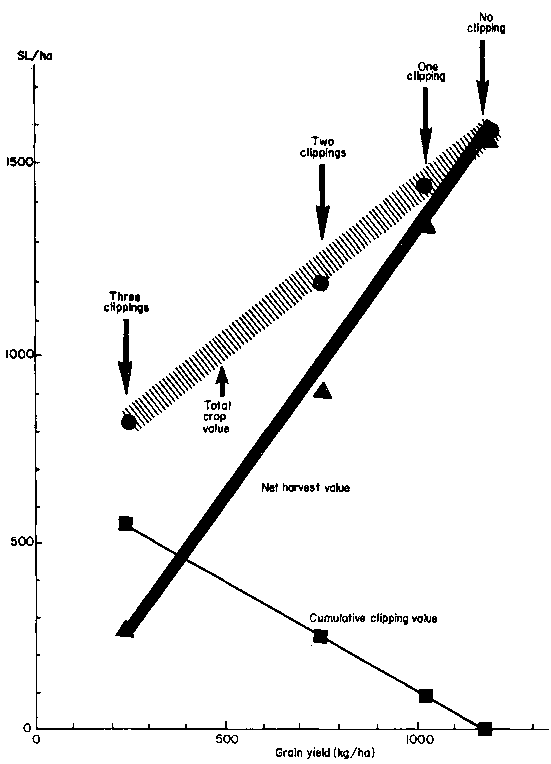
The evidence indicates strongly that winter grazing is not profitable. In an experiment conducted at Breda, fairly typical of barley producing areas in north Syria, it was found that the more barley was grazed the lower was its total value, even when the value assigned to winter dry matter was twice that of grain (Figure 1). Why then do many farmers continue with a practice which appears to cost them so dearly?
The answer may lie in the different grazing techniques used by farmers and experimenters: Where grazing is widely practiced, surveys have revealed that it may be done earlier in winter and more lightly than in the experimental crops. Allden (1980) quotes data on time and intensity of grazing which appears to support this view. Or it may simply be that farmers place great value on maintaining sheep in good condition and will do so regardless of cost. But in the sense that integration refers to complementation between cereals and livestock it appears that winter grazing is not a powerful force and may even be detrimental.
Figure 1. Effect of clipping on the total value of barley crops.
The use of straw however is another matter: recent work has shown that up to one-third of the metabolisable energy requirements of sheep in winter comes from barley straw (Table 1). Straw is so important that any increase in grain yield must take into account its effect on straw yield and quality. In this sense, much recent plant breeding work, which has resulted in improved harvest index with no consideration of straw quality, is open to serious criticism.
Table 1. Contribution of various feedstuffs to the diets of sheep (percentage of total diet) from November to February (mean of 2 years).
|
|
Dry matter |
Metabolisable energy |
Protein |
|
% |
% |
% |
|
|
Barley straw |
49 |
37 |
20 |
|
Barley grain |
22 |
29 |
27 |
|
Cottonseed cake |
5 |
7 |
19 |
|
Wheat straw |
7 |
9 |
12 |
|
other grains and straw |
7 |
8 |
10 |
|
Other concentrates |
10 |
10 |
12 |
Source: R. Jaubert and M. Oglah (personal communication).
This need not be so. As a result of work by Capper and his colleagues (Capper et al 1985a; 1985b) it is becoming increasingly clear that grain yield can be increased without reducing straw quality. Although there are very few (if any) improved barleys with straw quality as good as local landraces, Capper's data suggest that there is a large variation in straw quality within barley and that this is not related to yield. Furthermore, his work lends strength to the low opinion held by farmers of straw in temperate environments: straw of cereals grown in the United Kingdom was of markedly lower quality than straw in Syria.
Apart from Arabic Abiad (a local barley), Capper found that no variety provided sufficient nutrients to maintain liveweight. The problem is protein deficiency: addition of protein to straw diets resulted in liveweight gains of more than double those which followed addition of energy (ICARDA, 1985). In contrast, Allden (1980) concluded that in dry pasture residue there were deficiencies of both energy and protein. Allden further points out that, in the environment in which he worked (southern Australia), cereal straws and stubbles are considered to be of such poor quality that very little research on their nutritional value has been carried out or indeed is thought necessary.
Grazing of stubbles probably has another beneficial effect on crop establishment. In north Syria tillage operations begin before or soon after the first rains. Straw impedes cultivation, especially if some form of shallow cultivation is desired. A few farmers burn their stubbles but most use grazing in residue management. This has many of the advantages of conservation tillage, developed recently in the United States (Allmanas and Dowdy, 1985). In this system, straw is left on the surface of the soil, so reducing wind erosion and avoiding problems associated with biological degradation of straw incorporated into the soil (reduced availability of mineral N). Residue management in the 'United States needs special machinery: this too is avoided by stubble grazing.
Straw utilisation is therefore a good example of cereal/livestock integration, with each enterprise enhancing the other's profitability. By selecting' cereal varieties with high straw quality and yield it should be possible to increase livestock production from this important component of integrated farming systems.
Forage crops are defined as leguminous crops sown and harvested in a single year which do not re-seed themselves. They are harvested as hay or straw and, as will be seen later, can also be grazed. Forages are not used extensively: in north Syria about 8% of zone 1 is used for crops of Vicia sativa and V. ervilia, and in zone 2 about 5% of the deeper soils are used for V. sativa.
This is an under-estimate of the number of crops used as forage. Barley is often grazed at the green stage or near maturity: lentil (Lens culinaris) also produces straw of great feeding value and is grazed during spring when seasonal conditions suggest that grain yield will be low. At Tel Hadya the 20 highest yielding lentils had an average biological yield of 9.1 t/ha, compared with only 7.8 t/ha from field peas grown for forage nearby (Erskine, 1983; Ceccarelli and Somaroo 1981, respectively). Lentils are grown in zones 1 and 2.
In view of the huge diversity of legumes in the Mediterranean region, surprisingly few have been used specifically as forage crops. Kernick (1978) notes that three species of Lathyrus and nine species of Vicia are potentially important, but of these probably only nine species have been tested and fewer still used. In north Syria only Lathyrus sativus (where rainfall < 300 mm), V. ervilia (> 400 mm), and V. sativa (300-500 mm) are actually grown, L. sativus only on very small areas. There are several other species, most notably Pisum sativum (Xeatinge et al, 1984), and possibly Scorpiurus muricatus, some annual Trifolium spp, and Nedicago scutellata that have received limited testing.
To be successful, forages need high inputs of seed, fertilizer, and labour. The costs of these inputs make forage legumes poor competitors with alternate forms of land use (fully, 1984). For example, at least 100 kg of V. sativa seed/ha is necessary for maximum forage yields in Cyprus (Hadjichristodoulou, 1975), Syria (ICARDA, 1984) and Morocco (Villax, 1963), and fertilizer rates of 18-26 kg of P/ha and 20 kg N/ha are recommended, the latter when legumes are mixed with cereals (Kernick, 1978). The absence of hay-making machinery and the high cost of hand harvesting also make forages unattractive in many countries.
The use of crop mixtures is of special interest. In most cases, adding a cereal increases yield and makes harvesting easier but there are two biological costs: Nitrogen fixation is reduced, and the effect as a break crop may be nullified. Hadjichristodoulou (1973) observed that yields doubled when barley was added to V. sativa, V. villosa, and P. sativum. However, his treatments, which included applying 20 kg N/ha, did not measure the effect of the mixtures on subsequent cereal yields. This has been done by Osman and Nersoyan (1985), who found that even 33% cereal in the mixture reduced grain yields of a subsequent crop, regardless of which species of cereal was used in the mixture (Table 2). Clearly, if the use of crop mixtures is to be encouraged, there is an urgent need to discover the causes of yield decline in continuous cereal systems, which can reduce yields to one third in 3 years (Keatinge et al, 1984).
Table 2. Effect of proportion of legume in cereal/legume forage mixtures on subsequent grain yields of barley (kg/ha): yields are means of 2 years.
|
Legume/cereal ratio |
Vetch/cereal |
Pea/cereal |
|
0:100 |
986 |
1069 |
|
33:66 |
1209 |
1196 |
|
50:50 |
1317 |
1299 |
|
66:33 |
1340 |
1370 |
|
100:0 |
1536 |
1800 |
Source: A.E. Osman (personal communication).
High harvesting costs could be avoided if the forages were grazed instead of cut for hay or straw. Such an approach has been adopted by Thomson et al (1985) who found that growing forages (V. sativa and L. sativus) was almost as profitable as growing barley, the accepted enterprise in the villages where they worked. Their results, obtained where annual rainfall is only 280 mm, extend the use of forages to much drier areas than is currently possible. Dry-matter yields were only 2 t/ha, far below those possible in wetter areas, and they used seeding rates of 150 kg/ha, a major contributor to costs. However sufficient seed was produced on only 20% of the sown area for the farmer to perpetuate the system. As a result of their work there is an increasing demand for the seed in the villages concerned.
Grazing forage crops provides feed in spring, the season of least need. It may be more useful to graze mature crops in summer, a practice that has received some attention in Australia. Allden and Geytenbeek (1980) examined nine legumes including chickpeas (Cicer arietinum) and faba beans (V. faba) and found that lambs grazing mature crops gained up to 160 g/day, although this rate fell markedly after rain, which reduced digestibility of the forage from 55% to less than 40%. Their results indicated that if V. sativa were to be used in this way genotypes with non-shattering pods would be most useful. Genes for this character have been identified at ICARDA and will be incorporated into agronomically suitable varieties. It is worth noting that faba beans produced the greatest liveweight gains, and chickpeas, field peas and barley the least.
A recent discovery concerns the palatability of field peas. This crop has attracted a great deal of attention because of its high herbage yields. However, in mixtures with barley, sheep prefer barley, whereas in barley-vetch mixtures vetch is preferred. It now seems that hay made from peas is also unpalatable, voluntary intake often being less than half that of vetch (Table 3). This result demonstrates, if nothing else, the dangers of ignoring the consumers, in this case sheep, in agricultural research.
Whatever the problems of growing forage crops, it seems likely that they will be resolved by innovative farmers and scientists. The resulting systems will increase livestock production without detrimental effect on cereal production. The possible beneficial effects on cereals will be discussed later.
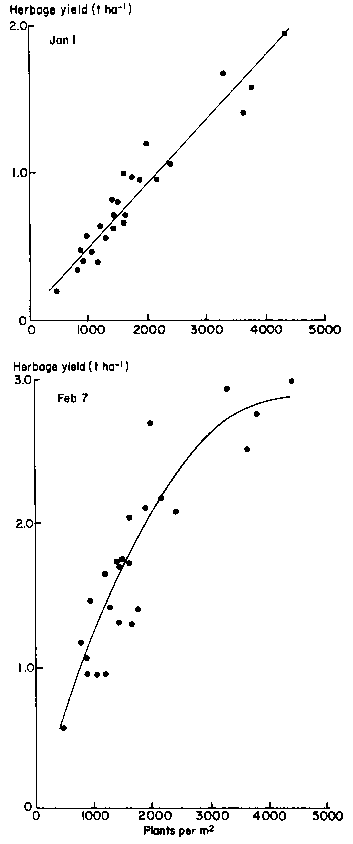
Annual pastures comprise legumes which, through the possession of seed dormancy, volunteer in the pasture phase of cereal/pasture rotations and are grazed directly, the term 'fey' meaning land under natural grass, referring to the ability of pastures to naturally reseed. In ley farming the main period of pasture growth is spring, when plant growth rates of up to 150 kg/ha per day are possible. Excess spring growth is eaten by animals in summer and, even though the plant material is dry, it is possible for sheep to maintain or even increase their weight on pasture and cereal residues. Late autumn and winter are the critical periods, during which pasture growth rate depends on plant numbers (Figure 2), but even in the cold Aleppo winters pasture growth rate is up to 30 kg/ha per day.
Table 3. Intake of in vivo digestible dry matter (g/kg MW0.075) of four forage crops fed at various growth stages, and weight gain of Awassi sheep (g per day) receiving the four forages for 28 days.
|
|
Intake |
Weight gain |
|
|
(g/kg MW0.075) |
(g/day) |
||
|
(a) Fed fresh |
|||
|
|
Barley |
66.8 |
308 |
|
|
Vetch |
80.1 |
355 |
|
|
Peas |
16.0 |
-236 |
|
|
Lathyrus |
80.9 |
282 |
|
(b) Fed as hay |
|||
|
|
Barley |
57.8 |
322 |
|
|
Vetch |
71.8 |
259 |
|
|
Peas |
26.5 |
-72 |
|
|
Lathyrus |
62.5 |
205 |
|
(c) Fed as straw |
|||
|
|
Barley |
15.6 |
-259 |
|
|
Vetch |
37.9 |
-30 |
|
|
Peas |
24.4 |
-158 |
|
|
Lathyrus |
34.1 |
13 |
1. Of four sheep, two refused to eat pea straw. The figures represent intake and weight gain of the other two sheep. Source: E. F. Thomson, N. Nersoyan and A. Termanini (personal communication).
Figure 2. The relationship between herbage yield of regenerating pastures and plant density in (a) early winter, and (b) late winter.
Ley farming originated in the Mediterranean region of southern Australia using two widely distributed plant groups: subterranean clover (Trifolium subterraneum) and annual medics (including M. truncatula). It was developed at a time when meat and wool prices were high, cereal yields were falling, farmers were worried about soil erosion, and naturalised pastures were responding to superphosphate applied to crops. New tillage machinery, designed to cultivate the usually shallow Australian soils, also encouraged pastures by burying seeds at depths from which small seedlings could emerge. Cereal yields in the region have increased by 70% and livestock numbers by up to 400% since the ley-farming system was introduced (Cocks et al, 1980; Puckridge and French, 1983).
Carter (1978) estimated that approximately 30 million ha of fallow land in North Africa and West Asia are suitable for ley farming. If 70% of this land were sown to pastures he estimated that approximately 80 million tonnes of herbage would become available, enough to feed 100 million ewes. He went on to calculate that 1.4 million tonnes of N would be added to the soil per year, an amount 65% greater than is currently applied as fertilizer in Algeria, Tunisia, Libya, Jordan, Syria, Turkey, Iran and Afghanistan combined.
Some of Carter's assumptions have been tested near Aleppo. We have recorded herbage yields of up to 9 t/ha where Carter assumed only 4 t/ha. Even on first-year pasture, five sheep can be grazed per hectare and regenerating pasture can carry more: Carter's assumption was three sheep per hectare. Up to 150 kg N/ha has been fixed by medics, more than enough to add to the soil the 60 kg N/ha assumed by Carter and based on long-term Australian experience (see ICARDA, 1985). There is little doubt that this is a very potent method for integrating cereal and livestock production with enormous potential benefit to farmers in the Mediterranean region.
If there are so many benefits, why is it that farmers are not practicing ley farming? Most of the circumstances are favourable: livestock prices are high, native legumes are widespread, cereal yields are either declining or becoming dependent on fertilizer N, and soil erosion is a widespread problem. In the 20 years since 1965 numerous attempts have been made to introduce the system, with little success. I believe that there are three important reasons for the system not being adopted: lack of adapted pasture cultivars, lack of seed and an inadequate understanding of the nature of technology transfer. In particular localities there are other reasons, e.g deep ploughing and the lack of adapted rhizobia, but I will not discuss these further.
The first reason is lack of adapted cultivars, and I will refer to annual medics since, on alkaline soils, they are preferred to subterranean clover. In Australia the two most widely-grown species are M. truncatula and M. littoralis, both of which are commonly found near the sea: Indeed the distribution of M. littoralis, as its name implies, is restricted to the coast. That they are successful in southern Australia is not surprising since its climate is similar to the littoral zone of the Mediterranean Sea, especially Morocco, Tunisia and Libya. In general, when reintroduced to North Africa and West Asia they succeeded where they were native and failed elsewhere, especially in Iraq (Radwan et al, 1978), Syria, Jordan and the high plateau of Algeria (Saunders, 1976).
It has long been recognised that indigenous medic species are widespread and represent a valuable resource (Chatterton and Chatterton, 1984). Many collections have been made, e.g. Gintzburger and Blesing (1979) in Libya and Rumbaugh and Graves (1981) in Morocco, but the identification of new cultivars has been slow. This is due partly to the difficulty of selecting for adaptation to ley farming in a region where ley farming is not practiced. Nevertheless it now seems clear that in north Syria, M. rigidula is adapted to both the environment of zone 2 and the system (Abd El Moneim and Cocks, unpublished data). Its adaptation to cold is illustrated in Table 4, where its survival after prolonged frost was 95% compared with about 15% by Australian cultivars of M. truncatula, M. polymorpha and M. scutellata. Similarly M. noeana, endemic to northern Iraq and Turkey, N. rotate, growing on volcanic soils in southern Syria and Jordan, and M. aculeata, widespread in the mountains of Algeria, are potentially valuable species. Clearly, the principle must be to choose new cultivars from the native medic population.
Table 4. Number of plants which germinated and their survival after severe frosts of seven medic genotypes including four Australian cultivars.
|
Species and genotype |
Number of seedlings before frost |
Survival |
|
(per m2) |
(%) |
|
|
M. scutellata cv. Robinson |
232 |
5 |
|
M. truncatula cv. Cyprus |
536 |
7 |
|
M. truncatula cv. Jemalong |
432 |
14 |
|
M. polymorpha cv. Circle Valley |
856 |
21 |
|
M. rotate sel. 2123 |
1144 |
90 |
|
M. rigidula sel. 716 |
816 |
95 |
|
M. rigidula sel. 1919 |
864 |
98 |
Source: P.S. Cocks (unpublished data).
Lack of local seed production is a major constraint, especially in areas where the Australian cultivars fail. A commercial seed industry requires special harvesting and cleaning machinery, technicians (or farmers) capable of correct preparation of land and control of specific weeds, and appropriate certification and inspection procedures. However, no seed industry will develop unless there is demand for the seed, and demand itself is reduced by lack of seed. It nay be possible to break this nexus by using contractors outside the region to produce seed of adapted cultivars to stimulate short-term demand, and instigate a research and training programme in seed production within the region to meet long-term demand. For this to be implemented, local authorities need to be convinced of the long-term economic benefits of ley farming.
Introduction of ley farming has suffered from an inadequate understanding of the process of technology transfer both by expatriate experts and by local authorities. For example, in projects aimed at introducing ley farming, heavy, expensive machinery is often used because there is a commitment to develop large areas, more than 20 000 ha in one instance. In most cases sheep are managed using fences, and sometimes such clearly unsuitable practices as castration of male lambs have been advocated. There is also a belief, to some extent nurtured by expatriates, that ley farming will transform agriculture in very few years, and the disappointment that follows when it fails to do so often leads to disillusion. None of this is necessarily the fault of any particular group but indicates an attitude of mind towards technology transfer which minimises problems.
Farming practices are very diverse within the region, varying from small owner-operated farms to large state-managed farms. Before implementing new technology a knowledge of farming systems is needed, especially an understanding of resources available to farmers, their skills and knowledge, and why they do what they do (e.g. Springborg, 1985). There is also a need to understand the significance of small environmental differences: very small differences in soils, climate and weed flora, for example, can have large effects on the success of new technologies. It may be best to simply introduce a concept, in this case rotation of cereals with pastures, then, by restricting the use of resources to those already available, encourage farmers to build their own systems around the concept. Farmers would need continued access to advisers and scientists to help them resolve problems as they arise.
In this context an important mistake made by many proponents of ley farming is to emphasise its impact on cereal production (e.g. Doolette, 1980) rather than livestock production. The result has been lack of integration, even to the extent of neglecting livestock altogether. This has implications on other components of the system: For example, many of the difficulties associated with weeds are symptoms of poor grazing management. On the other hand, what Australians mean by good grazing management -- continuous grazing at a rate which does not deplete seed reserves -- may not be possible if farmers do not own livestock.
Nevertheless, ICARDA remains confident of the potential of ley farming. At a village near Aleppo a farmer has developed a version of ley farming with considerable success. Using his 5 ha of native medic as a focus, ICARDA and the Ministry of Agriculture are providing seed of local medics to an increasing number of his neighbours, whose interest was aroused by the original field. Inputs are limited to seed and rhizobia, the project otherwise using only local-resources, although, because the project is regarded as experimental, the farmers receive compensation for use of their land in the first year. It is too early to be confident of success, but widespread interest has been aroused, both within and beyond the village.
No discussion of the role of pasture and forage legumes can ignore their ability to fix atmospheric N. Both groups of legumes are able to fix large amounts of N. Keatinge et al (1984) recording that forage peas fixed up to 170 kg N/ha, while M. noeana and M. rigidula fixed 140 and 150 kg N/ha, respectively (ICARDA, 1985). The important point is how much of this remains for the use of the following crop. If, in the case of forages, the herbage is cut and removed, as is the normal practice, the answer must equal the amount present in roots, likely to be no more than 10-15% of that in the tops. The effect of this amount of N on subsequent grain yield is likely to be low, especially in dry areas where total N fixation is much less than that quoted above. Reasons for the beneficial effects of forage crops on cereal production (if any) must be sought elsewhere.
In ley farming, pastures are grazed in situ, so the amount of N removed will be less than in forage systems.
However, because of the long-term nature of changes in soil fertility, detailed analysis of their effect on cereal yield is not yet possible. In Australia, where there is a longer experience of ley farming, the rate of N accretion under subterranean clover is about 50 kg N/ha per year for periods of up to 40 years (Russell, 1960; Donald and Williams, 1954). In rotation with cereals, Carter (1978) states that 70 kg N/ha per year is a reasonable estimate, and Puckridge and French (1983) quote several authors who measured rates of increase varying from 30 to 150 kg N/ha per year.
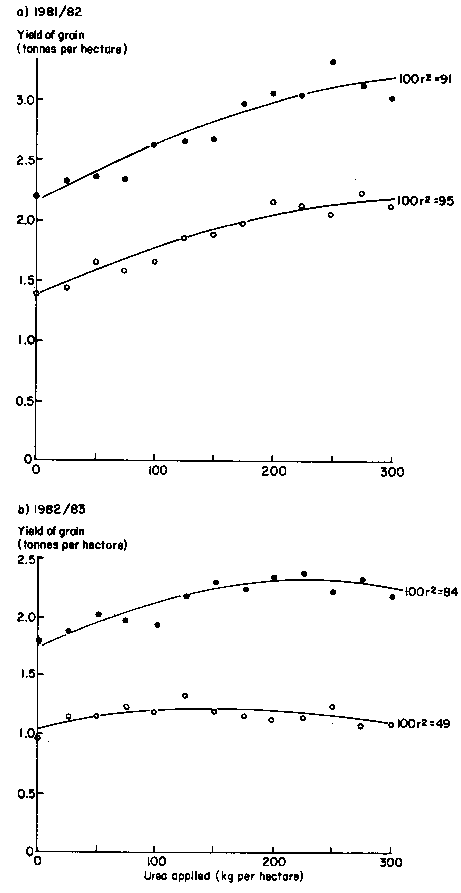
In the shorter term, pastures and forages produce similar effects to other breaks between cereals, including fallows. In northern Iraq the yield of wheat after medic was 1 t/ha higher than that of wheat after wheat (Figure 3) and approximately equal to wheat after fallow (P.S. Cocks, unpublished data). Since the response of both crops to N was the same the difference in yield was attributed to control of cereal root diseases. This conclusion is supported by extensive Australian work: Rovira (1980) reported that both medics and peas in rotations with wheat increased wheat yields by 100% compared with wheat after either wheat or oats, by controlling Gaeumannomyces graminis, a fungus that attacks cereal roots.
Can these models of integrated livestock/cereal farming be extended to other climatic types? Since this paper is being presented in Addis Ababa I would like to briefly discuss this question in relation to the highlands of Ethiopia.
Ley farming depends on the ability of Mediterranean annual legumes to produce large amounts of dormant seeds which become viable over several years. Presumably, if species with similar characteristics were present, ley farming could be developed in other environments. I would like to suggest that the annual species of Trifolium present in the highlands of east Africa are likely to possess these seed characters.
Figure 3. The effect of urea application in (a) 1981/2 and (b) 1982/3 on the yield of wheat sown after medic and wheat at Erbil in northern Iraq.
One species of medic (M. polymorpha) and 28 species of Trifolium are present in Ethiopia, many of the latter being endemic or present elsewhere only in neighbouring countries. Of the 28 species of Trifolium, 19 are annuals falling into two sections of the genus, Lotoidea and Mistyllus (Zohary and Heller, 1984). They grow widely as volunteers on fallows and occur as weeds in crops throughout the temperate highlands, a distribution and ecology which strongly suggests that they possess the characteristics necessary to succeed in ley farming. They respond strongly to phosphorus, by up to 600% (Haque and Jutsi, 1984).
Recent work on the value of vetches is also of interest (Kenno and Gebrehiwot, 1983). Dry-matter yields more than 6 t/ha were obtained from V. atropurpurea, V. villosa, and V. sativa at five highland locations. Kenno and Gebrehiwot believe that vetches will fit well into cereal/fallow rotations by reducing weed populations in subsequent crops and improving soil fertility. This has still to be proven, but the preliminary work of these and earlier authors (e.g. Haile, 1977) should encourage the development of integrated systems in Ethiopia.
Allden W G. 1980. Integration of animals into dryland farming systems. In: Proceedings of the International Congress on Dryland Farming, Adelaide, South Australia. pp. 342-78.
Allden W G and Geytenbeek P E. 1980. Evaluation of nine species of grain legumes for grazing sheep. Proc. Aust. Soc. Anim. Prod. 13: 249-52.
Allmanas R R and Dowdy R H. 1985. Conservation tillage systems and their adoption in the United States. Soil and Tillage Res. 5: 197-222.
Capper B S. Mekni M, Rihawi S. Thomson E F and Jenkins G. 1985a. Observations on barley straw quality. In: Proceedings of the Winter Meeting of the British Society of Animal Production, Scarborough (in press).
Capper B S. Rihawi S. Mekni M and Thomson E F. 1985. Factors affecting the nutritive value of barley straw for Awassi sheep. In: Proceedings of the 3rd Animal Science Congress. Asian-Australian Assoc. Anim. Prod. Soc., Seoul, Korea (in press).
Carter E D. 1978. A review of the existing and potential role of legumes in farming systems of the Near East and North African Region. ICARDA, Aleppo, Syria.
Ceccarelli S and Somaroo B H. 1981. Relationship between dry matter yield and seed yield in annual legumes under dry conditions. In: Report of the Fodder Crops Section, Merelbeke, Gent, Belgium, Sept 1981. European Association for Research on Plant Breeding, Wageningen, The Netherlands. pp. 85-97.
Chatterton B and Chatterton L. 1984. Alleviating land degradation and increasing cereal and livestock production in North Africa and the Middle East using annual Medicago pasture. Agric. Ecosystems Env. 11: 117-129.
Cocks P S. Mathison M J and Crawford E J. 1980. From wild plants to pasture cultivars: annual medics and subterranean clover in southern Australia. In: R J Summerfield and A H Bunting, (eds). Advances in legume science. Royal Botanic Gardens, Kew.
Donald C M and Williams C H. 1954. Fertility and productivity of a podzolic soil as influenced by subterranean clover (Trifolium subterranum L.) and superphosphate. Aust. J. Agric. Res. 5: 664-87.
Doolette J B. 1980. An improved crop rotation technology for Tunisia, In: Carl Gotsch (ed.) Improving dryland agriculture in the Middle East and North Africa. Ford Research Institute, Stanford University.
Droushiotis D N. 1984. Effect of grazing simulation on forage hay and grain yields of spring barleys in a low rainfall environment. J. Agric. Sci. 103: 587-594.
Erskine W. 1983. Relationship between the yield of seed and straw in lentil. Field Crops Res. 7: 115-121.
FSP (Farming Systems Program). 1980. Farming systems in six Aleppo villages. Research Report 2. FSP, ICARDA, Aleppo, Syria.
Gintzburger G and Blesing L. 1979. Genetic conservation in Libya. III. Indigenous forage legumes collection in north Libya (spring 1978) - Distribution and ecology of Medicago spp. Socialist People's Libyan Arab Jamahiriya Agric. Res. Centre. FAD/ARC Acct. No. 235/79. pp 1-48.
Hadjichristodoulou A. 1973. Production of forage from cereals, legumes and their mixtures under rainfed conditions in Cyprus. Tech. Bull. 14. Agric. Res. Inst., Nicosia, Cyprus.
Hadjichristodoulou A. 1975. Effect of seed rate on forage production of cereals and legumes under rainfed conditions. Tech. Bull. 19. Agric. Res. Inst., Nicosia, Cyprus.
Haile A. 1977. Results of experiments in forage crops and pasture management in the highlands of Ethiopia, 197176. Forage and Range Bull. No. 1: 19-22. Inst. Agric. Res., Addis Ababa, Ethiopia.
Haque I and Jutzi S. 1984. Nitrogen fixation by forage legumes in sub-Saharan Africa: Potential and limitations. ILCA Bull. 20: 2-13.
ICARDA (International Centre for Agricultural Research in the Dry Areas). 1984. Annual Report 1983. ICARDA, Aleppo, Syria.
ICARDA (International Centre for Agricultural Research in the Dry Areas). 1985. Annual Report 1984. ICARDA, Aleppo, Syria.
Keatinge J D H. Cooper P J M and Hughes G. 1984. The potential of peas as a forage in dryland cropping rotations of Western Asia. In: Proceedings of the Nottingham University Easter School, April 1984, Nottingham, England (in press).
Kenno H and GebreHiwot L. 1983. Prospect of vetches (Vicia spp) as forage legumes for the highlands of Ethiopia. Eth. J. Agric. Sci. 5: 131-138.
Kernick M D. 1978. Ecological management of arid and semi arid rangelands in Africa and the Near and Middle East. IV Indigenous arid and semi-arid forage plants of North Africa, the Near and Middle East. FAO, Rome.
Osman A E and Nersoyan N. 1985. Annual forages to replace fallows in cereal-fallow rotations of west Asia. Exp. Agric. (in press).
Pabot H. 1956. Rapport au gouvernement de Syrie sur l'ecologie et ses applications. FAO, Rome.
Puckridge D W and French R J. 1983. The annual legume pasture in cereal-ley farming systems of southern Australian: a review. Agric. Ecosystems Env. 9: 229267.
Radwan M S. Al-Fakhry A K and Al-Hasan A M. 1978. Some observations on the performance of annual medics in northern Iraq. Mesopotamia J. Agric. 13: 55-67.
Rovira A D. 1980. Soil-borne diseases of field crops and pastures associated with dryland farming. In: Proceedings of the International Congress on Dryland Farming, Adelaide South Australia. p. 546-580.
Rumbaugh M D and Graves W L. 1981. The Medicago germplasm resources of Morocco. Abstr. Western Alfalfa Improvement Conference. pp. 18-21.
Russell J S. 1960. Soil fertility changes in the long term experimental plots of Kybybolite, South Australia I. Changes in pH, total nitrogen, organic carbon, and bulk density. Aust. J. Agric. Res. 11: 902-926.
Saunders D A. 1976. Early management issues in establishing wheat-forage legume rotations. In: Proceedings of the 2nd Science Conference, Baghdad, Iraq, 1975. Scientific Research Foundation.
Springborg R. 1985. The importance of farming systems research in the transfer of Australian dryland farming technology to the Middle East. In: Proceedings of the Farming Systems Research Workshop. Australian Centre for Int. Agric. Res., Canberra, Australia.
Thomson E F. Jaubert R and Oglah M. 1985. On-farm comparisons of milk yield of Awassi ewes grazing introduced forages and common village lands in the barley zone of north-west Syria. Paper presented at the International conference of animal production in arid zones. ACSAD, Damascus, Syria.
Tully D. 1984. Land use and farmer's strategies in Al Bab: The feasibility of forage legumes in place of fallow. Research Report 12. Farming Systems Program, ICARDA, Aleppo, Syria.
Villax E J. 1963. La culture des plantes fourrageres dans les region mediterraneene occidentale. Cah. Rech. Agron. No. 16: 257-258. INRA, Rabat.
Yotopoulos P A. 1984. Competition for cereals: the food-feed connection. Ceres 101: 22-25.
Zohary M and Heller D. 1984. The genus Trifolium. The Academy of Sciences and Humanities, Jerusalem.
