Abstract
Introduction
Present farming systems and constraints
Review of research on forage legumes
Trials in communal farming areas
Discussion and conclusions
References
J.N. Clatworthy1, A.R. Maclaurin2 and M. Avila3
1 Department of Research and Specialist Services, Ministry of Lands, Agriculture and Rural Settlement, Grasslands
2 Research Station, Marondera, Zimbabwe. Department of Crop Science, University of Zimbabwe, Harare, Zimbabwe.
3 Farming Systems Research Unit, Department of Research and Specialist Services, Ministry of Lands, Agriculture and Rural Settlement, Harare, Zimbabwe.
The Farming Systems Research Unit, entrusted with the task of developing and testing improved crop and livestock technologies for the communal farming areas, has selected two representative areas in which to carry out its programme. Mangwende is at medium altitude, has predominantly sandy soils with pH between 4 and 5, and rainfall between 700 and 900 mm per annum; Chibi has similar characteristics except that rainfall ranges between 400 and 600 mm and thus is classified as low potential. Crops grown commonly in both areas include maize, millets, sorghum, groundnuts and vegetables. Although cattle are desired by all farmers, primarily because of draught-power and manure needs, only half to three-quarters of the farmers own cattle and herds are very small. Poultry are very common in both areas whereas goats and donkeys play an important role only in Chibi. The major constraint on improving livestock management and productivity is the shortage of dry season feed in the winter due to the very low productivity of the communal grazing areas and very low quality of crop residues, mainly grain stovers.
A review of previous research on forage legumes in Zimbabwe showed the following. Trifolium semipilosum and Lotononis bainesii persisted with various creeping grasses under cutting for 6 years and, in the absence of N fertilizer, resulted in marked increases in dry-matter yield and crude protein content of the herbage. On ploughed land Desmodium intortum, D. uncinatum, Macroptilium atropurpureum and the other herbaceous legumes have been shown to persist under controlled grazing or cutting and produce yields of up to 10 t DM/ha. The use of herbaceous legumes for dry-season grazing has given disappointing results because of leaf shed due to frost and of trampling of the herbage. For the reinforcement of native grazing, the ability to establish under adverse conditions is a prime requirement and Stylosanthes spp seem especially suitable. Under controlled grazing, S. guianensis var intermedia has increased body mass gains per hectare by up to 60%.
In one series of trials, four legumes (Stylosanthes humilis, S. guianensis var intermedia, Macroptilium atropurpureum and Macrotyloma axillare) were established in exhausted arable areas, now used for grazing, at 11 sites in communal farming areas. Marked responses in dry-matter yield to application of single superphosphate and dolomitic lime were recorded. Subsequent screening trials of legumes under different fertilizer and management options were started but did not produce conclusive results due to political developments prior to and during independence.
The feasibility of introducing forage legumes in the communal area farming systems depends on a number of factors: improved management of communal grazing areas; competition with crop enterprises for scarce resources including land, labour and cash for fertilizers; willingness and availability of capital to erect fences; direct and indirect pay-offs in terms of farmers' icurrent priorities; and enthusiasm and ability of extension staff.
The tremendous success of agricultural development in the large-scale commercial farming sector of Zimbabwe can be attributed to the skillful implementation of appropriate government policies and, to a large extent, intensive interactions and effective communication between farmers and development, extension and research officers. This relationship ensures precise definition of production constraints and researchable problems and quick feedback on the profitability and acceptability of technological innovations under practical management conditions. These inputs serve as a basis for planning research programmes These inputs are also necessary for improving agriculture in communal farming areas. Consequently, the Department of Research and Specialist Services decided to form the Farming Systems Research Unit (FSRU) to conduct on-farm research.
The specific objectives of the FSRU are to study mixed crop and livestock production systems in two representative communal farming areas in order to identify opportunities for and major constraints on improvements of production, and to adapt, develop and test improved crop and livestock production techniques and systems on-farm.
This paper briefly describes the present farming systems and major constraints, presents a review of previous research on forage legumes in Zimbabwe, and discusses the feasibility of introducing forage legumes into the communal farming areas and its implications for future research.
The Mangwende and Chibi Communal Areas were selected for study by the FSRU because they have distinct and different biological and economic potentials. Mangwende is at an altitude of between 1200 and 1500 m, and has predominantly sandy soils derived from granite with pH (CaCl2) between 4.0 and 5.0 and a unimodal pattern of rainfall. Average rainfall is between 700 and 900 mm per annum. Chibi has similar characteristics except that the altitude is between 700 and 900 m and rainfall is between 400 and 600 mm per annum. Mangwende is considered to be a high potential area and was chosen because conventional wisdom is that scarce research resources must be invested in regions where large and quick pay-offs would be likely to occur. Although Chibi is considered to be a low potential area, it was chosen because the vast majority of communal area farmers live in such areas.
The farming systems in the two areas are basically similar with respect to the combination of crop and livestock enterprises (Table 1). In Mangwende, maize is the predominant crop and cattle herds are larger than in Chibi, where the small grains [sorghum and millets (Sorghum vulgare, Pennisetum typhoideum and Eleusine coracana)], and goats and donkeys are relatively more important.
Within these farming systems there is a high degree of interdependence and interaction among crop and livestock activities. The livestock depend upon crop residues for survival during winter, and the crop enterprises are extremely dependent upon livestock for draught power for land preparation and for manure to improve soil fertility. Given the mean areas of arable land per farmer, it is estimated that each farmer requires 40 to 50 working days per year from a span of at least two animals in good condition. In addition, ploughing must be timely to exploit the early rains, otherwise maize yields could be reduced by as much as 70%. It has been shown that a minimum of 10 tonnes of manure must be applied per hectare to obtain a significant effect on maize yields (Mugwira, 1985), which would require a herd at least four times the present size to supply manure for the entire arable area. Furthermore, the quality of manure in communal farming areas is low and highly variable, consisting of up to 50% sand (Mugwira, personal communication). This could be due to the way in which farmers store and dig out kraal manure or to animals grazing too low to the ground and ingesting sand (Ward, personal communication).
Table 1. Mean areas and numbers and percentage of farmers with selected activities in the research areas of Mangwende and Chibi.
|
Activity |
Mangwende |
Chibi |
Mangwende |
Chibi |
|
Mean area (ha)/farmer with crop enterprise |
Number of farmers (%) |
|||
|
Arable area |
2.8 |
2.5 |
100 |
100 |
|
Maize |
1.5 |
0.8 |
100 |
96 |
|
Sorghum |
0.2 |
0.4 |
4 |
54 |
|
Groundnuts |
0.3 |
0.2 |
77 |
29 |
|
Pearl millet |
0.3 |
0.6 |
4 |
56 |
|
Finger millet |
0.3 |
0.4 |
55 |
75 |
|
Vegetable garden |
0.3 |
0.4 |
72 |
50 |
|
|
Mean area (ha)/farmer with crop enterprise |
Number of farmers (%) |
||
|
Cattle |
9.0 |
5.5 |
77 |
57 |
|
Goats |
4.7 |
4.2 |
28 |
52 |
|
Donkeys |
2.8 |
2.8 |
5 |
30 |
|
Sheep |
1.0 |
7.7 |
2 |
5 |
|
Pigs |
3.6 |
2.1 |
5 |
6 |
|
Poultry |
15.0 |
13.1 |
87 |
79 |
|
Rabbits |
4.5 |
4.7 |
10 |
2 |
Numbers in sample: Mangwende 108 and Chibi 131.
Source: FSRU Survey (1984)
In the long term, cattle provide one of the few opportunities for capital accumulation and security. Farmers use most of their cash (profits from crop enterprises or off-farm remittances) to purchase cattle. They perceive cattle as savings banks, liquid assets that can be used for emergency situations and protection against risk, and cattle serve also as a medium of exchange for formal and traditional arrangements such as bridewealth in marriages. In addition, livestock provide basic food needs in the form of milk, eggs and meat.
Because of these functions, farmers always desire more livestock and cattle in particular. From informal discussions with farmers, it seems that the optimum herd size is regarded as between 30 and 50 head per household, but very few farmers ever achieve this. The mean numbers of livestock in both areas are far below the desired herd size and a large number of farmers do not have any cattle but need them (Table 1). Consequently, the control of stock numbers would appear to be unacceptable to the vast majority of communal area farmers.
The aggregate stocking rates of communal grazing areas are approximately twice the recommended level and grazing is uncontrolled. The result is a steady decline in veld (range) condition, as evidenced by a reduction in plant vigour, changes in species composition from predominantly perennial to predominantly annual species in the herbaceous layer; little basal and litter cover and a large proportion of bare and unprotected areas. In addition, water infiltration rates are lower and erosion and loss of top soil are severe in the grazing areas. The end result is a relatively drier soil microclimate compared with areas where veld is in better condition and this reduces the overall potential productivity of the intensively used communal grazing (Refly and Walker, 1976).
Zimbabwe has recently suffered 3 years of drought. The poor vigour of the veld did not allow sufficient herbage production to maintain cattle at the high stocking rates found on the communal grazing areas, and, as there were little crop residues due to crop failures, the livestock were particularly severely affected, with very high mortality rates. Chibi was more severely affected than Mangwende, which has a higher mean annual rainfall.
In areas where little herbaceous forage is available, cattle tend to make greater use of browse. However, the needs for timber for building and fuel for cooking and the opening up of arable areas has reduced browse availability. Consequently, with the continued degradation of the veld and the desire for increased herd sizes, the situation in the grazing areas is not likely to improve, although some form of veld management could help to slow down the degradation. Thus other forms of intervention also need to be investigated.
With respect to the future, given the human population growth rate of 3.5% per annum, the population is expected to increase by 20% by 1990, 73% by 2000 and will double by 2006. Since the labour of young children is used and is necessary to maintain household productivity and the opportunity cost of resources used in raising children is rather low, the population growth trend will continue and will have serious implications on the demand for arable areas and encroachment onto grazing areas, and will automatically result in equivalent increases in livestock numbers. In other words, barring any major demographic shift and assuming that livestock will still be essential to the farming systems, farmers will have to produce more feed either by improving the productivity of the grazing areas or by designing their cropping patterns to optimize production of animal feed.
In the light of the above, the FSRU has identified the deficiency of feed, in both quantity and quality, particularly during the second half of the dry season and the first part of the rainy season, as the major constraint to livestock development. Deficiency of feed results in poor growth, poor reproductive performance, low milk production, inefficient performance of draught animals due to poor physical condition, high mortality rates in young stock and increased susceptibility to diseases, especially in drought years (Rein, personal communication).
The principal causes of feed constraints stem from a combination of the following factors (Rein, personal communication).
1. Decreasing grazing areas due to increasing requirements for land for arable and settlement use;2. Increasing cattle numbers due to the economic and social importance of cattle in the farming systems and due to traditional rights to graze unlimited numbers of livestock;.
3. Communal use of grazing land and stubble fields with no defined responsibility for adequate management of this land;
4. Insufficient and inefficient use of crop residues, with a strong emphasis on poor-quality cereal stover;
5. Lack of specific fodder production on arable land due to its low productivity and limited size per household, thus requiring all land for subsistence and commercial production; and
6. Lack of supplementary feeding due to a lack of cash and to the low importance of commercial production (milk and beef) from the cattle herd.
In order to ascertain the relevance of the above assumptions and to identify possible solutions to the feed problem, a review of previous research on component technology development with regard to forage legumes was made, the results of which are outlined below.
From the early days of commercial farming in Zimbabwe there have been repeated attempts to select legumes that could be grown successfully in grass-legume pastures under local conditions. Initially, these attempts were centred largely on the clovers and were purely observational. Over the years a wide range of both temperate and subtropical legumes were tested. These were mainly in nursery plots although a few were also included in cutting trials and in grazed pastures. Results were generally disappointing.
One of the first long-term trials in Zimbabwe to demonstrate clearly a benefit to the grass from growing it with a legume was that of which the first 3 years' results were reported by Clatworthy (1970). Six creeping grasses were grown alone, or with Beit lotononis (Lotononis bainesii) or with Kenya white clover (Trifolium semipilosum) with nitrogen applications of 0, 112 or 224 kg N/ha per year. The trial was harvested three times each year (barring drought or accidents) and one-third of the nitrogen was applied at the start of growth of each harvest. A total of 16 harvests were taken over 6 years. The legumes persisted well for this period, which included two very dry years, and produced marked increases in yield and crude protein content from the plots receiving little or no nitrogen (Table 2). Of particular interest was that at several harvests, yields of grass were greater from the plots containing legume than from the equivalent plots without legumes. In a cutting trial, this could have resulted only from the release of nitrogen from the legume, presumably as a result of root die-back over the dry season.
The results of that trial gave added impetus to attempts to select pasture legumes for use in local farming systems. Barnes (1966) produced a short list of promising legumes for the high rainfall sandveld of Zimbabwe, including Desmodium intortum,, Beit lotononis, Stylosanthes fruticosa, S. guianensis and Kenya white clover. Other legumes have been added to this list in the light of experience gained in screening trials laid down on ploughed land at Grasslands Research Station (near Marondera), Henderson Research Station (near Mazowe) and Makoholi Experimental Station (near Masvingo) (Clatworthy, in preparation). Over 4 years the legumes were sampled two or three times per season. At each sampling, quadrats were cut from each plot before cattle were allowed to graze the legumes. After grazing, the remaining herbage was slashed with a rotary mower. At the two high rainfall sites Desmodium spp. were the highest yielding legumes, with D. intortum especially productive. Yields greater than 8 t DM/ha per year were obtained regularly. On the poorer soils and with the lower rainfall at Makoholi, Siratro (Macroptilium atropurpureum) and Archer (Macrotyloma axillare) were the only legumes to persist and produce reasonable herbage yields (Table 3).
Table 2. Mean annual dry-matter (DM) yields and crude protein (CP) percentages when six creeping grasses were grown at three nitrogen levels with and without Beit lotononis (Lotononis bainesii) and Kenya white clover (Trifolium semipilosum).
|
Treatment |
kg DM/ha per year |
Total |
Mean CP (%) |
|
|
Grass |
Legume |
|||
|
Without N fertilizer |
||||
|
no legume |
2320 |
- |
2320 |
8.63 |
|
+ lotononis |
2215 |
1880 |
4095 |
12.60 |
|
+ clover |
2445 |
995 |
3440 |
12.09 |
|
112 kg N/ha.yr |
||||
|
no legume |
4700 |
- |
4700 |
9.51 |
|
+ lotononis |
4580 |
745 |
5325 |
10.62 |
|
+ clover |
4740 |
645 |
5385 |
11.20 |
|
224 kg N/ha.yr |
||||
|
no legume |
7730 |
- |
7730 |
10.84 |
|
+ lotononis |
7100 |
570 |
7635 |
11.21 |
|
+ clover |
7045 |
305 |
7350 |
10.89 |
Source: Clatworthy (unpublished data).
This trial differed from the true grazing situation in that the plots were defoliated severely over a short period and then allowed to regrow for a long time. However, the yields obtained may provide an indication of those that could be obtained in a "cut-and-carry" system.
Table 3. Mean annual dry-matter yields (kg DM/ha/yr) of legumes over 4 years at three sites in Zimbabwe.
|
Legume species |
Grasslands |
Henderson |
Makoholi |
|
Alysicarpus rugosus |
|
3485 |
|
|
Cassia rotundifolia |
|
|
455 |
|
Clitoria ternatea |
|
|
0 |
|
Desmodium intortum |
8080 |
5985 |
|
|
D. sandwicense |
5700 |
3990 |
150 |
|
D. uncinatum |
5135 |
4510 |
175 |
|
Galactia striate |
525 |
1375 |
|
|
Lotononis bainesii |
1325 |
1560 |
95 |
|
Macroptilium atropurpureum |
540 |
2570 |
1560 |
|
Nacrotyloma axillare |
3230 |
3025 |
1720 |
|
M. uniflorum |
|
175 |
|
|
Neonotonia wightii |
2415 |
|
|
|
N. wightii |
|
2390 |
35 |
|
Stylosanthes fruticosa |
|
|
210 |
|
S. guianensis (Schofield) |
40 |
1505 |
|
|
S. guianensis (Oxley) |
1500 |
|
490 |
|
S. humilis |
|
|
5 |
|
Teramnus labialis |
1510 |
|
|
|
Trifolium semipilosum |
605 |
|
|
|
Vigna vexillata |
|
1435 |
|
|
V. vexillata |
|
|
10 |
Source: Clatworthy (unpublished data).
In the communal areas of Zimbabwe there are usually no fences sub-dividing the arable areas, so that if forage legumes are sown on a portion of the cultivated land, grazing them during the growing season becomes virtually impossible. Under these circumstances, legumes on arable land are likely to be used either as cut-and-carry fodder or for grazing during the dry season. For both of those roles a legume with an upright growth habit would have distinct advantages.
One example of disappointing results obtained from grazing herbaceous legumes during the dry season only is provided by a trial at Henderson Research Station (Clatworthy, 1984). Veld reinforced with Silverleaf desmodium (Desmodium uncinatum) and veld left undisturbed were used for overwintering weaner beef steers. Although in some seasons almost half the herbage on offer was silverleaf desmodium, unsupplemented steers lost body mass over the dry season (less on the reinforced grazing than on the control) and only started to gain when plants started making new growth from October onwards. The poor results from the silverleaf desmodium were ascribed to leaf shed after frost and to loss of herbage from trampling. It is suggested that a legume with an erect growth habit would be less affected in these ways.
One erect legume that has been used in trials at Henderson Research Station is Horse marmalade (Desmodium discolor). Indications of the yields which could be obtained from this legume in a cut-and carry system are shown in Tables 4 and 5 (Mills, unpublished data).
Table 4. Effects of time of harvest on total dry matter yields (kg DM/ha/yr) of Horse marmalade (Desmodium discolor) at Henderson Research Station.
|
Season |
Time of harvest |
||||||
|
Dec |
Jan |
Feb |
Apr |
Dec & Feb |
Dec & Apr |
Jan & Apr |
|
|
|
kg DM/ha/year |
||||||
|
1964/65 |
1140 |
4530 |
8090 |
8820 |
4340 |
7080 |
5800 |
|
1965/66 |
2195 |
2090 |
5625 |
7135 |
2685 |
4570 |
4280 |
|
1966/67 |
2830 |
3145 |
5460 |
1945 |
1400 |
1145 |
1070 |
Source: Mills (unpublished data).
Table 5. Effects of time of harvest on leaf dry matter yields (kg DM/ha/yr) of Horse marmalade (Desmodium discolor) at Henderson Research Station.
|
Season |
Time of harvest |
||||||
|
Dec |
Jan |
Feb |
Mar |
Apr |
May |
Jun |
|
|
|
kg DM/ha/year |
||||||
|
Cut once only |
|||||||
|
1964/65 |
2081 |
3514 |
5740 |
4985 |
3146 |
678 |
261 |
|
1965/66 |
3233 |
1704 |
1210 |
1001 |
910 |
1133 |
- |
|
Cut for silage in January and one other cut |
|||||||
|
1964/65 |
|
|
300 |
1316 |
1868 |
3591 |
2701 |
|
1965/66 |
|
|
184 |
1258 |
1045 |
2710 |
- |
Source: Mills (unpublished data).
The results show that Horse marmalade can produce substantial quantities of herbage of at least reasonable quality and that cutting the plots in mid-season resulted in considerably greater yields of leaf in the early dry season.
From 1951 to 1956 Pigeon pea (Cajanus cajan) was used to provide browse during the early dry season at Grasslands Research Station. Depending on the quantity of herbage available at first stocking and the severity of frost, steers gained an average of 0.22 to 0.34 kg/steer per day over a 30 - to 90-day period (Mills, 1961). This was better than the performance of steers on lightly fertilized grass pastures, on which steers gained only 0.09 to 0.18 kg/steer per day for the same period. Recently, work has started with Leucaena leucocephala for use as an early dry season browse, but as yet no results are available. Both species are sensitive to frost and so their use in this role would be in warmer, frost-free areas.
Another potential role of legumes in communal area farming systems is for the reinforcement of veld which is used mainly during the growing season. A large part of the feed during the dry season is provided by crop residues on arable lands. Screening trials of legumes under grazing have shown that although a number of legumes are suited to the heavier soils at Grasslands Research station only Oxley fine-stem stylo (Stylosanthes guianensis var intermedia) persisted under heavy summer grazing and in fact increased in density through establishment from shed seed (Clatworthy, 1980). To measure the effect of veld reinforcement with Oxley stylo on animal performance at Grasslands Research Station, half of a 24 ha block of reverted land was seeded with stylo on disced strips and half left untouched. Weaner steers were brought onto the veld each June and run on the trial for a year before being removed for pen-finishing. The trial ran for 7 years. The reinforced veld could carry about 20% more steers than the control plot and the steers gained about 40 kg per head more over the year. These factors combined to result in a 60% greater body mass gain per hectare from the reinforced veldt However, it is doubtful whether an increase of this magnitude would be detectable by peasant farmers in a communal grazing situation.
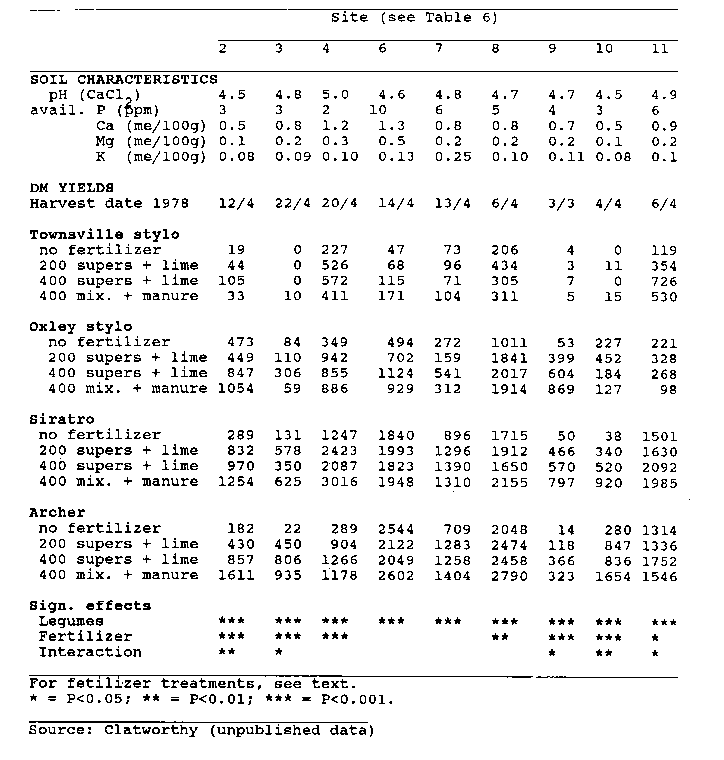
In 1975-76 a series of trials with legumes and different fertilizer treatments were conducted at 11 sites in communal farming areas in Masvingo Province. The trials were sited on areas that had been cultivated previously but had been exhausted by continued exploitative cropping. The aim of the trials was to select legumes that could grow on these areas, with the short-term aim of improving the quality of the diet of grazing animals and with the long-term aim of restoring the fertility of the soil to a level at which arable cropping would again be feasible.
The legumes used in these trials were Archer, Siratro, Oxley stylo and Townsville stylo (Stylosanthes humilis). The fertilizer treatments were nil, 200 or 400 kg/ha of a 1:1 mixture of single superphosphate (8.14% P + 12% S. and dolomitic limestone (> 11% Mg) or 400 kg/ha of the mixture plus 2 t of kraal manure/ha. The trial areas were ploughed before sowing the legume seed. At the end of the establishment season the density of the legumes in each plot was measured. The fertilizer treatments had no effect on the number of seedlings, but there were marked differences among the sites, among the legumes and in the order of the legumes at the various sites. Townsville stylo showed the greatest variation in density between the sites and Archer the least (Table 6).
Table 6. Plant density (plants/m2) of four legumes sown on ploughed land at 11 sites in Masvingo Province of Zimbabwe in 1975/76.
|
Site |
Legume |
|||
|
Townsville |
Oxley |
Siratro |
Archer |
|
|
1. Chivero |
17.34 |
17.25 |
14.19 |
10.16 |
|
2. Chipinda |
9.56 |
12.31 |
10.06 |
11.66 |
|
3. Gurajena |
16.45 |
22.12 |
22.34 |
8.62 |
|
4. Gweriko |
10.41 |
12.56 |
12.28 |
8.88 |
|
5. Mohohoma |
7.00 |
12.66 |
8.78 |
11.16 |
|
6. Mamvura |
8.25 |
9.22 |
14.63 |
18.00 |
|
7. Mazungunye |
7.09 |
10.28 |
13.44 |
11.53 |
|
8. Muswere |
7.53 |
11.38 |
16.06 |
15.72 |
|
9. Mutakwa |
22.59 |
20.75 |
25.66 |
12.41 |
|
10. Serima |
3.69 |
11.81 |
7.13 |
13.41 |
|
11. Tagwira |
5.53 |
7.38 |
12.19 |
17.41 |
Source: Clatworthy (unpublished data),
At the end of the following season quadrats were harvested from every plot at nine of the sites and the herbage was sorted into legume, grasses and dicotyledonous weeds. At all sites there were large differences among the yields of the different legumes. At all but two of the sites the fertilizer treatments affected legume yields and at five sites the legumes reacted differently to the fertilizers. Archer and Siratro produced the greatest dry-matter yields (Table 7).
It had been intended to open the plots to grazing for all but a 6-week period during the growing season each year. At the end of this period the plots would have been sampled to assess the productivity and persistence of the legumes under grazing. Unfortunately, events in that area resulted in the trial being abandoned.
INTRODUCTION OF FORAGE LEGUMES INTO FARMING SYSTEMS
In order to evaluate the technical and economic feasibility of introducing innovations into farming systems, it is necessary to identify their advantages (benefits) and disadvantages (problems or conflicts) as the potential users see them.
The possible introduction of forage legumes to complement or reinforce grazing areas requires feasibility analysis at the community level since such decisions would not lie within the domain of any particular household but rather with the community at large who share rights to a defined grazing area. Farmers realise the problems of overgrazing and degradation of the veld and in the past have set up grazing schemes (Froude, 1974; Danckwerts, undated). However they no longer have child labour for herding due to schooling, and although they are interested in paddocking and using improved management, it is unlikely that rotational grazing would substantially increase forage production because of the present poor condition of the veld (Cleghorn, 1966) and the very high stocking rates (Hill, 1982). Consequently, the introduction of legumes into the grazing areas as veld reinforcement or the setting up of strategic fodder banks in the arable areas would seem to be a necessary and manageable alternative
Farmers were asked about their willingness to grow fodder legumes for animal feed and about factors that would affect their decision. One alternative presented to the farmers was to grow perennial shrubs as hedges or on contours, giving the necessary protection and fertilizer so that they could be cut-and-carried to the animals, usually after the crops had been harvested. Slightly more that half of the farmers in the sample expressed an interest provided certain conditions were met. Those not willing to grow them were less than a fifth of the total sample; the remainder of the sample group did not have ruminants.
The results in both Mangwende and Chibi were similar except that the Chibi farmers gave more weight to maintenance costs than to lack of knowledge as reasons for not growing them (Table 8).
The other alternative presented to farmers was to grow fodder on fallow land within the arable area, with the necessary protection, fertilizer and the requirement that the fodder be grown for at least 3 years. One-third of the households surveyed had fallow land, but the reasons for this were very different in Mangwende and Chibi. The proportions of farmers willing to grow fodder on fallow land were similar in the two areas (Table 9). Farmers generally demonstrated a reluctance to use arable land for fodder production largely due to a shortage of land.
Farmers in communal areas are very aware of the role and importance of livestock in their farming systems and, furthermore, are aware that their grazing areas are being depleted in terms of both area and productivity. They are thus keen to try new technologies (subject of certain conditions) that will improve their situation, particularly following the disastrous results of the last few years of drought.
Table 8. The main reasons given by farmers with grazing livestock for their willingness or unwillingness to grow perennial shrubs as hedges or on contours in Mangwende and Chibi Communal Areas.
|
|
Mangwende |
Chibi |
|
Willing to grow, provided: |
78% |
82% |
|
seeds or plants available or cheap |
42% |
48% |
|
fertilizers provided or sufficient manure |
22% |
21% |
|
fence or protection supplied |
15% |
13% |
|
knowledge or help given |
15% |
8% |
|
sufficient labour or land |
5% |
- |
|
no condition |
- |
6% |
|
other |
1% |
4% |
|
TOTAL* |
100% |
100% |
|
Unwilling to grow, due to: |
22% |
18% |
|
Shortage of labour |
39% |
31% |
|
land not protected |
11% |
23% |
|
leek of knowledge |
19% |
- |
|
costs of fertilizers/inputs |
19% |
8% |
|
insufficient cattle |
11% |
15% |
|
maintenance costs and others |
11% |
23% |
|
TOTAL* |
100% |
100% |
*To calculate sub-class percentages, a general index was calculated by assigning weightings of 1, 0.75 and 0.5 for the first, second or third reasons a particular farmer gave for his decision.
Source: FSRU Survey (1984).
Table 9. Proportion of farmers with grazing livestock with fallow land and reasons given by these farmers for their willingness or unwillingness to grow fodder on this land in Mangwnde and Chibi Communal Areas.
|
|
Mangwende |
Chibi |
|
Proportion with fallow land, due to: |
42% |
47% |
|
sufficient fertile land |
31% |
- |
|
insufficient draught |
23% |
26% |
|
insufficient labour |
20% |
3% |
|
insufficient cash/inputs |
17% |
10% |
|
fertility or weed problem |
3% |
16% |
|
insufficient grazing for cattle |
6% |
- |
|
lack of rain |
- |
45% |
|
TOTAL* |
100% |
100% |
|
Willing to grow, provided: |
35% |
40% |
|
fertilizer provided or sufficient manure |
41% |
39% |
|
seed available |
19% |
31% |
|
fence or protection provided |
22% |
12% |
|
sufficient land |
12% |
- |
|
sufficient cash |
3% |
- |
|
advice provided |
3% |
10% |
|
sufficient draught power |
- |
3% |
|
TOTAL* |
100% |
100% |
|
Unwilling to grow, due to: |
65% |
60% |
|
lack of land |
46% |
54% |
|
shortage of labour |
24% |
16% |
|
land not fenced |
14% |
8% |
|
lack of knowledge |
10% |
- |
|
insufficient cattle or grazing |
2% |
6% |
|
priority to grain crops |
- |
16% |
|
other |
4% |
- |
|
TOTAL* |
100% |
100% |
*To calculate sub-class percentages, a general index was calculated by assigning weightings of 1, 0.75 and 0.5 for the first, second or third reasons a particular farmer gave for this decision.
Source: FSRU Survey (1984)
The introduction of forage legumes into communal grazing areas or fallow land would seem to be practicable since it has been clearly shown that improved productivity would result. However, if the grazing areas are to be reinforced, some form of improved management with rotational grazing and reduced stocking rates will be necessary. Child labour for herding duties is now scarce, fencing is very expensive, particularly for subsistence farmers, and as there is already a critical shortage of draught power in communal areas, it is unlikely that stocking rates would be reduced by much. However, if watering points were to be strategically placed so that a better distribution of stock on the grazing areas could be achieved, this alternative has some promise.
There are legumes that have been shown to be well adapted and able to persist in higher rainfall areas such as Mangwende. More research is required to find other suitable legumes, particularly those with an erect growth habit. In lower rainfall areas such as Chibi, the range of legumes that could be used is much narrower and so greater efforts need to be made to find more suitable legumes for the harsh conditions found there. There appears to be a greater willingness to grow legume shrubs in hedgerows and along contours than on fallow land, and so there is a need for more research as there has been little work in this direction.
Lack of knowledge was a relatively important constraint on the adoption of growing legumes. If the staff in the Department of Agricultural Technical and Extension Services are able to give a clear demonstration to farmers in the Communal Areas of the benefits of growing and using legumes correctly, the farmers are likely to be much more willing to adopt the practice. Constraints with regard to inputs were another major consideration and initially the farmers should be provided with seed, starter fertilizers and some assistance with establishment and use of legumes until the benefits of using legumes are generally accepted.
Due to the critical need to improve grazing management and the importance of group decisions in the use of communal grazing resources, research is needed into the dynamics of group decision-making in order to identify appropriate administrative and organizational communal management alternatives. Communal responsibilities for improved grazing management must be successfully established before forage legumes can be effectively introduced to assist in sustaining livestock feed production. In addition, this will prevent the upsetting of crop production priorities, as it is from their cash crops that surpluses are produced. Thus the direct and indirect benefits of introducing forage legumes must be weighed against the direct cash and opportunity costs of the resources used.
One recent development that is being experimented with is to overhaul completely the planning of a whole communal area or at least an entire section of it. In Mweneze Ward of Matibi No.1 Communal Area this has meant the movement and consolidation of households into villages and arable lands to designated areas. The effect has been to release extra areas for grazing. Grazing schemes have been planned and will be implemented in these areas. Under these conditions, legumes should thrive and persist provided they are adapted and are managed properly and if adequate advice and inputs are given initially.
Milk is a valued commodity in communal areas and is in short supply. In order for the cow to produce enough milk for both the household and her calf, both the quantity and the quality of the cow's diet must be increased. This could be achieved by using legumes in a cut-and-carry system and would be a means of increasing the cash income of the farmers (Clatworthy, 1985).
Despite the unfavourable conditions for legumes in the communal grazing areas, there are places were sown legumes, notably Cassia rotundifolia, Townsville stylo and Oxley stylo, have established and spread. However, most of the sowings in communal farming areas have been on individual arable holdings, and many have been used for seed production followed by dry-season grazing. In an effort to foster this interest, the Grassland Society of Zimbabwe has, for the past two seasons, organised a competition in selected communal areas, with prizes awarded to farmers who have established plots of forage legumes and used them intelligently.
Competitions are popular among the farmers and so this is another way of encouraging the use of new technologies within their farming systems.
Barnes D L. 1966. The preliminary evaluation of grasses and legumes for use in the high-rainfall sandveld of Rhodesia. Proc. Grassl. Soc. S. Afr. 1: 69-76.
Clatworthy J N. 1970. A comparison of legume and fertilizer nitrogen in Rhodesia. In: Proceedings of the XI international grasslands congress. pp. 408-411.
Clatworthy J N. 1980. Screening of legumes for veld reinforcement. Proc. Grassl. Soc. S. Afr. 15:111-116.
Clatworthy J N. 1984. Effect of reinforcement of native grazing with Silverleaf desmodium (Desmodium uncinatum) on dry season performance of beef steers in Zimbabwe. Trop. Grassl. 18:198-205.
Clatworthy J N. 1985. Pasture research in Zimbabwe (19641984) In: Kategile J A. (ed) Proceedings of the IDRC/SADGC workshop on pasture improvement research in eastern and southern Africa, Harare, Zimbabwe, 17-21 September, 1984. pp. 25-58.
Cleghorn W 8. 1966. Report on the conditions of grazing in Tribal Trust Land. Rhod. Agric. J. 63:57-67.
Danckwerts J P. undated. A socio-economic study of veld management in the tribal areas of the Victoria Province. Department of Agriculture, University of Zimbabwe, Harare, Zimbabwe.
Froude M. 1974. Veld management in the Victoria Province tribal areas. Rhod. Agric. J. 71:29-3.
Hill J R C. 1982. Present vegetation conditions. Symposium on communal agriculture in Zimbabwe. Grassland Society of Zimbabwe, P.O. Box A43, Harare, Zimbabwe.
Kelly R D and Walker B H. 1976. The effects of different forms of land use on the ecology of a semi-arid region in south-eastern Rhodesia. J. Ecol. 64:553-576.
Mills P F L. 1961. Pigeon pea as a pasture legume in the high rainfall sandveld regions of Southern Rhodesia. Rhod. Agric. J. 58:171-172.
Mugwira L. 1985. Manure fertilization of sandveld soils in Zimbabwe. FSRU Workshop, Harare, 24-26 September. In: Annual report for 1984. FSRU, Department of Research and Specialist Services, Ministry of Agriculture, Harare, Zimbabwe (in press).