E. K. Odhuba
Animal Production Research Centre, Muguga; Kenya Agricultural
Research Institute, P.O.Box 21, Kikuyu, Kenya
Abstract
Introduction
Problems associated with the use of poultry waste as a feed
Processing and feeding of poultry waste
Feeding of poultry waste-based rations-the Kenyan experience
Conclusions
References
Feeding experiments were conducted to evaluate the utilization of poultry waste-based diets by cattle. Sunflower seed cake could be replaced completely by broiler litter to constitute 30% of finishing rations for steers without affecting average daily gain or carcass merit. Cross-bred heifers which were supplemented with a fermented 60:40 poultry layer waste/ground sorghum grain were able to attain a breeding weight of around 260 kg by 18 months of age. In both experiments, dry-matter intake and digestibility coefficients of poultry waste-based diets were comparable to commercial-type rations. Ensiling sorghum forage (Sorghum vulgare) with layer waste making up 40% of the ensiled material improved crude protein (CP) from 6.5% in untreated silage to 12.2% in the treated silage. Steers that were supplemented with treated silage gained 0.87 kg/day and this was raised to approximately 1 kg/day when 1 kg of ground grain per day was fed in addition to treated silage. A ration compounded with 30% of the concentrate mixture as poultry waste could support about 10 litres of milk per day. Inclusion of the waste did not affect butter fat content of the milk. It would appear that CP values of around 12% in concentrate mixtures may be adequate for low producing dairy cattle.
Poultry waste, also referred to as poultry litter or poultry manure, has been used as a fertilizer mainly to supply nitrogen to the soil. Chemical analysis shows that crude protein (CP) in poultry waste varies between 14 and 30% on dry-matter (DM) basis (Bhattacharya and Taylor, 1975; Smith et al, 1979). The nitrogen can be utilized up to ten times more efficiently when recycled through ruminants as a feed (Smith and Wheeler, 1979). Micro-organisms in the rumen have the unique ability of utilising uric acid and other forms of non-protein nitrogen (NPN) contained in the waste to make their own body protein which is subsequently digested in the lower gut for use by the host animal. The rumen microbes also degrade cellulosic materials used as bedding contained in the waste. The latter also contains high levels of calcium and phosphorus and can also be an important source of energy, yielding about 9.1 MJ per kg, which compares favourably with lucerne hay (Bhattacharya and Fontenot, 1966). The waste often includes varying proportions of high quality spilled chicken feed which may contribute significantly to its feeding value. However, its real feeding value is attributable to the provision of NPN rather than energy.
In feeding poultry waste, it is important to note that depending on the type and standard of management of the birds, the material may be a potential source of harmful agents including pathogenic bacteria (e.g. Salmonella), moulds and yeasts (Alexander et al, 1968). Also there may be problems associated with nutrient loss mainly through volatilisation of ammonia (Caswell et al, 1975). Besides, some forms of poultry waste e.g. caged-layer waste (CLW) have a particularly offensive odour and are rather messy to handle. Lastly, the high ash content especially in CLW tends to reduce the energy value of the waste.
In attempting to obtain a stable and safe material, some form of processing is desirable. For instance, Fianu et al (1984a) treated CLW by air-drying, overheating and autoclaving but none of these methods was satisfactory for the simultaneous control of obnoxious odour, pathogens and nitrogen loss. Besides, the expenses incurred would be prohibitive to a large section of the farming community. It is imperative, therefore, that only the waste from healthy and properly managed birds, preferably on concrete floors, should be used, the idea being to start with material with a low bacterial count.
The waste should be thoroughly raked, removing any caked material and left to dry in situ for at least three days. The material is subsequently milled through an 8-10 mm sieve to facilitate mixing with other feed ingredients. Poultry layer waste from deep litter houses does not, usually, require any milling. Further processing, if necessary, may be achieved by composting or deep stacking (Fontenot and Jurubescu, 1980) or better still and rather more cheaply, by ensiling (Harmon et al, 1975). Ensiling subjects poultry waste to a chemical process known as fermentation, in which soluble sugars are hydrolysed enzymatically by aerobic micro-organisms into acetic and lactic acids. Any pathogenic bacteria present in the waste are killed as a result of high temperatures and accumulation of these acids. In addition, these acids have a deodorising effect on the waste which acquires a pleasant aroma, thereby enhancing palatability and voluntary dry-matter intake by the animal. Johnson et al (1967) quoted work that showed NPN was more efficiently utilised by ruminants when added to plant material at ensiling time rather than when added to silage at feeding time. This was attributed to the improved nutrient composition of the silage arising from the sparing effect that NPN has on the degradation of protein in the forage. Ensiling, therefore, provides a technique for using NPN in amounts greater than can be used effectively by direct feeding. Besides, the method helps to preserve nutrients which can be used as and when required in addition to improving storage characteristics. Good silages have been made with up to 45% of the total DM contributed from poultry waste (Harmon et al, 1975). Baugarski et al (1980) obtained quality maize silage in the laboratory using up to 55% DM as broiler litter.
The amounts of poultry waste that can be fed would depend on plane of nutrition, production intensity and protein content of the waste. In general, the waste can supply 30-90% of the total protein requirements for ruminants (Shah and Muller, 1983). However, such rations must be fortified with readily fermentable carbohydrate to supply the energy required by the rumen microorganisms to be able to handle the NPN more efficiently. An optimal inclusion level of 10% of the waste DM with molasses was suggested by Harmon et al (1972). Addition of molasses would also improve palatability and hence voluntary intake.
1. Utilisation of broiler litter in finishing rations for steers
Objective - To feed finishing steers with broiler litter-based diets so as to improve carcass grade and also promote liveweight gain in a semi-intensive production system.
Materials and Methods - Four groups of steers each weighing from 240-315 kg liveweight (Boran and Boran x Hereford crossbred) were grazed a predominantly Rhodes grass (Chloris gayana) pasture during daylight hours and supplemented during the night with finishing rations at the rate of 2 kg ground sorghum grain (Sorghum vulgare) and 1 kg mixture of broiler litter, sunflower seed cake (SSC), molasses, grass hay and mineral mix in the rations indicated in Table 1. These rations were compounded to give average daily gain (ADO) of around 0.8 kg. The fifth group was a negative control and was supplemented with Rhodes grass hay ad libitum.
Table 1. Composition of supplementary rations for finishing steers.
|
Ingredient |
Ration kg (dry-matter basis) |
||||
|
Hay |
2 |
3 |
4 |
5 |
|
|
Sunflower seed cake |
0 |
1.0 |
0.6 |
0.3 |
0 |
|
Broiler litter |
0 |
0 |
0.36 |
0.63 |
0.9 |
|
Sugarcane molasses |
0 |
0 |
0.04 |
0.07 |
0.1 |
|
Sorghum meal |
0 |
2.0 |
2.0 |
2.0 |
2.0 |
|
Ground grass hay |
0 |
1.0 |
1.0 |
1.0 |
1.0 |
|
Unground grass hay |
Ad lib |
0 |
0 |
0 |
0 |
|
Mineral Mix *, g |
150 |
150 |
150 |
150 |
150 |
* Obtained from Pfizer Laboratories, Nairobi.
Digestibility coefficients of the five supplemental rations were determined using another set of three steers per diet in conventional metabolism stalls. Animals were slaughtered after a feeding period of 110 days and carcass grades were assessed by the Kenya Meat Commission (KMC) graders. Percentage fat in the carcasses was determined by the 10th rib method as described by Ledger et al (1973).
Results - Tables 2 and 3 summarise the results of DM intake and digestibility, ADG and percent fat, respectively. Inclusion of broiler litter in finishing concentrate rations did not affect intake or digestibility which was consistent with the results reported by Kayongo and Irungu (1986) using sheep. Liveweight gains of supplemented animals were similar regardless of whether broiler litter or SSC was the source of nitrogen. Steers which were fed on a diet in which broiler litter replaced all the SSC gained, on average, 0.6 kg/day, slightly below the expected 0.8 kg/day, probably due to the severe dry conditions during the experimental period. For the same reason, carcass fat content fell short of the optimal levels of 22-26% (Ledger et al, 1973). However, all carcasses of animals supplemented with SSC or broiler litter-based rations were High Grade and well-fleshed with even fat cover. Details of this trial have teen reported by Odhuba et al (1986a).
Table 2. Mean DM intake and digestibility of rations fed to steers.
|
Parameter |
Rations |
|||||
|
Hay |
2 |
3 |
4 |
5 |
LSD |
|
|
DM intake, kg/day |
4.3a |
7.7 b |
7.2 b |
7.8 b |
7.8 b |
1.6 |
|
DM digestibility, percent |
51.2 |
|
|
|
|
|
|
DM digestibility : hay + concentrate |
- |
55.3 |
53.3 |
52.8 |
53.3 |
- |
|
DM digestibility : concentrates alone |
- |
62.3a |
56.9b |
55.5b |
57.3b |
4.7 |
Numbers in a row with different superscripts differ significantly (P < 0.05).
LSD = Least significant difference.
Table 3. Weight changes and percent fat in the carcasses of finishing steers fed broiler litter-based rations.
|
Parameter |
Rations |
|||||
|
Hay |
2 |
3 |
4 |
5 |
LSD |
|
|
Initial mean weight, kg |
339.8 |
348.0 |
346.5 |
344.0 |
347.5 |
|
|
Final mean weight, kg |
372.5 |
416.8 |
426.5 |
414.8 |
413.3 |
|
|
Average daily gain, 9 |
297a |
625b |
727b |
644b |
598b |
243 |
|
Mean fat percent |
12.8 |
17.3 |
17.4 |
17.1 |
18.1 |
|
Numbers in a row with different superscripts differ significantly (P < 0.05).
LSD = Least significant difference.
2. Use of fermented caged-layer waste in rations for bulling heifers
Objective - To determine the extent to which caged-layer waste (CLW) fermented with grain can replace conventional concentrate diets based on sunflower seed cake (SSC) for growing heifers so as to attain a target breeding weight of 260 kg.
Materials and Methods - CLW was fermented with ground sorghum grain (Sorghum vulgare) in three percentage compositions on a DM basis as follows :
|
Mixture A |
- 40% CLW and 60% grain |
|
Mixture B |
- 60% CLW and 40% grain |
|
Mixture C |
- 80% CLW and 20% grain |
Sugarcane molasses was added to mixtures A, B and C to replace 10% of CLW dry-matter. Water was added to make up 40% of total mixture (Caswell et al, 1974). The mixtures were allowed to ferment in drums for at least 30 days before feeding to three groups of animals each consisting of four Boran/East African Shorthorn Zebu (EASZ) x Hereford crossbred heifers averaging 230 kg. A fourth group received a commercial - type ration compounded with 68.4% ground sorghum grain and 31.6% SSC. The fifth group was a negative control and received 1 kg DM of Chloris gayana hay.
All the five groups were grazed together. Groups 1 - 4 were supplemented with the four diets, in the evenings, at the rate of 2.5 kg/animal/day plus a basal ration of 1 kg/day of grass hay for 84 days. Intake and digestibility of each ration were determined using three steers in metabolism stalls.
Results - The fermented mixture containing 60% CLW and 40% grain had a DM digestibility of 61.6% and gave ADG value of 431 9 (Tables 4 & 5). These figures compared favourably with a digestibility of 62.3% (Table 2) and ADG of 494 9 using a commercial-type diet based on SSC and grain. Dry-matter intake of the mixture containing 80% CLW was reduced significantly (P<0.05) resulting in a tow ADG (P<0.01). Details of this trial are given by Odhuba et at (1986b).
Table 4. Mean DH intake and digestibility of caged-layer waste fermented with sorghum grain fed to steers.
|
Parameter |
Rations |
||||
|
Hay |
A |
B |
C |
S.E.D. |
|
|
DM intake, kg/day |
6.0a |
8.8b |
8.7b |
8.0c |
0.3 |
|
DM digestibility, percent |
55.0 |
|
|
|
|
|
DM digestibility - hay + concentrate |
- |
56.9 |
57.0 |
55.4 |
2.3 |
|
DM digestibility concentrate atone |
- |
61.3 |
61.6 |
56.9 |
4.2 |
Numbers in a row with different superscripts differ significantly (P < 0.05).
S.E.D. = Standard error of difference between any two means.
Table 5. Liveweight (kg) and daily gain of growing beef heifers fed rations containing fermented caged-layer waste and grain.
|
Parameter |
Rations |
|||||
|
Hay |
Commercial |
A |
B |
C |
S.E.D. |
|
|
Initial mean weight |
229.3 |
234.3 |
232.3 |
231.3 |
230.0 |
- |
|
Final mean weight |
229.0 |
275.8 |
265.0 |
267.5 |
242.3 |
- |
|
Average daily gain, g |
-3.6a |
494.0b |
386.9b |
431.0b |
146.4c |
48.6 |
Numbers in row with different superscripts differ significantly (P < 0.05).
3. Use of layers-deep litter ensiled with sorghum forage for growing steers
Objective - To improve quality and characterise response of feeding sorghum forage ensiled with layers-deep litter.
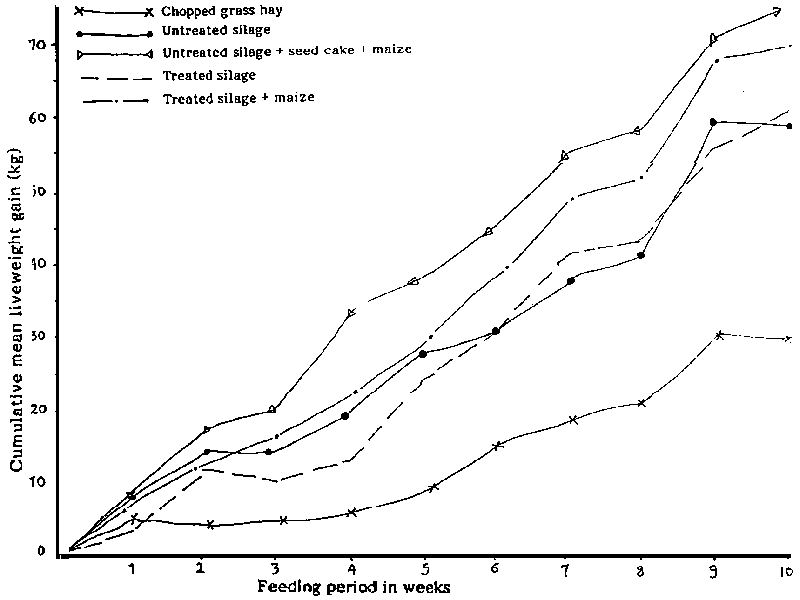
Materials and Methods - Layers-deep litter was ensiled with sorghum forage (Variety 1291) to contribute 40% of total DM of the mixture. Sugarcane molasses was added to make up 3% of the mixture. Fermentation was allowed to continue for three months. Twenty five Friesian/Ayrshire x Boran/EASZ yearling steers were divided into five groups balanced for breed and initial weight. The animals were grazed on low quality dry season Chloris gayana pasture and were supplemented in the evenings with the following diets:
1. Chopped Chloris gayana hay ad libitum (negative control)2. Untreated sorghum silage alone
3. Untreated sorghum silage + 1.0 kg DM cottonseed cake (CSC) and 1.0 kg maize meal (feedlot system, positive control)
4. Treated sorghum silage atone
5. Treated sorghum silage + 1.0 kg DM of maize meat
The total daily DM intake of treated and untreated silage, with or without concentrate, and including grazing, for steers weighing from 200 kg to 250 kg ranged from 5.1 kg to 7.6 kg. Grazing was estimated to provide approximately 2 kg DM/day. The trial lasted for 70 days.
Results - Crude protein improved from 6.5% in untreated silage to 12.2% in the treated silage. Animals that were fed treated silage plus 1.0 kg maize meal gained 0.98 kg/day which was not statistically different from ADG of 1.10 kg for the steers on a commercial-type feedlot diet (Table 6).
Table 6. Liveweight sod average gain (kg) of growing steers supplemented with sorghum forage ensiled with Layers deep litter.
|
Parameter |
Rations |
|||||
|
1 |
2 |
3 |
4 |
5 |
S.E.D |
|
|
Initial mean weight |
231.4 |
224.0 |
226.4 |
243.6 |
231.4 |
|
|
Final mean weight |
262.0 |
283.2 |
301.8 |
304.2 |
299.8 |
|
|
Average daily gain |
0.44a |
0.85b |
1.10c |
0.87b |
0.98bc |
0.09 |
abc Means followed by different superscripts are significantly different (P<0.05).
S.E.D. = Standard error of difference between two means.
It would appear that untreated silage was near adequate in meeting the nutrient requirements of the animals, hence the marginal response to additional nitrogen and energy in the treated silage (Fig. 1). However, there was a noticeable trend towards improved growth rate when energy was added to treated silage. It would be of interest to evaluate these diets with more productive end demanding type of cattle such as lactating cows .
4. Broiler Litter in dairy rations
Materials and Methods - The composition of the rations fed to milking cows is summarised in Table 7. The animals comprised Friesian and Ayrshire cows, pure or crossbred. Three animals were allocated to each of the three supplemental diets in a 3 x 3 Latin square design. There were four replications in all. Each animal received 1 kg DM of the compounded concentrates (diets R0, R50 or R100) per 2 kg milk produced. Therefore DM intake of the concentrates ranged from 5-6 kg per cow per day. The quantities of feed provided (Table 7) were estimated according to Anon (1975) to provide 12 MJ of metabolisable energy per kg DM intake, being the amount of energy required by a 450 kg dairy cow producing 15 kg of milk/day. The trial lasted 9 weeks.
The pattern of liveweight gain of steers fed sorghum forage with poultry litter.
Table 7. Composition (%DM) of broiler litter-based dairy rations.
|
Ingredients |
Diets * |
||
|
R0 |
R50 |
R100 |
|
|
18.1 |
15.6 |
12.3 %Crude protein |
|
|
Maize meal |
42.00 |
42.00 |
42.00 |
|
Barley |
15.00 |
15.00 |
15.00 |
|
Wheat bran |
9.00 |
9.00 |
9.00 |
|
Sunflower seed cake |
4.50 |
2.25 |
- |
|
Rapeseed |
9.20 |
4.60 |
- |
|
Cottonseed cake |
8.20 |
4.10 |
- |
|
Sweet lupine |
10.10 |
5.05 |
- |
|
Broiler litter |
- |
14.40 |
28.80 |
|
Molasses |
- |
1.60 |
3.20 |
|
Minerals |
2.00 |
2.00 |
2.00 |
|
Total % |
100 |
100 |
100 |
* R0 - Commercial protein concentrates only.
R50 - ration compounded to replace 50% of commercial protein source.
R100- ration compounded to replace 100% of commercial protein sources.
Results - The ration in which broiler litter completely replaced the conventional protein sources was able to support 10.2 kg of milk/day compared to 11.6 kg/day from cows fed diets compounded from commercial protein sources (Table 8). Although this difference was significant (P<0.05), the cost of feeding commercial protein supplements would tip the balance in favour of the poultry-based diet. DM intake and milk butterfat were not affected by feeding broiler litter. Similar results have been reported by Kayongo and Irungu (1986) at Naivasha using lactating Friesian heifers.
Table 8. Performance of cows fed concentrates containing different levels of broiler litter.
|
Item |
Diets |
|||
|
R0 |
R50 |
R100 |
P |
|
|
Milk yield, kg/day |
11.6a |
10.7b |
10.2b |
* |
|
Milk butterfat, percent |
4.0a |
3.7a |
3 9a |
NS |
ab Means on the same row followed by different superscripts are significantly different at the level shown.
* Significant at P< 0.05.
1. Dry season supplementation with energy and protein sources was beneficial to beef cattle grazing predominantly Rhodes grass planted pasture.2. Poultry waste used in compounding rations for cattle should be dried in situ or ensiled to render it safe for use by the animals.
3. Sunflower seed cake can be replaced completely by broiler litter to constitute 30% of finishing rations for steers on a semi-intensive system as long as the animals are supplied with some grain and molasses.
4. Crossbred heifers could be fed for a period of three months prior to mating on a fermented 60:40 poultry layer waste/ground grain ration to attain a breeding weight of around 260 kg by 18 months of age.
5. Ensiling sorghum forage with poultry waste improved crude protein content of the silage almost twofold. Ensiling should be done with poultry waste and molasses making up 40 and 3 percent of total dry-matter of the mixture, respectively. Such silages should be fed with a grain supplement for optimal production.
6. Rations constituted with 30% of the concentrate mixture DM as poultry waste can support about 10 kg of milk/day. Such rations must be fortified with energy sources. It would appear that CP levels of 12% in concentrate mixtures may, in fact, be adequate for low to mediocre producing dairy cattle.
7. The ubiquitous distribution of poultry farms in Kenya, both small-scale and large enterprises, make poultry waste a readily available source for compounding relatively cheap cattle feeds of high quality.
Alexander, D.C.; Carrire, J.A.J. and McKay, K.A. 1968. Bacteriological studies of poultry litter fed to livestock. Can. Vet. J. 9: 127-131.
Anon. 1975. Energy allowance and feeding systems for ruminants. Tech. Bull. 33, Ministry of Agriculture, Fisheries and Food; Department of Agriculture and Fisheries for Scotland, Her Majesty's Stationery Office, London.
ARC (Agricultural Research Council). 1980. The nutrient requirements of ruminant livestock. Commonwealth Agricultural Bureaux, Farnham Royal, U.K.
Bhattacharya, A.N. and Fontenot, J.P. 1966. Protein and energy value of peanut hull and woodshaving poultry litter. J. Anim. Sci. 25: 367-371.
Bhattacharya, A.N. and Taylor, J.C. 1975. Recycling of animal waste as a feedstuff. A review. J. Anim. Sci. 41: 1438-1457.
Bugarski, D.; Milanovic, A. Dzinic, M. and Beganovic, A. 1980. (Nutritive and hygienic characteristics of silages made by mixing broiler litter and maize plants). Nutr. Abstr. 4790, p. 546.
Caswell, L.F.; Fontenot, J.P. and Webb, K.E. Jr. 1974. Fermentation of ensiled broiler litter. Cited by Fontenot and Webb 1975.
Caswell, L.F.; Fontenot, J.P. and Webb, K.E. Jr. 1975. Effect of processing method on pasteurization and nitrogen components of broiler litter and on nitrogen utilisation by sheep. J. Anim. Sci. 40: 750-759.
Caswell, L.F.; Webb, K.E. Jr. and Fontenot, J.P. 1977. Fermentation, nitrogen utilisation, digestibility and palatability of broiler litter ensiled with high moisture corn grain. J. Anim. Sci. 44: 803-813.
Fianu, F.K.; Assoku, R.K.G. and Palomeras, I.M.L. 1984a. Poultry manure as feedstuff for ruminants. I. Effect of air-drying oven-heating and autoclaving on odour, pathogens and nutrient losses. Bull. Anim. Hlth. Prod. Afr. 32: 143-148.
Fianu, F.K.; Assoku, R.K.G. and Hinson, F. 1984b. Poultry manure as a feedstuff for ruminants. II. Effects of ensilage on pathogens, nutrients and odour of diets based on caged layer excrete. Bull. Anim. Hlth. Prod. Afr. 32: 350-354.
Fontenot, J.P. and Jurubescu, V. 1980. 31. Processing of animal waste by feeding to ruminants. Proc. Symp. Metabolism in Ruminants, France. pp. 641-662.
Fontenot, J.P. and Webb, K.E. Jr. 1975. Health aspects of recycling animal wastes by feeding. J. Anim. Sci. 40: 1267-1277.
Harmon, B.W. Fontenot, J.P. and Webb, K.E. Jr., 1972. Performance studies with rations containing broiler litter and molasses. Cited by Bhattacharya and Taylor (1975).
Harmon, B.W.; Fontenot, J.P. and Webb, K.E. Jr. 1975. Ensiled broiler litter and corn forage. I. Fermentation characteristics. J. Anim. Sci. 40: 144-155.
Johnson, R.R.; McClure, K.E.; Klosterman, E.W. and Johnson, L.J. 1967. Corn plant maturity. III. Distribution of nitrogen in corn silage treated with limestone, urea and diammonium phosphate. J. Anim. Sci. 26: 394-399.
Kayongo, S.B. and Irungu, K.R.G. 1986. Evaluation of broiler waste in formulation of concentrate for lactating Friesian heifers grazing irrigated pasture. E. Afr. Agric. For. J. 52: (1):9-15.
Ledger, H.P.; Giliver, B. and Robb, J.M. 1973. An examination of sample joint dissection and specific gravity technique for assessing the carcass composition of steers slaughtered in commercial abattoirs. J. Agric. Sci. Camb. 80: 381-392.
Odhuba, E.K.; Magadi, J.P. and Sanda, I.A. 1986a. Poultry waste in cattle rations. I. Utilisation of broiler litter as a source of nitrogen in semi-intensive feedlot rations. E. Afri. Agric. For. J. 52: 16-21.
Odhuba, E.K.; Magadi, J.P. and Sanda, I.A. 1986b. Poultry waste in cattle rations. II. Use of fermented caged layer waste in rations for growing heifers. E. Afr. Agric. For. J. 52: 22-36.
Shah, S. I. and Muller, Z.O. 1983. Feeding animal wastes to ruminants. In: By-product utilization for animal production. Proceedings of a workshop on applied research held in Nairobi, Kenya, 2630 September 1982. IDRC, Ottawa. pp. 49-57.
Smith, O.B.; Macleod, G.K; Mowat, D.N. and Moran, E.T. 1979. Effect of feeding organic acid treated hen excrete upon performance, carcass merit and health of feed-lot cattle. J. Anim. Sci. 49 (5):1183-1189.
Smith, L.W. and Wheeler, W.E. 1979. Nutritional and economic value of animal excrete. J. Anim. Sci. 48: 144-156.