S. Fall, H. Guerin, C. Sall and ND. Mbaye
Departement de recherches sur les productions et la sante animales
Institut senegalais de recherches agricole (ISRA)
Laboratoire national de l'elevage et de recherches veterinaires (LNERV), 8P 205, Dakar-Hann, Senegal
Abstract
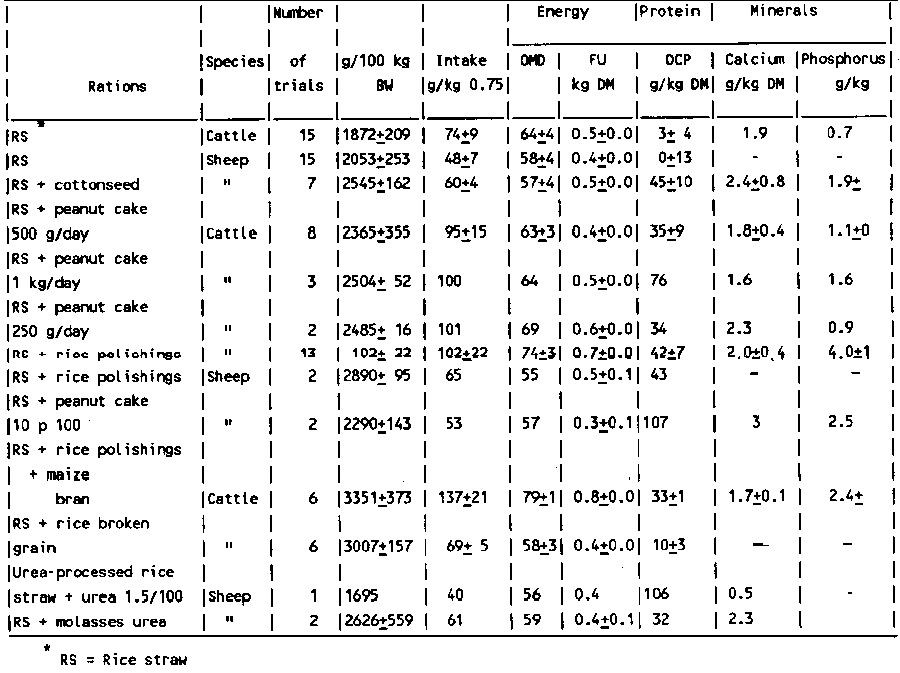
Introduction
Experimental procedures
Results and discussions
Acknowledgements
References
Cereal straws represent an important source of energy. However they contain low concentrations of nitrogen, minerals & digestible energy which requires a good supplementation. Preference should be given to agro-industrial by-products available in the areas of cereal production. In the peanut basin and in the South, cereal straw can be supplemented by peanut cake, cottonseed, sorghum, millet & rice brans.
The rice agro-industrial by-products (rice polishing, rice bran) can be fed together to support high levels of production. This feeding package is suited to the northern and southern part of Senegal.
Treatment of straws with urea is the most promising alternative solution in order to enhance straw utilisation by ruminants. Urea which is an important source of non-protein nitrogen is available to farmers at low cost.
On-farm research should be geared towards comparing the economic feasibility of two alternative solutions: treatment and supplementation of cereal straw with urea.
The drought which adversely affected the Sahelian countries of Africa during the past two years has now receded. However, the available biomass remains insufficient. Nutrition is still the major constraint to the improvement of livestock productivity in Senegal. The challenge for research workers, livestock technicians and farmers is to develop efficient feeding systems using the available feed resources in Senegal. Within the framework of crop-livestock interactions, low quality crop residues such as feed resources can play an important role in meeting the dry-matter and energy requirements of ruminants.
In 1986, 887,820 tons of maize, millet, sorghum and rice grain were harvested. The estimated straw output is 4,800,000 tons. This available quantity is expected to increase soon with the development of irrigation in Senegal river basin. The main areas of production are the groundnut basin, Senegal river basin, Tambacounda and Casamance.
Previous studies carried out in the Laboratoire national de l'elevage et de recherches veterinaires (LNERV) have investigated the problems of low concentration in digestible nutrients, bulkiness and low digestibility of cereal straws (Calves et al, 1974).
Offered alone, cereal straws cannot meet the maintenance requirement of cattle, sheep or goat. They need to be supplemented with concentrates in order to support reasonable milk or meat production. Chemical treatment can also improve digestibility of low quality roughages.
Supplementation and alkali treatment of cereal straw have been carried out in LNERV and IEMVT. The objectives of this paper are to describe experimental procedures, discuss available results in order to set up the best way of integrating cereal straws in Senegal's ruminant feeding system.
Supplementation of rice straw
The main objectives of rice straw supplementation was to improve rumen environment and increase straw digestibility.
Rations were intended to allow either maintenance or low to medium levels of meat/milk production. Thus rice straw used was analysed and the chemical composition is given in Table 2. Composition of the complete rations and number of trials are specified in Table 1.
Table 1. Cereal straw supplementation.
|
Rations |
Species |
Number of trials |
Level of concentrate (%) |
|
Rice straw + cottonseed |
Sheep |
7 |
26 |
|
Rice straw + peanut cake |
Sheep |
7 |
10 |
|
Rice straw + peanut cake |
Cattle |
2 |
6.5 |
|
Rice straw + peanut cake |
Cattle |
8 |
10 |
|
Rice straw + peanut cake |
Cattle |
3 |
15 |
|
Rice straw + rice polishing |
Cattle |
12 |
22 |
|
Rice straw + rice polishing |
Sheep |
2 |
45 |
|
Rice straw grain + rice broken |
Cattle |
6 |
28.5 |
|
Rice straw + molasses + urea |
Cattle |
2 |
21.5 |
|
Rice straw + P * |
Cattle |
6 |
20 |
* P = mixture w/w of rice polishing and maize bran.
Alkali treatment of cereal straws
NaOH and urea treatments of cereal straw have been comparatively carried out. To avoid unjustifiable excessive loss of water and nutrients a semi-dry method (Jackson, 1979) was applied.
Different levels of urea (3.5 and 6 g/100 g of straw) and sodium hydroxide (3,4,5 and 6 g/100 g of straw) were tested. The effects of urea treatment in different species of cereal straw, millet, sorghum, maize and rice has been summarised in Table 3 and 6.
Table 2. Chemical value of agro-industrial by-products used as supplement.
|
Agro-industrial |
Cotton seed |
Peanut cake |
Mixture w/w rice polishing |
Rice polishing N=14 |
Rice broken grain |
|
Fractions |
|||||
|
Ash |
41 |
52 ± 5 |
103 |
63 ± 3 |
153 ±7 |
|
Protein |
193 |
504 ± 50 |
135 |
119 ± 53 |
81 ± 0 |
|
Crude fiber |
250 |
28 ± 9 |
78 |
65 ± 30 |
70 ± 1 |
|
Ether extract |
184 |
7 ± 0 |
76 |
44 ± 32 |
16 ±0 |
|
Nitrogen-free extract |
256 |
408 ± 24 |
608 |
568 ± 242 |
683 ± 10 |
|
Calcium |
1.5 |
1.2 |
1.1 |
0.8 ± 1.2 |
1.2 |
|
Phosphorus |
5.1 |
6.2 |
9.5 |
10.7 ± 0,0 |
- |
Evaluation of the nutritive value of rations
The nutritive value of supplemented rice straw, and alkali-treated cereal straws were evaluated by chemical analysis and in vivo digestibility trials. Chemical analysis involved organic matter, crude fiber, crude protein, NDF, ADF, lignin, silica and minerals. In vivo digestibilities were carried out with six cattle or sheep. This protocol was broken down into phases: 15 days of adjustment and 6 of measurement.
1. Rice straw supplementation
1.1 Peanut cake
Peanut cake is available in the whole groundnut basin and in the south of Senegal. Rations based on rice straw supplemented with cake were well accepted by cattle and sheep (Table 3). However, high levels of peanut cake depressed digestibility of straw, and therefore the level of peanut cake should be restricted. Previous studies have also shown the depressive effect of peanut cake on organic-matter digestibility (OMD) of straw when fed at high levels. Data in Table 4 show a significant (P<0.05) depression of rice straw OMD at the level of 500 g peanut cake per day (10 per cent). It is also evident that rice straw OMD was not significantly improved by feeding at the rate of 250 g of peanut cake per day.
Table 3. Supplemented rice straw : Chemical value and digestibility of rations.
|
Rations |
Rice straw |
Rice straw |
Rice straw |
Rice straw+ rice break |
Urea-treated rice straw |
Urea-treated rice straw | |
|
Analysis |
Cattle |
Sheep |
Sheep |
bran |
Sheep |
Sheep |
Sheep |
|
Organic matter * |
849 ± 19 |
- |
793 |
841 ± 2 |
838 ± 5 |
883 |
818 |
|
Crude protein * |
63 ± 11 |
- |
147 |
52 ± 2 |
47 ± 2 |
141 |
73 |
|
Crude fiber * |
260 ± 35 |
|
258 |
255 ± 6 |
242 ± 8 |
369 |
344 |
|
Ether extract * |
31 ± 22 |
|
17 |
29 ± 2 |
12 ± 0 |
17 |
10 |
|
Nitrogen-free extract * |
459 ± 16 |
|
371 |
505 ± 4 |
583 ± 3 |
356 |
402 |
|
NDF * |
413 |
|
499 |
|
|
|
|
|
A D F * |
229 |
|
324 |
|
|
|
|
|
Lignin * |
46 |
|
49 |
|
|
|
|
|
Silica * |
100 ± 9 |
|
15 |
1.6 ± 0.1 |
3.3 |
2.1 | |
|
Calcium * |
2.0 ± 0.4 |
|
3 |
1.7±0.1 |
|
0.5 |
2.3 |
|
Phosphrous * |
4.0 ± 1.7 |
|
25 |
2.4 ± 0.4 |
|
|
|
|
Magnesium |
3.2 ± 0.6 |
|
2.2 |
|
|
|
|
|
Potassium * |
11.7 ± 4.1 |
|
14.9 |
|
|
|
|
|
Cobalt ppm * |
0.6 |
|
0.5 |
|
|
|
|
|
Copper |
9.1 |
|
7.5 |
|
|
|
|
|
Zinc ppm |
43.8 |
|
47.3 |
|
|
|
|
|
Manganese ppm |
5880 |
|
5600 |
|
|
|
|
|
Iron ppm |
967 |
|
1103 |
|
|
|
|
|
Sodium ppm |
1938 |
|
|
|
|
|
|
|
Dry-matter digestibility (%) |
59 ± 4 |
47 |
47 |
75 ± 2 |
50 ± 4 |
46 |
50 |
|
Organic-matter digestibility (%) |
74 ± 3 |
55 |
57 |
79 ± 1 |
58 ± 3 |
56 |
59 |
|
Digestible crude protein * |
42 ± 7 |
43 |
107 |
33 ± 1 |
10 ± 3 |
106 |
32 |
|
Voluntary intake g/kg 0.75 |
102 ± 22 |
65 |
53 |
137 ± 21 |
69 ± 5 |
40 |
41 |
* g/kg DM
Table 4. Digestibility of rice straw in complete diets compared to rice straw offered alone.
|
Rations |
|
Species |
Organic-matter digestibility (%) |
|
Rice straw |
N = 15 |
Cattle |
64 ± 4 |
|
Rice straw |
N = 15 |
Sheep |
58 ± 4 |
|
Rice straw + peanut cake 500 g/day |
N = 8 |
Cattle |
59.6 ± 2.7 |
|
Rice straw + peanut cake 1 kg/day |
N = 3 |
Cattle |
59.3 ± 2.0 |
|
Rice straw + peanut cake 250 g/day |
N = 2 |
Cattle |
68.4 ± 0.6 |
|
Rice straw + rice polishing + maize bran |
N = 6 |
Cattle |
80.9 ± 1.5 |
|
Rice straw + rice polishing |
N = 12 |
Cattle |
73.8 ± 4.4 |
|
Rice straw + rice broken grain |
N = 6 |
Sheep |
37.1 ± 5.7 |
In conclusion, peanut cake raises the nitrogen, energy and phosphorus levels of rations based on rice straw, but should be limited to a maximum of 10 per cent of the diet. The alternative use of urea to correct nitrogen deficiency is a possibility (Table 5).
1.2 Cottonseed
Cottonseed cake and rice straw are both produced in Casamance and Tambacounda. Experiments have shown that these can be fed together to support reasonable levels of production (Table 6).
However, the data are very limited. Table 6 suggests an addition of urea to reach the semi-intensive beef production allowed by the energy level of the ration.
1.3 Agro-industrial by-products of rice
Broken rice, rice polishings and bran total to substantial quantities. When fed alone or in association (w/w) with maize bran, rice polishings give an adequate supplementation to rice straw. Significant (P<0.05) improvements in OMD (Table 4) were obtained in a number of experiments. The rations with high levels of energy could support fattening of cattle. Further, the possibility of incorporating urea as a source of nitrogen is an added advantage. Broken rice grain is rich in starch, and can be fed up to 10% in ruminant diets but too high levels have a depressing effect on straw digestibility. This byproduct should be reserved for poultry.
1.4 Urea and molasses
It is well documented that urea is a cheap nitrogen source able to improve intake and OMD of low quality roughage. In Senegal, molasses and rice straw are available in the same area (Senegal rice basin). The combination of rice straw, molasses and urea gives a mixture which is well consumed by ruminants. The addition of peanut cake and minerals could allow intensive or semi-intensive beef fattening.
Table 5. Nutritive value of rations based on rice straw.
2. Alkali treatment of cereal straw
2.1 Urea treatment of cereal straw
The treatment of straws with urea improved intake, digestibility and nitrogen concentration in rice, millet, sorghum and maize crop residues (Table 6).
Table 6. Urea treatment of cereal straw caparison of rice, millet, maize, and sorghum straws.
|
Cereal straws |
|
CP (%) |
DMD (p. 100) |
Intake g/kg (p 0.75) |
|||
|
Rice straw |
Processed |
7.9 |
n = 1 |
54.48 ± 3.76 |
|
61.0 ± 9.5 |
n = 6 |
|
Control |
4.5 |
n = 1 |
42.8 ± 3.6 |
|
47.7 ± 2.8 |
n = 5 |
|
|
Maize straw |
Processed |
14.9 |
n = 1 |
57.2 ± 4.8 |
n = 6 |
52.6 ± 10.3 |
n = 6 |
|
Control |
3 9 |
n = 1 |
49 3 ± 2.4 |
n = 6 |
39.5 ± 4.6 |
n = 6 |
|
|
Millet straw |
Processed |
14.10 |
n = 1 |
58.8 ± 5.5 |
n = 4 |
56.1 ± 3.4 |
n = 4 |
|
Control |
8.4 |
n = 1 |
39.2 ± 6.4 |
n = 5 |
31.5 ± 6.8 |
n = 4 |
|
|
Sorghum straw |
Processed |
14.60 |
n = 1 |
65.1 ± 2.7 |
n = 6 |
68.4 ± 3.4 |
n = 6 |
|
Control |
4.2 |
n = 1 |
47.2 ± 4.7 |
n = 2 |
49.8 ± 6.2 |
n = 5 |
|
Compared to maize and sorghum, millet residues gave a superior improvement of intake and digestibility while the first had a higher capacity of nitrogen fixation. The results in Table 8 describe the effect of urea concentration on cereal straw improvement. The optimal level of application was found to be 5 g of urea per 100 g DM of straw.
2.2 NaOH treatment of millet straw
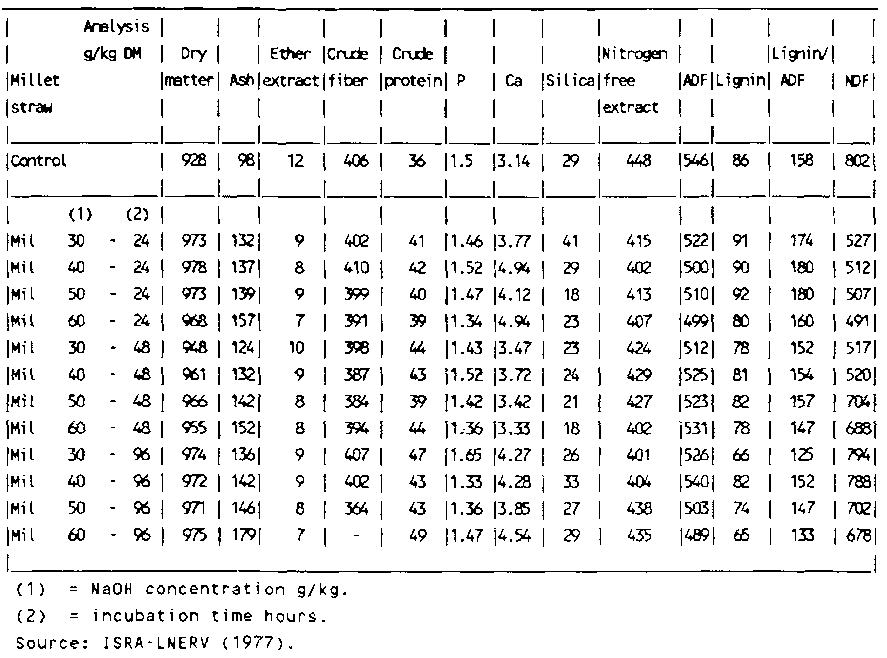
Available results show a positive influence of NaOH treatment levels on millet straw digestibility (Table 7) but chemical composition of the straw did not undergo any changes (Table 8). The incubation time had no major influence on the improvement of the nutritive value of straw. The minimal incubation time was found to be 24 hours.
Table 7. Dry-matter digestibility of millet straw treated with NaOH.
|
NaOH concentration (g/kg) | ||||
|
Incubation time |
30 |
40 |
50 |
60 |
|
24 hours |
52.6 |
56.1 |
58.6 |
62.5 |
|
48 hours |
52.4 |
57.6 |
57.2 |
62.6 |
|
96 hours |
52.2 |
56.4 |
57.9 |
62.8 |
Control = 36 p 100.
Source: ISRA-LNERV (1977).
Table 8. Chemical value of NaOH-treated millet straw.
The authors are grateful to Mahawa Mbodj, Adama Faye and Didier Richard for making a critical review of this paper. They are also indebted to Abdou Fall for his help in translating the text.
Calvet, H.; Valenza, J.; Boudergues, R.; Diallo, S.; Friot, D. and Chambron, J. 1974. La paille de riz dans l'alimentation animale au Senegal. I. Analyses bromatologiques. Digestibilite in vivo et in vitro. Bilans azotes et mineraux. Rev. Elev. Med. Vet. Pays Trop. 27(2): 207-220.
ISRA - LNERV. 1977 - Rapport sur le fonctionnement de l'annee 1977. ISRA-LNERV, Dakar, Senegal.
Jackson, M.G. 1979. Le traitement des pailles pour l'alimentation des animaux. Evaluation de la rentabilite technique et economique. FAO, Rome. 68 pp.