R.M. Njwe ¹ and F.O. Olubajo ²
¹Dept. of Animal Science, Dschang University Centre
B.P. 96, Dschang, Cameroon² Dept. of Animal Science, University of Ibadan
Ibadan, Nigeria
Abstract
Introduction
Materials and methods
Results and discussion
References
Forty-eight West African Dwarf goats ranging from 9 to 12 months and weighing between 9 and 15 kg were fed fresh Guatemala grass and various combinations of graded levels of cassava flour (0, 100, 150 and 200 g/day) and groundnut cake (0, 50, 100, and 150 g/day) as concentrate supplements in a split-plot design.
Incorporating increasing combined levels of both supplements in goat rations increased dry-matter, crude protein and cell contents intake; and decreased intake of cell walls, acid detergent fibre and cellulose. While it positively affected the digestibility of dry matter, crude protein and cell contents, the effect on cell walls, acid detergent fibre and cellulose digestibilities was negative.
Each increment in the level of groundnut cake and cassava flour in goat rations resulted in an increase in liveweight gain. Maximum liveweight gain was obtained with animals fed either a combination of 200 g of cassava flour with 100 g of groundnut cake (52 g/day) or 200 g of cassava flour with 150 g of groundnut cake (62 g/day) as supplement to fresh Guatemala grass.
Goats receiving 0 to 50 g concentrate supplement lost weight consistently as a result of inadequate energy and protein intakes.
Nutrition is one of the major factors responsible for the low productivity of small ruminants in Cameroon. Generally, undernutrition is more acute in the dry season than the wet season. Many agricultural and agro-industrial by-products are available but are not fully exploited for the feeding of livestock. Among these products are cassava flour and groundnut cake. For profitable use of these products as concentrate supplements for livestock, optimum levels have to be determined through feeding trials. The objective of this experiment was to determine the optimum combination of groundnut cake and cassava as concentrate supplements to adult West African Dwarf goats.
Forty-eight West African Dwarf goats ranging from 9 to 12 months and weighing between 9 and 15 kg were used for this experiment. They were previously maintained on Guatemala grass and limited quantities of concentrate at the University farm at Nkolbisson. Deworming and tick control was carried out before the experiment began.
The animals were divided into 16 groups, represented a treatment in a split-plot design consisting of four main plots (cassava flour levels) and 4 subplots (groundnut cake levels).
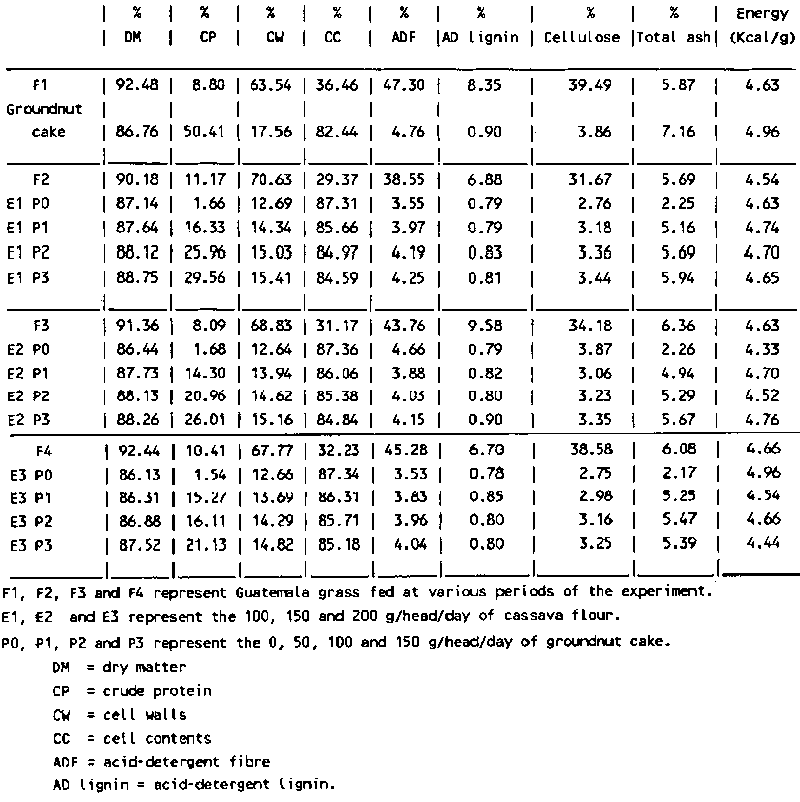
Fresh Guatemala grass (Tripsacum laxum) was fed in different combinations with cassava flour (0, 100, 150 and 200 g per animal per day) and groundnut cake (0, 50, 100 and 150 g per animal per day). Each concentrate supplement contained bicalcium phosphate at a rate of 1%. The chemical composition of the experimental diets is shown in Table 1.
Table 1. Chemical composition of Guatemala grass and the experimental diets.
Animals were maintained in individual metabolic cages during the entire experimental period of 42 days. Due to the availability of only 12 metabolic cages, 4 treatments were run at a time until the 16 treatments were completed. The daily portion of concentrate was given in individual troughs at 08.00 hours while chopped fresh Guatemala grass was also offered in a grass trough at 09.00 and 16.00 hours. Fresh drinking water and salt licks were provided ad libitum in all the cages. The animals were weighed at weekly intervals during the experimental period. During the last 7 days of the experimental period faeces and urine were collected.
Dry-matter, ash and crude protein content of forage, concentrates and faeces were analysed according to A.O.A.C. (1970) methods; while cell contents, cell walls, acid-detergent fibre, acid-detergent lignin and cellulose were analysed as described by Goering and Van soest (1970). Urinary nitrogen was determined by the macro-Kjeldahl and Markam micro distillation method. Gross energy of feeds, faeces and urine was determined with the Gallenkamp ballistic oxygen bomb calorimeter. Methane energy production was estimated according to the equation of Blaxter and Clapperton (1965) while metabolic faecal nitrogen was analysed by the detergent method proposed by Mason (1969). Statistical analysis of data was carried out according to the procedures of Steel and Torrie (1960) while differences between treatments were determined using the least significance difference test.
Table 2 presents dry-matter and nutrients intake by West African Dwarf goats fed basal Guatemala grass and various concentrate supplements. Generally as more concentrate was consumed by goats there was a corresponding decrease in forage dry-matter intake indicating a preference for concentrate intake to grass.
An increase in the level of groundnut cake in concentrate supplements increased total dry-matter intake by goats. Animals offered 150 g (P) groundnut cake per day consumed 63.16 g/day/W0.75 kg compared to 58.80, 48.17 and 48.47 g/day/W0.75 kg, respectively, for those fed 100 (P2) 50 (P1) and 0 (P0) grammes of groundnut cake per day. Dry-matter intake by goats fed 200 g of cassava flour (E3) was 62.24 g/day/W0.75 kg which was significantly (P<0.05) higher than all the other treatments (E0, E1 and E2) with values ranging from 51.29 g/day/W0.75 kg. The inter action of cassava flour and groundnut cake was not significant on dry-matter intake. Goats fed mixed concentrate of 200 g cassava flour and 150 g groundnut cake consumed the highest quantity of dry-matter (72.88 g/day/W0.75 kg). This value was not significantly different from dry-matter intake by animals on supplements consisting of a mixture of 150 g cassava flour and 150 g groundnut cake (63.93 g/day/W0.75 kg) or 200 g cassava flour and 100 g groundnut cake (69.39 g/day/W0.75 kg) but significantly (P<0.05) higher than all other treatments. The lowest levels of dry-matter intake were obtained with animals fed Guatemala grass only or supplemented with 50 g groundnut cake or either 100 or 150 g cassava flours; intake ranging from 43.98 to 49.51 g/day/W0.75 kg.
Table 2. Feed intake by West African dwarf goats fed combinations of graded levels of groundnut cake (P) and cassava flour (E) as concentrate supplements.
|
Treatments |
DM |
CP |
CW |
CC |
ADF |
CE | |
|
Effects of groundnut cake | |||||||
|
|
P0 |
48.47 C1 |
3.47 D1 |
25.94 A1 |
23.92 D1 |
15.60 A1 |
12.81 A1 |
|
|
P1 |
48.17 C1 |
6.53 C1 |
22.64 B1 |
26.86 C1 |
12.95 B1 |
10.57 B1 |
|
|
P2 |
58.80 B1 |
9.69 C1 |
25.15 A1 |
34.30 B1 |
14.21 A1B1 |
11.53 B1 |
|
|
P3 |
63.16 A1 |
12.39 A1 |
25.61 A1 |
38.70 A1 |
14.25 A1B1 |
11.61 B1 |
|
|
SE |
1.37 |
0.19 |
0.82 |
0.67 |
0.48 |
0.38 |
|
|
CV (%) |
8.69 |
7.98 |
11.43 |
7.48 |
11.76 |
11.34 |
|
|
LSD |
4.01 |
0.54 |
2.40 |
1.95 |
1.41 |
1.11 |
|
Effects of cassava flour | |||||||
|
|
E0 |
52.28 B |
8.50 A |
33.22 A |
23.68 D |
20.79 A |
17.15 A |
|
|
E1 |
51.29 B |
8.09 A |
22.69 A |
28.08 C |
11.45 C |
9.19 C |
|
|
E2 |
52.79 B |
7.12 B |
21.46 B |
31.73 B |
12.17 BC |
9.53 C |
|
|
E3 |
62.24 A |
8.36 A |
21.97 B |
40.29 A |
12.60 B |
10.65 B |
|
|
SE |
0.82 |
0.18 |
0.47 |
0.51 |
0.26 |
0.25 |
|
|
CV (%) |
5.20 |
7.79 |
6.58 |
5.72 |
6.41 |
7.48 |
|
|
LSD |
2.84 |
0.63 |
1.64 |
1.77 |
0.92 |
0.87 |
|
Combinations | |||||||
|
|
E0 P0 |
47.51 efg |
4.18 gh |
35.23 a |
17.32 g |
22.73 a |
18.76 a |
|
|
E0 P1 |
43.98 g |
6.56 ef |
28.98 bc |
19.42 g |
18.26 b |
15.06 b |
|
|
E0 P2 |
55.58 cde |
10.28 b |
33.88 ab |
26.24 e |
21.00 ab |
17.33 ab |
|
|
E0 P3 |
62.06 bcd |
12.99 a |
34.82 a |
31.73 cb |
21.16 ab |
17.46 ab |
|
|
E1 P0 |
45.66 fg |
3.78 h |
24.39 cd |
21.27 fg |
12.86 cde |
10.54 cdef |
|
|
E1 P1 |
47.28 efg |
6.38 f |
21.39 def |
25.89 e |
10.85 def |
8.90 efg |
|
|
E1 P2 |
55.64 cde |
8.35 cd |
34.11 cd |
31.77 cd |
12.04 cdef |
9.24 defg |
|
|
E2 P3 |
54.25 def |
11.87 a |
20.86 def |
33.39 c |
10.07 ef |
8.04 fg |
|
|
E2 P0 |
45.13 fg |
2.57 i |
21.57 def |
24.03 ef |
13.15 cde |
10.31 cdef |
|
|
E2 P1 |
49.86 efg |
5.39 fg |
23.16 d |
27.25 de |
13.12 cde |
10.26 cdef |
|
|
E2 P2 |
52.25 ef |
8.59 cd |
17.60 ef |
34.76 c |
9.41 f |
7.37 g |
|
|
E2 P3 |
63.93 abc |
11.95 a |
23.70 cd |
40.64 b |
12.99 cde |
10.19 cdef |
|
|
E3 P0 |
55.63 cde |
3.36 hi |
22.57 de |
33.06 c |
13.68 cd |
11.63 cd |
|
|
E3 P1 |
51.59 efg |
7.78 de |
16.99 f |
34.61 c |
9.57 f |
8.06 fg |
|
|
E3 P2 |
69.39 ab |
9.57 bc |
25.00 cd |
44.42 ab |
14.39 c |
12.17 c |
|
|
E3 P3 |
72.38 a |
12.75 a |
23.33 d |
49.05 a |
12.75 cde |
10.76 cafe |
|
|
SE |
2.74 |
0.37 |
1.64 |
1.34 |
0.97 |
0.76 |
|
|
CV (%) |
8.69 |
7.98 |
11.43 |
7.48 |
11.76 |
11.34 |
|
|
LSD |
8.02 |
1.08 |
4.79 |
3.90 |
2.83 |
2.23 |
N.B. Figures in column with the same letter script are not significantly different (P >0.05).
The overall mean total dry-matter intake of 54.51g/day/W0.75 kg by goats from this investigation agree with the 57.73g/day/W0.75 kg reported by Awah (1982) with goats of similar age. The improvement in goats' dry-matter intake when increased levels of either cassava flour or groundnut cake (or both) were incorporated in their diets agrees with the findings of Akinsoyinu (1974), Adegbola (1974), and Crabtree and Williams (1971). The high levels of total dry-matter intake with high levels of dietary crude protein agrees with reports by several authors (Adegbola, 1974; Blaxter and Wainman, 1964; Elliot and Topps, 1963).
The improvement in dry-matter intake is attributed to the stimulating effect of the readily available concentrate nitrogen on the multiplication, digestive and fermentative activity of rumen microbial population. The larger surface area for the activity of digestive enzymes and faster rate of passage through the rumen and gut are factors that could contribute to increased dry-matter intake when increasing levels of concentrates are fed to goats.
Increasing the quantity of groundnut cake in diets resulted in a corresponding significant (P<0.05) increase in crude protein intake by goats from 3.47 (P) to 12.39 g/day/W0.75 kg (P3). The effect of increasing dietary levels of cassava flour on crude-protein intake by goats was not consistent. The interaction of cassava flour and groundnut cake on crude protein intake was not significant. Maximum crude-protein intake (12.99 g/day/W0.75) was registered with goats fed Guatemala grass and 150 g groundnut cake only (E0P3), while the lowest intake was obtained with those maintained on grass supplemented with 150 or 200 g cassava flour (2.57 and 3.36 g/day/W0.75 kg, respectively).
The increase in crude-protein intake as the level of groundnut cake in goat rations was raised agrees with the reports of Akinsoyinu (1974). The diminishing effect on crude-protein intake by increasing levels of cassava flour may be a result of a dilution effect or decreasing concentration of crude protein per gram of concentrate consumed by goats.
Intake of concentrate supplement significantly (P<0.05) depressed intake of cell walls by goats. The interaction of cassava flour and groundnut cake on cell walls intake was significant (P<0.05). Animals fed only forage had the highest level of cell wall intake. The declining contribution of forage to total dry-matter intake as concentrate level was raised could be responsible for the lower cell walls intake by goats fed mixed rations of forage and concentrate. The same explanation is valid for the relatively higher intake of acid detergent fibre and cellulose by goats fed only grass compared to those on diets of grass and concentrates.
Each increase in the level of groundnut cake or cassava flour in goat diets caused significant (P<0.05) increases in the intake of cell contents. This may be attributed to the increasing importance of this fraction in the diet as more concentrate was consumed. Cell contents constitute 82 to 87% of concentrates used in this study.
The digestibility of dry-matter and other feed constituents by dwarf goats is indicated in Table 3. The digestibility of dry-matter, crude protein, cell contents and energy was improved by feeding goats with combined graded levels of cassava flour and groundnut cake; while that of cell walls, acid-detergent fibre and cellulose was decreased. The highest digestibility of dry-matter (76.04%) was obtained with goats fed the highest levels of groundnut cake and cassava flour (E3P3) while the least values were registered with goats maintained on forage only (63.31%) or forage plus 50 g groundnut cake (60.06%).
Incorporating increasing levels of groundnut cake in goat rations resulted in corresponding increases in digestible and metabolisable energy intake. Similarly, each increment in cassava flour level in goat rations resulted in an improvement in digestible metabolisable energy intake (Table 4). Maximum digestible energy intake was obtained with goats fed 150 g groundnut cake with 200g cassava flour (235.69 Kcal/day/W0.75), whereas minimum intake was in goats fed forage only (131.56 Kcal/day/W0.75 kg) or forage plus 50g groundnut cake (108.14 kcal/day/W0.75 kg).
All animals gained weight except those fed forage only or forage plus 50 g groundnut cake. Generally, increasing the level of groundnut cake and cassava flour resulted in increased weight gain. Liveweight loss recorded ranged from -4 g/day for animals fed solely on forage to -11 g/day for those fed forage and a supplement of 50 g of groundnut cake. The highest rates of liveweight gain were observed with goats fed 200 g cassava flour with 100 g groundnut cake (52g/day) and 200 g of cassava flour with 150 g groundnut cake (60 g/day). These values were significantly (P<0.05) higher than all other treatments.
In terms of weight gain, the advantage of these concentrate supplements are obvious. Low energy intake and negative nitrogen balance may be responsible for the liveweight losses obtained with goats fed solely on forage or forage supplemented with minimum does of groundnut cake.
Table 3. Digestibility % of feed constituents by West African Dwarf goats fed a combination of graded levels of groundnut cake (P) and cassava flour (E) as concentrate supplement.
|
Treatment DMD* |
DMD* |
CPD* |
CAD* |
CCD * |
ADFD * |
CED* |
END * |
|
Effects of groundnut cake | |||||||
|
P0 |
68.81 B1 |
55.49 C1 |
62.21 A1 |
74.86 B1 |
53.16 A1 |
54.98 A1 |
67.52 A1B1 |
|
P1 |
66.56 C1 |
74.04 B1 |
60.21 A1 |
73.16 B1 |
45.03 B1 |
47.78 B1 |
66.91 B1 |
|
P2 |
71.97 A1 |
78.48 A1 |
60.91 A1 |
81.03 A1 |
49.24 A1B1 |
51.98 A1B1 |
69.87 A1 |
|
P3 |
72.28 A1 |
79.96 A1 |
59.11 A1 |
81.20 A1 |
45.90 A1 |
49.44 B1 |
69.69 A1 |
|
SE |
0.67 |
0.71 |
1.22 |
1.18 |
1.81 |
1.76 |
0.81 |
|
CV (%) |
3.33 |
3.45 |
7.55 |
5.28 |
12.01 |
11.72 |
4.11 |
|
LSD |
1.97 |
2.08 |
3.96 |
3.45 |
1.81 |
5.14 |
2.38 |
|
Effects of cassava flour | |||||||
|
E0 |
64.56 C |
70.89 BC |
62.65 A |
74.34 C |
59.03 A |
61.08 A |
59.15 |
|
E1 |
70.1171.70 |
63.51 A |
74.55 |
42.31 |
45.55 B |
70.60 A |
|
|
E2 |
71.71 AB |
74.05 A |
61.64 A |
78.04 |
46.51 |
47.77 B |
70.66 A |
|
E3 |
73.23 A |
69.33 |
54.82 B |
83.31 |
45.49 |
49.79 B |
73.58 A |
|
SE |
0.51 |
0.59 |
1.40 |
0.88 |
1.53 |
1.22 |
0.88 |
|
CV (%) |
2.50 |
2.85 |
8.01 |
3.92 |
10.93 |
8.29 |
4.47 |
|
LSD |
1.75 |
2.04 |
4.86 |
3.04 |
5.29 |
4.23 |
3.08 |
|
Combinations | |||||||
|
E0 P0 |
63.31 h |
59.91 |
66.20 ab |
68.09 f |
64.90 a |
64.50 a |
59.81 |
|
E0 P1 |
60.06 h |
70.17 fgh |
59.49 bcd |
70.24 ef |
55.62 abc |
58.28 abcd |
52.55 g |
|
E0 P2 |
66.54 fg |
76.97 bcde |
61.70 abed |
78.53 abed |
57.42 ab |
60.10 abc |
61.42 f |
|
E0 P3 |
68.32 ef |
79.55 bed |
63.23 abc |
78.34 abed |
58.16 ab |
61.43 ab |
62.81 f |
|
E1 P0 |
68.72 ef |
50.37 j |
65.91 ab |
79.87 def |
43.94 cafe |
48.38 café |
67.70 cafe |
|
E1 P1 |
70.05 def |
74.50 efg |
68.83 a |
70.84 def |
42.94 de |
45.39 e |
74.11 ab |
|
E1 P2 |
71.22 bcde |
80.46 abc |
64.59 abc |
76.26 cafe |
42.06 de |
44.74 e |
71.27 abcd |
|
E1 P3 |
70.91 bcdef |
81.47 ab |
54.71 de |
80.22 abc |
40.28 e |
43.68 e |
69.30 abcde |
|
E2 P0 |
70.18 def |
57.42 i |
59.20 bcd |
75.83 cafe |
53.84 abed |
52.06 bcde |
69.03 bcde |
|
E2 P1 |
67.90 ef |
84.77 a |
63.93 abc |
73.83 cafe |
42.88 de |
43.57 e |
68.84 de |
|
E2 P2 |
74.90 abc |
81.06 ab |
60.07 abed |
81.92 ab |
46.89 bcde |
50.99 bcde |
73.58 ab |
|
E2 P3 |
73.94 abed |
82.94 a |
62.63 abed |
80.58 ab |
42.44 de |
44.46 e |
73.93 ab |
|
E3 P0 |
73.67 abcd |
57.27 i |
57.55 bcd |
84.63 ab |
49.97 bcde |
54.97 abcde |
73.52 ab |
|
E3 P1 |
68.19 ef |
68.71 h |
48.60 e |
77.72 abcde |
38.66 e |
43.90 e |
74.83 a |
|
E3 P2 |
75.22 ab |
75.44 def |
57.30 bcd |
85.26 a |
50.59 bcde |
52.10 bcde |
73.21 abc |
|
E3 P3 |
76.04 a |
75.88 cdef |
55.85 cafe |
85.64 a |
42.74 de |
48.20 de |
72.76 abc |
|
SE |
1.34 |
1.42 |
2.64 |
5.28 |
3.63 |
3.51 |
1.63 |
|
CV (%) |
3.33 |
3.45 |
7.55 |
2.36 |
13.01 |
11.92 |
4.11 |
|
LSD |
3.93 |
4.17 |
7.72 |
6.91 |
10.61 |
10.27 |
4.76 |
N.B: Figures in a column with the same letter script are not significantly different (P>0.05).
|
* DMD = dry-matter digestibility |
* ADFD = acid-detergent fiber digestibility |
|
* CPD = crude-protein digestibility |
* CED = cellulose digestibility |
|
* CWD = cell-wall digestibility |
* END = energy digestibility |
|
* CPD = cell-contents digestibility |
|
Table 4. Energy intake and live weight gain by West African dwarf goats fed combinations of graded levels of groundnut cake (P) and cassava flour (E) as concentrate supplement.
|
Treatments |
GE |
DE* |
ME* |
DLWG (G) |
AWT (KG) |
MWT (KG) |
|
Effect groundnut cake | ||||||
|
P0 |
220.34 |
149.10 C1 |
110.91 C1 |
13 D1 |
12.73 |
6.78 |
|
P1 |
223.24 |
150.67 C1 |
112.69 C1 |
17 C1 |
12.30 |
6.56 |
|
P2 |
264.24 |
184.93 B1 |
136.78 B1 |
31 B1 |
12.08 |
6.48 |
|
P3 |
291.15 |
203.80 A1 |
158.59 B1 |
40 A3 |
12.60 |
6.68 |
|
N (%) |
- |
9.66 |
9.58 |
28.68 |
- |
- |
|
LSD |
- |
14.04 |
10.33 |
6.22 |
- |
- |
|
Effects of cassava flour | ||||||
|
E0 |
245.30 |
146.45 C |
109.75 C |
5 |
12.62 |
6.70 |
|
E1 |
233.97 |
165.36 B |
122.97 B |
26 |
11.88 |
6.39 |
|
E2 |
243.64 |
173.23 B |
128.62 B |
22 |
13.49 |
7.04 |
|
E3 |
276.59 |
203.34 A |
149.63 A |
45 |
11.71 |
6.32 |
|
SE |
- |
3.24 |
2.28 |
2.35 |
- |
- |
|
N (%) |
- |
6.53 |
6.19 |
6.19 |
- |
- |
|
LSD |
- |
11.25 |
7.92 |
7.92 |
- |
- |
|
Combinations | ||||||
|
E0 P0 |
219.95 |
131.56 fg |
98.31 fg |
-4 |
12.74 |
6.74 |
|
E0 P1 |
204.77 |
108.14 g |
81.46 g |
-11 |
12.69 |
6.72 |
|
E0 P2 |
261.60 |
159.72 cafe |
119.74 def |
11 f |
12.73 |
6.74 |
|
E0 P3 |
293.89 |
186.39 bc |
139.47 bcd |
25 de |
12.32 |
6.58 |
|
E1 P0 |
208.53 |
141.10 |
105.61 ef |
11 f |
11.28 |
6.15 |
|
E1 P1 |
219.46 |
162.65 cafe |
120.75 def |
26 de |
10.78 |
5.95 |
|
E1 P2 |
258.12 |
184.33 c |
136.76 cd |
38 bcd |
11.94 |
6.42 |
|
E1 P3 |
249.76 |
173.00 cd |
128.77 de |
30 cafe |
13.53 |
7.05 |
|
E2 P0 |
204.88 |
141.10 df |
104.87 f |
10 f |
14.78 |
7.53 |
|
E2 P1 |
232.36 |
154.98 cafe |
115.43 def |
15 ef |
13.58 |
7.07 |
|
E2 P2 |
240.21 |
177.24 c |
131.45 d |
22 et |
12.20 |
6.53 |
|
E2 P3 |
297.12 |
219.62 a |
162.71 ab |
41 bc |
13.40 |
7.01 |
|
E3 P0 |
247.98 |
182.34 c |
134.83 d |
35 cafe |
12.13 |
6.49 |
|
E3 P1 |
236.40 |
176.91 c |
133.11 d |
37 cd |
12.13 |
6.49 |
|
E3 P2 |
298.13 |
218.42 ab |
159.18 abc |
52 ab |
11.45 |
6.22 |
|
E3 P3 |
323.84 |
235.69 a |
171.39 a |
62 a |
11.13 |
6.09 |
|
SE |
- |
9.60 |
7.07 |
4.26 |
- |
- |
|
CV (%) |
- |
9.66 |
9.58 |
28.68 |
- |
- |
|
LSD |
- |
28.01 |
20.66 |
12.45 |
- |
- |
N.B: Figures in a column with the same letter script are not significantly different (P >0.05).
|
* Kcal/day/W0.75 kg |
|
|
GE = gross energy |
DLWG = daily liveweight gain |
|
DE = digestible energy |
AWT = average weight |
|
ME = metabolisable energy |
MWT = metabolic weight |
Adegbola, T. 1974. Digestion and utilisation of protein in West African Dwarf sheep. Ph.D. thesis, Dept. of Animal Science, University of Ibadan, Ibadan, Nigeria.
Akinsoyinu, A.O. 1974. Studies on protein and energy utilisation by the West African Dwarf goat. Ph.D. thesis, Dept. of Animal Science, University of Ibadan, Ibadan, Nigeria.
AOAC (Association of Official Analytical Chemists). 1970. Official methods of analysis. 11th edition. AOAC, Washington, D.C., USA.
Awah, A.A. 1982. Effect of milk and concentrate feeding on nutrient utilisation and tissue development of West African Dwarf (Fouta Djallon) kids under humid tropical environments. Ph.D. thesis, Dept. of Animal Science, University of Ibadan, Ibadan, Nigeria.
Blaxter, K.L. and Wainman, F.W. 1964. The utilisation of the energy of different rations by sheep and cattle for maintenance and for fattening. J. Agric. Sci., Camb. 63: 113-128.
Blaxter, K.L. and Clapperton, J.L. 1965. Prediction of the amount of methane produced by ruminants. British J. Nutr. 19: 511-522.
Crabtree, J.R. and Williams, G.L. 1971. The voluntary intake and utilisation of roughage concentrate diets by sheep. I. concentrate supplement for hay and straw. Anim. Prod. 13: 71-82.
Elliot, R.C. and Topps, J.H. 1963. Voluntary intake of low protein diets by sheep. Anim. Prod. 5: 269-276.
Goering, H.K. and Van Soest P.J. 1970. Forage fibre analyses (apparatus, reagents, procedures and some application). Agricultural Handbook No. 379, USDA, Agricultural Research Service, Washington, D.C.
Mason, V.C. 1969. Some observations on the distribution and origin of nitrogen in sheep faeces. J. Agric. Sci., Camb. 73: 110-111.
Steel, R.G.D. and Torrie, J.H. 1960. Principles and procedures of statistics. McGraw-Hill Book Company Inc., New York, USA.