Adrian Wekulo Mukhebi
Winrock International
Small Ruminant Collaborative Research Support (SR-CRSP) Kenya
P.O. Box 252, Maseno, Kenya
Antony Mwai Gitunu
Kiboko National Range Research Station
P.O. Box 12, Makindu, Kenya
Introduction
Methodology
Results
Discussion
Conclusions
References
Appendix
Abstract
The agropastoral systems of southern Machakos District of Kenya are in a semi-arid area with an annual rainfall of 500 mm to 700 mm falling in two seasons. A mean household consists of 15 persons, and owns 20 ha of land, 36 head of cattle, 13 sheep and 45 goats. A variety of crops are grown during the long and short rainy seasons, mainly in mixed stands of maize + pigeon peas, maize + beans, maize + cow peas, and maize + green grams.
Farmers perceive the following as the constraints which limit, in order of their severity, increased production of crops and livestock in their systems: drought, capital scarcity, livestock diseases, crop diseases and pests, poor infrastructure, inadequate extension service, lack of improved inputs, wildlife, land scarcity, labour scarcity, marketing, land tenure, bush encroachment, soil erosion, theft, large family and witchcraft. The ranking of these constraints varies slightly by farm size and survey site. Most farmers view the government as the source of solutions to most constraints. Admittedly many of the constraints would require government action such as improvements in infrastructure and marketing, land tenure, research and extension as pre-requisites for further development.
Researchable constraints of immediate interest to the Kiboko National Range Research Station in order of their importance to farmers are: drought, livestock diseases, crop diseases and pests, and improved crop varieties and livestock breeds.
This paper reports some of the results of a survey conducted by the Socioeconomics Division (SEA) of the Kiboko National Range Research Station (NRRS) to identify and rank production constraints as perceived by the agropastoralists of southern Machakos District of Kenya (Mukhebi et al., 1985).
The Kiboko NRRS has a mandate for conducting research directed at developing technologies for increasing rangeland productivity in Kenya. To make such technologies relevant, production constraints that reflect the felt needs and aspirations of rangeland inhabitants are a pre-requisite.
One of the reasons for the dismal performance of many development projects and programmes is that they are often designed to address problems of target populations as perceived by government officials and other outsiders rather than as perceived by the people themselves. The danger with this approach is that in many cases, considerable amount of resources are expended on trivial problems while priority problems of people are left unattended. The result is often that as soon as external funding and assistance are withdrawn, the initiated development activities which are supposed to be continued by the people are not carried beyond the life of the target group. This happens because sometimes a technical problem is implemented to provide a technical solution, when, in fact, that technical problem ranks low in the minds of the target population. The people may be having a different priority problem on their minds that requires a technical or non-technical solution as a necessary and sufficient pre-condition for any other development activity or project.
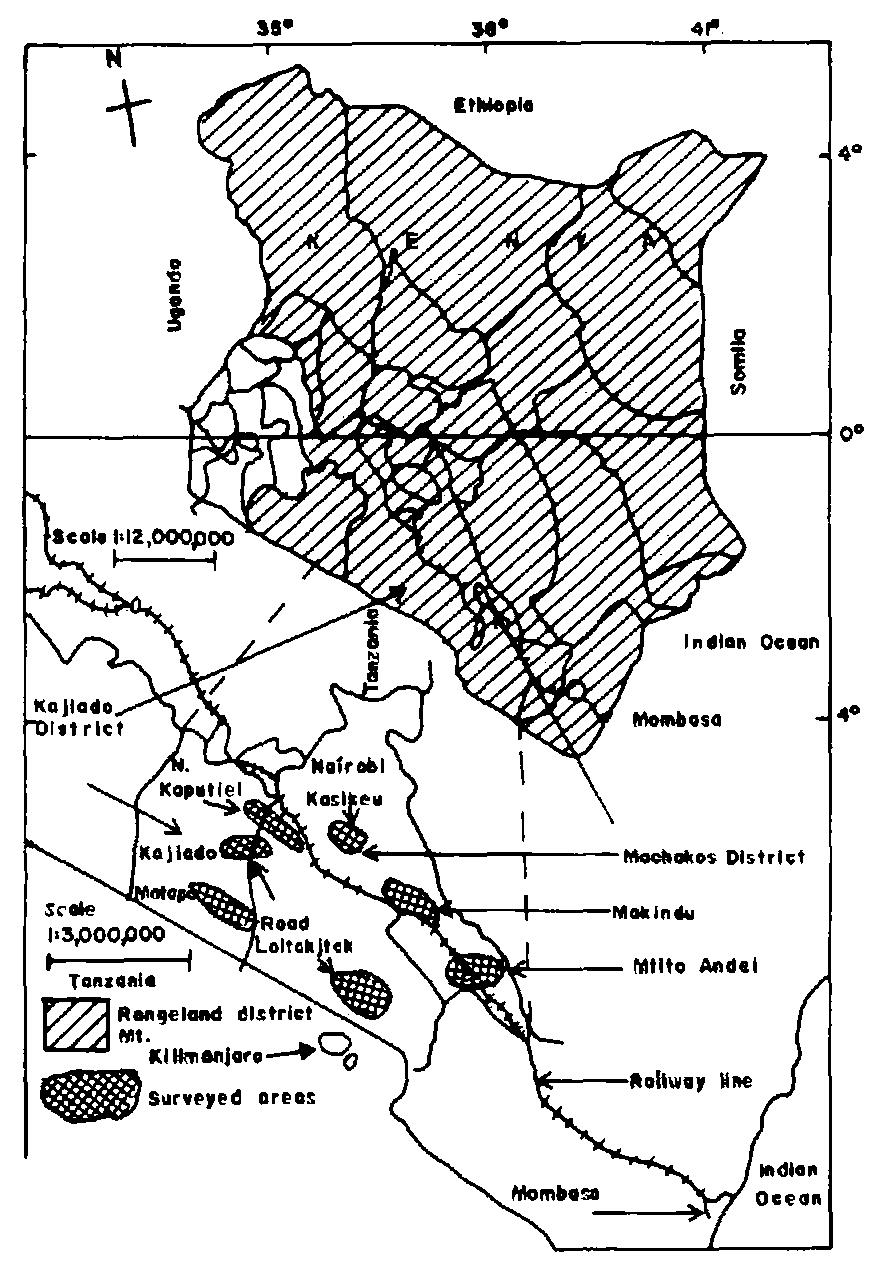
The study was conducted in the southern part of Machakos District stretching from Salama through Makindu to Mtito Andei townships (Figure 1). The area is semi-arid with an annual rainfall of about 500 to 700 mm, falling in two seasons: long rains (March to May) and short rains (September to October). It is inhabited by the Akamba agropastoralists. On average, they own about 20 (± 41) ha of land, keep 36 (± 56) head of cattle, 13 (± 16) sheep and 45 (± 48) goats per household of 15 (± 13) persons. They grow a variety of food crops during the long and short rainy seasons, mainly in mixed stands of maize + pigeon peas, maize + beans, maize + cowpeas, and maize + green grams.
Three sites were selected for sampling: Kasikeu location near Salama, Makindu location in the middle of the target area and Mtito Andei location at the southern end of the target area. These areas are representative of the mixed farming systems of southern Machakos: relatively intensive systems of Kasikeu, less intensive systems of Makindu and rather extensive systems of Mtito Andei.
On the basis of the above stratification by location, lists of farmers were obtained from area assistant chiefs and agricultural extension officers. (There was no official Land Registry list of farmers as land registration has not been undertaken in the area). A random sample of a pre-determined number of farms was selected from each site. In total, 106 farms were selected: 32 in Kasikeu, 43 in Makindu and 31 in Mtito Andei.
A survey team from SED with the assistance of the extension staff interviewed sampled farmers through single-day visits. The interviews were conducted during May 1985 using a pre-tested questionnaire. Among other variables, respondents were asked an open-ended question: What problems do you consider to be limiting increased production of crops and livestock on your farm? After enumerating all the problems, the respondent was asked how he/she felt they could be solved, one by one.
Figure 1. Surveyed areas in Kajiado and Southern Machakos Districts in Kenya.
Responses regarding felt problems are summarised in Table 1 by farm size and Table 2 by survey site. The problems or constraints to increased crop and livestock production are ranked on the basis of their response frequency.
For all the farms, 17 constraints are identified and ranked in the following order of their severity starting with the most severe: Drought (expressed severally as lack of rainfall, insufficient rainfall, lack of water, crop failure, lack of forage during dry season, etc.); capital scarcity (lack/shortage of cash, loans); livestock diseases; crop diseases and pests; poor infrastructure (lack of or poor roads, hospitals, transport), inadequate extension service (lack of or insufficient skills); lack of improved inputs (lack or unavailability of grade livestock, hybrid seeds, fertilizers, machinery, low yields); wildlife (crop damage by wild animals, livestock predation by wild animals); land scarcity (land shortage, shortage of grazing area; overstocking): labour scarcity (labour shortage, weeding problem, lack of enough time to work on the farm); marketing (lack of or poor markets, low output prices, price fluctuations, delayed payment for marketed crops); land tenure (unsurveyed land, lack of title deeds, trespassing); bush encroachment; soil erosion; theft; large family; and witchcraft.
Table 1. Listing and ranking of production constraints by farm size, South Machakos District, Kenya, 1985.
|
Constraint |
Farm size |
All farm sizes |
||||||
|
Small (a) |
Medium (b) |
Large (c) |
(n = 106) |
|||||
|
(n = 44) |
(n = 28) |
(n = 34) |
||||||
|
% |
Rank |
% |
Rank |
% |
Rank |
% |
Rank |
|
|
Land |
23 |
5 |
14 |
9 |
15 |
11 |
18 |
9 |
|
Labour |
23 |
5 |
7 |
12 |
12 |
12 |
15 |
10 |
|
Capital |
84 |
2 |
86 |
2 |
74 |
3 |
81 |
2 |
|
Extension services |
16 |
8 |
25 |
7 |
32 |
6 |
24 |
6 |
|
Improved inputs |
18 |
7 |
29 |
6 |
18 |
8 |
21 |
7 |
|
Drought |
87 |
1 |
93 |
1 |
88 |
2 |
90 |
1 |
|
Infrastructure |
14 |
9 |
39 |
5 |
32 |
6 |
26 |
5 |
|
Soil erosion |
5 |
13 |
7 |
12 |
3 |
14 |
5 |
14 |
|
Crop diseases/pests |
50 |
4 |
46 |
4 |
62 |
4 |
53 |
4 |
|
Livestock diseases |
64 |
3 |
57 |
3 |
100 |
1 |
74 |
3 |
|
Land tenure |
9 |
10 |
11 |
10 |
9 |
13 |
9 |
12 |
|
Marketing |
9 |
10 |
11 |
10 |
18 |
8 |
10 |
11 |
|
Bush |
5 |
13 |
4 |
14 |
18 |
8 |
8 |
13 |
|
Wildlife |
9 |
10 |
21 |
8 |
35 |
5 |
21 |
7 |
|
Theft |
2 |
15 |
4 |
14 |
0 |
- |
2 |
15 |
|
Large family |
0 |
- |
0 |
- |
3 |
14 |
1 |
16 |
|
Witchcraft |
0 |
- |
4 |
14 |
0 |
- |
1 |
16 |
a Small farm size 0-9.9 ha.
b Medium farm size 10-19.9 ha.
c Large farm size 20 + ha.
Farmers' suggested solutions to the above constraints are summarised in Appendices 1-15. The percentage of respondents (n = 106) suggesting solutions to a given constraint is greater than 100 when some respondents suggested more than one solution, and less than 100 when less than 106 respondents suggested any solution. The majority of the respondents view government as the major source of solutions to most constraints.
Table 2. Listing and ranking of production constraints by surveyed area, South Machakos District, Kenya, 1985.
|
Constraint |
Surveyed area |
All surveyed |
||||||
|
Kasikeu |
Makindu |
Mtito Andei |
(n = 106) |
|||||
|
(n = 32) |
(n = 43) |
(n = 31) |
||||||
|
% |
Rank |
% |
Rank |
% |
Rank |
% |
Rank |
|
|
Land |
22 |
6 |
21 |
7 |
10 |
12 |
18 |
9 |
|
Labour |
28 |
5 |
7 |
12 |
13 |
11 |
15 |
10 |
|
Capital |
91 |
1 |
84 |
3 |
68 |
3 |
81 |
2 |
|
Extension services |
9 |
10 |
30 |
5 |
29 |
7 |
24 |
6 |
|
Improved inputs |
19 |
7 |
14 |
9 |
32 |
6 |
21 |
7 |
|
Drought |
88 |
2 |
93 |
1 |
87 |
1 |
90 |
1 |
|
Infrastructure |
19 |
7 |
30 |
5 |
29 |
7 |
26 |
5 |
|
Soil erosion |
6 |
12 |
5 |
13 |
3 |
14 |
5 |
14 |
|
Crop diseases/pests |
56 |
3 |
51 |
4 |
52 |
4 |
53 |
4 |
|
Livestock diseases |
53 |
4 |
88 |
2 |
74 |
2 |
74 |
3 |
|
Land tenure |
9 |
10 |
5 |
13 |
16 |
9 |
9 |
12 |
|
Marketing |
16 |
9 |
2 |
15 |
16 |
9 |
10 |
11 |
|
Bush |
3 |
14 |
12 |
10 |
10 |
12 |
8 |
13 |
|
Wildlife |
6 |
12 |
21 |
7 |
35 |
5 |
21 |
7 |
|
Theft |
3 |
15 |
2 |
15 |
0 |
- |
2 |
15 |
|
Large family |
3 |
14 |
0 |
- |
0 |
- |
1 |
16 |
|
Witchcraft |
0 |
- |
0 |
- |
3 |
14 |
1 |
16 |
Among the five severest constraints for all farms, drought is ranked first as expected in this semi-arid area. Capital scarcity is rated second. Many respondents expressed lack of cash for purchasing or hiring farm inputs such as seed or oxen for ploughing. This in turn is reportedly due to low volumes and prices of marketable product surpluses and inaccessibility to commercial credit. Livestock diseases is ranked as the third severest constraint. Respondents attributed this problem largely to inadequate veterinary services, lack of drugs and insufficient livestock dips. Tick-borne diseases such as East Coast Fever and heartwater are reportedly the most prevalent. Crop diseases and pests are the fourth most important constraint in these agropastoral systems. Frequent pests include birds and army worms, the latter coming especially at the on-set of rains following prolonged dry spells. The fifth constraint is poor infrastructure, i.e. lack of roads in many areas, poor roads that are impassable during wet seasons, lack of public transport vehicles, lack of sufficient hospitals and health clinics.
Constraints are identified and ranked by farm size and survey site to determine any differences between farm size and spatial distribution. There is no difference in the list of identified constraints by farm size and site, but there is a slight variation in ranking. While drought is ranked number one constraint in small (0-9.9 ha) and medium (10-19.9 ha) size farms, it is ranked second in the large (20+ ha) size farms, in which livestock diseases are rated as the first constraint. Smaller farms rely more on crops than livestock for livelihood and vice versa for larger farms. Furthermore, while the farmers of Kasikeu perceive capital as their number one problem (due to more intensive systems), it is ranked number three in Makindu and Mtito Andei locations, where drought is ranked first. Spatial variation in type and ranking of constraints could be expected to become more pronounced with distance. This would call for more caution generalising constraints over large geographical areas.
One striking observation about the suggested solutions is that most respondents view government as the source of solutions to most of their problems. This view is not conducive to development. It encourages people to sit and wait for the government to provide solutions to problems that they themselves can solve or do something about. People ought to be educated "by the government" about the need to find or initiate solutions to constraints facing them by themselves rather than wait for the government to provide the answers. This could be effected through encouragement of community self-help (harambee) efforts and through cooperative societies as a few of the respondents suggest for solutions. Admittedly, many of the constraints identified would require government action such as improvements in infrastructure and marketing, land tenure, research and extension as pre-conditions or pre-requisites for any significant development initiated by the people themselves.
Many of the constraints identified are interrelated. Solutions to some may alleviate others. For instance capital is ranked the second constraint considering all farms together. But the capital constraint is related to the land tenure, large family and marketing constraints. For instance, a freehold land tenure system with title deeds would enable farmers to have access to commercial credit by offering the title deeds as security for loans; smaller family size would lessen household consumption expenditure and save cash for purchase of farm inputs; and improved marketing would improve producer prices or increase volume of marketed farm produce, resulting in higher cash in-flow. Each one of these actions would have the tendency of relaxing the household capital constraint.
From the NRRS point of interest, researchable constraints, in order of their priority to the farmers are: drought, livestock diseases, crop diseases and pests, and improved crop varieties and livestock breeds that would be more productive than the current ones. However, the solutions suggested by farmers are important and need to be explored thoroughly before research is designed and undertaken to develop or test technologies that may not contribute significantly to the solution of the constraint in the eyes of the farmers. In fact, researchers would need to gather more detailed field information about these constraints before launching any research, for instance, the magnitude and nature of each constraint. Such information would help in focusing research and developing technologies on more specific aspects of the constraints.
It should be borne in mind that ultimately, whatever solutions (technologies) are devised to address the four and other "researchable" constraints above, farmers will need capital to adopt them. Since capital is ranked the second most severe constraint, it would need to be addressed before farmers would be expected to adopt the new technologies. Furthermore, since the listed constraints are interrelated as already mentioned and their solutions are geared towards the same goal of increasing agricultural production, an interdisciplinary approach in the context of rangeland systems research (RSR) would be the recommended strategy to adopt in addressing the constraints.
The agropastoralists of southern Machakos District perceive the following as the constraints limiting increased crop and livestock production in their systems, listed from the most to least severe: drought, capital, livestock diseases, crop diseases and pests, infrastructure, extension services, improved inputs, wildlife, land scarcity, labour scarcity, marketing, land tenure, bush encroachment, soil erosion, theft, large family and witchcraft.
The ranking of these constraints varies slightly among different farm size groups and survey sites. The majority of farmers view the government as the major source of solutions to most of the constraints. Admittedly in infrastructure and marketing, land tenure, research and extension services as prerequisites for any significant development initiated endogenously.
Researchable constraints of immediate interest to the Kiboko National Range Research Station, in order of their importance to farmers are drought, livestock diseases, crop diseases and pests, and improved crop varieties and livestock breeds. More detailed data about these constraints would have to be gathered by researchers in order to focus research on, and develop technologies for more specific aspects of the constraints. As most of the constraints are interrelated and affecting the same goal of increasing agricultural production, an interdisciplinary approach in the context of rangeland systems research would be an appropriate strategy to follow in addressing the constraints.
Mukhebi, A.W., Gitunu, M., Kavoi, J. and Iroha, J. 1985. Agropastoral systems of Southern Machakos District of Kenya. Technical Paper No. 7, Socioeconomics Division, Kiboko National Range Research Station, Ministry of Agriculture and Livestock Development, Kenya.
Appendix 1. Farmer-suggested solutions to drought constraint, southern Machakos District, Kenya, 1985.
|
Solution |
% of farmers suggesting (n = 106) |
|
Government to construct new dams and repair old ones |
47 |
|
Government to construct boreholes |
32 |
|
Government to assist reforestation and soil conservation |
38 |
|
Government to implement irrigation project |
14 |
|
Farmers to feed livestock with hay and supplements |
2 |
|
Farmers to construct water tanks to store rain water |
5 |
|
People to organise harambee water project |
4 |
|
Farmers to practice proper stocking rates |
3 |
|
Farmers to store food |
7 |
|
Government to provide seed for drought resistant crops |
2 |
|
People to practice family planning |
1 |
|
People to pray to God |
8 |
Appendix 2. Farmer-suggested solutions to capital constraint, southern Machakos District, Kenya, 1985.
|
Solution |
% of farmers suggesting (n = 106) |
|
Government to provide loans |
33 |
|
Government to increase producer crop prices |
6 |
|
Government to increase employment opportunities in rural areas |
8 |
|
Government to issue land title deeds for loan security |
7 |
|
Government to develop and improve markets for farm produce |
2 |
|
Government to increase salaries |
2 |
|
People to form cooperative societies that can provide loans |
9 |
Appendix 3. Farmer-suggested solutions to livestock disease constraint, southern Machakos District, Kenya, 1985.
|
Solution |
% of farmers suggesting (n = 106) |
|
Farmers to maintain proper dip strength |
4 |
|
Government to make drugs more available |
14 |
|
Government to control stock movement |
2 |
|
Government to provide more veterinary officers |
29 |
|
Farmers to dip and spray livestock more frequently |
24 |
|
Government to research on livestock diseases and drugs |
9 |
|
Government to construct more dips |
32 |
|
Government to lower drug prices |
2 |
|
Government to control tsetse flies |
3 |
|
Extension officers to visit and advise farmers more frequently |
12 |
|
Farmers to improve livestock management |
2 |
Appendix 4. Farmer-suggested solutions to crop diseases and pests constraints, southern Machakos District, Kenya, 1985.
|
Solution |
% of farmers suggesting (n = 106) |
|
Government to make pesticides more available |
19 |
|
Government to lower prices of pesticides |
14 |
|
Farmers to increase use of pesticides |
37 |
|
Government to research on crop diseases and pests |
18 |
|
Government to provide more extension officers |
18 |
|
Extension officers to visit and advise farmers more frequently |
19 |
Appendix 5. Farmer-suggested solutions to infrastructure constraint, southern Machakos District, Kenya, 1985.
|
Solution |
% of farmers suggesting (n = 106) |
|
Government to construct more health centres schools, markets, roads and bridges |
25 |
|
Government to provide loans for purchasing transport vehicles |
15 |
|
People to organise harambees for constructing health centres and schools |
16 |
|
People to buy more public transport vehicles |
8 |
|
Government to supply more drugs in hospitals |
17 |
|
Government to educate people more on development |
4 |
|
Government to provide more doctors |
10 |
Appendix 6. Farmer-suggested solutions to extension services constraint, Southern Machakos District, Kenya, 1985.
|
Solution |
% of farmers suggesting (n = 106) |
|
Government to provide more extension officers |
23 |
|
Government to provide more transport to extension officers |
6 |
|
Government to build more farmers' training centres |
5 |
|
Extension officers to visit and advise farmers more frequently |
19 |
|
Government to station extension officers near to farmers |
10 |
|
Government to organise seminars for farmers |
5 |
Appendix 7. Farmer-suggested solutions to improved inputs constraint, southern Machakos District, Kenya, 1985.
|
Solution |
% of farmers suggesting (n = 106) |
|
Government to provide more grade livestock and hybrid crop seeds |
20 |
|
Government to test soils for fertility |
3 |
|
Government to provide and distribute fertilizers more timely |
18 |
|
Government to provide loans for purchase of grade animals |
9 |
|
Government to make agricultural chemicals more available |
7 |
|
Government to provide tractors and loans for their purchase |
14 |
Appendix 8. Farmer-suggested solutions to wildlife constraint, southern Machakos District, Kenya, 1985.
|
Solution |
% of farmers suggesting (n = 106) |
|
Government to chase away wild animals |
18 |
|
Government to kill wild animals |
12 |
|
Government to compensate farmers for wild animal damage |
19 |
|
Government to confine all wild animals in game parks and reserves |
16 |
|
Government to provide loans to farmers for fencing their farms against wild animals |
11 |
|
Game personnel to patrol more frequently |
13 |
Appendix 9. Farmer-suggested solutions to land constraint, southern Machakos District, Kenya, 1985.
|
Solution |
% of farmers suggesting (n = 106) |
|
Farmers to purchase more land |
14 |
|
Farmers to preserve livestock forage |
8 |
|
Government to provide land for settlement |
17 |
|
Government to provide loans for land purchase |
2 |
|
People to practice family planning. |
3 |
|
Government to survey and provide individual land title deeds |
7 |
|
Farmers to intensify production |
4 |
|
Government to control ants that destroy livestock forage |
2 |
Appendix 10. Farmer-suggested solutions to labour constraint, southern Machakos District, Kenya, 1985.
|
Solution |
% of farmers suggesting (n = 106) |
|
Government to provide loans for hiring labour |
13 |
|
Government to provide herbicides to minimise hand weeding |
4 |
|
Government to provide loans for purchasing farm machinery |
4 |
|
Government to provide loans for hiring oxen |
2 |
Appendix 11. Farmer-suggested solutions to marketing constraints, southern Machakos District, 1985.
|
Solution |
% of farmers suggesting (n = 106) |
|
Government to improve marketing systems for farm produce |
5 |
|
Government to pay cash for delivered farm produce |
2 |
|
Government to increase prices of farm produce |
4 |
|
Government to reduce prices of farm inputs |
3 |
|
Government to construct auction rings for livestock |
1 |
|
Farmers to form marketing cooperatives |
1 |
|
Government to supply weighing scales for cattle |
1 |
Appendix 12. Farmer-suggested solutions to land tenure constraint, southern Machakos District, Kenya, 1985.
|
Solution |
% of farmers suggesting (n = 106) |
|
Government to survey land and issue title deeds |
9 |
|
Farmers to fence their farms |
1 |
|
Government to provide loans for fencing |
2 |
Appendix 13. Farmer-suggested solutions to bush constraint, southern Machakos District, Kenya, 1985.
|
Solution |
% of farmers suggesting (n = 106) |
|
Farmers to clear bush by hand |
4 |
|
Government to provide chemicals for clearing bush |
1 |
|
Government to provide loans for clearing bush |
3 |
Appendix 14. Farmer-suggested solutions to Soil erosion constraint in southern Machakos District, Kenya 1985.
|
Solution |
% of farmers suggesting (n = 106) |
|
Government to instruct and assist farmers to construct terraces and benches |
5 |
|
Government to carry out reafforestation and reseeding |
3 |
Appendix 15. Farmer-suggested solutions to soil erosion constraint, southern Machakos District, Kenya, 1985.
|
Constraint |
Solution |
% of farmers suggesting (n = 106) |
|
Theft |
Government to increase security |
2 |
|
|
Government to increase employment opportunities |
1 |
|
Large family |
People to practice family planning |
1 |
|
Witchcraft |
Churches to teach religion |
1 |
|
|
Government to arrest witchdoctors |
1 |