A.J. Kitalyi and M.A. Kabatange
Department of Animal Nutrition, Tanzania
Livestock Research Organization P/Bag, Mpwapwa
Introduction
Methodology
Results and discussion
Research opportunities
Acknowledgements
References
Abstract
Based on a diagnostic survey carried out in Mpwapwa District, the main features of the farming system are presented. This is followed by a description of the grazing lands which supply the major feed component of the ruminant population. The existing grazing pattern and farmer feeding strategies over the seasons are discussed.
The farmers are agropastoralists producing mainly for subsistence. Livestock sales is the main source of cash income which in turn is spent on purchase of grain. There are very low investments in agricultural production resulting in low production coefficients.
Despite the uneven distribution and poor quality of feed resource, farmers do manage to take most of their stock through the dry season by employing various strategic measures. Loose grazing of animals in the crop fields after harvest is the main form of supplementation (60% of the respondent n = 152). However, it is evident that poor animal nutrition in the dry season is a serious problem in the livestock production subsystem. The causes of the problem are discussed and research opportunities are highlighted.
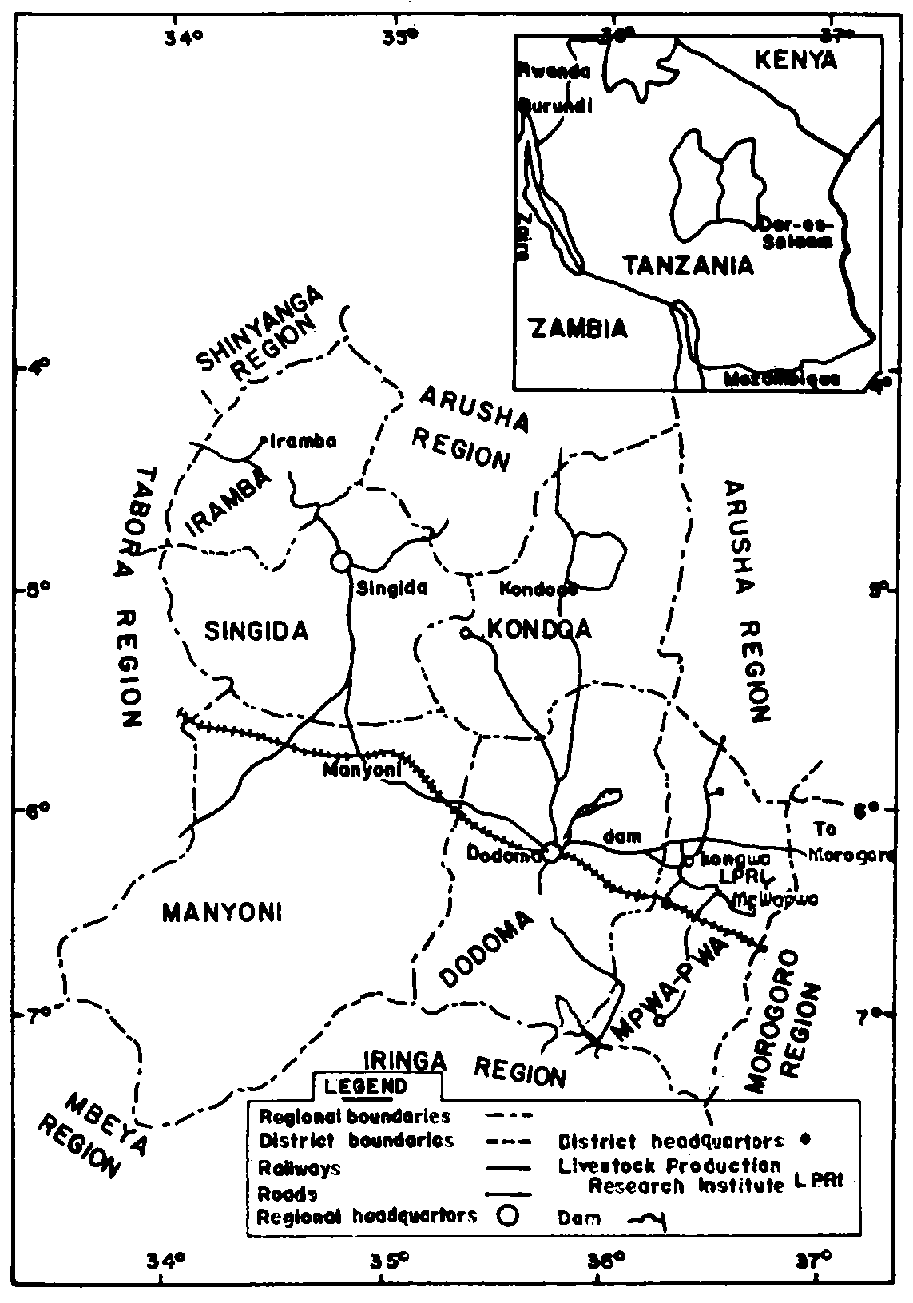
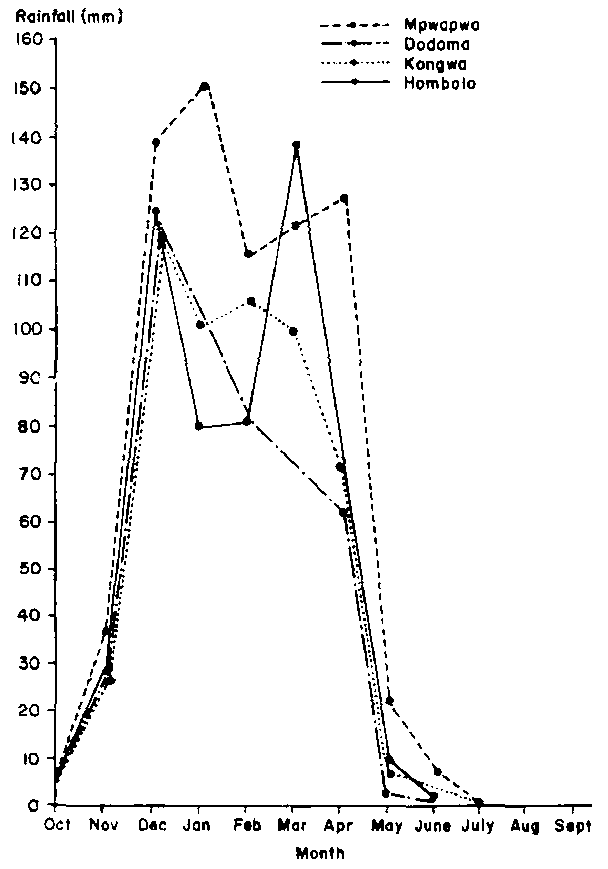
Central Tanzania covers an area of 140,000 km² in the central semi-arid plateau, between latitudes 4° and 7°S and longitudes 33° and 37°E (Figure 1). The plateau lies at an elevation of 750-1500 m, the eastern boundaries of which are steeper escarpments rising to 1750 m above sea level. The area has a dry savannah type of climate with a long dry season between April and November, and a short wet season from November to April (Figure 2). The total annual rainfall ranges between 250 mm to 750 mm with an average of 600 mm. The distribution is very erratic and reliability is low. Average temperatures are 20-25°C with a diurnal range of 12°C. Apart from the extensive areas of alluvium the two main soil types are a greyish sandy and red sandy loam textured. Severe leaching and laterisation are a common feature of the area. Natural vegetation consists of a dense deciduous thicket with Commiphora and Acacia as the dominant genera.
Typical of semi-arid areas most of the land is of marginal agricultural productivity with the exception of small pockets of high potential along the eastern boundaries. The dwellers are agro-pastoralists integrating crop production and livestock keeping in different degrees depending on socio-economic and cultural situations. According to the 1984 human population census, there are over two million people of various ethnic, groups namely: Gogo, Nguu, Hehe, Nyaturu, Nyiramba, Kaguru and Rangi. All these groups are of Bantu origin with an exception of a few pure Hamites, Maasai and Barbaig who have migrated from the neighbouring regions. The population is sparsely distributed in the area except for the few areas of higher soil fertility.
Figure 1. Central zone of Tanzania (Singida and Dodoma regions).
Figure 2. Average rainfall distribution (1974 1984), Dodoma region.
Adoption of improved technology in agricultural production is minimal, and very low investments are put into the sector. Consequently, production coefficients both in cropping and livestock farming are low. Land productivity potential, however, is higher for extensive livestock production than for cropping. The area has over 15% of the national ruminant population. Moore (1971) reported that whereas 88% of the land is used for grazing, only 10% is used for cropping. Consequently, livestock is an important resource which if well tapped can improve the standard of living of the people.
The production coefficients of cattle in the area have been reported to be generally low; calving rate of females over three years old of 45%, calf mortality to one year of age of 12%, mortality of other cattle of 10%, selling age of males of seven years and a market offtake of 13% (Stockes, 1976). Major problems of this extensive livestock production system are seasonal shortages of good quality feed and lack of acceptable range management practices. However, given the nature of the livestock production systems which produce several products and use many resources, a thorough description of the system is a pre-requisite to testing of any improvement strategies.
A team of scientists from the Tanzania Livestock Research Organization (TALIRO) formulated a Farming Systems Research (FSR) project entitled "Improvement of Animal Production Systems in Central Tanzania". The main objective of the project was to gain an understanding of the existing livestock farming system and develop improved pasture management, livestock feeding, herd composition and management practices that are acceptable to farmers in the traditional sector of Central Tanzania (Anon, 1986). This paper attempts to describe and discuss the livestock feeding aspects of the study area as drawn from a diagnostic survey of Mpwapwa District.
The diagnostic survey work was carried out in the 1985/86 growing season following the FSR methodology. Collation of background information was followed by an informal survey which resulted in stratification of the study area into three zones from which villages and households for formal survey were selected. There were three villages from each zone and 5% of the village households were interviewed using a structured questionnaire. The questionnaire was designed to cover all aspects of the farming system e.g. socio-economic background, cropping pattern, livestock species kept and livestock management practices (Anon, 1986). More emphasis was placed on livestock enterprise. Trained enumerators with certificate level of education in agriculture were used. A total of 152 questionnaires were filled in from the nine villages.
The data were coded, tabulated and analysed using hand calculators.
Main Features of the Farming System
From survey data, the main ethnic groups in the area were Gogo 44%, Kaguru 25% and Hehe 21%. Forty-one percent of the respondents had been living in the area for over 25 years whereas 47% had moved in during the national villagisation "Ujamaa" programme (1970-1974). It was revealed that the farmers in the area were agro-pastoralists with over 99% of the respondents keeping livestock as well as engaging in crop farming.
The farm plots were fragmented, the highest number of farm plots per household in the last growing season being six, and on average the furthest farm plots were 4.63 km from the homesteads. The average total hectarage was 5 ha, which may be considered to be rather large given the low level of mechanisation involved. Survey reports in other smallholder systems have reported farm sizes of 3.23 ha and 2.4 ha for draft cattle owners and non-owners respectively (Anon, 1982). A survey carried out in Northern Tanzania indicated the majority of farmers to own 1.2 ha of land (Urio and Mlay, 1984). The tendency for farmers in Central Tanzania to own large farm plots may be explained by the relatively low labour requirement in the preparation of seed beds in this area.
Ninety-two per cent of the respondents acquired their cropping land by clearing bush, thus individual land ownership is temporal. This reflects the existing land tenure system which is further indicated by the farmers' responses on the adequacy of grazing land. The majority of the respondents indicated that grazing land was abundant. However, the responses may be biased in view of the existing free movement of livestock from one area to another without limitation.
As indicated by the secondary information, adoption or use of improved technologies in agricultural production was found to be negligible. Only 1% and 6% of the respondents had used tractors and draft power respectively in the previous cropping season. Agricultural production was mainly for subsistence. Seven percent of the respondents said they would sell their surplus yields, and the main source of cash income for the majority (79%) was livestock sales. Hence, food ranked first (35%) in the expenditure list, followed by clothing (32%) and crop farming (18%).
The livestock species kept were cattle, goats, sheep, donkeys, pigs and poultry. On average one farmer kept 38 head of cattle, 18 goats, 7 sheep, 4 donkeys and 17 chickens. The cattle kept had been acquired through inheritance, exchange of smallstock with grain, dowry or direct purchasing. There were high variations in herd sizes across the area, the majority (76%) having between 10 and 60 head of cattle. The herd sizes declared by the farmers were lower than those reported in the literature and from general observation. The discrepancies may have been due to the well known reluctance of pastoralists to reveal such information to strangers.
Grazing Lands and Feeding Strategy
Herding is the main method of supplying feed for the ruminant population in the study area. The operation is carried out by adult male members of the household. It was evident that herding is a well-planned activity among the livestock keepers. Some farmers indicated herding their animals collectively while others did it individually. In most cases there is strategic herding to combat cattle rustling which was indicated to be a common problem among the livestock keepers (72% n = 152).
Describing the grazing lands of the study area can be quite difficult for researchers. For instance, there were no clear cut boundaries between the cropping land and the grazing lands. Moreover, after crop harvest the crop fields turn into grazing lands. The herdsman, however, could identify their specific grazing areas, and grazing in crop fields was considered to be feed supplementation. Follow-up observation on the grazing pattern revealed that the individual or group herds were grazed in specific areas. Grazing times are determined by the herdsman, basing it on the animal behaviour. Discussion with the herdsman revealed that they had a good knowledge of the rangeland, could tell the most palatable species and that the choice of grazing areas was based on their knowledge and experience.
The main grazing lands are in the secondary thicket which is an open community that has invaded abandoned crop land as a consequence of the shifting cultivation common in the area. It is composed of a mixed association of grass species and herbs. The common grass species were: Urochloa trichopus, Dactyloctenium sp., Aristida sp., Eragrostis sp. and Chloris virgata. Perennial grass species found in isolated areas were: Cynodon sp., Cenchrus sp., Hyparrhenia sp. and Panicum sp. Identified annual herbs included Astripomoea sp., Crotalaria sp., Commelina sp., Cleome sp. and Ipomea sp. The common perennial weeds were: Solanum pandoroeforme, Sida grewiodes and Tephrosia incana while common thicket species were Cassia sp., Croton sp. and Acacia sp. Most of the vegetation including weeds and shrubs were readily eaten by all classes of stock, a feature common in most semi-arid areas (Dyne et al., 1984).
The common grass species are generally known for their low nutritive value. Work done by Karue (1974) indicated that most of the grass species cannot meet the nutrient requirement of the ruminant animals. He deduced that even the best of grasses notably Cynodon dactylon and Digitaria setivala could only supply about 30% of the protein required by the beef animal. This can lead one to conclude that the shrubs, weeds and other forage play a big role in the nutrition of the animals. In recognition of this, herdsman cut down branches of browse for easy access to the animals.
Availability and quality of the feed resource fluctuates during the year between the wet and dry seasons respectively. While in the wet season forage is abundant, in the dry season it is both scanty and poor in quality. Various strategies are adopted by the herdsman in overcoming feed shortage problems in the dry season. Of main importance is the grazing in the crop fields after the harvest to utilise crop residues. About 60% of the respondents indicated doing so. A smaller proportion (40%) indicated burning; leaving the crop residue in the field and burning it when preparing land for the next growing season. In practice most of the residue is utilised by the animals, for no fencing was observed in the crop fields. Some farmers were reluctant to allow grazing in crop fields allegedly because it would result in reduced crop yield. Collection of crop residues for feeding was not a common practice probably because of limitations of transport.
In summary, crop residues play an invaluable role in dry season for it is only when it is exhausted that herdsman opt for other strategies. These include movement of animals to distant grazing lands for varying periods depending on the severity of dry periods: this involves a daily trekking of animals to distances as long as 6 km or more in search of pastures and water.
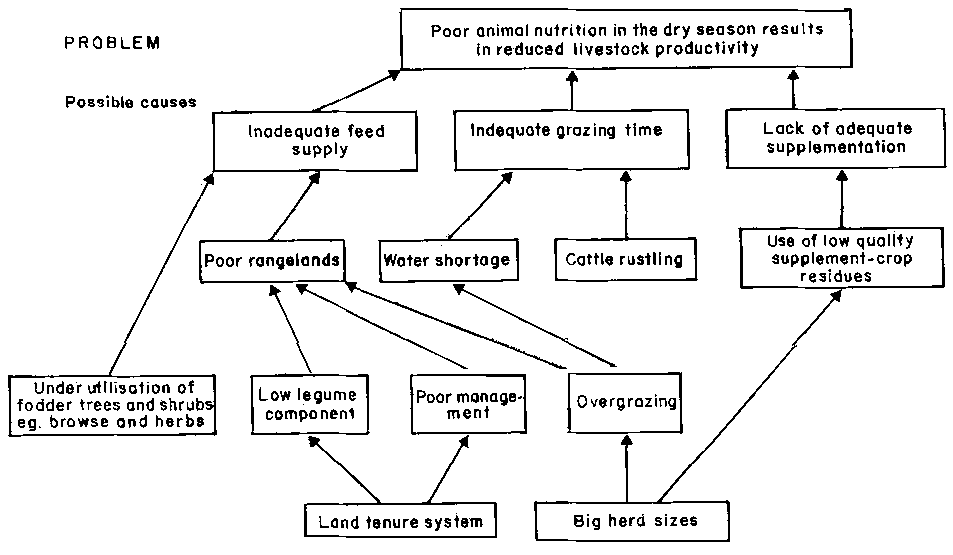
Poor animal nutrition particularly in the dry season came out as one of the major constraints to livestock productivity in the study area. This view is supported by the low milk production in the dry season. Whereas, 1.4 litre per cow per day could be produced in the wet season, milk production in the dry season was negligible. The slow growth rates leading to attainment of mature weights in seven years could partly be due to poor nutrition also. Furthermore, movement of animals to distant grazing areas in the dry season results from the feed shortages. This problem can be described with the causes shown in ovals diagrammatically (Figure 3). There can be many causes to this problem and some of the causes are interrelated. Three major causes to the problem have been identified in the current study: inadequate feed supply, inadequate grazing time and lack of adequate supplementation.
Figure 3. Diagrammatic representation of poor animal nutrition.
The main causes could be further analysed to the root causes which can be used to identify research opportunities. Some of these could be difficult for researchers, for instance the big herd sizes, the land tenure system, cattle rustling and water shortage. These would require a closer relationship between researchers, policy makers and other national development agencies. On water shortage, improvement of the environment through afforestation programmes and use of water harvesting technologies could alleviate the problem. Water conserving fruits e.g. watermelons are being used by some farmers for feeding sensitive classes e.g. calves and sicklings. Wider use of these could also reduce the problem but this has to be directed to specific classes depending on production targets.
Various techniques for improving rangelands have been suggested and some tested by range scientists. However, as Nestel et al., (1973) correctly puts it, "the major constraint lies in introducing change into the existing socio-economic systems, exacerbated by inexperience in adopting technology to suit local conditions". Exploitation of fodder trees and shrubs might involve introduction of more drought resistant and high quality species. The FSR team working on the research area is trying to introduce browse spp. such as Desmanthus virgatus, Leucaena leucocephala, Sesbania sesban, Sesbania spinosa and Rhynchosia senaarensis. However, a parallel comparative study of the nutritive value of the indigenous and introduced browse species is worthwhile for the former is already adapted. Information on the potential of the browse spp. as a forage resource in the area is scanty and most of the research work on this has not been conclusive (Kabatange et al., 1984). Its establishment might raise some problems because of the existing land tenure system. Furthermore, to introduce these as fodder banks might involve transportation which will again require wider use of draught power. As noted earlier, the use of draught power was not common particularly for the Gogo ethnic group who own the largest proportion of the cattle. Compassion is the main latent reason for not using animals for draught power.
Improvement of the natural rangelands by introduction of drought resistant better quality grass genera such as Cenchrus and Cynodon would be a good alternative, but the problem of land tenure would limit its success. However, such introductions could be effected in the terminal year of cropping before the farm is left fallow. Another alternative is to improve the nutritive value of crop residues with minimal investment. This has been a subject of discussion (with ILCA scientists probably leading the way), and a number of field experiments have given positive results (Butterworth and Mosi, 1986: Saleem, 1985). These experiments have been based on inclusion of annual legumes in the crop fields. Of importance to consider here is the time to undersow the legume in relation to grain yield and farmer labour requirements.
The main grain legume in the study area was groundnuts. This legume is harvested earlier than the cereal, and the method of harvesting i.e. uprooting the whole plant, does not make it a good legume for consideration. Furthermore, since the crop is harvested when the shoot is green and it is piled up, in most cases it gets mouldy and might not be a good supplement. Other common legumes grown in the area are cowpea and Lablab spp. Since the leaves of cowpeas are used as a vegetable, Lablab spp. remain the best alternative. Thus, inclusion of this legume in the cropping systems and its effect on crop yield, quality of stover and livestock productivity could be investigated.
The authors wish to thank the PANESA 1987 workshop organising committee for the invitation and permission to present the paper at the workshop. We are thankful to the Director General of TARILO for permission to attend the workshop. We are indebted to IDRC and World Food Programme (Tanzania) for funding the FSR Project. Finally we acknowledge the Livestock Production Research Institute FSR project executing team for their contribution to the work reported.
Anon. 1982. Demonstrations of an interdisciplinary approach to planning adaptive research programmes. Report No. 5. RSS, Ministry of Agriculture, Zimbabwe.
Anon. 1986. Annual Report 1985/86. Livestock Production Systems (Tanzania) Project. Tanzania Livestock Research Organisation/IDRC.
Butterworth, M.H. and Most, A.R. 1986. The voluntary intake and digestibility of combinations of cereal crop residues and legume hay for sheep. ILCA Bulletin 24:14-17.
Dyne, G.M. van, Burch, W., Fairfax, S.K. and Huey, W. 1984. Forage allocation on arid and semi-arid public grazing lands: Summary and Recommendations. In: Development strategies for rangeland management. National Research Council, Westview Press, Boulder, Co., USA.
Kabatange, M.A., Rukantabula, A.A. and Kitalyi, A.J. 1984. Research experience on feeding of livestock in the dry season at Mpwapwa. Proceedings of a seminar held at Livestock Production Research Institute (LPRI), Mpwapwa, Tanzania, September 20-22, 1984.
Karue, C.N. 1974. The nutritive value of herbage in semi-arid lands of East Africa. 1. Chemical composition. E. Afr. Agric. J. 40:89-95.
Moore, J.E. 1971. Rural population carrying capacity. BRAIUP Research Paper No. 18, University of Dar-es-Salaam, Dar-es-Salaam, Tanzania.
Nestel, B., Pratt, D.J., Thome, M. and Tribe, D.E. 1973. Animal production and research in tropical Africa. Report of the task force commissioned by the African Livestock Subcommittee of CGIAR. Washington D.C.
Saleem, M.A.M. 1985. Effect of sowing time on the grain yield and fodder potential of sorghum undersown with stylo in the subhumid zone of Nigeria. Trop. Agric. (Trinidad) 62 (2).
Stockes, K.W. 1976. Livestock marketing existing situation and recommendations for change. Proceedings of the Third Scientific Conference of Tanzania Society of Animal Production Mwanza, 17-19 May, 1976. Dar-es-Salaam, Tanzania.
Urio, N.A. and Mlay, G.I. 1984. Dairy feeding systems (Tanzania) progress report on diagnostic survey among small holder farmers in Hai, Morogoro, Tanzania.