G. Tarawali, M.A. Mohamed-Saleem and R. von Kaufmann
International Livestock Centre for Africa
Subhumid Zone Programme, Kaduna, Nigeria
Introduction
The fodder bank concept
Methodology
Results
Discussion
Conclusion
References
Abstract
There is a critical shortage of crude protein in fallow and range grazing during the dry season in the subhumid zone of Nigeria. Supply shortages and high cost preclude the use of purchased feed and research was directed towards the production of forage legumes.
A package for creating fenced legume pastures ('fodder banks') has been developed, but since most land is owned by cultivators who do not keep cattle, pastoralists have found it difficult to find the necessary land.
Productivity of the pasture is reduced over time by the build-up of soil nitrogen that encourages invasion by nitrophilous grasses, thereby excluding the desired legume species. This build-up can be reduced by periodic cropping with nitrogen-demanding cereals in order to favour legume dominance. The cereals used for this purpose yield better than natural fallow because of the nitrogen and other improvements in the characteristics of the soil.
This situation can be exploited to increase crop/livestock integration even where they are generally practised by different groups; in this case, farmers and pastoralists. The present paper describes a study carried out to test the hypothesis that legume-based cropping is beneficial.
The ILCA Subhumid Programme, adopting a farming systems research approach, identified poor nutrition in the dry season as the main constraint to cattle production in the Subhumid zone of Nigeria. During this period, the natural pasture is not only scarce but also poor in quality, with a crude protein (CP) content of about 3%. This is below the critical 7% CP level required in the diet of ruminants. Cattle may lose up to 15-20% of their body weight during this season (Otchere, 1986). Also, milk yields are low, calf mortality is high and many cows are unable to conceive because of nutritional anoestrus.
A contributory factor to the low quality and productivity of the herbage in the Subhumid zone is the poor nature of savanna soils. Intensive methods of agricultural production such as continuous cropping, land clearing and mechanised farming lead to nutrient losses through soil erosion, runoff and leaching. The organic matter of these soils is very low because the poor savanna vegetation contributes very little to the soil to replenish the fast decomposing organic matter. Burning and the removal of crop residues from the site for livestock feeding aggravate the situation.
Any attempt to promote livestock production in the subhumid zone should therefore consider a programme of soil fertility maintenance in addition to improving the nutritional value of the pasture. For instance, the poor carbon and nitrogen content of these soils could be improved by the incorporation of forage legumes into the cropping and fallow systems. The use of agro-industrial by-products such as cottonseed cake, groundnut meal, urea and molasses can improve the productivity of lactating and pregnant cows. However, supplies of these feeds are not readily available and prices are escalating. In view of these ecological and financial constraints, ILCA considered a sustainable enterprise such as planted forage legumes (fodder banks) to be a more appropriate long-term option.
Research is being conducted in three main case study areas. Kurmin Biri is a grazing reserve established by the government to assist pastoralist settlement. Abet is an intensively cultivated area where pastoralists settle amongst the arable farmers who are the landowners. Ganawuri is also intensively cultivated but by mixed farmers, who own both land and cattle.
A fodder bank is a concentrated unit of forage legumes established and managed by pastoralists near their homesteads for the dry season supplementation of selected animals. These legumes can fix soil nitrogen, and the protein content can stay above 8% for a greater part of the dry season. At present, Stylosanthes guianensis cv Cook and S. hamata cv Verano are the two main species recommended.
The guidelines for the establishment, management and utilisation of fodder banks are as follows:
(a) Depending on availability of land and number of animals, select an area (normally about 4 ha) close to the homestead.(b) Prepare the seedbed by confining a herd overnight in the area for several weeks.
(c) Broadcast scarified seeds mixed with 150 kg/ha of single super phosphate fertilizer.
(d) Control fast-growing grasses by early season grazing.
(e) Allow the forage to bulk up by deferring grazing until the dry season.
(f) Ration the fodder bank by selecting the appropriate type and number of animals and limiting grazing to 2.5 hours per day.
(g) Ensure sufficient seed drop and adequate stubble for stylo regeneration in the following season.
Experiments have shown that supplementary feeding with 1 kg of cotton-seed cake (crude protein - 30%) daily, maintained the bodyweight of Bunaji cows throughout the dry season (Otchere 1986). It was predicted that cattle fed with 2.5 kg of dry stylo (crude protein = 12%) would derive similar benefits. With a potential stylo dry-matter yield of 4 to 5 tonnes per hectare, it was estimated that a 4-ha fodder bank should adequately meet the supplementary requirements of 15-20 pregnant and lactating cows for the six-month dry season if grazing is limited to 2.5 hours a day.
Benefits of the Fodder Bank
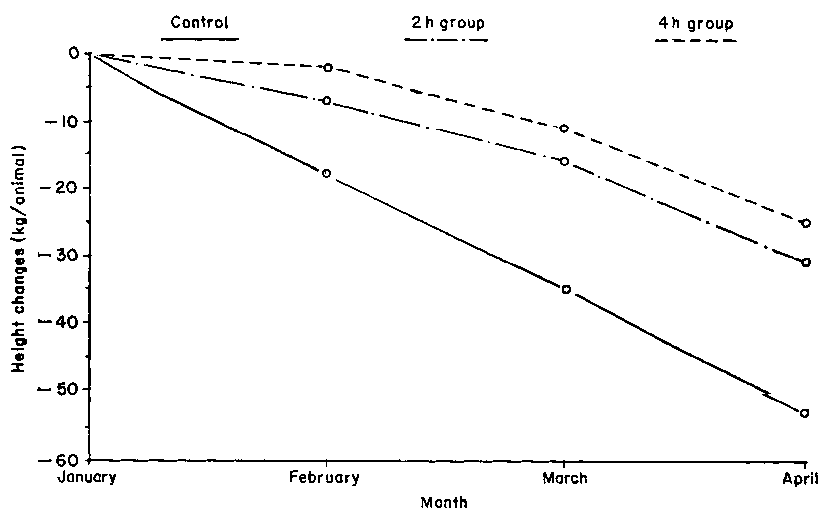
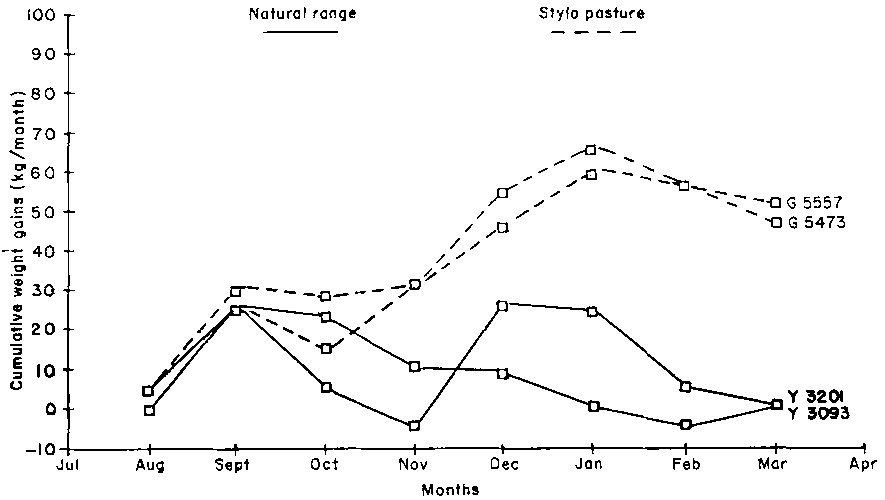
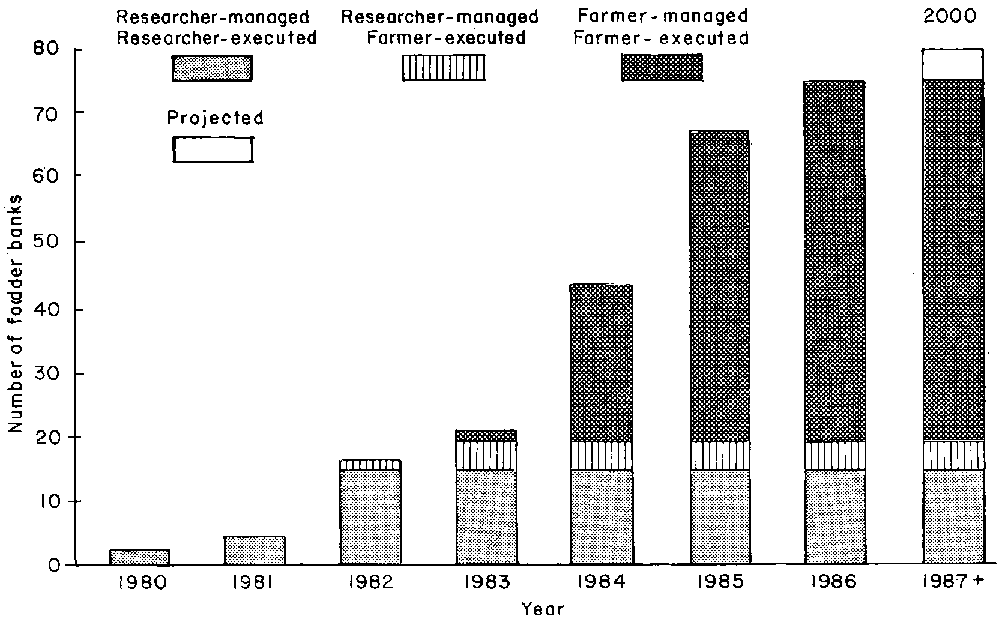
Animals with access to fodder banks in the dry season of 1983 produced more milk, lost less weight and their calves survived better (Bayer, 1986: Figures 1 and 2). This is supported by evidence from the comparison of herds with and without fodder banks (Table 1). The advantages of owning fodder banks is acknowledged by cattle owners as evidenced by an increase in the number of fodder banks in the subhumid zone from two in 1980 to 77 in 1986 (Figure 3), and financial support has been provided by the World Bank for the establishment of an additional 2000 fodder banks over the next five years.
Table 1. Effect of dam supplement.
|
Trait |
No supplement |
Supplement |
Improvement |
|
Cow survival (%) |
92.2 |
96.0 |
4.1% |
|
Calving percentage |
53.8 |
58.1 |
8.0% |
|
Calf survival (%) |
71.8 |
86.3 |
20.2% |
|
Calf weight at 1 year (kg) |
98.1 |
103.4 |
5.4% |
|
Lactation yield (kg) |
300.2 |
312.5 |
4.1% |
Source: Mani (1986).
Major Constraints to Fodder Bank Expansion
Social problems (land tenure system)
Among the three basic resources (land, labour and capital) required for the development of fodder banks, the difficulty of acquiring land by pastoralists has been identified as the most important limiting factor. The FulBe agropastoral cattle owners who were the original target group have no legal land rights in this part of the zone. Most indigenous farming communities generally have no direct interest in cattle production.
Figure 1. Weight changes of cattle in 1983/84 dry season grazing trial in Kurmin Biri.
Figure 3. Number of fodder banks under different levels of management.
Source: Mohamed-Salem (1986).
FulBe who are willing to settle on government grazing reserves find it easy to obtain land for fodder banks but there is only a limited number of grazing reserves. Most agropastoralists actually prefer to settle near crop farmers to have access to crop residues, better marketing facilities and social services. With an expanding population and consequent increasing demand for land for cropping, the pastoralists will face greater difficulties because the farmers retain the best crop land for themselves.
Moreover, they are typically reluctant to lease their unused land to cattle owners for pasture development because of their tedious procedures and safeguards that have to be negotiated under customary law. In certain areas, pastoralists are worried that farmers will go to the extent of hindering cattle owners from acquiring individual pasture plots even in grazing reserves. This clearly indicates that fodder bank technology will not be as widely adopted as desired in the subhumid zone unless it is of significant benefit to the farmers, as well as to the livestock.
Ecological problems (nitrophilous grasses)
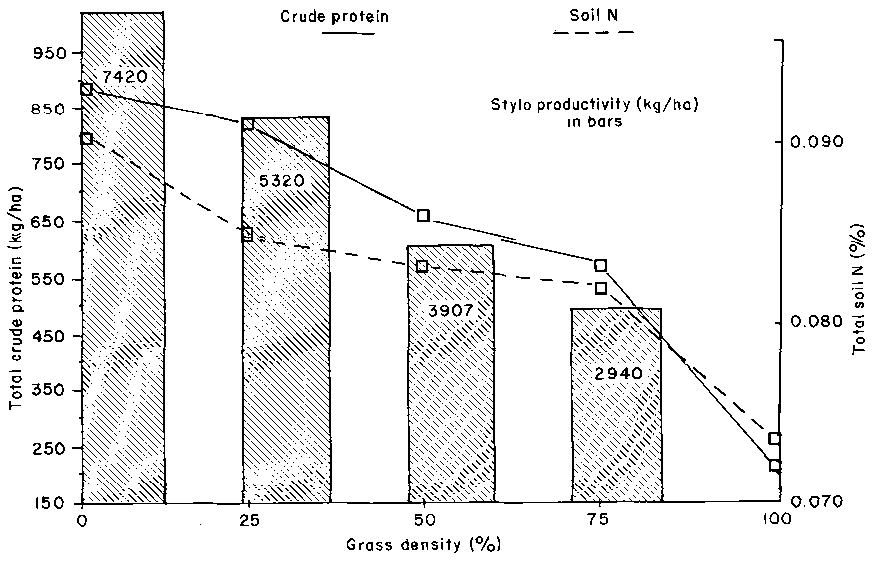
Invasion of leguminous pastures by nitrophilous grasses (Gardner, 1984) reduces fodder bank productivity over time. This is because such pastures accumulate soil nitrogen through fixation of atmospheric N (Vallis and Gardner, 1984) which makes nitrophilous grasses very competitive. Since grasses grow faster than legumes, the latter are likely to be smothered, thereby lowering the nutritional value of the pasture especially if the grasses are not controlled. This was observed in a four-year-old S. hamata cv Verano fodder bank in the Kachia grazing reserve, which showed a rapid build-up of fast-growing grasses (Table 2). In a one-year-old fodder bank, stylo productivity, soil N and crude protein declined with an increase in grass density (Figure 4). In Thailand, mixed legume/Setaria sphacelata swards changed from legume dominance to grass dominance within two years (Andrews and Gibson, 1985). This implies that a system must be devised whereby the excess N can be periodically flushed out to check the invasion of nitrophilous grasses.
Cropping as a solution
Cropping uses the accrued N. thereby restricting the growth of nitrophilous plants and favouring the legume component of the pasture. Nitrogen is the most limiting element for cereal crops and one of the most expensive fertilizers (FAO, 1984). Exploiting legume-fixed nitrogen through cropping will, therefore, interest the farmers and will encourage them to lend their land more readily to the FulBe for pasture development.
Previous work on legume-based cropping (Mohamed-Saleem, 1986) showed that maize-growing on fodder banks of various ages produced higher grain yields than on previously cropped and uncropped soils. Improvement in fertility and physical properties of the soil contributed to the increase in yield within the stylo area. Measurements on soils where the above experiments were carried out showed differences in bulk density, gravel, organic matter and nitrogen contents. ILCA's approach is to exploit this feature in order to encourage farmers to cooperate more readily with pastoralists seeking land for stylo establishment. Moreover, once the arable community recognises Stylosanthes as a soil conditioner, it will command the same care and respect as that given to crops. This will also indirectly alleviate problems such as the deliberate burning and indiscriminate grazing of fodder banks.
Table 2. Frequency distribution (%) of major grasses in a four-year S. hamata cv Verano fodder bank at Kachia grazing reserve.
|
Species |
Natural vegetation |
Fodder bank |
|
Andropogon spp. |
6.2 |
13.3 |
|
Brachiaria spp. |
8.3 |
|
|
Digitaria spp. |
0.8 |
|
|
Hyparrhenia spp. |
11.4 |
16.1 |
|
Loudetia spp. |
40.7 |
4.0 |
|
Panicum spp. |
0.8 |
|
|
Paspalum spp. |
1.4 |
0.4 |
|
Pennisetum spp. |
|
0.5 |
|
Setaria spp. |
0.6 |
0.8 |
|
Others |
24.4 |
5.6 |
|
Legume |
|
|
|
S. hamata cv Verano |
|
59.3 |
Source: Mohamed-Saleem et al (1986).
A study was conducted during the 1985 growing season at Abet (9° 30'N, 8° 25'E, rainfall 1300 mm between April-October), one of ILCA's case study areas. Two fodder banks of Stylosanthes hamata cv Verano established three and four years previously and grazed during all consecutive dry seasons, were identified. Four plots each of 15 m x 10 m were laid out inside each fodder bank. The plots were set up in sites in which the legume component was representative of that found in fodder banks of the subhumid zone (50-60% stylo). Each plot formed a replication. Comparable plots which had remained as natural grass fallow for at least four years were also demarcated immediately outside the fodder banks.
The plots were ridged to a height of 30 cm in May at one-metre intervals and planted with three maize seeds (Variety TZPB) per hole at a spacing of 0.25 and thinned to one seedling after emergence. A uniform dose of N. P and K at the rates of 60, 60 and 60 kg/ha, respectively was applied as compound fertilizer (N P15 K15) prior to planting and another 60 kg N/ha as urea was applied six weeks later. Plots were weeded five and eight weeks after sowing. At harvest, the cobs were first plucked then dehusked, dried and shelled to determine the grain yield. The stalks were cut and dried at 80°C to determine the dry weight of the crop residues. All data collected were analysed according to variance technique.
The grain yield and crop residues of the maize planted inside the fodder banks almost doubled that of maize sown outside the fodder banks (Tables 3 and 4).
Table 3. Grain yield (kg/ha) of maize growing inside and outside two fodder banks in Abet.
|
Location |
Site 1 |
Site 2 |
Mean |
|
Inside |
4785 |
4533 |
4659 |
|
Outside |
2411 |
2679 |
2545 |
|
LSD (0.01) |
452 |
235 |
- |
Table 4. Crop residue yield (kg/ha) of maize growing inside and outside two fodder banks in Abet.
|
Location |
Site 1 |
Site 2 |
Mean |
|
Inside |
7212 |
7586 |
7399 |
|
Outside |
4018 |
4523 |
4271 |
|
LSD (0.01) |
2331 |
592 |
- |
Even at the vegetative growth stages it could be seen that the maize planted in the legume-based soils was performing better than that grown on natural fallow. These visible differences led to the organisation of a field day for over 100 farmers and pastoralists in Abet on 12th August, 1985. They were quick to note the superior growth of maize inside the stylo area. The incremental income to farmers growing crops in fodder banks in Abet would be 124% of normal crop revenue resulting from a natural fallow (Kaufmann and Blench, 1986).
Despite years of contact with fodder banks, the demonstration trials enabled farmers for the first time to see in a direct, visual manner that legume-based pastures can be exploited for crops as well as livestock. As a result, farmers asked for Stylosanthes pastures to improve soil fertility in their fallows. Five of these have been established and more farmers are becoming interested in the package (Table 5). Initially, the small hectarage will be used for improving feed for small ruminants, but later it is hoped that the farmers will see the advantage of letting pastoralists seed and manage larger areas for them.
Table 5. Fodder banks for small ruminants in Abet.
|
Farmer agro-pastoralist |
No. of ruminants |
Size of fodder bank (ha) |
Productivity (kg/ha) |
% Stylo |
|
Magaji Bala |
8 |
0.1 |
3,604 |
58 |
|
Bayei Kaburuk |
7 |
0.1 |
3,589 |
60 |
|
Tanko Agau |
4 |
0.05 |
2,614 |
42 |
|
Achie Gariya |
6 |
0.05 |
2,832 |
52 |
|
Bammi Buldi |
30 |
1.0 |
4,836 |
62 |
There already exist farmer-pastoralist exchange relationships whereby pastoralists charge lower rates for manuring fields to farmers who ensure them first access to crop residues. At other times farmers arrange for herds of pastoralists to fertilize crop fields, so as to enjoy the benefit of cropping the area during the first year. In return, the pastoralists are allowed to cultivate the areas in subsequent seasons. This symbiosis could be developed further by incorporating forage legumes. The farmers could lend their fallow land to pastoralists for the establishment of fodder banks and thus improve their crop yields at the same time.
Future work will include the determination of the minimum area required to produce fodder that will support the average number of small ruminants kept by farmers. Management guidelines for the utilisation of the fenced pastures for both wet and dry season supplementation will be worked out. Also, the contribution of stylo to soil fertility and the performance of animals grazing on the fodder banks will be monitored.
Studies of the response of cereals to fixed nitrogen in fodder banks will be continued for newly opened and continuously cropped stylo soils in order to determine the most responsive crop and the fertilizer/labour requirements for cropping such soils. A crop-legume rotational system will be introduced in the larger (4 ha) fodder banks.
Stylosanthes-based cropping serves the dual purpose of maintaining forage quality and improving crop yields. Thus, it can benefit both farmers and agropastoralists. Cropping stylo areas, hitherto considered as optional in fodder bank management, should now be regarded as an essential practice.
Farmers and agropastoralists in Kurmin Biri, Abet and Ganawuri (ILCA case study areas) have seen this potential for cropping stylo areas. Since tilling these soils does not require more labour than a natural fallow (Tarawali et al., 1986) they have started to crop part of their fodder banks and legume fallows. While Stylosanthes pastures were originally meant to promote livestock production, their continued spread across the subhumid zone will be a boost to crop production as well.
Andrews, A.C. and Gibson, T.A. 1985. Adaptation of improved pasture species in the Highlands of Northern Thailand. 2. The 800 m Zone. Tropical Grasslands 19:17-24.
Bayer, W. 1986. Utilization of fodder banks. In: R. von Kaufmann, S. Chater and R. Blench (eds), Livestock systems research in Nigeria's subhumid zone. Proceedings of the Second ILCA/NAPRI Symposium held in Kaduna, Nigeria, 29 October-2 November 1984, ILCA, Addis Ababa. pp. 351-364.
Food and Agricultural Organization of the United Nations. 1984. Legume inoculants and their use. A pocket manual jointly prepared by Nitrogen Fixation for Tropical Agricultural Legumes (NifTal) Project, USA and FAO Fertilizer and Plant Nutrition Services, Land and Water Development Division in association with FAO Crop and Grassland Production Service, Rome.
Gardner, C.J. 1984. The dynamics of Stylosanthes pastures. In: H.M. Stace and L.A. Edye (eds), The biology and agronomy of Stylosanthes. Academic Press, Australia. pp. 334-356.
Kaufmann, von R. and Blench, R. 1986. The subhumid zone of Nigeria: A systems study. The Subhumid Zone Programme, ILCA, P.M.B. 2248, Kaduna, Nigeria.
Mani, R.I. 1986. Cattle productivity. Paper presented to ILCA External Programme Review (8-10 April). ILCA subhumid Zone Programme, P.M.B. 2248, Kaduna, Nigeria.
Mohamed-Saleem, M.A. 1986. Integration of forage legumes into the cropping systems of Nigeria's subhumid zone. In: R. von Kaufmann, S. Chater and R. Blench (eds). Livestock systems research in Nigeria's subhumid zone. Proceedings of the second ILCA/NAPRI Symposium held in Kaduna, Nigeria, 30 October - 2 November, 1984. ILCA, Addis Ababa. pp. 304-325.
Mohamed-Saleem, M.A., Suleiman, H. and Otsyina, R.M. 1986. Fodder banks: For pastoralists or farmers. In: I. Haque, S. Jutzi and P.J.H. Neate (eds), Potentials of forage legumes in farming systems of sub-Saharan Africa. Proceedings of a Workshop held at ILCA, Addis Ababa, Ethiopia, 16-19 September 1985. ILCA, Addis Ababa. pp. 420-437.
Otchere, E.O. 1986. The effects of supplementary feeding of Bunaji cattle in the subhumid zone of Nigeria. In: R. von Kaufmann, S. Chater and R. Blench (eds), Livestock systems research in Nigeria's subhumid zone. Proceedings of the Second ILCA/NAPRI Symposium held in Kaduna, Nigeria, 30 October-2nd November, 1984. ILCA, Addis Ababa. pp. 204-212.
Tarawali, G., Mohamed-Saleem, M.A. and von Kaufmann, R. 1987. Comparison of labour requirements for cropping maize on land previously used for Stylosanthes fodder banks and on adjacent fallows in the subhumid zone of Nigeria. ILCA Bulletin 26:36-39.
Vallis, I. and Gardner, C.J. 1984. Nitrogen inputs into agricultural systems by Stylosanthes. In: H.M. Stace and L.A. Edye (eds), The biology and agronomy of Stylosanthes. Academic Press, Australia. pp. 359-379.