Safietou Fall
ISRA LNERV
BP 2057, Dakar, Senegal
Abstract
Introduction
Constraints to on-farm urea utilisation in sahelian countries
Conclusion
Constraint to utilisation of browse plants in the diet of ruminants in the sahel
Conclusion
General conclusion
References
The problem of protein supply for livestock traditionally-raised in the Sahel and the constraints to using urea and browse plants at the farmer's level has been highlighted.
In the case of utilising urea either as non-protein nitrogen source or as a reagent for low quality roughage treatment, the constraints involve its unavailability in rural areas, difficulty in handling this potentially toxic compound, water shortage and the low educational level of farmers in the Sahel.
The main constraints to browse utilisation are in relation to optimal range management and environment preservation. Some technical points such as selection of species, their secondary productivity and toxicity, remain to be clarified by more research.
The education of farmers is of major importance in the introduction of the new feeding techniques.
Bioclimatic constraints are still the main limiting factor to availability of feeds for ruminants in the Sahel.
The dissemination of available research results which propose well-adapted solutions to these constraints is of particular urgency.
Cereals and high energy nitrogen concentrates remain costly not to mention problems of transport and of competition for livestock with alternative usages. Some agro-industrial byproducts with high nutritive value are exported consequently making their availability scarce.
In Sahelian countries, therefore, ruminant feeding systems are naturally based on natural pastures and low quality roughages like cereal straws which are good sources of cellulose but low in digestible nitrogen (see Table 1). Chemical and/or physical treatment including nitrogen, energy and mineral supplementation are indispensable for optimal utilisation of low quality roughages.
Among nutritional constraints, protein deficiency appears to be one of the most important. Protein sources are expensive and some proposed solutions involving utilisation of oil meals and cereal brans seem to have poor applicability for large-scale extensive livestock production. Therefore urea and browse plants could be used as locally available and cheaper nitrogen sources.
For more than 50 years, research work on protein in the nutrition of ruminants has identified urea as the most promising chemical for cereal straw quality improvement and non-protein nitrogen supplementation (Jackson, 1979; Sundstol, 1984). However the dissemination of research results concerning African traditional livestock have been poor.
Browse plants are other readily available sources of protein in pastures. During the dry season, browse plants could constitute as high as 50% of the diet of cattle. In the case of small ruminants browse plants could constitute around 80% of their diet (Guerin et al, 1985) when grazing. The available information describes the nutritive value of trees and shrubs; their high protein content and aptitude to enhance nitrogen level of the diet of ruminants is emphasised (Le Houerou, 1980; Kone, 1987; Fall, 1988). Urea supplementation and browses can therefore be used to reduce nitrogen deficiencies and improve livestock productivity in the Sahel.
My objectives are to (1) highlight several considerations linked with practical dissemination of research results, (2) identify constraints and (3) propose some solutions for making nitrogen supplementation to low quality fodder using urea and browse plants possible at the farmer's level and finally (4) to indicate priority areas in making such on-farm research investigation.
Urea processing
Technical constraints to dissemination of urea treatment of cereal straws
Physical treatment of straw
Tools of treatment
Ensiling time
Cost of urea treatment of straw
Urea for nitrogen supplementation in the ruminant's diet. Urea availability (Table 2).
In most of the Sahelian countries urea is not locally produced. This chemical is imported and widely used as fertilizer. In Senegal, around 10,000 t/year are imported and manufactured for fertilizer production. This quantity is below the national requirement for soil improvement and urea usage in livestock feeding could increase the deficit.
The Government's subsidy is decreasing from year to year; the objective being to encourage private initiative but resulting in a decrease in urea distribution, availability and cost of urea are major constraints to popularisation of urea production. Both livestock and the soil need greater quantities of urea for their improvement.
The question is whether urea supplementation is feasible and profitable for extensive livestock production. On-farm trials coupled with economics studies are needed.
Table 1. Urea availability and cost in Senegal (Tons)
|
|
1986 |
1987 |
1988 |
|
Total requirement for soil improvement (tons) |
- |
17000 |
17000 |
|
Imported quantities (tons) |
- |
10000 |
8000 |
|
Price (tax free) CFA kg |
60 |
60 |
60 |
|
Government contribution CFA* kg |
24 |
16 |
8 |
|
Dakar price CFA/kg |
70 |
70 |
70 |
|
Rural market price CFA*/kg |
75 |
70 |
75 |
|
Requirement for ruminants supplementation |
- |
- |
171550 |
* 298 CFA = 1 US$ (1988)
Source:
Ministry of Rural Development (personal communication)
Our estimation: 20 g/head (small ruminant) 200 g/head (cattle).
Urea (ammonia) dosage toxicity and ruminants digestive peculiarities.
Microorganisms in the ruminant's stomach have the capacity to use non-protein nitrogen in order to synthesize their own body protein which is absorbed by the animal host.
In the rumen urea is attacked by micro-organisms, ammonia release occurs rapidly which could be toxic depending upon the amount of urea intake. The content of urea in a ration should not exceed 2-3% on a dry basis. In practical conditions given quantities are 150 to 200 g/TLU or 15 to 20 g/sheep. Gradually offered over the day, urea can improve forage digestibility and nitrogen supply for the ruminant. An overdose leads to a rapid ammonia poisoning. So the daily dose appears to be a constraint on-farm. Farmers must be aware of the potential toxicity of ammonia when using urea. The sale of urea should therefore be in units whose dosage has been prepared separately for the small ruminant and cattle respectively.
Table 2. Nutritive value of cereal straws
|
Chemical composition digestibility and intake |
Rice straw (N) |
Maize straw (N=1) |
Millet Straw (N) |
Sorghum straw (N=3) |
|
Organic matter * |
827 ± 19 (29) |
751 |
886 ± 43(5) |
914 ± 29 |
|
Crude protein * |
25 ± 13 (29) |
36 |
60 ± 15(5) |
39 ± 9 |
|
Crude fiber * |
360 ± 34 (29) |
251 |
397 ± 55(5) |
344 ± 31 |
|
NDF * |
555 (1) |
618 |
814 ± 83(3) |
708 ± 36 |
|
ADF * |
428 (2) |
316 |
518 ± 57(3) |
708 ± 36 |
|
Lignin * |
62 (2) |
55 |
96 ± 19 (3 |
438 ± 26 |
|
Silica * |
- |
107 |
43 ± 41 (4) |
32 ± 13 |
|
Calcium * |
1.9 (2) |
1.1 |
3.1 ± 2.2(5) |
2.7 ± 0.2 |
|
Phosphorus * |
0.7 (2) |
0.5 |
1.8 ± 1.1(5) |
0.46 ± 0.12 |
|
Magnesium * |
- |
0.9 |
4.1 ± 0.1 |
3 ± 0.4 |
|
Potassium * |
- |
0.4 |
93 ± 98(3) |
8.2 ± 3.1 |
|
Cobalt ppm |
- |
0.76 |
0.6 ± 0.1 |
0.34 ± 0.07 |
|
Copper ppm |
- |
17.9 |
6.5 ± 1.7 |
3.1 ± 0.6 |
|
Zinc ppm |
- |
76.5 |
29.4 ± 5.0 |
18.1 ± 7.5 |
|
Manganese ppm |
- |
50.3 |
107.8 ± 13.3 |
195 ± 27 |
|
Sodium ppm |
- |
2525 |
575 ± 414 |
757 ± 307 |
|
Dry-matter digestibility (sheep) p100 |
49+3 (15) |
48(1) |
37(10) |
44 |
|
Organic matter digestibility |
58 |
39 |
38 |
46 |
|
(sheep) p100 |
|
|
|
|
|
Intake g/kg sheep |
48 |
- |
34 |
39 |
|
cattle |
74 |
- |
- |
- |
* g/kg dry matter
Source: Fall et al (1987)
The same attention should be given to urea storage so as to prevent a fasted ruminant animal from helping itself. The farmer should keep it in an out-of-reach box.
Characteristic of urea-added diets. To optimise urea's digestive capacity, a good supply of energy, true proteins and minerals are needed. Easily digestible sources of energy are molasses and cereals. The first is available in sugar-cane producing areas while the second is difficult to obtain on account of nutritional needs by humans and other monogastric animals.
Urea mixture in the diet should be as homogeneous as possible to ensure progressive consumption by the ruminant. This aspect involving diet preparation may be a constraint to the farmer since urea is sold in a pellet form. It has to be dissolved in water before it is mixed with the other components of the diet. This implies that a good water supply, a blendor or a hand-mixer (like fork) to impregnate forage with urea solution are needed.
Concerning the addition of true proteins for a well-balanced ration, NRC (1976) estimates that urea level should not exceed 30-40% the protein requirement of the animal. This goes to show that urea cannot solve the whole problem of nitrogen requirement in protein deficient diets.
Minerals, especially calcium and phosphorus but also sulphur and cobalt, are required for optimal activity of rumen microbes, the true users of urea. Availability of such mineral supplements in traditional livestock production systems must be adequately addressed.
Availability of water in the Sahel is the most important constraint to urea utilisation. Animals on a urea diet should be watered as regularly as possible. It is advisable to give water ad libitum which is almost impossible in the Sahel.
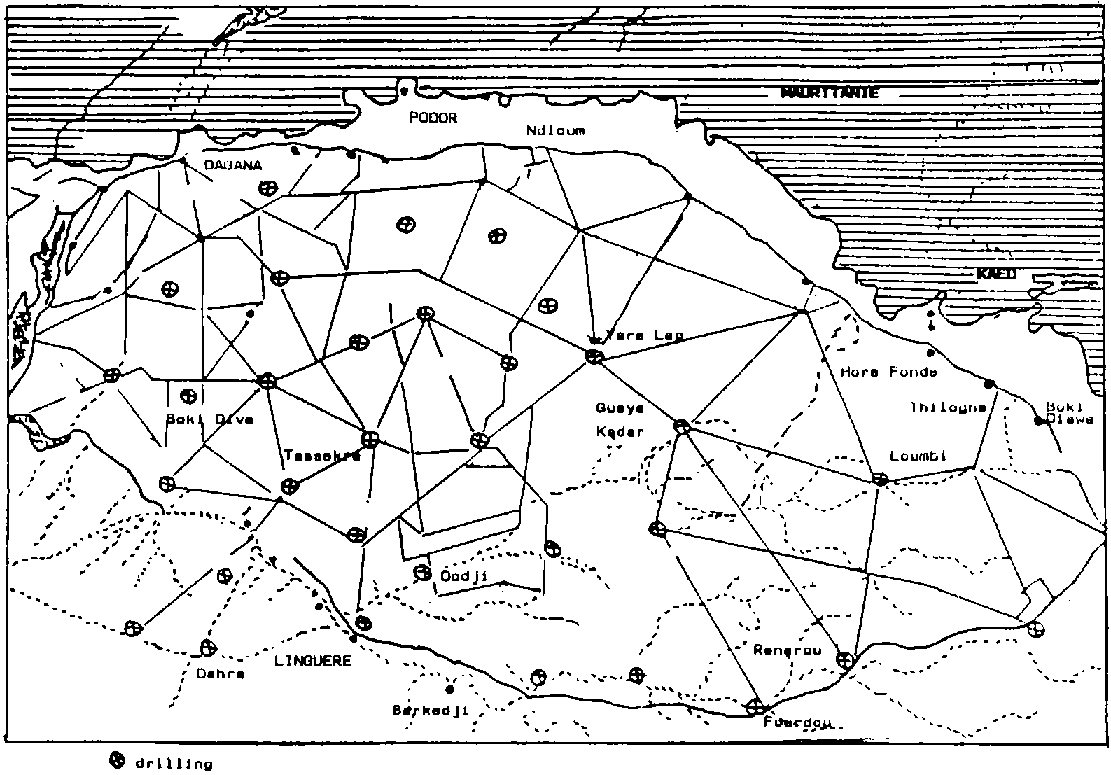
Temporary water points dry-up early in the dry season. The maintenance of drilled wells is a major problem: as such wells do not work often and the distance between them in the Ferlo area in Senegal is too far (See Figure 2). Hence herds are watered once every two days which is not adequate to satisfy ruminant requirements. These conditions evidently do not allow urea introduction.
Establishment of beef fattening schemes in areas where water supply is adequate offers the best condition for a successful dissemination of results involving urea usage in the diet of ruminants.
Poor palatability of urea-added diets may be a constraint to its acceptance by ruminants. The addition of molasses and/or common salts to urea-added diets significantly improves palatability.
Farmers therefore need to be aware of those characteristics of urea-based diets in order to ensure good absorption and prevent ammonia intoxication.
Improving the nutritive value of low quality roughages by urea processing
Comparison of urea with other chemical and physical methods for improving straw quality.
A major limiting factor to straw utilisation is its bulkiness and low concentration in digestible nutrient. The low nitrogen content of straw has a negative effect upon its digestibility.
Several physical and chemical methods have been used to improve the intake and digestibility of straws although both methods have their drawbacks.
Physical treatment by chopping or milling straws consumes energy and needs equipment and hence is costly. However rice straw is less rough and does not need to be chopped on farm. Hand cutting sorghum with a chopper and milling straw help in making them more easily edible.
For chemical treatment of low quality roughages, several alkaline or acid reagents are proposed. Among these, ammoniation by urea offers greater promise because of its feasibility and because it supplies non protein nitrogen (Jackson, 1979; Sundstol, 1984; Fall et al, 1987). Also it is more accessible to the farmer compared to other chemicals. Urea is three times cheaper than sodium hydroxide which is not available in rural areas in Senegal, for example. Unfortunately, urea too has its constraint.
In addition to the availability of urea and the potential toxicity of ammonia, there is a need to make urea-treatment of cereal straws adaptable to tropical conditions. According to Jackson (1979) one method of treating straw with urea is to mix straw with 5% urea. The dry procedure method involves injecting urea in the straw using high pressure. The resultant temperature rise seems to give the best forage quality. Unfortunately, the cost and unavailability of the needed equipment makes that technology out of reach for Sahelian farmers on a large scale.
The second method involves a small quantity of water where a 5% urea solution is sprinkled over the straw at the rate of 1 litre of solution per kilogram of straw to make it reasonably damp (Fall et al, 1987). The urea-straw mixture is kept in a silo and left for incubation for two (in tropical climate) or six weeks (in cool climate). This latter method is recommended for drought conditions in the Sahel. Needless to say, it also protects the environment from pollution.
Urea-ensiling helps to improve intake, digestibility and nitrogen content of poor quality roughages (Table 3). However its proportion in the diet of the ruminant should be limited so as to avoid risk of ammonia toxicity for beef cattle or transmission of toxic compounds in milk for dairy cattle (Preston and Leng, 1987). In north Europe treated straw is usually around 30% of the diet (Preston and Leng, 1987). More research work is needed to evaluate accurately the daily optimal consumption of urea-treated straws for sheep and cattle in Africa.
The urea-ensiling method seems to be easily applicable. What it needs is to be made adaptable to rural conditions. In view of the non-availability of suitable equipment in rural areas where livestock are raised, the use of locally available tools is a must to popularise straw ammoniation by urea treatment.
Before urea-ensiling takes place, long cereal straws are chopped in order to make them easy to handle and to enable the reagent to reach the cell wall. Rice straw is less rough and does not need a reduction of length. As most of the choppers are more or less sophisticated and electric-operated which may not be available in rural areas, the chopping process may be carried out by hand with a hatchet.
Urea solution can be sprinkled by watering cans instead of straw being urea-ensiled in big metal containers as is done in northern Europe. The process can be carried out in a silo hollowed out of soil laid over with cement or clay.
A mixture of urea solution with straw takes place, the silo can be covered with a polythene tarpaulin which might not be readily available in which case banana or palm tree leaves can be used just as well. Complete sealing is essential as some ammonia gas can escape. All necessary precautions should be taken to counteract the loss of ammonia through the silo.
Although treated straw may be conserved for a long period from a technical point of view, ensiling time may be a constraint for small-scale farmers who may not have the capacity to treat a great quantity of straw at once. They prefer to treat the required amount each week. The reported optimum ensiling time is from 10 days (in warm climate) to six weeks (in temperate countries). Research should be carried out to find out influence of decreasing ensiling time on straw quality improvement.
As discussed earlier, the cost and non-availability of urea in rural areas make it a major constraint to its utilisation. It is estimated that treatment cost in rice producing areas is three times that of its cost price; i.e. treatment cost is 45 CFA/kg while its cost price is 15 CFA/kg.
Very few studies have been made in Sahelian countries about the costs involved to produce milk or liveweight gains made of urea-ensiled straw. Economics of straw ammoniation by urea should be a major on-farm research work in order to be precise about the costs and profits involved and to convince farmers to adopt technology.
The ability of urea to enhance the nitrogen level of ruminant's diet either as supplement or as chemical reagent for improving low quality roughages has been proved for many years.
In Sahelian countries the dissemination of available research results is limited by a) lack of suitable equipment b) scarcity of urea in rural areas, c) its high price, and d) potential toxicity by quick ammonia intra-ruminal release.
More on-farm research could solve technical constraints and find ways and means of making feasible adaptations in rural areas. Needless to say, farmers' training is pre requisite for introducing urea in Sahelian feeding systems.
Table 3. Effect of urea treatment on straws nutritive value
|
|
|
Crude protein g/kg DM |
Dry-matter digestibility p100 |
Dry-matter intake g/kgW0.75 |
|
Rice straw | ||||
|
|
Urea 5% ensiled |
79 |
54 ± 4 (N=6) |
61 ± 10 (N=6) |
|
|
Control |
45 |
43 ± 4 (N=6) |
48 ± 3 (N=5) |
|
Maize stover | ||||
|
|
Urea 5% ensiled |
149 |
57 ± 5 (N=6) |
53 ± 10 (N=6) |
|
|
Control |
39 |
49 ± 2 (N=6) |
40 ± 5 (N=5) |
|
Millet stover | ||||
|
|
Urea 5% ensiled |
141 |
49 ± 6 (N=5) |
31 ± 7 (N=4) |
|
|
Control |
84 |
39 ± 6 (=5) |
31 ± 7 (N=4) |
|
Sorghum stover | ||||
|
|
Urea 5% ensiled |
146 |
65 ± 3 (N=6) |
68 ± 3 (N=6) |
|
|
Control |
42 |
47 ± 5 (=2) |
50 ± 6 (N=5) |
(source Fall et al, 1987).
Nutritive value of browse plants
Intake and toxicity
Digestibility and intra-ruminal degradation.
On-farm utilisation of trees and shrubs
Storage of trees and shrubs
Supplementation of ruminants
Browse management in pasture
Recent results have shown the importance of trees and shrubs in ruminant feeding in Africa (Le Houerou, 1980). In natural pasture they can reach 70 to 80% of sheep and goat's diet during the dry season (Guerin et al, 1985). Leaves, flowers and fruits of browses are well known for their high level of nitrogen which improves the ruminant's protein supply (Le Houerou, 1980; Kone, 1987; Fall, 1988).
Some 100 browse species are consumed according to Le Houerou (1980). In the Sahelian Ferlo area of Senegal, the main genus are Acacia, Balanites, Calotropics, Guiera, Boscia, Zyziphus and Combretum.
Nutritive value, harvesting and management constraints can be a limiting factor to browse usage at the farmer's level.
Chemical composition
Chemical composition of browses may be a limiting factor to their digestibility. High maturity contributes to high proportion of cell wall which plays a negative role upon digestibility. Part of the proteins may be imprisoned in lignocellulose and cannot be reached by protein microbes (Guerin et al, 1988). So the total protein may not be available. It depends on the degree of lignification, the age and part of the plant.
Occurrence of tannins in browses has been mentioned by McLeod (1974), Diagayete (1981) and Reed et al (1985). These antiquality factors have a negative effect, specially upon digestibility and protein metabolism.
Research should be undertaken to identify the best period of harvesting according to its stage of development and which nutrient can be available in what part of the plant.
Limiting factors to browse intake are in relation to the chemical composition of the browse plant. Some species can be rich in digestible nutrient but are unplatable.
Tannins and other toxic compounds contribute to the unpalatability of trees and shrubs. Most of them remain to be identified, their toxicity and seasonal variations studied. However, browse intake varies according to the season and year. During a drought period when food is scarce, ruminants are known to accept unpalatable species.
A long adaptation period seems to improve the intake of browses.
A high proportion of cell wall and lignin fraction contribute to lower digestibility of browses. The poor intra-ruminal solubility in a short incubation period explains, in part, the low intake of some species (Fall, 1988). Research should be undertaken to find out a feasible method of browse ensiling to cut back this negative effect of the cell wall.
Browse harvesting
Most of the Sahelian countries do not have any legislation regarding the utilisation of natural pastures. They should enact such legislation to enable the farmer to be involved in range management. Such legislation would facilitate an orderly use of pasture so that it would not be disrupted by movement of herds looking for water and food. Currently ruminants use browse plants freely in pasture. Some browse species are over-grazed while others are not touched. Stocking rates are often too high and bush fire is still destroying a great part of pasture land.
Therefore, to make the best use of available feed resources, farmers should cut and save trees and shrubs for the worst part of the dry season.
Piot (1980) has made a review of some exploitation techniques. The review describes the haphazard cutting down of trees, not helping in their regeneration and/or the protection of the environment. According to the review only the upper leaves of trees should be cut to allow regeneration to take place.
In the Sahel storage of browse plants for fodder reserves is a necessity. While the usual practice in West Africa is to sun-dry most of the harvested Acacia fruits this procedure may affect the nutritive value of some species.
Hentgen (1985) says Azadirachta indica leaves are stored by ensiling with salt, a method which method offers promise. However proper training of farmers must precede introduction of that technology.
Browse supplementation (to ruminants) calls for more investigation on the resultant weight gain and on milk production. This is necessary so that sound recommendation can be made on their use.
A whole methodology of browse exploitation has to be defined. It would include a time table of browse harvesting methods, species to be protected, storage and distribution to ruminants as supplement. Direct utilisation of browse in pasture needs more research work to be able to control the optimal stocking rate.
Browse management must therefore take into account all technical and particularly social constraints constraints.
Harvesting: In addition to the problem of methodology, utilisation of browse plants has to be seen in light of collection of species and an optimal period for harvesting.
It is not easy to define harvesting methodology applicable to all genera. Variations in phenological behaviour justify a particular study of each genus or species. The goal is to exploit and allow browses to regenerate. Cutting leaves and small branches seems to be a good method of harvesting (Piot. 1980).
Some species are high in nutritive value while others are practically useless as ruminant fodder. An association of chemical and secondary production criteria should allow a given number/type of species to be protected or introduced in pasture.
The choice of browse harvesting period is of major importance. One must bear in mind that cutting too early can break the process of development of reproductive parts (flowers and fruits) while cutting too late can lead to an excess of lignification and a decrease in the nutritive value of trees and shrubs. Species variation in development cycle suggests adoption of different periods of harvesting according to their phenology.
Storage of harvested browses: A good storage of leaves or fruits of trees and shrubs can overcome bioclimatic hazards like fire, drought, and wind as well as pests such as insects or birds. They can contribute to limit undernutrition and mortality of ruminants in the Sahel.
The depressive effect of sun-drying upon nutritive value suggests that ensiling should be tested with local tools.
Direct utilisation in pasture: The free choice method does not help to improve management in the present situation in the Sahel where there is a large movement of herds of Sahelian livestock during the dry season. The free choice method would result in a disordered exploitation of natural pasture. The survival of some browse species may be threatened due to overgrazing, consequently encouraging useless species to develop.
The determination and control of adequate stocking rates could minimise the constraints to direct utilisation of browses in pasture situation.
Some browses have a high digestible protein level and are available in the Sahel where livestock are raised traditionally.
Constraints to the optimal utilisation of browse plants at the farmer's level involve variation in nutritive value, range management as well as the educational level of the farmer himself.
Research on browse plants need to be intensified in order to answer questions involving choice of species and collection including their secondary productivity.
Undernutrition of protein is the main constraint to livestock production in the Sahel.
Because the usual protein sources, like oil meals or seeds, and by-product of animal origin, are either expensive and not available in livestock grazing areas of the Sahel, research workers must now think in terms of practical on-farm utilisation of low cost protein sources like browses or urea. The ability of urea to improve the nitrogen content of the diet of ruminants is now an established fact. The adoption of this technology, i.e. the use of urea, in the developing countries of the Sahel by farmers could help in supplying more protein and improving low quality roughages. Unfortunately, these research results are not that well-known amongst Sahelian farmers. Constraints to the introduction of that new feed technology in traditional livestock growing areas involve risks of toxicity, water shortage, cost and availability of urea in rural areas, lack of equipment as well as low educational level of farmers. There is need for basic education in the management of appropriate feeding methods for maximising the profit of urea-supplemented diets.
Research needs to be carried out on-farm to be able to recommend which local tools to use, the best urea-straw ensiling time and the economics of on-farm urea utilisation as a new feeding technology in rural areas.
Optimal utilisation of browses requires a better knowledge of their nutritive value, the techniques of harvesting and secondary productivity. In addition to technical constraints, the problem of range management needs to be investigated. On-farm research efforts should include education of the farmer in environment preservation.
Diagayete, 1981. Untersuchungen zur erweiterung der kenntnisse uber den futterwert westafrikanischer futterplanzen. Dissertation zur Erlangung des grade eines Doktors der Agrarwissenschaften vorgelegt der facultat IV. Agrarwissenschaften II der Universitat Hohenheim. Hohenheim, West Germany. 135 p.
Dicko-Toure, M.S. 1980. Measuring the secondary production of pasture: An applied example in the study of an extensive production system in Mali. In: H.N. Le Houerou (ed.), Browse in Africa: the current state of knowledge. Papers presented at the International Symposium on Browse in Africa, Addis Ababa, April 8-12, 1980. ILCA, Addis Ababa, Ethiopia. pp. 247-253.
Fall, S. 1988. Utilisation digestive par les ruminants domestiques de ligneux fourrages disponibles au Senegal. Rapport ISRA-LNERV No. 59 Alim. Nut. Sept 1988. Dakar, Senegal. 100 pp.
Fall, S., Guerin, H., Sall, C., M'baye, N.D. 1987. Les pailles de cereales dans le systeme d'alimentation des ruminants au Senegal. Rapport ISRA-LNERV No. 70, Sept. 1987. Dakar, Senegal. pp. 68.
Guerin, H., Richard, D. Friot, D., Kone, A.R., avec la collaboration technique de A. Duche, p. Lefevre, G. Bernard et H. El Djendoubi. 1988. Interet du dosage de la lignocellulose (ADF) et de son azote residuel pour estimer la valeur nutritive des fourrages naturel sahelien. A paraitre.
Hentgen, A. 1985. Les arbres fourragers en Inde: une chance pour l'elevage des ruminants. Fourrage, No. 101, Mars 1985. pp. 105-119, 125.
Jackson, M.G. 1979. Le traitement de pailles pour l'alimentation des animaux. Evaluation de la rentabilite, technique et economique. Etude FAO: Production et sante, Animales, No. 10. FAO, Rome. pp.68.
Kone, A.R. 1987. Valeur nutritive des ligneux fourragers en zone sahelienne et soudanienne d'Afrique occidentale: Recherche d'une methode simple d'estimation de la digestibilite, et de la valeur azotee,. These Doct 3'eme Cycle, Univ. Paris, VI, Dec. 1987. Paris, France. 150 pp.
Le Houerou, 1980. The role of browse in the Sahelian and Soudanian zones. In: H.N. Le Houerou (ed.), Browse in Africa: the current state of knowledge. Papers presented at the International Symposium on Browse in Africa, Addis Ababa, April 8-12, 1980. ILCA, Addis Ababa, Ethiopia. pp. 83-100.
McLeod, M.N. 1984. Plant tannins: Their role in forage quality. Nutrition Abstracts and Reviews. 44(11):804-815.
NRC (National Research Council). 1976. Urea and other non protein compounds in animal nutrition. NAS, Committee on Animal Nutrition, Washington, D.C. 120 pp.
Piot, J. 1980. Management and utilisation methods for ligneous forages: Natural stands and artificial plantations. In: H.N. Le Houerou (ed.), Browse in Africa: The current state of knowledge. Papers presented at the International Symposium on Browse in Africa, Addis Ababa, April 8-12, 1980. ILCA, Addis Ababa, Ethiopia. pp. 339-349.
Preston, T.R. and Leng, R.A. 1987. Matching ruminant production systems with available feed resources in the tropics and sub-tropics. Penambul Books, Animale, New South Wales, Australia. 245 pp.
Reed, J.D., Harvath, P.J., Allen, M.S., Van Soest, P.J. 1985. Gravimetric determination of soluble phenolics including tannins from leaves by precipitation with trivalent ytterbium. J. Sci. Food. Agric. 36:255-261.
Sundstol, F. 1984. Definition des procedures a suivre pour les recherches sur le traitement des residues de recolte et des sous-produits agro-industriels dans les pays en developpement. In: En vue d'une meilleure utilisation des residues de recolte et des sous-produits agro-industriels en alimentation animale dans les pays en developpement, siege du CIPEA, Addis Ababa, 5-9 Mars 1984. Rapport de la consultation d'experts FAO/CIPEA. FAO, Rome/CIPEA, Addis Ababa. p.36.
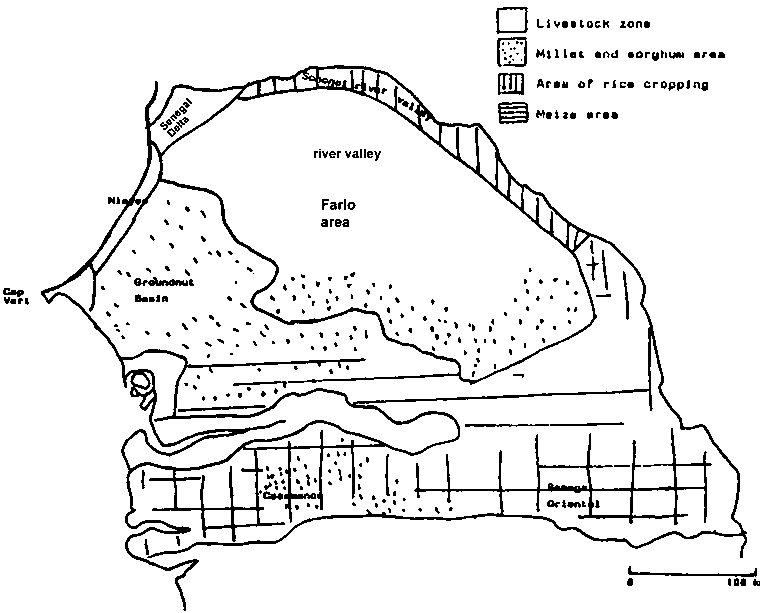
Figure 1. Area of cereal production in Senegal.
Figure 2. Sahelian Farlo area: drilling distribution in Senegal (A)
Figure 2. Sahelian Farlo area: drilling distribution in Senegal (B)
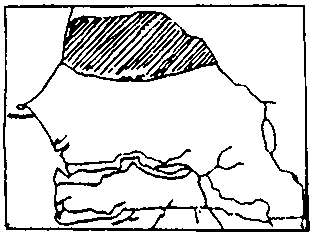
Sources: Gaston (1987).