

H. L. Potter
Animal Production Research Department
Kenya Agricultural Research Institute
P. O. Box 21, Kikuyu, Kenya
Introduction
Non-ruminant smallholder farm livestock
Smallholder ruminants in Kenya
Smallholder livestock feeding systems
Feed-resource options available to the smallholder
Conclusions
Acknowledgements
References
The use of agro-ecological zone delineation to define areas with similar natural production potentials and constraints has been found to be of considerable value for planning purposes in many countries (FAO 1978). In Kenya a comprehensive field survey of six provinces was carried out during the period 1977-1980 by the Ministry of Agriculture with assistance from the Federal Republic of Germany. This survey resulted in the publication of the Farm Management Handbook of Kenya in which the agricultural areas were classified according to agro-ecological potential (Jaetzold and Schmidt 1982). Naps were prepared for each District at a scale of 1:500,000. Seven major ecozones were identified, very largely on the basis of water availability, with subsidiary classification being based on combinations of altitude, temperature and soil-type parameters (Table 1).
Table 1. Agro-ecological potential zones in Kenya
|
Zone |
Climate type |
Water availability (rainfall/Eo) |
% of country |
|
1 |
Humid |
>80 |
5 |
|
2 |
Sub-humid |
65-80 |
5 |
|
3 |
Semi-humid |
50-65 |
5 |
|
4 |
Transitional |
40-50 |
10 |
|
5 |
Semi-arid |
25-40 |
15 |
|
6 |
Arid |
15-25 |
20 |
|
7 |
Pre-arid |
>15 |
40 |
Eo = Potential evapotranspiration.
Source: Kenya Soil Survey 1982.
Care is needed in the use of such classifications based on average conditions. Variation in the climate in any particular season can shift the effective zone boundaries considerably (Downing et al. 1985). However, using the average classification, the small-farm sector to be considered in the present study lies mainly in zones 2 and 3, although parts of zones 1 and 4 may also be included. The prevailing combination of rainfall, temperature and soils produces good-to-excellent conditions for the growth of plants.
During the period from about 1900 to Independence in 1963 these high-potential areas were occupied either by small-scale African subsistence farmers or, in special reserved areas, by large-scale (mostly European) settler farmers. Prior to Independence the great majority of the commercial agricultural output of the country was derived from the relatively limited number of large-scale farms.
One of the great challenges to the Kenya Government over the last 20 years has been to maintain the increase in cash- and food-crop as well as livestock production needed to satisfy rapidly increasing local food requirements and the export needs of the country while attempting to make land available to more farmers through subdivision of the old settler farms. Over one million hectares have been resettled during this process.
Sub-division of these resettled farms and of the traditional African areas by land sales and family inheritance has resulted in a rapid reduction in farm size. The survey data presented in Table 2 were collected in 1974/75; at that time about three-quarters of all holdings were less than 3 ha. Although no national survey has been reported since that time, there is little doubt that over the last ten years the proportion of farms in the smaller size classes has increased considerably. Irrigation potential over most of the high-potential region involved in the present study is limited due to lack of suitable surface-water sources, difficult topography and the lack of resources needed for pumping from underground sources. Production is, therefore, dependent on natural rainfall.
Table 2. Size classes of smallholdings in Kenya
|
Size class ha/unit |
No. ('000) |
% of total |
Estimated % pasture/fodder |
|
0.5 |
208 |
14 |
10 |
|
0.5-1.0 |
267 |
18 |
20 |
|
1.0-2.0 |
401 |
27 |
25 |
|
2.0-3.0 |
223 |
15 |
30 |
|
3.0-4.0 |
148 |
10 |
40 |
|
4.0-5.0 |
104 |
7 |
45 |
|
5.0-8.0 |
89 |
6 |
50 |
|
>8.0 |
4 |
3 |
55 |
Source: Stotz 1983.
A mixture of enterprises is usual on these small farms. In the higher-potential wetter areas of zones 1, 2 and 3 cash crops, including tea, coffee, pyrethrum, cotton, wheat, barley, oilseed and cashews, have been encouraged by Government or private marketing agencies. The opportunities for cash cropping in the slightly lower potential areas are very limited due to the lack of suitable crops with an acceptable level of yield. Food crops are grown on all holdings with maize, beans, sorghum, cassava and pigeon peas being the most common. These crops are grown primarily for the subsistence needs of the farm family, but fortuitous surpluses following good growing seasons are frequently sold. Livestock have been estimated to be present on more than 80% of the smallholdings (Stotz 1983), particularly to supply milk for the farm family. The role of smallstock as a readily realizable source of cash has been shown to be very significant in particular areas (Pollard 1981; Rukandema 1981; Stotz 1983).
Table 3 gives the estimated total values for national production of selected agricultural products up to 1983, the last full year for which results are available.
Table 3. Value of agricultural production in Kenya, 1979-1983 (K pounds '000,000)
|
Sector |
1979 |
1980 |
1981 |
1982 |
1983 |
|
Cereals |
50.5 |
35.3 |
48.0 |
60.0 |
81.4 |
|
Coffee |
105.7 |
118.9 |
102.5 |
122.9 |
166.2 |
|
Tea |
67.3 |
71.5 |
80.6 |
93.2 |
130.3 |
|
Sugarcane |
23.3 |
29.5 |
30.9 |
29.4 |
34.3 |
|
Slaughter cattle |
29.1 |
33.9 |
47.9 |
52.3 |
51.8 |
|
Slaughter smallstock |
2.2 |
1.6 |
1.4 |
1.6 |
1.8 |
|
Pigs |
1.1 |
0.9 |
1.1 |
1.7 |
1.9 |
|
Poultry and eggs |
1.9 |
1.6 |
2.8 |
3.0 |
1.2 |
|
Wool |
0.4 |
0.5 |
0.4 |
0.6 |
0.5 |
|
Hides/skins |
2.3 |
2.6 |
3.7 |
4.1 |
4.3 |
|
Dairy products |
17.5 |
15.0 |
22.8 |
28.5 |
32.8 |
Source: Central Bureau of Statistics 1984.
Production of poultry and pigs in Kenya is now very largely a commercial undertaking as the home consumption of these products is limited. Commercial production is based on the use of purchased manufactured feeds, with very little on-farm feed production. At present over 60% in value of all manufactured feed in Kenya is fed to poultry (Table 4). Very marked increases in poultry-feed prices, approved by Government, have not been associated with corresponding increases in prices to producers for the animal product so that the initial enthusiasm for poultry as a means of maximizing output per unit area of the land on a smallholding has been dampened. No central marketing organizations exist for eggs or birds and small-scale producers lack the entrepreneurial skills to market their product with an attractive profit.
The problems of the poultry industry do not appear to be a result of lack of feeds as the installed milling capacity is at present underutilized and the distribution network is adequate (Magadi, personal communication). The major disincentives to production are high prices of feeds, variation in feed quality leading to poor conversion rates, and low prices to producers through lack of marketing skills and the low price of competitive products such as beef. The recent formulation of a Kenya Standard for animal feedstuffs, to be supported by the appropriate legislation, should ensure that quality problems are reduced considerably when the required inspection and analytical system is operational. Reduction in feed costs will only be possible when research into cheaper local alternatives to imported components of the rations, such as fishmeal, can confirm their efficacy and adequate supply so that imports can be banned. The lack of such research in the past has undoubtedly been a contributory factor to the apparent reluctance of millers/compounders to make use of some local materials when fortuitous surpluses become available (Ministry of Agriculture 1980b). The producer-price factor mentioned above remains dependent on the beef-price structure, which is at present under direct Government control.
Table 4. Manufactured feed production in Kenya 1978-1983 (K pounds '000,000)
|
Feed type |
1978 |
1981 |
1983 |
|
Pig |
1.3 |
0.9 |
0.1 |
|
Poultry |
8.1 |
8.5 |
1.4 |
|
Cattle |
1.7 |
1.4 |
0.9 |
|
Other |
- |
3.9 |
1.9 |
Source: Central Bureau of Statistics, 1984.
The problems of the poultry industry With regard to feed prices and end-product value are mirrored in the pig industry. The fall from 40% to 18% in the market share held by the parastatal Uplands Bacon Factory between 1981 and 1983 has been attributed to slow payments, even though the price offered was generally somewhat higher than that from private buyers (Ministry of Agriculture and Livestock Development 1983). The farmers clearly understood the value of a good cash flow.
Although the cost of feed provision is undoubtedly a major constraint to expansion of both the pig and poultry industries in Kenya, the very small farm size and low level of resource availability severely limit the possibilities for on-farm feed production as a means of reducing costs. Neither the quantities of suitable raw materials nor the appropriate technology for production of feeds of the high quality required for good feed conversion ratios appear likely to be available at the farm level.
As Table 3 indicates, the contribution of pigs and poultry to the national agricultural output is small in comparison to that of ruminant products, so the remainder of this paper will concentrate on the feeding of ruminants on the smallholder farm in Kenya.
This livestock class naturally includes sheep and goats as well as cattle. However, the nutrient requirements of smallstock are similar to those of cattle. The estimated ratios of production of smallstock in relation to cattle of 1:12 for value (Table 3) and of 1:8 for biomass (Stotz 1983) confirm the importance of cattle on the small farm.
Table 5 indicates the pattern of cattle ownership in Kenya and Table 6 the contribution of these cattle to the total milk supply. Present beef prices are too low to allow beef production to compete with milk on the small farm in terms of the return per unit farm area. The areas where the proportion of male cattle is highest are those where there is significant use of oxen for cultivation.
Table 5. Pattern of cattle ownership in Kenya, 1983
|
|
Cattle numbers in '000,000 head |
|||||||
|
Numbers and % of cattle on farms |
||||||||
|
Cattle Type |
Small farms |
Large farms |
Pastoralists |
Total |
||||
|
Zebu |
4.00 |
(48) |
1.50 |
(18) |
2.80 |
(34) |
8.30 |
(100) |
|
Grade beefa |
0.04 |
(11) |
0.29 |
(28) |
0.04 |
(11) |
0.37 |
(100) |
|
Cross-bred |
|
|
|
|
|
|
|
|
|
Dairya |
0.80 |
(89) |
0.10 |
(11) |
- |
- |
0.90 |
(100) |
|
Grade dairyc |
1.10 |
(85) |
0.20 |
(15) |
- |
- |
1.30 |
(100) |
a Crosses between local and exotic beef breeds.
b Contain less than 75% exotic genotype.
c Contain more than 75% exotic genotype.Sources: Ministry of Agriculture and Livestock Development 1983; Stotz 1983.
Table 6. Estimated volume of milk production in Kenya, 1983
|
Origin (type of animal) |
Yield (kg/head/yr) |
No. ('000) |
Total output ('000,000 kg) | |
|
Grade cows (+X bred) |
800-900 |
900 |
890 | |
|
Zebu cows |
50-150 |
3,900 |
470 | |
|
Camels |
750 |
400 |
260 | |
|
Smallstock |
50 |
300 |
14 | |
|
|
Total local output |
|
|
1,644 |
|
Powder-milk imports |
|
|
38 | |
|
|
Total availability |
|
|
1,682 |
Sources: Ministry of Agriculture and Livestock Development 1983; Department of Customs, Annual Returns 1983; Ministry of Finance and Planning, Nairobi.
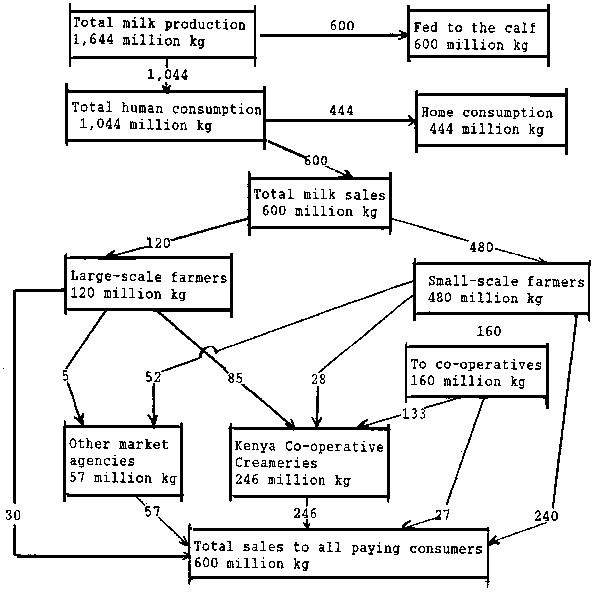
Figure 1 is a marketing flow chart for milk production in Kenya for 1983. This chart shows that 80% of the marketed milk is now derived from smallholders. It is, however, clear from Table 6 that though there are almost one million grade dairy cows in the country, their average yield, at less than 1,000 kg per lactation, is far below their genetic potential. Raising the national milk supply to the target required for the country's estimated population in 1990 will depend to a large extent on raising the output of these grade cows by better feeding (Ministry of Livestock Development 1980a).
Figure 1. Marketing flow chart for milk and dairy produce in Kenya, 1983
Source: Ministry of Agriculture and Livestock Development 1983.
The national survey data collected for the Farm Management Handbook of Kenya (Jaetzold and Schmidt 1982) from 1977 to 1980 were used to derive Table 7 in which various characteristics of the smallholder livestock sector are presented. The data used in the preparation of the table were derived from sample farm surveys supported by crop-cutting studies of fodder and grazing areas on farms and on relevant research stations. The values presented therefore represent the situation on a "typical" farm in the various Districts, taking into account the range of relevant agro-ecological zones present in the District. A number of points demonstrated in the table are worthy of emphasis.
Resource Base
The farm size is very small and hence overall resource availability is low.
Human Population Density
This is usually high - over 100 per square kilometre. The farm is required to support these people before any saleable surpluses can be considered.
Prevalence of Arable Cropping
The concern to maximize output per unit area of land has led to expansion of the arable area for cash and food generation at the expense of area for providing specific livestock feeds, so that the area available for fodder and grazing is only about one-third of the farm area - typically less than one hectare.
High Stocking Rates
The stocking rates observed are extremely high, considering the potential on-farm feed production resources. The strategy adopted by many pastoral peoples of keeping high stock numbers in conditions of variable feed and water supply, disease, etc., to ensure some survival in adverse conditions (Potter 1981), appears to have been carried into the small-farm situation. Its relevance, particularly considering the high nutritional demands of the grade dairy cow, is now in question.
Level of Forage Supply
Table 7 indicates that the on-farm availability of forage in most areas is very low, typically being less than 5 kg dry matter per head per day. This is partly due to the small area available for forage production, but undoubtedly it is also a result of the lack of use of technology which could support a higher level of forage production. Ignorance of the technology and fears of lack of economic return have limited forage yield at the farm level. It should also be noted that the figures in the table are based on an average year-round forage supply, masking the problems associated with a seasonal pattern of fodder or pasture growth.
The Role of Non-Forage Feed Supply
The low level of on-farm forage supply indicated in Table 7 is completely inadequate for even the maintenance requirements of the dairy animal. That the animals survive at all, albeit to produce milk at a low level, indicates that they must be obtaining feed from other sources. This must be particularly true during the dry seasons (normally two per year) when fodder or pasture growth is reduced.
Future Trends
Whatever the difficulties of providing for the feed requirements of the dairy cow at present, the current rate of human population growth in Kenya of 4% per annum (CBS 1985) will undoubtedly place even more strain on the system as land subdivision is likely to continue reducing effective farm size, with the larger rural and urban population raising national milk requirements. Increase in stock numbers per holding as a strategy to increase farm milk output is clearly not likely to be effective as forage resources are already limiting milk production from the existing animals and the proportion of feed required for maintenance rather than production would increase.
The most recent estimate of on-farm feed resources available to the smallholder was made in 1979 (Table 8). It is perhaps an indication of the low priority attached to animal production in national agricultural policy that since the publication of the National Livestock Development Policy document over five years ago (Ministry of Livestock Development 1980a) no national inventory of livestock-feed resources has been prepared. Figures of areas under fodder or pasture are not available either on a District, Provincial or national basis (ISNAR 1985), although an exercise to gather these vital data has been stimulated by this work (see Appendix 1).
In the past, programmes related to animal production in Kenya appear to have emphasized the animal-health and breeding aspects with rather less emphasis on nutrition. Table 9, for example, indicates the allocation of resources to the dairy-production section of the Integrated Agricultural Development Programme 1980/81, the first full year of the existence of the Ministry of Livestock Development as a separate Ministry, when it might have been expected that enthusiasm would be high. Without national feed-production data, consideration of the feed options for the smallholder dairy industry must therefore be on the per-farm basis rather than consolidated sectoral output potential.
Table 7. Characteristics of the livestock sector of smallholder farming in Kenya
|
District
|
ha farm holding
|
ha/head (adult equiv.)
|
Livestock feed resources ha/farm |
Stocking rate (LU/ha)
|
% Grade cattle
|
% Mature female
|
On-farm forage production DM kg/year |
% Non agric. land
|
|||||
|
Fodder |
Grazing |
Fodder |
Grazing |
Total |
kg/LU per day |
||||||||
|
Nyanza Province |
|||||||||||||
|
|
Kisii |
3.3 |
0.6 |
0.15 |
1.3 |
2.5 |
12 |
60 |
1,400 |
6,200 |
7,600 |
5.1 |
11 |
|
|
S. Nyanza |
8.0 |
1.3 |
0 |
3.0 |
2.3 |
1 |
50 |
- |
6,900 |
6,900 |
2.7 |
20 |
|
|
Kisumu |
3.1 |
0.8 |
0 |
0.9 |
4.8 |
1 |
60 |
- |
4,750 |
4,750 |
2.6 |
19 |
|
|
Siaya |
5.9 |
1.3 |
0.2 |
2.2 |
2.5 |
1 |
50 |
1,090 |
5,080 |
6,170 |
1.8 |
17 |
|
Western Province |
|||||||||||||
|
|
Busia |
5.7 |
1.4 |
0.05 |
2.2 |
2.1 |
2 |
50 |
450 |
1,120 |
5,370 |
3.1 |
15 |
|
|
Bungoma |
6.6 |
1.4 |
0.2 |
3.1 |
1.8 |
7 |
60 |
1,510 |
10,390 |
11,900 |
5.5 |
15 |
|
|
Kakamega |
3.9 |
1.0 |
0.05 |
1.8 |
2.2 |
16 |
60 |
400 |
5,180 |
5,580 |
3.8 |
18 |
|
Eastern Province |
|||||||||||||
|
|
Embu Upper |
2.2 |
0.7 |
0.1 |
0.5 |
9.7 |
60 |
75 |
730 |
1,540 |
2,270 |
2.2) |
30 |
|
|
Embu Lower |
4.1 |
1.3 |
0 |
2.0 |
1.7 |
1 |
70 |
0 |
1,850 |
1,850 |
1.5) |
|
|
|
Meru Upper |
2.0 |
0.6 |
0.15 |
0.6 |
4.2 |
80 |
85 |
820 |
1,850 |
2,670 |
2.3) |
20 |
|
|
Meru Lower |
7.2 |
1.7 |
0.1 |
2.3 |
2.2 |
28 |
80 |
450 |
1,850 |
2,800 |
1.2) |
|
|
|
Machakos Upper |
4.5 |
1.0 |
0.2 |
2.3 |
1.3 |
20 |
40 |
440 |
2,150 |
2,590 |
2.2) |
15 |
|
|
Machakos Lower |
5.6 |
1.5 |
0 |
2.7 |
2.6 |
7 |
80 |
0 |
3,320 |
3,320 |
1.3) |
|
|
|
Kitui Upper |
5.2 |
1.3 |
0 |
2.3 |
2.4 |
11 |
65 |
0 |
2,660 |
2,660 |
1.3 |
20 |
|
Coast Province |
|||||||||||||
|
|
Taita Taveta |
1.7 |
0.5 |
0.1 |
0.5 |
5.7 |
22 |
45 |
400 |
770 |
1,170 |
0.9 |
25 |
|
|
Kwale |
8.2 |
2.1 |
0 |
3.4 |
0.9 |
1 |
65 |
0 |
4,180 |
4,180 |
3.7 |
30 |
|
|
Kilifi |
6.5 |
1.4 |
0 |
1.5 |
3.5 |
1 |
30 |
0 |
1,150 |
1,150 |
0.6 |
40 |
|
Rift Valley |
|||||||||||||
|
|
Nandi |
10.1 |
2.6 |
0.3 |
6.8 |
1.9 |
82 |
75 |
1,640 |
31,390 |
33,030 |
6.7 |
18 |
|
|
Kericho |
4.4 |
1.11 |
0 |
2.9 |
2.8 |
74 |
85 |
0 |
13,080 |
13,080 |
4.4 |
12 |
|
|
Elgeyo Marakwet |
3.7 |
1.0 |
0 |
1.0 |
4.5 |
33 |
75 |
0 |
2,310 |
2,310 |
0.6 |
30 |
|
|
Baringo |
4.7 |
1.1 |
0.1 |
2.7 |
2.0 |
57 |
75 |
550 |
8,310 |
8,860 |
4.3 |
30 |
|
Central Province |
|||||||||||||
|
|
Nyandarua |
10.4 |
2.3 |
0.6 |
7.0 |
1.0 |
79 |
89 |
2,910 |
28,460 |
31,370 |
11.3 |
22 |
|
|
Kiambu |
2.6 |
0.7 |
0.15 |
0.3 |
6.0 |
73 |
80 |
1,090 |
1,150 |
2,240 |
2.3 |
27 |
|
|
Murang'a |
2.6 |
0.7 |
0.1 |
1.1 |
4.0 |
60 |
75 |
820 |
4,310 |
5,130 |
2.9 |
18 |
|
|
Nyeri |
2.4 |
0.6 |
0.3 |
0.6 |
4.0 |
75 |
93 |
2,450 |
2,310 |
4,760 |
3.6 |
21 |
|
|
Kirinyaga Upper |
2.6 |
0.6 |
0.1 |
0.4 |
6.5 |
55 |
75 |
820 |
1,690 |
2,510 |
2.1) |
15 |
|
|
Kirinyaga Lower |
6.2 |
1.6 |
0.1 |
1.7 |
3.5 |
28 |
65 |
450 |
2,620 |
3,070 |
1.3) |
|
Source: Derived by the author from data of Jaetzold and Schmidt 1982.Note: District values are means weighted for the production of relevant ecozones in each District.
Table 8. On-farm feed resources for smallholder farm livestock, 1979 (estimate)
|
Source |
Total area (ha) |
Remarks |
|
Permanent pasture |
1,900,000 |
Unsuitable for arable crop use |
|
Grass leys |
2,100,000 |
Includes regenerating fallows |
|
Fodder crops |
240,000 |
Especially Napier grass |
|
Food crop residues |
2,100,000 |
Especially maize stover |
Source: Stotz 1983
Table 9. Resource allocation to dairy development in the Integrated Agricultural Development Programme, Ministry of Livestock Development, 1980/81
|
Sector |
Funds allocation (%) |
|
Tick control |
73 |
|
A.I. services |
11 |
|
Animal production extension |
14 |
|
Animal production research |
2 |
Source: Ministry of Livestock Development, Work Plan 1980/81.
The options open to the smallholder for feed for his livestock can be summarized as follows:
1. Fodders and pastures;
2. On-farm by-products;
3. Industrial by-products;
4. Bought-in roughages;
5. Concentrates.
These will be discussed in turn.
Fodders and Pastures
Although official estimates of the overall area under fodders and pastures do not appear to have been made since Stotz's 1979 work, there is little doubt that the area of folders, particularly Napier grass, has considerably increased since then at the expense of grazing area. As the results of Jaetzold and Schmidt (1982) indicate, in most areas the forage yield of planted or natural pastures is likely to be only about half that of Napier grass, depending on the level of technology actually used on the farm. The value of the yield increase from a switch to folders in the smallholder's attempt to maximize output per unit area of land has been confirmed in the rapid rise in Napier-grass area. However, the effective exploitation of the higher potential of feed availability from the fodder has required that the farmer switch to some form of "cut-and-carry" or stall-feeding system to reduce the wastage that occurs from trampling and soiling by dung and urine during grazing. This switch has a number of management implications, especially with regard to the need for a continual supply of labour and feed as the animal can no longer find feed for itself.
The switch away from pasture use has also been encouraged by the lack of animal-production research data on the limited range of locally available pasture grasses - whose seeds are in any case extremely expensive at more than KSh. 50 per kilogram. Establishment of planted pastures, especially essential early attention to weeding, is also difficult for the small farmer who is tied up with his arable crops at the same time in the season. Natural pastures containing grasses long known to be of high nutritional value (Strange 1963), such as star and Kikuyu grasses, though available in some areas, are losing ground to folders, particularly Napier grass, due not only to their lower yield potential but also to the desire of farmers to adopt the widely publicized technology of zero-grazing. Although off-farm grazing, and even cutting of grass from outside the farmstead do occur throughout the area under study, especially in Districts with higher proportions of non-agricultural land, increasing land pressure will undoubtedly reduce the availability and reliability of this supply (Potter 1982).
Napier grass has been mentioned frequently as the example of a fodder crop in the smallholder regions of Kenya and it is at present by far the most common in terms of its contribution to the national on-farm feed supply. Production data collected by the Dairy Development Project team from co-operating farmers (Wouters 1985) and from the Muguga research programme (Potter and Anindo 1985) have indicated that forage yields per unit area can be raised considerably from the levels observed by the Jaetzold and Schmidt (1982) surveys. The use of relatively inexpensive and simple management improvements, involving plant spacing, weeding, cutting systems and application of farmyard manure, as outlined in the technical bulletin recently published by the Kenya Agricultural Research Institute (1985), can help significantly to remove the lack of knowledge noted as an important constraint to the effective use of fodder (Stotz 1975; Nkanata 1984).
With regard to other fodders, including sweet-potato vines, giant Setaria, sorghums, brassicas, etc., information is much more limited. Although standing-crop estimates of these materials have been made on-farm (Goldson 1977), an examination of persistence, long-term yield and quality characteristics under regular harvesting, as required in an actual production system, has not been carried out. Animal feeding and production studies are almost completely absent for these materials. Such studies may be extremely desirable, not only because these materials may have growth characteristics which could supplement the already established Napier grass, but also because the long-term wisdom of dependence on a single forage crop as the basis of the dairy industry in Kenya appears questionable.
The nutritive value and growth characteristics of Napier grass, and other folders, will be considered in some detail in a later paper in this workshop. Local research data do indicate close correlations between chemical composition of the forage, intake and animal performance (Karanja 1985; Njogah and Kamande 1985; Potter and Anindo 1985; Wouters 1985). With an appropriate field-production and feeding system material palatable enough to be consumed at the rate of 65 kg fresh forage per head per day has been demonstrated to support a milk output of up to 10 litres per day without concentrates (Potter and Anindo 1985). The technical basis for supporting an increase of milk output from fodder appears therefore to exist.
Present evidence suggests that above about 10 kg-milk-per-day production levels (about three times the present national daily average for the grade cow), Napier grass is unable to supply an adequate balanced supply of protein and energy (Potter and Anindo 1985; Wouters 1985). Legume enrichment, for example with Desmodium species or siratro, has been suggested as a possible method of improving forage quality. Studies in both western and central Kenya have so far failed to lead to the identification of a practical on-farm management system capable of maintaining the legume at a proportion high enough to have any effect on overall forage nutritive quality while at the same time maintaining total dry-matter yield. At the farm level the reason for the low milk yield is much more the result of lack of feed quantity than quality.
Conservation of either fodders or pasture material is extremely uncommon in the smallholder areas at present. The availability of surpluses is extremely limited given the high stocking densities on the farms. In addition, the technology for making hay or silage on a scale appropriate to the actual farm-resource level has not yet been identified, although promising results have been obtained from preliminary studies in Napier grass silage production by the Dairy Development Programme in Coast Province (Voskuil, personal communication).
On-Farm By-Products
As mentioned above, all of the farms in the smallholder area grow crops, with up to two-thirds of the farm area being under arable crops grown either for food or for sale. Many of these crops have residues which have potential value for livestock feed. Table 10 gives the arable by-products most commonly available in the smallholder areas, together with some comments regarding their potential value.
Table 10. On-farm arable by-products available to the smallholder farmer in Kenya
|
Crop |
Residue |
Remarks |
|
|
Maize |
Stover |
Est. 7.5 m tonnes available p.a. |
|
|
Cob spindle |
Est. 2.8 m tonnes available p.a. |
||
|
|
Sweet-potato |
Vines |
No availability estimate |
|
|
Sorghum |
Stover |
No availability estimate |
|
|
Legumes |
Haulms |
No availability estimate |
|
|
Bananas |
Leaves/Stalks |
No availability estimate |
|
|
Rice |
Straw |
Est. 39,000 tonnes available p.a. |
|
|
Cassava |
Tops |
No availability estimate |
Source: Compiled by author from various sources.
No accurate estimate has been made of the quantities of these materials used or available to the smallholder either on a per-farm, District or national basis, but widespread use of them has been recorded (Chudleigh 1974; Kevelenge 1978; Nkanata, personal communication). Use of these byproducts is somewhat haphazard as often there are no suitable storage facilities and the farmer has no way of determining the most effective feeding regime to incorporate these roughages into a year-round feed budget. Although basic chemical-composition data have been available for many of these by-products for many years (Dougall 1960), data on availability and from controlled animal-feeding studies are limited (Said 1976; Kevelenge 1978).
Factors which have been identified as limiting the nutritive value of these materials include:
1. Low crude-protein content;
2. High cell-wall content (fibre);
3. Low effective in vivo digestibility (Kevelenge 1978).
To these may be added low dry-matter content, as with sweet-potato vines and banana leaves or pseudostems.
Some research has been carried out in Kenya on the treatment of a number of these crop residues with chemicals such as urea, ammonia and alkalis in an attempt to increase their nutritive value (Kevelenge 1980). Although some improvements in parameters such as digestibility have been reported, the relevance of such techniques to the small-farm situation remains unclear, especially when the toxicity of some of the materials is considered. Of the materials suggested, urea, with its possible additional role as a non-protein nitrogen source, deserves further investigation.
Further studies of the availability, especially as affected by seasonal factors, and animal-production characteristics of these byproducts appears highly desirable due to the universal occurrence of arable crops on the farms and the need to maximize total on-farm feed-resource use. Recent studies of the use of fresh maize leaves derived by defoliating the growing plant have indicated that a tonne of dry matter of forage per hectare may be obtainable over a three-month period without any drop in grain yield (KARI 1985). Such studies of methods of integration of the crop and animal components of the small-farm operations can only be beneficial to the farm-feed budget, and finally to farm output.
Agro-Industrial By-Products
Almost all of these materials are derived from the processing of arable crops. They are distinguished from the previous class by having an off-farm origin, although small quantities may be available on the farm. Table 11 presents some of the characteristics of the more common materials involved.
Estimates of the total quantities of these materials likely to be available have only been made for a few of them, partly because the processing is often done on a relatively small scale by many different units with variable rates of recovery. Many of the comments regarding feeding value made in regard to the on-farm by-product are also valid in respect of the industrial products. The nutritional value of some of these materials is notably higher than that of most roughages, with the value of materials such as brewer's waste (machicha) having been recognized widely. Materials such as pyrethrum mare and poultry waste have levels of protein which enable their use in the formulation of concentrate rations, or for raising the feeding value of roughages such as silage (Odhuba 1984).
Table 11. Agro-industrial by-products useful for animal feed
|
Source |
Residue |
Remarks |
|
Coffee |
Hulls |
No availability estimate |
|
Pulp |
No availability estimate |
|
|
Sisal |
Pulp |
Est. 41,000 tonnes available p.a. |
|
Coconuts |
Copra/meal |
Est. 33,000 tonnes available p.a. |
|
Cashew |
Waste |
Est. 20,000 tonnes available p.a. |
|
Pineapple |
Waste |
No availability estimate |
|
Pyrethrum |
Marc |
No availability estimate |
|
Barley |
Brewer's grains (Machicha) |
No availability estimate |
|
Sugarcane |
Tops/waste |
No availability estimate |
|
Cereals |
Milling residues |
No availability estimate |
|
Poultry |
Waste |
No availability estimate |
|
Cattle |
Abattoir waste |
No availability estimate |
As with the on-farm by-products, there is a clear need for further evaluation of the availability and animal-production-support capability of the agro-industrial materials. The quantity of material, cost of purchase and transport to the farm will be a highly site-specific combination, but general principles regarding the incorporation of such materials into the whole farm budget may be clarified by research.
Bought-in Roughages
During the severe drought experienced over much of the smallholder area of Kenya in the first ten months of 1984, it became very common to see piles of grass, hay or other roughages for sale by the side of the road around Nairobi. Prices up to KSh. 2 per kilogram were being asked, often for material of rather dubious nutritional value. Livestock owners had little option but to pay the prices asked as the supply of feed on their own holdings was virtually nil. This material had been collected from swamps, forest areas, road sides and other non-individually owned areas. This represented a type of commercial venture for the vendors which had not been observed previously to any extent. It remains to be seen if this type of feed provision becomes a significant component of smallholder feed resources. The cultivation of small areas of Napier grass outside regular farm boundaries on land that would have been previously planted with arable crops has significantly increased over the last year, reflecting a demand for the forage. To what extent the purchase of this forage is being supported by the higher returns smallholders are able to obtain by selling milk direct to the consumer requires investigation as results from such a study would have implications for Government policy on official milk pricing and marketing, through, for example, the parastatal Kenya Co-operative Creameries.
Concentrates
Table 4 gives the estimated total value of commercial animal feeds produced in Kenya in 1983 and comment has already been made regarding the prices of such materials. Table 12 gives the quantum and price indices for livestock feeds over the past five years. The very steep increase in costs noted for 1984 was the result of the need to import most of the raw materials as drought conditions severely limited local supply, particularly of maize which makes up about 60 per cent of most rations. In spite of the almost doubling of price the quantity produced and sold increased in 1984 over 1983, no doubt due to the shortage of other feeds for livestock.
Table 12. Commercial feed production Kenya, price and quantum indices, 1980-1984 (1982 =100)
|
|
1980 |
1981 |
1982 |
1983 |
1984 |
|
Quantum index |
88 |
128 |
100 |
111 |
116 |
|
Price index |
108 |
108 |
100 |
89 |
156 |
Note: Total feed output in 1982 was estimated at 120,000 tonnes
Source: Central Bureau of Statistics 1984, 1985.
No estimates are available of the proportion of smallholder farmers feeding concentrates. The national average milk output of 3-4 kg per day for the grade cow appears to indicate that even if feeding of concentrates does occur it does not generally provide for the high milk output potential of the grade animal. In many cases the purchased material will be of value to the animals only in terms of supplementing the inadequate roughage supply so that little more than maintenance requirements are met. Considerable ignorance is also apparent as to what is regarded as a concentrate (Nkanata, personal communication). Bran, brewer's waste and sweet-potato vines have all been considered as concentrates. The use of these products may in fact lead to an increase in milk output at the farm level, but it is clear that this is mainly through improving roughage supply. As pointed out above, a roughage-only diet of Napier grass may be able to support a milk output of 10 kg per day if supply is adequate.
The exact role of commercial concentrates on the smallholding depends to a very great extent on the relationship between milk price and the cost of concentrate. At the present time 1 kg of commercial dairy meal costs approximately Ksh 2.50 on the farm, while 1 litre of milk marketed through a co-operative is worth about Ksh 2. Direct to the consumer about Ksh 3.50 may be obtained. Economic evaluation of the use of concentrates in relation to roughages has not been carried out adequately. The Dairy Development Project is carrying out some economic analysis of their co-operating farms and initial results will be available shortly (Valk 1985).
It is, however, abundantly clear that the price paid and marketing efficiency of the milk industry will greatly influence concentrate use. An increase in the Government-controlled producer price paid by the parastatal Kenya Co-operative Creameries, with its legal monopoly over much of the smallholder region, or expansion of direct sales to consumers at higher prices, would provide considerable incentive to the producer to intensify production, with a greater use of concentrates. The feed-compounding industry has adequate capacity for the near future, at least to provide a sufficient quantity of feeds for national requirements, and the formulation of feeds of acceptable quality is not a technical problem.
The possibility of production of home-made concentrates on the small farm appears to be very limited given the farmer's labour and land constraints. The legume sweet lupin does, however, appear to offer some promise as a high-protein crop which is capable of being intercropped successfully within a maize crop in a manner similar to that already practiced with beans. There is some evidence that the legume may benefit the maize crop as well as providing a valuable protein source (KARI 1983).
The dairy industry in Kenya is at present in a highly critical state. Demand for milk is expanding rapidly due to a population growth rate of over 4% per year, increasing urban incomes, and the requirements of the Presidential-sponsored school milk scheme aimed at supplying free milk to all primary school children in the country. The development over the last 20 years of a small-holder-based commercial dairy industry may well he a forerunner of future trends in other African countries as land pressure increases. The transfer of technology developed in Kenya to other countries is a clear possibility. Within Kenya itself, increase in national output on the small farm appears possible using technology already available, but more research is needed to ensure that adequate material is available for the year-round feed budget, especially as the pressure on land reduces farm size in the drier regions of the smallholder zone. The role of milk marketing, including pricing, is central to the economic applicability of any proposed new technology.
Appreciation is due to many people for providing background information relating to the ideas expressed in this paper. In particular thanks are due to my colleagues at the Kenya Agricultural Research Institute (KARI), to Mr. A. Wouters of the Dairy Development Project, Naivasha, and to Mr. P. Bartilol, Head, Feeds Section, Livestock Division, Ministry of Agriculture and Livestock Development, Nairobi. Errors, omissions and all ideas expressed in the paper remain the responsibility of the author. The paper should not be taken as representing the official attitude of KARI or its parent Ministry of Agriculture and Livestock Development.
Appendix 1
As mentioned in the text a survey is currently under way to obtain estimates of the area of fodder and/or pasture in the smallholder areas. Some results are already available, as shown in the table below.
|
District |
Area (ha) |
|||
|
Pastures |
Fodders |
|||
|
Nyeri
|
Planted |
|
Napier grass |
10,464 |
|
Natural
|
45,000 |
Sweet potato |
3,913 |
|
|
|
Lucerne |
157 |
||
|
Baringo |
Chloris gayana |
230 |
Napier grass |
164 |
|
Setaria sphacelata |
231 |
Misc. folders |
200 |
|
|
Natural |
66,000 |
|
|
|
|
Bungoma |
Rhodes |
66 |
Napier grass |
145 |
|
Murang'a |
All |
16,875 |
Napier grass |
9,925 |
|
Uasin Gishu |
Chloris gayana |
5,000 |
Napier grass |
1,250 |
|
Setaria sphacelata |
1,000 |
|
|
|
|
Siaya |
Chloris gayana |
91 |
Napier grass |
154 |
CBS (Central Bureau of Statistics). (1984). Statistical Abstract. Ministry of Finance and Planning, Nairobi.
CBS (Central Bureau of Statistics). (1985). Economic Survey. Ministry of Finance and Planning, Nairobi.
Chudleigh, P.D. (1974). A description of smallholder ruminant production systems in the high-potential areas of Kenya. Technical Report No. 4, Pasture Research Project, National Agricultural Research Station, Kitale.
Dougall, H.W. (1960). Average nutritive values of Kenya feeding stuffs for ruminants. East African Agriculture and Forestry Journal 26: 119-128.
Downing, T.E., Akong'a, J., Mungai, D.N., Muturi, H.R. and Potter, H.L. (1985). The Kenya case study. In: Parry, M. and Carter, T. (eds.). Assessment of Climate Impacts on Agriculture, Vol. 2. In Semi-arid Areas. International Institute for Applied Systems Analysis, Laxenburg, Austria.
FAO. (1978). Report on the Agro-ecological Zones Project. Methodology and results from Africa. World Soil Resources Project Report 1/48, Food and Agricultural Organisation, Rome.
Goldson, J.R. (1977). The present state of knowledge on pastures and folders in the Central Province of Kenya. Technical Report No. 22, Pasture Research Project, National Agricultural Research Station Kitale.
ISNAR. (1985). The management of agricultural research in Kenya. ISNAR. The Hague, Netherlands.
Jaetzold, R. and Schmidt, H. (1982). Farm Management Handbook of Kenya, Vol. II a, b and c. Ministry of Agriculture, Nairobi.
Karanja, G. (1985). Management of Napier grass for dry season use. Proceedings of the Animal Production Society of Kenya 17 (in press).
KARI (Kenya Agricultural Research Institute). (1983). Annual Record of Research, Animal Production Research Department, Muguga.
KARI (Kenya Agricultural Research Institute). (1985). Technical Bulletin No. 1. Animal Production Research Department, Muguga.
Kenya Government. (1981). National Food Policy. Sessional Paper No. 4 of (1981). Government Printer, Nairobi.
Kenya Soil Survey. (1982). Agro-ecological zones in Kenya. 1:1,000,000 map.
Kevelenge, J.E.E. 1978. The nutritive value of four arable farm byproducts commonly fed to dairy cattle by small scale farmers. M. Sc. Thesis, University of Nairobi.
Kevelenge, J.E.E. (1980). Quality characteristics of ruminant feeds with special reference to agro-industrial by-products. Proceedings of the Animal Production Society of Kenya 12:2633.
Ministry of Agriculture. (1980). Report to the Director of Agriculture of the ad hoc Committee on Maize and Pastures, Ministry of Agriculture; Nairobi.
Ministry of Agriculture and Livestock Development (1983). Annual Report. Livestock Division, Ministry of Agriculture and Livestock Development, Nairobi.
Ministry of Livestock Development. (1980a). National Livestock Development Policy. Ministry of Livestock Development, Nairobi.
Ministry of Livestock Development, (1980b). Work Plan 1980/81. Ministry of Livestock Development, Nairobi.
Njogah, J. and Kamande, G. (1985). Annual Record of Research. Animal Production Research Department, Kenya Agricultural Research Institute, Muguga (in prep.).
Nkanata, J.N. (1984). The integration of livestock into T & V in the Central Province. Proceedings of the Animal Production Society of Kenya 16: 65-72.
Odhuba, E.K. (1984). Annual Record of Research. Animal Production Research Department, Kenya Agricultural Research Institute, Muguga.
Pollard, S.J. (1981). Report on the Nzaui/Machakos farming systems study. Agricultural Mechanisation Station, Ministry of Agriculture, Nakuru.
Potter, H.L. (1981). Strategies for the settled pastoralist. Proceedings of the Animal Production Society of Kenya 13: 18-27.
Potter, H.L. (1982). Livestock feed resources in semi-arid areas. In proceedings of the combined Workshop on the Review of the FAO Dryland Farming and USAID Dryland Cropping Projects. Embu Institute of Agriculture.
Potter, H.L. and Anindo, D.M.O. (1985). Animal performance on Napier grass diets. Proceedings of the Animal Production Society of Kenya 17 (in press).
Rukandema, M. (1981). Report on the farm survey results from Mwala Location. Technical Report No. 1, Farming System Economics Research Programme, Katumani Dryland Farming Research Station, Machakos.
Said, A.N. (1976). Evaluation of feeds - some results from the study of the nutritive value of-Kenya grasses and fodder crops. In Proceedings of the Conference on Nutritive Value of Feeds for Ruminants in East Africa. National Agricultural Research Station, Kitale.
Stotz, D. (1975). Milk production systems in Kenya, their economic features and management traits. Working Paper No. 2, Dairy Farm Management. Livestock Recording Centre, National Animal Husbandry Research Station, Naivasha.
Stotz, D. (1983). Production techniques and economics of smallholder livestock production systems in Kenya. Ministry of Livestock Development, Nairobi.
Strange, R. (1963). Grassland and forage farming in the high bracken, Kikuyu and star grass zones of Mount Kenya and Eastern Aberdares. Technical Report No. 4/63. Embu Agricultural Research Station, Embu.
Valk, Y.S. van der (1985). Annual Report 1983-84 of Recording Farms, Dairy Development Project, National Animal Husbandry Research Station, Naivasha.
Wouters, A.P. (1985). Chemical composition and dry matter availability per livestock unit of Napier grass on farms with Napier plots during 1983-1984. Progress Report, Dairy Development Project, National Animal Husbandry Research Station, Naivasha.
