A.R. MacLaurin
In order for useful economic analyses to be done, it was necessary to closely identify and define the system within which the analyses is made. This meant that there was an urgent need for more and/or better co-operation between specialists in different disciplines. At times this can result in the formal setting up of farming systems research teams. However, this has often been strictly crop oriented although Zimbabwe and Ethiopia recognise the need to incorporate the animal component, particularly with respect to forage and/or livestock research. It was generally felt that data bases were weak and FSR teams can help to alleviate this and help define research priorities.
The way in which FSR can be conducted was outlined and clearly showed the need for close team and farmer-researcher interaction. Cognisance of the farmer-system interaction needs to be made. It was pointed out that small-scale farmers are by nature subsistence farmers and will not adopt strategies or interact if they are put at risk.
For innovations to be effective they should require low inputs, which do not upset the stable system, and produce improved increments. Innovations should not upset the system and should lead to sustained changes.
A number of different ways of performing economic analyses were illustrated and clearly showed the need to closely define the system and what assumptions need to be made. Biological and climatic limitations and levels must be defined. Caution was expressed over the use of surveys in defining parameters, particularly with regard to cash flows and labour use and requirements.
In many places, there are FSR teams working in isolation. These should be induced to co-operate both nationally and on an interdisciplinary basis. Where possible formalization of linkages should occur and possibly national approaches developed. However, it was felt that FSR teams should not become too institutionalized.
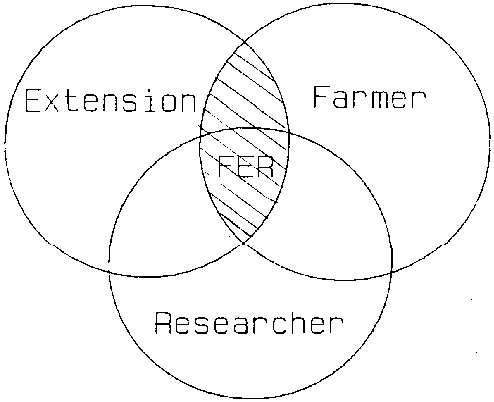
Where FSR-extension-researcher-farmer linkages are weak, care should be taken not to adopt downward approaches (such as "on a ladder") but have an equally interactive basis as illustrated:
Where FSR teams are testing new technologies on-farm, they should not be too cautious in trying their innovations, which should not only be applicable in the present: but also future contexts. It was generally felt that payment for use of farmer resources should not be done lest it set a precedent, but this would depend on individual cases.
Extension - Farmer - Researcher