4.1. Introduction
4.2. Agriculture, Forestry and Fisheries in a Changing Global Context
4.3. Natural Resource and Socioeconomic Database
4.4. Agroecological Zone Aspects
4.5. Regional Aspects
4.6. Production Sectors and Commodities
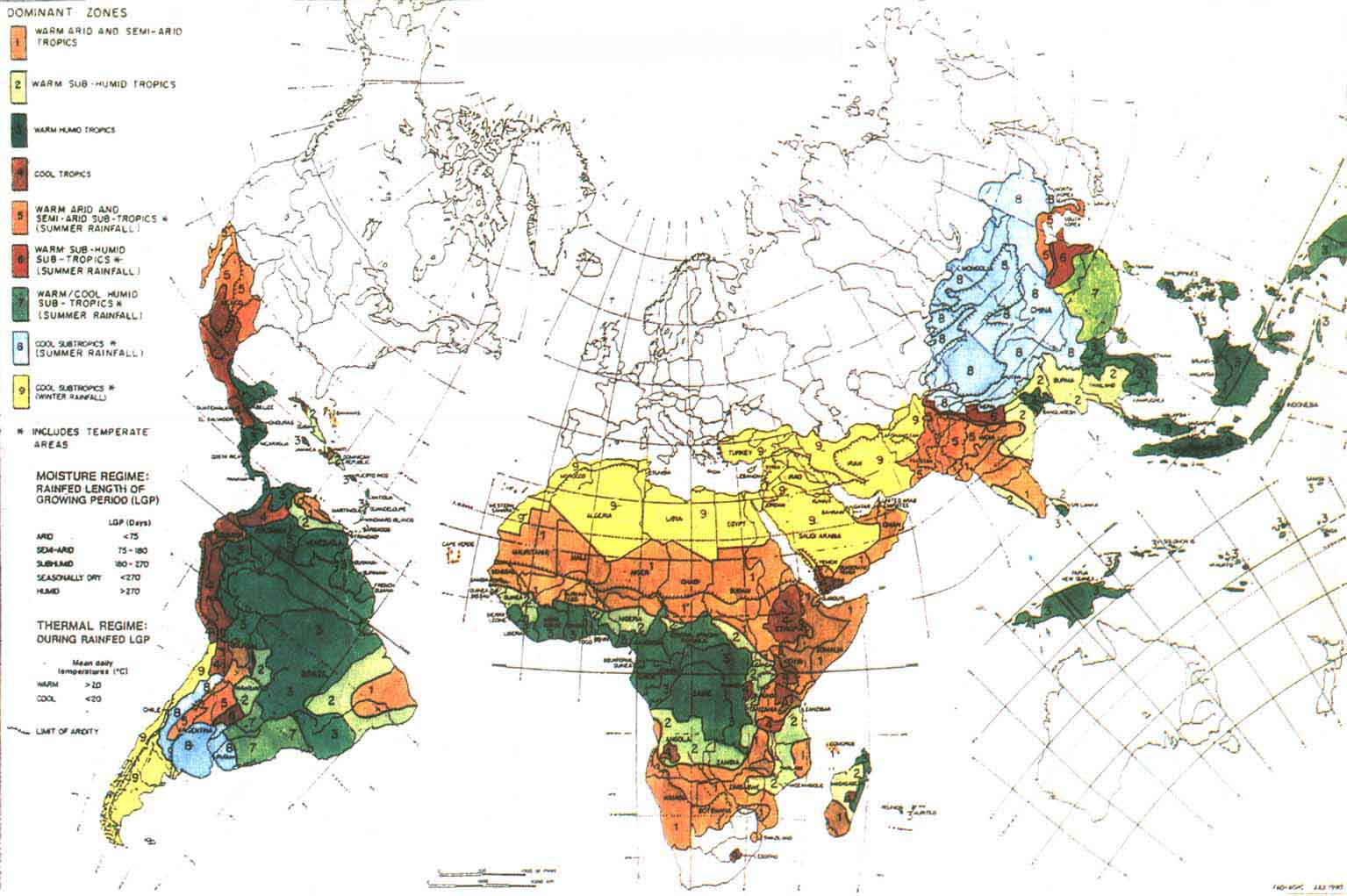
Figure 3.1 REGIONAL AGRO-ECOLOGICAL ZONES
While the world produces more food per head of population today than ever before in human history, more than 800 million people in developing countries do not have enough to eat to lead fully productive working lives (World Commission on Environment and Development, 1987). The sustainability of agricultural production is at risk, the degradation of resources accelerates at a fast pace, and poverty and malnutrition remain widespread in the developing world. During the next two decades, in developing countries yields of staple foods will need to more than double to maintain food production per caput at today's levels.
In assessing priorities for the next decade, it is essential first to consider a longer range planning horizon. Investment in research today may not have a pay-off at the producer level until two to three decades from now. The context for long-range planning, therefore, should be the food needs, poverty status and natural resource base of developing countries in the year 2010 or 2020.
This chapter presents an overview of the challenges facing research and development in agriculture, forestry and fisheries over that longer time horizon. These challenges are presented globally, by sector, by region and by agroecological zone. Much of the information has been summarized from studies by FAO (FAO 1986a, 1987, 1988). Reference is also made to the recent FAO/Netherlands Conference on Agriculture and the Environment, which resulted in the "Den Bosch" declaration stressing the need for specific actions by governments to ensure sustainable agricultural development in each region (FAO, 199 la).
4.2.1. Trends Affecting Food Demand
4.2.2. Resource Management
4.2.3. Changes in the Atmosphere and Climate
4.2.4. Equity and Gender
4.2.5. Perspectives on National Research
4.2.6. Strategies for Areas with Different Resource Endowments
Population growth is the main determinant of increasing food demand. The United Nations medium variant projection estimates that the population of developing countries will increase from 3.6 billion in 1985 to 5.8 billion in 2010 and 7.0 billion in 2025 (United Nations, 1988). At present, about 75% of the world's population lives in developing countries. This proportion will increase to 79% in 2000, 81% in 2010, and 83 % in 2025. The population of sub-Saharan Africa is expected to expand threefold by 2025. Asia's population increase will be the largest in absolute terms of any world region; its population will grow from 2.6 billion in 1985 to 4.4 billion in 2025.
Income growth is a significant factor determining the composition, as well as the level, of food demand. Estimating income growth over the long term is difficult because such growth is determined largely by highly unpredictable factors such as political developments, the level of energy prices, and national economic and trade policies. The World Bank has projected an average annual growth rate in per caput income of 3.5% during the next decade for developing countries as a group, but only 0.5% growth is expected for sub-Saharan Africa (World Bank, 1990). In most developing countries, food consumption will increase and there will be a shift in diets from staple grains to livestock products and vegetables. Increases in the demand for livestock products will lead in turn to a rise in the demand for feed grains.
Urbanization is also a major factor determining the composition of food demand. At present 31% of the population of developing countries lives in urban areas, but this is expected to increase to 40% by 2000 and to 57% by 2025. In sub-Saharan Africa it will increase from 28% today to 55% in 2025, in West Asia-North Africa from 65% to 72%, in Asia from 25% to 50%, and in Latin America from 69% to 84%. The diets of urban consumers tend to consist of high-value cereals, livestock products and vegetables. To cater for the needs of urban consumers, more food processing is required. Urbanization also affects the mode of food supply, since more food has to be produced for market production rather than subsistence. Food produced for urban markets needs to be transported and stored. Cities are usually located on better soils, sizeable amounts of which are taken out of agricultural production as they grow in size.
With respect to the demand for forestry products, for many of the poor in developing countries, the demand for fuelwood already greatly outstrips supply, particularly in dry areas. FAO has estimated that more than 100 million people experienced acute fuelwood scarcity during the early 1980s (FAO, 1983). With rising incomes, the demand for other sources of energy will increase, reducing the pressure on fuelwood markets to some extent.
The demand for fish and fish products has been growing rapidly in recent years. The traditional sources of fish - seas, lakes and rivers - have for the most part already been fully exploited. This has led to rapidly increasing prices for fish and fish products.
Malnutrition and poverty remain common features of the developing world. People are malnourished either because not enough food is available or because they are too poor to buy available food. Increasing food production alone will, therefore, not solve the problem of malnutrition. Poverty has many causes, including inadequate incomes, malnutrition itself, lack of social services, and lack of social and political status. The World Bank has recently estimated that 1.1 billion people, or 33% of the population of developing countries, live in poverty (World Bank, 1990). About three-quarters (800 million) of them live in Asia, although proportionally Africa has more poor people than any other region.
The implications of these numbers are awesome. Even if the agricultural land area continues to expand at the same rate as over the last two decades - an optimistic assumption - yields of the world's major marketed crops will have to more than double during the next two decades simply to maintain current per caput consumption. Unless yields increase still further, malnutrition and poverty will remain common, particularly in sub-Saharan Africa and South Asia.
During the past two decades, developing countries have relied increasingly on international trade for their food supplies. Imports of cereals have increased particularly rapidly. Meanwhile, exports from developing countries have remained relatively stable.
Net agricultural trade surpluses and terms of trade in general have deteriorated considerably.
The widespread degradation of the natural resource base has been a growing concern in many countries in recent years. The sustainability of agriculture in some areas of the developing world is under threat because of the loss of genetic diversity, depletion of forest and water resources, soil erosion, salinization, acidification, waterlogging, desertification, deforestation, and environmental pollution.
The level of external inputs used by farmers is a key factor affecting the resource base, because both under-use and overuse have detrimental effects. Farming systems in which farmers use few or no external inputs but plant crops annually eventually deplete soil nutrient reserves and reduce vegetative cover, thereby exposing the soil to erosion. Many cropping areas of Africa have been affected in this way. Research is needed to develop integrated nutrient supply systems based on a balanced mix of external inputs, organic manures, biological nitrogen fixation and efficient cycling of nutrients. In better endowed areas, high levels of external inputs are needed to sustain high levels of production, but may induce pollution problems. The generally low rates of application of agrochemicals in many developing countries imply that pollution has not yet become an issue for them. However, in some intensive crop production areas, particularly in Asia, Latin America and North Africa, policy measures are needed to increase awareness of potential problems, to educate the public and users of agricultural chemicals, and to ensure that subsidies do not encourage overuse.
The successful management of resources is central to the concept of sustainable agriculture. However, the research needed to address the many and diverse problems of resource degradation and environmental pollution is beyond the capacity of the CGIAR System. TAC considers it essential that CGIAR research on resource management should be focused on issues which bear directly on the productivity and sustainability of agriculture, forestry and fisheries. Further, such research should be confined to issues associated with those commodities and production systems with which the System is involved from the point of view of improving productivity.
Important resource management research topics at the global level include the substitution of renewable for non-renewable resources and the conservation (stewardship) of genetic resources and of various valuable ecosystems (including their wildlife). Other significant global research topics are the contribution of agriculture to changes in the composition of the atmosphere and in the climate, and the impact of those changes on agriculture (see below). Broad issues requiring research include the roles of community and government agencies and of agricultural and other businesses in resource management and conservation. In addition to developing new technologies for resource management, research should be focused on the organizational, educational and policy aspects of resource management, and on institution building. The size of management unit considered in resource management research is also important in assessing priorities. For most purposes, the management unit is the individual farm, but for some research a larger unit such as a landscape, a watershed or an irrigation system is more suitable.
The atmospheric content of carbon dioxide and methane is increasing as a result of human activities. The major source of carbon dioxide is the combustion of fossil fuels, which releases about 5.6 billion tonnes of carbon annually into the pool of 700 billion tonnes in the atmosphere. The pools of carbon held in forests and in forest soils are being steadily drained by deforestation, which releases between 1 and 3 billion tonnes of carbon each year.
Global warming is in itself expected to increase rates of respiration (including the respiration of plants and organic matter in soils), thereby further speeding the release of carbon dioxide and methane from forest lands and other vegetation sources. On the positive side, it should be noted that increased carbon dioxide levels will increase photosynthesis, with benefits to plant growth rates and storage of CO2.
The contribution of forest burning to global warming has been deemed sufficiently serious to warrant recommendations by several international agencies that governments should take steps to contain deforestation. If, in addition, new forest could be established on a large enough scale, carbon could be removed from the atmosphere and stored. However, between 1 and 2 million square kilometres of new forest would be needed every 75 years to store carbon at a rate of 1 billion tonnes per annum. (This estimate is based on the unlikely assumption that bare land would be used; the carbon fixation of existing grassland should be taken into account to obtain a more accurate estimate). The massive reforestation required to realize these levels of storage would be very difficult to achieve.
The keys to the containment of global warming lie in reducing the use of fossil fuels, improving conservation and energy efficiency, and switching to renewable sources of energy, as well as in curbing tropical deforestation.
Assessing the possible effects of global climate change on agriculture is a vital task. Climate and weather have been and continue to be dominant factors in agricultural productivity despite technological advances.
The Intergovernment Panel on Climatic Change (IPCC) recently concluded that climate change could modify both regional production and trade of agricultural commodities and could have severe effects for certain vulnerable regions (IPCC, 1990). However, it acknowledged that the present state of knowledge was inadequate for drawing firm conclusions.
The CGIAR mission statement implies a strong focus on research to benefit low-income people, including women, landless labourers and poor producers and consumers in both rural and urban areas (see Section 2.1). In setting priorities for the CGIAR, it is therefore important to assess the location and size of each of these target groups, their consumption patterns and the constraints they face in producing, selling or buying food. It is also important to assess whether the problems of these target groups should be addressed through strategic international research, or whether adaptive and applied research at national level will be sufficient.
The implications of equity considerations for CGIAR priority setting are that:
· higher priority should be given to small-scale farms in developing countries, and not to commercial agricultural corporations;· higher priority should be given to commodities that poor people produce and consume (it could also be given to commodities produced by commercial farmers for consumption by the poor, and that provide income earning opportunities for landless labourers);
· higher priority should be given to geographical areas with large numbers of poor people that depend on agriculture, forestry or fisheries for their livelihood;
· higher priority should be given to research activities that will particularly benefit low-income people or resource-poor farmers.
With respect to gender, special attention should be given to households headed by women, to enterprises managed by women, to the role of women in agricultural production, and to women's consumption patterns.
Women represent a disproportionately high share of the total population living in poverty. They are disadvantaged by their farming and family responsibilities and by their lack of access to productive assets. Women, and often children, play an important role in all aspects of agricultural production, and usually carry primary responsibility for the collection of fuelwood. Significant gender differences in husbandry practices are associated with reduced access to credit. Women are also heavily involved in the postharvest processing of most food products. Often, technology is gender-biased against women. Changes in the allocation of women's time will influence the well-being of the family through changes in areas such as food availability, food preparation and child care. Technological change may also influence child labour and education. Women's expenditure patterns may be different to those of men. Lower food prices will favour women and children where these groups are currently less well fed than men.
Pardey and Roseboom (1991) and Pardey et al (1991) have analyzed regional differences in resource allocations to national research programmes in developing countries.
Between 1961-65 and 1981-85, the number of researchers grew four times faster in developing than in developed countries (7.1% against 1.6%). Asia now accounts for 72% of the developing country total, Latin America and the Caribbean for 12%, West Asia-North Africa for 10% and sub-Saharan Africa for 6%. In terms of research expenditures, Asia accounts for 59% of the total for developing countries, Latin America and the Caribbean for 20% and West Asia-North Africa and sub-Saharan Africa each for 11%. The growth in expenditures per caput was considerably slower in developing than in developed countries and, except in Asia, below the rate of growth in the number of researchers. Thus, in general, the levels of support available per scientist have declined during the last two decades, particularly in sub-Saharan Africa and in Latin America and the Caribbean.
The average size of public-sector national research system in developing countries (excluding China) has more than doubled during the last two decades, from approximately 150 to 350 researchers during 1981-85. In spite of the increasing number of medium- to large-sized systems, a substantial number of small systems remain with little capacity to undertake anything but highly focused adaptive research on a few commodities. During 1981-85, 39 national agricultural research systems had fewer than 25 researchers. These are mostly located in the Caribbean, the Pacific Islands and sub-Saharan Africa.
In all regions, research is oriented predominantly towards crops, with other sectors accounting for a far lower proportion of the overall number of researchers (Table 4.1). Research on forestry and fisheries has the largest share of research resources in Asia, while crop research is more dominant in West Asia-North Africa than in the other regions.
Table 4.1. Allocation of researchers by production sector and by region, 1981-85
|
Region |
Crops |
Livestock |
Forestry |
Fisheries |
|
Sub-Saharan Africa (%) |
67.3 |
20.0 |
7.3 |
5.4 |
|
Asia (%) |
63.7 |
17.4 |
9.4 |
9.6 |
|
Latin America and the Caribbean (%) |
68.7 |
24.1 |
5.4 |
1.8 |
|
West Asia - North Africa (%) |
75.4 |
16.2 |
5.7 |
2.7 |
|
All developing countries (%) |
68.3 |
18.7 |
7.3 |
5.7 |
|
Expenditures (US$'million) |
2,480 |
679 |
266 |
205 |
|
Researchers (No.) |
53,100 |
14,500 |
5,700 |
4,400 |
Source: Pardey et al (1991)
On the basis of a congruence analysis between the share of each production sector in agricultural GDP and in research personnel, Pardey and Roseboom (1991) noted that the share of crops and livestock research was smaller than might be expected on the basis of their share in total production. They also noted that many national systems have yet to achieve a critical mass of researchers in forestry and fisheries.
The success of the green revolution, with varietal improvement as the prime mover, has been restricted mainly to irrigated areas or areas with favourable rainfall patterns. In such areas, the major constraints to increasing production were agronomic and could largely be overcome through the increased use of chemical fertilizers and pest control. The necessary infrastructure required to deliver technology and market surpluses was largely already in place. However, the green revolution approach could not be transferred easily to agroecosystems with less favourable rainfall patterns, soils and land forms. In such systems, severe resource management problems have to be overcome before agronomic improvements can be effective. These problems relate to water management, control of erosion, cropping systems and soil amelioration (acidity, alkalinity, toxicities, minor elements, etc.).
Although considerable investments may be required before resource management in these less well endowed areas can be improved, the cost of such investments in rainfed agriculture is well below those needed in irrigation systems. The extent to which the potential for increased production is actually used will depend on the economic and policy environment. The task of resource management research is to demonstrate the potential and to develop pathways for incremental improvements that meet increasing demands in an affordable manner for farmer and country. The latter requires support by policy research.
Strategies for the improvement of both intensive and extensive production systems must focus more directly on providing institutional and technical support for improved soil fertility, pest and disease control, and water management. The inevitable increase in fertilizer applications which will be the main source of future agricultural growth and food security must be balanced by efforts to improve the efficiency of fertilizer use and to maximize the contribution from organic sources of nutrients, legumes and soil microflora. Such efforts are needed to promote sustainability and to bring more productive practices within reach of resource-poor farmers and the landless poor.
Strategies for employment and income creation in the agricultural sector should be based on a thorough analysis of comparative advantage, including the production costs and the processing and marketing requirements of those crops that may be competitive.
Questions of economic and institutional stability and development are also central to a considerable number of strategic options for development. Most governments apply various policy instruments such as subsidies and fiscal measures to their agricultural sectors, but their purpose is often primarily to serve the interests of urban populations rather than those of farmers. Their impact on the well-being of the rural population, on sustainable resource use and on the environment is often negative.
To allow priority setting on the basis of regions, agroecological zones, commodities and research activities, a database was developed in spreadsheet form containing primary and derived agroecological, demographic and economic information. The information originates mostly from FAO, the World Bank and the CGIAR Centres. The data base includes time series data by country, by agroecological zone, by regional agroecological zone and by region on both urban and rural population and their growth rates, income, poverty, nutritional status, production of and demand for major food commodities and livestock feed, exports of industrial crops, prices and value of production of major commodities and product groups, trends in resource utilization and resource productivity (rainfed arable land, irrigated land, livestock, forests, etc), land-use patterns, soils and soil constraints, land form, lengths of growing periods and thermal conditions, vegetative resources and potential productivity.
Table 4.2. gives examples of information compiled by regional agroecological zone. It provides data on total land area, population in 1990 and 2010, population growth, demand for food in grain equivalent in 1990 and 2010, production of food and cash crops in 1990, rainfed arable land, irrigated arable land, and total arable land. Production of cash crops in grain equivalent was estimated by dividing the value of cash crops by the unit value for wheat.
Table 4.2. Land area, population, food demand, arable land and production by regional agroecological zone
|
RAEZ |
Land Area (106 ha) |
Population 1990 (106) |
Population 2010 (106) |
Population Growth (%) |
Food Demand 1990 (106 tGE) |
Food Demand 2010 (106 tGE) |
Production Food 1990 (106 tGE) (B1) |
Production Cash 1990 (106 tGE) |
Rainfed Arable (106 ha) |
Irrigated Arable (106 ha) |
Total Arable (106 ha) |
|
SSA |
2 191.2 |
501.1 |
922.3 |
3.10 |
115.2 |
223.9 |
104.2 |
72.3 |
156.5 |
5.22 |
161.8 |
|
1 |
1 245.7 |
166.6 |
301.3 |
3.01 |
37.9 |
72.6 |
33.3 |
8.7 |
60.3 |
3.69 |
64.0 |
|
2 |
348.4 |
106.3 |
197.0 |
3.13 |
24.6 |
48.5 |
22.7 |
13.2 |
43.3 |
0.43 |
43.8 |
|
3 |
502.1 |
152.3 |
282.4 |
3.14 |
36.1 |
71.9 |
33.4 |
35.7 |
36.8 |
0.44 |
37.3 |
|
4 |
95.0 |
75.9 |
141.6 |
3.17 |
16.6 |
30.9 |
14.8 |
14.7 |
16.1 |
0.66 |
16.7 |
|
WANA |
1 253.1 |
316.0 |
510.1 |
2.42 |
103.8 |
185.0 |
65.2 |
22.4 |
64.3 |
18.66 |
83.0 |
|
1 |
49.1 |
5.5 |
9.8 |
2.93 |
1.5 |
3.3 |
0.3 |
0.1 |
0.1 |
0.10 |
0.2 |
|
4 |
33.3 |
8.0 |
15.5 |
3.36 |
2.0 |
4.3 |
0.9 |
0.2 |
1.1 |
0.25 |
1.4 |
|
9 |
1 170.7 |
302.5 |
484.8 |
2.39 |
100.3 |
177.4 |
64.0 |
22.0 |
63.1 |
18.31 |
81.4 |
|
Asia |
2 035.0 |
2 739.7 |
3 678.2 |
1.48 |
735.8 |
1 073.6 |
732.6 |
236.7 |
326.8 |
135.75 |
462.5 |
|
1 |
149.2 |
466.2 |
666.2 |
1.80 |
115.4 |
167.7 |
113.0 |
14.5 |
63.8 |
22.15 |
85.9 |
|
2 |
184.0 |
228.9 |
319.0 |
1.67 |
59.7 |
89.2 |
69.4 |
25.9 |
32.8 |
7.70 |
40.5 |
|
3 |
385.3 |
474.5 |
677.2 |
1.79 |
123.5 |
204.2 |
124.6 |
58.3 |
30.5 |
14.50 |
45.0 |
|
5 |
178.4 |
456.6 |
645.2 |
1.74 |
120.7 |
190.9 |
117.9 |
65.1 |
63.0 |
43.02 |
106.0 |
|
6 |
53.7 |
212.9 |
269.8 |
1.19 |
61.5 |
86.3 |
54.2 |
36.9 |
22.4 |
10.14 |
32.5 |
|
7 |
148.8 |
485.9 |
587.3 |
0.95 |
138.1 |
179.7 |
138.1 |
31.4 |
55.6 |
22.77 |
78.4 |
|
8 |
935.6 |
414.7 |
513.5 |
1.07 |
116.9 |
155.6 |
115.6 |
4.8 |
58.7 |
15.47 |
74.2 |
|
LAC |
2 038.3 |
447.7 |
630.1 |
1.72 |
133.4 |
209.4 |
141.8 |
118.7 |
147.5 |
14.07 |
161.4 |
|
1 |
190.8 |
37.7 |
51.3 |
1.55 |
10.9 |
16.4 |
11.8 |
4.2 |
9.2 |
1.76 |
10.9 |
|
2 |
312.4 |
70.3 |
100.0 |
1.78 |
20.8 |
33.3 |
21.1 |
32.3 |
24.0 |
2.16 |
26.1 |
|
3 |
743.9 |
87.3 |
123.9 |
1.77 |
25.1 |
39.7 |
23.4 |
27.2 |
20.0 |
1.80 |
21.8 |
|
4 |
259.5 |
130.2 |
191.1 |
1.94 |
38.0 |
62.1 |
33.1 |
28.3 |
13.4 |
2.02 |
15.4 |
|
5 |
103.2 |
13.5 |
18.9 |
1.70 |
4.6 |
7.2 |
4.4 |
1.7 |
5.5 |
2.59 |
8.1 |
|
6 |
16.6 |
3.8 |
4.7 |
1.07 |
1.3 |
1.7 |
3.0 |
1.0 |
6.6 |
0.47 |
7.1 |
|
7 |
108.7 |
62.5 |
87.0 |
1.67 |
18.8 |
30.0 |
20.5 |
21.5 |
32.6 |
1.14 |
33.7 |
|
8 |
149.6 |
27.8 |
34.3 |
1.06 |
9.5 |
12.6 |
20.6 |
2.1 |
32.1 |
0.10 |
32.2 |
|
9 |
153.6 |
14.6 |
18.9 |
1.30 |
4.4 |
6.4 |
4.0 |
0.3 |
4.1 |
2.03 |
6.1 |
|
Overall |
7 517.6 |
3 996.5 |
5 740.7 |
1.82 |
1 088.2 |
1 691.9 |
1 043.8 |
450.1 |
695.1 |
173.70 |
868.7 |
|
1 |
1 634.8 |
676.0 |
1 028.6 |
2.12 |
165.7 |
260.0 |
158.4 |
27.5 |
133.4 |
27.70 |
161.0 |
|
2 |
844.8 |
405.5 |
616.0 |
2.11 |
105.1 |
171.0 |
113.2 |
71.3 |
100.1 |
10.29 |
110.4 |
|
3 |
1 631.3 |
714.1 |
959.6 |
2.15 |
159.6 |
276.1 |
157.9 |
121.2 |
67.3 |
14.94 |
82.3 |
|
4 |
387.8 |
206.1 |
332.7 |
2.42 |
54.6 |
93.0 |
48.0 |
43.2 |
29.5 |
2.68 |
32.1 |
|
5 |
281.6 |
470.1 |
664.1 |
1.74 |
125.3 |
198.1 |
122.3 |
66.8 |
68.5 |
45.61 |
114.1 |
|
6 |
70.3 |
216.7 |
274.5 |
1.19 |
62.8 |
88.0 |
57.2 |
37.9 |
29.0 |
10.61 |
39.6 |
|
7 |
257.5 |
548.4 |
674.3 |
1.04 |
156.9 |
209.7 |
158.5 |
53.0 |
88.2 |
23.91 |
112.1 |
|
8 |
1 085.2 |
442.5 |
547.8 |
1.07 |
126.4 |
168.2 |
136.1 |
6.9 |
90.8 |
15.57 |
106.4 |
|
9 |
1 324.3 |
317.1 |
503.7 |
2.34 |
104.7 |
183.8 |
68.0 |
22.3 |
67.2 |
20.34 |
87.5 |
GE = Grain Equivalent
Source: FAO data files
Table 4.3. Selected socioeconomic indicators by region
|
Indicator |
SSA |
Asia |
LAC |
WANA |
Absolute Number Million |
|
Population (% of LDC total) |
12.5 |
68.4 |
11.2 |
7.9 |
4005 |
|
Number of poor (% of LDC total) |
16.2 |
72.1 |
6.3 |
5.4 |
1 110 |
|
Share of urban population |
28 |
25 |
69 |
65 |
1 340 |
|
Calorie intake/caput (1986/88) |
2030 |
2600 |
2730 |
2960 |
|
|
Income/caput (US$) |
294 |
448 |
1 847 |
1 544 |
|
|
Arable land (%) |
18.6 |
53.2 |
18.6 |
9.6 |
868.7m.ha |
|
Irrigated land (%) |
3.0 |
78.2 |
8.1 |
10.7 |
173.7m.ha |
|
Demand in 1990 for food crops (million tGE) |
115 |
736 |
133 |
104 |
1 088 |
|
Demand in 2010 for food crops (million tGE) |
224 |
1 074 |
209 |
185 |
1 692 |
|
Production of cash crops (million tGE) |
72 |
237 |
118 |
22 |
450 |
|
Production of food crops (million tGE) |
104 |
733 |
142 |
65 |
1 044 |
|
Production of food and cash crops (million tGE) |
176 |
970 |
260 |
87 |
1 494 |
|
Use of fertilizer (kg/ha) |
7.2 |
82.8 |
35.1 |
49.1 |
|
|
Food self-sufficiency ratio |
90 |
100 |
107 |
63 |
|
|
Agr. GDP/agr. labourer (US$) |
413 |
341 |
2 116 |
1 196 |
|
|
Agr. GPD/total GDP (%) |
34 |
24 |
10 |
16 |
|
|
Agr. Land-labour ratio (ha/worker) |
4.7 |
1.0 |
18.8 |
7.0 |
|
|
Deforestation (1980-90, % p.a.) |
1.7 |
0.9 |
1.4 |
1.0 |
16.8 m.ha |
|
Total wooded area (1987/89, m.ha) (closed + open + forest fallow) |
668 |
489 |
961 |
59 |
2 177 |
GB = Grain equivalent
Source: FAO and World Bank data files
An overview of some important socioeconomic indicators at the regional level is presented in Table 4.3. The major share of the world's total population and of its poor people live in Asia. Per caput incomes are four to five times as high in Latin America and the Caribbean and in West Asia-North Africa as they are in sub-Saharan Africa and Asia. In proportion to the size of its population, Asia has a much smaller area of arable land than other regions, but it accounts for more than two-thirds of all irrigated land.
Calorie intake in sub-Saharan Africa is well below that of the other regions. This region has the highest incidence of malnutrition and the lowest per caput income. Both in sub-Saharan Africa and Asia a significant amount of foreign exchange is generated through exports of industrial crops. This is of particular importance with respect to the self-reliance of these regions.
The food self-sufficiency ratio ranges from only 63 in the West Asia-North Africa to 107 in Latin America and the Caribbean, while it amounts to 90 in sub-Saharan Africa and 100 in Asia. The productivity of agriculture is also highest in Latin America and the Caribbean, where agricultural GDP per agricultural labourer amounts to US$ 2,116, more than six times that of Asia. In Latin America and the Caribbean the agricultural land-labour ratio is 18.8 ha/worker, well above that of Asia, where it is only 1 ha/worker. The use of fertilizers is highest in Asia and lowest in sub-Saharan Africa. The rate of deforestation is a source of concern throughout the developing world, but is particularly high in sub-Saharan Africa and Latin America.
4.4.1. Warm Arid and Semi-Arid Tropics
4.4.2. Warm Subhumid Tropics
4.4.3. Warm Humid Tropics
4.4.4. Cool Tropics
4.4.5. Warm Arid and Semi-Arid Subtropics with Summer Rainfall
4.4.6. Warm Subhumid Subtropics with Summer Rainfall
4.4.7. Warm/Cool Humid Subtropics with Summer Rainfall
4.4.8. Cool Subtropics with Summer Rainfall
4.4.9. Cool Subtropics with Winter Rainfall
Crop and livestock productivity research must take into account the productivity potentials and constraints of target agroecological zones. The following sections highlight some of the major constraints in each of nine agroecological zones identified in Section 3.4.
The warm arid and semi-arid tropics encompass very large areas of sub-Saharan Africa (1,246 million ha), and large areas of Asia (149 million ha) and Latin America and the Caribbean (191 million ha). The land available per caput is 7.5 ha, 0.32 ha and 5.1 ha respectively on a total area basis and 0.38 ha, 0.18 ha and 0.29 ha on an arable land basis. Rainfall is inadequate and uncertain. During short wet seasons, soils are susceptible to waterlogging or erosion, while wind erosion is a threat to sandy soils during the long dry season. The problems of erosion are exacerbated by overgrazing in rangeland areas.
In rainfed areas the major food crops are sorghum, millet, cowpea, pigeonpea, soybean, groundnut and sweet potato. The introduction of external inputs to increase crop production in these areas is risky. Consequently, the green revolution has largely bypassed these areas, whose large agricultural populations remain poor. Increasing food production in the rainfed areas in ways that conserve and enhance the resource base is an extraordinarily difficult task, given the uncertainty of rainfall.
Population growth and poverty in the ensuing decades will continue to put strong pressure on the resource base, especially in Asia and parts of Africa where there is no room to expand the land frontier. A particular problem in Asia and sub-Saharan Africa is the shortage of fuelwood, reflected in the data for area of forest and woodland per caput which are 0.17 ha and 0.88 ha in the two regions respectively.
The only region in this agroecological zone with significant areas of irrigated land (22 million ha) is Asia, although there is some potential to expand the 4 and 2 million ha of irrigated land in the semi-arid tropics of sub-Saharan Africa, Latin America and the Caribbean respectively. Irrigation overcomes the rainfall constraint and reduces risk, encouraging farmers to intensify production by adopting modem varieties and inputs. However, irrigated areas in the semi-arid tropics are prone to salinization unless water supply and drainage are carefully managed.
Soil constraints in some low-lying rainfed areas also include salinity, which can move to the soil surface when water tables rise due to the clearing of trees in re-charge areas. Another major soil constraint is acidity, which can develop in poorly buffered soils after they are cultivated and fertilized in an unbalanced way. Systems are needed for recycling nutrients, using legumes and external nutrient inputs. Organic residues will also help to reduce widespread physical constraints such as soil crusting and low infiltration rates.
The problems of the semi-arid tropics appear intractable, but in fact there is a great deal of scope for increasing production. Farming systems research is needed to develop low-resource, low-risk production systems appropriate for the harsh environment. Improved stress-tolerant crop varieties will be a key component of these systems, but low-cost soil and water conservation measures and innovative crop management technologies will be crucial to success. These technologies will be information- and management-based, so it is essential that they be developed with a full knowledge of the problems facing farmers in the zone. The needs of farmers are strongly location-specific, so in this zone as in others it is essential that national research agencies play a major role in applied and adaptive research.
The total area of the warm subhumid tropics is 844.8 million ha, about half of which is found in Latin America (mainly Brazil). The length of the growing period is 180-270 days, adequate to support the open forests and moist savanna woodlands which are the most widespread form of natural vegetation. In some Asian countries, more than half the forests have been destroyed. The soils vary across the different regions, but acid soils are common in upland areas of all regions. Alluvial soils in the lowlands are more fertile and support intensive crop production systems.
The land availability ratio is much lower (0.8 ha per caput) in Asia (India, Myanmar, Sri Lanka and Thailand) than in sub-Saharan Africa (3.3 ha per caput) and Latin America and the Caribbean (7.4 ha per caput). Irrigated areas total 10.3 million ha, of which most (7.7 million ha) are in Asia. FAO states that there is scope to expand irrigation in Asia by 2.3 million ha. If realized, this expansion would reduce the pressure on upland areas, to which considerable migration is occurring at present. In most countries in sub-Saharan Africa and Latin America and the Caribbean the opportunity to expand crop cultivation onto new lands is being taken on a large scale. The Latin American moist savannas are also being used for extensive cattle grazing.
The major crops grown are rice, maize, sorghum, soybean, cowpea, cotton, cassava and sweet potato. Considerable yield advances have been made in irrigated areas, but the yields of rainfed crops have generally not improved. A common cause is the reluctance of farmers to invest in the lime and phosphate fertilizers needed to overcome soil acidity and phosphorus fixation. Where these investments have been made in response to market incentives, crop yields have increased and farmers have profited.
Livestock production varies considerably in different regions. The presence of the tse-tse fly limits the production of large ruminants in large areas of sub-Saharan Africa. In Latin America and the Caribbean, extensive cattle production is practised, but the sustainability of this system is uncertain. The introduction of ley systems based on the rotation of crops and legume-based pastures show promise. In Asia, the need for draught animal power, as well as milk and meat production, must be taken into consideration in research and development planning.
Coastal ecosystems, particularly in Asia, present special problems. Saline water incursion is a serious problem likely to increase if sea levels rise. Acid sulphate soils can be used for rice production, but increased use is being made of coastal mangrove areas for aquaculture. The products are a source of animal protein to local people as well as supplying lucrative international markets for shellfish.
The warm humid tropics occupy a total land area of more than 1,630 million ha, of which just over 82 million ha is currently used for crops. This agroecological zone supports over 627 million people. Potential land availability per caput is high in sub-Saharan Africa and Latin America and the Caribbean, but is as low as 0.6 ha per caput (on a total area basis) and 0.09 ha per caput (on an arable land basis) in Asia.
The economies of most countries in the humid tropics are largely dependant on agriculture and forestry. Inland and coastal fisheries play an important role in some countries. Very few countries have explicit national policies for agriculture, forestry and fisheries.
Many national research systems in the humid tropics are weak with respect to institutional mechanisms, quality of human capital, adequacy and sustainability of operational funds, and links with the extension system. There are, however, notable exceptions in parts of Asia and Latin America and the Caribbean.
Population densities and per caput GNP are generally low. The population is largely rural except in Latin America and the Caribbean, where over 70% live in urban areas. About 70% of the population can be considered as poor. Diseases such as malaria and human trypanosomiasis (in sub-Saharan Africa) are endemic in this zone. The major livestock diseases include theileriosis and trypanosomiasis. The main crops grown are root crops (cassava and yam), maize, banana and plantain, rice, pineapple, and tree crops (coconut, cocoa and oil palm). The major livestock species are cattle, sheep, poultry, and the water buffalo. In the forest areas tropical hardwoods are produced.
Historically, cool areas in the tropics have attracted human populations because of the favourable climate for health and for crop and livestock production. Cool tropical areas cover 388 million ha and are particularly important in Latin America and the Caribbean (260 million ha), and East Africa (95 million ha). They have high population densities, having for centuries been intensively cultivated, grazed and deforested. In many cool tropical areas the land has been over-exploited, resulting in the long-term decline of soil fertility and in widespread soil erosion. Most farms are small and operate with family labour and animal traction. The main food crops are maize, beans, sorghum, tea, coffee, potato, wheat, and barley. Livestock production, particularly for milk, is also important and offers substantial scope for development. Deforestation has been widespread, due to the ever increasing need to expand the area under crop cultivation. The major soil constraints are shallow soils, acidity and steep slopes. Soil conservation measures are necessary as well as the development of technology to improve the efficiency with which inputs are used. The regulating role of vegetation/soil relations in different ecosystems should be better understood. There is also a need to develop new, integrated land use systems and to improve the management of forests and agricultural land.
Large areas of Asia (178 million ha) and Latin America and the Caribbean (103 million ha) comprise the warm arid and semi-arid subtropics with summer rainfall. However, while the arable land area in Asia (106 million ha) includes important areas of China, India and Pakistan with a total population of 457 million, the arable land area in Latin America and the Caribbean is only 8 million ha and the population 14 million. The climate is warm and solar radiation is high, but because of low and unreliable moisture availability the length of the growing period is generally less than 180 days. Arid areas are not conducive to productive rainfed agriculture. Low nutrient holding capacity and low buffering capacity are important constraints in the soils of this zone. In some irrigated areas of Asia, the high base status soils have salinity and alkalinity problems.
Much of the agricultural output of this zone is produced under irrigation (41% and 32% of the arable land in Asia and Latin America and the Caribbean respectively). The irrigated areas in India, Pakistan and China are among the most productive in the developing world. High yields of rice and wheat are obtained using modem varieties and high rates of purchased inputs. In many of these irrigated areas the rapid growth in yields of the past decades is no longer being sustained. Meeting the future food demand in this zone will require an annual increase in grain production of 3.65 million tonnes (or 2.5%). This will have to come largely from the intensification of production on existing cultivated land, which is currently available at a ratio of only 0.23 ha per caput.
Water scarcity is the major resource problem. In some areas, such as the North China plain, the growing demand for water from urban and industrial development is causing the level of the water table to drop at an alarming rate. Salinity is also a threat when drainage and water supplies are not efficiently managed. Another problem is pollution from external chemical inputs, which are used excessively in some areas.
The major cropping system of this zone in Asia is intensive irrigated rice-wheat production. Other crops include cotton, food legumes and sugar cane. Livestock are used for draught power as well as milk and, in some areas, meat production. Forest resources in the Asian part of this zone are particularly scarce, with wooded area less than 0.10 ha per caput.
FAO estimates of potential productivity of presently cultivated land are 150% higher than current production in Asia and 500% in Latin America and the Caribbean (FAO, 1984). Achieving such large production increases will require further investments in irrigation and much more efficient use of water resources.
Most of the warm subhumid subtropics with summer rainfall lie in Asia (54 million ha of China, India and North and South Korea), where this zone has a population of 213 million. The only other significant area is 17 million ha of Argentina, with a population of 4 million. The climate is conducive to both rainfed and irrigated crop production. In the Asian part of the zone, large areas of fertile alluvial or loess-derived soils are used for irrigated crop production. The land availability ratio is 0.25 ha per caput in Asia and 4.4 ha per caput in the Argentinian part of the zone.
Population growth in the Asian part of the zone is expected to increase annual food demand by 1.6 million tonnes (2.35%) over the coming decade. The theoretical potential production on existing cultivated land is 141 million tonnes of grain equivalent, compared with the current 54 million tonnes. The main crops are rice and wheat, which are largely produced under irrigation with high levels of inputs. Industrialization is expected to reduce the proportion of the population involved in agriculture, so further intensification will require greater mechanization. Intensive agriculture and industrialization are already creating pollution problems, which are likely to become increasingly serious in the future.
The growing period in the warm/cool humid subtropics with summer rainfall is between 270 and 365 days. The zone has a mean daily temperature greater than 20°C during the warm part of the growing period and less than 20°C during the cool part. It occurs in parts of Asia (China) and Latin America (Argentina, Brazil, Paraguay) and covers a total land area of about 257 million ha, of which about 110 million ha are arable. The zone has a population of 550 million people, which is projected to rise to 670 million by 2010. The potential productivity of presently cultivated land is high, and the average annual growth rate in production needed to meet projected demand is 1.3% for Asia and 1.9% for Latin America and the Caribbean. In Asia this zone comprises the most productive but densely populated areas of the world. Research is needed on intensive vegetable and aquaculture production. In Latin America, unlike China, 75% of the population living in this zone is urban.
The cool subtropics with summer rainfall comprise 1,085 million ha globally, supporting a human population of 443 million. Some 86% of the zone (936 million ha) is located in Asia, with 415 million people, covering Bhutan, Mongolia, Nepal and parts of China, India, and North and South Korea. The rest of the zone (150 million ha) is situated in Latin America, covering Uruguay and parts of Argentina, and supporting about 28 million people. This zone is therefore very diverse in terms of income, stage of development, topography and land use potential. In terms of elevation, some of the areas in Latin America and Northern China are low-lying, whereas elsewhere the zone is mountainous.
The population is projected to reach 548 million in 2010. The present population relies on 106 million ha of arable land, 16 million of which is irrigated. The area of arable land per caput in 1990 was 0.18 ha in Asia and 0.22 ha in Latin America. Food production in 1990 totalled 136 million tonnes, of which 115 million tonnes were produced in Asia to meet a demand of 117 million tonnes. The remaining 20.6 million tonnes were produced in Latin America meeting a demand of only 9.5 million tonnes. However, to maintain the current balance in supply and demand, food production will have to grow at 1.44% per annum to meet new demand. The main crops grown in the zone are wheat, barley, maize, beans, Letaria millet, and soybean and rice in warmer areas.
The cool and often harsh climate, steep slopes (60% of soils in the zone outside China have slopes of over 30%) and remoteness of many of the zone's mountainous areas are major constraints to agricultural and infrastructural development. Where cropping is practised in such areas, shallow soil depth is a major limitation, while low clay and organic matter content are a further constraint, particularly in the heavily dissected areas. There is a high risk of long dry spells during the cropping season, and in areas with less than 400 mm annual rainfall it is difficult to produce satisfactory yields without supplementary irrigation or soil moisture conservation. Year to year variations in the thermal and moisture environments are high. In areas with dissected terrain, topographical shading, aspect and slope lead to a mosaic of growing environments. Due to low nutrient status and low clay content of the major soil types, traditional crop and livestock production systems are closely integrated to maintain soil fertility. Irrigated soils with low clay and organic matter content have an added problem of low nutrient retention. The need to cultivate steeper and steeper slopes increases the risk of soil erosion.
In the low-lying plains of northern China and Latin America, cold temperatures, a short growing season and drought are serious constraints to increased production. Some soils have high alkalinity and salinity, while others offer good agricultural potential, particularly in areas with adequate soil moisture.
The cool subtropics with winter rainfall cover 1,324 million ha, of which the bulk (82%) is located in the West Asia-North Africa region and the rest in Latin America (in Chile and Argentina). The zone is characterized by cool to cold winters and hot summers, and the agriculturally important rainfed land has a semi-arid moisture regime derived from winter rainfall. The ecological constraints and limits to rainfed production in both lowland and highland areas arise from the combined effects of short growing periods with large interseasonal variations, highly seasonal thermal conditions, and soils that are low in clay and organic matter, shallow and prone to erosion and degradation. In areas of irrigated production, salinity remains a serious risk.
There is limited potential in the West Asia-North Africa region for bringing new rainfed land into cultivation or expanding the irrigated area. Moreover, the agricultural resource base in the region is deteriorating, with widespread salinization and waterlogging occurring on irrigated land and serious erosion and degradation on rainfed land owing to uncontrolled mechanization and the extension of cultivation to marginal areas. The deterioration of the resource base is leading to yield stagnation and declining availability of feed for ruminant livestock. This is not so for the zone in Latin America, where there is room for significant area expansion and the land currently under use is comparatively well preserved and does not face major environmental problems.
In the West Asia-North Africa region, there has been some increase in wheat yields following the introduction and selective adoption of modem varieties, but the yields of most other annual crops - barley, pulses, oilseeds, vegetables and forage crops - have risen very little, partly because of the unavailability of appropriate modem varieties and partly because of discriminatory price policy. In Latin America, most of the area is planted with improved varieties, including fruits and vegetables.
On average, less than one crop a year is grown on rainfed land in the West Asia-North Africa region because the traditional cereal-fallow system relies on the fallow period for soil moisture conservation and for the maintenance of soil fertility. In irrigated areas, the cropping intensities are not much higher, mostly because of inadequate water management combined with insufficient drainage. Crop and livestock systems are not effectively integrated and diversified, and feed shortage, rather than disease, is the main factor limiting greater livestock productivity. Both the rainfed and irrigated sectors offer unexploited opportunities for diversification and intensification to meet the changing pattern of demand and to enhance the resource base. In Latin America, the zone appears to be responding positively to such opportunities, both domestic and export.
4.5.1. General Overview
4.5.2. Sub-Saharan Africa
4.5.3. West Asia-North Africa
4.5.4. Asia and the Pacific
4.5.5. Latin America and the Caribbean
TAC's report on a possible expansion of the CGIAR provided an analysis of the global context in which the CGIAR is likely to operate in the future. Particular attention was given to expected trends in world agriculture and forestry during the next two decades. The resulting challenges to agricultural development and resource management, and the implications for research in each of the major developing country regions (Asia and the Pacific, sub-Saharan Africa, Latin America and the Caribbean, and West Asia-North Africa) were discussed.
In all regions and zones there is an urgent need for strategic research on natural resource conservation and management, and on improved crop management. Cost-reducing technologies are necessary to promote nutrient-use efficiency. Research to increase the yield potential of major crops and to increase genetic adaptation to particular constraints (such as pests and diseases) should also receive high priority throughout the developing world. There is a need to increase livestock productivity through improved nutrition and health. Policies that promote land use planning with a sustainability perspective and that offer incentives to farmers to intensify land use, in addition to providing infrastructure for the distribution of inputs and the marketing of outputs, are also widely required. The need for strong collaboration between international centres, their national programme partners and advanced research institutions should be emphasized. In all four regions, there is also a continuing need to emphasize capacity building in national research systems.
Despite having many similar development problems and research needs, the four major regions also exhibit a number of differences with important implications for the allocation of CGIAR priorities. These are discussed in the following sections. Issues related to forestry are discussed in greater detail in Section 7.2.
In sub-Saharan Africa, agriculture remains the mainstay of the economy, providing almost half the region's GNP and export earnings. The majority of people farm or live in rural areas, and most of them are poor. Dryland agriculture and smallholder farming systems dominate. The use of irrigation is limited to a few countries and delta areas. Less than 2% of arable land in sub-Saharan Africa is irrigated. The subhumid/humid areas are the most important in terms of population.
About 57% of the livestock population is found in the drylands. Only trypanotolerant livestock are found in the humid zone. Although highland areas cover only a small proportion of the total land area, they have the highest human and livestock densities.
In East and Southern Africa, recurrent civil war and drought have frequently led to famine. Despite the potential for increased agricultural productivity, progress has been discouragingly slow because of poor infrastructure, the diversity of agroecological conditions, the lack of appropriate technology and the failure of most governments to formulate policies to support the smallholder sector. During the past 25 years, population has grown faster than agricultural production. As a result, imports of food now account for 10% of consumption, and food aid for 6% (FAO, 1991b).
National agricultural research systems throughout sub-Saharan Africa are often research-station oriented and insufficiently focused on farmers' needs. Only a few countries have the minimum critical mass required to undertake advanced applied research. The gap between actual and potential yields remains very large throughout the region. In sub-Saharan Africa, special emphasis on resource and crop management research will be required given the fragile nature of the region's ecosystems. There is scope for substantial productivity increases in agriculture through the increased integration of crop and livestock production. Demand for increased agricultural production is very high, but the prospects for self-reliance are poor except in a few comparatively well endowed countries. Sub-Saharan Africa has the largest area of forest and woodlands of any region, but also the highest rate of deforestation. Fisheries are of local importance in coastal areas and along major rivers.
In West Asia-North Africa, there is limited room for expansion of the rainfed land area, but some increase in the irrigated land area is possible. No increase in agricultural productivity from present land use will be sufficient to achieve long-term food self-sufficiency, a goal which remains well beyond the reach of most countries in the region. Significant increases in rainfed and irrigated production are possible through crop intensification and diversification, and the integration of livestock production with settled farming. Improvements in water conservation, crop and fallow management (including fallow replacement), nutrient and water-use efficiencies and irrigation system management are needed to increase productivity.
Feed shortage is the main factor limiting livestock productivity in the region. The integration of pasture and forage crops, livestock and trees into cropping systems would contribute significantly towards improving the sustainability of production, while at the same time raising total productivity. The ratio between the price of meat and grains is such that the importation of concentrates to enhance the productivity of livestock systems is a viable option.
The West Africa-North Africa region has limited agricultural potential but many opportunities for trade, and these offer good prospects for achieving food security in the medium term. The national resources allocated to the development of the agricultural sector and of national research capacity are generally very limited.
In Asia, the main problem of development is the sheer size of the human population and the extent of its poverty, making food security vulnerable. More than half the world's population and two-thirds of that of developing countries live in this region. About 29% of the region's population, or 800 million people, are poor, while 22% are malnourished. The arable land available per caput is 0.2 ha, by far the lowest in the developing world. In most countries of the region there is no room for expansion of the area cultivated, so future productivity gains must come from intensification.
The Asia and the Pacific area is very diverse, although the region's statistics are overwhelmingly dominated by the two giant countries India and China. Both these countries have strong national research systems, while many other countries, particularly in the Pacific area have only limited national research capacity.
High priority must be given in Asia to research on soil and water conservation and nutrient-use efficiency. Irrigation is crucial to the region's food production. However, in the arid and semi-arid zone the productivity of irrigated areas is threatened by salinization. Improvements in the productivity of dryland farming are also needed. Landlessness and poverty are serious development problems. The yield gap is narrowing, and in some areas yields of wheat and rice are close to their agronomic potential. The yield potential of rice particularly will have to be raised, and this will require increased efforts in germplasm enhancement and breeding. In Asia, an expanded effort will also be required in policy research, particularly with respect to equity and sustainability issues.
Livestock are important, particularly pigs, cattle, poultry and buffalo. Shortage of feed is a major constraint to increasing productivity while demand for livestock products is growing rapidly.
Asia has relatively small areas of forest, but deforestation rates are high. Fisheries are important in terms of both income and employment as well as in their contributions to the diet.
Latin America and the Caribbean are slowly emerging from the deep economic crisis and crippling debt burden of the 1980s, now generally considered as a "lost decade". Many countries are currently undergoing structural adjustment and economic liberalization. More than two-thirds of the population live in urban areas. About 17% of the population live in absolute poverty. Although the number of poor people as a percentage of total population may be lower than in other regions, the proportion of poor people in the rural population has been estimated at more than a third, a figure comparable to that of sub-Saharan Africa. Several countries have a high per caput GNP, but income distribution is highly skewed throughout the region. Efforts are needed to reduce the cost of staple foods for the urban and rural poor.
Latin America has large land reserves, but many areas are too marginal for sustainable agricultural production. The productivity of livestock and the demand for livestock products are the highest of any region in the developing world. The region has good prospects for increasing agricultural productivity rapidly without degrading the resource base, and thus for helping to solve global food problems. Resource degradation is often driven by poverty or by inappropriate government policies. The highlands require particular attention for equity reasons, while some savanna lands have potential for large productivity increases. The region has the largest area of tropical forest in the world, but the absolute area deforested annually is also very high, partly because forests are considered "unused" lands.
Although Latin America and the Caribbean have a cadre of well trained scientists working in different agroecological zones, many national research systems have a chronic lack of operational funds. The region has a strong private sector involved in agricultural research, and links are developing between the public and private sectors. The emerging regional research system needs assistance in preserving and exploiting the region's considerable biodiversity, through expanded research on genetic resources. Research should capitalize on recent developments in biotechnology, although the risk that such research might benefit only the larger scale production systems should be recognized and avoided.
To assess the importance of each of the broad commodity groups under consideration in this report - crops, trees, livestock and fish - the values of production of each of these groups in each of the major developing regions were estimated by aggregating the value of the respective commodities of each commodity group (Table 4.4). This value had been estimated for each commodity by multiplying its average annual production volume during 1987/89 as reported in the FAO production yearbook, with its corresponding price as reported in Annex 3. The table captures some interesting differences in the relative values of production among commodity groups and regions. It clearly shows the importance of crop production, which accounts for 57% of the total value of production of developing countries. Trees account for 19%, livestock for 19% and fish for 5%. The table also illustrates the predominance of the Asia and Pacific region, which accounts for 59% of the overall value of production. Latin America and the Caribbean accounts for 23%, sub-Saharan Africa for 10% and West Asia-North Africa for 8%.
Trees are the second most important commodity group. Although Asia contains only 19% of the total wooded area in developing countries, the region's tree products represent 61% of total forestry value. Largely because of the importance of fuelwood in energy supplies, tree products account for 29% of the overall value of production in sub-Saharan Africa. In absolute terms, livestock and fish are of primary importance in Asia and in Latin America and the Caribbean. In relative terms, livestock are particularly important in the West Asia-North Africa region, where they account for 25 % of the value of production.
There are seven major caveats associated with the valuation of commodities and of commodity groups. First, several commodities (e.g. yam, fuelwood, sweet potato, etc.) have no published price data sources. Second, it has proven difficult to account for intermediate products such as draught power, manure, fodder crops, pasture hay, and certain tree products, because these are not usually traded and have no international price. Nevertheless, these intermediate products are indispensable inputs to the production of some of the priced commodities. Third, prices of all commodities may vary considerably by region and over time. In this analysis we used one global international price and did not allow for regional differences. Fourth, the relative importance of commodities depends on how they are aggregated. For instance, each of the many species of vegetable may be relatively unimportant, but the group as a whole is important. A similar argument can be made for fisheries (more than 1,000 species are traded regularly) and fruits. Fifth, for several commodities the reported international price refers to only a minor share of the market but which is heavily distorted by subsidies and the effects of other government policies (e.g. sugar, rice, etc.). Sixth, there is no consistency in the way price data are reported (some are FOB, others CIF, others farm-gate, etc.). Seventh, available international prices usually refer to high quality items only (e.g. beef, lamb).
Table 4.4. Gross value of production of major commodity groups in developing countries by region, 1987/89 (US$ billion/year)
|
Commodity Group |
Region |
|||||
|
Asia/Pacific |
SSA |
LAC |
WANA |
Total |
Share (%) |
|
|
Crops |
222 |
35 |
74 |
33 |
364 |
57 |
|
Trees |
73 |
19 |
25 |
2 |
119 |
19 |
|
Livestock |
64 |
10 |
36 |
12 |
122 |
19 |
|
Fish |
20 |
2 |
10 |
1 |
33 |
5 |
|
Total |
379 |
66 |
145 |
48 |
638 |
100 |
|
Share (%) |
59 |
10 |
23 |
8 |
100 |
|
Despite these caveats, the gross value of production of commodities provides a useful initial indicator of the importance and potential pay off of research on them. Value of production allows for meaningful aggregation across commodities so that their importance can be expressed in a common value. Table 4.5 shows the gross values for major commodities for the developing world as a whole. Table 4.6 provides this information for the 50 most important commodities in each of the four regions. These gross values are based on production and price data from FAO. The value of production by commodity and by RAEZ is presented in Annex 2 and the prices used in the calculations are listed in Annex 3. When FAO price data were not available, World Bank data were used. For non-tradeable commodities, the latest domestic prices in major producing countries were used. Production and price data use the 1987-89 annual average.
Table 4.5. Gross value of production of major commodities in developing countries (US$'million, 1987/89)
|
OVERALL | |||
|
COMMODITY |
TOTAL |
COMMODITY |
TOTAL |
|
Rice |
85998.6 |
Sawlog & Veneer (C) |
7276.8 |
|
Fuelwood & Charcoal |
60978.8 |
Tomato |
5832.7 |
|
Sawlog & Veneer (NC) |
52853.0 |
Beans |
5491.0 |
|
Milk |
45156.9 |
Coconut |
5428.0 |
|
Wheat |
31147.3 |
Apple |
5106.3 |
|
Marine Capture |
25179.6 |
Rubber |
5103.2 |
|
Beef & Buffalo Meat |
24140.7 |
Tea |
4112.1 |
|
Pigmeat |
23208.7 |
Sorghum |
4038.0 |
|
Maize |
19720.7 |
Cocoa |
3846.0 |
|
Orange |
17176.8 |
Onion |
3666.6 |
|
Sweet Potato |
14037.2 |
Palm Oil |
3528.2 |
|
Potato |
13790.0 |
Lemon & Lime |
3339.9 |
|
Cotton |
13578.5 |
Millet |
3317.2 |
|
Eggs |
13447.4 |
Barley |
3117.9 |
|
Coffee |
13224.6 |
Yam |
2959.1 |
|
Sugar |
12968.5 |
Pineapple |
2573.3 |
|
Tobacco |
12434.4 |
Chickpea |
2242.4 |
|
Groundnut |
12419.2 |
Broad Bean |
2031.1 |
|
Grape |
12326.2 |
Cabbage |
2027.1 |
|
Soybean |
12197.9 |
Cowpea |
1102.6 |
|
Banana & Plantain |
10334.6 |
Lentil |
1066.4 |
|
Cassava |
9847.7 |
Pigeonpea |
1054.7 |
|
Poultry Meat |
9378.2 |
Jute |
864.0 |
|
Inland Capture |
8461.6 |
Sisal |
164.5 |
|
Sheep & Goat Meat |
8102.3 |
Hemp |
39.5 |
NC = Non-Coniferous; C = Coniferous
The most important agriculture commodity in developing countries, measured by value of production, is rice, followed by milk, wheat, marine capture fisheries, beef and buffalo meat, pigmeat and maize.
The three most important agricultural commodities in sub-Saharan Africa are cassava, milk and banana and plantain; in West Asia-North Africa: grape, wheat and milk; in Asia: rice, milk and wheat; and in Latin America: beef, milk and orange.
The economic importance of forestry should be emphasized. It is mainly due to the production of fuelwood and sawlogs, which are the second and third most important commodities in the developing world as a whole as well as for Asia, while in sub-Saharan Africa fuelwood and charcoal rank well ahead of any other commodity. As for other non-traded commodities, the data for fuelwood were derived from typical household consumption figures, local prices and population data, and should be regarded cautiously. However, the importance of fuelwood in relation to other commodities is well established.
Of the non-food crops, cotton, coffee and tobacco rank relatively high in developing countries as a whole. Livestock production is relatively important in every region. In sub-Saharan Africa, the starchy foods are important, particularly cassava, banana/plantain and sweet potato.
The importance of several non-food commodities in the agricultural sector emerges clearly. These commodities contribute substantially to the generation of income and employment and are potentially important for self-reliance.
Table 4.6. Gross value of production of major commodities in developing countries by region (US$'million, 1987/89)
|
LAC |
SSA | ||
|
COMMODITY |
TOTAL |
COMMODITY |
TOTAL |
|
Beef & Buffalo Meat |
13809.1 |
Fuelwood & Charcoal |
16974.1 |
|
Milk |
12193.7 |
Sawlog & Veneer (NC) |
4798.8 |
|
Fuelwood & Charcoal |
11395.3 |
Cassava |
4434.0 |
|
Orange |
10708.3 |
Milk |
3663.5 |
|
Sawlog & Veneer (NC) |
10246.9 |
Banana & Plantain |
3564.5 |
|
Marine Capture |
9923.2 |
Beef & Buffalo Meat |
3133.2 |
|
Coffee |
8269.7 |
Yam |
2858.1 |
|
Soybean |
7966.2 |
Groundnut |
2703.4 |
|
Sugar |
6034.1 |
Coffee |
2696.0 |
|
Maize |
5569.4 |
Cocoa |
2215.4 |
|
Grape |
4567.8 |
Maize |
2034.3 |
|
Banana & Plantain |
3678.9 |
Rice |
1534.0 |
|
Rice |
3594.2 |
Sheep & Goat Meat |
1455.7 |
|
Poultry Meat |
3360.2 |
Millet |
1371.8 |
|
Wheat |
3178.8 |
Beans |
1313.0 |
|
Sawlog & Veneer (C) |
3086.4 |
Sorghum |
1308.9 |
|
Eggs |
3031.2 |
Cotton |
1208.3 |
|
Beans |
2641.0 |
Inland Capture |
1208.0 |
|
Pigmeat |
2530.3 |
Cowpea |
1052.9 |
|
Potato |
2281.9 |
Sugar |
891.0 |
|
Cassava |
2006.3 |
Marine Capture |
862.5 |
|
Cotton |
1994.9 |
Tobacco |
717.5 |
|
Tobacco |
1840.5 |
Sweet Potato |
700.9 |
|
Lemon & Lime |
1577.8 |
Poultry Meat |
605.0 |
|
Tomato |
1328.2 |
Palm Oil |
593.8 |
|
Cocoa |
1069.2 |
Eggs |
582.0 |
|
Apple |
1008.2 |
Tea |
504.3 |
|
Sorghum |
995.3 |
Potato |
424.2 |
|
Sheep & Goat Meat |
669.5 |
Rubber |
310.0 |
|
Pineapple |
648.8 |
Pigmeat |
287.5 |
|
Onion |
545.1 |
Pineapple |
286.0 |
|
Groundnut |
480.0 |
Orange |
277.5 |
|
Inland Capture |
426.4 |
Tomato |
275.6 |
|
Coconut |
387.4 |
Coconut |
267.2 |
|
Sweet Potato |
260.4 |
Wheat |
254.1 |
|
Barley |
199.4 |
Broad Bean |
180.8 |
|
Palm Oil |
196.2 |
Barley |
146.2 |
|
Sisal |
116.4 |
Sawlog & Veneer (C) |
131.5 |
|
Cabbage |
104.4 |
Onion |
103.9 |
|
Tea |
100.2 |
Lemon & Lime |
95.2 |
|
Broad Bean |
92.3 |
Soybean |
66.1 |
|
Yam |
76.5 |
Pigeonpea |
64.2 |
|
Chickpea |
56.4 |
Chickpea |
59.8 |
|
Rubber |
56.0 |
Sisal |
40.4 |
|
Lentil |
32.8 |
Grape |
27.3 |
|
Cowpea |
24.3 |
Cabbage |
15.0 |
|
Pigeonpea |
16.1 |
Lentil |
13.0 |
|
Millet |
9.6 |
Apple |
4.5 |
|
Jute |
5.8 |
Jute |
1.1 |
|
Hemp |
1.2 |
Hemp |
0.0 |
|
Grape |
6614.8 |
Rice |
79948.9 |
|
Wheat |
5907.0 |
Sawlog & Veneer (NC) |
37441.2 |
|
Milk |
4792.9 |
Fuelwood & Charcoal |
31533.7 |
|
Tomato |
2886.2 |
Milk |
22506.7 |
|
Orange |
2630.1 |
Wheat |
21807.5 |
|
Sheep & Goat Meat |
2411.6 |
Pigmeat |
20364.3 |
|
Potato |
2102.3 |
Marine Capture |
13188.7 |
|
Beef & Buffalo Meat |
2066.8 |
Sweet Potato |
13067.0 |
|
Barley |
2055.0 |
Maize |
11330.3 |
|
Eggs |
1565.5 |
Groundnut |
9129.7 |
|
Cotton |
1541.7 |
Tobacco |
9120.6 |
|
Apple |
1507.6 |
Potato |
8981.5 |
|
Poultry Meat |
1312.0 |
Cotton |
8833.7 |
|
Marine Capture |
1205.2 |
Eggs |
8268.6 |
|
Fuelwood & Charcoal |
1075.7 |
Inland Capture |
6583.8 |
|
Lemon & Lime |
978.8 |
Sugar |
5198.8 |
|
Rice |
921.5 |
Beef & Buffalo Meat |
5131.6 |
|
Onion |
859.7 |
Coconut |
4773.3 |
|
Sugar |
844.6 |
Rubber |
4737.2 |
|
Maize |
786.7 |
Poultry Meat |
4101.1 |
|
Tobacco |
755.7 |
Soybean |
4060.2 |
|
Lentil |
511.0 |
Sawlog & Veneer (C) |
3675.0 |
|
Broad Bean |
457.9 |
Sheep & Goat Meat |
3565.5 |
|
Beans |
429.0 |
Orange |
3560.9 |
|
Sawlog & Veneer (C) |
383.9 |
Cassava |
3407.4 |
|
Sawlog & Veneer (NC) |
366.2 |
Tea |
3150.2 |
|
Tea |
357.3 |
Banana & Plantain |
3013.1 |
|
Chickpea |
325.7 |
Palm Oil |
2738.2 |
|
Inland Capture |
243.3 |
Apple |
2585.9 |
|
Cabbage |
182.8 |
Coffee |
2246.9 |
|
Sorghum |
107.3 |
Onion |
2157.9 |
|
Groundnut |
106.0 |
Millet |
1908.2 |
|
Soybean |
105.3 |
Chickpea |
1800.6 |
|
Banana & Plantain |
78.0 |
Cabbage |
1724.8 |
|
Millet |
27.7 |
Pineapple |
1638.5 |
|
Pigmeat |
26.5 |
Sorghum |
1626.5 |
|
Coffee |
12.0 |
Tomato |
1342.6 |
|
Sweet Potato |
8.4 |
Broad Bean |
1300.2 |
|
Cowpea |
4.0 |
Grape |
1116.3 |
|
Jute |
1.6 |
Beans |
1108.0 |
|
Hemp |
1.6 |
Pigeonpea |
974.4 |
|
Sisal |
0.7 |
Jute |
855.5 |
|
Yam |
0.0 |
Barley |
717.3 |
|
Cassava |
0.0 |
Lemon & Lime |
688.2 |
|
Palm Oil |
0.0 |
Cocoa |
561.4 |
|
Pineapple |
0.0 |
Lentil |
509.6 |
|
Rubber |
0.0 |
Hemp |
36.8 |
|
Cocoa |
0.0 |
Yam |
24.5 |
|
Coconut |
0.0 |
Cowpea |
21.4 |
|
Pigeonpea |
0.0 |
Sisal |
7.0 |