3.1. Recommendations for 1998 Core Funding at a US$ 270 million System Vector
3.2. Reconciliation of TAC's Recommendations on 1998 Resource Allocation with CGIAR Priorities and Strategies
3.3. Recommendations for 1998 Core Funding at a US$ 280 million System Vector
3.4. Coping with a Sustained Shortfall of Core Funds in 1998
3.5. Transition from 1993 and Progression from 1994 towards 1998
3.1.1. Centre Level Considerations
3.1.2. Systemwide Considerations
3.1.3. Recommendations for 1998 Core Funding at a US$ 270 million System Vector
As indicated in Section 2.2., the original planning figure for 1998 consisted of, on the one hand, US$ 255 million (i.e., the March 1992 estimate of core funding for 1992) and, on the other, an additional US$ 15 million for the implementation and expansion of activities in the forestry and fisheries areas. As explained in Section 2.4, 5% of the estimated supply of core funds was set aside to provide TAC with a reserve of US$ 15 million which it could allocate either at the time it would formulate its final allocation recommendations, or during the implementation of the MTPs.
Based on the outcome of the priority-based and institutional evaluations discussed in Section 2,6., TAC first considered which of the centres should see their base resource envelope for 1998 decrease and by how much. The reductions obtained in this way would be added to the US$ 15 million reserve. TAC members discussed in depth the outcome of the two evaluations and their implications on System priorities and centres' operations. Eventually, TAC identified three centres whose indicative resource envelopes for 1998 should be reduced. The rationale for these conclusions is explained in greater detail in the centre-specific sections in Chapter 4 of this report. In summary, TAC proposed to reduce:
· INIBAP's base resource envelope for 1998 from US$ 2.1 million to US$ 1.8 million, mainly due to expected savings in Board and other administrative functions which will result from the implementation of the CGIAR decision (at MTM'93) to have INIBAP operate under the umbrella of IBPGR/IPGRI;· ILCA's supplemented envelope from US$ 17 million to US$ 14 million (as originally assigned) because the Committee considered that research on feed resources and their utilization could be more appropriately and more efficiently planned within the framework of the new, integrated entity for global livestock research (decided upon by the CGIAR at MTM'93) and relevant ecoregional mechanisms; and,
· ICRAF's base resource envelope for 1998 from US$ 15,6 million to US$ 14 million mainly because TAC considered that ICRAF's original envelope had been set too high relative to that of other centres. In addition, TAC felt that there was a need to temper ICRAF's projected growth so as to safeguard the quality of its nascent research programmes as well as the integrity of the institution, in line with the recommendations of ICRAF's external review.
These reductions added some US$ 4.8 million to the US$ 15 million allocatable reserve.
In the next step and following a similar approach - i.e., considering the outcome of the priority-based and institutional evaluations - TAC considered which centres should have their base resource envelope for 1998 increased, for what purpose and by how much. Again, this provoked an in-depth discussion among TAC members of the relative merits of centres, their proposals, their past and potential achievements, etc. At the end of this discussion, TAC decided 10 recommend increases for five centres: IRRI, CIMMYT, IBPGR, IFPRI and IITA. For IRRI, TAC augmented the base resource envelope for 1998 by 14%. For CIMMYT, IBPGR and IFPRI, TAC decided to recommend increases in their base resource envelope for 1998 of 10%, In IITA's case, TAC decided to recommend a 5% increase in the base resource envelope. This corresponded in each case to a funding scenario which was included in the centres' MTP proposals and which thus provided TAC with full documentation on the programmatic implications of such increases. As in the case of the centres for which decreases in the base resource envelope were proposed, the rationale underpinning the proposed upward adjustments is presented in the centre-specific section in Chapter 4. In summary, TAC proposed to increase:
· IRRI's resource envelope for 1998 from US$ 25.8 million 10 US$ 29.4 million (in 1992 values) mainly to include the five mega projects it had proposed in its 1998 core programme, i.e., raising the irrigated rice yield ceiling; reversing the decline in productivity trends in intensive irrigated rice; improving rice-wheat: systems; conserving rice genetic resources; and exploiting biodiversity for sustainable pest management;· CIMMYT's resource envelope for 1998 from US$ 24.1 million to US$ 26.5 million (in 1992 values), mainly to strengthen CIMMYT's work in maize and wheat genetic enhancement and biological applications:
· IBPGR's resource envelope for 1998 from US$ 8.4 million to US$ 9 2 million (in 1992 values) to enable IBPGR to include the Coconut Genetic Resources Network in its core programme, and to strengthen the implementation of a Systemwide programme on plant genetic resources:
· IFPRI's resource envelope for 1998 from US$ 8.6 million to US$ 9.5 million (in 1992 values) to enable IFPRI to give greater attention to research on natural resources management and to macroeconomic studies on sustainability, and
· IITA's resource envelope for 1998 from US$ 22,2 million to US$ 23.3 million (in 1992 values) to allow IITA to integrate the operation of its biological control programme into its core activities.
The increases in the base resource envelopes amounted to US$ 8.8 million. Total net allocations to centres following these two steps totalled US$ 257.8 million (in 1992 values).
In addition to a provision of US$ 1.2 million for external reviews, TAC decided to set aside a reserve of US$ 1 million for research on fisheries to reaffirm its views on the priority of this sector. However. TAC considered that the principal CGIAR Centre involved (ICLARM) needed to strengthen its research programmes and its capacity to deliver these effectively, and to improve its institutional health. If these conditions were fulfilled during the MTP implementation period, as to be testified by the interim external review during 1995, the funds held in reserve would be released to the Centre.
Thus the total recommended core funding for 1998 (in 1992 values) resulting from this centre-focused process amounted to US$ 260 million, and the proposed distribution is as follows:
|
Centre |
Amount in 1992 US$ million5 |
|
CIAT |
27.5 |
|
CIFOR |
7.6 |
|
CIMMYT |
26.5 |
|
CIP |
14.3 |
|
IBPGR |
9.2 |
|
ICARDA |
17.6 |
|
ICLARM |
4.8 |
|
ICRAF |
14.0 |
|
ICRISAT |
26.9 |
|
IFPRI |
9.5 |
|
IIMI |
7.6 |
|
IITA |
23.3 |
|
ILCA |
14.0 |
|
ILRAD |
11.1 |
|
INIBAP |
1.8 |
|
IRRI |
29.4 |
|
ISNAR |
6.8 |
|
WARDA |
5.8 |
|
CENTRES' TOTAL |
257.8 |
|
Provision for External Reviews |
1.2 |
|
Reserve for Fisheries |
1.0 |
|
TOTAL |
260.0 |
5 Totals may not add because of rounding.
In a third step, TAC considered centres' MTP proposals from a different perspective, recognizing that the process of developing the MTP proposals at centre level was limited in its ability to deal fully with concerns of particular importance at the System level, but transcending centres' own interests. TAC observed that several centre MTPs contained proposals to contribute to one or more inter-centre undertaking, some of which were in an early stage of implementation while others were essentially being proposed in the MTPs. TAC noted inconsistencies in the centres' perception of the relative priority of inter-centre undertakings as a part of their overall activities. The multi-centre ecoregional programme components and the CGIAR genetic resources effort - both dispersed over a large number of centres - were good examples of such situations.
TAC noted that, in some cases, centre MTP proposals did not lead to adequate treatment of a subject matter particularly important from a Systemwide perspective and deserving a higher priority than the centres concerned were assigning within their overall programmes. This was the case with water management, in aspects beyond irrigation and irrigation management, such as irrigated crop research, human health, watershed management and downstream environmental concerns.
TAC also recognized the decision taken by the CGIAR at MTM'93 to establish a single entity for global livestock research, into which relevant components of ILCA and ILRAD will be integrated and which will focus on a livestock research programme of global relevance in the CGIAR.
On the basis of the discussion of Systemwide considerations described above, TAC decided to recommend, to the CGIAR, allocations of core funds to a number of undertakings of particular importance to the System as a whole. TAC proposed that these initiatives be implemented gradually during the MTP period, by the end of which their aggregate core funding would total US$ 10 million (in 1992 values).
For each of the Systemwide initiatives, TAC identified a convening centre and likely partners from within the CGIAR, while it stressed the crucial importance of early involvement of national programmes and other relevant non-CGIAR counterparts in these initiatives. TAC envisages that the convening centre will act as initiator and facilitator. The convener would be a catalyst for the formation of a consortium and channel seed money to stimulate early planning activities but will not necessarily provide research leadership to the initiative concerned. It would also provide financial accountability to the donors. For each proposed initiative, TAC is prepared to receive joint proposals from the partners involved and submitted through the convening centre, describing the initiative and defining specific roles for each contributing partner. In all cases, the research would be conducted collaboratively with interested CGIAR centres, NARS and relevant non-CGIAR institutions.6
6 It is assumed that global, subject-matter centres, such as ISNAR (institution building) and IFPRI (policy research) would be involved in most of these initiatives.
The initiatives proposed by TAC for the forthcoming medium-term period and their core funding by 1998 (in 1992 values) are as follows:
(a) The initiation of ecoregional programmes referred to in the revised Chapter 13 of the report on CGIAR priorities and strategies would require core funding amounting to US$ 4 million by 1998 (in 1992 values), for the following inter-centre undertakings:(i) An ecoregional programme for the warm humid and sub-humid tropics of sub-Saharan Africa including the inland valleys of West Africa (US$ 500,000); IITA would be the convening centre through its programmes in the moist savanna and forest-zone areas of West, Central and Eastern Africa; for the work on inland valleys, IITA would work in close collaboration with WARDA and other relevant research institutions.(ii) An ecoregional programme for the semi-arid tropics in sub-Saharan Africa (US$ 500,000). ICRISAT would be the convening centre, both through its Sahelian programme and its programme in Bulawayo, in collaboration with the South African Centre for Cooperation in Agricultural Research (SACCAR).
(iii) An ecoregional programme in the East and Central African highlands (US$ 250,000). ICRAF would be the convening centre and would collaborate with several CGIAR centres and NARS in the context of a consortium. TAC noted that, while the cool tropics of sub-Saharan Africa were not considered to be a high priority ecoregion, this highlands initiative merited support because of its innovative approach, involving centres and NARS from the outset, and because of the weakness of the national research systems involved in research on resource management.
(iv) An ecoregional programme for the WANA region, emphasizing the subtropics with winter rainfall (US$ 400,000). ICARDA would be the convening centre.
(v) An ecoregional programme for the warm arid and semi-arid tropics and subtropics in Asia (US$ 400,000). ICRISAT would be the convening centre. Elements of the CIMMYT/IRRI rice-wheat cropping system would also be included in this initiative.
(vi) An ecoregional programme for the warm sub-humid and humid tropics and subtropics of Asia (US$ 700,000), for which IRRI would be the convening centre, particularly through its upland farming systems consortium and upland rice research programme.
(vii) An ecoregional programme for the LAC region with particular focus on the sub-humid and humid tropics and subtropics (US$ 750,000). CIAT would be the convening centre and the programme would include relevant parts of CIP's proposed Andean programme.
(viii) A cross-ecoregional programme on Alternatives to Slash-and-Burn Agriculture (US$ 500,000). This programme is currently led by ICRAF which works in close collaboration with IITA, CIAT, CIFOR and IRRI.
(b) An inter-centre programme on the conservation of genetic resources with IBPGR/IPGRI as the convening centre, and involving all relevant centres, to which TAC proposes to allocate US$ 1 million (in 1992 values) by 1998. In arriving at this recommendation, TAC examined the broader issue of the System's role in plant genetic resources conservation, which included the following considerations:
(i) The CGIAR is the leading actor in international plant genetic resources conservation and in related research. Germplasm collection, conservation, characterization and utilization is a primary responsibility of IBPGR but also an important activity in at least 11 other CGIAR centres many of which are located in, or close to, the area of origin of the crop concerned. In the aggregate, it is estimated that CGIAR core expenditure on plant genetic resources was US$ 23 million in 1992 and required 63 senior staff years (SSY), of which IBPGR's share was US$ 9 million and 22 SSY.(ii) TAC considers that given the scale of the CGIAR involvement in genetic resources conservation and research, its wide knowledge of the ways in which genepools can be characterized, evaluated and utilized, and a wide range of other important considerations, suggest that the CGIAR should be an active participant in the international debate on plant genetic resources and biodiversity. It should also be proactive in initiating thinking about the principles that are emerging concerning genetic resources.
(iii) TAC considers that there is a need for a central oversight of the collective responsibility to safeguard the System's genetic resources commitment and to be able to speak for the whole System.
To accelerate the process of defining TAC's recommendations on a Systemwide strategy for plant genetic resources, TAC is commissioning a strategic stripe study of genetic resources work in the CGIAR. The US$ 1 million that is being proposed is to support activities arising from this strategy.
(c) The new global livestock research entity should be allocated core funds (US$ 4 million) to facilitate the establishment of new livestock research programmes of both a global and ecoregional nature. Relevant components of ILCA and ILRAD's programmes will be integrated into this new entity, which will work in partnership with ecoregional mechanisms through the respective convening centres. The core funds hereby proposed for the new entity are in addition to the core funding proposed for ILCA and ILRAD, and are intended to build and strengthen linkages with plant-oriented centres to develop integrated programmes on livestock feed and production systems.
(d) TAC considers that the efficiency with which increasingly-scarce irrigation water is used for crop production should be studied along with resource degradation issues such as salinization and waterlogging. TAC does not see a case for IIMI to develop its own capacity in irrigated crops research. It should draw on the capacity that already exists in other CGIAR centres, particularly IRRI, WARDA and ICARDA.
A water management research programme should be initiated with IIMI as the convening centre in partnership with several CGIAR centres. TAC proposes to allocate US$ 1 million by 1998 (in 1992 values) to this new initiative. Those funds would be assigned for work in Asia (US$ 500,000), in WANA (US$ 250,000), and in sub-Saharan Africa (US$ 250,000).
TAC's recommended core funding of centre-specific requirements amounts to US$ 260 million as described in Section 3.1.1. TAC's recommendations related to inter-centre, CGIAR System initiatives described in the previous section, will total US$ 10 million by 1998, in 1992 values. The total thus amounts to US$ 270 million in 1992 values, i.e., the level of the core funding assumption for 1998 used throughout the resource allocation process.
The following table summarizes these recommendations:
|
Recommended Core Funding in 1998 (in 1992 US$ million) |
||
|
|
At US$ 270 m. |
|
|
A. Centres |
||
|
|
Recommended Centres' Core Funding |
257.8 |
|
Provision for External Reviews |
1.2 |
|
|
Reserve for Fisheries |
1.0 |
|
|
Sub-total Centres |
260.0 |
|
|
B. CGIAR Systemwide Initiatives |
||
|
|
Ecoregional Programmes |
4.0 |
|
Genetic Resources Programme |
1.0 |
|
|
Livestock Programme |
4.0 |
|
|
Water Management Programme |
1.0 |
|
|
Sub-total Systemwide Initiatives |
10.0 |
|
|
Total Recommended Core Funding |
US$ 270.0 |
|
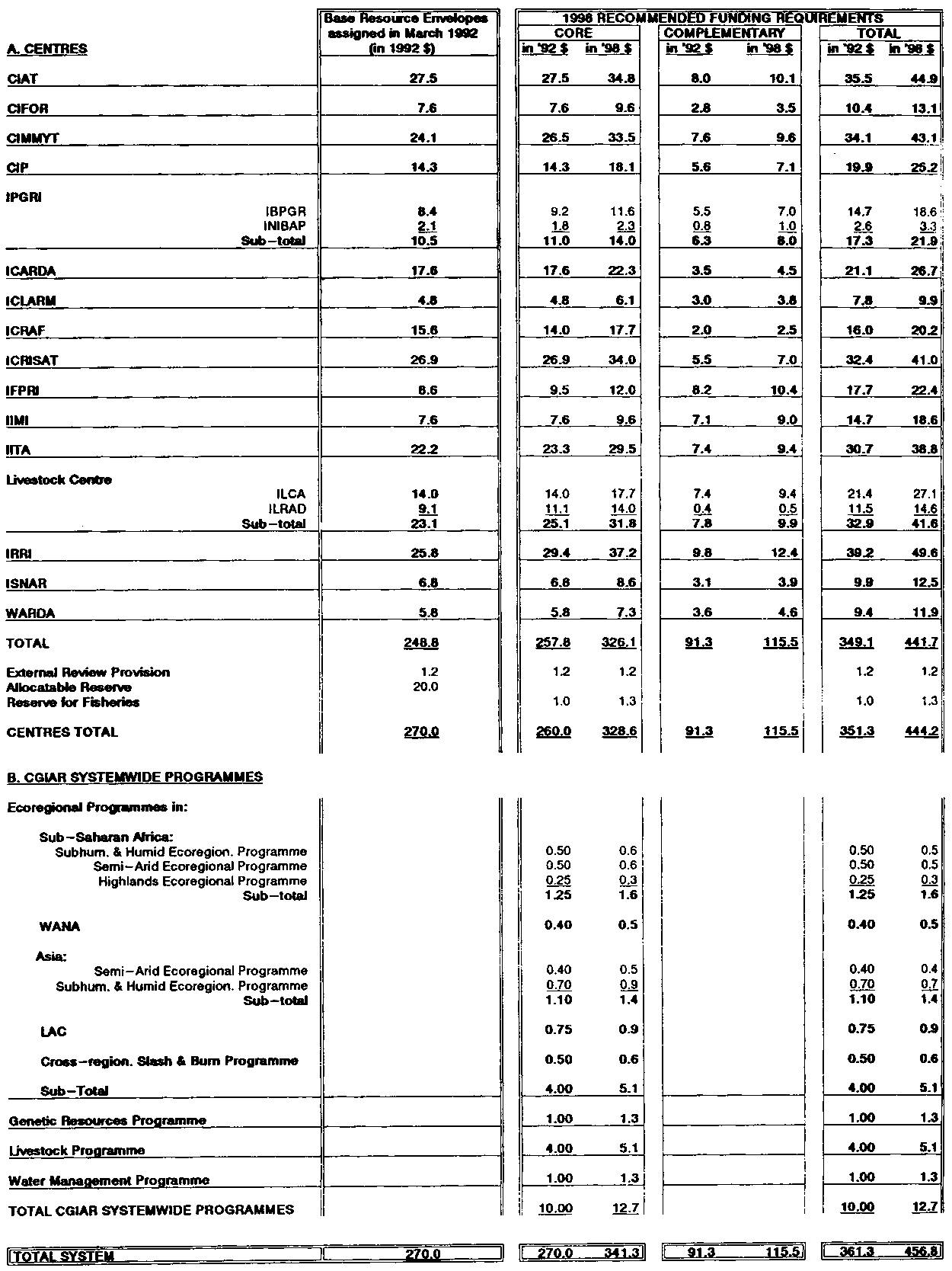
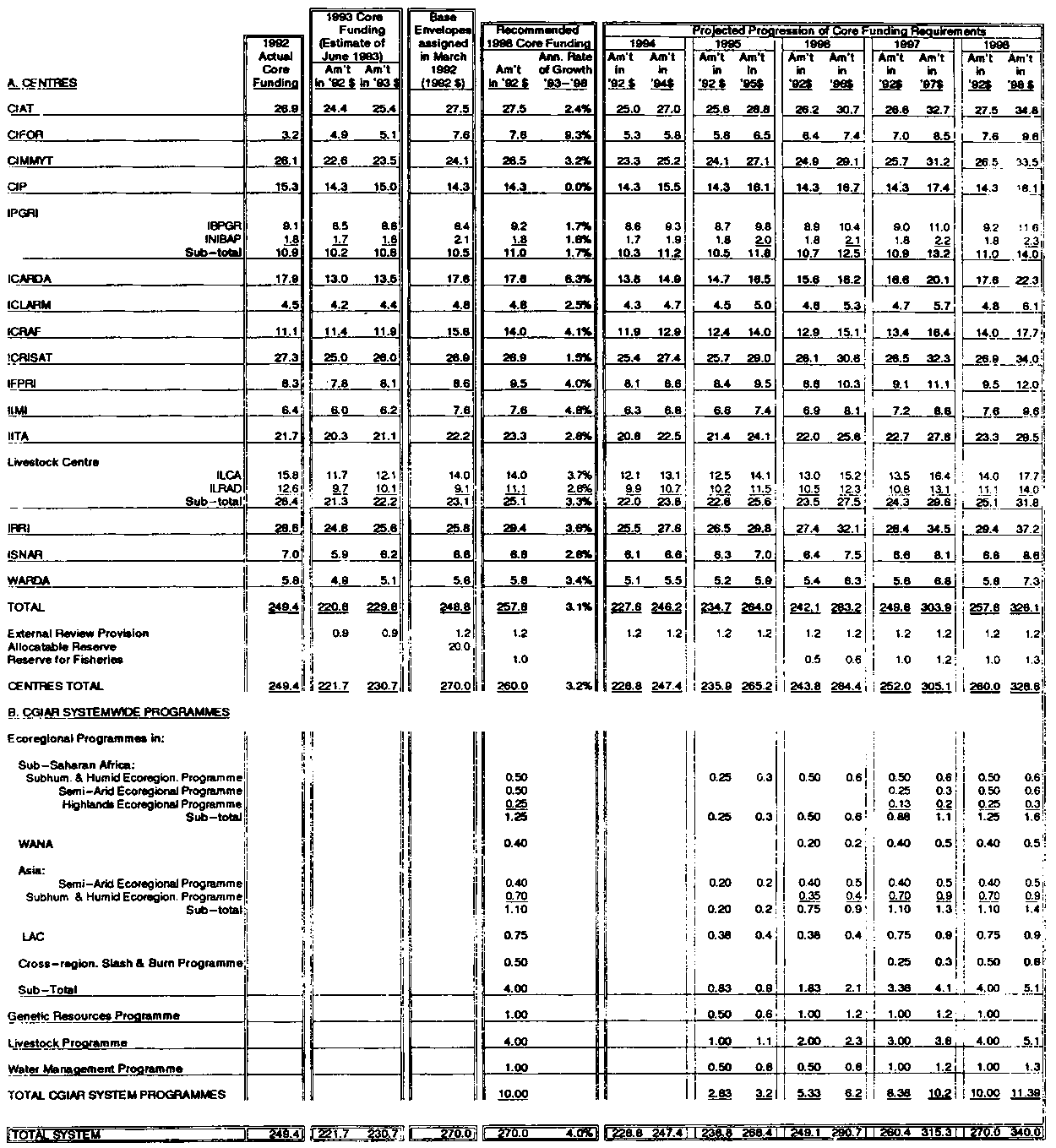
These recommendations, expressed in both 1992 and 1998 values (US$ 270 million and US$ 361 million respectively), by centre and by CGIAR Systemwide initiative are presented in Table 3.1. Section A of the table presents each centre's recommended funding in conjunction with its 1992 estimated funding, the amount of complementary funding projected for 1998 in both 1992 and nominal dollars, and the resulting total centres' 1998 funding requirements in both 1992 and current dollars. Section B of the table presents TAC's recommendations for CGIAR Systemwide initiatives totalling US$ 10 million in 1992 values, or US$ 12.7 million in current 1998 values.
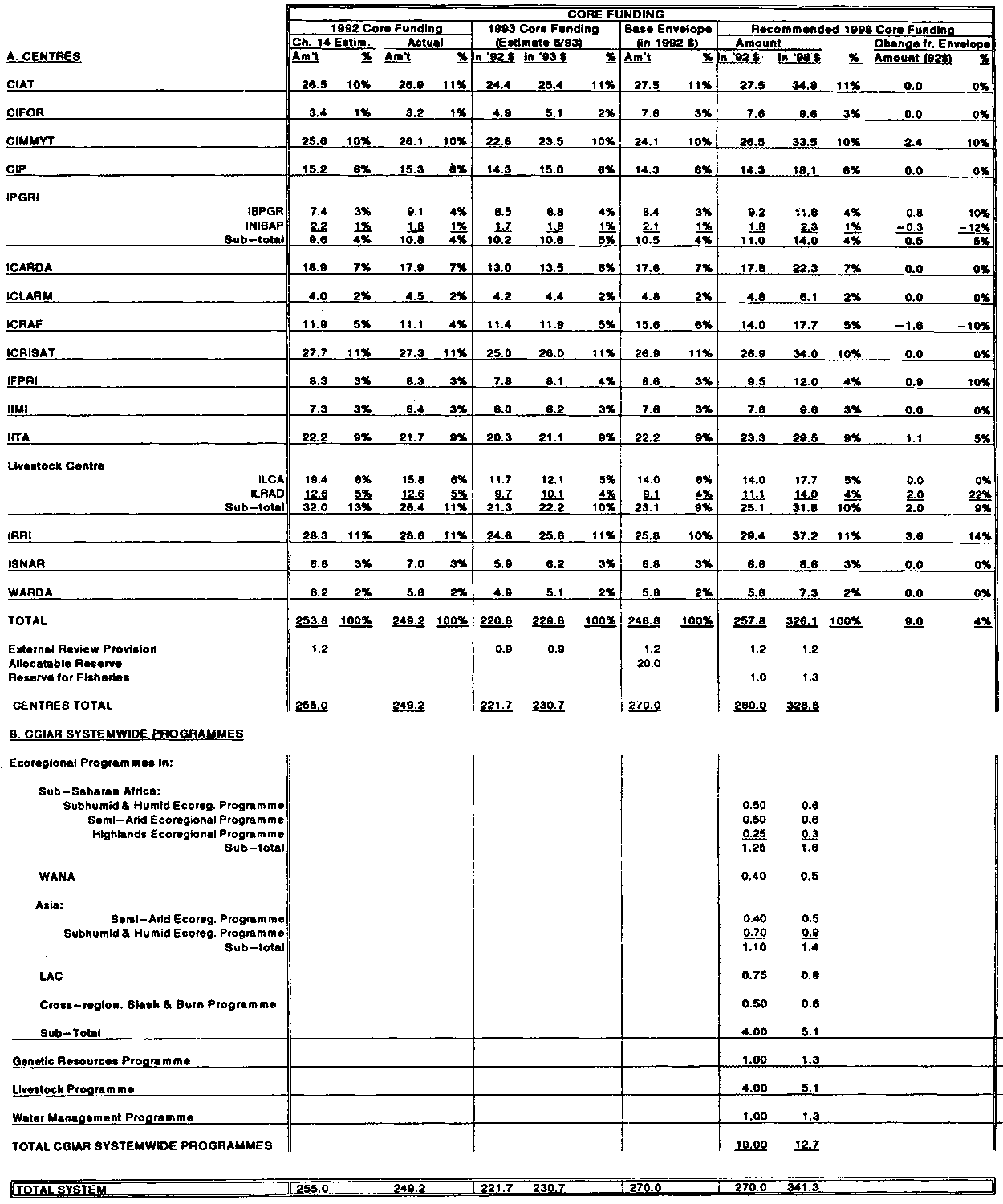
Table 3.2 compares TAC's recommendations on 1998 core allocations with actual funding in 1992, both as estimated (at the time of formulating tentative resource envelopes) and actual, with estimated 1993 core funding, and the indicative base envelope for 1998. The table also indicates the differences in dollar terms and in percentages between the indicative resource envelope and TAC's recommended level of 1998 funding.
The objective of TAC's recommendations on the allocation of core resources among centres and CGIAR Systemwide initiatives is to ensure that the System priorities and medium-term targets of change will be implemented effectively. In order to determine priorities and benchmarks for intended changes, and to allocate resources so as to achieve the priorities and targets, the CGIAR used an interactive process which involved TAC, centres, donors, national programmes and other stakeholders. As a consequence of the iteration and interactions, the perceptions of priorities, the required programme changes, and effective ways to achieve both were in a state of flux throughout the process since at each step, the prevailing view could be (and was) questioned or challenged.
For this reason and before closing the priority-setting and resource-allocation process, it was important for TAC to examine whether, and to what extent, the priorities originally proposed to, and endorsed by, the CGIAR had been changed or affected during the MTP process, due to external events (e.g., UNCED), CGIAR centre and stripe reviews or studies, and centres' own views on System priorities and their respective contributions to their achievement (through activities, regional distributions, etc.).
Table 3.3 assists in identifying any such changes and in evaluating their impact:
· the first column shows the estimated distribution of 1991 CGIAR core resources among the four main decision parameters, which constituted the basis for discussing and determining centres' indicative 1998 resource envelopes (see Chapter 14 of the report on CGIAR priorities and strategies);· the second column presents TAC's March 1992 recommendations of 1998 System resource allocation among these decision parameters;
· the third column presents the distribution of resources which, by aggregation, results from all centres' proposals (at their base resource envelope level);
· the fourth column shows the distribution which, in the aggregate, results from TAC's recommendations on individual centre core funding; and
· the fifth and last column shows the distribution of resources by activity, region, and production sector which results from TAC's recommendations on resource allocations to both centres and CGIAR System initiatives; in this case it is not possible to identify the distribution among commodities since several CGIAR System initiatives (the ecoregional and the genetic resources programmes in particular) will have commodity components which are not yet identified.
As Table 3.3 indicates, there is a reasonable degree of congruence between TAC's original recommendations on relative priorities and directional changes, and the relative priorities and directional changes which result from TAC's final recommendations on 1998 core resource allocations among centres and CGIAR System initiatives.
The fifth column of the table indicates that the integration of TAC's recommendations on CGIAR System initiatives reduces somewhat the disparity between the original 1992 recommendations and the outcome of the final recommendations of allocations:
By Category of Activity
· the overall allocation of 23% of 1998 core resources to category of activity 1 (natural resources) is above TAC's 1992 recommendation of 18%;· the allocation of 21% of 1998 core resources to category of activity 2 (germplasm enhancement and breeding) is below TAC's 1992 recommendation of 22%;
· the allocation of 27% of 1998 core resources to category of activity 3 (production systems research) is below the original recommendation of 29%;
· the allocation to category of activity 4 (policy research) is identical to the 11 % of total core resources in 1998 as recommended;
· the allocation of 19% of 1998 core resources to category of activity 5 (institution building) is below the original recommendation of 20%.
It is worth noting that, while there are differences in the magnitude of the changes, in all cases, except for activities in category 2, they are consistent with the originally-intended direction, but the implementation of the changes is accelerated, i.e., higher rates of increases, and faster reductions than originally anticipated. As indicated earlier, discrepancies may be due to differences in the classification of centres' operations in TAC's categorization of activities, especially in the overlap between natural resources conservation and management (category 1) and production systems research (category 3). Nevertheless, TAC is concerned about the high share of resources assigned to category 1 of natural resources conservation and management to research on 'ecosystem conservation'. This sub-category of activities has been assigned 16% of resources compared to 10% as originally recommended by TAC. This trend may have been partly donor driven and may be difficult to justify on programmatic terms alone. TAC is also concerned about the apparent reduction in category 2 (germplasm enhancement and breeding), although this may also be explained, in part, by differences in interpretation of the categorization of activities. TAC intends to carefully monitor the implications of these apparent discrepancies during the period of MTP implementation.
Table 3.3: Congruence of Priorities and Resource Allocations by Activity, by Region, by Production Sector, and by Commodity (in percentages)
|
|
1991 Distribution |
Priorities Paper's Recommendations for 1998 |
Centres' Proposals for 1998 |
Recommended 1998 Total Core Allocations to Centres Only |
Recommended 1998 Total Core System Allocations |
|
|
Categories of Activity |
||||||
|
1. Conservation & Management of Natural Resources |
13% |
18% |
23% |
23% |
23% |
|
|
|
1.1 Ecosystem conservation & management |
7% |
10% |
16% |
16% |
16% |
|
1.2. Germplasm coll., conserv., character., evaluat. |
6% |
8% |
7% |
7% |
7% |
|
|
2. Germplasm Enhancement & Breeding |
21% |
22% |
21% |
21% |
21% |
|
|
|
2.1 Crops |
20% |
20% |
19% |
20% |
19% |
|
2.2 Livestock |
0% |
0% |
0% |
0% |
1% |
|
|
2.3 Trees |
1% |
2% |
1% |
1% |
1% |
|
|
2.4 Fish |
0% |
0% |
0% |
0% |
0% |
|
|
3. Production Systems Development & Management |
33% |
29% |
25% |
24% |
27% |
|
|
|
3.1 Cropping Systems |
18% |
14% |
13% |
14% |
15% |
|
3.2 Livestock systems |
13% |
11% |
9% |
8% |
9% |
|
|
3.3 Tree systems |
2% |
3% |
2% |
2% |
2% |
|
|
3.4 Aquatic systems |
0% |
1% |
0% |
0% |
1% |
|
|
4. Socio-Economic, Public Policy. & Public Management Research |
9% |
11% |
11% |
12% |
11% |
|
|
5. Institution Building |
24% |
20% |
20% |
20% |
19% |
|
|
|
5.1 Training & Conferences |
9% |
7% |
8% |
7% |
7% |
|
5.2 Docum./Public./Dissemination of Info. |
8% |
6% |
8% |
7% |
7% |
|
|
5.3 Organization and Management Counselling |
2% |
2% |
2% |
2% |
2% |
|
|
5.4 Networks |
5% |
4% |
2% |
2% |
2% |
|
|
|
||||||
|
Regional Distribution: |
||||||
|
Sub-Saharan Africa (SSA) |
43% |
39% |
37% |
37% |
37% |
|
|
West Asia and North Africa (WANA) |
13% |
11% |
11% |
11% |
11% |
|
|
Asia |
29% |
33% |
32% |
33% |
33% |
|
|
Latin America and Caribbean (LAC) |
15% |
17% |
20% |
19% |
19% |
|
|
|
||||||
|
Production Sector/Commodity (Aggregation of categories 2 and 3) |
||||||
|
Cereals |
||||||
|
|
Rice |
15% |
14% |
16% |
17% |
|
|
Wheat/Barley |
10% |
9% |
8% |
9% |
|
|
|
Maize |
10% |
9% |
9% |
9% |
|
|
|
Sorghum |
4% |
3% |
3% |
3% |
|
|
|
Millet |
3% |
3% |
3% |
2% |
|
|
|
Cereals Subtotal: |
42% |
39% |
39% |
41% |
|
|
|
Roots & Tubers |
||||||
|
|
Cassava |
5% |
5% |
7% |
7% |
|
|
Potato |
4% |
4% |
6% |
5% |
|
|
|
Sweet Potato |
1% |
1% |
3% |
3% |
|
|
|
Roots & Tubers Subtotal: |
10% |
9% |
15% |
15% |
|
|
|
Food Legumes |
||||||
|
|
Phaseolus bean |
5% |
4% |
4% |
4% |
|
|
Faba bean/Lentil |
2% |
2% |
1% |
1% |
|
|
|
Chickpea |
2% |
2% |
2% |
2% |
|
|
|
Cowpea/Soybean |
3% |
4% |
2% |
2% |
|
|
|
Groundnut |
2% |
2% |
3% |
3% |
|
|
|
Pigeonpea |
1% |
1% |
1% |
1% |
|
|
|
Food Legumes Subtotal: |
16% |
15% |
14% |
14% |
|
|
|
Banana & Plantain |
||||||
|
|
Banana/Plantain/Yam |
3% |
3% |
3% |
3% |
|
|
Agricultural Crops Total |
70% |
66% |
71% |
74% |
71% |
|
|
Livestock |
24% |
23% |
20% |
18% |
21% |
|
|
Fish |
1% |
2% |
1% |
1% |
2% |
|
|
Trees |
4% |
9% |
7% |
6% |
7% |
|
|
TOTAL |
100% |
100% |
100% |
100% |
100% |
|
By Region
The implications of TAC's recommendations on resource allocation are largely congruent with TAC's recommendations on priorities by region. As Table 3.3 indicates, in the aggregate, the allocation of core resources to the four regions, as they result from TAC's final allocation recommendations, are broadly consistent with the original recommendations. The same comment applies as in the case of the distribution of activity, i.e., that the changes in direction are fully consistent but are happening faster in some cases than originally envisaged:
· 37% of total 1998 core resources would benefit sub-Saharan Africa which compares with 39% as recommended in 1992; this rapid reduction is in part linked to the reclassification of the regional relevance of some livestock research activities from a regional focus on sub-Saharan Africa to a global focus;· the share of the WANA region and Asia, at 11 % and 33 % respectively of total 1998 core resources, are fully consistent with the original recommendation; and,
· 19% of total 1998 core resources will benefit the LAC region, a marginally higher share than the 17% recommended in 1992.
By Commodity
With respect to the relative distribution of effort by commodity, and before considering the allocations to Systemwide initiatives, there is an increase in allocation for rice research, particularly in Asia. Cassava also benefits from a major increase in resource allocation, resulting largely from the incorporation of the biological control programme of IITA in the Centre's core operation.
In conclusion, it appears that, overall, the discrepancies between recommendations on priorities and resource allocation result more from different approaches to classification of CGIAR activities than from differences in substance. However, TAC will carefully monitor the distribution of effort and classification of activities during the MTP implementation period.
3.3.1. Approach
3.3.2. Additional Allocations to Centres
3.3.3. Additional Allocations to CGIAR Systemwide Initiatives
As indicated earlier in this report, centres were asked to provide TAC with information on the potential impact, on their programmes, of core funding at levels different from the indicative base resource envelopes assigned in early 1992. Because of the centres' concern that the planning level that drove the process was really constraining their ability to expose their full potential to donors, at the May 1993 MTP Workshop, TAC proposed, and the participants agreed, that it would present recommendations of allocation of core funding in excess of the planning level. This would also give the CGIAR insight into what it would forego if core funding were limited in 1998 to US$ 270 million. Therefore, TAC examined how an additional US$ 10 million could be effectively allocated; this would bring total core funding to US$ 280 million by 1998 or 10% above the total of centres' resource envelopes assigned in March 1992 (US$ 255 million).
To this effect, TAC members were asked to individually identify elements (i.e., centres, specific centre programmes or activities, regions, production sectors, commodities, or CGIAR Systemwide initiatives) which would merit increased support at a higher level of core funding. This information was collated, and each TAC member was asked to explain which elements he or she had selected and on what grounds. This paved the way for an in-depth discussion among TAC members of the relative merits of their proposals, and gradually led to consensus among the members in two steps, as in the process of determining the US$ 280 million vector, i.e., incremental allocations to centres, then to CGIAR Systemwide initiatives.
Following the process described above, TAC reached a consensus to recommend increased centre support for a total of US$ 4.3 million by 1998 (in 1992 values), pending core funding in 1998 at a level of US$ 280 million (in 1992 values). While the more detailed justification is provided in the centre-specific commentaries presented in Chapter 4, the following summarizes TAC's recommendations for each centre concerned:
|
CIAT: |
increase the 1998 recommended core funding of US$ 27.5 million (under the US$ 270 million vector) by US$ 0.75 million. This would allow the Centre to restore the commodity work which, as a result of TAC's recommendation on the funding level under the US$ 270 million vector, was expected to decrease; |
|
IBPGR: |
increase the 1998 recommended core funding level of US$ 9.2 million (under the US$ 270 million vector) by US$ 1.5 million for the development of IBPGR's work on forest genetic resources and biodiversity, in situ conservation/ethnobotany, and on population genetics and the genetic structures of populations; |
|
ICRISAT: |
increase the 1998 recommended core funding level of US$ 26.9 million (under the US$ 270 million vector) by US$ 1 million to encourage the further strengthening of inter-centre collaboration in the ICRISAT-led innovative resource management research programme in its Sahelian operations; |
|
ISNAR: |
increase the 1998 recommended core funding level of US$ 6.8 million (under the US$ 270 million vector) by US$ 1 million to enable the Institute to develop a more comprehensive research programme. |
Besides increments to centre core funding under the US$ 280 million vector, TAC also recommends increased support of CGIAR Systemwide initiatives under the same assumption for a total of US$ 5.7 million by 1998 (in 1992 values):
Ecoregional Initiatives: increase the 1998 recommended core funding level of US$ 4 million (under the US$ 270 million vector) by US$ 2 million to supplement the original allocations as follows:
· US$ 500,000 each to the African Highland initiative and to the Alternatives to Slash-and-Burn Programme; and· US$ 1 million to the other ecoregional initiatives to be distributed in the same general relative proportion as the original distribution under the US$ 270 million vector, as follows:
(a) US$ 200,000 for the initiative in the humid and sub-humid zone of sub-Saharan Africa for which IITA is the convening centre;(b) US$ 150,000 to the arid and semi-arid zone of sub-Saharan Africa initiative for which ICRISAT is the convening centre;
(c) US$ 125,000 for the WANA initiative for which ICARDA is the convening centre;
(d) US$ 125,000 for the initiative in the arid and semi-arid zone of Asia for which ICRISAT is the convening centre;
(e) US$ 200,000 for the humid and sub-humid zone of Asia initiative for which IRRI is the convening centre; and
(f) US$ 200,000 for the LAC initiative for which CIAT is the convening centre;
Genetic Resources: increase the 1998 recommended core funding level of US$ 1 million (under the US$ 270 million vector) by US$ 1 million;
Global Livestock Research: increase the 1998 recommended core funding level of US$ 4 million (under the US$ 270 million vector) by US$ 0.75 million to strengthen the linkages with other centres and to support livestock research activities in ecoregional initiatives;
Water Management Research: increase the 1998 recommended core funding level of US$ 1 million (under the US$ 270 million vector) by US$ 1 million to augment inter-centre collaboration on irrigated cropping systems research, including work on watershed management, human health issues in irrigated areas, and downstream environmental problems associated with irrigated agriculture; and
Fisheries: While the reserve for fisheries research would be maintained at the recommended level of US$ 1 million (recommended under the US$ 270 million vector), TAC recommends an additional US$ 1 million for global fisheries research in support of ecoregional initiatives, particularly on inland valleys, and for policy research work on common property resources and open access issues. ICLARM would be the likely convening centre for this initiative.
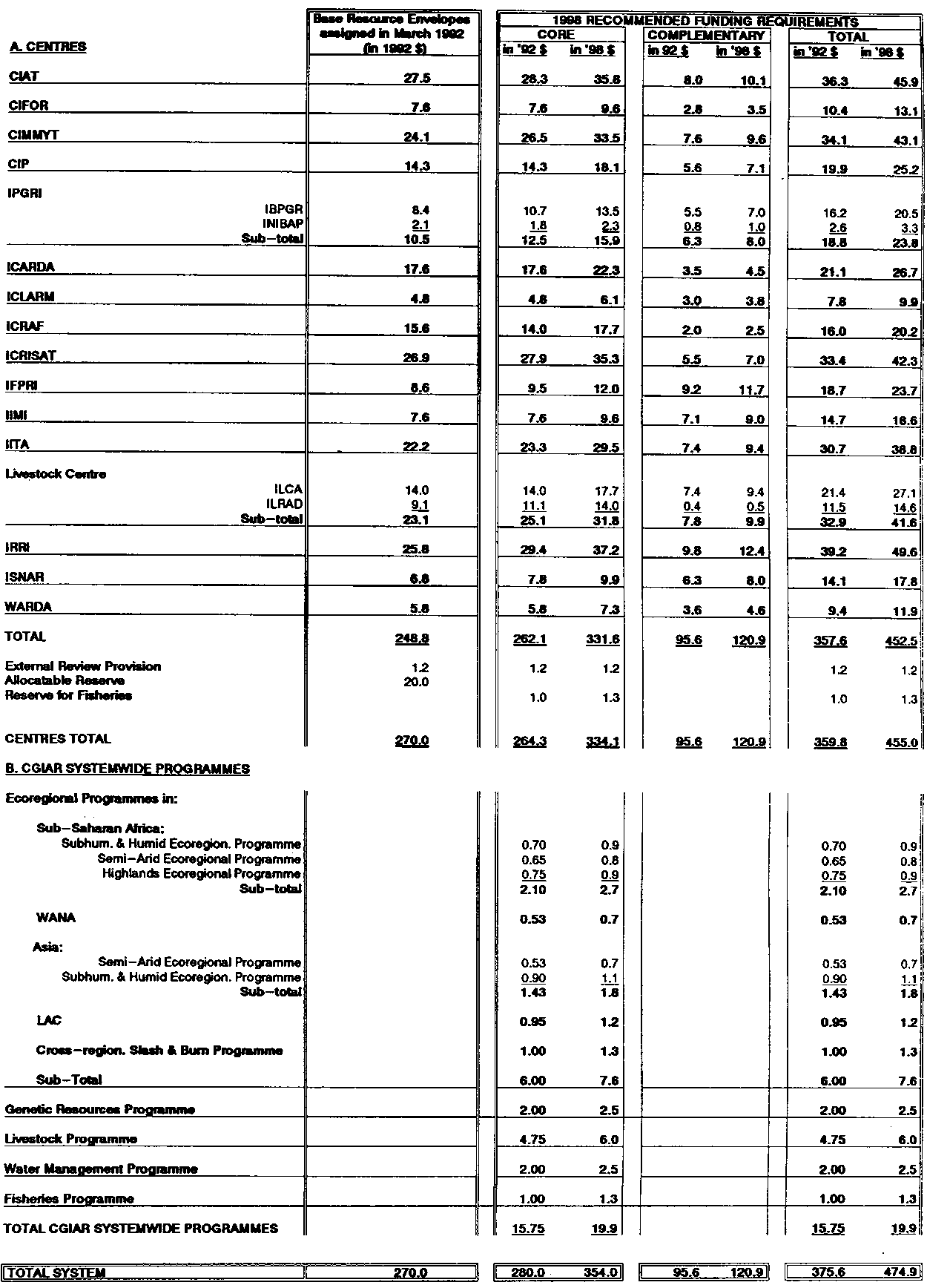
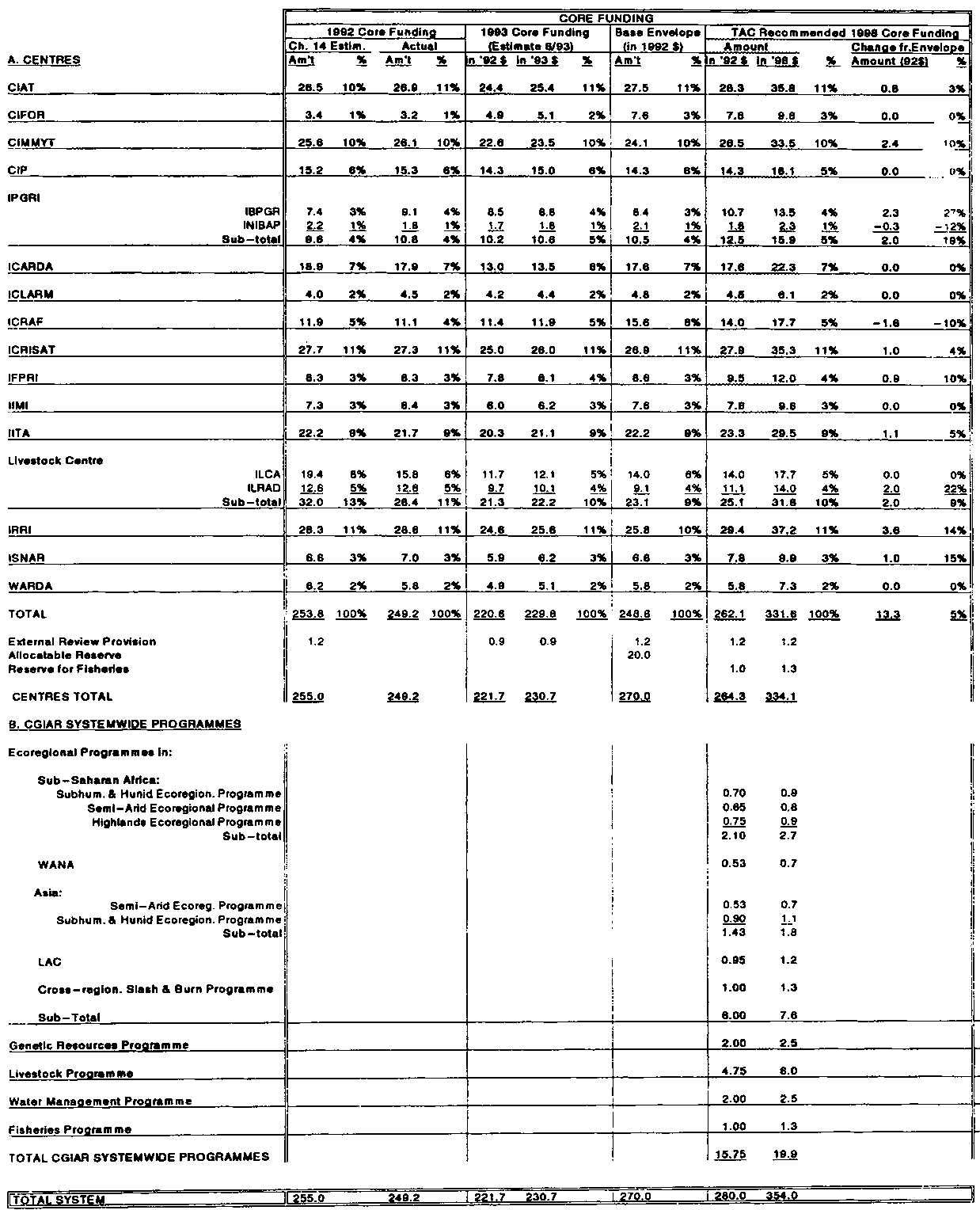
In ways similar to those used in Tables 3.1 and 3.2, Tables 3.4 and 3.5 show the TAC-recommended 1998 allocation at a System total of US$ 280 million (in 1992 values). Table 3.4 indicates the allocation by centre and by CGIAR System initiative, and includes centres' projections of 1998 complementary funding requirements as well as the resulting total 1998 funding requirements. As in Table 3.1, in the case of the US$ 270 million vector. Table 3.4 also indicates each centre's 1993 estimated core funding, and compares the proposed allocations with each centre's indicative, base resource envelope assigned by TAC in 1992. Table 3.5 also provides a comparison with funding in 1992, both actual and as estimated in Chapter 14 of the report on CGIAR priorities and strategies, and between indicative and final, recommended resource envelopes.
The CGIAR has experienced significant real and nominal declines in core funding in recent years. TAC therefore undertook a consideration of mechanisms for dealing with a potential shortfall of funds in 1998. Discussion at the MTP Workshop in May 1993 confirmed that it was appropriate for TAC to consider funding at least at 10% below the target figure of US$ 270 million for 1998 agreed upon at MTM'92.
Thus TAC, after completing the formulation of recommendations at the US$ 270 million and US$ 280 million levels, began consideration of how the System should cope with a possible significant sustained underfunding of as much as 10%, or US$ 30 million, below the 1998 funding target of US$ 270 million used by TAC and endorsed by the CGIAR.
In keeping with the conclusions of the Puerto Rico Workshop, TAC concluded that alternatives to simple across-the-board budgetary cuts should be explored. Thus, each Committee member was asked to identify elements (programmes, activities, centres, regions, production sectors and commodities) which could or should be curtailed or eliminated at reduced funding levels. The results of each member's proposed list was shared with the Committee and each member explained why cuts were proposed. There then followed a general discussion of what was the best way to proceed.
From the discussion it quickly emerged that it was the Committee's view that a sustained funding shortfall of such a magnitude (10% or more) could not and should not be accommodated by marginal budgetary adjustments across all centres' programmes. The Committee is fully aware of the fact that current (1993) nominal funding levels are in this range already. So far, some centres have coped with the shortfalls in mostly ad hoc and expedient ways.
Significant funding shortfalls on short notice have very serious consequences for research organizations with long-term programmes in place. While some CGIAR centres have undertaken substantive downsizing and programmatic restructuring, others have dealt with unanticipated shortfalls as best they could by measures such as: using reserves; drawing down and in some cases eliminating working capital funds; deferring contributions to depreciation accounts; not refilling positions vacated by resignation or retirement which results in random, not planned programme reductions; borrowing; and running deficits. These short-term adjustments are disruptive to centres' research work and are clearly not sustainable as solutions to long-term budgetary shortfalls.
The CGIAR may have assumed in recent years that funding shortfalls were a temporary phenomenon and therefore has not developed approaches to consider comprehensive restructuring of the System to accommodate sustained shortfalls.
TAC on two recent occasions (Chapter 11 of the 1990 Expansion Report, and the first draft of Chapter 13 of the 1992 Priorities and Strategies paper) has presented the CGIAR with a comprehensive set of structural options which could have led to savings in governance and management costs. On each occasion, the Group has had difficulty dealing with possible comprehensive restructuring. However, in May 1993, the CGIAR did make significant structural decisions on two components of the System - livestock and banana and plantain. In each case, the decision was preceded by a comprehensive priorities and strategy analysis by TAC and an institutional options analysis by a donor working group.
It is therefore TAC's conclusion that a reasoned, sequential approach to possible downsizing is more likely to be manageable than an across-the-board consideration of options despite the obvious merits of a comprehensive review. TAC proposes to undertake a series of across-centre/System stripe reviews on significant components of CGIAR activities. These could form the basis for similar approaches as were used in the cases of livestock and banana and plantain.
TAC presents in the revised Chapter 13 of the 1992 Priorities and Strategies paper a firm set of recommendations regarding priority-consolidated ecoregions and proposes mechanisms - convening centres and Systemwide initiative allocations - for furthering the implementation of ecoregional approaches. Also in the revised Chapter 13, TAC reviews carefully CGIAR global activities, both by commodity and subject matter. These reviews led to TAC's conclusions that recent decisions by the CGIAR on rice, livestock and banana and plantain have for the near term settled these issues. TAC concludes that the current arrangements for legume, coconut and fisheries research are appropriate and that past recommendations on vegetable research remain relevant from a technical point of view.
In Chapter 13, TAC proposes a series of approaches for future analysis of System priorities and structural modalities. While these are presented in more detail in Chapter 13, the essence is presented here in the sequence that TAC proposes to follow.
1. Genetic resources: Genetic resource conservation and management is the primary responsibility of IBPGR/IPGRI and a significant scientific activity in at least 11 other CGIAR centres. The CGIAR is a major holder of genetic resources of relevance to the developing world and could play a major leadership role in these increasingly important areas. TAC proposes to initiate in 1993, and complete in 1994 a strategic review of this activity to facilitate the development of a Systemwide strategy and programme in this vital area. TAC has also proposed System funding to new approaches in this area. The undertaking of this particular review does not necessarily imply reduced resources or restructuring in this vital area. Rather, it will address the question of Systemwide strategies and resource use efficiency.
2. Public policy, public management and institution building research: The CGIAR is investing an increasing share of its monetary resources in research and research-related activities in this area. Public policy research is the primary function of IFPRI but is an important area of work for many other centres including ISNAR, CIFOR, ICRAF and IIMI. Institution building is the primary function of ISNAR but almost all other centres engage in NARS strengthening activities. Public management is the primary concern of IIMI and ISNAR but many others are involved. Common property resource issues are important for IIMI, CIFOR, ICRAF, ICLARM and IFPRI. Therefore TAC proposes to initiate a strategic stripe review in this area to assist TAC and the CGIAR in defining a System strategy and exploring alternative structural options. TAC proposes to initiate this review in 1994.
3. Roots and tubers: Research on roots and tubers is currently dispersed across several institutes - CIP, CIAT and IITA. Fortuitously, each of these centres is scheduled for an external programme and management review during 1995. At the same time, TAC proposes to organize an inter-centre review on roots and tubers to assess the possibilities of a more optimal organization of research on the commodities involved.
4. Cereals: While rice was extensively reviewed in 1992-1993, a comprehensive look at how the CGIAR is organized to do research on the other cereals - wheat, maize, barley, millet and sorghum - seems appropriate but not as urgent as the other reviews already discussed. TAC proposes such an inter-centre review in 1996 which would both address structural issues and provide valuable inputs into the next review of CGIAR priorities and strategies.
5. CGIAR delivery mechanisms: The comprehensive and simultaneous review of 18 MTP proposals has given TAC and the CGIAR a complete snapshot of the CGIAR in all of its dimensions. One of these dimensions is geographic and one of the things that stands out is the growing number of CGIAR activities, facilities and programmes that exist side by side in many regions. Each taken separately no doubt can be explained rationally by the centre involved. However, looked at from a System perspective one must ask the question as to whether there are not more cost-effective ways of organizing the CGIAR presence in many regions.
Therefore TAC proposes to initiate a regional inventory of CGIAR facilities, personnel, programmes and activities in West Africa. This type of study, if proven useful, could be conducted for other regions as well. There is nothing ominous about the selection of West Africa. TAC chose it because many centres have a physical presence in the region - IITA, WARDA, ICRISAT, ILCA, CIMMYT, IFPRI, CIP, IIMI and ICRAF, to name only some. The study would identify physical locations of facilities, personnel resident in the region, programme expenditure and level of capital investment. In a period of sustained resource shortfall, all possible avenues of sharing and cost saving need to be explored. TAC proposes to initiate the study in 1994.
It is also noted that the revised Chapter 13 contains an extensive discussion of evolving programmes in forestry and agroforestry. The MTP proposals of the two centres involved show a high degree of complementarity and potential overlap. As TAC notes in Chapter 13, separate centre programmes and governance structures for ICRAF and CIFOR may be sustainable at full funding levels. But if funding levels continue to stagnate or decline, TAC suggests that prudence and efficiency concerns may point towards a re-examination of the two-centre approach.
The approach proposed by TAC is summarized as follows:
|
|
1993 |
1994 |
1995 |
1996 |
1997 |
|
Genetic resources |
X--------------X |
|
|
| |
|
Public policy and public management |
|
X |
|
|
|
|
CGIAR delivery mechanisms |
|
X------------- X |
|
| |
|
Roots and tubers |
|
|
X |
|
|
|
Cereals |
|
|
|
X |
|
|
Priorities and strategies review |
|
|
|
|
X |
The above set of proposals is obviously incomplete. Further reviews of the System's capacity to sustain its current portfolio of centres and activities in all regions, production sectors and commodities may be necessary if funding levels stagnate at 1993 levels or decline further. The reviews should provide options for a more cost-effective organization of CGIAR research in particular areas. TAC stands ready to advise on institutional options as it already has in Chapter 11 of the 1990 Expansion Paper and the earlier draft of Chapter 13 (priorities and strategies). However, we now believe the sequential component approach outlined in this section may be a more fruitful way to proceed than through complete System reviews.
3.5.1. Purpose
3.5.2. Methodology Applied by TAC
3.5.3. TAC's Recommendations of 1994 Core Funding and Allocations
3.5.4. TAC's Recommendations of 1995 Through 1997 Core Funding and Allocations
3.5.5. Implementation Monitoring and Funding Adjustments
The preceding sections describe TAC's views on what should be achieved by individual centres and through a number of Systemwide initiatives by the year 1998, and by what means. In a next step, TAC considered the mapping of the path which, starting from the present 1993 situation, will assure a gradual and effective achievement of the 1998 targets during the MTP period. To that effect, TAC indicated for each centre a pattern of allocation of core resources in each of the five years of the MTP period; once approved by the Group, the pattern will enable centres to finalize their medium term plans, and to construct annual programmes of work and budgets starting in 1994. Similarly for the inter-centre, Systemwide initiatives, TAC indicated the likely year in which each initiative is likely to start and how core resources should gradually be built up to the level recommended for 1998. For donors, this provides the basis for determining the level of future contributions and their allocation among centres and programmes.
In the process of formulating core funding recommendations for 1994 through 1997, TAC perceived the need, on the one hand, to be consistent with its recommendations for 1998 and, on the other hand, to relate somehow its short-term recommendations to current core funding trends in the CGIAR.
For TAC to formulate recommendations on resource allocation over the medium term, the Committee needed to make assumptions with regard to both the likely level of core funding for the System in the first year, and the pace of implementation of centres' programmes and budgets between the present and 1998. Several possibilities exist in formulating these assumptions.
At the System level, among at least two possible approaches7, TAC chose the option which, from a supply perspective, implies that the current estimate of core funds available to centres in 1993 (US$ 231 million, or US$ 221 million in 1992 values) constitute the benchmark to determine an average, annual rate of real growth necessary to reach the 1998 recommended level of core funding. This produces, in the aggregate, an annual, average real rate of increase for centres' requirements of 3.1% - from US$ 221 million in 1993 to US$ 258 million in 1998 both expressed in 1992 dollars.
7 The other option - from a demand perspective - would imply that the required core funding in 1994 be derived from the difference between the funding estimated for 1992 (when 1998 indicative envelopes were set) and the sum of those envelopes for 1998; i.e., by relating the then-estimated 1992 funding of US$ 255 million to the 1998 recommended level of US$ 270 million (in constant 1992 terms).
At the centre level, TAC also selected from among two possible approaches to set yearly core funding levels for each centre8. The option chosen by TAC consists in using, for each centre, the average, annual rate of growth between the centre 1993 estimated core funding and its recommended 1998 funding level. When applied consistently to all centres, this approach implies that all centres will progress in a linear mode from their respective 1993 funding levels towards their 1998 target funding level. The major reasons for TAC to select this option over the alternative, was that the alternative would have imposed a distribution of resources among centres in the very early years of the MTP period. This distribution, however, is actually intended to be achieved through gradual implementation of programme changes over the five-year period. In addition, by ignoring present levels of centres' funding, the alternative approach could have produced anomalies; e.g., a centre, not well funded in 1993 but with a high rate of growth in 1998 compared with 1993, could have a recommended 1994 core funding level considerably higher than in 1993, possibly unattainable for donors and the centre alike.
8 The alternative option consists in using the relative distribution between centres of the 1998 core funding of US$ 258 million (i.e., exclusive of the allocations to CGIAR System initiatives) and applying the distribution to the 1994 System funding in 1994 projected as described above, i.e., using the System's average growth rate of 3.1 %.
The option selected by TAC, i.e., the linear progression from 1993 towards 1998, is not flawless in that a centre's future resource allotment, resulting from the linear progression, is highly contingent on that centre's funding in the year of reference, i.e., 1993, which is not (or not necessarily) related to programme or priority considerations.
The application of the average rate of growth of 3.1 % to 1993 System core funding produces a core funding level of US$ 228 million in 1994 (in 1992 dollars). Augmenting this amount by an annual rate of 4% for cost adjustments translates it into US$ 246 million in 1994 dollars. Including a provision for external reviews, the nominal core funding requirement for the centres' aggregate will thus amount to US$ 248 million in 1994 dollars. The latter compares with US$ 230.7 million in 1993 and calls for a nominal increase of US$ 16.8 million, or 7.3%.
It should be noted that, because of the newness and thus experimental character of the CGIAR Systemwide initiatives, and the time required by centres to make specific proposals, TAC did not recommend initiating any of these during 1994.
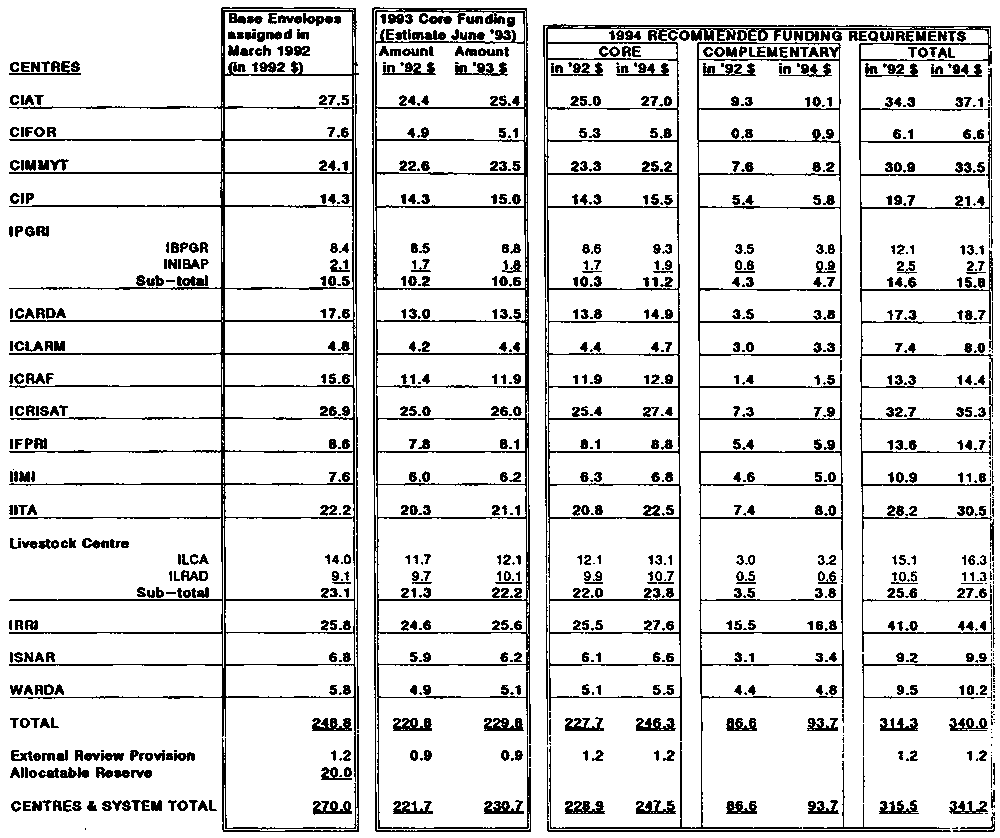
The outcome of TAC's recommendations of 1994 core funding is presented in the table below, by centre and for the System as a whole.
Recommended 1994 Core Funding
|
Centre |
Amount in 1992 |
Amount in 1994 |
|
CIAT |
25.0 |
27.0 |
|
CIFOR |
5.3 |
5.8 |
|
CIMMYT |
23.3 |
25.2 |
|
CIP |
14.3 |
15.5 |
|
IBPGR |
8.6 |
9.3 |
|
ICARDA |
13.8 |
14.9 |
|
ICLARM |
4.4 |
4.7 |
|
ICRAF |
11.9 |
12.9 |
|
ICRISAT |
25.4 |
27.4 |
|
IFPRI |
8.1 |
8.8 |
|
IIMI |
6.3 |
6.8 |
|
IITA |
20.8 |
22.5 |
|
ILCA |
12.1 |
13.1 |
|
ILRAD |
9.9 |
10.7 |
|
INIBAP |
1.7 |
1.9 |
|
IRRI |
25.5 |
27.6 |
|
ISNAR |
6.1 |
6.6 |
|
WARDA |
5.1 |
5.5 |
|
Centres' Total |
227.7 |
246.3 |
|
External Reviews |
1.2 |
1.2 |
|
SYSTEM TOTAL |
US$ 228.9 |
US$ 247.5 |
These recommendations are described in greater detail in Table 3.6 which presents the total recommended 1994 core funding requirements (US$ 229 million in 1992 dollars, or US$ 248 million in 1994 values) in the context of centres' total funding requirements, i.e., US$ 341 million in 1994 dollars inclusive of US$ 94 million in complementary funding. The recommended 1994 core funding is also presented in relation to the 1998 resource envelopes and reserves assigned in March 1992, as well as to current estimates of core funding in 1993.
Consistent with the procedure followed for determining core resources for the System as a whole and for individual centres, the core resource allocations for each of the three intermediary years were projected in two steps.
The first step consisted in applying to each centre, and to the centres as a whole, the linear, average rate of growth between 1993 and 1998 - i.e., 3.1% per year for the centres' aggregate - to each of 1994, 1995, and 1996 to assess the following year's funding requirements.
Table 3.6: Recommended 1994 Core and Complementary Funding Requirements (US$ Millions)
In a second step, the 1998 allocation to CGIAR Systemwide initiatives were built up gradually over the four-year period (1995-98). This TAC did on the basis of the relative priorities of the proposed global initiatives, of the degree in which the proposal represents a new activity or the expansion of a not yet fully developed initiative, and in accordance with the likely timing for convening and partner centres to prepare and submit concrete proposals for review and approval.
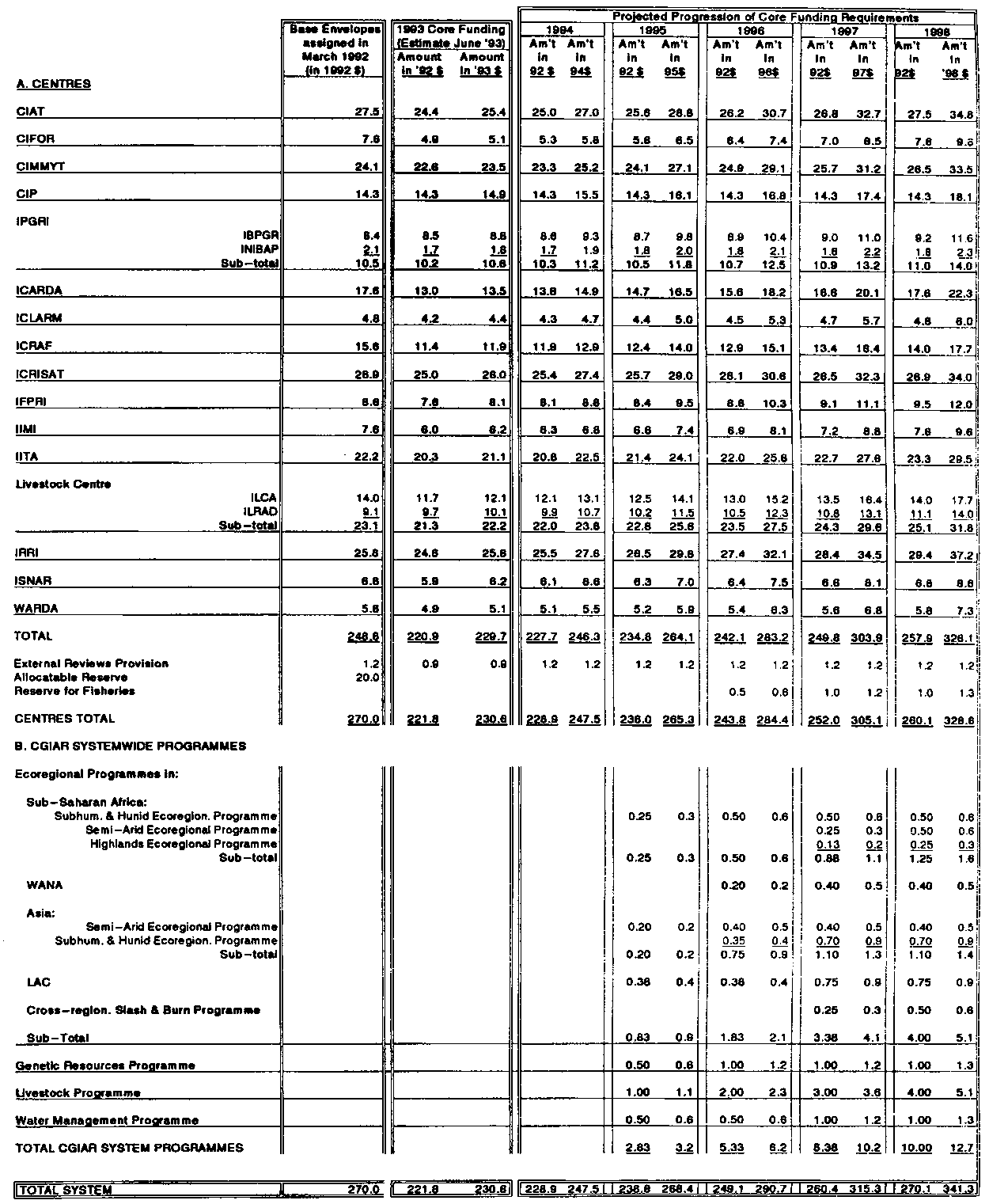
Thus, for each of the intermediary years, the projected allocation of resources consists of two components, i.e., a centre-focused resource allocation and a CGIAR Systemwide initiatives' allocation, the sum of which composes the System total core resource requirements in each of the years.
These projections, at the US$ 270 million vector, are summarized in Tables 3.7 and 3.8 which show the projected progression of core resource allocations to centres and the CGIAR Systemwide initiatives for each of the intermediary years of the 1994-98 MTP period.
Table 3.7 compares the medium-term core resource requirements with 1992 core funding estimates when the 1998 indicative envelopes were assigned, and with 1993 funding as currently estimated. In all cases values are given in constant 1992 dollars and in current terms.
Table 3.8 presents the projections and recommendations in the context of 1992 actual and 1993 estimated core funding, and of the 1998 indicative resource envelope as assigned in March 1992.
As indicated earlier, the final recommendations refer to the achievement in the medium and longer term of priorities and to a consistent allocation of core resources to that effect.
This requires monitoring, through the process of annual programme and budget review and approval, of both the programmatic and financial performances of centres, programmes and the System.
The programme monitoring will oversee and regulate the gradual implementation of programmes and changes thereof, and of the achievement of intermediate targets and longer-term objectives.
The financial monitoring will watch, at the System, individual centres and Systemwide initiatives level, the progress made in resource mobilization and utilization, and indicate - when and where needed - which corrective action need to be taken so as to assure a reasonable match between supply and demand at the respective levels.
In addition, the current, highly uncertain funding environment is not likely to change drastically in the very near future. Thus the CGIAR should have at its disposal a non-discriminatory tool to deal with moderate, annual funding variances in a simple and transparent way which treats all centres fairly and which is consistent with the System's views on relative priorities. More significant variances will call for different, non budgetary approaches similar in nature to those described in Section 3.4.
The option for determining centres' 1994-97 core funding on the basis of a linear progression from 1993 to 1998 offers a simple and transparent mechanism to adjust centres' core funding, in any year of the MTP period, to any level of System core funding.
To illustrate this, three scenarios can be envisaged:
(a) CGIAR core funding, in any year, increases in real terms by more than the average, aggregate growth rate between 1993 and 1998. In this case, all centres' average growth rates would be increased in the same proportion as the average increase exceeds the projected 3.1%. For example, if 1994 core funding is 4.5% above 1993 estimated core funding in constant terms, the average growth rate of each centre is increased by 45% (i.e., 4.5% compared to 3.1%). The resulting, centre specific new average rate of growth is then consistently applied from 1994 through 1998, which should result in an upward adjustment of each centre's 1998 target amount.(b) CGIAR System core funding in 1994 is greater in real terms than in 1993 (i.e., US$ 221 million in 1992 dollars), but the rate of growth is smaller than 3.1%. In this case, all centres' average rates of growth would be reduced in the same proportion as the 1994 core funding (expressed in constant terms) is below the projected 3.1% rate of growth. For example, if the 1994 core funding is 2% above the 1993 estimated core funding in constant terms, the growth rate of each centre would be adjusted downwards by 35%. The new average, centre specific rate of growth rate is then consistently applied from 1994 through 1998, which should result in a downward adjustment of each centre's 1998 target amount.
(c) CGIAR System core funding in 1994, expressed in constant dollars, is below the level estimated for 1993 (US$ 221 million in 1992 dollars). Under this scenario, a more complex approach is required consisting in (i) first, determining for each centre its core funding in the past two years9 as a percentage of the System core funding in those years; (ii) second, in applying each centre average percentage to the estimated System core funding in the year of concern; and, (iii) third, adjusting the resulting relative percentage of each centre with the centre's linear growth rate between 1993 and 1998.
9 Averaging out two years should moderate the impact of abrupt changes in funding (e.g., an unexpected reduction in, or withdrawal of, a donor's contribution) or other aberrations (such as delays in renewal or extension of restricted project agreements).
This formula should allocate the shortfall in core funding, below the previous year's level, among centres in a fair way by taking as reference points both their actual funding in the past two years and the directional changes aimed at by the medium-term resource allocation, i.e., the centre's linear progression between 1993 and 1998.
The adjustment mechanism should in principle be applicable throughout the period 1994-97 as far as the centres' proper allocations are concerned, and to the extent the variance between the projected and actual centre core funding do not exceed 5% either way. From 1995 onwards, the CGIAR Systemwide initiatives would be incorporated gradually in the System's annual programme and budget process, possibly through incorporation in centres' programmes of work and budget which will be submitted for review and approval on an annual basis.