1.1. Challenge of Food Security and Sustainability in Tropical sub-Saharan Africa
1.2. Origin and Evolution of IITA
1.3. Current Mandate and the Role of IITA
1.4. IITA Today
1.5. IITA's Response to the Recommendations of the 1990 External Review
Any cursory look at the biophysical and socioeconomic data for sub-Saharan Africa immediately gives rise to two fundamental conclusions. The first is the degree of heterogeneity that exists in the region in terms of resource endowment (climate, soils, population, etc.), institutional and infrastructural development, political stability and maturity, and commitment to development (including agricultural and rural development). The second is that, in terms of some human development indicators and almost any economic development indicator, SSA as a whole is continuing to deteriorate. Of course, given the diversity in SSA there are promising signs of progress in agricultural and economic development in a few countries, but in general the immediate and longer-term prospects are not encouraging.
Together with people in South Asia, people in SSA remain the poorest in the world. Unfortunately, in contrast to some progress in South Asia, the proportion living in poverty in SSA continues to increase. In fact, according to the World Bank, the number living in poverty increased almost 1.5% per annum between 1985-92. Although in recent years there have been modest increases in gross domestic product (GDP), partly as a result of structural adjustment polices being implemented by many countries, including currency devaluation, the result in per caput terms has been negative (because of continuing high population growth rates in excess of 3%). Between 1989-92, 23 out of 43 countries experienced negative per caput growth rates and only five countries had per caput growth rates of more than 2%.
The continuing inability of the non-agricultural sector to provide gainful employment for the rapidly rising population of SSA means the proportion of the population living in rural areas is still very high and on a par with that in South Asia (i.e. 72% compared with 75%). However, there the similarity ends. The success of the Green Revolution in many parts of Asia contrasts with the much poorer performance of agriculture in SSA. All indicators of improved productivity (e.g. crop yields, use of fertilizer, percentage of land irrigated) compare unfavourably. As a result, food production per caput in SSA continues to show a declining trend while food self-sufficiency ratios are low. The continuing lack of success of agriculture has contributed to an average income per caput that in SSA is only about 67% of that in South Asia.
Because of the high population growth rates and the lack of absorptive capacity in the non-agricultural sector, the total size of the rural population will increase by over 80% between 1980 and 2010, although the proportion of the population living in rural areas will continue declining.1 The rapid increases in the rural population dependent on agriculture, combined with a lack of adoption of improved technologies, helped to make SSA the region of the world with the highest annual rate of deforestation between 1980 and 1990.
1 This situation is somewhat paradoxical in the sense that, partly because of the lack of success in developing agriculture, a disproportionate share of the younger able-bodied population is likely to migrate to the urban areas, thereby increasing the relative shortage of labour in rural areas.
Efforts in expanding food and other biological production are increasingly resulting in intensification of land use. With reference to this there is obviously potential for greater use of irrigation. However, it is also apparent that most farmers will have to continue relying on rainfed agriculture, including the hydromorphic inland valleys. Although the output per unit of land in rainfed agriculture sometimes increases in the short term, indicators of environmental and resource base degradation have also manifested themselves through deforestation and consequent loss of organic matter, nutrient depletion, greater weed infestation and increased soil erosion as a result of increasingly shorter fallows. Food "security" in the short term must not be achieved at the expense of food security in the long term.
Thus, issues relating to both food security and sustainability are becoming increasingly important. Using the projected fertility levels, the World Bank estimates that by the year 2020 the food gap (i.e. the difference between food requirement and food production) would amount to an annual deficit of 243 million tonnes if food production increases at 2% per year. If food production increases at 4% per year, an annual surplus of 49 million tonnes would be produced. However, based on past performance, increases at the latter rate are unlikely. Thus, problems of attaining food security and sustainability will become increasingly serious unless population growth is reduced substantially and the non-agricultural sector develops rapidly and generates significant foreign exchange earnings to permit substantial imports of food - also unlikely developments.
Although expansion of the non-agricultural sector and the associated agroindustrial and agrobusiness activities, is critically important in the economic development process, in the meantime, the onus will continue to be on the agricultural sector as one of the main contributors to economic growth, as national economies diversify and regional markets grow. Relevant improved technologies and policies provide the ingredients necessary for the agricultural sector to contribute effectively to national development. However, many other factors such as infrastructure, delivery (including extension) and marketing institutions together with political commitment and support, determine how well those ingredients are used and exploited.
The justification for establishing the International Institute of Tropical Agriculture (IITA) in 1967 (and its sister Institute, the Centro Internacional de Agricultura Tropical - CIAT in Cali, Colombia) and later incorporating it in the Consultative Group on International Agricultural Research (CGIAR) System, was based on the following rationale.
In the tropical and subtropical areas of the world, food production was barely keeping pace with population growth, and in tropical SSA, annual per caput food production was actually declining. Hunger and malnutrition were recurrent problems, in particular during the African dry season against the background of a population which was mainly rural, poor, and growing rapidly in size. To alleviate hunger, reduce poverty, generate income for the small-holder farmers, and engender general economic growth, food production needed to increase at an unprecedented rate.
IITA was officially established under a Federal decree on 24 July 1967 in Ibadan, where the Nigerian government had donated a 1,000 hectare piece of land for the Institute, as an autonomous, non-profit corporation, to address the above challenges. Ford and Rockefeller Foundations were mainly responsible for the planning and original funding of IITA. Research work started in 1970 and in 1971, when the CGIAR was created, IITA became one of the four centres of the CGIAR System together with the International Rice Research Institute (IRRI), the Centro Internacional de Mejoramiento de Maíz y Trigo (CIMMYT) and CIAT.
The original mandate of the Institute was aimed at sustainable alternatives to shifting cultivation in the lowland humid tropics in Africa, and was based on the improvement of a basket of crops. In 1974, the Centre was working on a wide variety of legumes: cowpea, soybean, lima bean, African yam bean and velvet bean. Research on root and tuber crops covered cassava, yam, sweet potato and cocoyam and that on cereals: maize and rice. In addition work had been initiated on banana and plantain, vegetables, forage legumes and grasses, and multipurpose trees. According to the IITA 1971 Annual Report, the lowland humid tropics was interpreted as follows:
The environment of the total agricultural system of concern to IITA is the humid tropics at less than 600 meter elevation between 23"27'N or S of the equator and in which evaporation is less than precipitation for at least six months of the year.The farming systems programme interpreted its objectives as follows:
The farming systems programme's broad objective is to provide adequate food of good quality, fibre, housing and living standards at the highest level compatible with the resources available and the competing objectives for the people of the environment.
Thus, unlike IRRI and CIMMYT which had been established with only commodity improvement mandates, IITA (and CIAT) had a mixed mandate that included a responsibility for commodity improvement as well as for the development of production systems for the lowland humid tropics. This mixed and "broad" mandate, interpreted as described above, proved far too complex and difficult to implement smoothly for several reasons:
· The mandated crops were not confined to the production systems of the humid tropics in Africa, but were also important food crops in the humid tropics of other developing regions of the world.· Crops such as maize, sweet potato, cassava and banana/plantain were not confined to the lowland tropics, but were also important crops in the higher altitude areas.
· With some crops such as rice, maize and cassava, IITA's crop improvement mandate overlapped with those of other CGIAR centres; i.e. IRRI, CIMMYT and CIAT, which had crop improvement mandates for rice, maize and cassava, respectively.
· A number of the mandate crops such as cowpea, maize, sweet potato and cassava were also grown in the lowland subhumid and semi-arid areas of SSA, and were not confined to the production systems of the lowland humid tropics as defined by IITA above.
· Some mandate crops such as cowpea were mainly produced in the semi-arid areas of West Africa and maize, soybean and cowpea, as grain crops, had a much higher agronomic potential outside the lowland humid tropics.
· Other mandate crops such as yams were important mainly in West Africa, with most of the production located in Nigeria.
In 1992, the Institute celebrated its 25th anniversary. During its 25 years, IITA saw its mandate modified, partly as a result of the recommendations of the external reviews, to achieve greater cohesiveness and focus. The main modification of the commodity mandate was the reduction of the commodity portfolio first to eight crops (i.e. maize, rice, cowpea, soybean, cassava, sweet potato, yam and banana/plantain), and then to six (i.e. maize, cowpea, soybean, cassava, yam and banana/plantain). Responsibilities for sweet potato were transferred to CIP in 1987, and for rice to WARDA in 1990.
As the Institute approached its 20th anniversary in 1987, it developed its first Strategic Plan which was adopted by its Board in 1988. From IITA's long and complex formal mandate, the Board of Trustees distilled the following four operational programme objectives:
· "To develop systems of management and conservation of natural resources for sustainable agriculture in the humid and subhumid tropical zones."· "To increase the performance of selected food crops that can be integrated into improved and sustainable production systems."
· "To strengthen national agricultural research capabilities in order to accelerate the generation and utilization of improved technologies by means of training, information and other outreach activities."
· "To improve the quality characteristics and postharvest technologies in order to realize the more complete utilization of food crops within IITA's mandate."
In addition to IITA's interests in the humid and subhumid tropics of SSA, the Institute is involved in crop improvement work related to cowpea, maize and cassava in the "moist" parts of the semi-arid zone (i.e. parts of the northern Guinea savanna and the Sudan savanna) for which the International Crops Research Institute for the Semi-Arid Tropics (ICRISAT) has a primary responsibility for production systems and natural resource management research. IITA has maintained that its interest in the semi-arid areas arises only from a commodity viewpoint.
The Strategic Plan called for a reduction in geographical coverage, to West and Central Africa, of its primary emphasis on improving farming systems of lowland humid and subhumid tropics. This limitation did not apply to its Africa-wide commodity improvement work except for maize. Also, in addition to targeting the upland agroecosystems in the humid and moist savanna zones, the inland valleys in those zones remained an explicit target agroecosystem both because of the Institute's production systems mandate and because at that time rice was a mandate crop of the Institute.
1.3.1. IITA's Operational Mandate
1.3.2. Role and Relevance of IITA
IITA's founding mandate embraced agroecological and regional concerns as well as crop improvement concerns. While the mandate has been modified several times during the past 25 years, it has retained its basic characteristics which are: the promotion of the development of sustainable production systems through improved resource management, by devoting special attention to problems of environmental degradation and by developing more productive, stress-resistant varieties of the region's key crops. IITA's research mandate therefore refers to genetic improvement of maize, cowpea, soybean, cassava, yam and banana/plantain, to plant health management and to the development of systems for the sustainable use and management of natural resources in subhumid and humid African agriculture.
To reflect growing global concerns over food self-reliance, food security, equity and sustainability within the sub-Saharan region and in response to the revised CGIAR mission statement in 1990, the IITA Board of Trustees updated the Institute's mandate as stated in its current mission statement:
IITA aims to improve the nutritional status and well-being of low-income people in the humid and subhumid zones of sub-Saharan Africa by carrying out research and related activities for increasing agricultural production in a sustainable manner, in cooperation with national and international systems and institutions.
For the period 1994-1998 of the current Medium-Term Plan (MTP), the Strategic Plan was revised in 1993 to include a gradual expansion of IITA's geographical coverage into the humid and subhumid tropical areas of East and Southern Africa. Initial expansion is envisaged through an extension of the commodity improvement work on cassava and banana/plantain, to be followed later by production systems work as resources become available. Also, IITA no longer considers the inland valley agroecosystem to be a separate target agroecosystem and has oriented its research programme activities towards the Humid Forest Zone with a focus on West and Central Africa, the Moist Savanna Zone with a focus on West Africa, and the Mid-altitude Savanna with a focus on East and Southern Africa. This is complemented and supported by activities across agroecosystem.
In October 1993, IITA was designated as a convening centre for the CGIAR ecoregional programme for humid and subhumid SSA. The Institute is currently involved with potential partners in designing suitable initiatives for the ecoregional programme and has initially proposed work in three agroecosystems: the humid forest and the moist savanna to be coordinated by IITA, and the inland valleys, to be coordinated by the West Africa Rice Development Association (WARDA). Also, IITA was recently designated as the convening centre to facilitate the development of a Systemwide initiative in integrated pest management (IPM) through inter-centre collaboration.
The role of IITA in sub-Saharan Africa is defined in general terms by the Institute's mission statement given earlier. The corresponding research agenda is made to reflect a balance between activities aiming at immediate and medium-term productivity gains, including postharvest research and at ensuring long-term sustainability of the resource base used for such production. In directing these research and related activities, account is also to be taken of the need for food self-reliance and equity in order for IITA to contribute to poverty alleviation and economic development within the mandate area. The Panel concurs with this general definition of IITA's role in the mandate region.
The Panel notes that IITA's crop research mandate is broad. One consequence is that, in its role as an International Agricultural Research Centre (IARC), IITA relates to a correspondingly large array of partners, stakeholders and clients within and outside the region, ranging from National Agricultural Research Systems (NARS), other IARCs, other research institutions active in the same region, to non-governmental organizations (NGOs) and farmers.
The research-related activities mentioned in IITA's mission statement are those in training and information; these activities are essential for progress in research and contribute to the strengthening of the NARS's research capability. These are also activities for which IITA is receiving much recognition in the region. For a large proportion of the agricultural research community in SSA, in particular in West and Central Africa, IITA is performing the role of a scientific and professional reference base.
As mentioned earlier, IITA has been designated as the convening centre within the CGIAR for the development and oversight of an ecoregional programme for the warm humid and subhumid tropics in SSA. Ecoregional initiatives are designed to bring about a new quality of IARC-NARS interaction which crucially involves the design and use of well-structured innovative modes of consultation and collaboration. From the earlier conception of this relationship, as a process of transfer of technology, generated in a chain ranging from advanced research institutions and IARCs doing basic and applied research, over NARS performing adaptive research to extension and ultimately to the farmer, IITA is advocating a move to a new concept of collaboration in research. This new concept of IITA's role involves "the continuum that proceeds from the onset of the research process to its resolution" in which "national and international researchers and farmers are partners in a joint venture" where "collaboration achieves a collegial balance with effectively matched contributions at every stage" (IITA Annual Report 1993). Key features of this new approach to the definition of IITA's role in the region's agriculture are participatory modes of appraisal, priority setting, research implementation and technology testing. Distinctions between strategic, applied and adaptive research and extension and utilization phases are no longer as clear-cut as they were previously believed to be.
The Panel believes that this approach is the basis for the successful establishment of IITA's new role as an international ecoregional institution, with continental (cassava, soybean) and global (cowpea, yam, plantain/banana) commodity responsibilities as well as for the necessary integration of research on commodity improvement and resource sustainability.
The Panel further believes that while IITA can influence only part of the general development challenge, its contribution to the development of relevant improved technologies continues to be critically important. This continued relevance of IITA to the future development of SSA can be justified on the following grounds:
· The six crops included in the mandate of IITA, namely cassava, yam, maize, plantain/banana, cowpea and soybean1 are, in addition to rice, millet, sorghum, groundnut, Phaseolus beans and sweet potato, which are under the mandates of WARDA, IRRI, ICRISAT, CIAT and the Centro Internacional de la Papa (CIP), the major food crops in SSA.1 Actually soybean is currently not a major dietary item of the rural population but is rapidly increasing in importance as a cash crop.· The complexity of many of the problems in the humid and subhumid areas of SSA is likely to be beyond the expected capacity of the NARS to solve by themselves. In any case most of the NARS are becoming increasingly vulnerable to economic forces. According to the International Service for National Agricultural Research (ISNAR), although the number of researchers in NARS has expanded dramatically in recent years, with 36% still having B. Sc. degrees, the number of farmers per research worker has tripled during the last 30 years. Further, research expenditures as a percentage of agricultural GDP has decreased from a peak of 0.84% in 1981 to 0.55% in 1991. Relative support of the total research budget of NARS by external donors increased from 35% in 1986 to 43% in 1991 but this did not compensate for declining governmental funding and such high levels of international support are unlikely to be maintained.
· The consequence has been a reduction in operating expenses per researcher, resulting in their underemployment. Thus their effectiveness in technological development is in many countries being eroded. Consequently, it is increasingly unlikely that NARS will be in a position adequately to meet the agricultural research requirements even in adaptive and applied research, let alone at the strategic end of the research spectrum. Consequently, international agricultural research institutes such as IITA will increasingly have to take this undesirable trend into account.
· The commodity and regional mandate of IITA provides the Centre with the opportunity for facilitating scientific inter-country communication and material exchange, thereby potentially avoiding duplication of research effort and increasing the multiplier/payoff effect of research efforts.
· The agroecological mandate of IITA provides it with a unique opportunity to address sustainability issues through exploiting the biological relationships within farming systems. Given the budgetary crises in many NARS, it is likely that the limited research resources will have to continue focusing on productivity gains. However, in the long run, given the probability that governmental resources will continue to be limited, the only realistic way of incorporating sustainability issues will have to be through bringing about convergence between the short-term production needs of farmers (i.e. who understandably are concerned with maximizing profit, together with producing enough food to survive until the next production cycle) and the long-term sustainability of the farming system through exploiting the biological relationships within the systems. The need for strategic research to address sustainability issues under increasingly land-intensive farming systems is obvious and is something in which IITA has a comparative advantage.
A final point is in order. Although, as indicated above, IITA can continue to play an important role in addressing issues of food security and sustainability, it is not the only actor. To be fully effective and to maximize its multiplier effect, it must continue to collaborate with NARS and increasingly with NGOs and the emerging private sector, as well as with other IARCs and advanced institutions. This is particularly important given IITA's primary focus on the small family farm which is so dominant in SSA, and helps the issues of sustainable production and equity to be addressed simultaneously.1 Institutions within national programmes can make particularly important contributions to production systems and management research, although given the current state of many of the NARS the Panel urges increased collaboration, rather than the immediate devolution of such activities to such institutions, as was recommended in a recent TAC review of CGIAR commitments in West Africa (McIntire and Ouayogode, 1994: p. 2).2
1 Following a meeting with NGO's in 1993 the Board Approved the establishment of a NGO liaison office2 Obviously, if increased funding could be provided for national programmes to shoulder such responsibilities effectively, then this would need re-evaluation. However, the mission recommended that savings resulting from such devolution should be allocated to other research activities in IITA (McIntire and Ouayogode 1994; p. 51)
1.4.1. IITA Headquarters and Other Main Locations
1.4.2. Programme Strategy and Structure
1.4.3. Funding
1.4.4. Staffing
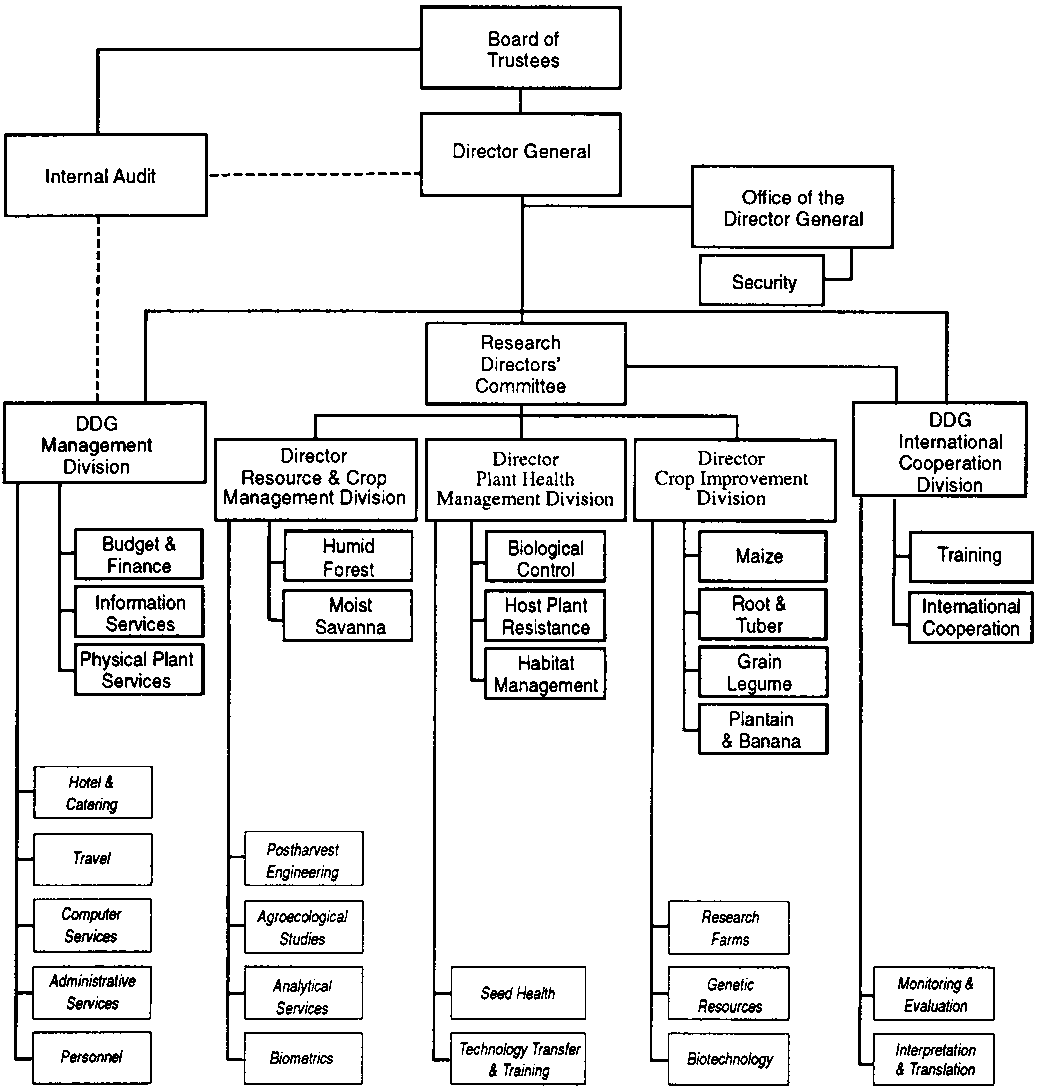
The staff who carry out IITA's work are organized as shown in Figure 1.1. IITA operates three Research Divisions: Resource and Crop Management Division (RCMD), Crop Improvement Division (CID) and Plant Health Management Division (PHMD), each headed by a Divisional Director and an International Cooperation Division (ICD), headed until recently by a Deputy Director General (DDG), International Cooperation. These four Divisions are supported by the Management Division (MD), headed by a DDG (Management). Research at the institute level is managed by the Research Directors' Committee (RDC) comprising the Director General, the three Heads of the Research Divisions and the DDG (International Cooperation). Moreover, inter-divisional research groups exists for Striga, cowpea wide crosses and biotechnology; postharvest technology and multipurpose legumes.
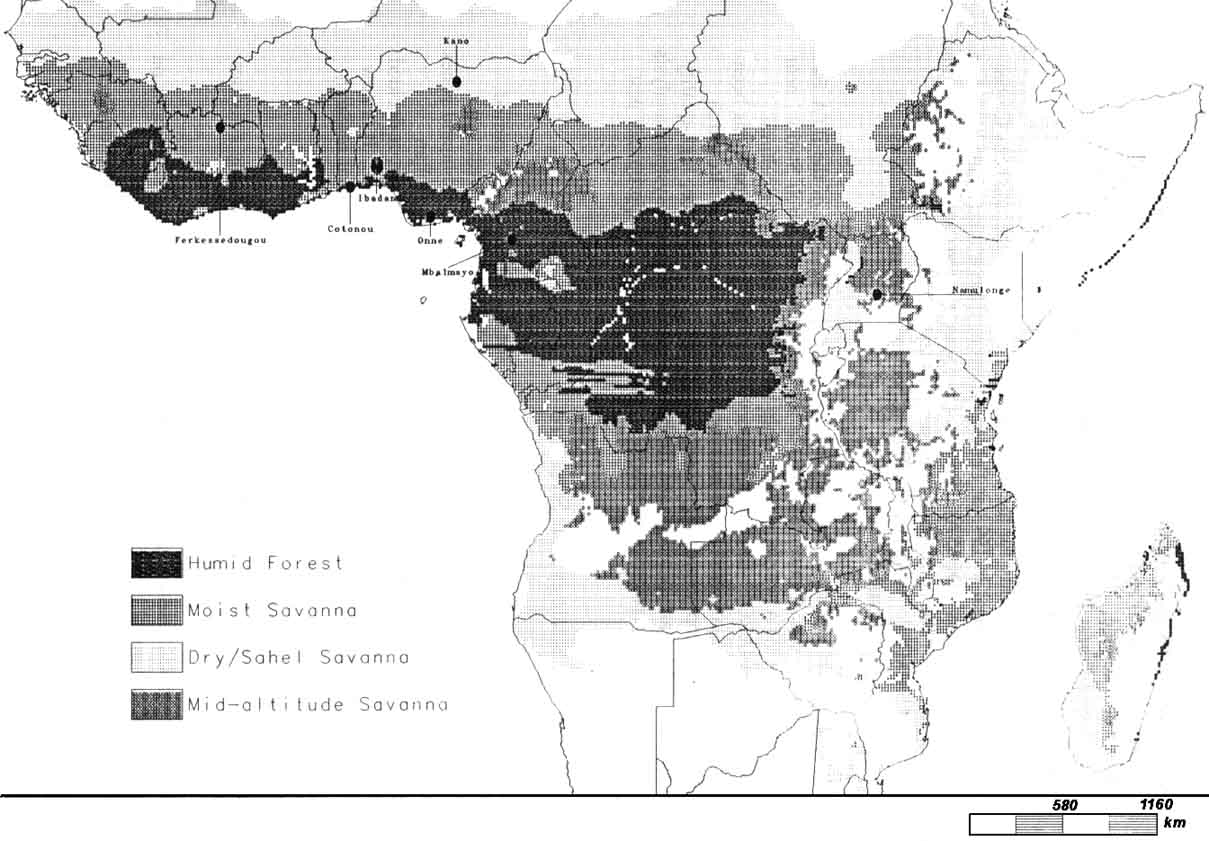
IITA has been implementing a policy to decentralize its operations in the region. IITA's operations are located in several countries in West, Central and East Africa (Figure 1.2.). IITA's Headquarters is located at Ibadan in the humid forest/derived savanna transition zone. Most of the Crop Improvement Division, the International Cooperation Division, the Management Division, the Moist Savanna Programme of the Resource and Crop Management Division, and the Host Plant Resistance Programme of PHMD are located at the Headquarters. During 1988, all biological pest control research, part of insect mass rearing and related training were transferred from Ibadan to Cotonou in Benin. Most members of the Plant Health Management Division and the Division's Director are now located at the Cotonou facility.
Since 1976, IITA has conducted research from the Onne station near Port Harcourt in Nigeria in the humid forest and coastal zone where plantain is a major food staple. After initial emphasis on plantain production systems, a breeding programme commenced in 1987. This initially focused on Black Sigatoka (BS) resistance with some related epidemiological research. As a result of major progress in developing BS-resistant hybrids, the breeding programme now addresses a wider remit for plantain improvement.
Figure 1.1. IITA Organization Chart April 1995
The Kano station located in the north of Nigeria in the Sudan savanna has been established within the premises of the Institute of Agricultural Research which is headquartered at Samaru. The research work at Kano is focused on cowpea improvement and on cereal-cowpea intercropping, as well as cowpea IPM and cassava germplasm for the semi-arid zone.
Since 1990, IITA has established its Humid Forest Station in the Cameroon at Nkolbisson, Yaoundé (offices) and at Mbalmayo (research station and offices), some 40 kilometres South of Yaoundé. This is a principal location for resource management research. The Humid Forest Programme of the RCMD and the Director of the Division are based there.
A small research facility for the moist savanna located in the northern Guinea savanna has become operational in 1993 at Ferkessedougou, Côte d'Ivoire in cooperation with the Institut des Savannes (IDESSA). Research is focused on maize improvement and on maize-based systems of the northern Guinea savanna and is being carried out in collaboration with CIMMYT. WARDA provides office space for the staff at its Headquarters at M'Bé near Bouaké.
In 1994, a start was made to establish infrastructural facilities of the IITA East and Southern Africa Regional Centre (ESARC) at the Namulonge Research Station, near Kampala, Uganda where IITA works in partnership with the National Agricultural Research Organization (NARO). Limited laboratory, office and housing space has been made available to IITA the construction of additional facilities is planned. Research activities focus on (a) development of improved disease and pest resistance, high-quality cultivars of cassava and banana/plantain, and (b) banana/plantain agroecosystems analysis to determine the economic importance of specific pests and to develop appropriate pest management programmes.
In addition to its six crop commodities, IITA, for the 1994-98 MTP period, committed itself to four operational strategies: (a) a regional emphasis on West and Central Africa, with a gradual expansion to include the warm humid and subhumid zones of East and Southern Africa, (b) a focus on the small-holder family farm, (c) an agroecological orientation and (d) concentration on farming systems. Further, it decided to decentralize its research in order to achieve greater proximity to the client. It is now also developing benchmark areas which should become increasingly important research locations.
As noted in the organizational structure (Figure 1.1), IITA's research programmes are located in RCMD, CID, PHMD. The institution-strengthening activities are based in ICD, whereas the information services are in MD.
RCMD conducts research in collaboration with NARS and other institutions on both the biophysical and social dimensions of the farming environment and on technologies which can improve or sustain farm productivity. Within the Division, two multidisciplinary programmes have been created: the Humid Forest Programme and the Moist Savanna Programme. This Division (and all other Divisions of the Institute) issupported by the Agroecological Studies Unit. The Division includes, in addition, the Biometrics Unit, the Analytical Services Laboratory, and the Postharvest Engineering Unit. RCMD is actively engaged in putting into operation the ecoregional approach to research.
CID's function is to help conserve genetic resources and to increase the yield, quality and stability of production of IITA's mandated food crops through plant breeding. CID works with national programmes to develop germplasm that is well adapted to various agroecosystems, resists pests and environmental stresses and suits farmers' and consumers' needs. The Division comprises four crop improvement programmes: maize, grain legumes (cowpea and soybean), roots and tubers (cassava and yam), and banana/plantain, together with two support units, the Genetic Resources Unit (GRU) and the Biotechnology Research Unit. The Division also runs the Centre's Research Farms in Nigeria.
PHMD engages in research on crop-pest-environment interactions, in partnership with national programmes and other institutions. PHMD's objectives are to develop and implement ecologically sound interventions for African farming systems, to provide solutions to today's plant health problems and prevent those of tomorrow. Within the Division there are three programmes: Biological Control, Host Plant Resistance and Habitat Management. The Seed-Health Unit and the Technology Transfer and Training Unit which focus on technology relating to plant health are also included in this Division.
ICD provides a platform for the essential tasks of supporting and strengthening NARS. These cover IITA's network and training activities, meetings and workshops, Research Liaison Scientist Scheme, the Visiting Scientists Scheme and the Resident Scientist Scheme. ICD is also responsible for the management of special projects. The Institute's Information Services in MD cover activities related to publications, library services and public affairs.
The current MTP (1994-98) developed by IITA and approved by TAC in October 1993 serves as a basis for IITA's programmatic efforts. Total core expenditure has grown from US$19.7 million in 1989 to $21.7 million in 1994. The share of IITA's research and research support activities as a percentage of total expenditure has grown from 58% in 1989 to 65% in 1994 (Table 1.1). This has been achieved by a decrease in the cost of research support and of finance and administration. The projected operating core budget for 1995 is $23.6 million.
IITA's total funding, core and special project, was at $35.7 million maximum in 1992 (Table 1.2.), when the Institute received $14.1 million (39.5% of total) for special projects. The recovery of indirect cost as percentage of special project cost was around 8% to 9% during the period 1989-93, but has increased to around 13% in 1994.
Table 1.1. Breakdown of IITA's Total Core Expenditure 1989-1995 (US $000s)
|
|
1989 |
1990 |
1991 |
1992 |
1993 |
1994 |
1995 Projected |
|||||||
|
US$ |
% |
US$ |
% |
US$ |
% |
US$ |
% |
US$ |
% |
US$ |
% |
US$ |
% |
|
|
Research |
9,000 |
46 |
9,599 |
47 |
10,113 |
51 |
11,986 |
55 |
11,302 |
55 |
12,751 |
59 |
13,784 |
58 |
|
Research Support |
2,346 |
12 |
2,266 |
11 |
1,664 |
9 |
1,680 |
8 |
1,703 |
8 |
1,600 |
7 |
1,673 |
7 |
|
Institution-Building |
2,176 |
11 |
1982 |
10 |
2,064 |
10 |
2,321 |
10 |
1,744 |
9 |
1,624 |
8 |
1,762 |
8 |
|
Finance & Administration |
6,145 |
31 |
6,749 |
32 |
5,861 |
30 |
5,898 |
27 |
5,650 |
28 |
5,737 |
26 |
6,358 |
27 |
|
Total Expenditure |
19,667 |
100 |
20,596 |
100 |
19,702 |
100 |
21,885 |
100 |
20,399 |
100 |
21,712 |
100 |
23,577 |
100 |
Source:Program and Funding Proposals (Actual)
(Excludes Depreciation and Capital Expenditure)
Table 1.2. Type of Funding 1989-1995 (US $000s)
|
Year |
Core Unrestricted |
Core Restricted* |
Non-Core or Special project |
Total |
Recovery of Indirect costs |
|
1989 |
16,954 |
4,563 |
9,701 |
31,218 |
818 (8.4%) |
|
1990 |
16,769 |
5,759 |
12,805 |
35,333 |
1,143 (8.9%) |
|
1991 |
17,098 |
5,262 |
11,914 |
34,274 |
983 (8.3%) |
|
1992 |
16,408 |
5,209 |
14,108 |
35,725 |
1,106 (7.8%) |
|
1993 |
14,982 |
5,837 |
13,267 |
34,086 |
1,137 (8.6%) |
|
1994 |
14,833 |
6,980 |
9,756 |
31,569 |
1,257 (12.9%) |
|
1995 Est |
16,300 |
7,000 |
8,500 |
31,800 |
1,200 (14.1%) |
Source: Audited Accounts*Includes Japanese contribution which has very nominal restrictions
The estimated total funding for 1995 is $31.8 million, of which $8.5 million (26.7%) is expected for special projects. The downturn in total funding has been a general phenomenon in the CGIAR System, although there is a marked improvement in the estimate for core funding in 1995.
The proposed resource allocation among Divisions and activities during the current MTP is: 24% RCMD, 25% PHMD, 23.0% CID (3% maize, 4% cowpea and soybean, 6% cassava and 6% yam and banana/plantain, and 4% all crops), 11% research support, and 17% international cooperation, information services and training.
At present IITA has a total of 1,950 staff, of whom 1585 (81 %) are on core and 365 (19%) on complementary funding. There are 129 internationally recruited staff (IRS), of whom 93 (72%) are on core. The number of IRS has declined steadily during the review period, from 158 in 1990 (including 117 on core) - see Table 1.3. At present there are 1,441 nationally recruited (local) staff at headquarters and at the various field locations.
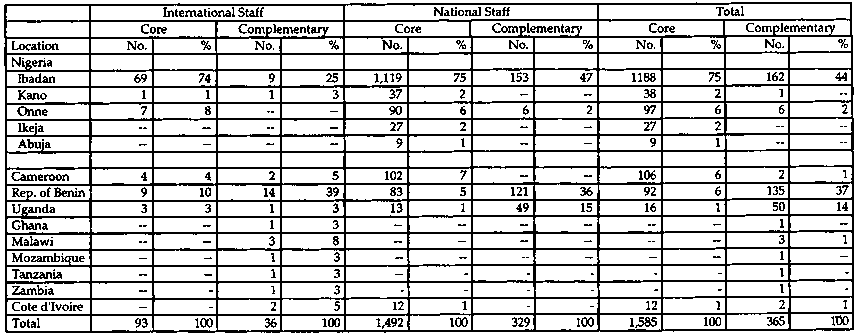
The majority (69; 74%) of the core-funded IRS are based at IITA headquarters in Ibadan, and the remaining are in the field, mostly in Benin and Cameroon - the divisional headquarters of the PHMD and RCMD divisions, respectively. In keeping with the Centre's decentralization policy, a substantial number (51) of the IRS are field-based and roughly half of them are funded from the core budget.
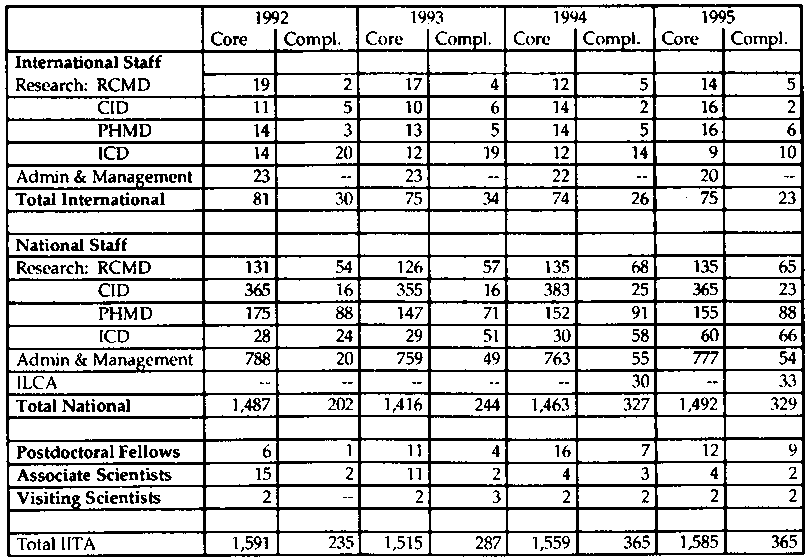
The staffing pattern during the period 1992-95 is shown in Table 1.4., by division. At present, the IRS are distributed almost equally among the research divisions (the range is 18 to 24 staff, including core- and complementary-funded staff). Administration and Management (ADM) has 20 IRS, in its various sections. During the last three years, the number of staff in PHMD has increased from 17 to 24, and in CID from 16 to 18. During the same period, RCMD staff has decreased from 21 to 19, ICD staff from 34 to 19, and ADM staff from 23 to 20.
The distribution of national staff by division is also shown in Table 1.4. As should be expected, ADM and CID have the largest numbers of locally recruited staff, reflecting the nature of the work performed in these divisions. Besides these staff, IITA has a substantial number of post doctoral fellows (21), Associate Scientists (6), and Visiting Scientists (4). The numbers of staff in these categories have increased steadily since 1992, partially offsetting the cuts in core and complementary staff noted above.
The distribution of international and national staff by location is shown in Table 1.5. The largest number of staff (1,350) are at Ibadan, mostly on core funds. The other divisional headquarters, in Benin and Cameroon, have much fewer numbers of staff (227 and 108 respectively).
Table 1.3. Total International Staff Strength (1989 -1995)
|
Location |
1989 |
1990 |
1991 |
1992 |
1993 |
1994 |
1995 |
|||||||
|
Core |
Compl. |
Core |
Compl. |
Core |
Compl. |
Core |
Compl. |
Core |
Compl. |
Core |
Compl. |
Core |
Compl. |
|
|
HQ |
97 |
5 |
94 |
4 |
86 |
7 |
85 |
3 |
75 |
8 |
71 |
9 |
69 |
9 |
|
Field |
14 |
35 |
23 |
37 |
23 |
20 |
19 |
30 |
24 |
35 |
25 |
29 |
24 |
27 |
|
Total |
111 |
40 |
117 |
41 |
109 |
27 |
104 |
33 |
99 |
43 |
96 |
38 |
93 |
36 |
Table 1.4 IITA Staffing by Division
Table 1.5. IITA Staff by Location - 1995
Overall, the cuts in staffing noted earlier are the result of the severe funding crises faced by the CGIAR and IITA during the past few years. As a result, the Centre has found it much harder than anticipated in the Medium-Term Plans (for 1989-93 and 1994-98) to implement its research programme. Despite this constraint, in the Panel's view, progress has been steady, as discussed at length in subsequent chapters.
The 1990 External Review of IITA made 36 recommendations, of which 19 were on its research programme and 17 on management. The recommendations were generally endorsed by TAC and the CGIAR. The IITA Board and management at that time, responded positively to most of them. The Panel considers that taken together, the recommendations were far-reaching but necessary, particularly since they further encouraged IITA's continuing efforts toward a leaner operating structure, greater organizational cohesiveness and further decentralization. IITA, to the full credit of all staff and Board, has implemented most of the recommendations with vigour and commitment. Although the results of some of the changes have not yet been fully realized, the Panel has been impressed with the progress achieved. The Panel considers that IITA has benefitted significantly as a result of these changes, which have been "incrementally" introduced, for which the Board and management deserve full credit.
IITA's action in response to the recommendations is tabulated in Appendix VI, together with this Panel's comments. According to the assessment by the Panel, IITA has fully implemented 21 recommendations, partially implemented nine recommendations and not implemented six. Overall, the Panel believes that IITA has taken positive, though sometimes incomplete action on most of the main recommendations. The Panel comments on IITA's actions in the appropriate sections of this Report.