4.1. Governance
4.2. Leadership and Organization
4.3. Research Management
4.1.1. Overview of the IITA Board of Trustees
4.1.2. Size and Composition of the Board
4.1.3. Frequency of Board Meetings
4.1.4. Management of the Board
4.1.5. Selection, Orientation and Development of Trustees
4.1.6. Research Policy and Programme Oversight
4.1.7. Management Policy and Operations Oversight
The 1990 EMR noted that the IITA Board of Trustees (BoT) had made significant progress in improving Board processes during recent years. This process of beneficial change has continued. The BoT is now composed of well-qualified Trustees who are committed to the Institute and its mission. They have developed a sound structure of committees with well-documented terms of reference and they continue to test new methods of performing committee and BoT tasks. Information needs and requests of the BoT are met promptly by management.
Although not having defined precisely the dividing line between "policy" and "management" decisions per se, the BoT and the Director General (DG) appear to have reached an implicit accommodation that serves their respective roles in a satisfactory manner. As the "Re-engineered CGIAR" further evolves, the role of the BoT can be expected to change somewhat and relationships with management may be modified. Neither the BoT nor the DG has come to grips with the full implications of that transformation - a situation no doubt shared by all of the IARCs at this early stage. In any event, the goodwill, trust and mutual respect that currently exists between the BoT and management in IITA can be expected to provide a sound basis for working out any adjustments that may be needed.
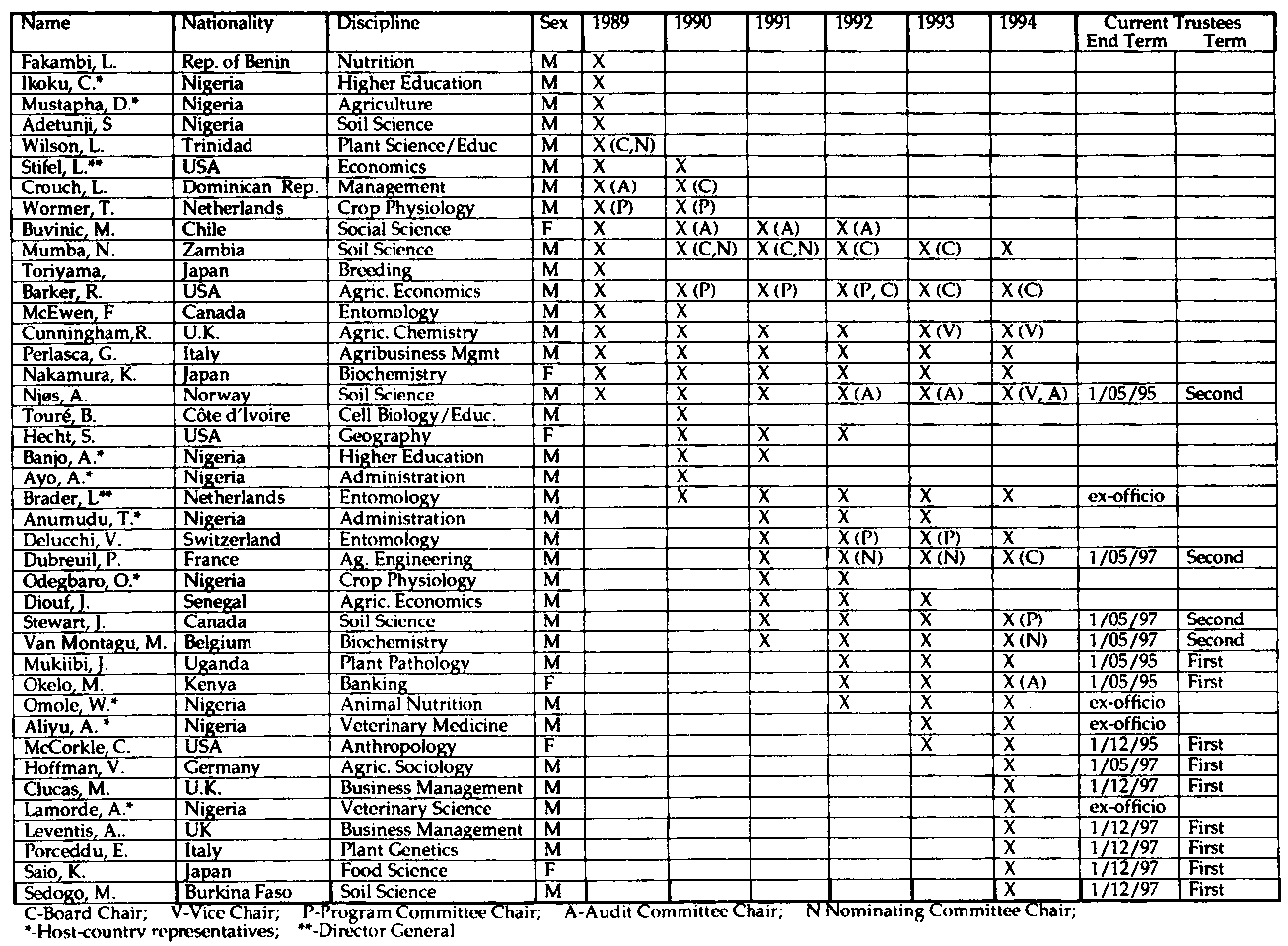
The BoT is authorized to have not less than nine and not more than 17 members. Four Trustees are ex-officio members, including the DG and three members from the host country. The BoT which is currently made up of 17 members (Table 4.1.) has made an effort to achieve regional balance among Trustees while maintaining the range of disciplines required to perform its responsibilities for oversight of research policies and programmes and of management operations. It continues to seek qualified women candidates. Twenty-one percent (3 out of 14) of the present Board-selected Trustees are women, which compares very favourably with other IARC Boards. In terms of composition, the Panel believes that besides having experienced business managers, the BoT should continue to include members who are formally trained and experienced in research management in order to help guide the complex management challenges in IITA.
Recognizing that 17 is a large number, the BoT has periodically reviewed the issue of whether or not one or two positions should be left unfilled, especially as a way of economizing on BoT expenses. This issue was revisited during the December 1994 meeting attended by the Panel consultant. As in previous years, the BoT noted that IITA is a research institute with a multicrop portfolio, operating in a region with wide agroecological zones. To achieve the desired range of scientific and managerial competencies, while maintaining regional balance, a satisfactory donor/non-donor country ratio and increasing the presence of women on the Board, a large majority of the Trustees felt strongly that a full complement of Board members should be maintained.
Table 4.1. Composition of the IITA Board of Trustees: 1989-1994
The Panel shares this view. However, currently, 11 out of 17 Trustees come from donor countries and there are only four members from African countries (Burkina Faso, Kenya, Nigeria and Uganda). If the BoT is to fulfil its commitment to bring the NARS and other collaborators into more effective participation in planning and executing a comprehensive research programme, the Panel suggests that the BoT (a) gives serious consideration to achieving a more equitable balance between donor and non-donor countries and seek to recruit well-qualified Trustees from collaborating institutions or (b) develops other consultative processes. The Panel also suggests that, since IITA stations are now hosted by several other countries, the BoT consider including one member from another host country (besides Nigeria) without increasing the number of ex-officio host-country representatives.
The BoT meets twice a year, usually in April and December, with the Executive Committee (EC) meeting one additional time (or more if the situation demands). To minimize costs, the BoT has adopted the practice of polling members by mail on urgent issues that cannot await the next regularly scheduled meeting. Considering the frequency of meetings, and the travel distances and difficulties involved, the attendance record has been good. Seldom have more than one or two BoT-selected members been absent in recent years, and such absences have usually been due to unexpected and uncontrollable circumstances. The BoT has a standing rule that two successive absences result in termination of the Trustee's membership, and the rule has been rigorously applied, with rare exceptions being made to meet unusual circumstances.
Conscious of the need to keep costs to a minimum, the BoT has periodically considered having one regular meeting a year, with only the EC and Programme Committee (PC) meeting twice. Members feel that since a majority of members serve on those two committees, any saving would be minimal and would deprive the remaining minority of the opportunity to be as informed about IITA's programmes and operations as the others. Furthermore, experience in recent years indicates that the frequent demands on the BoT generated by Strategic and Medium-Term planning exercises, the dynamic changes taking place in the research programmes as a result, and the recurring budget crises in the CGIAR would, in any event, have required the calling of an Extraordinary Meeting of the BoT if only one regular meeting had been scheduled each year.
In the light of the above, the Panel suggests that when and if, the financial situation of the CGIAR is stabilized on a sustainable basis and IITA has fully implemented a redesigned research programme and supporting management structure, the BoT should reconsider the need for two full Board meetings a year.
When the full Board meets twice a year, the need for formal interim reporting by management to the BoT is less than for a Board that meets only once a year. Nevertheless, some Trustees feel that more frequent updates on significant developments between BoT meetings would be helpful. As a minimum, the Chief Financial Officer could provide a quarterly update on the current financial and budgetary situation to the EC and the Audit Committee (AC). The Panel therefore suggests that the BoT should reach agreement with management on the scope and frequency of interim management and financial reports to the BoT, to keep Trustees informed of significant developments between regularly scheduled BoT meetings.
Board and committee meetings are well structured, the Board Docket is complete, is convenient to use and is available in advance. Agenda items are clearly identified as to whether a BoT decision is required or whether it is for background and information purposes. This enables the Trustees to allocate their time in reading the analysis more efficiently. BoT and committee agendas are complete, available in advance, and observed. Meetings are orderly, systematic and engage the active participation of members. Trustees feel free to contribute without inhibition, and exchanges are frank and cordial. All members, even first-time attendees, feel free to propose initiatives or agenda items and their interventions are given due consideration.
Committee Terms of Reference are clear and succinct and members seem well acquainted with their roles as committee members. The committees are generally of an adequate size and meetings focus sharply on the agenda items. Participation is active, widespread and lively. A problem arises from a provision in the By-Laws that requires that each Trustee serve on at least one committee while strictly limiting the size of each committee. As a result, when there are many new members it is sometimes required that a veteran member relinquish a post to accommodate a new member, or that one or more Trustees are assigned to a committee for which they lack appropriate background or interest. The BoT decided during the December 1994 meeting to reconsider the committee membership requirements, including any necessary By-Laws revision that would improve use of members' qualifications and interests.
During the December 1994 meetings, the BoT reviewed the current status of its Conflict of Interest Policy. It concluded that the present formulation in the By-Laws did not provide sufficient guidance for Trustees. After an inconclusive discussion of possible changes, the BoT requested the DG to collect examples of such policy statements of other IARCs from the CGIAR Secretariat and to include this subject on the agenda for the next BoT meeting.
It is BoT practice to evaluate the DG annually, in closed session with the DG absent. This was done in December 1994; and the BoT decided to renew the DG's contract for another five years. The evaluation in December 1994 was extremely informal and unstructured. It might even be characterized as superficial, except that it was apparent that each Trustee had formed a firmly held and deeply felt opinion of the DG's performance - which they found to be excellent, with no dissenting voice heard. However well-merited such an appraisal might be, it is not very helpful to the DG to be told simply that everyone thinks everything is fine. The DG is a man of perception and much well-assimilated experience. He is conscious of the fact that no one is perfect and he is sincerely interested in constructive feedback from the BoT on ways in which he might improve his own performance. The BoT should try to be more helpful in this regard.
Recommendation:
The Panel recommends that IITA Board develop and implement a more systematic and structured process for evaluating the Director General's performance and use the results for making future BoT decisions on Director General contract terms and conditions.
The BoT does not have the custom of evaluating the performance of the BoT Chairman, as do other IARCs. Introducing an annual Chair evaluation, perhaps at alternate meetings from the DG evaluation, would not only serve the customary purpose for the Chairman, it would help focus the members' attention on the desired performance criteria. This would aid both in selecting a successor and in recruiting new members with a potential for succeeding to the Chair. Consequently, the Panel suggests that the BoT should develop and implement a systematic process for annually evaluating the performance of the BoT Chairman.
During the December 1994 meeting, the BoT decided to consider initiating a Board self-evaluation process. One member volunteered to develop a rating system for testing at the next meeting. This is a commendable move and provides another indication of the seriousness with which the BoT views its responsibilities and demonstrates its determination to improve its ability to serve IITA.
Although the BoT is conscious that its operations have a cost impact and has taken some steps to reduce costs during periods of budget stringency, it does not systematically review its own budget nor does it receive an annual report of its expenditures. The IITA annual budget includes $170,000 within the "Administration" activity for BoT expenses but this amount does not reflect the full costs of BoT activities. It covers only the honorarium, travel and subsistence costs. Not included are such costs as printing/reproduction, postage and shipping, telecommunications, operating expenses of IITA-owned aircraft and vehicles when used for BoT activities, etc. Because of the size of the BoT, the frequency of BoT meetings and the cost concerns of some donors, the BoT needs to take exceptional steps to reassure donors (and itself) that it is sensitive to the need to economize. In this regard, the Panel suggests that the BoT should request the IITA Finance Officer to provide, each year, a fuller report of BoT expenses. The report should be reviewed by either the EC or AC, and any issues, problems or suggestions for more economical operations should be recommended to the full BoT.
Next to the selection and separation of the DG, perhaps the most important single responsibility of a Board is to ensure the quality of the Board itself by selecting highly qualified candidates, making sure that they receive adequate orientation to the Board and the Institute. Furthermore, the Board should ensure that they are given ample opportunity to develop into productive Board members by judicious assignment to (and perhaps rotation between) committees, so that there will always be at hand a good pool from which to select Board and Committee Chairs. A Board that is composed of highly qualified persons, committed to IITA and its mission, who take their Board responsibilities seriously, will not go far wrong. It will provide itself with strong leadership in the Chair and judiciously allocate its time and energies to the appropriate areas of greatest need, taking into consideration the circumstances of the moment.
The principal responsibility for this lies with the NC. The NC consists of four members, elected by the BoT, one of whom is selected by the BoT as Chairperson. The NC is responsible for recommending to the BoT nominations for new Trustees, their nomination for second terms, members of BoT committees, the Chairperson of the NC, and candidates for BoT Chair and Vice Chair. The DG and BoT Chairperson are not members of NC, but usually attend meetings of the NC as non-voting participants.
The NC has developed a good inventory of qualified candidates, and makes a systematic effort to match BoT needs for disciplines and fields of expertise with candidate qualifications. Recent unexpected resignations from the BoT, combined with normal turnover, resulted in the need for six new Trustees in 1994, twice the normal expected intake. The NC was nevertheless able to recommend at least two qualified candidates for each vacancy, while maintaining regional balance and female representation. Recognizing that six new members in 1994 would mean six vacancies again in the year 2000, the NC obtained BoT approval for developing a proposal for selectively altering second-term periods to achieve a more even flow of vacancies.
While the selection of candidates is handled expeditiously, nominations for committee assignments (and thus, to some extent, the development of Trustees) is constrained by the requirement in the By-Laws governing the size of the various committees. Placement of new Trustees, and judicious rotation between committees is thereby hampered. Recognizing the problem, compounded by the unusually large intake in 1994, the NC obtained the concurrence of the BoT to develop proposed amendments to the By-Laws, for consideration at the next BoT meeting, that would provide more flexibility in committee assignments.
The responsibility for the orientation of new Trustees has not been assigned to the NC or to any other committee or officer of the BoT. In the past, the DG has offered an orientation programme to new members that introduced them to IITA, its facilities and its research programmes, and has supplied a compilation of materials in the form of a BoT Handbook. During the December 1994 meeting, the Chairman hosted the new members at a dinner during which the recent history of the BoT and IITA were reviewed. While these efforts were appreciated by the new members, there remains a felt need (expressed by some older as well as new members) for an added dimension to the orientation process. New Trustees should have an opportunity for a more extensive introduction to the modus operandi of the Board itself. This should include the rights and responsibilities of the Trustee (including fiduciary responsibilities), the key decisions that will be on the BoT's agenda for the three years of the member's first term, the BoT's conflict of interest policy, and the opportunities for committee assignments and Board experience. Given the importance of orientation to the performance of the new Trustees, the Panel suggests that the responsibility for arranging a comprehensive orientation for new Trustees should be explicitly assigned to a committee (e.g. the NC or EC) or to an officer of the BoT (e.g. the Vice Chairman).
While the BoT's responsibility for oversight of IITA's research polices and programmes is shared by all Trustees, the principal responsibility is delegated to the PC. The PC consists of not more than nine members, one of whom is elected by the PC members as the Chairman. It advises the BoT on all matters relating to research plans, programmes policies and budgets. It monitors research programmes for quality and conformity with IITA's approved Strategic and Medium-Term Plans.
The 1990 EMR recommended that BoT "make every effort to interact informally" with scientists and other senior staff to "improve their understanding of the Institute's work". This recommendation has been partially implemented by the current BoT and PC, and additional efforts are needed. This could include mechanisms for sampling opinions of a cross-section of the IITA community. Visits to outstations, as well as informal get-togethers and PC structured meetings with research programme leaders, have provided opportunities for members to gain useful insights into research problems and prospects.
In recent years the PC Programme Review meetings with senior staff consisted largely of presentations on the status of research, training and international cooperation activities. This format provided a useful opportunity for informing PC members about the current status of a wide range of programme activities but was time-consuming and afforded little chance for detailed or extensive interaction between PC members and programme staff. During the December 1994 meeting, the PC experimented with a variation on this customary format. After a half-day session dealing with the more routine committee matters, the PC divided into three "Concurrent Groups" to meet separately with senior staff to explore selected topics in depth. This experience was viewed favourably by senior staff as well as by participating PC members, and should form the basic strategy for PC/staff interaction in the future. It provides a sounder basis for the PC to deal with issues relating to the quality of science in IITA.
The Panel is aware that the current practice is to carry out an internal review of one division each year. Thus, over a five-year period, all IITA activities are reviewed (see Section 4.3.4.). If the CGIAR thrust towards more reliance on internally-managed external reviews continues to be emphasized, the PC (on behalf of the full BoT) may need to reconsider its relatively passive role in the current external review process. Anticipating the future need to revise the current Medium-Term Plan (and, indeed, eventually to revisit the Strategic Plan), the PC might well begin with a planned series of external reviews of research programmes that would focus more sharply on the longer-range impacts of anticipated technologies.
At present, there is little opportunity for the BoT to systematically address such strategic issues, to identify the longer range implications in terms of the social, environmental and economic impacts, and to reach a consensus on the appropriate research strategy. With some greater involvement of the PC in the structuring of future external reviews, it should be possible to equip the BoT better with the cumulative information and deeper understanding of the costs and consequences of alternative research strategies. This would position the BoT to deal more strategically with the major policy decisions it must make in the not so distant future.
Recommendation:
The Panel recommends that the Programme Committee utilize more proactive and participatory methods in determining research strategies and review policies, including those for internally managed external reviews, to enable the BoT to provide effective oversight of the scope and quality of the research programmes of IITA.
Board responsibility for oversight of IITA's management and administrative operations is shared between the EC and AC.
The EC is comprised of the BoT Chairperson, Vice-Chairperson, the DG, and the Chairpersons of PC and AC, plus one additional Trustee. It has the customary power to act on behalf of the BoT between meetings and serves as the Budget and Finance Committee of the BoT. It appears to exercise self-restraint in avoiding the taking of decisions that could and should be taken by the full BoT and reports promptly to the full BoT any decisions or actions taken.
The AC consists of four members, one of which is selected by the AC members to serve as Chairperson. It oversees the work of the External and Internal Auditors and recommends to the BoT appointment of and contractual arrangements for the External Auditors. The AC currently comprises four highly qualified Trustees with broad experience in banking, business and finance, as well as in scientific research. It conducts its business with diligence and dispatch, and has established sound working relationships with both the Internal and External Auditors.
While both the EC and AC are involved in the oversight of management operations, their present practice is partial and reactive. The EC's oversight is largely DG-driven. That is, it reacts to those management issues brought before it by the DG and relies heavily on the DG's recommendations for solutions. The AC'S oversight, on the other hand, is largely driven by audit findings. That is, it reacts to findings presented by the Internal and External Auditors. While both committees are effective in their assigned roles, there remain large areas of management policies and administrative operations not systematically covered under present BoT oversight practices. For example, there are no internally-managed external reviews of management and administrative operations that correspond to those conducted for research programmes and BoT members do not appear to have sufficient informal interaction with staff at all levels to gain an in-depth appreciation of the management issues found by the Centre and how they might be overcome in the future.
If the CGIAR proceeds to implement a revised system for external reviews as envisaged in the TAC Chair's Report to ICW'94, (ICW/94/18) relying to a greater extent on internally managed external reviews, the IITA BoT will need to develop somewhat more comprehensive practices for discharging its oversight responsibilities.
Recommendation:
The Panel recommends that the Terms of Reference of the Audit Committee (AC) include oversight responsibility for management systems, personnel policies and administrative procedures. The AC should also provide guidance for undertaking internally managed external reviews in these areas as appropriate.
In response to recommendations in the 1990 EMR, the BoT has enacted policies on IITA borrowing authority and investment practices (see Section 5.2.). However, neither the full BoT nor any of its committees currently monitors the implementation of either of those policies. Consequently and in view of the importance of minimizing the Centre's exposure to investment risks, the Panel suggests that the BoT should assign, to either the EC or AC, the responsibility of annually reviewing with the Finance Officer the Institute's borrowing practices and investment programme for the past year and any significant changes planned for the current or future years.
4.2.1. Continuing Evolution
4.2.2. Assessment of DG's Leadership Style
4.2.3. Assessment of the Research Culture
4.2.4. Assessment of Structure of Scientific Leadership
4.2.5. Assessment of Structure for International Cooperation
4.2.6. Assessment of Divisional Structure
4.2.7. Assessment of Decentralization
4.2.8. Management of the Ecoregional Consortia Initiative
At the last EMR in 1990, the former DG was praised for the determination and skill which had been shown in bringing about major improvements in the management, personnel and fiscal processes of IITA, in what was generally viewed as a "disturbed system". Some in IITA believed that this had led to greater bureaucracy, although it was apparent there was need for greater control and a need for some clarification in management procedures. A recommendation was made for more participatory forms of decision making. In response, after the current DG was appointed at the end of 1990, several participatory fora were established or reinvigorated. These include the Management Consultative Committee (MCC), Research Director's Committee (RDC), Executive Management Committee (EMC), Joint Advisory Committee (JAC), Community Council, and the Work Planning Week. All of them are mechanisms intended to provide opportunities for collaborative decision making. The minutes of these meetings are available to staff. In addition, the new leadership within IITA encouraged the formation of three new associations in 1991 (i.e. Senior Staff Association, Management Staff Association, and the International Staff Association). The degree to which these "management-initiated" associations have been effective is evaluated elsewhere (see Section 5.1.).
IITA's organizational structure has also evolved since 1990. During the last EPR and EMR there were considerable concerns about the research management structure. These have been addressed in an evolutionary manner. The current research structure that has evolved over the last five years has resulted from comments in the last review: to create a separate plant health management division, to streamline the link between management and research, and to minimize the number of Director and DDG positions. These have been taken into account during the review period, through the creation of the PHMD and the RDC and by reducing the number of Director and DDG positions from 14 to 7.
During 1991, the crop-based working groups were transformed into the humid forest and moist savanna programmes, which in fact included most of the staff of the RCMD. Two other research divisions, CID and PHMD were also formed at the same time. Each research division is divided into programmes that are headed by Programme Leaders who are selected in consultation with programme members. The three Divisional Research Directors, together with the DDG for International Cooperation and the DG currently constitute the Research Directors' Committee (RDC). The RDC is chaired by the DG. The RDC and the DG have taken over the functions of the DDG(R) who has not been replaced since his departure in 1991. The current organization within IITA is shown in Figure 1.1. and is discussed later in this section.
It is obvious that there have been major organizational changes during the review period and that these are continuing to evolve over time. The Panel is impressed with the dynamic leadership and commitment shown by the DG. His informal and straight-forward manner and approachability on research-related issues make him a popular research leader both with the IITA Board and with scientists. The Panel therefore wishes to congratulate the DG on the progress that IITA has continued to make in implementing a very difficult mandate in a complex institutional environment. The "participatory/consultative learning-by-doing approach" to research management issues has been popular with many staff. The DG has also initiated many changes in the research management system. This does not imply that there are no problems, particularly in relation to the more limited attention given by the DG to evolving administrative and human resource management issues (see Section 5.1.) but the progress that has been made in what is a very dynamic and uncertain institutional setting deserves special recognition. It is also apparent that linkages with other IARCs have continued to improve and become stronger during the review period (see Section 6.3.).
The general impression of the Panel is that IITA has become a stronger research centre and that the environment for science is much better than it was five years ago. In general the senior management and research staff appear to work well as a team, and all apparently respect the leadership style of the DG. However, the Panel did detect some evidence of strained relationships between researchers and administration (see Section 5.1.), and sometimes between and within, the research divisions. Nevertheless, the senior management makes efforts to listen to issues raised by staff, including those pertaining to eliciting the views of staff with respect to issues concerning the future programme direction(s) of IITA. For example, during the 1995 Work Planning Week, considerable time was spent in discussing the move towards a project-based approach to organizing the research programme. As a result of this consultative approach, widespread support emerged for the principles underlying the proposed change. Consequently it appears that the changes that are being introduced are not creating, to the same degree, the stresses and strains that have been apparent in some other CGIAR institutions where analogous changes have been introduced using more of a "top-down" approach.
The current organizational environment is now more conducive to encouraging creativity, although because of the evolutionary nature of the research management process, it is apparent that there is sometimes a perceived lack of clarity in what is expected and the way in which things are done. Given the policy of "incremental change", this is perhaps inevitable. However, the Panel is convinced that senior management will devote greater attention to communicating its intentions and expectations to staff, thereby facilitating the continued evolution of the desired research management and processes over the next year or two.
The structure of scientific direction at IITA is unusual, if not unique within the CGIAR System. Since his arrival, the present DG has taken a keen personal interest in the scientific direction of the programmes and is closely involved in their formulation. For this reason, he has elected not to fill the position of DDG(R). As noted earlier (see Section 4.2.2.), he has undoubtedly fostered an esprit de corps among the IITA scientists which the Panel strongly commends. Thus the Panel seeks to encourage rather than undermine this personal approach and involvement.
Nevertheless the Panel feels some adjustment is necessary. The reasons for this are as follows:
· The Panel believes the DG is overloaded, considering all the other institutional responsibilities he has. This inevitably means a tendency to address pressing issues through reactive decision-making, and reduces the time available for strategic and proactive decision-making that is so important in the complex environment in which IITA operates. The time and attention given to administrative issues, particularly the management of IITA's large investment in its staff, is also limited.· The top scientific direction of the centre is assigned to the RDC, comprising the DG, the three Research Division Directors and the Director of International Cooperation (until recently the DDG(IC)). This committee has broad terms of reference encompassing research policy formulation and implementation, the provision of leadership for planning and implementation of research activities, cross-divisional collaboration and communication and the review and endorsement of research and training proposals to be presented to donors. The Panel is not convinced that a committee, which meets monthly, can effectively perform these functions, including also line responsibility for research implementation and supervision, particularly since two of the Division Directors live away from the Ibadan headquarters in other countries.
· The heads of the Research Divisions are relatively new appointments and the learning cycle which the Research Directors are undergoing, their onerous responsibilities and their geographical separation raise questions as to how effectively they can communicate with each other on a day-to-day basis and at the same time provide the necessary research leadership within their own divisions. As presently structured, the research direction of IITA assumes a degree of altruism on the part of divisional directors which is perhaps unrealistic. There is a widespread but understandable perception within the Centre that the three Divisional Directors on the RDC are sometimes unable to transcend their divisional interests. Thus the response to the criticisms of the last EPMR, that the senior management was top-heavy, now seems to have moved too far in the other direction.
· Under the present arrangements, there is, during the DG's necessary and frequent absences, a lack of a central reference point for scientific matters in IITA, in terms of both internal and external relations. During such absences of the DG and therefore, de facto, the DDG(R), the DDG (Management) is in charge and becomes the contact point for scientific matters originating from outside the centre - clearly an unsatisfactory situation. To place one of the Research Directors in charge of scientific matters would also create problems since it would presumably always devolve to the one stationed in Ibadan, creating possible equity problems with the other two located outside Nigeria.
The Panel is aware that the issues relating to the absence of a DDG(R) have been a frequent topic at IITA Board meetings. Nevertheless, in light of the above the concerns, the Panel suggests that this issue is addressed once again by the DG in consultation with the Board. The Panel further suggests two possible options that could be considered:
· The appointment of a DDG(R) with the management and international cooperation posts each being filled at the same level (i.e. DDG level). This is the option preferred by the Panel. The Panel is aware that both the DG himself and the RDC may not be comfortable with this option, in introducing another administrative layer. Also, the Research Directors may feel that the interpolation of a DDG(R) with line responsibilities for the direction and implementation of research would diminish their roles. However, the Panel, while acknowledging the risk, believes that such concerns are over stated. The removal of some of the coordinating duties currently assumed by the RDC would free the Divisional Directors for more direct involvement in the planning and execution of the research work in their respective areas. What would be critically important is the appointment of a DDG(R) who would be willing to continue using the RDC as an advisory and consultative body to foster interdivisional communication and cooperation in the Centre.· The appointment of a DDG without portfolio in the DG's office, and designation, as well, of the management and international cooperation posts at the DDG level. The advantage of this option would be that the DG could decide on the division of the duties between himself and his deputy, thereby permitting him, if he so desires, to continue taking a "leading role" in the direction of research. However, this solution is likely to be far less satisfactory, especially once the current DG completes his appointment at IITA. This option is not preferred by the Panel.
Recommendation:
The Panel recommends that the Director General re-examine with the IITA Board, the appointment of a Deputy Director General (Research) to ensure that top research leadership can be provided in a continuous and sustained manner without distorting relationships in management structure.
With the appointment of the DDG(R), the present distortions in the research management structure could be removed. One of the organizational anomalies of structure is that Research Support and Research Farms Units are allocated to individual Research Divisions. This arrangement is not ideal in terms of safeguarding equal access to and attention to, these Units. It may be desirable for some specialized Units to stay with their current Divisions (e.g. Genetic Resources and Biotechnology with CID, Seed Health and TT&T with PHMD, and Agroecological Studies with RCMD). However, other Research Support Units, Research Farms and IITA stations (i.e. Cotonou, Kano, Onne, Bouaké/Ferkessedougou, Namulonge, and Nkolbisson/Mbalmayo) could report to the DDG(R).
This issue has been examined by the Panel because of the possibility that the new head might be appointed at the Director level. Reasons why the Panel feels the position should be filled at the DDG level are:
· IITA's external environment is undergoing constant change, with inter- institutional relationships becoming increasingly complex and demanding - for example, with R&D partners, donors and media. For policy dialogue with NARS and for serving as convenor of ecoregional consortia, the DG will continue to need a dynamic and strong DDG for international cooperation with good negotiating skills.· Given the international status of IITA, it would be preferable for the head of international cooperation to act as head of IITA in the absence of the DG and DDG(R).
· There will be additional responsibilities arising from the plan to transfer Information Services to the International Cooperation Division. The Panel concurs with this decision of the DG.
Recommendation:
The Panel recommends that the head of international cooperation should continue to be appointed at the Deputy Director General level and have additional responsibilities including information services.
As the move takes place to greater emphasis on the ecoregional approach and the development of the consortia, there may be pressure to eliminate divisions, as currently constituted, and replace them with divisions organized by ecoregions. The Panel would advise against this move at this time for a number of reasons. The Panel believes that the current divisional structure is desirable, in spite of the fact that, on occasion, it appears to engender some strains when it comes to allocating the limited resources available for research. The Panel believes that persuasive arguments in favour of maintaining the current divisional structure are to:
· Maintain focus and disciplinary strength.· Ensure that subjects that are not ecoregion-specific (i.e. particularly often relating to a more strategic type of research) continue to receive adequate emphasis.
· Ensure that there is not too much dispersion in disciplines. While the Panel recognizes the strengths of an interdisciplinary approach, which is already reflected in the multidisciplinary composition of the current Divisions and the interdisciplinary nature of the projects, it also believes that peer interaction and review within disciplines is an important activity to ensure scientific quality.
Decentralization of research activities has continued since the last review, with the result that IITA is now one of the more decentralized centres. IITA management clearly recognizes the advantages of this but at the same time recognizes the complexities it creates in terms of management. This is apparent in documentation provided to the Panel by the DG:
"The benefits of decentralization are the closeness of the researchers to the problems to be addressed and the increased contacts with NARS. The regional visibility and accessibility leads to willingness to adopt and adapt [and] gives us more knowledge of, and responsiveness to, to the real problems faced by the NARS. There has to be a balance between the requirement for actually being in the region and conducting research in Ibadan, although there is a need for both. Decentralization, however, comes at a price. Greater efforts have to be made to ensure that communication flows; that scientists remain up-to-date in disciplinary terms; and that there is a critical mass for tackling the issues. Decentralization of administration for stations other than headquarters is not an easy issue but is being worked on. As might be anticipated, the stations feel too much is centralized and headquarters requires assurance that devolution of authority, in areas such as purchasing, is effected in an appropriate manner."
The Panel believes that this expressed understanding on the part of the management of IITA bodes well for entering into a dialogue between the "periphery and the centre." Unquestionably there is concern at the periphery about the understanding and the motives of the management at the centre, given that some senior managers have yet to visit stations outside Ibadan. Thus the Panel feels that the initiative for the dialogue needs to come from the central management. This dialogue should cover the following aspects:
· Programmatic and structural decentralization need to go hand-in-hand. In general, scientists appear to have positive feelings about programmatic decentralization, although the Panel is somewhat concerned about inter-divisional collaboration at stations/sites away from Ibadan (see Section 2.4.). Both the Panel and many of the scientists are more concerned about decentralization relating to organizational matters (e.g. procurement, accounting and budget management, office administration, role of the central administration, etc.; see Section 5.2.).· There is a feeling that the small (e.g. Kano, Ferkessedougou) and large stations (e.g. Cotonou, Yaoundé) should be managed and organized differently, with a greater degree of autonomy for decision-making given to the larger stations (see Section 5.5.). In the interest of managerial efficiency in the stations outside Ibadan, the Panel believes that this is desirable, provided appropriate controls can be put in place.
· There is sometimes confusion and misunderstanding between Officers-in-Charge of Stations and Programme Leaders, with the former not being kept fully informed about communication and decisions made between individual scientists at the station and their Programme Leaders (i.e. usually at Ibadan). The solution to this is the development of operating procedures for maintaining communications between the scientists concerned and the Officer-in-Charge. Division Directors/Programme Leaders should ensure that this is done particularly at the smaller stations where the actions of one scientist can have a major influence on the resources/activities of the station.
Under the CGIAR-initiated move to an ecoregional approach, IITA has been named as the convening (host) centre for the ecoregional programme for the warm humid and sub-humid tropics in SSA. Within this, WARDA is a lead centre with respect to the inland valleys component, for which a consortium1 has already been established. By the end of August, IITA plans to launch two consortia for the humid forest and the moist savanna components. These consortia will facilitate the "demand-pull" orientation to the research programme desired by IITA. The 23 projects that have been identified in the 1995 Work planning Week (see Section 4.3.2.) have been classified in terms of numbers of senior scientist years (SSY) and to the extent to which they apply to one or more agroecological zones in the cases where they are specific. Out of the 23 projects only four are zone-neutral. The plan is to have fulltime zonal IITA-funded coordinators to facilitate coordination of efforts by the members of the consortia (i.e. the host centre, other CGIAR institutions operating in the same zone, and the NARS).
1 A consortium is the mechanism adopted by the CGIAR centres to implement a Systemwide ecoregional initiative and/or programme. It is defined as a partnership of diverse institutions to create critical mass and jointly plan and implement an integrated research programme of common interest. The commitment between partners in a consortium is at the institutional level and specific research responsibilities are assigned to each institution on the basis of institutional comparative advantage. A consortium has a governance and management structure, funding and resource allocation mechanism and clearly defined responsibilities for financial and programme accountability.
The move to launching ecoregional consortia with the NARS provides special opportunities and challenges. The Panel agrees with the approach being used by the IITA leadership, in emphasizing that the process of establishing the consortia is done in a truly participatory manner. Establishing true collegial relationships with other partners is a critically important pre-condition to optimizing the potential payoff from such consortia. However, prior to their launch, the consortia must define a research agenda, determine how the different research needs will be addressed and decide who will be accountable for which portion of the research agenda.
The Panel is supportive of IITA's plan to establish two ecoregional consortia (i.e. Humid Forest, and Moist Savanna in West Africa) but wishes to note that care should be exercised not to extend into the semi-arid areas within the Moist Savanna Zone, without the prior agreement of ICRISAT, which technically has CGIAR support as the convening Centre for an ecoregional programme for the warm arid and semi-arid tropics in SSA. The current plan to delay the establishment of a consortium for the Mid-Altitude Savanna in East Africa seems reasonable, given the current youthfulness of IITA-sponsored activities in that area and the limited resources available to IITA (see Section 2.2.). The Panel suggests that IITA takes into consideration the following:
· For the particular researchable problems selected by the consortia partners, the consortia should oversee and coordinate the complete continuum of research activities that should span the range from strategic through applied to adaptive, with the different institutions having the primary responsibility for the types of research in which they have a comparative advantage (e.g. IITA stressing research activities near the strategic end). As such there would be value in all the IITA Research Divisions playing an active role in the consortia which could provide a major conduit for linkages with the NARS and provide potential for greater input into their strategic research agenda by the major customers of IITA research. If this is accepted there may be some logic in cancelling the current IITA RLS positions (i.e. using the posts in some other manner (see Section 3.2.2.1.) and, with concurrence of the consortium members, using fulltime Consortium Coordinator positions, as substitutes for those positions. The planned Steering Committee and Working Groups of the consortia would then be used as the major focal point of linkages with the NARS.· Although the consortia primarily have a research function, the Panel supports recently evolving plans to consider representation from extension/development/distribution agencies (i.e. in the public and private sectors) in the Steering/Working Groups of the consortia, since potentially this could facilitate the process of appropriate technology packaging, approval, and dissemination. This also provides an opportunity to address the issue of impact assessment considered later (see Section 7.2.).
· Obviously the Panel supports the notion that the consortia collectively seek external funding to support the full spectrum of research activities specified above. In acquiring and allocating such funds, the Panel believes that consideration should be given to the approach currently used by WARDA through their Task Forces.
· The Panel agrees that IITA should be parsimonious in setting up more benchmark areas from core resources (i.e. not more than one per agroecosystem), leaving it up to the consortia to establish additional benchmark areas (see recommendation in Section 2.3.).
4.3.1. IITA's Research Planning and Management Process
4.3.2. Plans to Introduce Project-Based Research Management
4.3.3. Assessment and Future Evolution of the Research Management Process
4.3.4. Assessment of Other Research Management Aspects
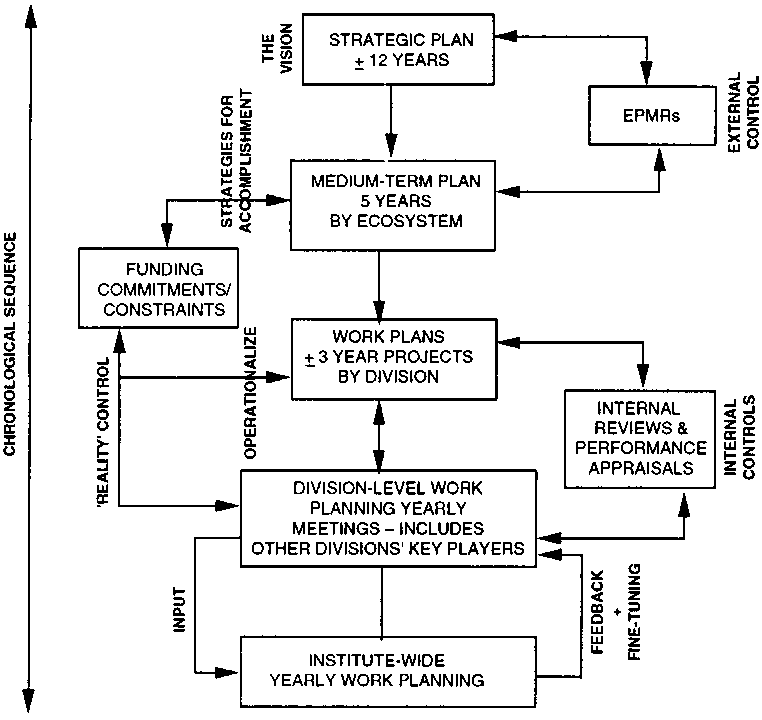
IITA's current work planning process is depicted in Figure 4.1. Preparation of the individual work plans, which are based on IITA's Strategic and Medium-Term Plans, is the responsibility of the researchers concerned, in consultation with their Programme Leader and Research Division Director. Progress in the research activities is reviewed at the annual divisional meetings as a basis for updating plans for the following year. Staff of other divisions attend these meetings to encourage cross-divisional activities. Later a summary of new activities is presented to the annual Work Planning Week, with the purpose of informing others about what is planned and of providing an opportunity to eliminate possible duplication of effort and to identify further areas of possible cooperation. In a further effort to encourage interdivisional cooperation, initiatives on the part of researchers themselves can result in the formation of working groups to tackle a particular problem of common interest and in which joint research planning can take place. Working groups currently exist in the areas of postharvest technologies, Striga, legumes in farming systems research and cowpea wide-crosses and biotechnology.
The annual Work Planning Week is held at headquarters and all outposted scientists, including resident scientists, participate. On this occasion all the research portfolios for the year are assembled and by combining them, the Division and overall IITA research portfolios are established.
The research planning process is not structured in a systematic way (e.g. with the use of logical framework or goal-oriented project planning methods) and a general procedure by which the research proposals are submitted to an ex-ante impact assessment and priority-setting exercise is not yet available. Such methods are occasionally, however, applied in the case of donor-funded special projects and were used in 1994 and 1995 by the Crop Improvement Division for work planning. The Panel suggests that the Institute generalize the use of goal-oriented project planning methods such as the Log-Frame.
IITA has an impressive record in acquiring complementary funding for special projects. The special projects are considered by the RDC and then submitted to the Programme Committee of the BoT. Given the volume and diversity of these projects, continual attention is needed for the integration and consolidation of these activities within IITA's overall research programme, to ensure that they are compatible with the Institute's priorities (see recommendation in Section 4.3.4.).
Under the MTP, IITA's Research Divisions, Programmes and activities are allocated resources in accordance with the relative priorities assigned to each type of research and research-related activity (crop improvement 24%; plant health management 23%; resource and crop management 25%; research support 11%; international cooperation, information and training 17%). These funds are then allocated to research activities within each Division.
Figure 4.1. WORK PLANNING PROCESS
IITA is planning to adopt a "project-based" research management mode instead of the current "programme-based" mode and the transition, including the shift from cost-centre to project-based budgeting, is taking place. Initial plans were to complete this process by 1996. All IITA research will then be assembled in a portfolio of research "projects" - each of which will have clearly defined objectives, anticipated outputs, milestones, personnel and operational inputs and other requirements.
The Panel commends IITA, not only for taking this decision but also for making sure that the IITA scientific community unanimously supports this plan. It is expected that project-based research management will lay the foundation for: greater focusing of the research programme; enhanced technical, scientific and financial accountability; more effective monitoring of priorities; more attention to interdisciplinarity and institutional collaboration requirements; more explicit output orientation of the Institute's research and thus, ultimately, improved scientific quality and greater research productivity and impact.
In assessing the research planning and organizing processes at IITA, the Panel wishes to make the following observations:
· Interdisciplinary Linkages and Team-Building: The relative "softness" of systems and procedures for planning, prioritizing, budgeting, and reviewing of research activities has sometimes provided an impression of fragmentation and atomization. The planned move to a project-based approach to research planning will greatly improve the probability of creating effective interdisciplinary linkages and more programmatic cohesion. Since planning of research activities would begin at the project level, important linkages such as those between breeding and agronomy, breeding and host plant resistance, etc., would be easier to emphasize. It would also be easier to factor in training requirements more explicitly into the research delivery system. RDC would be expected to provide the inter-disciplinary and inter-divisional balance in the Institute's research and training portfolio.· Project-Based Budgeting: At present, divisional budgets are prepared by Division heads and allocated to Programmes and to research activities and scientists (cost centres). The transition to project-based research management will require an adjustment of the budgeting process with reference to the costing of individual projects and their consolidation into the Institute's overall budget. The Panel concurs with IITA that the use of time-based standard costing techniques would be an appropriate method and the resultant figures could then be reconciled with the divisional financial results. Thus, the transition from budgeting on a cost-centre basis to project-based research management, would be feasible with rather limited adjustments to the present system. The 23 projects identified in the 1995 Work Planning Week, which group activities with common objectives, would meet the definition of a project, if structured with a logical framework and having budgetary resources attached.
Recommendation:
The Panel recommends that IITA develop an integrated project-based planning, resource allocation and implementation system in the next few years and pilot test it in selected areas before extending its coverage to the entire research programme and to research-related activities.
Each project would be demand- or problem-driven and be implemented by a project coordinator (the scientist with the principal responsibility for that particular project). The project coordinators would report to the Division Directors through the Programme Leaders as at present. In some cases Programme Leaders might also be the project coordinator. Some projects would be interdivisional, such as the Striga project (Working Group). While the Panel recognizes that allocating some projects to specific coordinators may not be easy (e.g. particularly when projects involve more than one Division), this bottom-up "building blocks" approach to the research programme (from scientists to projects, to Programmes, to Divisions) would strengthen accountability mechanisms at various levels and would provide the flexibility needed to respond to new research opportunities.
The Panel expects that the projects would remain science-driven and be managed within the divisional structure. They would be oriented towards the agroecological zones covered by IITA's mandate. Thus, conceptually, research management would be implemented in the "soft" matrix structure depicted schematically in Table 4.3.
Project-Based Financial Information System
At present, policy formulation and resource allocation of scientist years occurs within the divisional structure, and costs are allocated to research activities. The proposed project-based research management is compatible with existing divisional reporting structure for financial information. It is anticipated that after the pilot testing has been completed, a simple, non-bureaucratic procedure for project-based budgeting would be used for the entire research programme. The Panel expects this to be completed by the start of the next Medium-Term Plan, i.e. 1998. The IITA Finance Division is encouraged to make the necessary adjustments in order to provide an effective, project-based Financial Information System as soon as possible (see Section 5.2.).
Table 4.2. Schematic Representation of the Proposed Project - Based Research Management in a "Soft" Matrix Structurea
a. P1 to P5 represent projects and 1 to 5 represent outputs of those projects.
|
Division |
Agroecological Focus |
General |
||||
|
Humid Forest |
Moist Savanna |
Mid-Altitude Savanna |
||||
|
CID |
P1 |
|
P1 |
P3 |
P4 |
|
|
PHMD |
|
P2 |
|
P3 |
|
P5 |
|
RCMD |
P1 |
P2 |
P1 |
P3 |
|
|
|
|
|
|
|
|
|
|
|
|
Output |
Output |
Output |
Output |
||
|
|
1A |
2 |
1B |
3 |
4 |
5 |
Priority Setting and Strategic Planning
IITA, in its strategic planning, has adopted a number of "relevance indicators" in order to help decide on priorities and strategies. This model includes both demand (e.g. technology and knowledge needs of NARS) and supply (e.g. technologies and knowledge to be developed by scientists) considerations. This approach has helped IITA in defining its longer-term research thrust. However, IITA currently does not have an analogous formal priority-setting mechanism for individual research projects within this overall set of agreed research priorities. This needs to be developed further.
Recommendation:
The Panel recommends that IITA further develop its priority-setting methodology and processes for routine screening of new projects, including ex ante impact assessment, irrespective of their funding source. It should also ensure compatibility with the formal strategic planning process of IITA.
IITA implements internal reviews by Division at five-yearly intervals and with the participation of Board members, NARS and sister IARC representatives as well as with the participation of external experts. Internally commissioned external reviews have also been used (e.g. in the case of RCMD). IITA has thus introduced some means of peer review and quality control, and should strengthen these processes.
However, a five-year interval between Division reviews is perceived by the Panel as too long. In addition, there are new requirements in this area emerging from the rationalization of the review process in the CGIAR System which will increasingly rely on the IARCs' own monitoring procedures for quality control and performance. The Panel therefore suggests that IITA should revise its Board-approved policy on internal reviews, including the internally managed external reviews (see Section 4.1.6.).
Incorporating Partner Needs
To date, there has been no systematic way in which concerns and priority research needs of IITA's institutional partners in the mandate area are considered and taken into account in the research planning process. The Panel recognizes that IITA frequently consults with NARS and it also appreciates that sometimes NARS scientists have participated in IITA planning meetings and IITA scientists in those of NARS. The Panel also recognizes that, in the case of resident scientists, the practice is for them to agree with their national programmes counterparts on the contents of their research plans before they travel to IITA, where they present this information at the annual Work Planning Week. This naturally establishes a valuable direct linkage to IITA's clients.
However, the Panel believes that there might be room for extending this partnership further by more formal consultation with NARS during the research planning process and to incorporate consideration of research training needs. The move to establishing ecoregional consortia provides another opportunity for formalizing such linkages (see Section 4.2.8.).
Recommendation:
The Panel recommends that IITA should establish a formal and transparent system for ensuring that NARS are routinely consulted in planning the Centre's annual research programme and research-related activities.
Research Support
A structural/organizational deficiency was noted earlier with respect to the Research Support service (Section 4.2.4.). The fact that such support services are not centrally managed but distributed among the Research Divisions, potentially has a negative influence on the efficiency and productivity of research. Consequently, there is a risk of unequal access to the services and also a risk of inadequate attention being given to these units by the Research Division Directors. In order to ensure that they are managed in a way compatible with IITA's overall interests, the Panel suggests that those Support Units that routinely provide services for more than one division should be transferred to the DDG(R) when appointed.