4.1 Introduction
4.2 Governance
4.3 Leadership
4.4 Research Management
4.5 Resource Management
The 1988 EMR found serious management problems at ICARDA. In response, the CGIAR decided that an Interim EMR should be commissioned to report on the Center's progress in dealing with the recommendations of the 1988 review. The 1991 Interim EMR reported on a number of changes at the Center as well as on areas of continuing concern. Overall, that Review concluded that "ICARDA's management structure, policies and operations are now in good shape. The problems of the past have largely been successfully overcome... We highly commend the Board and Management for their success and are confident that the few residual problems can be satisfactorily overcome" (pp. 18-19).
The 1993 ER Panel is certain that many aspects of management at ICARDA have significantly improved since 1988. In addition, it finds the 1991 Interim EMR to be perceptive and on target in most areas of its inquiry. However, the overall conclusions drawn in 1991 may, in hindsight, perhaps have been a little too favorable.
The 1993 ER Panel recognizes that ICARDA has developed and implemented systems of management and control, replacing the general ad hoc approach described in 1988. It has strengthened a number of managerial weaknesses - most dramatically in the area of financial management. And it is clear that the DG has put in place a capable Management team. However, the Panel believes that the good intention to create rational systems has in some cases gone to an extreme of running a "tight ship" so tightly that there have been negative effects on staff morale and efficiency.
As the 1991 Interim EMR was conducted approximately one and-a-half years ago specifically as follow-up to the 1988 EMR, the 1993 ER Panel will not report again on follow-up, unless specific concerns still exist. The general focus is on the future, and changes that the Panel feels will enhance ICARDA's prospects for success.
4.2.1 Size and Composition of the Board
4.2.2 Management of the Board
4.2.3 Selection, Orientation and Development of Trustees
4.2.4 Policy and Program Oversight
4.2.5 Management and Operations Oversight
The 1988 EMR strongly recommended that the ICARDA Board of Trustees (BOT) take immediate steps to strengthen its performance. The 1991 Interim EMR reported that many positive steps had been taken, based on its assessment of Board minutes and interviews with a few BOT members. The 1993 Panel had the opportunity to observe a meeting of the BOT (in addition to its review of BOT documents and interviews with members), and confirms the findings of the 1991 review - that deficiencies of the past largely have been corrected and that the BOT is functioning well overall. The current BOT is comprised of well-qualified members who are dedicated to ICARDA and its mission. There is wide, though not unanimous, agreement about the role of the BOT, its committees and its members. Relations with Management are cordial, open and based upon mutual trust and respect.
ICARDA and the BOT are entering a new stage in the Center's evolution. The past five years can be viewed as a period of consolidation. Responding to the 1988 EMR and the 1991 Interim EMR, the BOT and Management have made great progress in upgrading the quality of senior management staff, introducing improved management systems and strengthening the overall capacity of the BOT to discharge its oversight responsibilities.
The new program emphases and priorities embodied in ICARDA's Strategic Plan (SP) and Medium-Term Plan (MTP), coupled with increasingly tight budgetary constraints on core funding, create a new and challenging environment for the BOT and Management. The well-defined roles and style of operation that were suitable to the requirements of previous years will not necessarily be optimal for the years ahead. ICARDA's BOT confronts these challenges at a crucial transition time for leadership. During the coming year, the BOT will be selecting a new Director General and BOT Chair. It has a valuable opportunity to make a fresh assessment of its philosophy, style and modus operandi and to determine whether and how to adjust these to meet the new challenges.
In 1994 the composition of the BOT will be substantially different from that of the BOT in 1988. The annual Board meeting in 1994 will find only five trustees who were on the Board in 1988 (excluding the DG), all of whom will be completing their terms. The time is ripe for a thorough self-appraisal and re-assessment of the BOT's style of governance. Particular attention should be given to the BOT's traditional view of its oversight role. The BOT has positioned itself near one end of the Policy/Management continuum, exercising care not to be excessively involved in the operational decisions of Management. Viewing its function as essentially "strategic" and its role as broad policy-making, the BOT has largely deferred to Management not only on day-to-day operating decisions but also on management policy. Except for the financial oversight of the Audit Committee (AC) and selected personnel issues, the BOT has not systematically concerned itself with the oversight of management operations. Similarly, its approach to research program development and management could be characterized as "arm's length." This posture may have been reasonably suitable during ICARDA's consolidation period, and was clearly compatible with the preferred style of ICARDA's DG and BOT Chair. Before a new DG assumes office, the full Board should re-evaluate its role and define the desired relationships with the new DG and management team.
The ICARDA Board is very conscious of the multi-cultural (and diverse political) conditions under which it and the Center must operate. ICARDA serves a large and diverse region - stretching from Morocco to Pakistan - with a long history of turbulence and conflict. Strong cultural, ethnic, religious and political differences combine with great diversity in agroecological conditions to create highly demanding governance and management challenges. ICARDA's Board and management team deserve recognition for the progress made during the past five years.
ICARDA's Charter authorizes a Board of 18 trustees, of which one is ex-officio (the DG) and up to three may be nominated by host countries. Of the 14 remaining trustees selected by the BOT, three are nominated by the CGIAR.
In 1990 the BOT decided to limit membership to 16, reportedly because some felt that a full membership of 18 was unwieldy. Current BOT members are no longer clear as to precisely why two more trustees would create an unwieldy Board. Some trustees feel that even 16 is too many, noting that large private-sector firms manage with smaller boards. Others feel that limiting the BOT to 16 (often fewer when there is a delay in filling vacancies) precludes adequate discharge of the BOT's responsibilities for policy and program oversight. Most recently, the need for budgetary economy was cited as an additional reason for not filling all authorized positions.
The current BOT is reasonably well-balanced as far as geographic and donor/non-donor representation are concerned. With two female trustees, the BOT compares favorably with other centers, though efforts rightly continue to seek additional qualified female trustees. In terms of disciplinary balance, the BOT currently lacks members with training and experience in disciplines that are of programmatic concern, including biotechnology, agroforestry and environmental management. The Panel recognizes the difficulty of creating multidimensional Board balance. Nonetheless, it encourages the Board to carefully consider program commitments in the SP and MTP in terms of both the responsibilities of the BOT for policy and program oversight and the competence of current trustees, and to plan membership balance accordingly. Given the number of upcoming vacancies, the Panel expects that the Board should find a mix suitable to its needs while limiting membership to not more than the current level of 16.
Since 1988, the BOT has devoted considerable attention to matters of governance. In 1990 the BOT undertook an in-depth questionnaire survey of BOT performance, and has given more attention to self-appraisal sessions since. Departing trustees are invited to participate in "exit interviews" or submit end-of-term appraisals of their Board experience. BOT committees have been restructured, By-Laws have been revised, and a Board Handbook has been developed. A successful effort by the Nominating Committee (NC) has expanded the range of competencies on the BOT, and has improved gender balance. The Audit Committee (AC) established in 1988 has taken up its responsibilities with diligence and energy.
The BOT's committee structure and committee responsibilities are clearly documented in the Handbook and, within their defined roles, trustees have a clear understanding of their responsibilities. Beginning in January 1993, the BOT instituted a formal half-day orientation program for newly-elected trustees.
A deliberate effort has been made to strengthen the Executive Committee (EC) to enable it to act as an equivalent to a Board. The EC now includes the Chairs of all standing committees as well as the Board Chair and Vice-Chair and the DG. In addition, two other trustees, including one member-country representative, bring the total EC membership to eight (one-half of the current BOT membership). The deliberate strengthening of the EC, "to cope with urgent matters that cannot await the convening of a plenary session of the Board" (Center's Report to the Panel, September 1991, p. 60), is consistent with the provisions of ICARDA's Charter and has much to recommend it. It does, however, tend to implicitly diminish the status of the remaining trustees in their own eyes. This could become a problem over time if the EC is not careful to operate in an open and transparent fashion and strenuously resist the inevitable temptations to exercise preemptive judgements on issues that could and should be deferred to the full Board.
The major remaining weakness in the overall management of the BOT is the lack of an explicit agreed-upon process for electing a Chair and Vice-Chair. During the January 1993 meeting, there was a breakdown in the advance planning for replacing the retiring Chair, in pan resulting from the fact that responsibility for that function is not specifically assigned to any BOT committee or officer. The situation prompted an improvised, awkward and somewhat embarrassing ad hoc procedure resulting in the unexpected extension of the incumbent Chair for one additional year.
Recommendation 4.1
Responsibility for developing and managing a BOT-endorsed process for nominating and electing members to the Chair and Vice-Chair should be assigned to a BOT committee.
The process (which could be assigned to the NC, EC or a special selection committee) should be designed to assure that each trustee has an opportunity to recommend candidates, and to participate in a secret ballot for the election. To the extent possible, a Chair-designate could, ideally, be elected one year in advance to provide an opportunity to become thoroughly familiar with the many and varied responsibilities and duties of the position.
The principal responsibility for the selection of new trustees rests with the NC. The NC consists of four members elected annually by the BOT on the nomination of the Chair. Neither the DG nor the BOT Chair serves on the NC. The full Board elects the NC Chair, who consults closely with the BOT Chair on NC recommendations. In addition to the customary role of identifying and proposing BOT members, the NC also nominates candidates for the standing committees of the BOT. However, the NC has no assigned role for nominating the BOT Chair or Vice-Chair.
Forward planning for filling vacancies is limited to one year in advance. It does not appear that sufficient attention has been paid to the need to adjust terms of service to even out the turnover of trustees (five members will end their final terms in 1994, none in 1995, and only one in 1996). Primary reliance for identifying prospective candidates for Board-selected positions has been placed on current and past BOT members. However, the CGIAR/CIS is now being accessed for prospective members with some success. The Panel suggests that the NC should extend its planning horizon at least one additional year. A greater effort could also be made to adjust terms of service to achieve a more even flow of members, and to avoid "bunching" of vacancies.
The responsibility for orienting new trustees to the full range of responsibilities and rights of membership is not explicitly assigned to any officer or committee of the BOT. Some of the senior trustees indicated that they would have welcomed and benefitted from a more formal orientation program. The BOT did institute a formal half-day orientation program for new members in January 1993. The program was well received by the new members as a useful overview of ICARDA's organization and research program. However, a more extensive discussion with the Chairman and other senior BOT members would have been welcomed, especially if focused on the individual trustee's rights and responsibilities, and the nature and timing of the major decisions that would be faced in the trustee's term of service.
The Panel suggests that the BOT assign specific responsibility for planning and implementing a systematic orientation of new trustees. Consideration should be given to making the assignment to the NC, to the Vice-Chair, or to a separate committee comprised of senior trustees. In addition to the provision of the customary documents and the overview of Center operations, new trustees should be briefed by the Chair and Committee Chairs on the BOT's modus operandi, the rights and responsibilities of trustees (with explicit focus on conflict-of-interest rules), and be provided with a Board decision-calendar outlining the key scheduled Board business over the first three years of their terms (including planning, program, budget decisions, BOT officer elections, etc.). Greater opportunities seemingly should be provided for orientation visits to selected field sites as well as to HQ operations (section 4.2.4).
While responsibility for policy and program oversight is shared by all trustees, the principal responsibility for reviewing ICARDA's research programs and monitoring implementation rests with the Program Committee (PC). The PC presently must consist of the DG and at least three trustees who are elected annually by the BOT. All new trustees are now automatically assigned to the PC for their initial year. Currently, ten trustees serve on the PC, and the DDG-R serves as the Secretary. The PC normally meets twice a year - for a three-day annual program review in January and a one-day meeting during the annual Board meeting in the spring.
During the past few years, PC members have tended to view their role as primarily "strategic," dealing with higher order policy issues rather than exercising close oversight of research program performance and quality. This is an inherited role influenced both by the preferred style of the current DDG-R and by the disposition of the more senior members of the PC. This limited view of the appropriate role of the PC is not, however, unanimously shared by all PC members. Some feel strongly that the PC should be more closely engaged in assessing the scientific quality of the research at the scientist level, and should be more directly involved as scientific colleagues of the professional staff - a view shared by many ICARDA research staff.
Most members feel that the PC has had some positive impact upon the content of the SP and the MTP. Resource allocations within Programs, at the project level, are increasingly becoming a focus of PC member interest. Such individual members' inquiries would probably be facilitated by the proposed project-based budgeting system, but this level of planning should not in itself be a focus of PC activity. Considering that ICARDA is entering a new phase in its evolution, and that the BOT will soon need to select a new DG and Chair, the "traditional" style of oversight may no longer be appropriate.
Recommendation 4.2
The Program Committee and the full Board should assess their mechanisms for oversight and reach a fresh judgement as to whether the traditional roles remain appropriate given the new challenges of the strategy, the new Medium-Term Plan, and the increasingly constrained funding situation.
The BOT encourages its PC members to visit ICARDA field operations but few availed themselves of the opportunity. The Panel suggests that the BOT assign specific responsibility for scheduling members' visits to a Board officer (perhaps the Vice-Chair) or to a committee (EC or NC) for doing so. Management can continue to make the necessary transport and logistical arrangements, and advise on the most suitable and convenient times for such visits. A common issue agenda for field visits would provide the Board with a more useful and representative view of the Center's operations, and would make most efficient use of the members' time.
In January 1993, the PC Chairman initiated a thoughtful and potentially useful evaluation of PC performance by distributing questionnaires to both the members of the PC and to research program leaders who collaborated with the PC during the MTP review. The results were to be available for PC and BOT review during the May 1993 meeting.
The AC is responsible for overseeing the accounting, auditing, financial and administrative processes of ICARDA. The EC, on an ad hoc reactive basis, deals with special problem situations as they arise.
The full BOT appoints the DG and, on the recommendation of the DG, other key management officials (DDGs, ADGs, Directors of Finance and Administration, and Secretary to the Board). An annual review of the performance of the DG is made, but this is not linked to the annual increment determination. There is no formal review by the BOT of the performance of the other appointees who are evaluated within the annual staff performance review.
Recommendation 4.3
The BOT should introduce a more systematic and objective process for annual evaluation of the performance of the DG and for the oversight of the evaluation of other top management officials.
This could usefully be done prior to the final selection of a new DG, so that there is a clear mutual understanding and agreement that this is a condition of employment. This function might be assigned explicitly in the By-Laws to the EC, or to a smaller Compensation Committee established for that purpose.
Board relationships with Management are cordial, open and trusting. Information requests of the trustees are met promptly and fully. Management reports quarterly to the trustees - a frequency that will be changed to three times a year by mutual agreement. No attempt has been made to define carefully the distinction between "policy" and "management" decisions per se.
The principal focus of management oversight rests with the AC, which consists of four members elected annually by the BOT. The DG does not serve on the AC. The AC is relatively new in ICARDA's history, having been established only five years ago. None of the current members of the AC is specifically trained or experienced in accounting or financial management, although three of the four have training in economics and all members bring to bear much relevant experience. The AC now meets at least twice a year, at the beginning of each of the annual Board meeting and the autumn meeting of the EC as well as during extraordinary Board meetings. It carries out its functions in a systematic and energetic manner but there is no formal written report to the BOT, only an oral report by the AC Chair, which is entered in the minutes of the meetings. The AC should adopt a practice of filing a formal annual report to the BOT, signed by the Chair, in addition to the customary oral report.
While the traditional Board/Management relationship may have been suitable in the past, given the DG's style of management and the Board's composition, it may not be as appropriate in the coming years when the demands of the new thrusts in the SP and MTP confront increasingly constrained financial resources. The impending change in ICARDA's Management will provide an excellent opportunity for the BOT to re-assess its own role in management oversight with a view to a more assertive Board role, albeit with a clearly defined separation between careful oversight and excessive interference in operating decisions.
Recommendation 4.4
The BOT should re-assess its self-defined role and strategy in overseeing operations and management of ICARDA. At a minimum, the BOT should assign explicit responsibility for reviewing and assessing the full range of ICARDA's administrative and management systems, either as an expansion of the Audit Committee's role or as an assignment to a separate standing committee established for that purpose.
ICARDA's current DG took up his position in 1988. Under his leadership, ICARDA has completed a Strategic Plan and two Medium-Term Plans. As noted in section 4.1, the Center now has systematic management processes and transparent controls, and a capable management team in place. ICARDA has made progress since 1988 on many fronts, which is a credit to the DG and his management team.
Currently the Board is conducting a search process for ICARDA's next DG, who is expected to assume leadership within about one-and-a-half years when the current incumbent retires. The successor will need time to get to know the Center before beginning to contemplate decisions necessary for effective leadership. Thus, in the view of the Panel, the remaining tenure of the current DG is a time to continue to press forward with difficult decisions and effect change in the interests of ICARDA's long-term future. The DG has done an outstanding job in reforming the "management side" of ICARDA and could now achieve analogous reforms and advances on the "research side" of the Center. It should also be a time to forge ahead on the fundraising front, utilizing past experience and feeling confident that Center operations are in good hands.
The Panel believes that these objectives could best be met if the DG delegates more to the management team. Currently decision making at ICARDA is highly centralized and, given the capabilities of the individuals involved, greater decentralization would be beneficial.
Currently the DG is assisted by two Deputies, one for Research and the other for Operations (DDG-R and DDG-O). The Panel agrees with the Center's decision not to replace the DDG-O when the current incumbent completes his secondment later this year, as the management systems he was responsible for developing are largely in place and the Directors below him are capable of moving things forward.
The 1988 EMR described the leadership style of ICARDA's former DG as "personalistic, top down and bureaucratic" (p. 9). The 1993 Panel is pleased to report that the personalistic style of the past has gone. Yet, while the DG is open to input into decision making, there is still a ways to go towards a more appropriately decentralized leadership style.
4.4.1 Research Structure
4.4.2 Decision Making and Controls
4.4.3 Research Leadership
4.4.4 Strategic and Medium-Term Planning
4.4.5 Research Review Processes
4.4.6 Annual Planning and Resource Allocation Processes
4.4.7 Committees and Research
4.4.8 Research Environment and Teamwork
4.4.9 Options for Structural Change
In order to help assess the current status of research management at ICARDA and contribute to deliberations on possible options for future improvement, the Panel conducted a survey (section 5.3.2) of ICARDA's scientific staff. A questionnaire was circulated in January 1993 and by April the Panel received responses from 51 out of approximately 80 of the scientific staff. The survey form and summary of responses may be found in Appendices 5 and 6, respectively. Many of the themes that emerge from the responses are covered below.
As shown in Figure 1.2, ICARDA's four research programs, international cooperation activities (IC), and research support units all report to the DDG-R. Structurally this differs from the 1988 arrangement in that formerly IC was also led by a DDG who reported to the DG. Consolidation of IC into Research has served ICARDA well, bringing training, information services and outreach activities closer to the primary research program. Now, outreach research staff have somewhat dual reporting responsibilities (programmatically to the Program Leaders and administratively to the ADG-IC), which has operated surprisingly well, although the balance between independence and controls, discussed in section 4.4.2., requires modification.
The 1988 external reviews recommended that, in developing its strategic plan, ICARDA consider alternate structural models for organizing research that would facilitate implementation of the strategy. The reviews discussed criteria that should be taken into account (integration of activities, linkages with the environment, authority and responsibility for scientists, and simplicity), and suggested that some form of managerial matrix be considered. ICARDA has considered numerous options for matrix organization and has retained its four-program structure. Within this structure, multidisciplinary research operates well at the Program level, although cross-Program interaction - particularly between FRMP and the three "commodity" Programs - could be improved. (Mechanisms to achieve this are discussed in section 4.4.9.) Otherwise, in the view of the Panel, the current structure serves ICARDA's strategy well.
The 1988 EMR described a managerial culture at ICARDA dominated by "strong (bordering on authoritarian) leadership; management by exception; decision making by status or who you know; and attention to managing one's own unit well, at the expense of cooperation across units" (EMR, p. i). Significant effort has been expended in transforming the Center to one governed by rational, transparent and equitably implemented policies. Systems of control and accountability are strong at ICARDA (as discussed in sections 4.3 and 4.5) but, in the opinion of the vast majority of research staff the Panel surveyed and interviewed, these systems are too restrictive in terms of decision making authority, and thus they constitute something of an impediment to effective research management.
This said, the Panel found a high degree of freedom to conduct research (to make research decisions) at ICARDA - and the research staff acknowledge and appreciate this. Their concern is with what they consider to be the rigidity of the system of administrative and financial controls. Management considers centralized control essential in a time of fiscal uncertainty and contends that the processes for seeking approval are quick and pro forma if properly followed. The Panel believes changes are required, and reemphasizes the sentiment of the 1991 Interim EMR, "despite the continued financial austerity that is needed, we believe further devolution of authority for program decisions is possible and needed. This will require some continuing adjustment in the management approaches of the DG and DDG-R, and improvements in the management systems [accomplished by 1993] and skills at the Program and Unit Leader levels" (p. 5).
Recommendation 4.5
The BOT should oversee the development and implementation of a plan delineating delegation of authority, that strikes a new balance between Program freedom and fiscal/administrative control in an effort to devolve more authority to the Programs.
A component of this plan would relate to project-based budgeting (section 4.5.1.3). Although this may exist to some degree at ICARDA, it is not a well-defined system that entails a wide degree of budgetary responsibility for scientists or project task managers. In the view of the Panel, a comprehensive project-based budgeting system would be highly desirable. It could help monitor research inputs and outputs, thereby augmenting institute-wide planning and review processes, and could help strengthen research decision making and management at the project level - assuming project task managers receive adequate training to take on the new responsibilities. In order to be most effective, the system should be planned collaboratively by research and financial/administrative personnel, so that it best meets the needs of all involved. Steps in this direction are being developed and are to be reviewed by the BOT at its meeting that follows the submission of this Report.
A consequence of the environment of centralized controls is that the DDG-R is obliged to authorize many Program-level decisions, which infringes on time he could be devoting to research leadership. Concurrently, scientific staff contend that, as the DDG-R has in the past year or so been so consumed with institutional matters (ranging from ones they consider administrative details in which Management should not involve him, to CGIAR System-level demands such as the arduous strategic and medium-term planning processes), he has little time for substantive program-related matters (such as organizing an Annual Program Review in 1992). Scientific staff - and the Panel - consider that the current DDG-R is clearly a capable research leader, but see his energies being dissipated in other and too many directions. Program Leaders are, overall, providing effective leadership of their Programs, but the institution-wide dimension of research leadership and oversight should be enhanced.
Recommendation 4.6
If the current organizational structure is retained, ICARDA's Management should examine primary responsibilities and demands on its members, in efforts to identify what the boundaries of responsibility should be for the DDG-R. The plan for delegation of authority (recommendation 4.5) should include a carefully reasoned work program for the DDG-R that enables the incumbent to focus on research leadership and oversight.
The long-term vision for ICARDA's research is elaborated in the Strategic Plan (ICARDA 1989). In developing its Strategic Plan, ICARDA drew on many information sources, including its own considerable experience, various TAC studies, the reports of the 1988 External Reviews, the FAO and IFPRI forecasts on future food supply and demand in countries covered by ICARDA's mandate, as well as dialogue with NARSs over some three years. With the information available, the Panel believes that the procedures followed were thorough and reasonably well executed.
Consistent with CGIAR practice, ICARDA develops its MTP in the context of its Strategy. Since the 1988 reviews, ICARDA completed a MTP 1990-94 and a MTP 1994-98, which was recently endorsed by TAC. The Panel comments, in the course of this report, on how effectively ICARDA has followed and achieved the aims of the MTP 1990-94. The comments here concern the medium-term planning process, and relate to the preparation of the MTP just completed.
The MTP process - described in the MTP - was a time-consuming one for ICARDA, heavily involving the DDG-R and Program Leaders, and also including participation of ICARDA research staff and NARS collaborators. Program Leaders and many of the research staff involved were rather frustrated by the demands of the exercise, which they felt could have been lessened by better process planning and leadership.
In addition to internal inputs, the process included efforts to solicit input from ICARDA's collaborators in the NARSs, which is a difficult endeavor considering that there are 24 WANA countries with which ICARDA works, whose priorities and capabilities differ. Nonetheless, ICARDA consulted widely. NARSs' views were solicited through a number of channels - many of which are part of "business as usual" at ICARDA: scientist-to-scientist contact, regional meetings and workshops, the Office of the Regional Coordinator and, most formally, through the annual ICARDA/NARSs Coordination and Planning Meetings held throughout the WANA region - which involve "a minimum of 500 national scientists" and are organized on both in-country and cross-country regional bases.
In preparation for the recent MTP and ER processes, ICARDA initiated additional dialogue with NARSs through a formal questionnaire. NARSs personnel were requested to respond to two lists of open-ended questions. The first series of questions entitled "NARSs inputs into planning ICARDA's program" sought NARS response to 14 broad questions. Based on the responses to this questionnaire, a second series of 13 questions was addressed to the NARSs relating to "Modalities of NARS/ICARDA Interaction." The Panel had the opportunity to observe the Program Committee of the BOT discuss the outcome of this ICARDA/NARS dialogue and considers that the Center has made genuine and effective effort to involve its national partners in the preparation of its work plan for the medium-term future. Nevertheless, some of ICARDA's NARSs collaborators met by the Panel expressed concern that they are not included adequately in ICARDA's planning processes. They appreciate the opportunity to inform ICARDA of their views, but they believe their collective influence on ICARDA to be small. The Panel suggests that ICARDA provide feedback to the cooperating NARS personnel in a brief document that summarizes the NARSs' inputs and explains how ICARDA is responding to these.
The Program Committee of the BOT has main responsibility for oversight of ICARDA's programs (section 4.2.4). The PC's role has primarily been in guiding and overseeing strategic and policy issues concerning the research program. The Panel suggests that it could play a stronger role in setting policy for ICARDA's research planning and review mechanisms, and overseeing that these operate effectively.
Based on responses to the Panel's survey of research staff and interviews, the Panel believes that review processes could be better planned and formalized at ICARDA and recent positive efforts at the Center to improve them indicate that the ICARDA Management shares this view. In recent years, when the annual program review has been conducted, its rigor has been of declining value. Although these reviews may involve an external peer component, this does not occur on a sufficiently systematic basis. In the view of the Panel, peer review - during the annual review or at some other juncture - should be a systematic aspect of ICARDA's internal review process.
This said, ICARDA scientists do benefit from interaction with visiting scientists and experts, who may comment on or review their research. Publication in refereed journals adds further critical peer review to a research output, but cannot comment on either output vis-a-vis inputs or the research plan and objectives. The same might be said about ICARDA's seminar program, which provides a valuable opportunity for feedback and interchange that supplements more formal review mechanisms.
In addition to conducting a well-planned Annual Internal Review, one mechanism the Panel suggests for strengthening internal review processes is that of internally-commissioned external reviews of Programs or activities, which other CGIAR centers find valuable. Another practice ICARDA might consider is a system of "milestone reviews," under development at CIMMYT, for instance. This process will entail a rigorous peer review of each of the senior scientific personnel every four years (beginning with the longest-serving scientists). Analogous suggestions are made below (section 4.5.2.6) concerning promotion procedures for senior research personnel at ICARDA.
Review and planning should be closely linked. In the view of the Panel and scientific staff surveyed, currently these processes are not (at least formally) linked at ICARDA. Currently, research planning (and much of the review effort) is conducted at the Program level - and is considered to be effective there overall - but seems not yet adequately handled at the cross-Program and institutional level. The present work of the DDG-R and TRAC (section 4.4.7) to re-activate and revitalize the annual program review will be helpful in moving forward in this regard.
More than is evident in current practices, resource allocations should be part of a broader system of research planning and review. The current system begins with the Director of Finance, who develops target budgets based on MTP projections and the prior year's Program expenditure. These are modified after discussions/negotiations among those involved (which would include, of course, the DG and DDG-R), before proposals are presented to the BOT.
As actual budgets have fallen well below MTP projections (53% of approved level in 1992), the practice has been to retain past ratios across Programs - a simple solution but not necessarily one that takes into account the shift in institutional priorities that probably would accompany such a decline in funds. Related is the practice of "freezing" some senior staff positions when vacancies occur; again, although a simple short-term solution, this practice threatens to divert ICARDA's longer term priorities. Given the changing prospects of ICARDA's funding, priorities need to be reexamined on an institutional basis to a greater extent. The new MTP should provide an appropriate context for this.
Research policy matters could conceivably be discussed by the Management Committee but, in practice, the only committee with strong and regular involvement in research management is the Training and Research Advisory Committee (TRAC). TRAC consists of the heads of the research and training units, is chaired by the DDG-R and meets monthly. It provides a forum for discussion and advises the Director General on research issues that are of Center-wide concern. Discussions with members of TRAC reveal that TRAC seems to function fairly effectively and deals with wide-ranging and important research and training issues.
Despite the frustrations that research workers have with administrative and Management-related matters - which the Panel believes is endemic to research organizations - the research environment at ICARDA is a positive one. Research workers are generally enthusiastic about their work and are committed to ICARDA's mission. Although cross-Program collaboration could be better, in the view of the Panel, this has improved since 1988 when it was found to be quite deficient. The Panel commends ICARDA for this progress and encourages further efforts to boost internal collaboration and teamwork.
As noted in section 4.4.1, the Panel considers that ICARDA's research structure has been reasonably effective in the past, although cross-Program interaction, particularly between FRMP and the other three Programs (CP, LP and PFLP) could be improved. In the light of this, and with an awareness of the need to critically assess the imperative of management positions - as well as all other positions at ICARDA - in this time of financial cutbacks, the Panel felt obliged to consider a number of structural options for ICARDA's future. These included the status quo, and new options for the consideration of ICARDA Management:
(a) mergers of CP and LP, and FRMP and PFLP,(b) the merger of FRMP and PFLP, retaining CP and LP as at present,
(c) appropriate incorporation of FRMP into CP, LP and PFLP,
(d) appropriate incorporation of FRMP into a merged CP/LP and PFLP program configuration, and
(e) the status quo strengthened by a formal mechanism to integrate FRMP activities more effectively across the other Programs.
In discussing these options, the Panel became increasingly conscious of the need for closer interaction between non-Research Management and Program Leaders in terms of research planning and direction, research management and administrative support. The importance of an effective direct line structure from the DG's office to program management also heavily influenced the Panel's consideration of the different options.
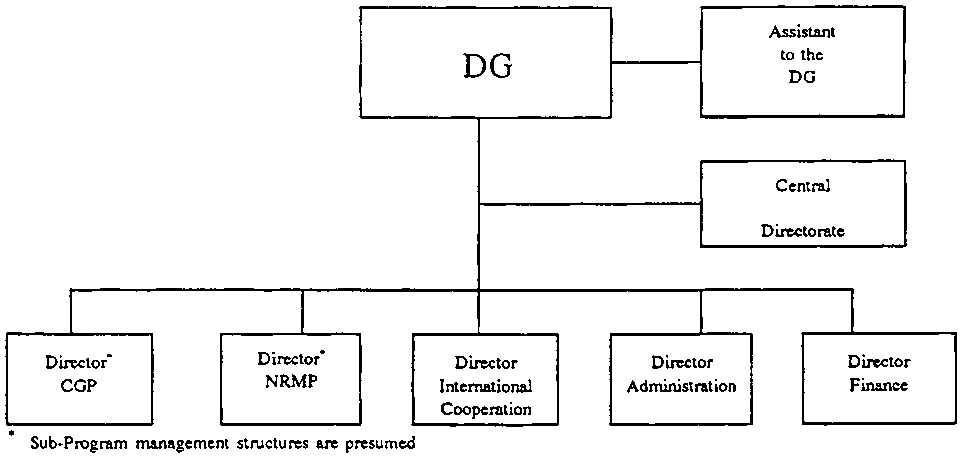
The Panel gave careful consideration to suggestions that emerged from its survey of research staff and from informal discussions with senior ICARDA personnel. All options considered have possible positive advantages. All have costs associated with both change itself and, in most cases, also with post-change implementation, especially in terms of disadvantages that are perceived to be implicit. After much debate, the Panel saw the "slimmed-down" closer-knit management structure, as depicted in Figure 4.1, as the alternative it would encourage ICARDA to consider, as staffing changes over the next year or so present opportunities for structural change.
Program Implications
At the Program level, this proposal would entail the mergers of CP and LP, and FRMP and PFLP. The Genetic Resources Unit (GRU) would be incorporated into the merged CP/LP, thereafter the Crop Germplasm Program (CGP). The merged FRMP/PFLP might aptly be named the Natural Resource Management Program (NRMP). This Program configuration would strengthen and focus ICARDA's "critical scientific mass" in germplasm conservation and enhancement in one department, enabling a concentration of part of the Center's program on strategic (upstream) research. The Natural Resource Management Program would facilitate the integration of ICARDA's research activities into a cogent research program on crop and livestock production within a framework of natural resource conservation. This bimodal structure would be consistent with the sentiments embodied in the CGIAR Priorities and Strategies for International Agricultural Research, which on the one hand, ask for an IARC focus on strategic upstream research and, on the other hand, call for a concentration of research on NRM to evolve within the TAC/CGIAR concept of ecoregionality.
Center Management Implications
The Center management implications are twofold. First, the proposal implies a significant reduction in senior management positions. As envisaged by the Panel, the proposal would facilitate more direct and effective input by the Program Leaders/Directors into Center management, indeed. Program Leaders/Directors would assume many of the functions currently carried out by the DDG-R. The Central Directorate, consisting of the DG and Program Directors, would provide the formal framework for decision making. More generally, the implicit interactions and collaborative management processes between the DG and senior staff in the flattened structure should enable better interactive communication and decision making within ICARDA.
Comment
The Panel is aware that there has already been much discussion of structural possibilities within the Center, and that the process is continuing. In advancing for consideration the preferred option of Figure 4.1, the Panel wishes to emphasize its limited time available for addressing this issue and thus its agreement with the principles embodied rather than with the particularities (e.g., the placement of research support units) as displayed. Nonetheless, the Panel would encourage ICARDA to move towards such a structure, as opportunities arise.
Figure 4.1 Proposed Center management structure for ICARDA
4.5.1 Budget and Finance
4.5.2 Human Resources
4.5.3 Administration
4.5.1.1 Financial condition and budget strategy
4.5.1.2 Financial management
4.5.1.3 Integrated planning and budgeting - project-based budgeting
4.5.1.4 External audit
4.5.1.5 Internal audit
4.5.1.6 Importation of Syrian currency ("the Lebanese window")
For the time being, ICARDA continues to enjoy a sound financial position with a high degree of liquidity, and it has not had to resort to short-term borrowing to manage its cash flows. However, ICARDA also continues to be heavily dependent upon core funding (80%), and two donors (USAID and IBRD) continue to supply the largest shares of this. The recent, and probably continuing, reductions in core grants will place increasing strains on ICARDA's budget, and will likely require drawdown of cash reserves.
ICARDA Management has assured the professional staff that the Center can manage the current budget shortfall without terminating employees. By fully exploiting economies in support services, freezing positions as they become vacant, and drawing upon cash reserves. Management feels that ICARDA can get by for a few years. This strategy, however, can only be regarded as "successful" if the shrinking core budget is soon supplemented with substantial increases in non-core funds. If the funding gap is not quickly closed, ICARDA's liquidity will soon be critically impaired.
Management is, in effect, following a passive/defensive budget-coping strategy. Relying heavily on freezing vacancies as they occur and drawing on cash reserves (running a budget deficit), ICARDA seeks to minimize short-term organizational turbulence. Unfortunately, such short-term "solutions" are not likely to deal effectively with long-term problems. Pursued too long, this approach could lead to a serious financial crisis with the potential for a much more damaging effect on research programs and institutional stability.
Under the circumstances, ICARDA is faced with three potentially complementary budget strategies, namely, (a) seek to persuade traditional donors that ICARDA's mandate, mission and plans are so highly congruent with donor priorities that ICARDA should receive an increasing share of a declining System-wide core budget, (b) mount a major new campaign to develop substantial levels of complementary funds, especially from non-traditional donors, and significantly reduce reliance on core funds and (c) adjust on-going research programs and projects within existing priorities to scales that can be financed with smaller core budgets.
The recent MTP effort was based essentially on the first alternative, at least initially. ICARDA is simultaneously pursuing the second alternative, and has been for several years. Indeed, the 1988 EMR strongly suggested that ICARDA "develop and implement a fund-raising strategy aimed at expanding its funding base" (p. 43-44). Some limited success has been achieved, notably engaging the participation of Japan and the Arab Fund for Economic and Social Development, and reaching agreement with the Government of Iran to initiate a collaborative project and establish a research institute near Maregeh for research on drylands problems of Northwest Iran. But there has been no substantial change in the Center's fundamental reliance upon the two major traditional donors. ICARDA has recently stepped-up its efforts and is devoting more resources to the task. For instance, it has recently assigned one economist half-time (soon to be close to full-time when the project she is directing finishes in mid-1993) to the task of preparing project proposals and conducting related activities. However, there is no indication at present that these limited efforts will close the funding gap.
The third alternative of adjusting the research program to a more sustainable level under a reduced budget scenario is one that Management has not yet chosen to adopt but, should donor support not change significantly from the present, it intends to address half-way through the 1994-98 MTP period.
ICARDA understandably should continue to make its best case to the CGIAR for preferential treatment in the overall allocation of core funding. Prudence suggests, however, that expanding the shrinking funding base is more likely to occur through a major expansion of complementary funds and engaging the participation of new donors - especially donors from the WANA region itself. It seems unlikely that the present level of effort will do the job.
Recommendation 4.7
ICARDA Management, working closely with the Board, should develop and implement a detailed, explicit, long-range funding strategy.
This strategy might include (a) developing and implementing a Center-wide plan and procedures for targeting project proposals and fund appeals to individual donors, (b) establishing an ad hoc Board committee comprised of trustees with fundraising experience to work closely with Management, (c) establishing an endowment fund and more aggressively promoting the fund to private-sector as well as to government donors, (d) exploring the possibilities for utilizing debt conversion opportunities as a source of local and regional currencies and (e) instituting more aggressive cash management and investment activities and policies to seek higher returns.
The 1988 EMR was extremely critical of ICARDA's financial planning, management and control processes. Citing deficiencies in staffing, organization, accounting and reporting systems, and the absence of internal auditing, the Report contained numerous recommendations - including repetition of some of the 1984 EMR recommendations that had not been implemented by Management. By the time of the 1991 Interim EMR, most of the identified deficiencies had been corrected or were being dealt with effectively by the new financial management team.
Today, ICARDA has a core financial management staff of well-qualified, energetic and innovative professionals. Although systems problems remain, the staff have identified needed changes and are implementing appropriate solutions.
The most immediate and significant change underway is the installation of a modern computer and a versatile accounting/administrative package of programs. The new DEC computer was delivered in August 1992, the local area network was operational in November 1992, and new business software and scientific software packages have been installed. ICARDA expects to complete conversion of financial and administrative applications by the end of 1993. Training programs for scientific as well as administrative staff are well underway. The computer installation effort is being carried out by the Computer Services Unit under the leadership of an experienced director recruited for this purpose. The presently planned changes in financial systems are, however, not conditioned by an over-arching systems-design concept that would integrate strategic planning, medium-term planning and annual budget development, execution and reporting.
A new integrated research planning, budgeting and management system was recommended by the 1988 EMR, to be based upon a matrix structure and project budgeting. The 1991 Interim EMR noted that some progress had been made, particularly in the areas funded by special-project grants. The assumption explicit in both reviews was that such a change would require that there be substantial delegation of program and budgetary authority to lower levels of management and to research workers.
While ICARDA Management endorses matrix management and project budgeting in principle, an extensive debate continues within its ranks (and within the Board) as to the specific project structure expected to emerge and the extent of delegation of authority to be experienced. There appears to be a lack of common understanding about the nature of the concepts and the terminology being used. For instance, the concept of a project budget does not imply any necessary degree of delegation, either in the discretionary use of financial resources or in the freedom to employ and deploy staff. A "Project Budget" simply defines the set of activities to be carried out, the resources to be available, the outputs or results expected and the person responsible for project performance - while leaving to be resolved the degree of centralization/decentralization for various types of management decisions. There are many research workers in ICARDA who may be overly optimistic about the benefits to be realized at the working level in terms of delegated authority, and insufficiently aware of the disadvantages that may be experienced (e.g., increased paperwork and frequency of reporting). Much Board time has been spent on discussion of these issues with Management, and between Board members, without resolution of the many different issues involved.
Management has been slow to proceed with the extension of a project budget system to the core research programs, perhaps in part because of the perception that the current budget procedures offer maximum flexibility for Management to deal with financial constraints and uncertain funding support. There is (as of early May 1993) no documented plan elucidating the structural concepts as they are to be applied in ICARDA, no time-phased schedule of tasks and events, no provision for systematic orientation and training of staff, and no clear explanation of the precise manner in which the new computer-based financial and administrative systems will support the program/project planning, budgeting and management processes. It is to be hoped that the final result in due course will be a fully-integrated system that effectively links strategic planning, medium-term planning, annual budgeting, and management control and reporting processes in a timely manner that meets the varied needs of the Board, Management and research workers.
The Board took an initial, and important, first step in the right direction in January 1993 when it passed a resolution directing Management to present to the Board in May 1993 a concept paper outlining Management's view of a preferred project budget structure and supporting financial management systems, including a recommended degree of devolution of financial responsibility, and an elaboration of the controls considered necessary.
Recommendation 4.8
When the Board and Management reach agreement on the basic concepts and outline of a project-based budgeting system, ICARDA should: (a) designate a single project manager to be responsible for coordinating the total system design and implementation effort; (b) assign the project manager the task of developing - collaboratively with research and financial/administrative personnel - a time-phased systems design and implementation plan, including staff orientation and training components, with appropriate milestones; and (c) establish a regular reporting schedule to the Board on progress, problems and contemplated changes in the approved system design, if any.
ICARDA's external auditing has been performed by Arthur Anderson & Co. since 1987 and audit results have revealed a marked improvement in ICARDA's financial management processes during the intervening years. ICARDA Management has responded promptly to audit recommendations and recent audit reports and management letters have revealed no material shortcomings. The audits have been professionally performed by regional employees of the firm under close supervision of a senior partner operating out of Geneva. Relationships between the external and internal auditors are cordial, cooperative and professional.
Although Arthur Anderson & Co. has performed in a responsive and professional manner, at a reasonable price, for only five years, the AC decided in 1991 to change external auditors. Responding to a suggestion from the CGIAR that all centers should adopt a policy on the retention or rotation of external auditors, the AC will propose to the Board during the May 1993 meeting that the Board adopt a policy of changing audit firms every five years, a frequency chosen to coincide with the external review cycle.
A detailed, systematic and objective procedure for soliciting and evaluating offers from competing firms was developed by the AC with assistance from the Internal Auditor. After a careful review of bids from seven firms, the AC selected one international firm and plans to recommend that firm to the Board in May 1993, providing that several minor technical issues can be resolved satisfactorily.
The process followed by the AC was exemplary, and could well serve as a model for other centers. However, a decision to automatically change external auditors every five years should be approached with care. Five years is a relatively short time frame for rotating external auditors. Because of the unique characteristics of the IARCs (compared, for example, with the typical commercial firms with which most audit firms are familiar), one must expect a significant drop-off in the effectiveness during the first year as a new external audit team becomes familiar with the Center and its varied activities. There is also likely to be some decline in the effectiveness of the internal audit process, since the burden of "training" the new audit team is likely to fall largely on the shoulders of the Center's Internal Auditor. Depending on the firm employed, there might even be some degradation in performance during the last year or two of the five-year tour if it was a foregone conclusion that the contract could not be extended beyond the fifth year. The temptation to assign junior staff to an expiring non-renewable contract, for training proposes, might be too strong for some firms to resist.
The issue of rotating external auditors has been under consideration by the CG Secretariat for several years, largely prompted by the practice of some centers never to change audit firms. At one time the suggestion was made to adopt a policy of rotating firms every seven years. This proved unacceptable to many, and the current view is simply that each Center should at least have an explicit policy concerning rotation. In short, there is not widespread agreement on the frequency with which external audit firms should be rotated, though there does seem to be a consensus that rotation should occur.
The ICARDA Board might prefer to consider a policy that provides more flexibility to adjust rotation periods in response to circumstances, including the quality and cost of performance, likely changes in the frequency of ERs, changes in Management, and major changes in the scope and complexity of ICARDA's financial arrangements.
One of the principal recommendations in the 1988 EMR was that ICARDA should establish an internal audit function with an operational audit focus as well as a financial audit focus. The 1991 Interim EMR noted that the newly appointed Internal Auditor had done some useful work but had not yet undertaken significant audit work per se, and had not performed operational audits. It is gratifying to be able to report that substantial progress in both areas has been made since 1991.
The current Internal Auditor was appointed to the position full-time in January 1991. He is a capable and energetic professional who is a Chartered Accountant. He has had over 20 years experience in South Asia and Africa as well as in the WANA region and is thoroughly familiar with ICARDA -having served as its Budget Officer from 1987 to 1991.
Reporting directly to the DG, and concurrently to the Board through the AC, he has unrestricted access to all official records, correspondence and data. He works directly with Program Leaders and Unit Heads in the development, execution and follow through of audit activities and findings, and he appears to enjoy open and cordial working relationships. His quarterly and annual reports are closely monitored by the AC, and are comprehensive and detailed. They reveal a high degree of concurrence in, and implementation of, audit recommendations by ICARDA staff and Management.
The scope of the audits is comprehensive, covering outposted field operations as well as headquarters, and includes operational auditing. Three operational audits were completed in 1992 and four are planned for 1993. However, operational audits are still somewhat limited in scope, emphasizing controls, procedures and asset management, with only limited attention to the identification and analysis of the cost effectiveness of alternative methods, procedures or organizational arrangements. In part this limited approach is due to the need to gain experience with a new approach to auditing, and in part a reflection of the training and professional experience of the Internal Auditor (accounting and law, rather than management and economics). The Internal auditor would benefit from additional training if he were to conduct the kind of operational audits that might optimally contribute to the efficiency and efficacy of Center operations.
Expenses of the members of the BOT have not been audited, although such expenses clearly fall within the jurisdiction of the Internal Auditor. There is no separate line item in ICARDA's budget for the Board, nor is a separate annual report prepared on actual Board expenses. While Board expenses are not sizeable enough to warrant an annual comprehensive audit, a periodic audit of expenses should be scheduled. The knowledge that expenses would be audited at least once every three years (i.e., once in the term of each trustee) would help sensitize members to the need to be aware of their own spending practices and the importance of being able to demonstrate concern for fiscal propriety and budgetary economy.
ICARDA has been importing Syrian currency (purchased with US dollars) from Lebanon since 1985, interrupted only by a Board-ordered temporary suspension in 1989 lasting through the early months of 1990. This practice, while legal and secure, has been a source of some concern to some Board members and the CG Secretariat in the past.
Syrian Government regulations allow the importation into the country of any amount of Syrian or other currencies, but has required ICARDA to convert about US$3 million per year through official channels, an amount sufficient to meet payroll requirements. To cover non-salary expenses in local currency, the Board has authorized the importation of Syrian currency to a ceiling of the equivalent of US$2.5 million.
The logistical and financial arrangements and procedures have been substantially improved since 1988. There are adequate checks to assure integrity in the transactions, current practices assure security of the cash movements and the personnel transporting the funds, cash in transit is covered by insurance (as are the couriers), and cash movements are limited to relatively small amounts to minimize risk. The overall security situation in Lebanon has improved markedly, although ICARDA has never experienced interruption in its Lebanon operations (either in Terbol or Beirut) during the past 17 turbulent years. All currency transactions are processed expeditiously and reliably. Both the external and internal auditors report that they are satisfied that all necessary precautions have been taken, and that control procedures are adequate and are enforced.
Although conversion rates from Syrian to US currency in Lebanon are still favorable, the differentials are less now than before. As the Syrian Government continues to liberalize currency controls, the advantage will continue to decline and, perhaps, disappear altogether. In any event, at some point the difference in rates may become so narrow that it will no longer be worth the added trouble and expense to continue the practice. The present Board monitors the situation carefully, as does ICARDA Management.
Over the years, currency exchange gains have made an important and significant contribution to ICARDA's favorable liquidity position, and continue to do so. Management is to be commended for its imaginative yet prudent exploitation of this opportunity to strengthen ICARDA's financial base.
4.5.2.1 Personnel policies
4.5.2.2 Regional staff
4.5.2.3 "Casual" work force
4.5.2.4 International staff
4.5.2.5 Human resource planning and development
4.5.2.6 Promotion of P-level research staff
4.5.2.7 Turnover rates and center effectiveness
4.5.2.8 Gender and staffing
4.5.2.9 Grievance procedures
4.5.2.10 Personnel officer
The 1988 EMR found many deficiencies in human resource management at ICARDA. The 1991 Interim EMR commented on changes and improvements, particularly in areas relating to (a) development of a new personnel policies manual in 1989 that greatly helped overcome problems of "ad hocism" identified in the 1988 EMR, (b) implementation of the new policies, resulting in greater standardization in areas of recruitment and staff appraisal, among others, (c) introduction, for regional staff, of new salary grades that are periodically reviewed, and the initiation of a Center-wide job-equivalency study (involving specification and analysis of the organization charts for all units and updated descriptions of all jobs).
The 1991 Interim EMR also highlighted areas (identified in 1988) still requiring further improvement and advised that ICARDA should (a) recruit internationally to appoint a professional to head human-resource efforts, in order to provide the Center with a more forward-looking approach in this area (with specific mention of more systematic training and career development), (b) develop institutional mechanisms for anticipating and dealing with human resource issues, including - (i) more effective and systematic communication, counselling and grievance resolution, (ii) wider sharing of responsibility of "people management" (and strengthening skills of managers to do this effectively), (c) further improve personnel policies (and communication regarding these) and (d) develop a proper safety program.
The Panel finds that progress has been made on some fronts. These include further development and clarification of personnel policies, the completion of the job-equivalency exercise and classification, attendance by senior managers in management training, and an increase in staff training overall. In addition, an Ombudsman Committee was appointed and the DOA has reactivated the Safety Committee. The Panel is pleased to find that personnel policies, overall, appear rational and equitably implemented. The Panel is encouraged that the work environment created by many managers at ICARDA appears highly positive, and that the DOA has initiated efforts to meet broader concerns of human resource planning and development raised by the Interim EMR (e.g., development of a middle-management course to be run in 1993). However, its overall assessment is that human resource management at ICARDA continues to be problematic at the institutional level, in aspects identified by earlier review panels along with other aspects noted below. A new Personnel Manager is under recruitment to replace the current incumbent who will be retiring later this year. (ICARDA is undergoing difficulties in identifying a suitable candidate.) The new incumbent, who will report to the DOA, may bring a fresh approach to human resource management.
The following are highlights, concerns and ideas proposed by the Panel to improve human resource management at ICARDA.
The Panel is pleased to find that ICARDA does not treat its personnel policies in a static manner, and efforts continue to update and clarify these. Despite these efforts, many international staff with whom the Panel spoke expressed strong concern regarding the logic or clarity of certain policies. In addition, the manual, which covers international and regional staff, is only available in English -ICARDA's official language. Thus, the Panel suggests that Management redouble efforts for improvements in this area, and consider the translation of the document into Arabic a high priority. It understands that this is presently under-way.
The process of reaching personnel policy decisions is important and strongly influences staff morale. Some efforts have been made to include staff in decision-making processes, such as those underway concerning ICARDA's housing policy for international staff, but in recent years this has not been the norm. The Panel encourages more efforts in this vein. Although staff consultation need not always be necessarily appropriate, further efforts might be made by Management to communicate how and why decisions are taken.
This staff category encompasses all who are hired regionally and locally. Their salaries are denominated in the currency of their post (e.g., Syrian for those employed in Aleppo). While regional staff met by the Panel were generally positive about the work environment at ICARDA and turnover is low, morale is low as well. Staff raised a number of concerns (section 4.5.2.9).
While staff in general indicated that a reasonably effective system of feedback exists in their units/Programs concerning performance, they perceive little link between the assessment and rewards. Since 1988, 10% are eligible annually for promotion and 10% for merit/bonus. Given these strict limitations, some supervisors "reward" on the basis of "who's been waiting longest," making staff feel they have little incentive to excel. Furthermore, over 50% of regional staff have reached the ceiling of their salary grade so, unless they are among the promotion/bonus minority, they will receive no monetary reward (no step increase) for effort. The Panel realizes this problem of "career ceiling" is not unique to ICARDA.
Related to the appraisal system is that of the compensation package. Apart from the limited incentive system, structural adjustments to base salary have been modest in recent years relative to inflation, and staff see their earnings eroding. Management has been conscientious in the conduct of "local compensation surveys" that find ICARDA above local comparators - although the data have been interpreted differently by staff - and, in holding down salary increases, the relative advantage of ICARDA pay is deteriorating.
The existing arrangements of ICARDA's compensation practices for this group of staff are historic and complex, particularly as the package includes both local currency and dollar components - comparable to UNDP but not local compensation practices. The Panel did not have the time to study the cost-benefits of the package for ICARDA and its staff, or to compare these with alternative options. The Panel, however, urges ICARDA to examine short- and long-term implications of alternative practices. The Panel believes that a package designed to provide attractive incentives for hard work and excellence, and that is comparable (i.e., similar) to practices of better employers in the local market, would be appropriate and should be implemented.
ICARDA currently has about 185 non-seasonal daily workers who have been working long-term for the Center. As the number has not changed from 1988, it would appear that this group comprises an ongoing and essential part of the ICARDA work force (indeed the vast majority of these workers have been employed by ICARDA for over five years). However, these individuals do not enjoy the benefits of regular regional staff. The Panel urges Management to consider the role of the casual work force when developing the "human resource planning and development strategy" discussed below. All attempts should be made to restrict a casual pool to seasonal or other short-term activities.
"International staff' at ICARDA is composed of "P" (Principal and Managerial) and "RA2/RA3" (Research and Administrative) staff. These employees are, by policy, internationally-recruited and compensated in dollars. (There is also an RA1 category of professional staff who are grouped with regional staff as they are recruited and compensated on a local basis.)
Compensation
ICARDA's salary structure for international staff is based on a system of grades and steps that, although perhaps surprisingly mechanistic for an organization as small as ICARDA, results in a distribution that does not appear unreasonably inconsistent internally - which was not the case under ICARDA's former (pre-1988) administration. It is difficult to compare salary and benefits across CGIAR centers - and with other international comparator organizations - as circumstances and packages differ. The Panel commends the DG for conducting a salary survey in 1992 in efforts to compare P-level salaries of ICARDA with salaries at other centers. The analysis forms a broad comparison but, given the lack of information on the population under survey (e.g., all international staffer only senior?), more in-depth coverage is needed. The CGIAR Center Directors' Benefits Committee (which ICARDA's DG chairs), has commissioned consultants to undertake a comprehensive survey of compensation across centers. The Panel welcomes this initiative, and believes that this will provide a much firmer basis upon which to evaluate how competitive ICARDA is. The Panel urges that, when the results of the survey are available, the Center gives serious consideration to changes that may be needed to keep ICARDA competitive, as well as innovations that may be possible to improve the value of the package, without altering the overall cost (e.g., offering more of a "cafeteria style" compensation package).
Performance Appraisal and Rewards
As with regional staff, while international staff feel the appraisal system generally works reasonably at the Program level, they feel the system could be improved at the institutional level. They consider the link between appraisal and rewards to be weak and observe that rewards are extremely limited (the average structural plus merit increase has been about 4% per year over the past few years, with minimal variation in the percentage of merit-increase awarded staff). Furthermore, some staff perceive performance criteria to be somewhat unclear and rather narrow, with recent emphasis on journal publication relative to other factors (e.g., training, impact) that reflect ICARDA's objectives and the orientation of many positions. Of course, publication in good journals surely has several virtues not always recognized, such as offering "cheap" additional peer review and, for those successful at it, greater mobility from ICARDA when career moves are later considered. In the view of the Panel, ICARDA Management, in consultation with staff, should work towards improving the criteria for performance appraisal. In addition, it urges Management to strengthen the directness of the link between performance and rewards.
System of Classification
As noted in Table 1.1, currently ICARDA has approximately 60 P-level and 38 RA2/RA3-level staff (section 4.5.3.1 discusses the ratio of internationally-recruited administrative to research staff). The system of classification has at least two aspects of concern to the Panel:
· Benefits' Differential
International staff at RA and P levels have different packages concerning important benefits (e.g., insurance, dependents' education allowance, housing). In the view of the Panel, the needs of individuals of these two groups, who live as expatriates in a foreign country, would be the same and the benefits package should reflect this. Perhaps as a result of this differential, many RA staff feel that they are treated as second-class members of the international staff by all in the ICARDA community.
· Principles of International Recruitment and Cost
Although the policy states, "international staff will be recruited by international advertisement," there are many RA2/RA3 positions where this has not been the case, again due to "historical" reasons. Notwithstanding this recognition, the Panel raises its concern in the light of equity issues (relating to competition for a position) and cost considerations (the cost differential between regional and international positions). Management is aware of this issue and has been making an effort to reassess RA2/RA3 vacancies when they occur, then to recruit internationally or reclassify the job as regional and recruit accordingly. In the view of the Panel, financial stringency may dictate a more proactive policy of evaluating international positions, identifying those that by their nature require international recruitment and those that do not, and initiating a fair and rational plan for change.
The DOA - in consultation with Program Leaders and others - has been involved in an ongoing effort to plan future staffing scenarios for ICARDA that reflect its changing financial situation. In the view of the Panel, this effort should be linked with a proactive human resource planning and development strategy. In terms of staffing, the strategy should take into account international-regional staffing requirements of the future and should correct for past classification discrepancies. It should also address the long-term employment of "casual" workers. The plan should include modifications required in the regional staff compensation package to keep it competitive and locally comparable. It should also contain incentives for excellence for all levels of staff.
The strategy should also contain a skills/career development component - which the Panel is pleased to see has received more attention in recent years (e.g., in Finance staff are encouraged and many have enrolled in an accounting correspondence course). Other important aspects for consideration include systematic management/leadership training and leadership succession plans. While senior Management will take the lead in developing this plan, the new Personnel Officer should be qualified to play an important role in its design and implementation.
The Panel has no desire to second-guess the elements that will finally be included in such a strategy but it will surely include consideration of the sabbatical leave scheme, its status as a privilege vs. a right and its experience at ICARDA in fostering the sustained scientific productivity of participants. It will also doubtless give due attention to the special needs of those research personnel assigned to relatively professionally isolated postings in the outreach program. This will probably mean giving higher priority to outreach staff, including the Regional Coordinators, for sabbatical leave - perhaps also on a shorter cycle than the conventional one. It should also consider a policy for actively rotating staff between headquarters and outreach postings, as discussed in chapter 3.
Recommendation 4.9
ICARDA should draw up and implement a human resource planning and development strategy. This should include a comprehensive "human resource needs plan," a skills/career development component, leadership progression/succession considerations, and a model of appraisal/rewards that is fiscally responsible and organizationally sound.
The current promotion procedures at ICARDA could be enhanced to provide the healthy esprit du corps needed to maximize individual and thus Center-wide productivity. Rather than relying only on internal evaluation of staff progress and merits for promotion, external evaluation of staff by international experts in the candidate's field of expertise should be incorporated into the process. This is consistent with the international nature of ICARDA's very existence.
Since 1988, an in-house evaluation committee is formed to conduct the annual evaluation of all P-level research staff. The committee is comprised of the DDG-R as Chair, the ADG(IC), Program Leaders and a head of one of the research units. It is suggested that, for each promotion action, the in-house evaluation committee for P-level staff (especially P3 and P4), in consultation with the candidate, should select his or her research material to be sent to, say, three external evaluators, with at least one located at another CGIAR research center and, especially if the candidate is outposted in the NARSs, at least one person from NARSs in the region should be included in the set of reviewers. In the latter case, there should be a request for an evaluation also by NARS collaborators of the person's effectiveness. The external recommendations would be considered by the in-house committee, which naturally should consider the full range of ICARDA's advancement criteria and would then proceed with recommendations according to the current procedures.
Recommendation 4.10
An external evaluation of P-level (especially P3 and P4) staff by international experts in the candidate's field of expertise should be incorporated into the promotion review process.
The rate of turnover of research staff can be used to investigate problems of instability or ageing that may affect Center effectiveness. A member of the Panel attempted to address this issue with data generated by the Center for P-level scientists who had left since the beginning of ICARDA until the time of the main phase of the Review. It is generally accepted that the period for a plant breeder to be effective will usually be around eight to 14 years, and the period for physiologists, pathologists and other disciplines may be shorter, say, perhaps up to five years. The data indicate that non-breeder scientists do turn over relatively quickly, with about 60% leaving in the first four years and thus possibly creating an unhealthy degree of instability in the program. The average length of stay for practicing breeders, however, is about 10.5 y, which seems appropriate for ICARDA's scientific program.
Another set of turnover rates was assembled to compare WANA and non-WANA scientists. ICARDA scientists from outside WANA turn over rapidly and, in that sense, could perhaps be less valuable "investments" for ICARDA. Over one-half of non-WANA scientists had left ICARDA within their first four years of tenure, in contrast to less than one-fifth of WANA scientists. Over one-half of WANA scientists stayed nine years or longer, compared with only one-fifth of non-WANA scientists. Monitoring of turnover may help to provide data for Management to make possible adjustments and maintain a "healthy balance" in various dimensions of staffing. Needless to say, any considered intervention will be difficult in a time of shrinking total budgets.
The Panel notes that the proportion of women on the international staff (including post-doctoral fellows) is 13%, which is close to the recent CGIAR average (12% in 1991), as is the proportion in the senior scientist category (7% vs. 9%). Women international staff interviewed by the Panel noted difficulties ICARDA faces in recruiting women to their group, including spouse employment and misperceptions that outsiders have of the region. They commented that they find the environment very safe, tolerant and hospitable (albeit conservative by Western standards), and work-related travel in the region has not presented gender-related difficulties (as some had believed it might).
Many international staff at ICARDA consider spouse employment a major factor affecting their well-being and ICARDA's prospective recruitment efforts (as at other IARCs). The consultants from the CGIAR Gender Program who visited ICARDA recommended the establishment of a Gender Staffing Committee (in addition to the Gender Analysis and Research Committee), to advise Management on spouse employment and related staffing issues. The Panel believes that such a Committee could contribute a great deal to Center efforts to address these important issues, and urges Management to act accordingly.
Regional staff raised a number of personnel matters in which - as a group or individually - they felt they were treated unfairly by the Center. They gave examples of benefits being reduced, individuals being hired for jobs at levels below those advertised, "errors" in contracts that could not be rectified in a reasonable manner, and what they perceived as the Center's unreasonable rigidity in applying promotion criteria. International staff also raised a number of personnel issues that, they felt, they could not satisfactorily resolve with the Center.
In 1991 the DG appointed an Ombudsman, the ADG-GL, who now chairs an official committee for handling grievances. Since the Committee was appointed, it has handled four cases, recommending solutions to the DG. The Committee has no formal authority and, as it merely makes recommendations to the DG, staff find it easier to go directly to the DG, who has an open-door policy. Other options for staff wishing to resolve grievances include going to the Regional Staff Association or the ICARDA Senior Staff Association, but these associations serve large constituencies and are hardly suited to handle personal grievances.
The volume of grievances and complaints aired to the Panel convinced it that perfection has yet to be reached in ICARDA's machinery for handling grievances. With due regard to the need to be sensitive to personal, cultural and gender considerations, the Panel suggests that Management consider modification of the Ombudsman arrangements to, perhaps, feature a different type of person - someone not from Management, possibly female, who is recognized as a sympathetic approachable person.
The 1991 Interim EMR strongly recommended that ICARDA hire a P- or RA3-level internationally-recruited professional in human resource management to lead the Personnel Unit, repeating a need identified in 1988. Although, in the Panel's estimation, the appointment of a senior personnel manager would be desirable, the Panel believes that ICARDA's decision to instead hire a slightly more junior but professionally-qualified individual at RA2 level (when the current incumbent retires later this year) is responsible under current circumstances. The Panel expects that this individual will work in close consultation with the DOA in addressing the human resource challenges that face the Center, and will effect appreciable changes.
4.5.3.1 Administration vs. Research - status, staffing and bridging the gap
4.5.3.2 Administrative services and facilities
"Administration" at ICARDA is seen to cover all non-Research and Research-related activities. The Panel first comments on this aspect of Administration and then covers the branch of the organization that comprises the administrative services and facilities.
It's not unusual in research organizations to find internal frictions between Research and Administration, particularly in the CGIAR, where the Administration often is a large complex designed to provide services that are (or were) not readily available in the local environment. Research and Administration could not exist without each other. Clearly they would both operate a lot more smoothly if they were more attuned to each other's interests and work demands, and responsive to these. Better communication is fundamental to improvement.
One topic of contention at ICARDA is staffing levels, and requirements in Administration vs. Research. As Table 1.1 (section 1.3) indicates, since 1988 there has been close to a 36% decrease in the total number of administrative staff at ICARDA. Currently ICARDA has 21 internationally-recruited (dollar-compensated P and RA2/RA3) staff in Administration (broken down to Management-5, Finance-6, Administration-10) compared with 77 internationally-recruited staff in Research (ten of whom are outposted). (The ratio changes somewhat if visiting scientists, post-doctoral fellows, CIMMYT/ICRISAT staff, and the teachers at ICARDA's school are included.) Since 1988, this ratio has declined, when it was 74 internationally-recruited staff in Research and 24 in Administration. In the view of the Panel, this staff mix is one important aspect for Center review under the "human resource planning and development strategy" (discussed with a recommendation in section 4.5.2.5).
The 1988 EMR reported that administrative units at ICARDA were not performing well. The current Director of Administration (DOA) assumed his position in 1991 - about two years after the former Director had left. One of his initial activities was to conduct an organizational review of the Administration, in efforts to rationalize the departments and units under his span of control and to explore opportunities for improvement. Thereafter, he modified the organization and has reduced his staffing level - aiming, among other considerations, to replace dollar-compensated positions with locally-compensated ones, when vacancies and position requirements allow.
There is a wide array of departments/services in the Administration at ICARDA. These include: Personnel (section 4.5.2), Visitors Office, Travel, Purchasing and Supplies, Stores, Security, International School, Facilities Management, Engineering Services, the Damascus and Beirut Offices, and other administrative services. The calibre of service (and the nature of problems) varies across these operations. Overall, improvements have been made and, in the Panel's view, the DOA has the skills to improve the efficiency and quality of his operations further. Comments on some areas deserving attention follow.
Safety
The 1988 EMR and 1991 Interim EMR both recommended that a qualified person be designated as safety officer with responsibility for the implementation of an active safety-awareness program. An individual has not been appointed to assume this responsibility, due at this stage to budgetary constraints. A satisfactory alternative solution has not been developed. The DOA recently revived ICARDA's Safety Committee, and perhaps it will actively change what many staff consider an area of serious concern to the Center. The Panel reiterates the recommendations of the earlier reviews, that ICARDA designate a point-person in the Center to take charge of safety-related matters.
Medical
Related to the issue of safety, there are also concerns at ICARDA about the adequacy of the clinic, and ICARDA in general, to respond to medical emergencies. (The clinic is staffed by nurses who provide first aid, and there is a consulting doctor who comes in once, and sometimes twice, a week.) The test of a recent emergency drew attention to the need for improvements in this area. The DOA considers this a priority of his.
Communications
The Syrian telephone system was recently upgraded to an electronic exchange and telephone and telephone-based communications - which had been extremely problematic for ICARDA in the past - have improved. The Syrian Government granted permission to ICARDA to operate fax machines. Electronic mail messages are still routed through ICARDA's office in Turkey, which is less than ideal.
Damascus Guest House
ICARDA's Damascus Guest House has four rooms and is located in the rental space of ICARDA's Damascus Office (where a number of administrative activities are conducted). The Office has had some difficulties in staffing the Guest House (and staffing is low). The quality of the facilities is not well regarded and improvements could be considered. The DOA expects to explore the costs and benefits of other rental options in Damascus, which the Panel would encourage.
Inventories
The combined efforts of the Internal Auditor and the Directors of Administration and Finance have resulted in a significant reduction of 32% in the Center's inventories of supplies and materials, from US$2.2 million to US$1.5 million by the end of 1992. Further reductions should be possible without impairing the effectiveness of research programs, especially since continuing budget constraints will reduce inventory requirements.
Contracting Services
Some limited use has been made of contracting with local Syrian sources for services that can be performed effectively at a lower cost (e.g., cleaning services, travel agent services). The Syrian economy has improved in recent years, and satisfactory commercial services are becoming more readily available. Additional opportunities for contracting-out commercial-type activities may be available and should continue to be monitored (e.g., cafeteria services and automobile maintenance and repairs).
Service Orientation
Administration service units have suffered staff cuts and users are quite aware of the hard work and effort of many administrative staff. Nonetheless, users feel that better services could be provided. The Panel notes concerns raised in its staff survey, and suggests that improvements may be possible by (a) reviewing, rationalizing and where possible eliminating "red tape" in administrative operations, (b) ensuring that there is equitable provision of services and (c) strengthening quality controls within units. Clearly, an effectively applied system of appraisal-rewards can help promote good service.
International School
The International School is very important to many of the international staff and is considered by Management to be an asset for ICARDA's efforts to recruit and retain quality people. Since the 1988 Review, four changes have improved the situation of the school. First, it has been accredited by the Mid Atlantic States of the United States, although the accreditation may be withdrawn if the school fails to address a set of issues. Second, it has raised tuition, allowing ICARDA to reduce its subsidy from $200,000 to $60,000 and is moving toward financial self-sufficiency. Third, its School Management Committee has been changed to include more parent-members and is now more acceptable to the international staff whose children are in the school. Fourth, it has added grades 10, 11, and 12 and an International Baccalaureate program.
Unfortunately, the Panel was literally barraged by criticisms of the school. A good number of people, both parents and teachers, are very upset because they judge the school to provide a poor quality of education. Their principal concerns involve the following perceptions: ICARDA is not committed to making the International School a good school, much less an excellent one; a number of teachers are unqualified to teach, some because of deficient credentials, training or experience and some because they are not proficient in English; many of the non-ICARDA school children are very poor in English and interfere with the education of the English-speaking children; and the Principal has used very poor judgement in recruitment and the use of monies, has poorly managed the school and has poor working relations with the staff. There is a group that calls for his dismissal.
In the judgment of the Panel, the seriousness of these complaints, the number of people making them, the intensity of their feelings and the importance of the International School to ICARDA's success require that the issues be addressed, and the new School Management Committee is attempting to do this. Each member met with five teachers individually and concluded that the complaints were largely overstatements and that the situation is far better than perceived. It has also established a committee to participate in the screening and recruitment of candidates for local and international positions. Though the SMC has acted responsibly, the criticisms, nevertheless, continue. The Panel, therefore, suggests that Management consider hiring an educational consultant to study the problems of the school.
Another issue that requires attention is the composition of the SMC, which is appointed by the DG. Presently it is chaired by the DOF and composed of ICARDA international staff. Previously, it only had one member who had children in the school and some 33 international staff petitioned that more parents of students be on the Committee. This change has been made and the SMC now has more legitimacy. With the move toward financial autonomy, however, ICARDA should consider adding a representation of non-ICARDA parents elected by the Parents and Teachers Association and might also well add someone elected by ISSA.