


3.1. An Overview of ICRAF's Research Programme and its Linkages
3.2. Programme 1 - Characterization and Impact
3.3. Programme 2 - MPT Improvement
3.4. Programme 3 - Component Interactions
3.5. The Systems Improvement Programme
3.1.1. Development of the Current Research Programme
3.1.2. Linkages Between Research Programmes
3.1.3. Setting Priorities for Research Projects and Activities
3.1.4. Linkages Between ICRAF Research and the Rest of the World
3.1.5. Assessment
The Panel started its programmatic review of the four ICRAF research programmes with an assessment of the overall research process and programme in ICRAF and the linkages that should be developed within the programme and with the rest of the world. This assessment then provided the framework within which the Panel assessed the individual programmes.
Research as such was added to ICRAF's mandate in 1985. The early programme was to a great extent driven by the interests and visions of the individuals involved, and basically focused on descriptive research on linkages between trees and other components important in agroforestry systems, development of methods for carrying out research, methods for diagnosing problems and designing agroforestry solutions, and methods for classifying, categorizing, and describing agroforestry systems. Some work on the economics of agroforestry was also undertaken. All early research in ICRAF could be classified as applied or adaptive, and most was descriptive.
Over the past 6 to 7 years, the research activity of ICRAF has evolved from a fairly isolated set of activities into a more coherent and focused set of programmes. What were previously called "thrusts" within programmes, are now called research projects, within which there are specific activities or studies. The programme includes more strategic elements, and there is a deliberate attempt to develop a more complete coverage of the key elements that ICRAF believes essential in order to develop improved agroforestry systems and the means to accomplish the overall strategic goals of ICRAF.
Thus, at the time of the main phase of the panel's review, the research component of ICRAF's activity consisted of four programmes:
Programme 1 deals with the environmental and economic characterization of land use systems in priority regions; this provides the essential framework and basis of information for assessing environmental and social impacts of agroforestry and for predicting adoption potential of technologies under different conditions. It also deals with policy research, i.e., how policies constrain or support the adoption of agroforestry technologies. Finally, it is involved in defining recommendation domains and developing recommendations for key technologies and determining the impacts of adoption of such technologies at both micro and macro levels;Programme 2 deals with identification, evaluation and improvement of multipurpose tree species for agroforestry systems. It includes a major project to explore, collect, document and conserve germplasm of priority species and facilitate the supply and exchange of research quantities of germplasm (MPT Germplasm Resource Centre).
Programme 3 focuses on process-oriented research and is designed to test hypotheses and obtain scientific data on how trees and crops compete for light, water, and nutrients, and how pests affect such processes. The largest project is on nutrient cycling and that on soil conservation is also important.
Programme 4 deals with development and improvement of management systems and strategies, and with monitoring and evaluation of the long-term impacts of such systems and strategies for traditional and innovative agroforestry technologies.
Programmes 1 and 4, in particular, are regionally focused and much of the work will be taking place in the field in the priority ecoregions of ICRAF. At the present time, about half of ICRAF's research budget is associated with regional activities.
Within research programmes there are projects, and within projects there are individual, but closely related, research activities, the building blocks of the research programme.
Interactions between programmes are needed to make the overall process work smoothly and effectively in moving toward ICRAF's goals. The essential linkages among projects are summarized in Table 3.1. With regard to the content of the table, it should be stressed that:
- The interaction process is viewed as an iterative and dynamic one that will evolve over time as the individual research programmes (and projects within them) develop results and find their true niche in the research areas in which they are involved.- Most of the interactions should be "dialogue" rather than one way information flows.
- The table only shows the main interactions. It is obvious that interactions and exchanges of ideas and information both within and between projects and programmes will, or should, be taking place constantly as new results and ideas surface.
Very briefly, Programme 1 (P1) will work particularly with P4 to continue the trend toward building up regional capacities and supporting ecoregional research activities, with P4 working with the "what and how" questions, i.e., what candidate agroforestry technologies are technically most appropriate and how can they best be developed under given biophysical conditions. P1 will focus on the "so what" questions, i.e., why should farmers want to adopt the improved systems; and what will be the impacts of adoption at different levels? P2 and P3 provide inputs mainly into P4 in the form of information on species and component interactions for use in developing agroforestry technologies for specific contexts. Technologies and systems that perform well in the context of P4's activities are then taken by P1 for on-farm testing under farmer conditions and for socioeconomic research related to adoption potential and socioeconomic impacts. Those technologies that are considered successful after such research are then developed under P1 (Project 1.4) into recommendations for specific conditions.
Two types of priority setting are discussed here. One is the priority setting exercise that resulted in the MTP and the array of projects that currently comprise the ICRAF research programmes. The second type is the on-going priority setting process for identifying new research activities within the 17 projects that make up the ICRAF research portfolio.
Priority setting for the MTP took place at four levels:
- First, based on Board deliberation the main ecoregions were chosen. These consist of: The humid tropics of Southeast Asia, Latin America and Africa; and the subhumid and semiarid tropics of Africa.- Second, within ecoregions, priority land-use systems and candidate agroforestry technologies were chosen based on application of ICRAF's D&D methods. (This apparently was an "acceptance or rejection" exercise, rather than a ranking exercise).
- Third, the resulting selection of land-use systems and candidate agroforestry technologies was associated with a wide variety of biophysical and socioeconomic issues which define the strategic research agenda. This was a step to define the set of potential research topics that matched the decisions of the first two stages of priority setting. Up to this point in the process, the boundaries of ICRAF's future activity had been defined.
- The fourth step involved internal decision making in ICRAF which included the programme coordinators and their staff and ICRAF's management committee. Programme coordinators were provided with clear guidelines derived from comments by both ICRAF's Board of Trustees and senior management. Principal amongst these were:
· The number of projects should be kept to a minimum, with clear objectives and activities.· In identifying projects, priority should be given to those fields of activity in which ICRAF had developed, or should develop, a clear comparative advantage.
The projects thus developed were reviewed by ICRAF's Management Committee. Where modifications to proposed projects were considered desirable, Programme Coordinators were consulted in the final determination of project titles, objectives and activities. The selected projects were then ranked in relative importance on the basis of 12 weighted criteria which provided additional information in the development of budget and human resource allocation in ICRAF's Medium-Term Plan. Final project description, as presented in the Medium-Term Plan was achieved through the use of a formal logical framework analysis for each project.
In terms of the second type of priority setting, namely the selection of research activities or thrusts within already accepted and established projects, ICRAF uses a rather informal process of dialogue and consensus building to reach decisions on activities. Briefly, the process is as follows:
Ideas for research within the projects originate from a number of sources. Since ICRAF views itself as a centre whose research is driven by farmer needs, a bottom up process is considered to be dominant, i.e., research should primarily respond to farmers' needs. In this type of demand driven approach, ideas originate in the field (generally through the AFRENAs and regional coordinators) and evolve in the ICRAF research system after more thorough ex ante assessment in one of the programmes in which the research would be focused, if it receives high enough priority.
At the same time that ideas flow up from the field, ideas for research also originate with the scientists. ICRAF is fully aware that many of the key ideas for research that eventually will make for progress in the farmers' fields will come from the researchers themselves as they gain new insights through their research. This type of opportunity-pull approach goes through the same kind of informal selection process as do the proposals that originate in the field.
Priority setting for activities within projects is revisited each year at the Annual Program Review meeting. The development of priorities at ICRAF appears to be a dynamic one with elements changing at the margin on a yearly basis, as decisions are made on the phasing out of older studies and the phasing in of new research thrusts within projects. The process, as understood by the Panel, is that, following discussion with the Regional Steering Committee, the regional coordinator (RC) proposes a programme for the year and this is discussed with the Programme Coordinators (PC) and the Director of Research (DR). An attempt is made to reach consensus on the exact nature and dimensions of the regional programme and the inputs from each research programme. In case of disagreement between the RC and a PC, the PC has the final say, with opportunity for appeal on the part of the RC to the DR.
ICRAF's research programme does not exist in isolation. It relates to the training and information activities within ICRAF and it relates to the rest of the world - the researchers in other international centres, and in national and regional research institutions; and the policy makers and development specialists in partner countries. Figure 3.1. provides an overview of the nature of these linkages. It should be noted that:
- socioeconomics and policy research results, including implications of new technologies, can move directly from research to policy makers and into the development environments of partner countries;- the two-way linkages between ICRAF researchers and other researchers involves dialogue and exchange of ideas in addition to the formal transfer of research results.
Figure 3.1. Linkages between ICRAF's Research Programmes and Other Internal and External Bodies
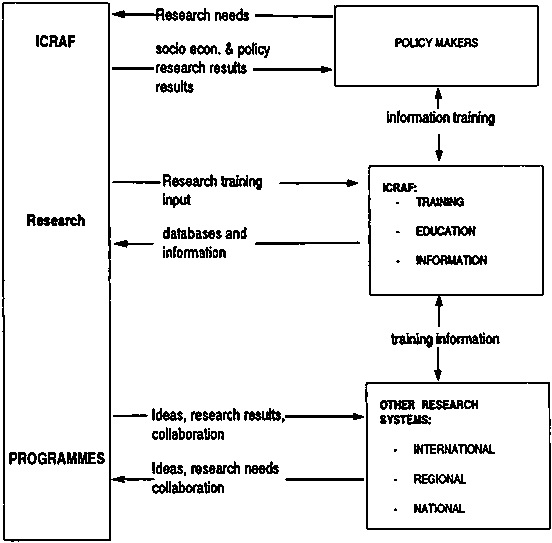
Table 3.1. Main Research Programme Interactions as Interpreted by the Panel
|
TO: |
Programme 1 |
Programme 2 |
Programme 3 |
Programme 4 |
|
FROM: |
|
|
|
|
|
Programme 1 |
INTERNAL PROGRAMME INTERACTIONS (See Table 3.2.) |
P1 should be providing Environmental characterization information to P2 for use in P2 screening activities; also, ex ante analysis on species performance will be useful for P2. |
P1 should be providing Environmental characterization information to P2 for use in developing priorities for research in P3; ex ante analysis of species interactions with other components will also be useful. |
P1 should be providing environmental characterization information to P4 for use in designing systems improvement research; P1 ex ante analysis at farm level and AF system level and results of ex post on farm analysis of systems being studied in P4 will also be essential in guiding the development of P4 research choices. |
|
Programme 2 |
P2 research results provide another input into the ex ante and ex post research and characterization work in P1. |
INTERNAL PROGRAMME INTERACTIONS |
P2 should provide species performance information for use in interaction research. |
P2 should provide technical results for use in systems design and improvement work. |
|
Programme 3 |
P3 research results provide another input into the ex ante and ex post research and characterization work in P1. |
P3 should provide performance information on interaction research results for use in species selection. |
INTERNAL PROGRAMME INTERACTIONS |
P3 should provide technical results for use in systems design and improvement work. |
|
Programme 4 |
P4 feeds information to P1: biophysical and economic information for ex ante analysis, and on AF systems being studied that show promise and therefore need on-farm testing through P1. |
Results from P4 research can provide a valuable input into the planning of research priorities and questions for P2. |
Systems improvement research will play an important role in identifying strategic research priorities, and will often provide an experimental framework within which such research can be conducted. |
INTERNAL PROGRAMME INTERACTIONS |
In the following paragraphs, the Panel discusses its concerns relative to (i) the stability of the ICRAF research programme; (ii) the research process in ICRAF (as interpreted by the Panel); (iii) the priority setting process followed by ICRAF, (iv) research quality; and (v) the balance among fields of expertise in the overall programme.
Need for stability. When the Panel started its work, it felt strongly that old programmes 1 and 5 should be consolidated; and the Panel is pleased to see that ICRAF has made this consolidation between the first phase and the main phase of the review. At the same time, this consolidation illustrates a concern of the Panel. There is a great deal of continuing change in the research division, partly due to recent changes in structure and partly due to the lack of Programme Coordinators in post for Programmes 1 and 4.
The Panel suggests that ICRAF needs to introduce a deliberate assurance of stability into the system, so researchers can get on with their jobs without being concerned about the next change in structure or organization. The basic building blocks are there and ICRAF needs to put the system into practice by focusing on appointing the new Programme Coordinators, so the whole system can function as an integrated whole.
ICRAF management is in the process of forcefully expanding into areas where there are apparent voids, or where others have been more cautious and systematic in their expansion. ICRAF should be concerned that it does not build up an image of being aggressive and expansionist. This is particularly so, if it has problems in developing and maintaining depth in the areas in which it is already operating. The Panel supports expansion in ICRAF, but suggests that ICRAF should incorporate safeguards to ensure that it is not at the expense of increases in the quality and depth of existing programmes.
The research process. The Panel believes that the overall ICRAF research framework and process described here is in theory logical and practical. ICRAF has endorsed the Panel's interpretation of the process. The Panel points out that some of the functions in the process - particularly those associated with P1.1 and P1.2 - can be seen as functions of well-organized NARS. Thus, P1.1 articulates farmer needs and useful types of solutions; and P1.2 adapts ICRAF's prototype products developed in P.4. However, most NARS are weak in both areas. Thus, ICRAF sees the necessity of tackling the whole process. Eventually, there should be opportunities to devolve these functions to NARS. In the meantime, they remain key elements in ICRAF's overall research process and strategy.
Priority setting. The issue of priority setting for projects and activities within them concerns the panel. We discuss this topic below in terms of two levels: one is the priority setting for the MTP, at the level of ecosystem, land use system, programmes and project titles within programmes; the other is the setting of priorities for activities within projects.
With regard to the MTP priority setting exercise, based on several discussions with ICRAF management and staff and a note provided by ICRAF, the Panel concludes that the process described by ICRAF as its priority setting process for the MTP needs to be considerably improved if it is to be used again. Specific points include the following:
- lack of clarity on how all four "levels" of priority setting discussed in the draft were applied: is it really priority setting or merely an exercise to limit ICRAF project themes? How is level three considered a priority setting activity?- lack of distinction between "acceptance-rejection" decisions and the setting of priorities among those items (projects) that were included; this relates to all levels in the process; acceptance-rejection of a proposed project/activity/thrust should be based on consideration of the following three criteria:
(i) it contributes to meeting ICRAF's goals,(ii) ICRAF has a comparative advantage in undertaking it, or should be developing such an advantage within the overall context of its research process; and
(iii) it involves strategic and/or applied elements.
- lack of information on the universe of alternatives considered; e.g., in stages 2,3, and 4 of the priority setting exercise;
- lack of rationale for the 12 criteria listed - some are overlapping; some should not be included as criteria for priority setting;
- lack of discussion of how priorities for programmes, projects, and studies within projects were set and then linked. Which came first? How were projects across programmes compared? Were studies within projects prioritized before "projects" (or project tides?) were prioritized?
- lack of explanation of how a quantitative ranking exercise such as suggested by ICRAF can be used to prioritize thrusts that all are a necessary part of an overall process, and not a universally comparable set. (For example, process activities such as technology testing and documentation cannot logically be ranked in a prioritizing process against the sub-humid plateau of Southern Africa).
With regard to the second level of priority setting, namely that involving choice of activities or studies within projects, the Panel is in general agreement with the process used by ICRAF as described earlier in this section. One possible improvement in the process would be the development of explicit criteria by the regional steering committees and the regional coordinators. This would make the priority setting process at the regional level more transparent.
The availability of a practical process for priority setting and clear criteria are essential in order to ensure programme continuity and clarity in direction, and to ensure that the appropriate mix of activities within projects is chosen. This process should be coupled with a more explicit monitoring and evaluation system within ICRAF, that would ensure timely phasing in and out of activities as research progresses. ICRAF needs to work on developing a formal priority setting process that is more logical and effective than the one described in the MTP and the accompanying notes given to the Panel.
Recommendation; The Panel recommends that ICRAF develop a more transparent and systematic research programme planning process, including priority setting, monitoring and evaluation. This process must be sensitive to cross-programme issues, regional differences, and the need to build confidence among researchers, partners and donors.
Research quality. Discussions with scientists, field inspections, a survey of publications and other observations indicate that the quality of ICRAF's research is improving. However, it must continue to improve as the science conducted by ICRAF must be of international quality if it is to maintain a pre-eminent place in agroforestry research and comparability with the standards of other IARCs.
Presentations made to the Panel did not give the impression that quality of research was of paramount importance to ICRAF at present. A clear objective of the Centre's management must be to develop a culture in the organization for quality research of international standards. To achieve this objective requires simultaneous attention to be directed to:
- recruiting high quality staff and providing opportunities for additional training to improve performance;- providing and maintaining good facilities and making provision for replacement of obsolete equipment;
- providing effective technical assistance;
- providing research support in the form of good library, computing and statistical services and ensuring that they are fully utilized;
- maintaining a critical mass of outposted scientists at all important locations;
- development of a system of critical internal review of research activities within projects according to clear criteria;
- exploring the possibility of introducing external peer review at the programme level into the APR;
- regular monitoring of research activities by Programme Coordinators and Lead Scientists;
- ensuring prompt internal and external peer review of all scientific material for publication;
- encouragement of scientists to aim to have their work published in high quality, international peer-reviewed journals; this will require planning of research with publication in mind.
It is acknowledged that ICRAF has made progress in raising research quality, but the Panel suggests the Centre review all its procedures to ensure there are no delays or deficiencies that will impede the development of a high quality research culture in ICRAF.
The current expansion of ICRAF has opportunities for improving research quality, but it also has potential dangers. Research support services, for example, must be sufficiently strong to meet the needs of all ICRAF scientists and particularly those in more isolated locations.
Recommendation: The Panel recommends that the Board and Senior Management should review ICRAF's expansion plans to ensure that these will not interfere with the further enhancement of science quality.
Together with this emphasis on quality, there is of course the requirement for quantity - research output must be as large and relevant as possible. In this context we commend the definition of milestones in the MTP as measures of the progress of research.
Balance among programmes and fields of expertise. The Panel is particularly concerned about the balance among programmes in terms of the fields of specialization of senior scientists, and particularly about the balance between biophysical and socioeconomics research expertise. The Panel feels that the latter is under-represented at the present time. One indication of this lack is the fact that policy research in ICRAF (Project 1.3) accounts for less that one percent of ICRAF's resources and would continue to do so through the planning period (Table 2 and p. 9 in the MTP).
If one allows for the administrative time taken away from the most senior social science (economist) researcher at headquarters, the availability of senior level expertise in social science research is very low. Yet, social science input is critical for the overall functioning of the ICRAF research process, both at the beginning of the process (ex ante studies that guide problem and technology assessment choices for research in the other programmes) and at the end of the process, as Programme 4 produces candidate agroforestry technologies for testing under farmer conditions. In addition there is the intention to enter strategic research in this area, something that would require even more capacity in socioeconomics and policy research. This issue is revisited in section 3.2.
Recommendation: The Panel recommends that ICRAF give higher priority to socioeconomics and policy research by appointing more in-house expertise in the social sciences. If ICRAF intends to enter strategic policy or socioeconomics research while at the same time providing the necessary input to the overall ICRAF research process, it should appoint at least two researchers in relevant fields of socioeconomics expertise additional to the number specified in the 1992 Draft Medium-Term Plan.
This recommendation reflects the Panel's strong belief that balance in programmes must be deliberately planned and budgeted for in the context of the overall ICRAF research process. It also reflects the Panel's strong support for concrete implementation of ICRAF's philosophy that development of viable candidate agroforestry technologies and systems depends on an understanding of both the biophysical and the socioeconomic constraints and requirements of the technologies and systems. With only 6 to 9 percent of research capacity devoted to socioeconomics and policy, the Panel believes that balance has not been achieved in the present research programme.
3.2.1. Evolution and Achievements
3.2.2. Current Focus and Future Development
3.2.3. Assessment
Earlier, we indicated that ICRAF's programme development is still in a state of continuing change. This is especially so for Programme 1 ("Characterization and Impact"), which was created only recently through an amalgamation of old Programmes 1 ("Environmental Characterization and Analysis") and 5 ("Policy, Adoption and Impact"). The recent nature of this Programme is indicated by the fact that the EPMR Panel had been assessing old Programmes 1 and 5 right up until the main phase of the review, when it was apprised of the consolidation. In the rest of this discussion, we refer to activities, achievements, plans, etc. associated with old P1 or old P5 as part of new Programme 1.
One idea driving P1 (particularly Project 1.1) is that more effective and efficient selection of research priorities, as well as increased adoption of improved agroforestry systems deriving from research, can be achieved by introducing into programs an understanding of the biophysical and socioeconomical factors characterizing the target sites for research and extension. Thus, one of the objectives of P1 is to develop, adapt and apply characterization techniques for environmental and socioeconomic variables that affect specific technologies. This is an extension of ICRAF's macro D&D methodology.
P1 (old P5) has dealt for some time with factors associated with adoption of improved agroforestry technologies (systems), with assessment of impacts of adoption by farmers, and with agroforestry policy and institutional issues. The now widely used D&D methods and tools evolved out of the work principally done in this project. One of the main achievements of P1 was development and application of D&D methods, now used in various forms in many countries.
Until 1990, the work at ICRAF in agroforestry policy and institutional development was concentrated on the problem of developing national support for, and establishing agroforestry research programmes in NARS. The AFRENAs provided the framework for collaborative activity in this area, helping the countries to develop their own scientific capacity and research experience. As a result of this work, agroforestry activities have been established in some 14 countries, and agroforestry is included in national development plans and in science and technology policies in at least 10 countries.
New Programme 1 has four projects. They and their objectives are as follows:
Project 1.1. Environmental characterization and analysis
Objective: "to characterize priority land use systems and identify constraints and opportunities for setting research priorities and defining research domains" (i.e., to deal with the critical functions of characterizing the environmental and socioeconomic potentials and constraints for use in developing problem focus in other ICRAF programmes).
Project 1.2. Technology testing and evaluation
Objective: "to evaluate the adoption potential of agroforestry technologies and to develop predictive models" (i.e., assessment of factors associated with adoption of agroforestry techniques and development of the ability to predict adoption based on selected indicators of physical/biological and socioeconomic performance).
Project 1.3. Policy research
Objective: "to develop an understanding of how selected policies constrain or support the adoption of agroforestry technologies and to advise governments on the policy requirements and mechanisms that will facilitate technology adoption".
Project 1.4. Recommendations and impact analysis
Objective: "to define recommendation domains and to develop specific recommendations for key technologies and to determine the impacts of key technologies at different levels of the farming system" (i.e., assess the environmental, social and economic impacts associated with such adoption, and on the basis of such information develop recommendations).
The planned links between the four projects in Programme 1 are illustrated in Table 3.2. (Links between Programme 1 and other programmes are discussed in section 3.1).
Although it will not be a major focus of P1, the D&D methods will evolve further within the context of P1. Among other things, P1 will develop the modelling of adoption of agroforestry technologies. P1 will also continue the work dealing with on-farm technology testing, species choice and impact assessment. These tools and approaches will continue to be widely used and to evolve within the new P1. P1's potential for future achievements is good and, indeed its future contributions will be critical to the future progress of ICRAF's overall programme and objectives. Thus, P1 will have to provide important inputs into the other ICRAF programmes, in addition to developing a strategic research output of its own that can complement and use the output from the other programmes.
Continuation of collaboration with other institutions will mark the evolution of P1. Work has been done with ISNAR on strategies for institutionalizing agroforestry. ICRAF has been working with CIAT, IITA, ICRISAT, ILCA, IFPRI, IRRI, FAO, and with various other consortia and national groups on issues related to the interests of P1. For example, work is underway with the Land Tenure Centre at the University of Wisconsin on land and tree tenure.
Table 3.2. Main Interactions among Projects in Programme 1
|
TO: |
Project 1.1 |
Project 1.2 |
Project 1.3 |
Project 1.4 |
|
FROM: |
|
|
|
|
|
Project 1.1 |
NA |
information on constraints and opportunities |
policy aspects of characterization work |
ecological and socioeconomic characterization information for the adoption and recommendation models |
|
Project 1.2 |
results for the database of P1.1 and for improved characterization |
NA |
ex ante and ex post adoption research results for use in policy analysis; identification of potential policy restrictions and policy support needs; |
information on technological and economic restriction on adoption at the farm level; results of the development of predictive models for adoption and for impacts |
|
Project 1.3 |
results from policy research will lead to improved characterization of environments |
an understanding of policy issues will result in improved targeting of specific AF technologies for on-farm evaluation |
NA |
policy related factors impacting adoption; |
|
Project 1.4 |
results for entry into characterization database for use in improving characterization work |
definition of recommendation domains and impact analysis for specific AF technologies will assist in the refinement and targeting of on-farm research |
definition of recommendation domains and impact analyses will assist in the development of policies to enhance adoption, and provide firm evidence to assist policy makers in their decisions |
NA |
While the Panel recognizes that this programme is a multidisciplinary one, the concern of the Panel focuses mainly on issues related to the socioeconomics and policy research input. This type of research in ICRAF is concentrated entirely in P1 at the present time. Thus, a major issue the Panel has identified with regard to P1 is its capacity to meet the expectations regarding its role and responsibilities in the socioeconomics area within the overall ICRAF research process and relative to the socioeconomics input needed by the other programmes. In addressing this issue, the Panel draws heavily on the assessment discussion in section 3.1. and deals here with (i) the ICRAF research process in relation to the responsibilities of P1; (ii) ICRAF's plans and needs in the area of strategic socioeconomics research; and (iii) ICRAF's involvement in on-farm research in P1.
Need for integration of socioeconomics research into other programmes. The socioeconomics components of research in ICRAF need to be integrated into the overall research strategy and objectives of ICRAF in such a way that a dynamic link is created between identification of priority research problems and translation of research results into practice in the farmer's fields.
The consolidation of old P1 and P5, which has brought the ex-ante and ex-post aspects of ICRAF's socioeconomics research closer together in a more integrated fashion than before, also helps establish the dynamics of the research process adopted by ICRAF (see also discussion in previous section). However, there still is room to define more explicitly the linkages with other programmes, particularly with Programme 4, that deals with agroforestry systems development. The Panel suggests that ICRAF make the linkages even more explicit and formalize some of them in specific cross-programme activities, perhaps through the mechanism of joint projects.
An example of where this type of formal joint activity could be developed is in meeting two fundamental needs of Programme 4: (i) providing socioeconomics input into design of screens for selecting the systems to be improved and studied in P4; and (ii) characterizing technologies and management options by resource profiles (land, labour and capital requirements and relationships over time) to permit more effective fitting of options to circumstances (e.g., resource availability over time) for a variety of target farming systems.
Balance between strategic, applied and adaptive research. There is potential for P1 to make contributions in strategic research. However, various pressures have tended to steer P1 in the direction of applied and adaptive research. The Panel suggests that ICRAF consider more explicitly the relative roles of P1 in strategic research versus its contributions to the overall research process through its characterization work and socioeconomics research.
There is not enough socioeconomics/policy expertise in ICRAF to start a meaningful strategic research programme in that area and at the same time meet the other demands on the existing socioeconomics researchers. Thus, there is a danger that too much emphasis is laid on strategic work on the development of characterization tools and predictive models. There does not appear to be a clear comparative advantage for ICRAF in development of characterization tools, for example GIS, mathematical modelling techniques, and research on development of information management systems, though it must ensure that such techniques are available for its research where needed. This could become a trap for ICRAF, because it could result in an imbalance between senior socioeconomics researcher time being devoted to perfecting these types of tools, and to the necessary task of meeting the socioeconomics needs created by the overall ICRAF research programme. The latter is essential for the smooth and effective functioning of the research process.
The Panel views much of the characterization work as a function that supports all the other programmes in ICRAF, rather than as a discrete research activity as such. Also, the needs for characterization and modelling are not unique to ICRAF. All IARCs and the NARS need these types of tools. The Panel suggests that ICRAF should explore more thoroughly the opportunities for joint activity with other centers in developing characterization methods and in applying those methods, e.g., starting in the ecoregions in which a consortium approach is planned.
In the Panel's view, at least two more senior researchers would be needed in the socioeconomics/policy area if ICRAF wants to start a meaningful strategic research programme in this area (See Recommendation 2, section 3.1.5.). The Panel recognizes that some strategic research needs can be contracted out to others with expertise in the particular areas in question. At the same time, the Panel believes that ICRAF needs to develop its own in-house capacity in certain basic policy areas related, for example, to tenure issues, incentives, and marketing and market development.
A different dimension of balance is that between direct and indirect costs and benefits of agroforestry systems. Although long-term biophysical, ecological and economic impact evaluations are mentioned under Programme 4 in the MTP, current evaluations at ICRAF only consider the direct costs and benefits associated with their adoption. The Panel believes this is an important omission, particularly so if the environmental and social repercussions of new technologies are to be anticipated. It is clear that in some agroforestry systems the major benefits, indeed the only benefits, may be indirect. For example it is important to attempt to quantify the downstream benefits of the reduction in erosion and reduced siltation, and to examine the policy options to internalize these to benefit communities that accept such technologies.
The Panel suggests that ICRAF build capacity and collaborate with advanced institutions to measure and analyze the indirect costs and benefits of both proposed and developed agroforestry technologies.
On-farm research. ICRAF works with some 600 farmers, all in Africa, looking at adoption and impact issues. It probably will be expanding this number as it moves into Latin America and Asia. The Panel doubts whether ICRAF should be working with that many farmers. Instead it probably should be devoting more effort to working intensively with fewer farms, at the same time providing strategic research support to NARS working with additional samples of farms This point is particularly relevant, since these farmers do not represent any statistically valid sample of given populations, hence statistical inferences cannot be drawn from observations on these farms. The Panel suggests that ICRAF needs to characterize production systems so that future on-farm sites can be identified as representing a population.
Further, for many of the farms involved, ICRAF needs to pay more attention to on-farm experimental design and focus. This is particularly important in developing the on-farm research in P1, related to adoption, impacts, and biophysical and socioeconomic factors. The Panel suggests that ICRAF needs to be particularly sensitive to the distinction between "technology push" and "demand pull" when it comes to putting technologies on-farm. In the past some of ICRAF's work has tended to be the former, e.g., in the case of hedgerow intercropping; and the results have not been positive. (It should be pointed out that ICRAF is not alone in this problem).
Finally, there are important opportunities for joining the activities in P1 more closely with the training activities of ICRAF to develop joint training programs with other IARCs and other groups in areas related to understanding production systems and the role of agroforestry technologies in farming systems. Ultimately, this work should be done by the NARS, who should have a comparative advantage in this type of work.
3.3.1. Evolution and Achievements
3.3.2. Current Focus and Future Developments
3.3.3. Assessment
Since ICRAF has changed its emphasis over time from an information gathering activity to a research activity including adaptive, applied and strategic research, we need to examine the evolution of Programme 2 to understand its current situation.
Consistent with its initial emphasis on compiling a strong information base for agroforestry, ICRAF in 1983 began a global inventory of multipurpose trees and shrubs (MPTS). This formed the basis of a computerized database with information on tropical and subtropical agroforestry species. The MPTS Database (diskettes and manual) released in 1991 included 1093 species. It is a descriptive database and a decision-support tool providing information for those involved in agroforestry and other land use management.
Species screening for agroforestry technologies in a range of environments was recognised by ICRAF as a first step in MPT improvement. Research in this area was designed as a decentralised collaborative activity within the framework of the AFRENAs. Since 1986, species evaluation trials have been initiated at all ICRAF's field sites in Africa. A major focus of the MPT improvement research is at the Maseno Agroforestry Research Centre in western Kenya where the "Multipurpose Germplasm Evaluation and Development Project" funded by Germany (GTZ/BMZ) is implemented by ICRAF and the Kenya Forest Research Institute.
Many of the earlier screening trials included exotic agroforestry species such as Leucaena leucocephala and Gliricidia sepium. However, as a result of Diagnosis and Design exercises and MPT surveys there is now a greater emphasis on indigenous species, including fruit trees. Species are also being more carefully selected for specific end uses (food, fodder, poles, soil improvement) and trial sites chosen to represent areas where agroforestry technologies may be applied.
In the past two years there has been greater emphasis on the more strategic aspects of MPT research with studies being undertaken on reproductive biology, vegetative propagation, root symbionts and genetic variation (isozyme studies) for selected species. At Maseno the programme has progressed to the selection of superior phenotypes, progeny evaluation trials and the establishment of seedling seed orchards of priority species (Sesbania sesban, Calliandra calothyrsus, Leucaena spp., Grevillea robusta and Markhamia lutea).
The response of MPTs to management practices has been included in Programme 2 as a significant research activity since 1988. It is conducted in the AFRENAs and builds on previous research on tree phenology, coppicing and pruning. Improved establishment techniques are also being developed.
Achievements of the programme since 1990 are: completed surveys of farmer preference for species and tree management practices in six African countries; successful establishment and preliminary evaluation of selected exotic species at multiple field locations in southern Africa; significant progress in evaluating lesser-known indigenous tree/shrub species including fruit trees with potential for agroforestry in Malawi, Nigeria and Cameroon; selection of outstanding trees for breeding populations of several species in Kenya; development and distribution of ICRAF's Multipurpose Tree and Shrub Database; training of national scientists in evaluation of MPT germplasm.
Within Programme 2 there are three projects. These are:
Project 2.1. MPT Germplasm Resource Centre
Objective: "to explore, collect, document and conserve germplasm of priority species and facilitate the supply and exchange of research quantities of germplasm to collaborating institutions".
In 1991 ICRAF identified a need for a focal point to address MPT germplasm requirements for agroforestry research. Following some interaction with donors and national and international bodies concerned with tree and shrub germplasm, ICRAF organized a consultative meeting to discuss its plans for the development of a multipurpose tree germplasm resource centre (GRC). The consultative group included representatives from IARCs and other advanced research institutions, regional seed centres, regional MPT species testing networks, national seed centres and donors. This group of stakeholders supported the concept of a GRC at ICRAF; strongly recommended collaboration with relevant national, regional and international centres in germplasm acquisition and training; and supported the GRC's proposed role in germplasm collection, ex-situ conservation, information, training and genetic research on MPTs.
After this endorsement, ICRAF gave the development of the GRC high priority and made plans for a laboratory and seed storage facilities to be included in a laboratory complex to be built in Nairobi. The GRC will focus on priority MPT species identified for ecoregion-based tree improvement activities. It will collaborate with national and regional institutions to collect germplasm for conservation and utilization and develop an in-house capacity for strategic research in rapid assessment of genetic variation and storage of recalcitrant seeds. An immediate activity will be the joint coordination with ILCA of a range-wide germplasm collection of Sesbania sesban. The project aims to have the GRC building completed and equipped, and to have started seed distribution by 1995. The GRC will be fully operational by 1998.
There is a serious global deficiency of readily-available information on MPTs of potential use in agroforestry. ICRAF's descriptive MPTS Database could be a focal point for the acquisition, collation and exchange of MPT information. It is intended that the development of the MPTS Database will continue at ICRAF HQ with new data being added and linkages being explored with other institutions operating tree databases. By 1996 the MPTS Database will have an additional 400 species and triple its current data records. The programme will have been amended to enable users to input their own data.
Project 2.2. Species and Provenance Evaluation
Objective: "to evaluate a wide range of indigenous and exotic species that have potential roles in agroforestry technologies for their adaptability to constraining environmental conditions, compatibility with companion crops, productivity, and their response to various tree management practices".
Most of the potentially useful MPTS for agroforestry exist in wild, unselected populations and hence great opportunities exist to improve the quality of germplasm through selection and low-cost breeding. Project 2.2 can be expected to define tree characteristics important for specific agroforestry technologies, identify germplasm adapted to specific environmental conditions, and determine productivity and utilisation potentials and management options for individual species. This will form the main stream of tree improvement research in Programme 2. Improved guidelines for assessment of species and provenance trials will be distributed to national institutions by 1994. By 1995 species and provenance trials will be established in Africa (eleven sites), Southeast Asia (two sites) and South America (three sites). There will be trials in Mexico, Peru, Philippines, Indonesia and Thailand by 1997. Recommendations of species/provenances for some agroforestry technologies will be available by 1998.
Project 2.3. Tree Improvement
Objective: "to develop methods for selecting and breeding MPTs for priority agroforestry technologies in each ecoregion".
ICRAF will provide support for national breeding programmes but will not develop a major breeding programme of its own. This project will define MPT ideotypes for specific agroforestry technologies; determine levels of intraspecific genetic variation and heritabilities of selected characteristics of MPTs; develop breeding methodologies; and undertake a small selection and breeding activity. Breeding biology studies on priority species will have started by 1994 and breeding methodologies for them will be available by 1996 at sites in Kenya, Malawi, Niger, Cameroon, Brazil and Indonesia. Results from heritability studies on priority species will be available by 1998.
Most resources will be allocated to Projects 2.1 and 2.2. This reflects a strong commitment to the new Germplasm Resource Centre and an assessment that there will be insufficient benefits from a high investment in breeding in the medium term. Major benefits are expected from the identification of appropriate MPT genotypes for specific agroforestry technologies in Project 2.2. Tree improvement activities will focus on strategic and applied research and support adaptive research by national institutions. They will be implemented in a decentralised and collaborative mode. Ecoregion-based tree improvement will be implemented within the framework of established networks and will be focused at Maseno (Kenya), Makoka (Malawi), Mbalmayo (Cameroon), Ibadan (Nigeria), Niamey (Niger), Manaus (Brazil) and Bogor (Indonesia).
In addition to projects exclusively in Programme 2, there will be other cross-programme activities that should yield significant results. Joint strategic research activities with the Components Interaction Programme can provide an understanding of tree-soil interactions which will assist selection of MPT genotypes (species, provenances or individuals) adapted to particular soil conditions; identification of genotypes with a high water-use efficiency, and an understanding of differential nutrient response amongst genotypes. There will be an opportunity to provide critical inputs into the Systems Improvement Programme and to interact with scientists in the Characterization and Impact Programme to determine markets and farmer preferences for tree products. This will assist in the identification of priority species for tree improvement.
A promising start has been made in Africa in identifying farmers' requirements for MPT services and products and in assembling and testing germplasm on several sites. The time taken to identify new species, evaluate them within an agroforestry system, effect some genotype improvement by selection and ensure a supply of high quality seed should not be underestimated. Experience in forestry has shown it is likely to take at least 10 years between identifying a new species and being in a position to recommend its widespread use. This long-time frame may be responsible for the perception of collaborators and stakeholders surveyed by TAC Secretariat that up to now the MPT improvement research did not rate as highly as research in other ICRAF programmes, although the potential for valuable outputs in the future was considered greater. The MPTS Database was regarded as a valuable output and this reinforces the positive response from a user evaluation survey conducted by ICRAF in June 1992.
The quality of the field experiments in terms of the use of well-documented seed sources, efficient experimental designs and careful management and measurement appears to have improved as staff have gained experience. Because species evaluation and breeding activities involve long-term experiments it is essential to work on priority problems and to ensure that all experimental procedures, management and monitoring are of the highest quality. Failure to maintain high standards may result in irrelevant data and a loss of the high investment in the research. The Panel suggests that the recommendations of MacDicken (1991) 1 on raising quality of research in the AFRENAs be implemented.
1 MacDicken, K.G. (1991). Relevance and Quality of Research in Southern Africa and East Africa AFRENA Programmes: Review and Recommendations. Unpublished. Consultant's Report, July 1991. 59 pp.
Initial screening for adaptability has and will continue to use standard forestry approaches. The Panel suggests, however, that there is scope to develop new rapid methods and experimental designs to evaluate tree traits of particular interest to agroforestry e.g. screening of seedlings for tolerance to limiting site factors, assessment of crown and root architecture and its influence on resource sharing with crops.
The output of information is commendable, but most research results have been reported in in-house (ICRAF) publications. The Panel suggests that scientists be encouraged to publish key findings in international, peer-reviewed journals.
There may be difficulties in the coordination and administration of Programmes with a wide geographic dispersion of staff. This is particularly exemplified at present in Programme 2 which also has a heavy load of donor liaison. The new programme structure will increase demands on Programme Coordinators. The Panel suggests that ICRAF review carefully the activities and responsibilities of Programme Coordinators in this context (see chapters 5.3.1. and 6.2.1.).
The review of MPT improvement for the Medium-Term Plan 1994-98 resulted in some significant changes. Priority was given to the establishment of a Germplasm Resource Centre and to a project on species and provenance evaluation while tree breeding activities were significantly curtailed. The expansion of MPT improvement activities to South America and Southeast Asia was also foreshadowed. These developments are assessed below.
Multipurpose Tree Germplasm Resource Centre. The consultative group meeting endorsed ICRAF's concept of a MPT Germplasm Resource Centre and, although the NARS were not widely represented, the conclusions can be considered a reasonable consensus of the main stakeholders.
There is a trend for commodity-based IARCs to rely more on national germplasm centres to obtain germplasm of crop plants but for them to take a greater role in conservation. However, MPT germplasm acquisition, storage and conservation is still at a primitive stage compared to crop plants and national genebanks are generally weak. The Panel agrees with ICRAF and the consultative group that there is a role for a GRC in ICRAF.
While a need for the GRC has been established, to a very large extent its success will depend on the sensitivity with which it approaches the matter of germplasm acquisition and distribution. At the international level, ICRAF has already signed a formal agreement with ILCA to ensure collaboration on various aspects of fodder germplasm. There has been no formalisation of arrangements for collaboration in germplasm acquisition and conservation with CIAT, IBPGR and CIFOR although all participated in the consultative meeting and are aware of ICRAF's plans for the GRC. The supply of effective root symbionts for MPTs may significantly affect field performance. ICRAF will give priority to nitrogen fixing bacteria and has approached Niftal to second a staff member to the GRC to ensure a supply of effective Rhizobium and Frankia root symbionts for MPTs is available. Where mycorrhizas are critical, ICRAF will liaise with several national institutions which specialize in these microorganisms and can supply selected strains. It is currently engaged in dialogue with some regional seed centres (e.g. OFI and CSIRO) to work out complementary and collaborative arrangements and the Panel suggests these discussions should be extended to other key centres, including the ASEAN-Canada Seed Centre in Thailand and CATIE in Costa Rica. At the national level, ICRAF has been working with several African NARS to coordinate seed collection and evaluation trials of Sesbania sesban. The indications are that the GRC has made a promising start in collaborating with other agencies.
The GRC's proposed activities include ex situ conservation of germplasm and indicate ICRAF has made a long-term commitment to maintaining this facility. Running costs of the GRC will be high and ICRAF should recognize that it could be a significant drain on core funding if donor support, agreed to in principle by DANIDA, is not maintained at the current level for a long period. At the present time the GRC has a comparative advantage in Africa through the AFRENAs, but in Asia and South America it will have to place great reliance on establishing a good working relationship with existing MPT germplasm centres and networks.
The Panel endorses ICRAF's decision to set up a MPT GRC and commends it for the approach it is taking to initiate collaborative activities. However, in view of the sensitivities of germplasm acquisition and distribution, the Panel suggests the GRC would benefit from policy guidance by a small advisory panel comprised of representative stakeholders.
MPTS Database. The MPTS Database is a valuable descriptive database which complements several other descriptive tree databases. Relational links between these databases and between other predictive, directory and various peripheral databases could be made. The MPTS Database could make a significant contribution to such a system and ICRAF and other scientists would benefit from being able to access data more readily. CIFOR has initiated a working party, TROPIS, to pursue the question of linkages between tree-related databases. The Panel suggests ICRAF continues to improve its MPTS Database as planned and that it participates actively in TROPIS.
Status of Tree Breeding. Programme 2 has a role in identifying species for agroforestry technologies. High payoffs can be expected from selecting within the highly variable gene pools of many MPT species. Species, provenance and progeny trials are used to make this selection and in parallel with this activity there is considerable scope for the definition of tree characteristics, both physical and physiological, that are important for agroforestry. Root characteristics that influence competition for below-ground resources will be particularly relevant (see Programme 3). To take the next step and move into tree breeding is expensive and long term. The high investment required may not be economic unless a species is to be planted very extensively and management inputs permit full expression of the improved genotype. The Panel suggests ICRAF's role in breeding should be to undertake strategic research on genetic variation, reproductive biology and vegetative propagation to assist individual or groups of NARS devise strategies to produce good quality germplasm (seed or vegetative material) for diffusion into the farming systems.
The Panel considers the decision to focus the Programme more on species and provenance variation than on intensive breeding activities is appropriate at this stage of agroforestry development. The Panel suggests that within the current Project framework there should be careful selection, in close consultation with Programmes 1 and 4, of priority agroforestry technologies for MPT research and activities be chosen which give a reasonable balance between the strategic, applied and adaptive components of the Programme.
Expansion of the MPT Programme. Programme 2 has tentatively identified a role for ICRAF in selecting trees for a number of agroforestry systems in Southeast Asia and South America. Its objectives include the selection, evaluation and management of a broad range of indigenous and exotic trees and shrubs for rapid growth, nutrient cycling, fodder and food production and capable of growing an acid and infertile soils. It may be desirable to include a MPT scientist in multidisciplinary teams researching "Alternatives to Slash and Burn", but MPT improvement activities are well established in Asia and parts of Central and South America at both national and regional levels. The Panel therefore suggests that ICRAF should not commit major resources for MPT improvement to Asia and South America until there have been further discussions in the regions and the role of ICRAF and CIFOR is well defined.
3.4.1. Evolution and Achievements
3.4.2. Current Focus and Future Developments
3.4.3. Assessment
As with the other ICRAF Programmes, the Component Interaction Programme has been recently re-organized and given new responsibilities. This Programme is a major component of ICRAF's strategic research agenda.
Throughout the 1980s ICRAF's programme was primarily agroforestry demonstrations and observational studies. In the period 1985-89, a tree/crop interface project aimed to develop guidelines for field experimentation in agroforestry. Other studies included: tree/crop competition for above- and below- ground resources, and soil conservation aspects of agroforestry technologies. At the end of the decade more formal, strategic research was initiated, aimed at developing a better understanding of component interactions in agroforestry. This research was concentrated at the Machakos Research Station in Kenya.
In addition to the major research activity at the Machakos, research was initiated at key locations within the AFRENAs in the humid, sub-humid and semi-arid eco-regions. Long-term field experiments have been established and research facilities are being developed. Outputs of this research since 1990 include: identification of some major factors determining tree/crop interactions in some agroforestry technologies, e.g. how soil water is extracted in competitive situations, and related to root system length and architecture; improved instrumentation of wide applicability in agroforestry research; assessment of the efficacy of different barrier hedgerows in decreasing soil erosion on sloping land; and a preliminary understanding of environments where hedgerow intercropping is appropriate to achieve soil fertility improvement.
The goal of component interactions research was then re-defined in the ICRAF Draft Strategic Plan (1992) to contribute to sustainable increases in the output of agroforestry systems by developing a predictive understanding of the biophysical processes affecting the interactions between the trees, crops and/or animal components of agroforestry systems.
Within Programme 3 there are four projects:
Project 3.1 Competition for Growth Resources
Objective: "for a representative range of environments, quantify the processes and determine the mechanisms that limit growth when trees and crops compete for resources".
Understanding the biophysical principles underlying competition for growth resources will assist in the development of natural resource management practices and assist in selecting MPTs for agroforestry technologies. Project 3.1 will quantify aspects of above- and below-ground competition and determine the influence of tree root systems on water and nutrient use by crops; it will quantify the limits to production and sustainability of agroforestry systems on sloping land and the extent of micro-climatic changes induced by windbreaks. This will also enhance the understanding of the basic mechanisms whereby mixed-species vegetation is controlled.
By 1995 a synthesis of tree/crop interaction research will be published and by 1996 the relative importance of above- and below-ground competition on contrasting sites in the sub-humid and semi-arid tropics will be quantified. The impact of variation in some MPT traits on competition for growth resources in sub-humid and semi-arid environments will be quantified by 1997. By 1998, biophysical principles will have been established for improved use of growth resources in agroforestry systems in semi-arid environments in Kenya.
Project 3.2 Nutrient Management
Objective: "to quantify the various processes by which trees improve the cycling of nutrients, maintain soil organic matter, ameliorate problem soils and contribute to efficient nutrient management."
Knowledge about the processes by which trees contribute to soil fertility is expected to assist the design of agroforestry technologies to use efficiently the available nutrients on acidic and nutrient depleted soils. Project 3.2 will conduct research in Africa, Southeast Asia and South America and have a significant role in ICRAF's "Alternatives to Slash and Burn" initiative. Activities will include quantification of nutrient cycling in tree fallows and silvopastoral systems; determination of the role of aluminium toxicity and its effect on trees planted on alang-alang sites; determination of the decomposition and nutrient release of organic residues and the effect of external inputs; and quantification of biological processes affecting organic matter degradation and decomposition in agroforestry technologies.
Studies on rotational fallows will be established in the sub-humid tropics by 1994 and in the humid tropics by 1995, and inputs to soil organic matter by fallow species will be quantified by 1996. By 1998 the amount of organic residues and inorganic inputs needed to minimise aluminium toxicity will be determined and nutrient budgets of fallow trees will be known.
Project 3.3 Soil Conservation
Objective: "to quantify the relative importance of the processes associated with the soil conservation potential of specific agroforestry technologies in the semi-arid environment of the Sahel and on moderate to steep slopes in the sub-humid and humid tropics".
Research in Project 3.3 is expected to contribute to the development of more efficient technologies to control wind and water erosion and for the conservation of water. By 1995 quantification of the soil erosion process on moderate to steep slopes in relation to barrier hedgerow technology will be achieved. The relative importance of processes involved in wind erosion and the impact of contrasting tree species on these processes in semi-arid environments will be determined by 1997. Long-term results of soil loss, crop yields and efficiency of water use under agroforestry and traditional systems in a semi-arid environment will be published, and preliminary water balance/erosion models for determining run-off on sloping lands will be developed by 1998.
Project 3.4 Insect Pest and Weed Management
Objective: "to monitor key insect pests and their natural enemies in specific agroforestry systems to gain an understanding of their population dynamics and their response to different technology and management strategies. Monitor weed populations and shifts in weed composition associated with the adoption of specific agroforestry technologies".
Planned studies aim to improve rotational fallows being developed in the sub-humid and humid tropics through the development of management strategies to minimise nematode populations in Sesbania fallows and reduce weed problems in selected agroforestry systems. By 1994 the project will have identified Sesbania species tolerant to root-knot nematodes and by 1995 will have quantified aspects of the population dynamics of the nematodes.
Most resources will be allocated to the Nutrient Management and Competition for Growth Resources Projects. The Soil Conservation Project is given least priority and allocated the least resources, but additional research on this topic will be conducted in Programme 4, Systems Improvement. The weed component of the Insect Pest and Weed Management Project is new, and a former project on livestock feeding systems using fodder trees and forages has been discontinued.
There are plans to extend into Southeast Asia the research on resource competition, nutrient cycling, soil erosion and weed dynamics. In South America, research is planned on soil constraints such as nutrient cycling, soil acidity, aluminium toxicity, organic matter dynamics and soil conservation.
This relatively small Programme is staffed by competent and high-quality staff. Although plant competition for light has been studied for a number of years, the understanding of below-ground competition mechanisms for water and nutrients is elementary and largely descriptive. Within a very short time the Components Interaction group has developed an exciting programme of international quality. From this strategic research, predictive theories are emerging on soil, plant and climatic characteristics and interactions that are necessary for agroforestry technologies to be successful. The low-cost instrumentation to measure water movement in plants and soil losses from water erosion which has been developed has wide applicability and is a valuable output from the Programme.
The Panel agrees with the new structure of Programme 3 and the priorities assigned to the projects in the MTP review. The decision to discontinue research on tree-livestock interactions in view of ILCA's comparative advantage in this area is appropriate. The development of the insect pest and weed management research project in the context of component interactions is a welcome new initiative by ICRAF which has implications for Programmes 2 and 4. However, the Panel recognizes that it may require the input of substantial resources and careful direction to make it dynamic and productive.
The effect of the proposed expansion of the Programme to other continents should be considered carefully from the view point of maintaining cohesion and critical mass. ICRAF controls only one site, at Machakos, in the semi-arid region of Kenya. A strong case can be made for another controlled site in a contrasting environment. Identification of a representative area in a subhumid part of Kenya or in the humid tropics of Cameroon, for example, would provide the Nairobi-based scientists with opportunities to develop a parallel programme which would allow theories to be developed and tested in a different climate. This would be more valuable than a scattered set of experiments by small, under-resourced groups. The demand on a few innovative scientists through such a policy could be very damaging. It is essential that the critical mass of scientists be maintained at Machakos.
This group is making effective use of visiting scientists, post-doctoral fellows and postgraduate students. The Panel suggests that it should also be encouraged to develop links with scientists in national institutes and universities who can contribute to ICRAF's strategic research agenda while at the same time improving their own research capabilities and outputs. This could be attractive to potential donors.
While the research of the group may have been somewhat constrained by lack of equipment and laboratory facilities, this problem is being addressed satisfactorily in ICRAF's capital works programme. The group has good complementary skills but if the stated outputs are to be achieved, the Panel suggests that consideration should be given to adding more modelling expertise (see also 5.9.).
The Panel considers Programme 3 has excellent potential to produce research of high international standard that should be of great value to ICRAF's research goals and to agroforestry development in general. It is appropriate that ICRAF continue to support this Programme from core funds.
3.5.1. Evolution and Achievements
3.5.2. Current Focus and Future Development
3.5.3. Assessment
Systems improvement is the research programme which seeks to achieve a major objective of ICRAF; to develop improved technologies for resource poor farmers. The goal of the programme is to generate agroforestry technologies which improve the sustainability of production systems. It also includes the monitoring and evaluation of the long term biophysical, ecological and socioeconomic impact of various traditional and innovative agroforestry technologies at locations directly facing the threats of deforestation and land depletion and is therefore concerned with sustainability. Systems Improvement is the heart of much of ICRAF's collaboration with NARS, implemented through the AFRENAs (see section 6.1.).
Systems Improvement as a research programme entered the ICRAF agenda following the 1984 donor sponsored review which moved ICRAF into collaborative research activities. It now plays a central linking role for all the Centre's research programmes (see section 3.1).
The Systems Improvement Programme was conceived as an on-station applied research activity to study and improve the potential of candidate agroforestry technologies to mitigate problems faced by resource poor farmers, for example poor soil fertility, soil erosion, and fodder and firewood shortage. The Programme seeks to answer the question "what works and how well" in given biophysical conditions.
Candidate technologies were identified following a diagnosis and design exercise to identify and analyze farmers' land use problems in a chosen agroecological zone, and an assessment of the potential of alternative agroforestry technologies to solve them. Traditional agroforestry systems provided the basis for most of the candidate technologies for the Programme. The station work on candidate technologies identified processes which needed to be understood, and Systems Improvement Programme has been the main origin of ICRAF's strategic agenda to be researched in-depth by Programmes 1, 2, and 3.
Feedback from results in Programmes 2 and 3 provides improved tree components and management options to the candidate technologies under investigation in Systems Improvement.
The main achievements of past research include the demonstration of the potential of sesbania to improve the fertility of fallows on degraded soils. Investigations on whether the sesbania can be planted into the crop grown prior to fallowing might be an important route to easy establishment. Research under the auspices of Programme 4 has shown the value of hedgerow intercropping in preventing soil erosion on sloping land. Tree and grass combinations on contour banks have also been shown to be effective in soil conservation.
Hedgerow research at a range of sites and economic evaluation of its viability has begun to narrow down the biophysical and economic niches in which it is perceived to be appropriate. The introduction of leguminous trees, particularly Leucaena spp, into fodder bank technology, has been an achievement of the program and is currently under test in farmers' fields. Finally, live fencing and boundary planting as well as upper tree storeys have been shown to be useful for biomass transfer and soil enrichment.
Currently, the following technologies are being tested in 14 countries in Africa and one in Latin America. Table 3.3. illustrates the distribution of technologies being investigated by country and ecoregion.
Table 3.3. Current Technologies being Investigated by Country and Ecoregion
|
Technology |
Subhumid Zone |
Humid Zone |
Semi-Arid Zone |
|
Hedgerow intercropping |
Burundi, Kenya, Malawi, Rwanda, Zambia |
Cameroon, Peru |
Burkina Faso, Mali, Senegal |
|
Improved fallows |
Kenya, Malawi, Zambia |
Cameroon, Peru |
|
|
Woodlots |
Zambia |
|
|
|
Fodderlots |
Burundi, Kenya, Zambia |
|
Mali |
|
Trees with fodder grass on erosion-control structures |
Burundi, Kenya, Rwanda |
|
Burkina Faso |
|
Boundary planting |
Kenya, Uganda |
|
|
|
Upperstorey trees |
Burundi, Uganda |
|
|
|
Trees planted in relay with food crops |
Malawi |
|
|
|
Living fences |
Malawi |
Nigeria, Peru |
Mali, Niger, Senegal |
|
Rotational hedgerow intercropping |
Tanzania |
Cameroon |
|
|
Hedgerow intercropping with livestock |
Kenya, Tanzania |
Cameroon |
Kenya |
|
Home gardens/Multi strata systems |
Kenya, Tanzania |
Nigeria, Peru, Cameroon |
|
|
Mixed intercropping |
|
|
Burkina Faso |
|
Windbreaks |
|
|
Niger, Senegal |
|
Biomass transfer for soil fertility |
Malawi, Zambia |
|
|
|
Agrosilvo-pastoral systems |
Tanzania |
Peru |
|
The Programme is based on the AFRENAs. Most research is located in Eastern and Southern Africa, with nine staff positions, against two for West Africa, where a new programme, the Semi-Arid Lowlands of West Africa (SALWA) was established in 1992. There is one staff position in Latin America and one in Asia.
The recent MTP for the period 1994-1998 shows the Systems Improvement Projects located in the six ecoregions as follows. All contain new activities.
Project 1: The Sub-humid Highlands of East and Central Africa. The project will implement new experiments on improved fallows, indigenous fruit trees and upper storey trees in banana systems. Researcher controlled on-farm trials and on farm testing will be implemented for improved systems for fodder production, diversified production through upper storey trees, hedgerow intercropping, as well as improved fallows and soil erosion control.Project 2: The Sub-humid Plateau of Southern Africa. In this region, new research will be conducted on alternatives to slash and burn at the benchmark location of Kasama, Zambia. On-farm researcher controlled trials as well as on-farm evaluation will be implemented with improved fallows and relay-cropping, hedgerow intercropping, fruit trees, and silvo-pastoral systems.
Project 3: The Semi-Arid Lowlands of West Africa. New experiments will be established on fodder production, live fences, wind erosion control, improved parkland systems and the contour planting of tree/shrub combinations for water erosion control. Recommendations will be made for researcher-controlled on-farm trials and for on-farm testing and evaluation.
Project 4: The Humid Lowlands of West Africa. New experiments on improved fallows, contour planting and multistrata systems will be established on acid soils at the benchmark site of Mbalmayo, Cameroon. Results will be taken into researcher controlled on-farm trials and on farm testing.
Project 5: Humid Tropics of Latin America. Activities in Latin America (Brazil, Peru and Mexico) will concentrate on the "Alternatives to Slash and Burn" initiative by the implementation of on-station and on-farm research on improved fallows, contour hedges, multistrata systems for fruit production, trees to rehabilitate degraded pastures and trees for live fence posts. Results will be available for testing and evaluation on-farm.
Project 6: Humid Tropics of Southeast Asia. This project will be established in Indonesia, Thailand, the Philippines, and Vietnam, with the aim of reducing tropical deforestation and reclaiming abandoned lands. Experiments on diverse candidate technologies will be implemented, including contour hedges, fodder banks, tree species suitable to taungya, multistrata systems, boundary plantings, and upper/understorey combinations on contours.
ICRAF has considered the lack of a Programme Coordinator to be the major weakness of this programme. The Centre points to the difficulty of communicating with the widely dispersed research staff and the need to standardize experimental design and implementation for cross site comparability. ICRAF believes that the appointment of a Coordinator, better communication systems, the development and use of its Experimental Database and closer links with the socioeconomists in Programme 1 will increase the potential for future achievements.
Programme 4 has an important position in the ICRAF research process. It is shaped by the diagnostic capacity of Programme 1 and, by the problems it meets in improving agroforestry systems. The latter may generate strategic research initiatives in any of the other programmes. The Panel has comments on the current research themes in the Programme as well as on its interface in the research process with the other programmes.
The improvement of agroforestry systems. Some results coming out of the research stations sites operated under Programme 4 look promising, including fodder banks (animal feeding on trees/shrubs foliages), biomass transfer for soil fertility improvement, improved fallow with Sesbania sesban. and hedgerow intercropping mostly for erosion control.
The Programme has begun to better define the appropriate niches for hedgerow intercropping. It, and ICRAF as a whole, must keep in mind the history of hedgerow intercropping (or alley cropping) as it begins to promote other prototype agroforestry technologies. This showed the dangers inherent in premature promotion of specific technologies.
Improved fallow with Sesbania sesban, has revealed an unsuspected potential to restore soil fertility; maize yields continue to rise over 3 years of continuous cropping. Significant increase of live weight gains and milk production of cattle were observed when animals received supplementary tree forage from the fodder banks. Biomass transfer for soil enrichment is a good alternative to hedgerow intercropping since it avoids direct competition between trees and crops, and corresponds more closely to traditional practices.
It seems to the Panel that ICRAF is placing a heavy emphasis on Sesbania sesban fallows. The Centre needs to take care to avoid a repeat of the alley cropping story. The Panel suggests that other candidate species should be kept in mind in view of identified management problems and potential adoption issues such as vulnerability of sesbania to pests and disease and dieback, and the need for useful by-products and wood quality.
At the same time the diversity of opportunities with sesbania is exciting. The use of sesbania in crops was observed on West Kenya maize fields in the early 1980's. The potential for the within crop management of sesbania is important for more densely populated areas where fallow is lost and permanent cropping established because such areas will widen as populations grow.
Biomass production technologies for cattle feeding and soil fertility improvement are focused on hedge management. As this technology requires both more land and more labour the option of scattered trees may be important. Also, hedge management prevent trees from fruiting and most leguminous tree fruits are of higher quality for animal feeding than their foliage.
With fodder banks chosen as a priority agroforestry system, and since ICRAF has a limited capacity to handle the livestock dimension, there is a need for close collaboration with strong national institutions and, logically, with ILCA. The 1989 EPMR strongly recommended joint research programmes with ILCA, which would parallel collaborative arrangements between ICRAF and ILCA for germplasm. Collaboration on livestock has not yet materialised, but the logic of the argument made in 1989 review still stands.
Generic characteristics of the evolving smallholder agriculture sector should always be borne in mind in the choice and design of agroforestry research programmes because in many evolving systems trees were removed from the field to allow mechanization. Agroforestry has potential for regions still unaffected, in an effort to prevent rather than cure degradation. Acceptable wood quality generally appears to be essential for species to be adopted by small farmers.
The standard of experimentation. The implementation and management of agroforestry experiments on station has improved over the last few years. There is a growing understanding of the difficulties in designing agroforestry experiments. Measures, often ad hoc, have been taken to correct poor design; root pruning trenches are an example. The ICRAF biometrician has been able to give direct and effective support to scientists in field situations. Nevertheless, the Panel suggests that special effort is still needed to provide principles for improved experimental design to manage variability and avoid confounding across plots caused by interactions between treatments from root competition and shade effects. This endorses the need for more capacity in biometrics noted in section 5.11.
Interactions with other programmes. The Panel has comments on two dimensions of the research process. First on the interactions between Programme 4 and Programme 1 in the ICRAF research process. Second on the organisational arrangements for identifying content for Programme 4.
Other sections of the report (see 3.1. and 5.3.) suggest that Programme 4 interactions with the other programmes need be systematically strengthened. There is a need for a more detailed understanding of farmer constraints to be brought to bear in shaping the agroforestry systems under research and in identifying management options that will be compatible with smallholders' limited supplies of labour and cash.
For example, the density of the Sesbania sesban in fallows may be important, not only to the maize yield response, but also to the shading out of weeds. In many systems the need to weed the fallow will reduce the incentive to adopt the technology, unless establishment is fitted to the time when labour for weeding is available - in many smallholder systems the fourth month into the rainy season. Such a delay in planting will compromise technical performance. It is a good example of the way ICRAF must understand farmers' resource limitations and evaluate the costs and benefits of compromises to accommodate them. Such analysis demands stronger expertise in diagnosis and design than is evident from the observations of the Panel.
Mismatches observed by the Panel between prototype technologies and farm situations in a framework demonstrate a weak grasp of On-Farm Research (OFR) fundamentals. Technology continues to drive the on-farm work as in the history of alley cropping. There is a need to characterise the agroforestry technologies under research in Programme 4 by their resource profiles. The Panel suggests that known small farmer constraints, such as the labour peak while cultivating and planting at the onset of the rains, should be identified and alternative technical management options explored to minimise the use of scarce resources at such peaks. Examples would include the use of seedlings or direct seeding for establishment and delayed establishment until labour is available for planting and weeding. Such characterization of the agroforestry technologies and their management alternatives will allow matching of technologies to farm situations and reduce the danger of irrelevancy in the on farm research.
The Panel suggests Programme 4, on Systems Improvement, should have its own capacity in socioeconomics. While the methodology was developed by ICRAF, past, and indeed some recent applications of the micro D&D have been weak. A deeper understanding of farmer circumstances is required than is being obtained. For example, gender differentiated responsibilities for farm operations are important when evaluating, ex ante. the impact of alternative candidate technologies, and their management options, on a target farming systems.
Recommendation: The Panel recommends that ICRAF strengthen the two steps in its research process which seek compatibility between agroforestry technologies and production systems:- the understanding of target production systems, including time-related resource use patterns and gender issues.- The specification of time-related resource use requirements of each management option for candidate agroforestry technologies.
With a global mandate for agroforestry, ICRAF can never be directly involved with more than a small number out of the total universe of production systems. The Panel suggests that ICRAF's strategy should be to devolve responsibility for on-farm adaptation of the prototype technologies produced by Programme 4 to NARS once these have built up an adaptive research capacity. Accepting this, training in OFR becomes an important focus, both for ICRAF and for a collaborative effort within the ecoregional initiative (see sections 4.3. and 6.1.).
Priority setting is particularly important to Programme 4 because it is regionally based. During country visits Panel members noted some confusion on the operational planning process. Some plans were made through the Steering Committee structure, others directly between ICRAF scientists and HQ. Although ICRAF has now confirmed that Programme Coordinators have precedence over Regional Coordinators, the relative authority of Regional Steering Committees, in which the Regional Coordinator may sit, and Programme Coordinators remains obscure.
