Pelagic fish.
An increase in the abundance of small pelagic fish has occurred since the previous Survey. The increase is represented by juvenile stages of Trachurus trecae and Sardinella aurita. They were observed around 100m depth in the area from Madingo almost up to Iguela. The southern part between Madingo and Pte. Panga was dominated by Trachurus trecae mixed with Trichiurus lepturus. Between Pte. Panga and Iguela a mixture of T. trecae, Saurida sp., Sardinella aurita and some Engraulis encrasicolus was observed. The northern part, outside Iguela was dominated by Sardinella aurita of 12-15cm length. During the day the sardinella aggregated in schools on the bottom and was fairly easy to catch with bottom trawl.
There were not caught adult stages of Trachurus trecae during the survey. Adult sardinella was represented only by a few specimens in the catches.
In the shallow waters the pelagic observations were made up of sardinella. Chloroscombrus chrysurus, Ilisha africana, Sphyraena gauchancho and some Trachurus trecae.
The triggerfish, Balistes capriscus, was only observed on the outer part of the shelf from Pt. Noire to Madingo.
Ariomma bondi was observed on the shelf edge from Sette Cama and northwards.
North of Port Gentil the pelagic resources were scarce. Some Trachurus around 17cm TL were caught.
Demersal fish.
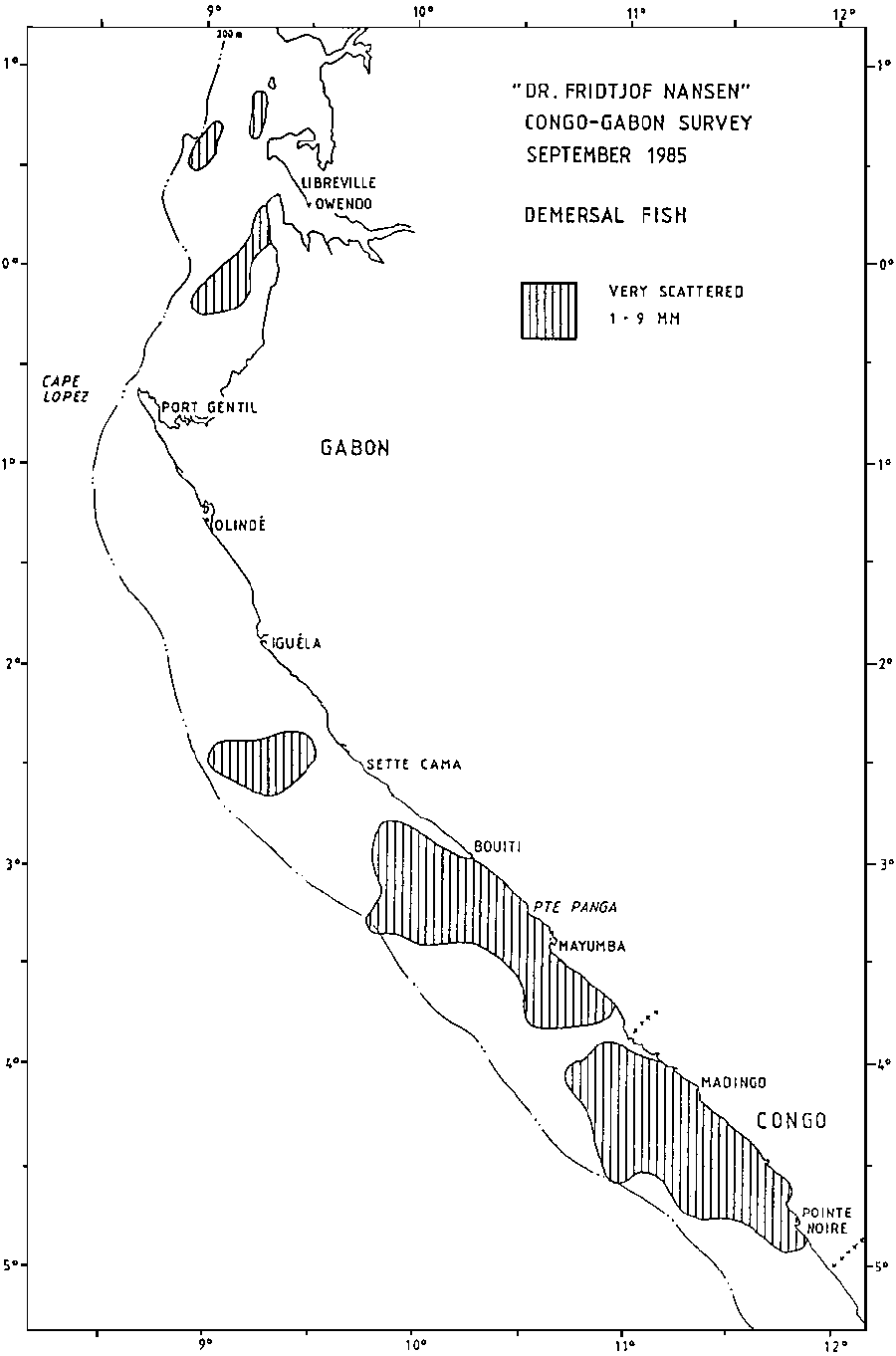
There were not observed any major changes in the distribution and abundance of demersal fish since the previous survey. Brachydeuterus is dominating the shallow waters while Pagellus, Dentex etc. occur in the deeper waters.
Biomass estimates (thousand tonnes):
Acoustic survey:
|
|
Congo |
Gabon |
Both |
||||||
|
Pel |
Dem |
Tot |
Pel |
Dem |
Tot |
Pel |
Dem |
Tot |
|
|
Survey I |
30 |
5 |
35 |
70 |
25 |
95 |
100 |
30 |
130 |
|
Survey II |
50 |
10 |
60 |
40 |
25 |
65 |
90 |
35 |
125 |
|
Survey III |
55 |
22 |
77 |
145 |
18 |
165 |
200 |
40 |
240 |
|
Survey I |
125 |
|
Survey II |
160 |
|
Survey III |
120 |
|
Mean three surveys |
135 |
Pooled and statistically unweighted distributions of the most common species are shown in Appendix III.
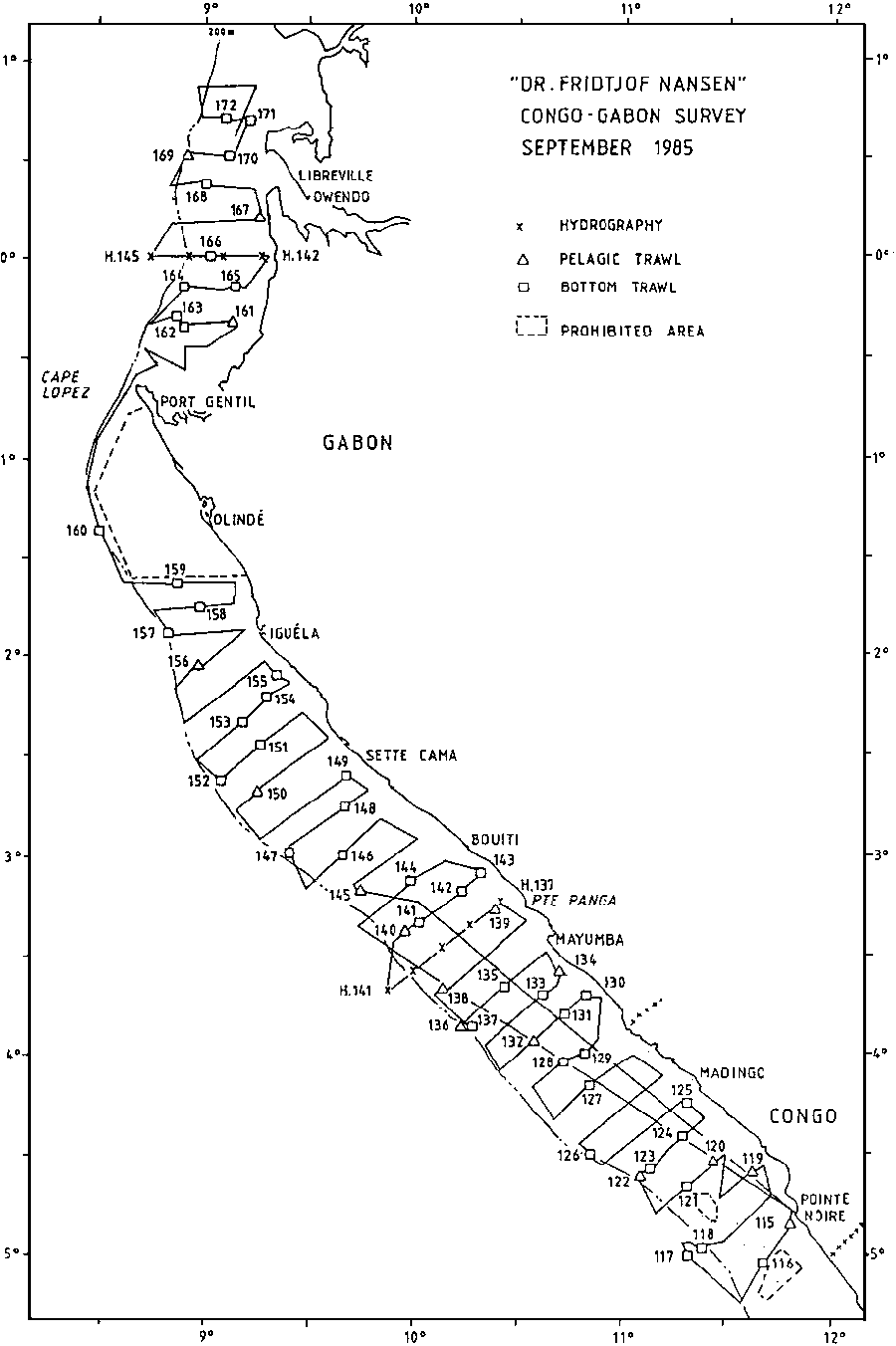
Figure 1. Cruise track and stations worked.
Figure 2. The hydrographical sections
Figure 3. The distribution of small pelagic fish.
Figure 4. The distribution of demersal fish from acoustic registrations