The acoustic observations and the trial fishing of the surveys can provide descriptions of the distribution of the fish. These are roughly classified in “small pelagic schooling fish” and “predominantly demersal (bottom) fish”. The acoustic method is unfortunately not well suited for assessment of large pelagic fish such as tunas and these are not included.
3.1 Small pelagic fish
Among these the following are important:
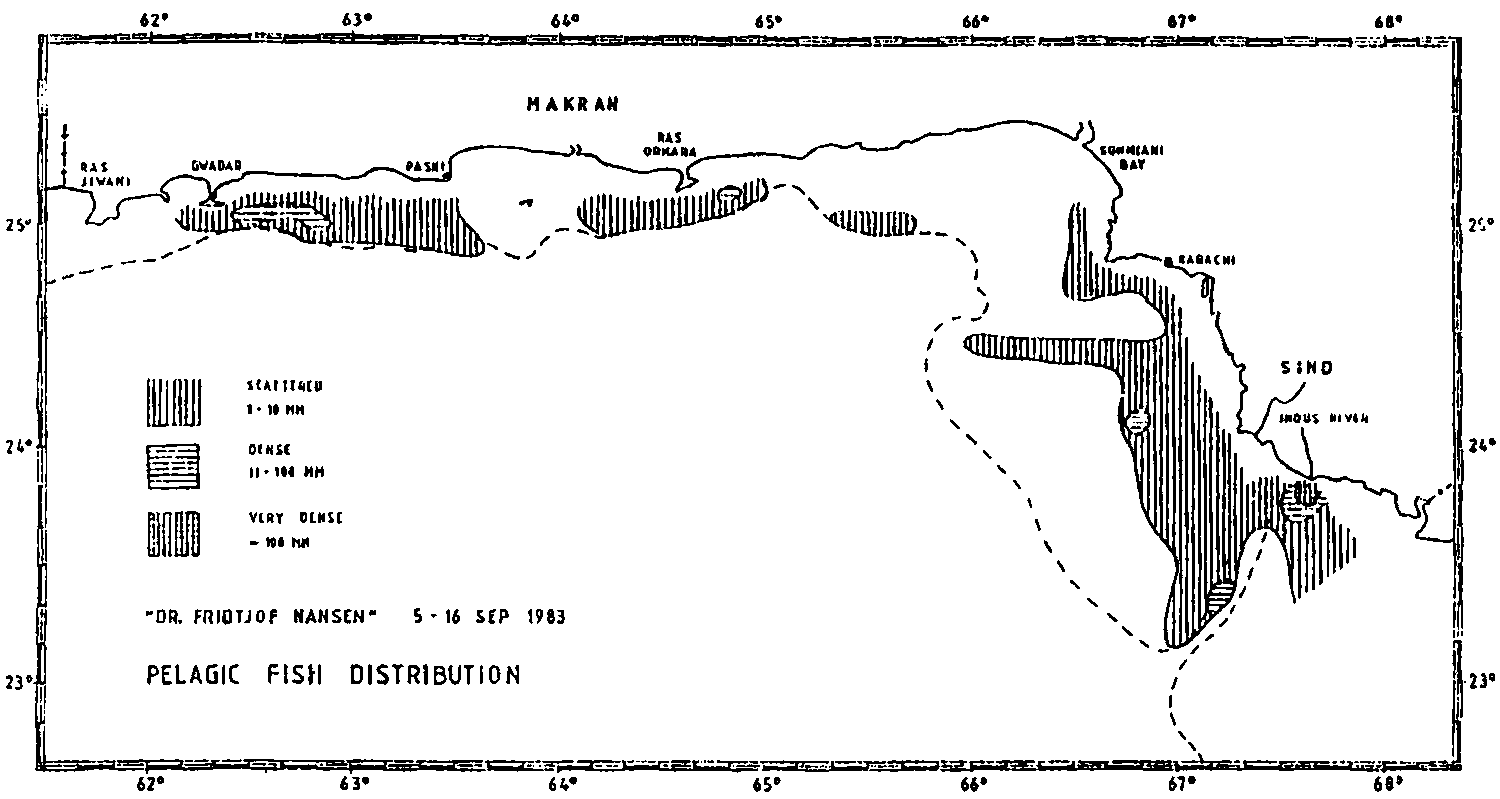
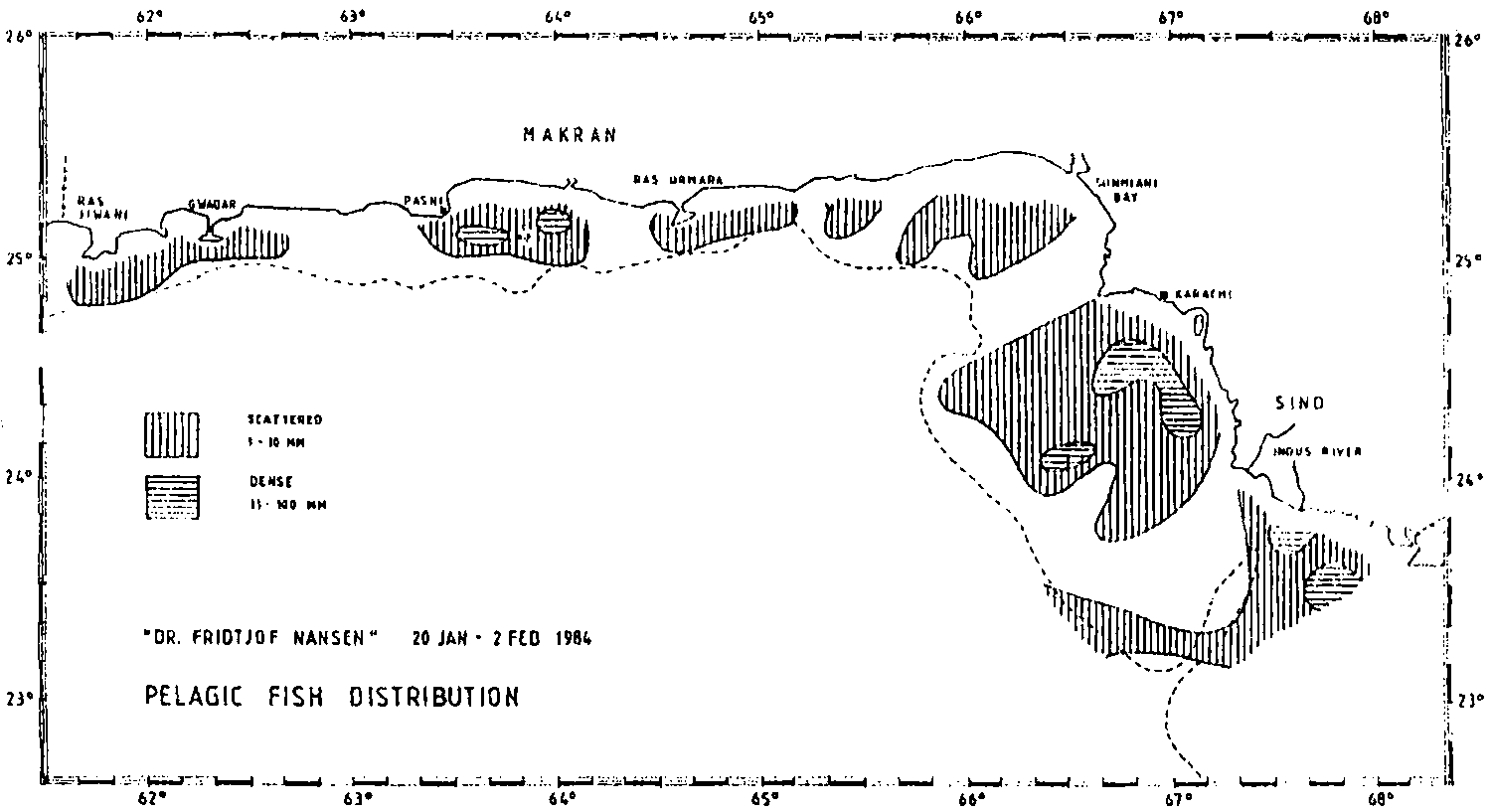
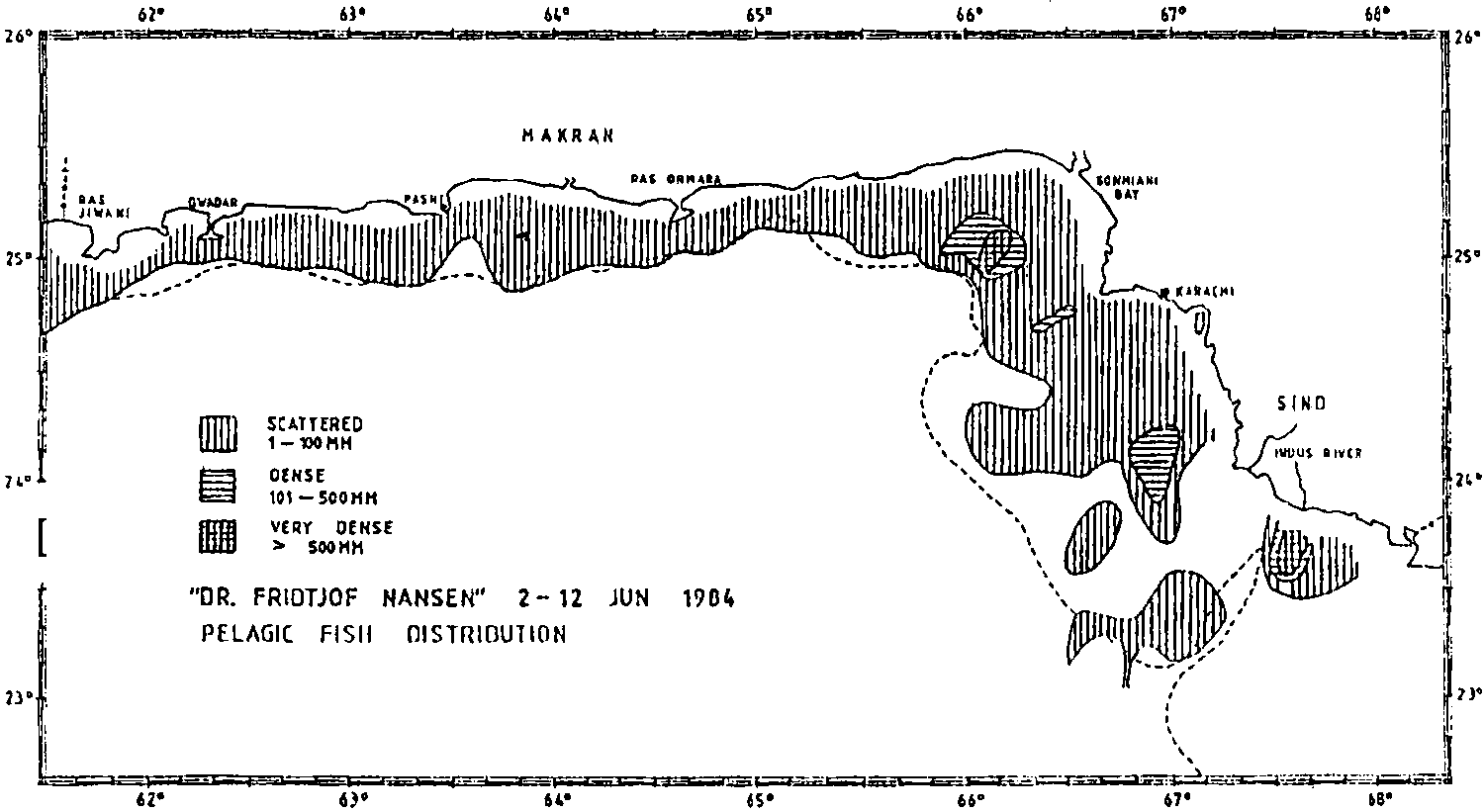
Anchovies or sardine-like fish which include sardinellas, rainbow sardine, a.o. Jack mackerels of various species. Spanish mackerels. Ponyfish and hairtails which occur in abundance both in mid water and at the bottom.Figure 5 shows the distribution of the small pelagic fish during the three surveys. In all of the coverages the fish was found distributed within the shelf areas and no recordings were made further offshore.
Figure 5. Relative distribution of the various types of small pelagic fish. (The scales are not directly comparable between the surveys.)
3.1.1 First survey
The predominant species at the Makran coast was rainbow sardine (Dussumieria acuta). The fish occurred in scattering layers and small schools in daytime at depths between 20-40 m, just off the bottom. During nighttime it was observed both as scattering layers and small schools at the surface. It ranged in length from 18-20 cm. Catch rates of rainbow sardines up to 3.7 tonnes per hour were obtained in pelagic night hauls.
Other pelagic fish species were scarce in the Makran area, but scads (Decapterus spp.) and hardtail scad (Megalaspis cordyla) were caught in limited numbers at some few trawl stations.
Off Sind concentrations of pelagic fish were found in three localities. At the inner end of the Indus Swatch very dense recordings of anchovy (Stolephorus sp.) were obtained in mixture with juvenile rainbow sardine. The fish was distributed in large schools or scattering layers at depths between surface and 20 m over 30-40 m bottom depth, but the extension of the area was limited to 2-3 square nautical miles. Quantities of bottom fishes - rays, sharks, grunts and croakers - were feeding on these concentrations.
Scattering layers and small schools of rainbow sardine, ranging from 10-20 cm in length, were observed in two localities off Sind at bottom depths between 60 and 80 m. During the day the fish occurred in small schools close to the bottom, at night it dispersed into a scattering layer at 30-40 m depth. In the Sind area the maximum catch rate of pelagic fish was about 500 kg per hour in the pelagic trawl.
3.1.2 Second survey
Along the Makran coast the recordings of pelagic fish were scattered. Around Astola Island some good recordings of the scad (Decapterus russelli) and the anchovy (Thryssa sp.) were made.
Also along the Sind coast the recordings of pelagic fish were generally low with a few exceptions. South of Karachi some dense concentrations of the anchovy (Stolephorus sp.) were observed. At the southernmost coast some good recordings of sardinella (Sardinella sindensis) were made. The two other areas of some more dense recordings were made up by ponyfish (Leiognathus sp.).
3.1.3 Third survey
Along the Makran coast pelagic fish distribution was scattered. The anchovies Thryssa mystax, T. vitrirostris, T. dussumieri, rainbow sardine (Dussumieria acuta) blacktip sardinella (S. elanura), ponyfish (Gazza minuta) and Spanish mackerels (Scomberomorus commersoni, S. guttatus) were frequently recorded in the catches.
Somewhat denser concentrations were recorded in the Sonmiani Bay, where a pelagic trawl station gave an almost clean catch of ponyfish (Leiognathus sp.). In the inner end of the Indus Swatch the denser pelagic recordings probably contained a mixture of Indian oil sardine (Sardinella longiceps), goldstripe sardinella (S. gibbosa), anchovy (Thryssa dussumieri), rainbow sardine (Dussumieria acuta), scad (Decapterus russelli), ponyfish (Leiognathus sp., Gazza minuta) and Spanish mackerel (Scomberomorus koreanus), which all were present in the bottom trawl catches in the area.
In the denser concentrations off Sind and outside Karachi, the indian ilisha (Ilisha melastoma), ponyfish (Leiognathus sp.), rainbow sardine (Dussumieria acuta), anchovy (Thryssa sp., T. dussumieri, T. vitrirostris), barracuda (Sphyraena putnamiae), gold-stripe sardinella (S. gibbosa), and indo-pacific Spanish mackerel (Scomberomorus guttatus) were present both in pelagic and bottom trawl catches.
3.2 Bottom fish
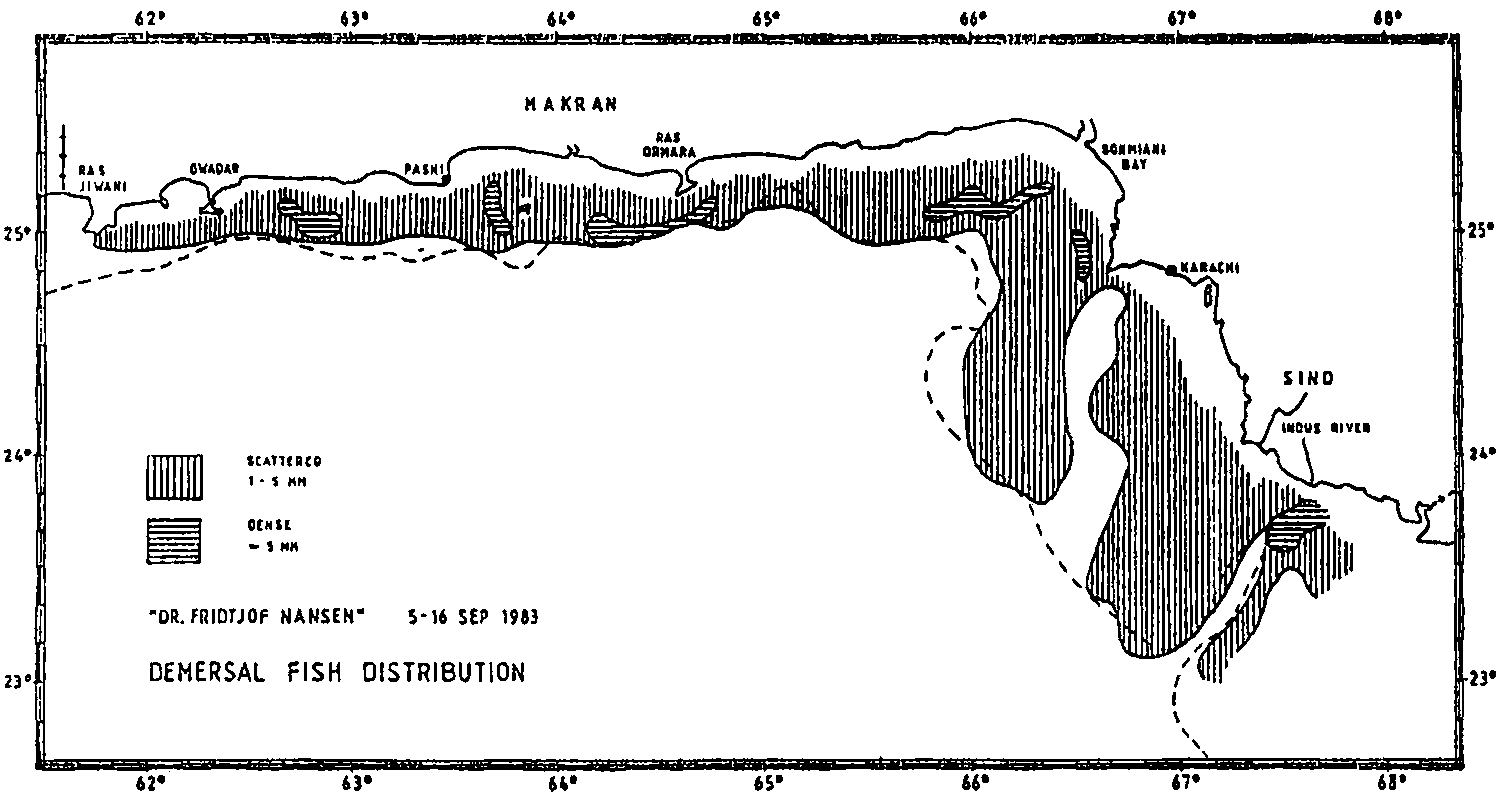
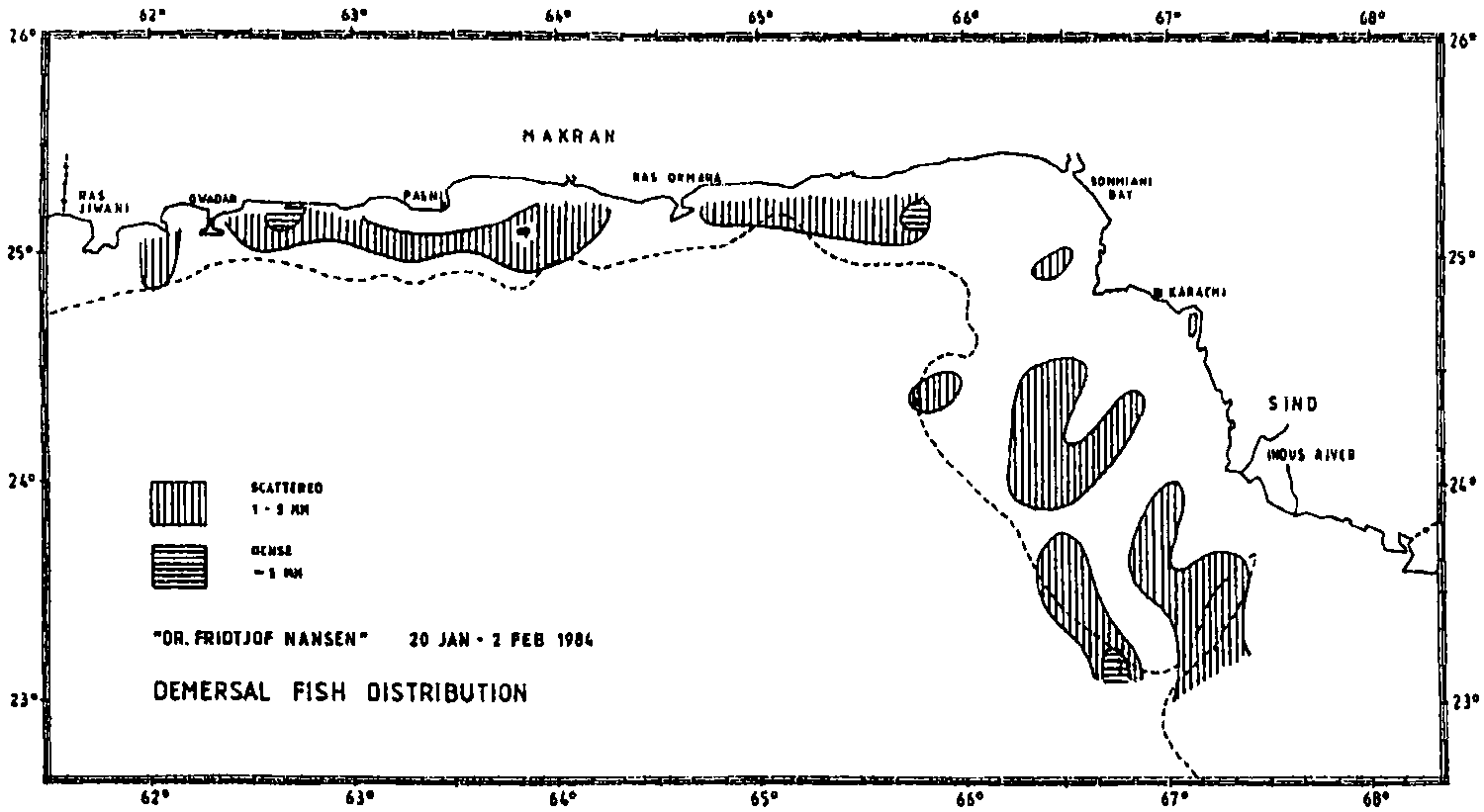
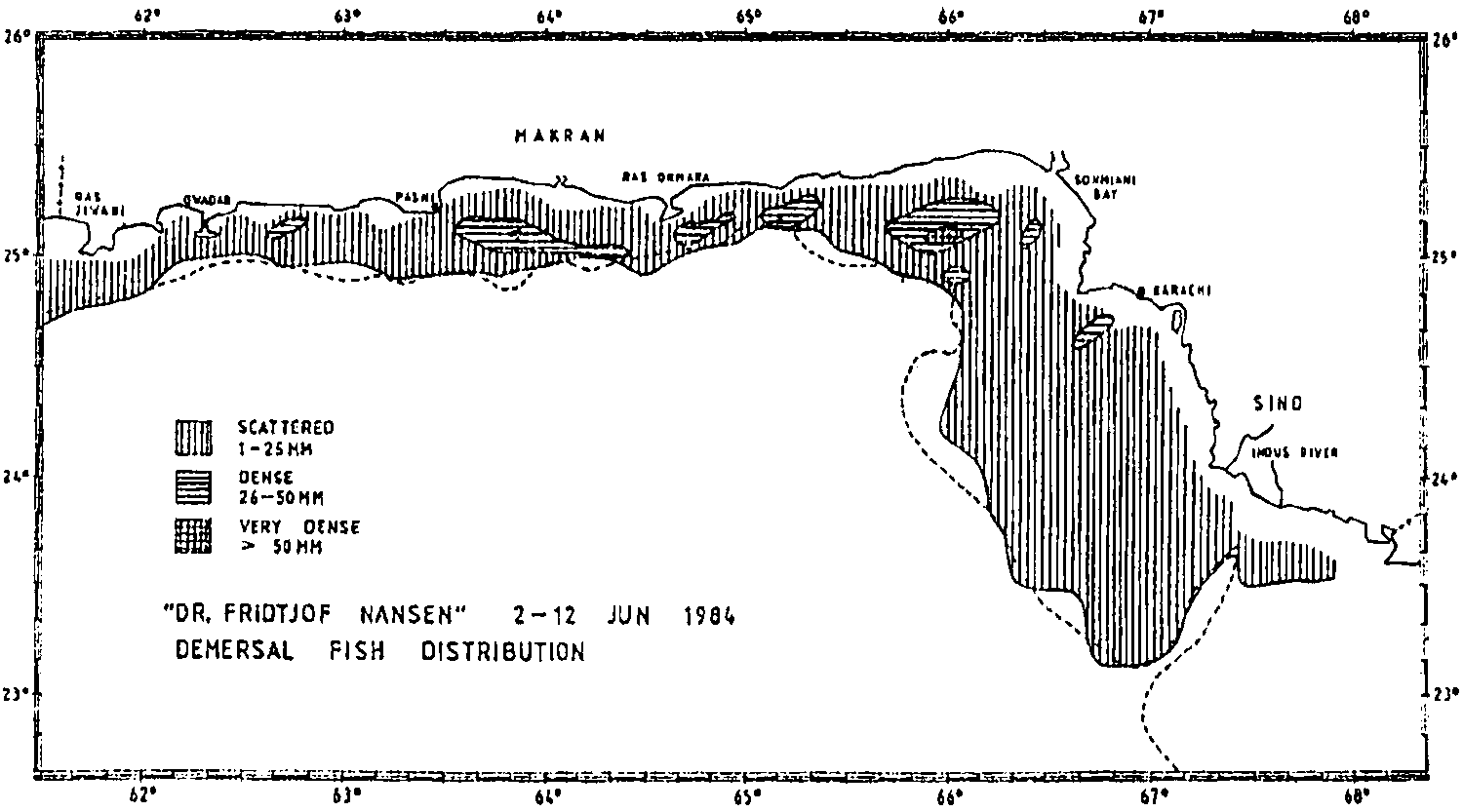
The most common demersal fish in Pakistan waters are hairtails (Trichiuridae), (also common in mid-water) croakers (Sciaenidae), grunts (Pomadasyidae) rays, catfishes (Ariidae), breams (Nemipteridae) and jack mackerels (Carangidae). A large number of other types of fish also occur. Figure 6 shows the relative distribution of the bottom fish as recorded during the three surveys.
3.2.1 First survey
Relatively dense patches were observed several places along the Makran coast while the recordings off Sind were more scattered. At the Makran coast the concentrations of bottom fishes were predominated by hairtails (Trichiurus lepturus and Lepturacanthus savala) which made up the bulk of the catches in the area. The hairtails were observed as weak scattering layer both at the bottom and in midwater over bottom depths ranging from 25-30 m to the edge of the shelf. Grunts (Pomadasys sp.) and croakers (Otholithes ruber a.o.) were also frequently caught in the bottom trawl hauls but in significantly less quantities than hairtails. Catch rates up to 6 tonnes per hour trawling were experienced.
Off Sind, both the recording and the catches of bottom fish were more variable than at the Makran coast. In most of the investigated area the abundance was found to be low, and dense patches of fish were found only at two localities, in southern Sonmiani Bay and at the inner end of the Indus Swatch. In Sonmiani Bay catfish was the predominant scatterer, while small-sized croakers and grunts together with hairtails and rays made up the bulk of the catches off the Indus delta. Catch rates up to 16 tonnes per hour were obtained in bottom trawl hauls. On the outer banks off Sind, catch rates were low and variable and the threadfin bream (Nemipterus japonicus) was a major constituent.
Figure 6. Relative distribution of various types of bottom fish. (The scales are not directly comparable between the surveys.)
3.2.2 Second survey
The catches along the Makran coast were dominated by rays and catfish (Arius sp.). The seabream (Argyrops spinifer), grunts (Pomadasys hasta, Pomadasys stridens) and sharks also made significant contributions to the catches.
In Sonmiani Bay the catfish (Arius sp.) dominated the catches. Significant contributions came from the threadfin bream (Nemipterus japonicus) and the false trevally (Lactarius lactarius).
Along the Sind coast the catches of bottom fish were nearly exclusively made up by the threadfin breams (Nemipterus metopias and N. japonicus) with the first as the most important.
3.2.3 Third survey
Along the eastern part of the Makran coast catch rates were relatively higher and hauls up to 7.5 tonnes per hour trawling were experienced. The hairtails (Trichiurus lepturus), catfish, seabreams (Acanthopagurus sp.) and croakers (Pennahia sp.) dominated the catch. Except for one trawl station, giving 4 tonnes per hour trawling, fish density on the western Makran coast was low. The larger catch in this area contained about 30% grunters (Pomadasys commersoni) with trevallies (Lactarius lactarius), croaker (Otolithes ruber) and catfish, as secondary components.
The recordings all along the Sind coast were generally scattered while limited areas with higher densities were found in the Sonmiani Bay.
At the Sind coast, the concentrations of bottom fish were dominated by hairtails (Trichiurus lepturus), threadfin bream (Nemipterus japonicus), catfish (Arius sp.), grunters (Pomadasys maculatus), lizardfish (Saurida tumbil), Indian driftfish (Ariomma indica), croakers (Argyrosomus sp.), snappers (Lutjanus malabaricus) and groupers (Epinephelus diacanthus). Catch rates were generally low, 100-500 kg per hour trawling, with a maximum at St. no. 113, outside Karachi, of 1.6 tonnes pr. hour.
In the Sonmiani Bay the bottom trawl catches was dominated by the threadfish bream (Nemipterus japonicus), hairtails (Trichiurus lepturus), croaker (Otolithes ruber), and catfish (Ancharius brevibarbis). Catch rates of 0.5-1.1 tonnes per hour trawling were usual in this area.