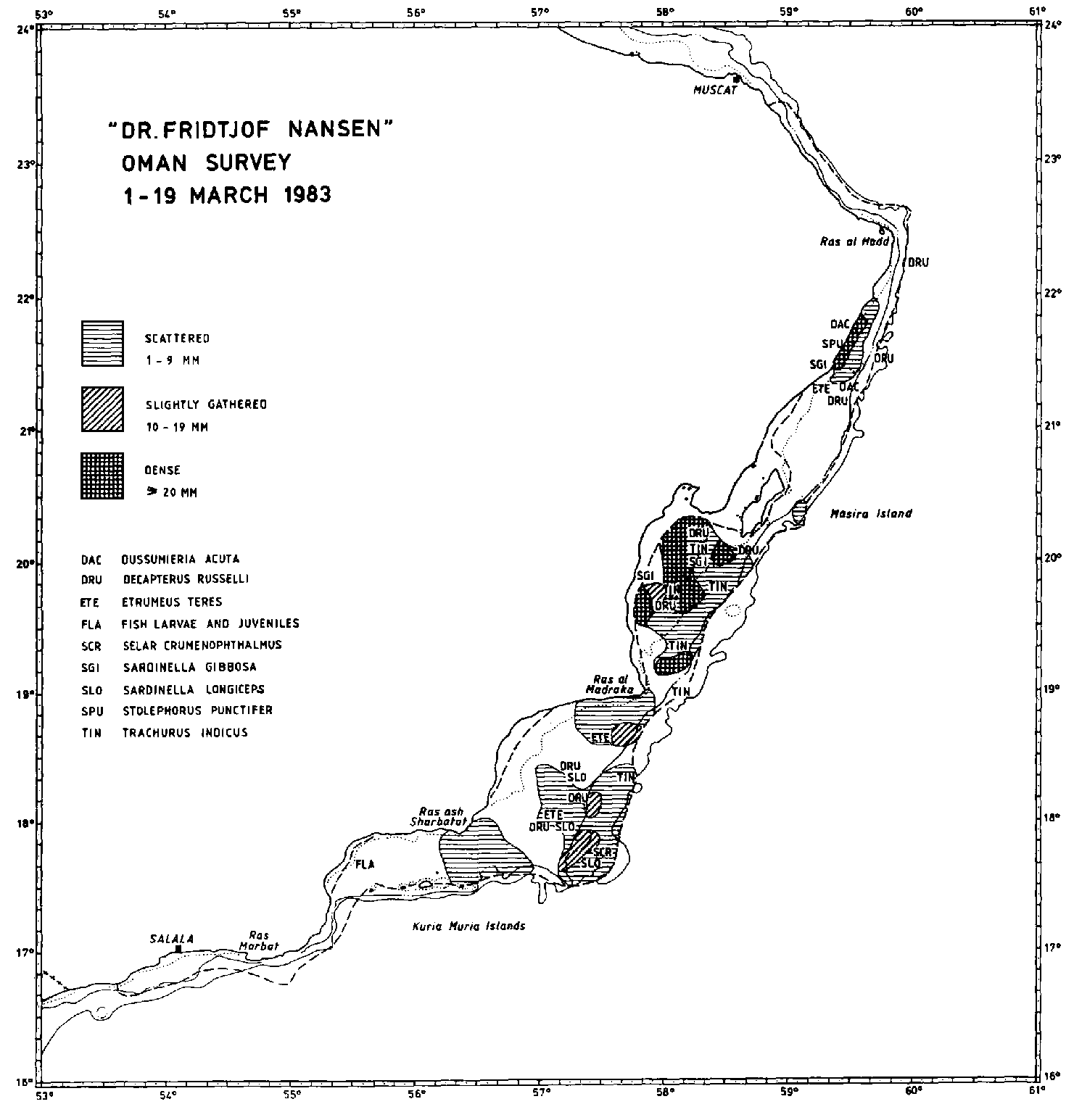
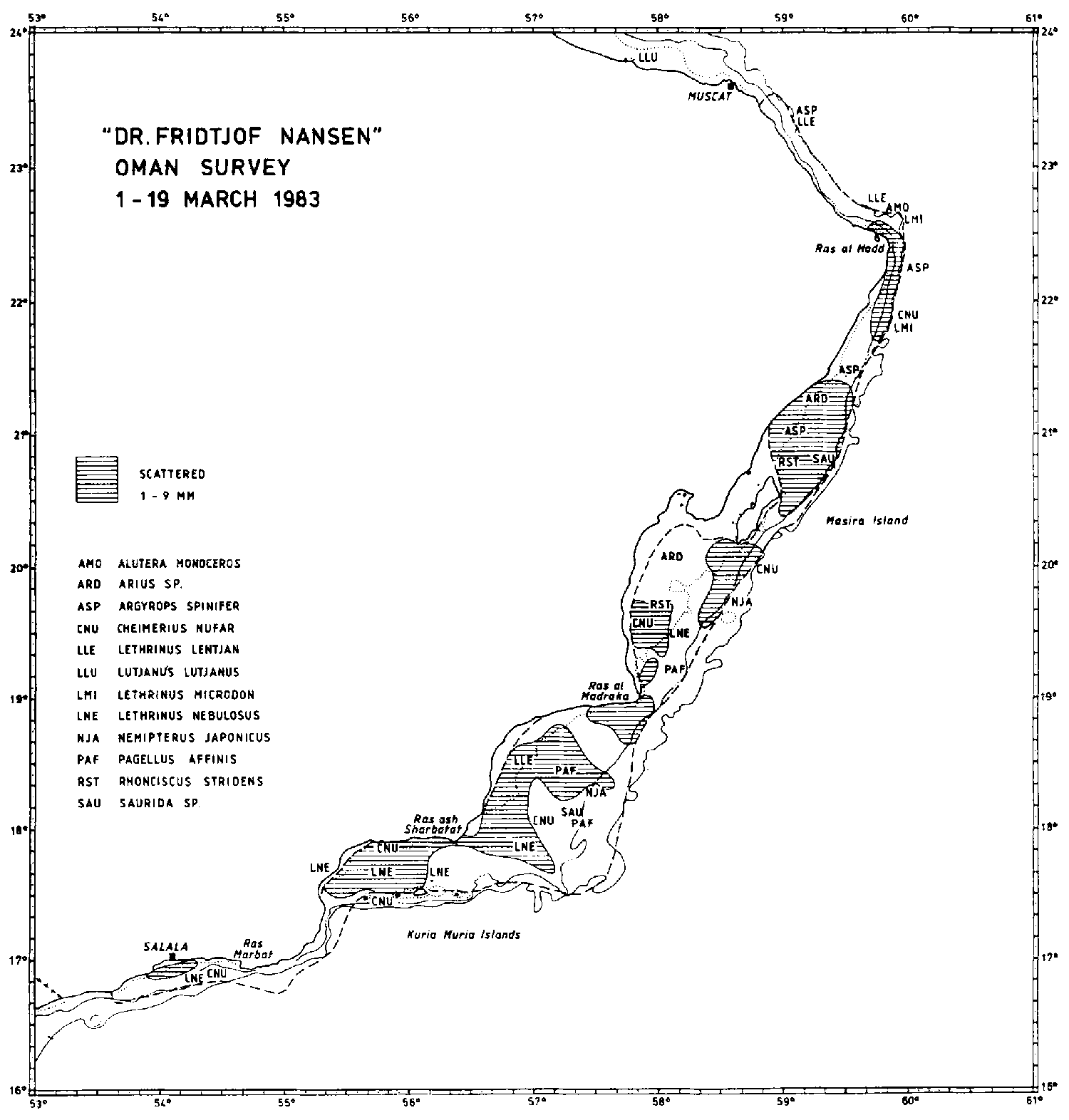
The 38 kHz system connected to the echointegrators was used to record the distribution and abundance of small pelagic fish, of demersal fish down to 200 m bottom depth and of mesopelagic fish on and off the continental slope. The 120 kHz system was used only as an additional aid in identification and interpretation of the echo-traces.
The output from the integrators is expressed in millimeters on graphic paper and represent indices of abundance of fish and plankton. By the characteristics of the echo-traces and by trawl sampling the integrator output is separated into plankton and fish. Figure 4 and 5 show the results obtained during the present survey of small pelagic and demersal fish.
Figure 4. Distribution of small pelagic fish. Echo-intensity by levels of integrator deflection.
Figure 5. The distribution of other fish. Echo-intensity by-levels of integrator deflection.
In areas with high productivity integrator readings up to 10 mm are considered representative of a scattered distribution of fish. In Figures 4-5 the fish density is expressed in three levels; very scattered (1-9 mm), slightly gathered (10-24 mm), and dense (>24 mm).
The estimates of biomass are as follows (thousand tonnes):
|
|
Ras al Hadd-Masira |
Masira Bank |
Sauqara & Kuria Muria Banks |
|
Small pelagic species |
150 |
600 |
250 |
|
Other (mostly demersal) species |
50 |
25 |
160 |
R/V “Dr. Fridtjof Nansen” has carried out five acoustic surveys in Oman waters in the period 1975-76. The biomass estimates for the southern area Ras al Hadd and southwards were as follows (thousand tonnes):
|
|
Pelagic |
Demersal |
|
Cruise 1&2 Apr-May -75 |
80 |
110 |
|
Cruise 3 Oct-Nov -75 |
820 |
115 |
|
Cruise 4 Feb-Mar -76 |
570 |
40 |
|
Cruise 5 May-Jun -76 |
480 |
125 |
|
Cruise 6 Aug-Sep -76 |
530 |
125 |
|
Mean of all surveys |
~500 |
~100 |
|
Mean of four most consistent estimates |
600 |
120 |
60 % of the estimate for pelagic fish is allocated to the Masira Bank and densities up to 1900 tonnes per square nautical mile were observed in this area. As the precision of the estimate decreases when the distribution pattern is highly aggregated, some caution should be applied in the interpretation of the estimates.
The “demersal fish” group on the other hand has a more dispersed and even distribution pattern, and the last survey indicate that this group is significantly more abundant than in the period 1975-76.
On the basis of the fish density observations obtained from the survey on mesopelagic fish in the Gulf of Oman (2-5 Feb) a preliminary estimate of 10 million tonnes is suggested for the whole gulf.