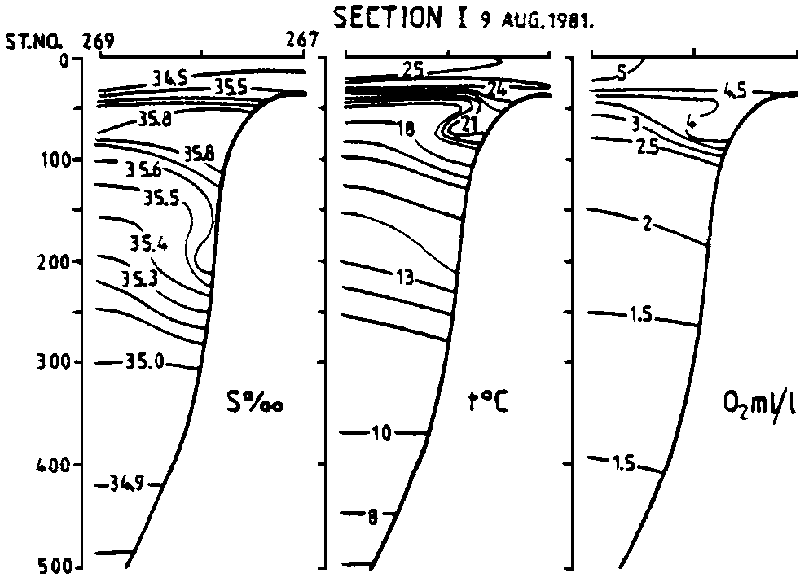
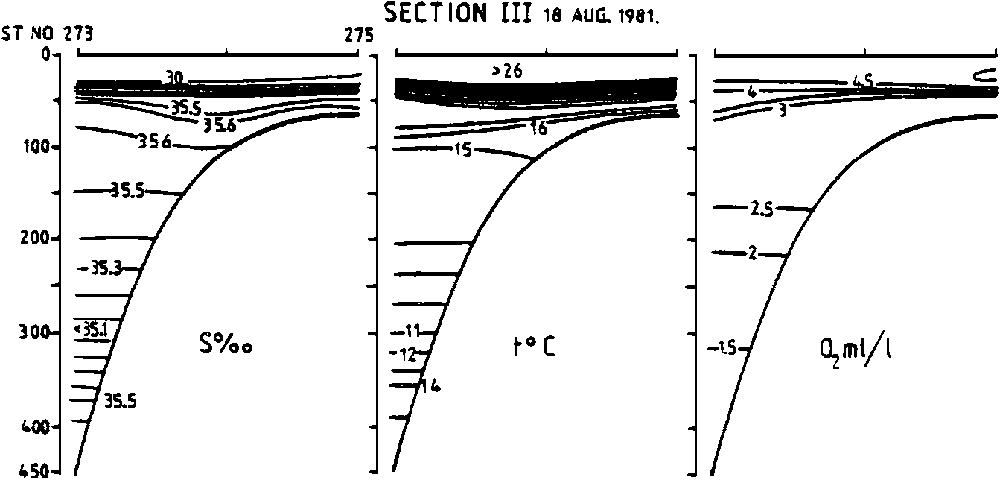
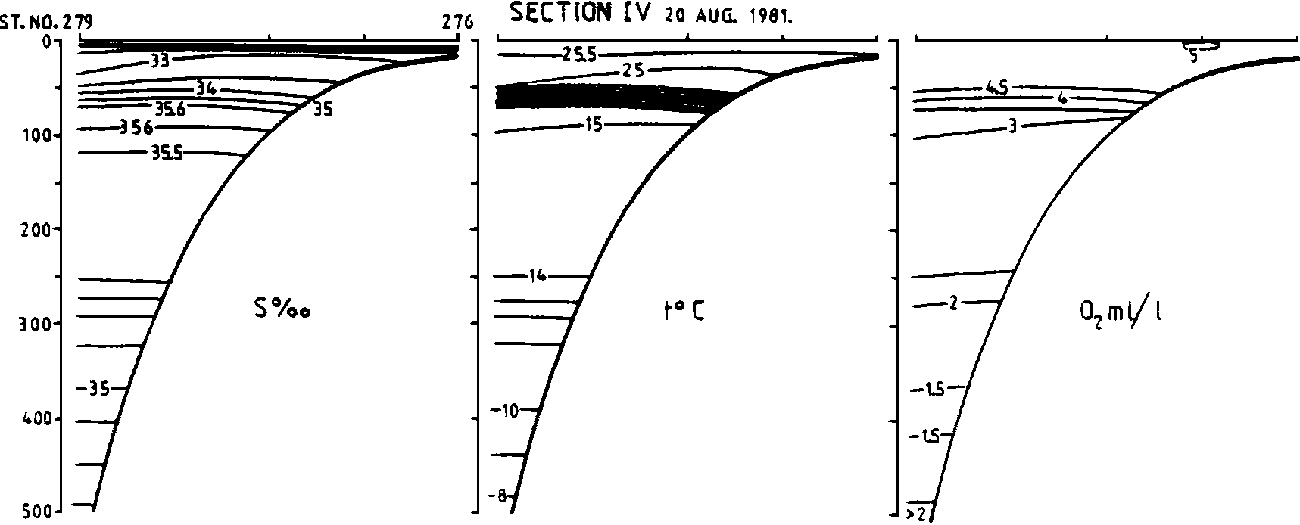
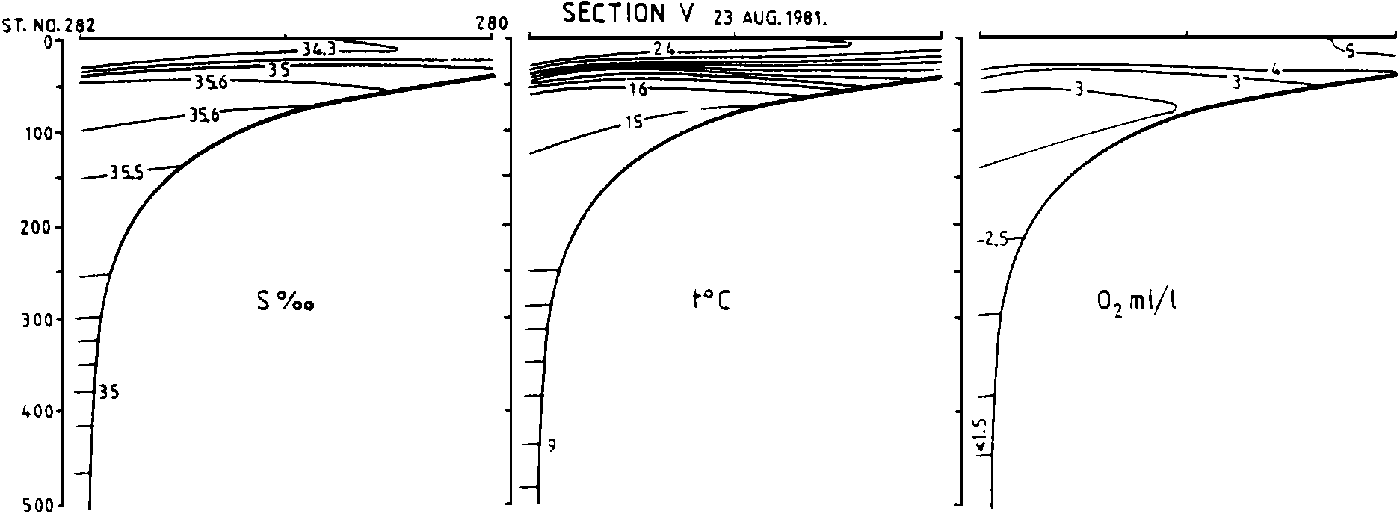
Fig. 3 shows the distribution of temperature, salinity and oxygen in the five hydrographical sections worked, three in the northern part and two in the south.
The shelf water of the four sections north of Cape Lopez had temperatures above 25 C down to 50 m in the inner parts and down to 30 m in the outer parts. South of Cape Lopez a distinct drop was observed in the surface temperature, indicating an expected different regime due to the "cold season" in this area. The frontal area off Cape Lopez is described by Stretta (1977), he demonstrates the relationship between the tuna fisheries and the hydro-graphical conditions. The mixing processes of the frontal area are favourable for an enrichment in nutrients of the surface waters (STRETTA, 1977), an enrichment reflected in higher biological production than further north.
Freshwater run-off influenced the shelf water off the southern coast of Nigeria (section III) as well as on the shelf off Equatorial Guinea (section IV), having salinities of less than 30‰. In section III the water of low salinity extended down to 30. m, while at section IV the low salinity values were found only in the upper 5 m. Section I off Benin had high salinity, over 35‰, from the surface and down to 300 m depth. Section II off Lagos showed a little decrease (33.6 - 34.3‰) in the surface salinities compared to section I off Benin. Section V, representing the shelf south of Cape Lopez had surface salinity values between 34.2 - 34.4‰. The oxygen values showed a shelf water rich in oxygen with a steady decrease in content with depth down to 400 m with the lowest values of around 1.5 ml O2 pr litre and then a slight increase in the depth of 500 m.
Fig. 3. Hydrographlcal sections. SECTION I 9 AUG. 1981.
Fig. 3. Hydrographlcal sections. SECTION II 16 AUG. 1981.
Fig. 3. Hydrographlcal sections. SECTION III 18 AUG. 1981.
Fig. 3. Hydrographlcal sections. SECTION IV 20 AUG. 1981.
Fig. 3. Hydrographlcal sections. SECTION V 23 AUG. 1981.