Annex I. Participating scientific staff
Annex II. Records of fishing operations
Annex III. Results from length measurements
Annex IV. List of species
Annex V. Equipment and methods
From the Institute of Marine Research, Bergen:
Mr. T. Strømme (cruise leader)From CECAF, Dakar:
Mr. H. Gjøsæter (biologist)
Mr. K. Strømsnes (research technichian)
Mr. H.P. Knutsen (instrument chief)
Mr. B. Kvinge (instrument technichian)
Mr. G. Everett (CECAF project leader), Nov 3-8From the Republic of Cape Verde:
Miss V. Marques da Silva (biologist) Nov 5-6, Nov 16-27From FAO/UNDP Cape Verde:
Mrs. M.H. Vieira (biologist) Nov 28-Dec 1
Mr. G. Beven (fishing master) Nov 5-6, Nov 16-Dec 1
Annex II. Records of fishing operations
Annex II. Records of fishing operations (cont. 1)
|
FAMILY/SPECIES |
STATION |
LENGTHS IN SAMPLE |
||||
|
|
|
LOWEST |
HIGHEST |
MEAN ST. |
DEV. |
N |
|
CAPROIDAE |
|
|
|
|
|
|
|
Antigonia capros |
|
|
|
|
|
|
|
|
379 |
11.0 |
16.0 |
14.2 |
.8 |
89 |
|
|
383 |
6.5 |
15.5 |
13.3 |
1.9 |
48 |
|
CARANGIDAE |
|
|
|
|
|
|
|
Caranx crysos |
|
|
|
|
|
|
|
|
374 |
41.0 |
64.0 |
51.9 |
6.4 |
18 |
|
|
375 |
43.0 |
63.0 |
52.7 |
6.8 |
8 |
|
Decapterus punctatus |
|
|
|
|
|
|
|
|
355 |
11.5 |
21.5 |
18.2 |
1.8 |
147 |
|
|
358 |
12.5 |
19.0 |
14.0 |
1.0 |
117 |
|
|
360 |
9.0 |
17.0 |
11.5 |
1.3 |
119 |
|
|
369 |
12.5 |
19.0 |
14.3 |
1.1 |
115 |
|
|
371 |
12.0 |
19.5 |
15.6 |
1.5 |
126 |
|
|
372 |
17.5 |
23.5 |
21.3 |
1.1 |
107 |
|
|
377 |
15.0 |
22.0 |
17.4 |
1.1 |
134 |
|
|
380 |
18.0 |
21.0 |
19.4 |
.9 |
14 |
|
|
381 |
19.0 |
24.0 |
21.1 |
1.1 |
98 |
|
|
383 |
18.5 |
22.0 |
20.0 |
1.9 |
32 |
|
|
385 |
8.5 |
18.0 |
11.7 |
2.1 |
96 |
|
|
386 |
13.5 |
21.5 |
16.2 |
1.6 |
159 |
|
|
387 |
10.0 |
13.5 |
11.2 |
.9 |
100 |
|
Decapterus rhonchus |
|
|
|
|
|
|
|
|
362 |
24.0 |
30.0 |
26.8 |
1.2 |
111 |
|
|
371 |
12.0 |
18.0 |
15.5 |
1.8 |
39 |
|
|
385 |
13.0 |
24.0 |
15.6 |
1.4 |
99 |
|
Decapterus macarellus |
|
|
|
|
|
|
|
|
350 |
19.0 |
32.0 |
25.2 |
3.9 |
100 |
|
|
351 |
28.5 |
32.0 |
29.9 |
1.0 |
23 |
|
|
352 |
21.0 |
33.5 |
28.0 |
2.4 |
53 |
|
|
357 |
11.0 |
22.0 |
17.4 |
2.1 |
97 |
|
|
371 |
16.5 |
27.0 |
18.7 |
2.0 |
82 |
|
|
377 |
17.5 |
21.5 |
19.5 |
1.1 |
20 |
|
|
380 |
17.0 |
28.5 |
20.1 |
1.7 |
150 |
|
Selar crumenophthalmus |
|
|
|
|
|
|
|
|
348 |
13.5 |
17.0 |
15.3 |
1.0 |
32 |
|
|
357 |
13.5 |
17.5 |
14.7 |
.9 |
32 |
|
CLUPEIDAE |
|
|
|
|
|
|
|
Sardinella maderensis |
|
|
|
|
|
|
|
|
|
|
|
|
|
|
|
|
357 |
12.0 |
17.0 |
14.5 |
1.2 |
23 |
|
|
371 |
16.0 |
25.0 |
20.2 |
3.0 |
11 |
|
|
385 |
17.5 |
26.0 |
22.4 |
1.7 |
35 |
|
LETRINIDAE |
|
|
|
|
|
|
|
Lethrinus atlanticus |
|
|
|
|
|
|
|
|
367 |
35.0 |
41.0 |
37.8 |
2.0 |
10 |
|
LUTJANIDAE |
|
|
|
|
|
|
|
Lutjanidae indet. |
|
|
|
|
|
|
|
|
378 |
41.0 |
48.0 |
45.3 |
2.3 |
8 |
|
MULLIDAE |
|
|
|
|
|
|
|
Pseudupeneus prayensis |
|
|
|
|
|
|
|
|
355 |
13.5 |
19.5 |
16.2 |
1.3 |
80 |
|
|
360 |
12.5 |
21.5 |
16.3 |
1.8 |
115 |
|
|
369 |
14.0 |
22.0 |
18.0 |
1.6 |
104 |
|
|
377 |
10.0 |
24.0 |
17.4 |
2.4 |
166 |
|
|
388 |
16.0 |
24.5 |
20.0 |
2.2 |
34 |
|
POMADASYIDAE |
|
|
|
|
|
|
|
Paraphristipoma sp. |
|
|
|
|
|
|
|
|
364 |
31.0 |
36.0 |
33.7 |
2.0 |
8 |
|
Pomadasys incisus |
|
|
|
|
|
|
|
|
388 |
20.0 |
24.5 |
22.3 |
1.0 |
41 |
|
SERRANIDAE |
|
|
|
|
|
|
|
Cephalopholis taenopsis |
|
|
|
|
|
|
|
|
364 |
39.0 |
48.0 |
44.7 |
3.5 |
8 |
|
SHARKS |
|
|
|
|
|
|
|
Rhizoprionodon acutus |
|
|
|
|
|
|
|
|
367 |
81.0 |
92.0 |
87.4 |
3.7 |
8 |
|
|
368 |
66.0 |
85.0 |
80.0 |
6.7 |
7 |
|
Mustelus mustelus |
|
|
|
|
|
|
|
|
363 |
66.0 |
97.0 |
84.7 |
5.8 |
35 |
|
|
367 |
80.0 |
96.0 |
86.4 |
5.6 |
16 |
|
SPARIDAE |
|
|
|
|
|
|
|
Boops boops |
|
|
|
|
|
|
|
|
369 |
14.0 |
16.5 |
15.3 |
.7 |
26 |
|
|
371 |
13.5 |
16.0 |
15.1 |
.6 |
26 |
|
|
379 |
22.5 |
27.5 |
25.1 |
1.2 |
70 |
|
Lithognathus mormyrus |
|
|
|
|
|
|
|
|
355 |
21.0 |
30.0 |
25.8 |
2.9 |
14 |
|
|
388 |
23.5 |
29.5 |
26.5 |
1.4 |
55 |
|
Pagellus acarne |
|
|
|
|
|
|
|
|
369 |
19.0 |
22.5 |
21.1 |
1.4 |
12 |
|
|
377 |
19.0 |
31.0 |
25.2 |
1.8 |
122 |
|
Spondyliosoma cantharus |
|
|
|
|
|
|
|
|
351 |
36.0 |
46.0 |
40.3 |
5.1 |
3 |
List of species caught with R/V Dr. Fridtjof Nansen off Cape Verde Islands November 1981.
|
ACANTHURIDAE |
|
|
|
Acanthurus monroviae |
|
ANGUILLIFORMES |
|
|
BALISTIDAE |
|
|
|
Balistes capriscus |
|
BELONIDAE |
|
|
|
Ablennes hians |
|
BRAMIDAE |
|
|
|
Brama brama |
|
CAPROIDAE |
|
|
|
Antigonia capros |
|
|
Capros aper |
|
CARANGIDAE |
|
|
|
Caranx crysos |
|
|
Decapterus punctatus |
|
|
Decapterus rhonchus |
|
|
Decapterus macarellus |
|
|
Selar crumenophthalmus |
|
|
Seriola carpenteri |
|
|
Seriola fasciata |
|
|
Trachinotus ovatus |
|
|
Trachurus trachurus |
|
|
Uraspis secunda |
|
CENTRACHANTIDAE |
|
|
|
Spicara sp. |
|
CLUPEIDAE |
|
|
|
Sardinella maderensis |
|
CONGRIDAE |
|
|
|
Rhechias sp. |
|
DACTYLOPTERIDAE |
|
|
|
Dactylopterus volitans |
|
FISTULARIIDAE |
|
|
|
Fistularia petimba |
|
GEMPYLIDAE |
|
|
|
Gempylus serpens |
|
|
Neolatus tripes |
|
|
Promenthichthys prometheus |
|
GERREIDAE |
|
|
|
Eucinostomus melanopterus |
|
GONOSTOMATIDAE |
|
|
|
Vinciguerria sp. |
|
HOLOCENTRIDAE |
|
|
|
Adioryx hastatus |
|
LABRIDAE |
|
|
|
Bodianus speciosus |
|
|
Xyrichtys novacula |
|
LETRINIDAE |
|
|
|
Lethrinus atlanticus |
|
LUTJANIDAE |
|
|
MACRORHAMPHOSIDAE |
|
|
|
Macrohamphosus scolopax |
|
MONACANTHIDAE |
|
|
|
Aluterus sp. |
|
|
Aluterus punctatus |
|
|
Stefanolepis hispidus |
|
MULLIDAE |
|
|
|
Pseudupeneus prayensis |
|
|
Lycodontis sp. |
|
MYCTOPHIDAE |
|
|
NOMEIDAE |
|
|
|
Cubiceps sp. |
|
|
Cubiceps gracilis |
|
|
Psenes sp. |
|
PARALEPIDIDAE |
|
|
|
Lestidium sp. |
|
POLYNEMIDAE |
|
|
|
Galeoides decadactylus |
|
POMADASYIDAE |
|
|
|
Paraphristipoma sp. |
|
|
Paraphristipoma octolineatum |
|
|
Pomadasys incisus |
|
|
Pomadasys peroteti |
|
PRIACANTHIDAE |
|
|
|
Priacanthus arenatus |
|
SALPS |
|
|
SCARIDAE |
|
|
|
Sparisoma rubripinne |
|
SCORPAENIDAE |
|
|
SERRANIDAE |
|
|
|
Cephalopholis taenopsis |
|
|
Epinephelus guaza |
|
|
Epinephelus alexandrinus |
|
SHARKS |
|
|
|
Rhizoprionodon acutus |
|
|
Mustelus mustelus |
|
SHRIMPS |
|
|
SPARIDAE |
|
|
|
Boops boops |
|
|
Dentex sp. |
|
|
Dentex macrophthalmus |
|
|
Diplodus sp. |
|
|
Diplodus bellottii |
|
|
Diplodus fasciatus |
|
|
Diplodus prayensis |
|
|
Lithognathus mormyrus |
|
|
Pagellus acarne |
|
|
Pagellus bellottii |
|
|
Spondyliosoma cantharus |
|
|
Viridentex acromegalus |
|
CEPHALOPODA |
|
|
LOLIGINIDAE |
|
|
|
Todaropsis sp. |
|
SYNODONTIDAE |
|
|
|
Synodus sp. |
|
|
Synodus saurus |
|
|
Synodus synodus |
|
TETRAODONTIDAE |
|
|
|
Lagocephalus laevigatus |
|
TRACHINIDAE |
|
|
|
Trachinus sp. |
|
|
Trachinus draco |
|
TRIGLIDAE |
|
|
|
Chelodonichthys sp. |
|
|
Chelodonichthys lastoviza |
|
TRICHIURIDAE |
|
|
|
Aphanophus sp. |
|
ZEIDAE |
|
|
|
Zeus faber |
The R/V DR. FRIDTJOF NANSEN is a 150 foot stern trawler with a main engine of 1500 horsepower. The vessel is equipped for acoustic surveying, bottom and midwater trawling, hydrography and plankton observations.
The bottom trawl was a 134 foot headline shrimp trawl adapted for demersal fish trawling. The foot rope was equipped with 0.5 m rubber bobbins. Bridles of 40 m gave it a horizontal distance between the wings of about 25 m. The effective vertical opening of the net was about 6 m. The pelagic trawl was of about 120 m circumference, and the vertical opening was normally 13 m. The pelagic trawl had an inner-net of mesh size 1 cm in the cod end. Pelagic trawl operations were usually monitored by aid of a 50 kHz acoustic net sonde.
Hydrographic observations were carried out with Nansen bottles with which temperature readings and samples for salinity and oxygen determinations were collected at standard depths. The salinity was determined with an inductive salinometer and dissolved oxygen by the Winkler method.
Two Simrad EK Sounders, 120 kHz and 38 kHz, connected to QM integrators, were run continuously. Settings and performance of the two acoustic systems were:
|
|
120 kHz |
38 kHz |
|
Basic range |
0 - 100 m |
0 - 100 m or 0 - 250 m |
|
Transmitter |
1/1 (330 W) |
Ext. (2500 W) |
|
Transducer (ceramic) |
10° (circular) |
7.5° × 8° |
|
SL + VR |
116.7 dB |
139 dB (13.9.81) |
|
Bandwith and pulse length |
3 kHz, 0.6 ms |
3 kHz, 0.6 ms |
|
TVG and gain |
20 logR, -0 dB |
20 logR, -20 dB |
|
Recorder gain |
4 |
7 |
|
Integrator threshold |
|
0.5 |
|
Ingegrator gain |
|
20 dB (×10) |
|
Depth intervals |
|
According to recordings |
Sampling and processing of catch data
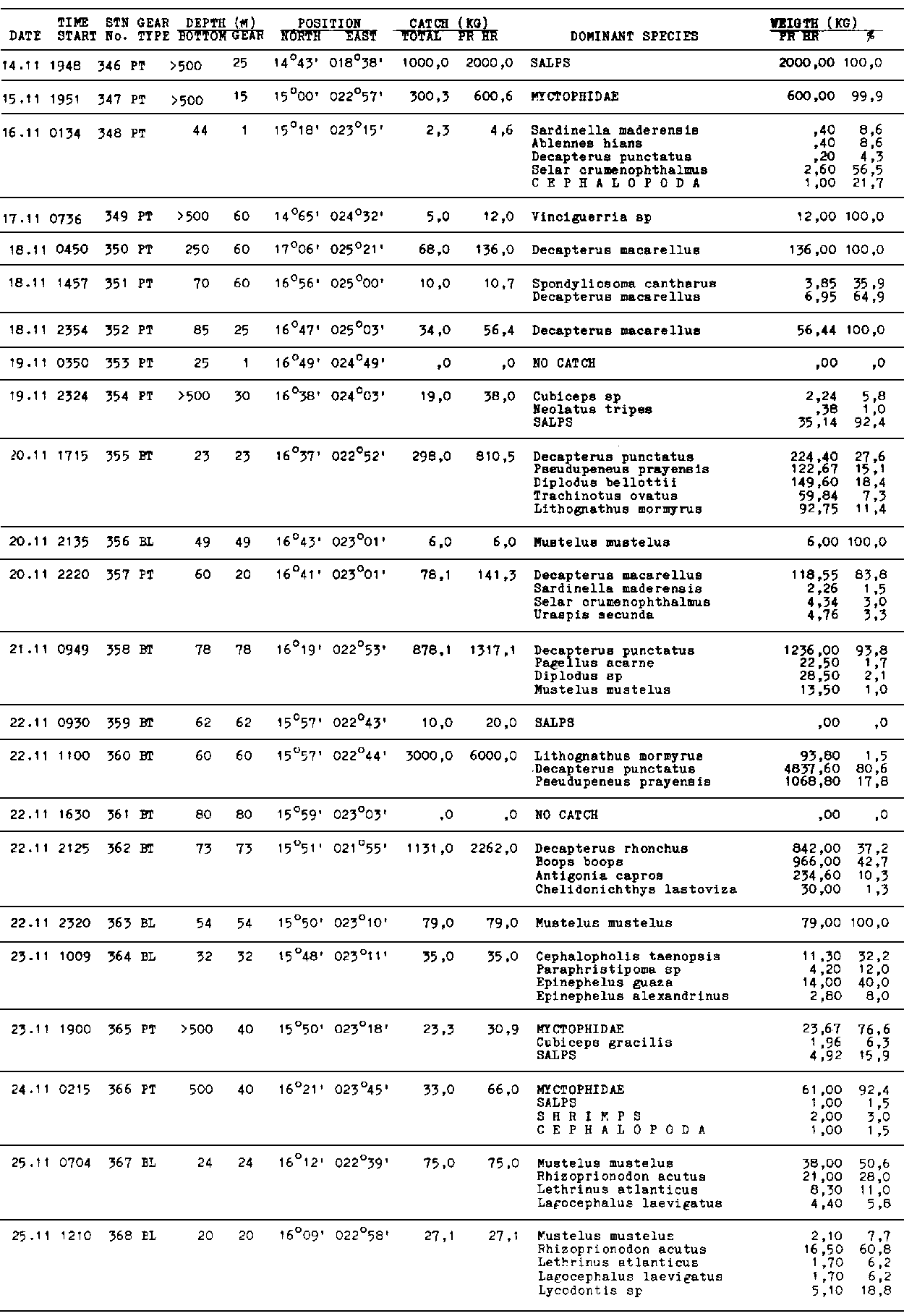
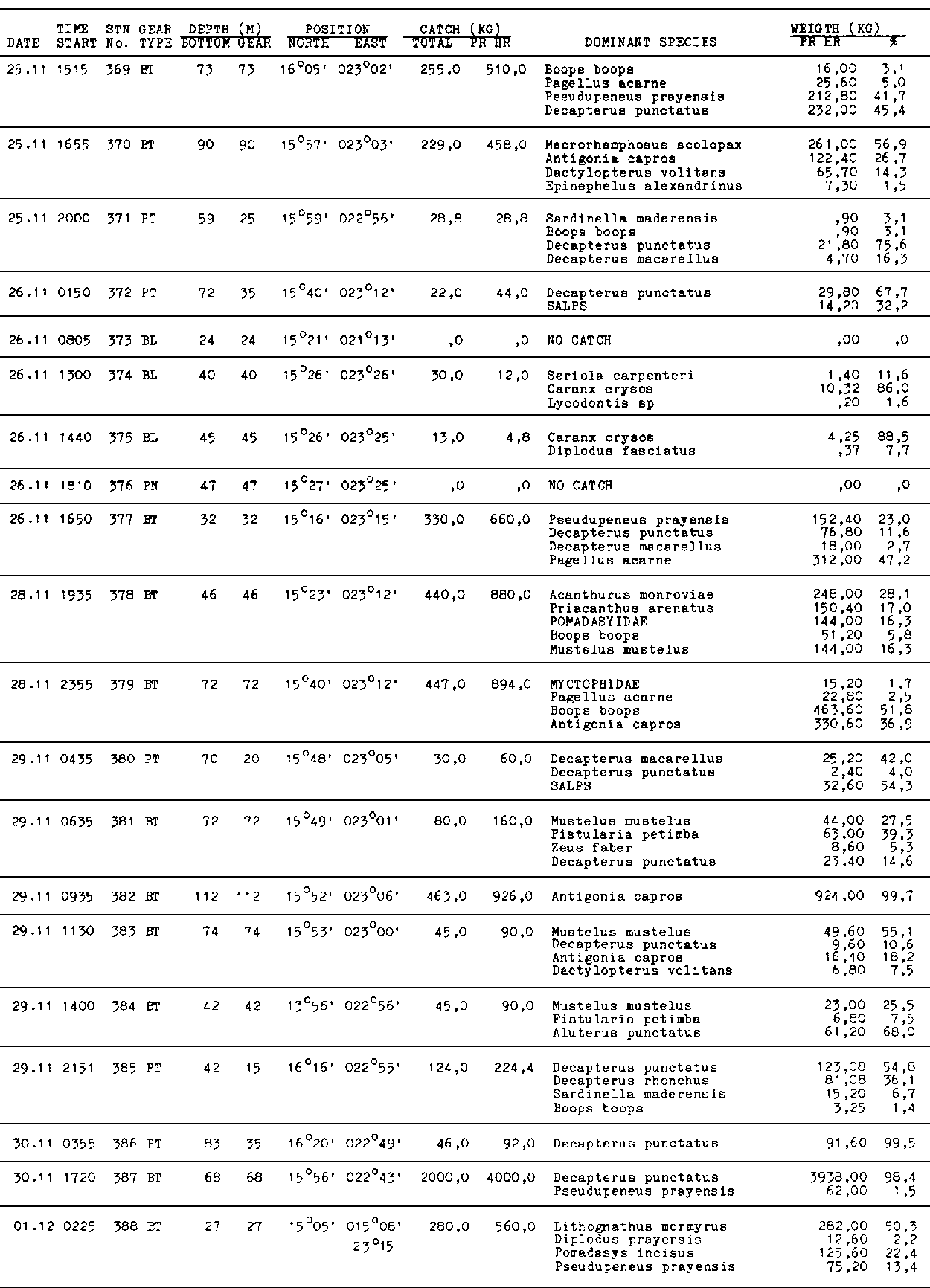
For each trawl catch the weight and number of each species were estimated by sampling. Species determination was mainly based on ANON (1981) and partly on BLANCHE et al. (1970). Length measurements were frequently taken, mainly on the commercially important species. The catches and their main composition are listed in Annex II and main results from the length measurements are given in Annex III.
The echo recordings and their interpretation
Assessment of the abundance of fish resources based on acoustic observations combined with experimental fishing is a method which especially lends itself to fish found in schools or other aggregations in midwater. But there are also notable exceptions, e.g. surface schooling tunas and tuna-like species and strictly bottom dwelling fish such as rays and flounders. Any fish found very close to the bottom (½-1 m) or in the very surface layer will escape echo sounder detection. For navigational reasons the work with the R/V DR. FRIDTJOF NANSEN is limited to waters deeper than 10 m. The extreme inshore waters could thus not be covered.
Because of differences in behaviour and size, different species or groups of fish species may give rise to various types of echo-recordings. Small-sized pelagic fish are, for instance, often found in well-defined schools, the recordings of which can be distinguished from those of the often looser aggregation in which semi-demersal larger fish are often found. Such classification of the echo recordings is of considerable assistance in interpreting the acoustic observations, but a positive identification by fishing operations is still indispensable and also provides the only means of sampling fish in this type of combined survey.
Based on previous experience and on identification by fishing, the echo recordings in the surveyed waters were classified as follows:
(i) Recordings of true larger schools or dense layer mostly in upper water. These will most often derive from pelagic schooling fish usually of smaller size, e.g. clupeids, scads.Acoustic abundance estimation(ii) All other fish recordings which especially comprised looser aggregations of smaller and larger fish near bottom. These are ascribed to demersal or semi-demersal fish such as grunts, seabreams, groupers, croakers, bigeyes etc.
(iii) Recordings of mesopelagic fish distributed in scattering layers.
Average integrator deflection per nautical mile was calculated each five nautical mile steamed. All echo traces were evaluated daily and together with the information from the trawl catches the readings from the integrator were split in categories small pelagic fish, demersal fish, mesopelagic fish and plankton. The integrator deflection was classified in two levels scattered (1-9 mm), and slightly gathered (11-20 mm), and contour lines were drawn to distinguish between areas of different density of fish. This forms the basis for the preparation of the charts of distributions of fish. For each of the areas the mean integrator value and the area of extention were calculated and their product gives an indice of abundance for that area. The conversion factor C from index of abundance to absolute abundance is linearity dependent upon the length of the fish, and we can correct for this by multiplying the index of abundance with a length-correcting factor f, where f = l/17 (l = fish length). After summing up all indices of abundance within a region the length corrected indices are converted into fish biomass by multiplying with the C value for the fish of standard length 17 cm. For the 38 kHz system with standard settings C17 = 13.6 tonnes/nm²/mm/nm.
Calculation of C-value
The relationship between target strength of 1 kg of small pelagic fish with swim bladder and the length of the fish can be written:
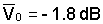
TSkg = -10 log 1 - 22 dBAnalytical relation between C value, the acoustic system performance constants and the target strength of 1 kg of fish can be written:
It can be seen from those two formulas that the C value expressed in tonnes/n.mile² mm is straightly related to the fish length in cm
C = a × lwhere
For the actual performance data of the acoustic system of R/V DR. FRIDTJOF NANSEN:
A = integrator gain
C1 = -26.5 dB
A = 30 dB
C = 0.8 × L T/n.mile²/mm/nm (L in cm)