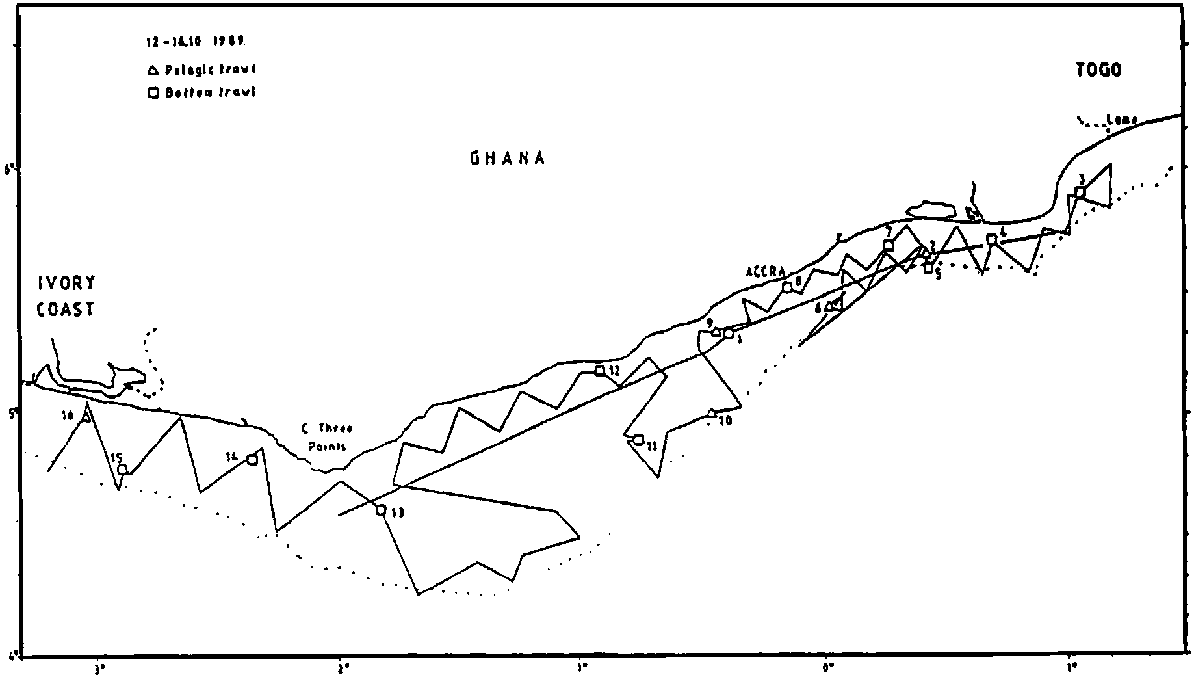
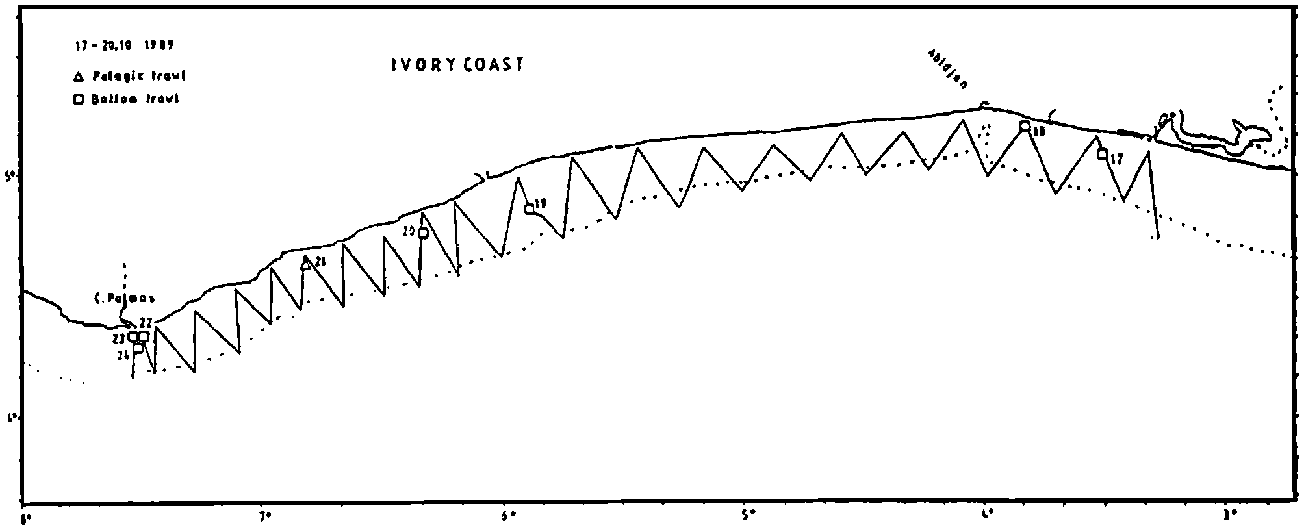
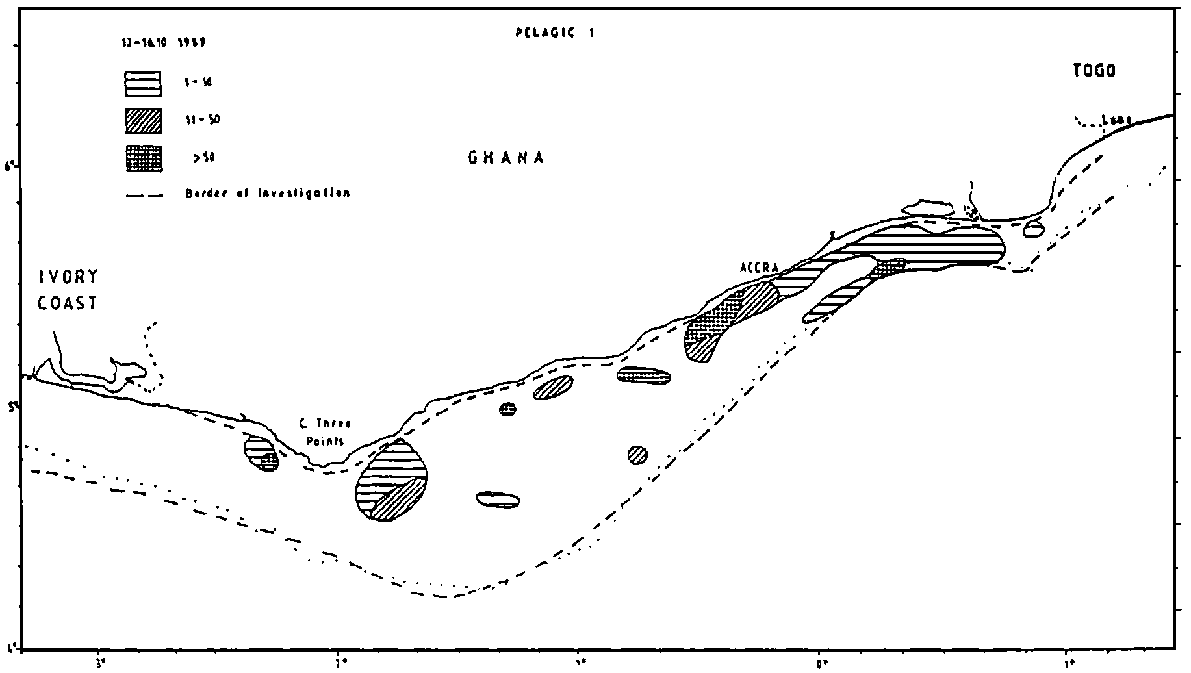
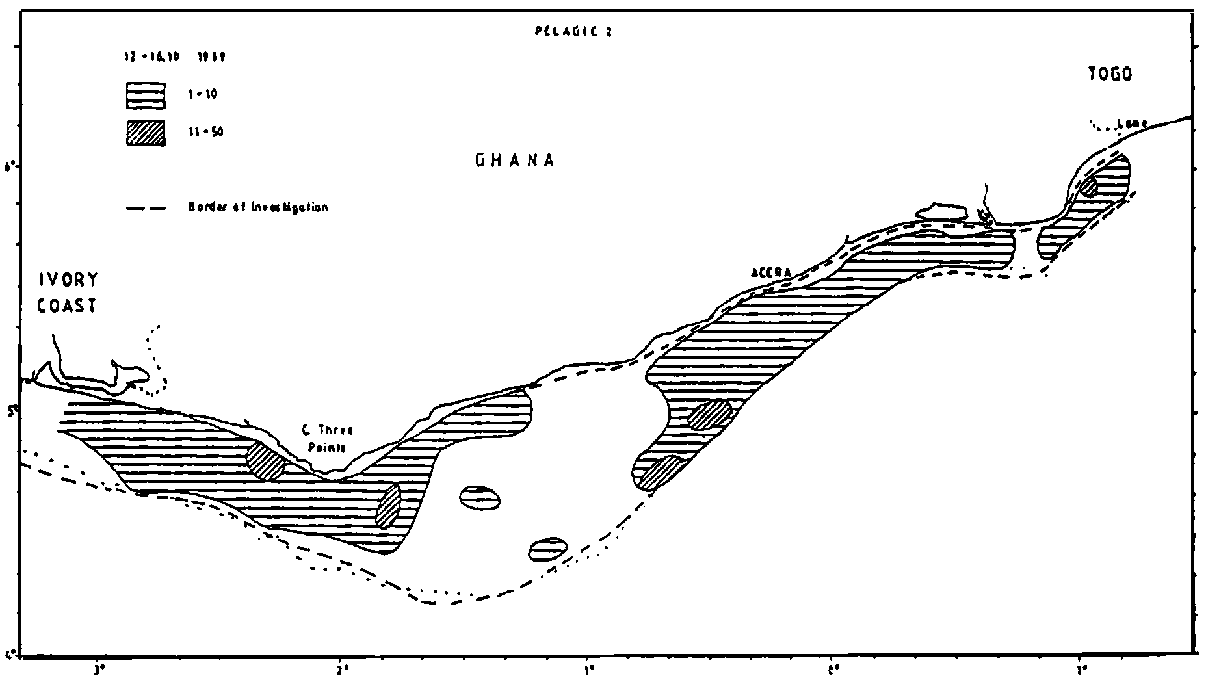
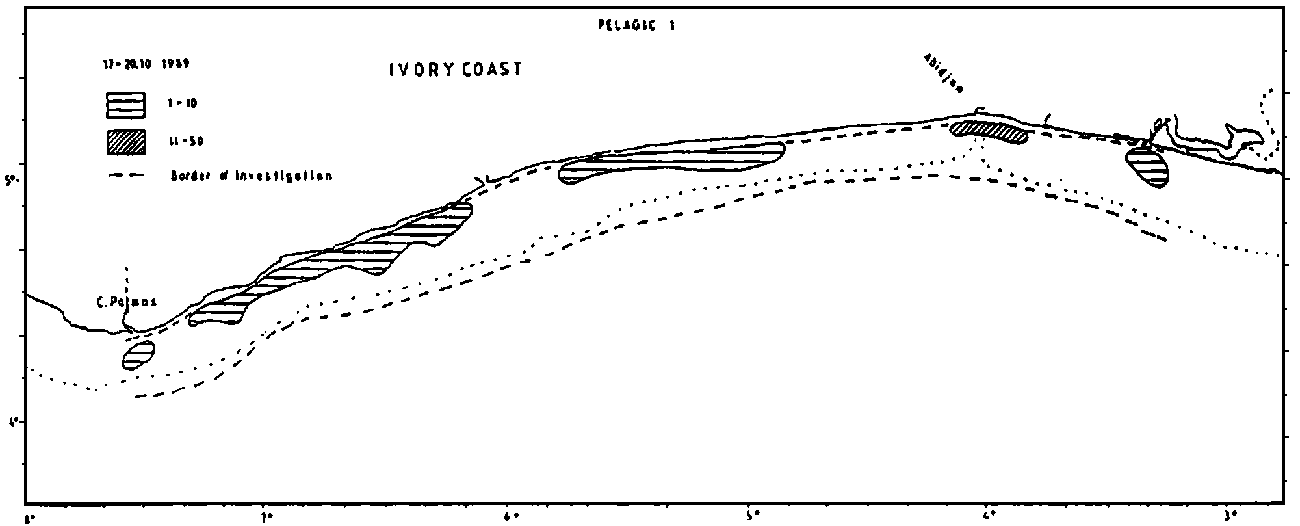
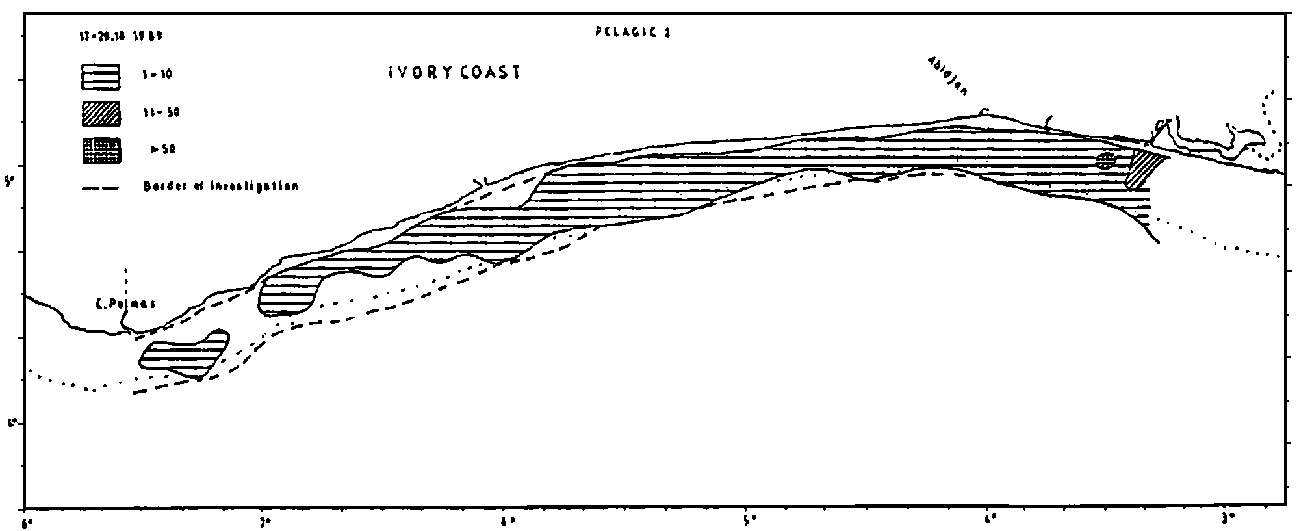
The survey which covered the continental shelf of Ghana and Ivory Coast and took place from 11 to 20 October 1989 showed that pelagic fish was present over most of the area, but was mostly found in dispersed distribution, but with some denser school areas in the inshore parts off Ghana. Sardinellas and anchovies dominated in the inshore parts, carangids, scombrids, barracudas were more widely distributed over the shelf. Triggerfish Balistes capriscus which was a dominant part of the biomass in previous surveys was not observed with the acoustic system and only appeared in insignificant amounts in 3 of the 23 trawl hauls.
The estimated biomass of pelagic fish and its allocation on main groups was as follows:
|
|
Ivory Coast |
Ghana |
Total |
|
Pelagic fish |
39 000 t |
98 000 t |
137 000 t |
|
Clupeoids |
6 000 t |
41 000 t |
47 000 t |
|
Carangids etc. |
33 000 t |
57 000 t |
90 000 t |
If the composition in the catches are used to allocate the biomass of the Pelagic 2 -group, the following allocation is derived:
|
Cunene horse mackerel |
72 000 t |
|
Other carangids |
12 000 t |
|
Scombrids and barracudas |
6 000 t |
Using the surveys from 1981, 1986 and 1989 the Clupeoids have varied from 79 000, 131 000 and 47 000 tonnes. This may reflect fluctuations in the sardinella stock. The most remarkable feature is the decline of the stock of triggerfish from 500 000 t to 140 000 t in 1986 and virtually 0 in 1989. An estimate from 1976 indicated a stock of 68 000 t (FAO/CECAF, 1981). The increase of the biomass of the carangids, scombrids etc. from 12 000 t in 1981, thorough 56 000 t in 1986 and 90 000 t in 1989 may represent an ecological response to the decline of the triggerfish. The distribution of this group covering the whole shelf as did the triggerfish supports this view. It is important to note that the Cunene horse mackerel with an estimated biomass of about 70 000 t in the most recent survey is not recorded as being caught in any for the previous surveys listed in Table 5 and thus represents a new important element in the fauna. The size compositions indicate that three spawnings groups of the species are already available in the area.
|
Table 5. Biomass estimates by main groups from some surveys off |
|||
|
|
|||
|
DR FRIDTJOF NANSEN |
|||
|
June 1981 |
Ivory Coast |
Ghana |
Total |
|
Triggerfish |
188 |
314 |
502 |
|
Pelagic fish |
41 |
50 |
91 |
|
Clupeoids |
39 |
40 |
79 |
|
Carangids etc. |
2 |
10 |
12 |
|
|
|||
|
CORNIDE DE SAAVEDRA |
|||
|
August 1986 |
|
|
|
|
Triggerfish |
26 |
115 |
141 |
|
Pelagic fish |
91 |
96 |
187 |
|
Clupeoids |
78 |
53 |
131 |
|
Carangids etc. |
13 |
43 |
56 |
|
|
|||
|
CORNIDE DE SAAVEDRA |
|||
|
June 1987 |
|
|
|
|
Triggerfish |
125 |
|
|
|
Pelagic fish |
62 |
|
|
|
Clupeoids |
38 |
|
|
|
Carangids etc. |
24 |
|
|
|
|
|||
|
DR FRIDTJOF NANSEN |
|||
|
October 1989 |
|
|
|
|
Triggerfish |
0 |
0 |
0 |
|
Pelagic fish |
39 |
98 |
137 |
|
Clupeoids |
6 |
41 |
47 |
|
Carangids etc. |
33 |
57 |
90 |
Strømme, T. 1984. Report on the R/V DR FRIDTJOF NANSEN fish resource survey off west Africa: Morocco to Ghana and Cape Verde Islands May 1981-March 1982. FAO, CECAF Series 84/29, Rome.
FAO/CECAF 1981. Report of the 5th session of the working party on resource evaluation, Dakar Oct. 1980. FAO Fish Rep(244).
Oliver, P. and J. Miquel 1987. Report on the survey carried out by the R/V CORNIDE DE SAAVEDRA in the Gulf of Guinea in 1986. Instituto Espanol de Oceanografia, Palma de Mallorca.
Oliver, P, J.Miquel and J.Bruno 1987. Preliminary report of the survey carried out by the R/V CORNIDE DE SAAVEDRA in Liberia, Cote D'Ivoire and Togo, May-June 1987. Instituto Espanol de Ocenaografia, Palma de Mallorca.
Figure 1. Course tracks and fishing stations.
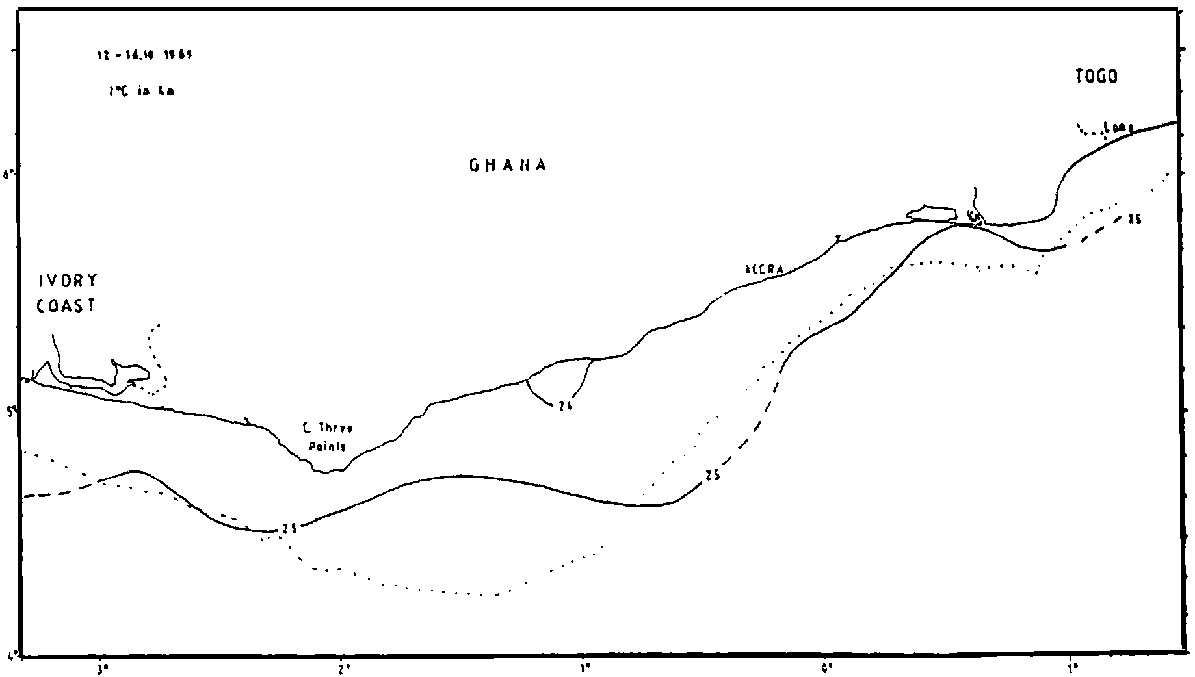
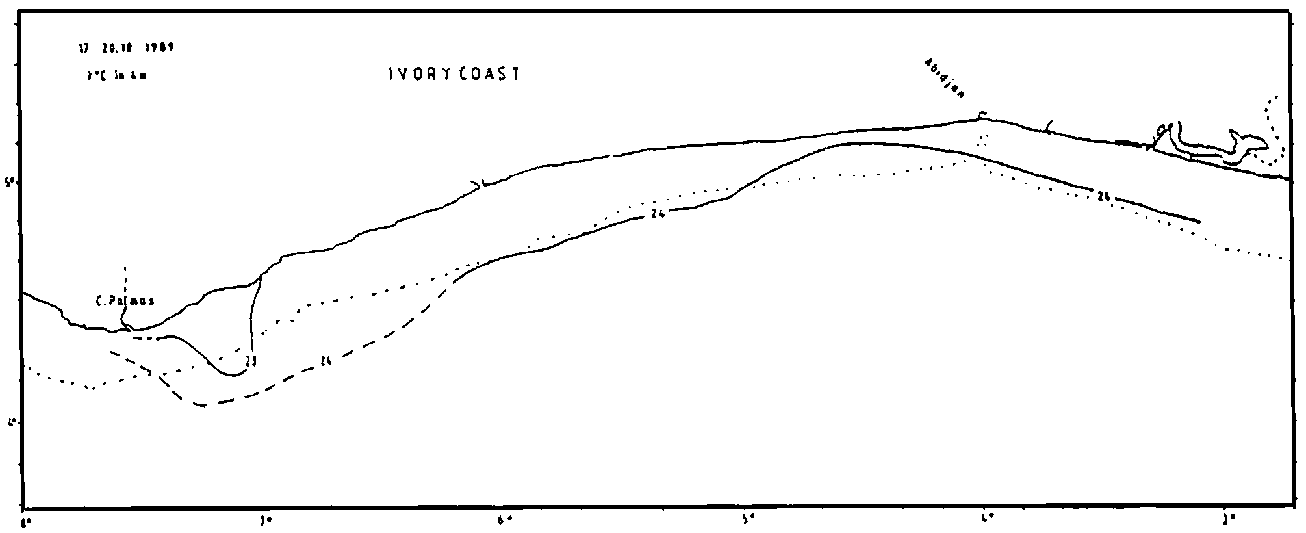
Figure 2. Temperature at sea surface.
Figure 3. Ghana. Distribution of pelagic fish 1 and 2.
Figure 4. Cote d'Ivoire. Distribution of pelagic fish 1 and 2.