

With the adoption of the millennium development goals, the international community has formally subscribed to halving the proportion of people living in extreme poverty by 2015. A key challenge is therefore to identify and promote income opportunities that may lead to significant economic growth for the poor. In the face of limited possibilities the livestock sector appears to present a real opportunity to enhance the livelihoods of a large proportion of the world’s poor.
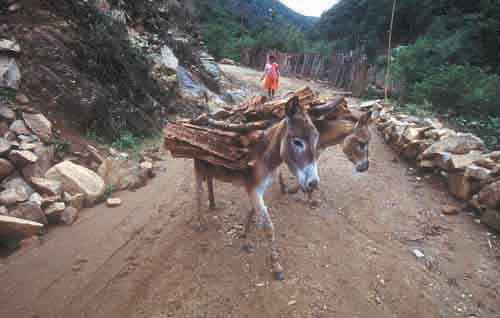
Livestock contribute to the livelihoods of an estimated 70 percent of the world’s rural poor: some 630 million people. Livestock provide food and income, a means of reducing risk and increasing assets. Draught power, fuel, manure and transport all contribute significantly to whole farm productivity and the consumption of animal protein improves human health and ability to work.
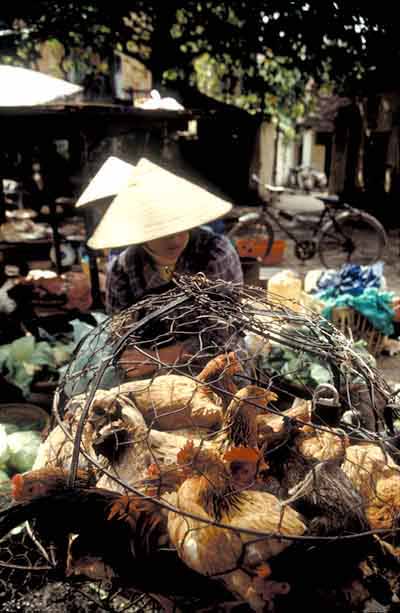
In many areas of the world the demand for meat, milk and eggs is increasing as a consequence of urbanization and greater affluence. This is coupled with a tendency towards withdrawal of state services and increasing privatization. These trends present real opportunities for poor livestock owners - but also challenges:
In spite of these concerns, the projected growth in livestock offers a unique opportunity: a rapidly growing market of which many rural people already have experience and which they can enter without the need for substantial resources or training. Livestock production does not offer a universal solution to rural poverty but, for many, it represents a practical way to build assets and financial security.
History shows that it is policies and institutions, not technical innovation, that lead to development and that technology adoption follows institutional change. Moreover, in many countries, the livestock sector is heavily distorted in favour of large-scale producers. Therefore the opportunity of achieving pro-poor impact through political and institutional reform is high.
It is for these reasons that the Food and Agriculture Organization (FAO) of the United Nations (UN) has joined forces with the United Kingdom’s Department for International Development (DFID), to establish the Pro-Poor Livestock Policy Initiative (PPLPI). The PPLPI aims to contribute to poverty reduction by strengthening the capacity within FAO’s member nations, FAO and other international organizations, to formulate and promote livestock-sector policies and institutional changes that favour the poor.
The Initiative operates through a central facility, based at FAO headquarters in Rome, and through regional pro-poor livestock policy hubs. In 2001, DFID committed funds to support the central facility for a period of six years. Whilst some regional activities are already being undertaken, further funding is needed to bring the regional hubs to a fully operational level.
|
POVERTY AND WELL-BEING It is generally agreed that human well-being has many dimensions, including political voice, access to services, and security against potentially damaging external events. However, in practice, the most widely used means of assessing poverty involves adopting a monetary “poverty line”, a threshold in income or consumption/expenditure below which a household is considered poor. The widely cited US$ 1.00 per day actually refers to a level equivalent to US$ 1.08 per day in 2000, using 1993 purchasing power parity estimates generated by the International Comparison Programme (World Bank 2001). The advantage of adopting an international poverty line is that, within the limitations of such measures, comparisons of income/expenditure poverty can be made across regions, and monitored through time. In September 2000, at the United Nations Millennium Summit in New York, the member states of the United Nations unanimously adopted the Millennium Declaration. This declaration endorses a series of targets, the Millennium Development Goals, first set out by international conferences and summits held in the 1990s:
Each of these goals has yardsticks for measuring progress. The first seven goals are mutually reinforcing and are directed at reducing poverty in all its forms. The last goal, the global partnership for development, defines the means to achieve the first seven. The targets for the first goal, poverty eradication, are to halve, between 1990 and 2015, the proportion of people whose income is less than one dollar a day, and in the same period to halve the proportion of people who suffer from hunger (http://www.developmentgoals.org). |
