


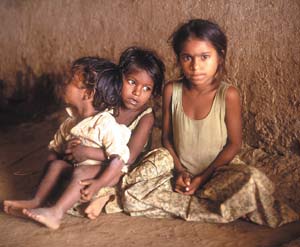
It is estimated that 1.2 billion people in the world live below a poverty line defined by US$ 1.00 per day, and that three-quarters of these work and live in the rural areas (Ravallion 2001). This is more than the populations of North America and Western Europe combined.
Apart from the ethical considerations surrounding poverty in a world of plenty, poverty exacerbates issues such as disease risk, uncontrolled migrations, political unrest, violence and crime. On the other hand, increasing the purchasing power of large sections of society would result in a virtuous circle of increasing demand, fuelling wealth generation and creating employment opportunities.
With the adoption of the Millennium Development Goals by the United Nations membership, the global community formally subscribed to the eradication of extreme poverty and hunger. Specific targets are to halve, between 1990 and 2015, the proportion of people whose income is less than one dollar a day and the proportion of people who suffer from hunger.
Achieving these targets will only be possible if three requirements can be met. These are that economic growth must be substantially faster than population growth; economic growth must be focused on sectors in which the poor have a major stake, and the vulnerability of poor people to shocks, such as disease and drought, must be reduced (DFID 2000).
