AQUASTAT - Глобальная информационная система ФАО по водным ресурсам и сельскому хозяйству
Workshops
National training workshop on SDG 6.4 for Oman
Muscat, Oman, 01/12/2019 - 05/12/2019
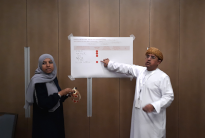
FAO and the Ministry of Agriculture of Oman organized a national workshop to present the SDGs of which FAO is custodian agency as well as their respective data requirements. The purpose of this training was to lead the water session of the FAO-Oman national workshop on SDG indicators – SDG 6.4, bringing together the SDG methodology and data requirements from the GEMI project with the questionnaire and data management from AQUASTAT.
Specific objectives of the workshop:
- Introduction to SDG general concepts and monitoring mechanism
- Raise national capacities in proper monitoring and implementation of SDG 6
- Raise awareness on the methodological aspects of the indicators 6.4.1 and 6.4.2, in particular on the parameters to be used for the computation of the indicators, i.e. water resources, water use and agronomic, environmental and economic parameters
- Capacities development on data validation and quality control for better management of water resources
Countries represented: Oman
Sub-regional workshop on monitoring the SDG 6.4. indicators in Eastern Africa
Addis Ababa, Ethiopia, 15/10/2019 - 18/10/2019
In Addis Ababa, FAO provided a training on monitoring Sustainable Development Goal 6.4 indicators as part of its ongoing efforts to support countries in the area for making their water use in agriculture more efficient, equitable, and environmentally friendly. This training was designed to enhance the knowledge and experience in collecting and reporting water data and, in particular, analyzing the SDG 6.4.1 and 6.42 indicators on water-use efficiency and water stress.
Specific objectives of the workshop:
- Introduction to SDG general concepts and monitoring mechanism
- Raise capacities in proper monitoring and implementation of SDG 6
- Raise awareness on the methodological aspects of the indicators 6.4.1 and 6.4.2
- Enhancing national capacities for better management of water resources in Eastern Africa
Countries represented: Burundi, Djibouti, Ethiopia , Kenya , Rwanda, Somalia, South Sudan and Uganda
Sub-regional workshop on monitoring the SDG 6.4. indicators in Central Asia
Almaty, Kazakhstan, 08/10/2019 - 10/10/2019
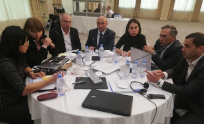
The workshop was conceived in the framework of the ESCAP project "Strengthening research and studies for improved quality of SDG statistics in Central Asia", funded by the Russian Federation, which aims to strengthen the capacity of the countries of Central Asia to produce data for priority SDG indicators. In this framework UNESCAP, in collaboration with FAO, organized this workshop on water-use efficiency and water stress indicators for the countries of Central Asia. The objective of the workshop was to build the technical capacity of participants to compile SDG indicators 6.4.1 and 6.4.2 and report them at the national and international levels. It was designed for staff members including AQUASTAT National Correspondents, of national statistical offices and ministries responsible for the national compilation of indicators 6.4.1 and 6.4.2
Specific objectives of the workshop:
- Introduction to SDG general concepts and monitoring mechanism
- Raise awareness on the methodological aspects of the indicators 6.4.1 and 6.4.2
- Enhancing national capacities for better management of water resources in Central Asia
Countries represented: Afghanistan, Armenia, Azerbaijan, Kazakhstan, Kyrgyzstan, Russian Federation, Tajikistan and Uzbekistan.
Sub-regional workshop on monitoring the SDG 6.4. indicators in Southern Africa
Gaborone, Botswana, 02/04/2019 - 04/04/2019
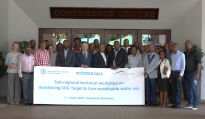
This workshop was organized merging the SDG methodology and data requirements from the GEMI project and the AQUASTAT methodology on data collection and management to support Member States in achieving and monitoring SDG 6.4 indicators. This was the first joint workshop where the GEMI project and AQUASTAT worked together to integrate the SDG presentations and exercises with the AQUASTAT database and questionnaire.
Specific objectives of the workshop:
- Introduction to SDG general concepts and monitoring mechanism
- Raise awareness on the methodological aspects of the indicators 6.4.1 and 6.4.2
- Capacity development on the computation of the indicators and on supplementary tools and methods to be used
- Revision of the data already collected and provision of new inputs for further data collection
Countries represented: Angola, Botswana, Eswatini, Lesotho, Malawi, Mozambique, Namibia, Zambia and Zimbabwe.
2nd AQUASTAT workshop - Launching the National Correspondents Network
Bari, Italy, 04/12/2018 - 06/12/2018
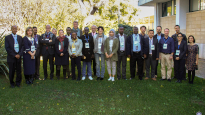
This workshop represented the second opportunity for FAO-CBL technical team to discuss both the AQUASTAT database and the related questionnaire, as well as an occasion to familiarize with the SDG 6.4 target, in particular with its two indicators 6.4.1 on water use efficiency and 6.4.2 on water stress. This 2nd workshop gathered a new group of AQUASTAT national correspondents, most of them invited among those that compiled the questionnaire.
Specific objectives of the workshop:
- Strengthening of the AQUASTAT National Correspondents Network
- Introduction to the SDG 6.4 target and its two indicators 6.4.1 and 6.4.2
- Revision of the data already collected and provision of new inputs for further data collection
- Discussion around the questionnaire, the variables and the procedures to improve the data collection process.
Countries represented: Bahrain, Canada, Indonesia, Jamaica, Kenya, Laos People’s Democratic Republic, Mongolia, Palestine, Slovenia, South Sudan, Sri Lanka, Tajikistan, United Republic of Tanzania, Uganda, Viet Nam.
1st pilot AQUASTAT workshop - Launching the National Correspondents Network
Bari, Italy, 25/06/2018 - 28/06/2018
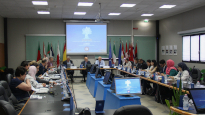
The workshop represented the first opportunity to discuss with the National Correspondents both content and format of the AQUASTAT questionnaire, the data collection process and its challenges. Participants shared their opinions, experiences and different approaches for data collection, which helped the AQUASTAT Programme to streamline the process for data acquisition and to improve the database content itself. The first pilot AQUASTAT Workshop gathered national correspondents from all over the world as well as international experts in water related domains, CIHEAM-IAM Bari and FAO-CBL technical teams.
Specific objectives of the workshop:
- Launch of the AQUASTAT network of National Correspondents
- Development of capacity and strengthening of motivations of the National Correspondents
- Revision of the data already collected and provision of new inputs for further data collection
- Discussion around the questionnaire, the variables and the procedures to improve the data collection process
Countries represented: Armenia, Azerbaijan, Brazil, China, Croatia, Egypt, Hungary, Italy, Jordan, Malaysia and Saudi Arabia.
International Organizations: IWMI, LUKE, OECD, Eurostat and UNSD.
Workshops to which AQUASTAT participated
- UNSD regional workshop on Environmental Statistics and Climate Change Statistics for the CARICOM region, St George’s Grenada, 04/11/2019 - 08/112019
- 26th FAO AFCAS Session, Libreville, Gabon, 04/11/2019 - 08/11/2019
- 9th Session of the Global Terrestrial Network-Hydrology (GTN-H), Panel Koblenz, Germany, 25/09/2019 - 27/09/2019
- 6th Meeting of the Expert Group on Environment Statistics organized by UNSD, New York, USA, 21/05/2019 - 23/05/2019
- Eurostat Meeting of the Working Group on Water Statistics, Luxembourg city, Luxembourg 05/03/2019 - 06/03/2019
- Eurostat Meeting of the Working Group on Water Statistics, Luxembourg city, Luxembourg 14/11/2017 - 15/11/2017