4.0 Introduction |
||
|
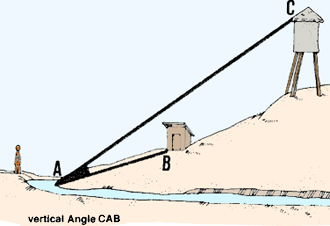
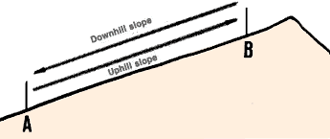
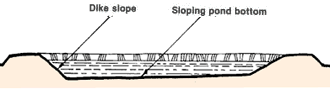
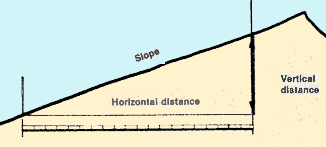
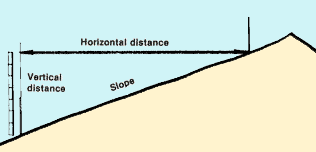
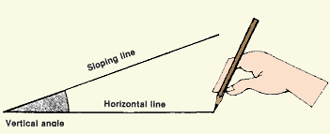
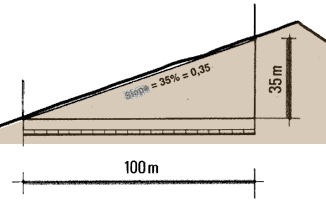
1. A vertical angle is an angle formed by two connected lines in the vertical plane*, that is, between a low point and two higher points. Since these angles are in the vertical plane, the lines that form them will usually be lines of sight. A vertical angle BAC can be formed, for example, by the line of sight AB from station A on a river bank to a higher water-pump installation, and the line of sight AC from station A to a much higher water-storage tank. 2. Whenever a line is not horizontal, it has a slope. The slope can be uphill or downhill. Its steepness depends on the difference in height between its points. 3. As you have learned (see Chapter 2), the slope of the ground affects the measurement of distances. Ground slope is also very important in the design of fish-farms, since you can use it to reduce your construction costs. You need to build bottom slopes in canals, to allow the water to move by gravity*; and in ponds, to allow good drainage. And you must build slopes in the dikes for ponds and dams (see the next manual in this series, Constructions for Freshwater Fish Culture). |
|
|