


Module 6 - Review and evaluation
Purpose:
* This module discusses the importance of evaluating the NFPE activities and provides guidelines for such a purpose.
* We need to know whether we have met our learning objectives.
Figure

* We need to identify our strengths and weaknesses. For example, we might be strong in the methods, but our content might not be as comprehensive.
Figure

* Action- Reflection -Action Sessions
- Participants are asked to share their observations/insights on the methods and content of the sessions, including the performance of the training staff/resource persons.
- These can be informal, free-for-all sessions that can be conducted among groups with not more than 20 participants.
* Visual Expressions
- Sometimes, our participants are too shy to express their feelings.
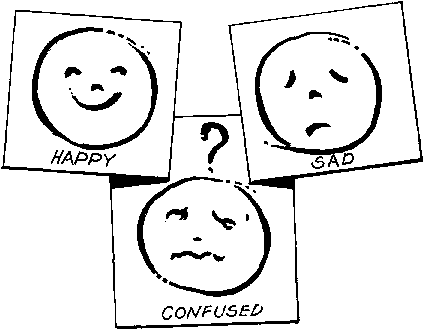
- We can ask them to draw their feelings or reactions to the NFPE activities.
- They can either draw how they feel or use flash cards prepared for this purpose.
- Below are examples of drawings expressing how one feels:
Figure
Pre-post tests
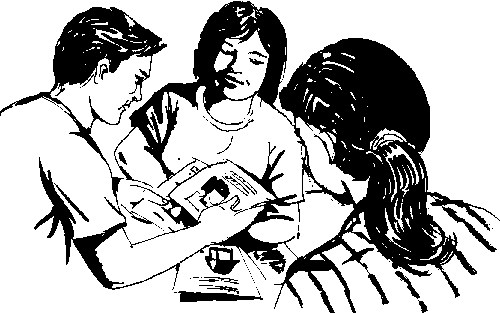
* Simple testing, like selecting prepared drawings showing certain concepts, can be administered before and after some sessions.
* The participants should correct the tests themselves so they can funkier learn in the process.
The above are just sample evaluation methods. You can use all your creativity to devise more appropriate and participatory methods in evaluating the NFPE activities.
Figure
Games
* The use of games can be an effective evaluation method. If we want to check on the knowledge of the participants, we can have variations of such games as:
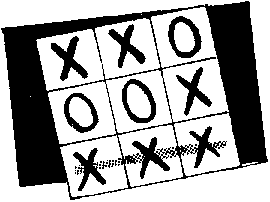
* TIC-TAG-TOE
A correct answer entitles the participants to a mark on the board, until they can make a straight line. It looks like this:
Figure
* FAMILY FEUD
The winning participants are the ones who give the highest number of correct answers. The participants vie to be first in giving the most number of correct answers. Example of question:
- What C can be used to prevent the spread of AIDS virus?
Answer: Condom
* RUMOR CLINIC
-The group that gets the correct message first wins the contest.
In conducting games as an evaluation method, it is important that the answers are discussed. We should also ask the participants who gave incorrect answers the reasons for their responses. This way, we will know if there were some shortcomings in the way we handlled the learning process.
N.B. Facilitators my find some useful hints on conducting games in Appendix B.
