• Technology and production development for marine land-based
fish farms in the Mediterranean sea
A. MORETTI (Italy)
• Production and training human resource development
J. MUIR (Scotland)
• Fish marketing and producer's problems
C.A.M. HOUGH (Belgium)
• Critères de sélection d'un site de production
VAN OBBREGEN (France)
• Comparative production costs : Analysis, forecasting, and monitoring
J. MUIR (Scotland)
• Aquaculture insurance and risk management
C.M. KENNEDY (Scotland)
• Les organisations de producteurs et La coopération régionale
VAN OBBREGEN (France)
By A. Moretti
Italy
1. INDTRODUCTION
For applied technology in aquaculture we intend the integration among engineering, biological knowledge and management.
If properly applied, any technological innovation can greatly affect production in a positive way.
The main targets of technological innovation could be summarised as follows:
a) Optimisation of production process
This means mainly :
to increase the efficiency of the rearing practices in terms of higher production per unit volume together
with lower biological risk.
to decrease running production costs by developing simpler techniques and/or by automatization of
routines and consequent lower labour cost.
Example
The development of new methods to increase survival and growing performance of eggs, larvae, fry
and marketable fish (balanced broodstock diets, eggs/larvae desinfection, new diets based on enriched
live food, new feed formulations and more efficient automatic feeding procedures)
The introduction of self-cleaning or automatic cleaning procedures, automatic dissolved oxygen analysis
and control, fast fishing and grading systems by means of fish pumps and electronic grading/counting
devices.
b) Proper utilization of available resources
It means to dimension the productive plant taking into consideration any available local resource,
saving time and investment costs.
Human resources: the need of specialised personnel should be carefully considered for example in countries
where aquaculture technicians are not easily recruited (absence of professional schools or post-degree
specialisation) and managing staff is not accustomed to the very special character of a fish farm.
Technological resources: to reduce whenever possible the import of special equipment could save money in a carefully planned farm; the choice of locally available building materials and building standards often represents a suitable, low-cost alternative to international standard (for example a brick walled shed instead of a precasted one).
Technology and Production Development
Therefore not every country can afford the same level of technology, since it is closely related to its purchasing capacity, the locally available engineering knowledge and the human resources. But every country has the duty to adapt and develop its own technological standards to the needs and resources of fish farming.
2. MEDITERRANEAN AQUACULTURE SYSTEMS IN SEA FISH CULTURE
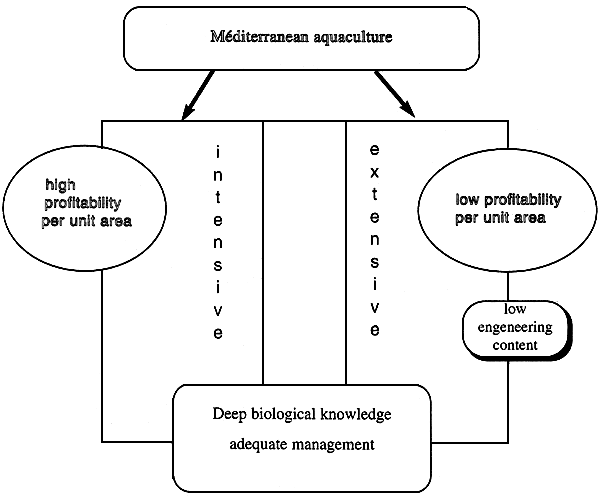
At present, in the Mediterranean area two rearing systems are the most widely used, intensive and extensive aquaculture. True semi-intensive aquaculture is indeed a rearing system seldom found : more frequently we experience semi-natural pond farms shifting quickly to an all-artificial feed supplement (intensive) in order to keep profitability within acceptable levels.
Some time we wrongly referred to these systems (intensive and extensive) as “high technology” and “low technology” systems, such difference could easily become a misleading concept. It seems therefore probably much more appropriate to introduce a distinction for aquaculture systems having respectively high and low engineering contents.
Both systems in fact need a deep knowledge of the biology of reared organisms, their relationships with the rearing environment and a proper management.
Thus a proper and as high as possible technological knowledge should backup also the extensive aquaculture, and only the low profitability per surface unit does not allow an adequate development of technology. Nevertheless, we cannot ignore for the figure the existing valuable traditional know-how and the large space for further improvement showed by it.
On the contrary being intensive aquaculture expansion based on the actual possibility of higher revenues, it obviously becomes object of important technological upgrading. It is evident in fact, how greater and more fruitful has been the technological evolution in the last ten years in the field of intensive aquaculture, if compared to the extensive one.
For all these reasons we are going to limit our lecture to an exposition of practices and techniques applied to intensive marine aquaculture.
3. FIELDS OF OCCURRENCE OF THE TECHNOLOGICAL EVOLOUTION
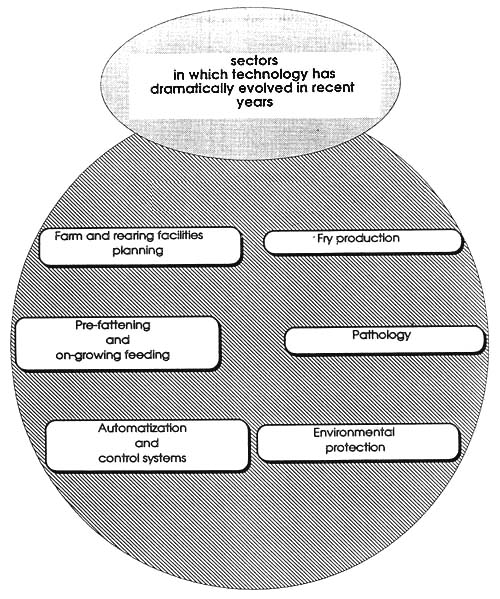
Technology has dramatically changed in the past years and a stable positive evolution and optimization of production has been achieved in intensive aquaculture systems
This can be recognized mainly in the following sectors:
- Farm and rearing facilities planning
- Fingerling production
- Pre-fattening and on-growing feeding
- Fish pathology
- Automatisation of rearing methods and monitoring systems
- Environmental protection
3.1 Farm and rearing facilities planning
Fish farm planning has been for years a job lacking accuracy and completeness. The “all-engineering” approach has been proved substantially incapable to solve most of the biological problems arising from this special form of zooculture. Only a full integration among biological, engineering and economical aspects, together with computers and the essential data from the environmental survey let us set up a properly planned, well-managed production unit, allowing true savings in investment, running costs and positive performances.
The main technological criteria for a functional planning are:
Safety
A fish farm is clearly based on few key structures whose functionality must be carefully selected, dimensioned and checked through simulating models. These works are the farm core and should be designed by highly specialized people only
Example :
à Sea water intake facilities (offshore and inshore works) are often underestimated and a cheap
solution is preferred with no regard to hydraulic parameters (actual hydraulic need of the farm,
water carrying capacity, turbulence, etc) and geographical factors (exposition, sediment pattern,
erosion, waves effect, tides, etc.). Experience shows that this mistake is frequent and can
rapidly spoil the pumping station, limit drastically the standing biomass and even affect fish
survival due to f.i. a clogged water intake.
à Hydraulic structures such as water conveying pipelines, open channels, tanks and reservoirs are again subject to frequent underestimation. Whenever an unsuitable solution is preferred because cheaper, it quickly shows its ineffectiveness due to a frequent clogging by sediment deposition and/or fouling, difficult cleaning, uneasiness of repairing fails, etc. Cheap ongrowing rectangular tanks are easy to built with bricks, but at the same time they could often represent a poor alternative to true raceways which show a correct length/width ratio, self-cleaning water current, easy-to-use inlet/outlet monks.
à Pump choice must depend on actual carrying capacity figures and careful estimates of spare water flow, together with a suitable motor turnover.
à The production and distribution of electrical power does necessitate of properly sized and connected emergency generator set. It has to be able to enter automatically the power line. The indoor electrical network must be equipped with self-extinguishing materials and safety switches which are exposed to a moist saline environment.
Ergonomics
A general criteria of logical arrangement of working activities should be the base of any correct planning. This means to design a fish farm hearing in mind what follows :
Suitable organisation of open spaces
Example : wide areas devoted to cleaning and desinfection, of small equipment (syphons,
brushes, buckets, screens); tank shape and dimensions suitable for easy access and cleaning;
sufficiently large aisles among tanks rows to guarantee easy access for working routines;
arrangement and coordination of functional sectors to let comfortable movement of staff and
quick transfer of food, fish and various material.
Logical accomplishment of routines
Example; transport and distribution of live food should be achieved by pumping concentrated
cultures through pipelines, not by hand Pellets should be delivered once a day to the automatic
feeders to avoid waste of time and labour. Fish is better moved and graded when ongrowing
tanks are grouped, allowing easy installation of belt graders and electronic counters.
Concern of the biological component
A more complete knowledge of fish biology and behaviour can help to plan the rearing structures
in a way to minimize any stress originated by abiotics factors variations.
Example : size and shape of rearing tanks are chosen also following the best swimming and
eating behaviour of reared fish (circular shape is preferred if dealing with larvae, rectangular or
circular shape are presently the best for marketable fish): in-tank water circulation and current
must support free swimming, homogeneous distribution and predation of live food, pellet
buoyancy; light intensity and photoperiod are chosen according to the optimal species-specific
needs; handling procedures and frequency also should respect the way different species behave
when fished to weighed; tank cleaning must not affect feeding and normal fish respiration.
Economizations
Every farm should be planned by carefully selecting suitable. long-lasting and easily serviced
materials and equipments.
Example : substantial saving can be reached by selecting proper insulation of buildings, by
minimization of covered surfaces and compactation of external facilities (such as race ways for
weaning and on-growing, having walls in common) to save space.
3.2 Fingerlings production
This sector of aquatic animal husbandry has likely experienced the mot evident technological changes in the past ten years. As a consequence, a constantly increasing larval survival and fry production per unit volume has been achieved. This can be pointed out mostly in the following fields:
Eggs and larvae quality
Several methods have been developed to improve the quality of the first living stages of fish:
desinfection by means of various chemicals to eliminate harmful bacteria film from egg surface.
Plankton culture
The introduction of selected algal, rotifers and artemia strains has allowed higher growing performances in plankton populations. Due to their general smaller size and high nutritional content, these live preys are better fitted to the mouth size of larvae and to their nutritional requirements.
Utilization of zooplankton as special nutrients and various chemicals carrier through bioencapsulation techniques has provided a unique system to supply fish larvae with required amount of essential factors and medicaments.
Larval and post-larval rearing techniques improvement
The development of well-balanced artificial diets for the early weaning has contributed to reduce substantially the covered areas requested to produce the live food of high nutritional quality. It makes also feasible the automatic distribution of post-larval feed, saving labour and gaining reproducibility.
Self-cleaning cylindro-conical tanks greatly contribute to maintain good hygienic conditions in the rearing environment. Disinfection of tank small equipment (filters, air stones, air pipes, skimmers, etc.) is essential also to avoid disease spreading.
New vaccines (f.i. against vibriosis) and more effective antibiotics have allowed to outline more successful prophylaxis.
Rearing environment improvement
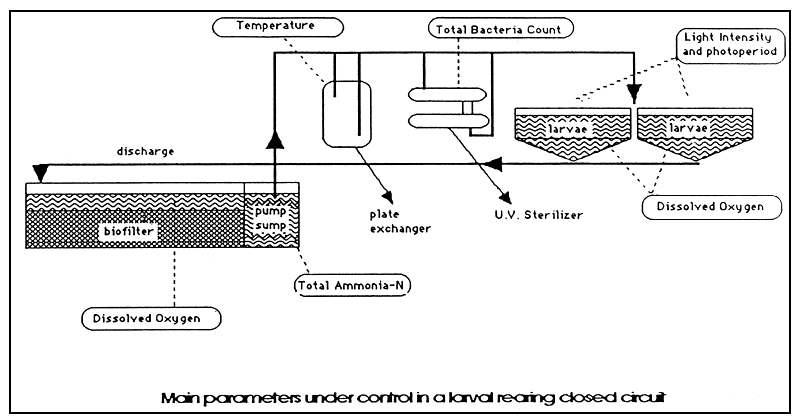
A great progress has been achieved in water quality control by means of microscreen mechanical filters and quasi-closed bio-reactors. The widely used recycling systems are now able to strictly control several environmental parameters by;
Significative results have been attained by rank size and shape optimization (rectangular and square vs circular, cylindrical or cylindroconical), in order to gain an optimal water circulation and complete self-cleaning performance.
The choice of atoxic and seawater-resistent materials (reinforced fibreglass, PVC, nylon, polypropilene, high density polyethilene, titanium stainless steel, aluminium, etc) have been preferred when selecting main equipment (tanks, pumps, sterilizers, heat exchangers, pipes), to avoid any possible form of intoxication of rearing water and to increase life span of structures.
Introduction of new species
The interest in rearing new species is mainly due to: diversification of products with consequent better market penetration and limitation of possible market difficulties; increased biological diversity in the farm to reduce disease risks; better exploitation of the geographical conditions (rearing of warm-water and cold-water finfish.)
New species whose induced reproduction and industrial on-growing have been standardized in recent years are: gilthead sea bream, Japanese sea bream (madai), turbot.
3.3 Pre-fattening and on-growing feeding
A wider knowledge of alimentary needs of reared species does allow to achieve a more efficient conversion ration with an increased crop. It also makes the fish healthier and more resistent to possible pathologies.
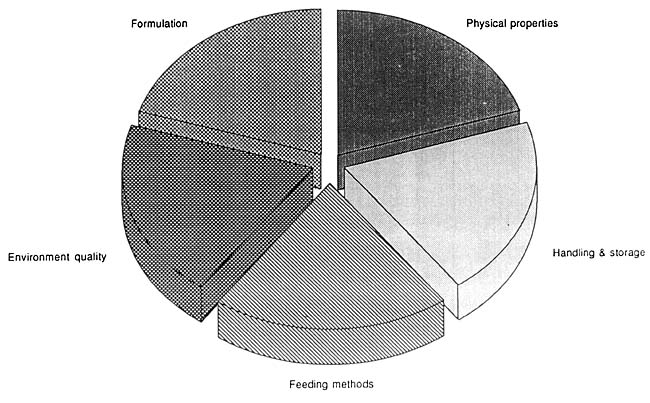
The main factors which enter the formula of a well balanced diet and the development of an efficient feeding system are:
Formulation
Feeding methods
Physical properties
Quality of rearing environment
Handling & storage
Practically speaking, a successful feeding must put together on appropriate chemico-physical composition of fond with adequate delivering methods and handling/storage systems. All these things must be tailored to the existing quality of the rearing environment. A well balanced diet is useless if stored in moist, hot environments and/or distributed under anoxic conditions.
Among the areas in which the technological development takes place there are:
3.4 Pathology
Improved knowledge on more effective prophylactic systems (vaccines, vitaminized integrators) and treatment systems (antibiotics, chemotherapeutics) is essential to either prevent, or treat the most common diseases occurring in fish farming.
Basic knowledge on morbidity of new diseases and on biology of new parasites could prevent from their spreading around and limit possible damage or loss.
Minimisation of the disease-risk by means of polyculture, species diversification and non-stressing
rearing methods (reduced handling, continuous feeding, limited density, self-cleaning environment,
continuous oxygenation, etc.)
Quarantine systems applied to breeders and wild fingerlings prior to stocking are key factors to avoid
diseases spreading among fish farms and inside the fish farm itself.
3.5 Automatization of rearing practices and control systems
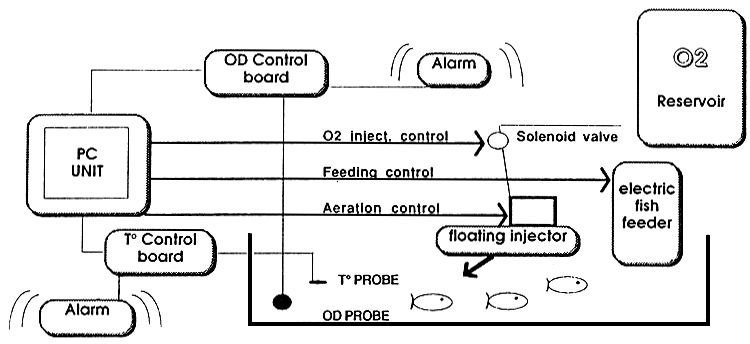
Positive results are obtained by automatization of routine procedure. A more careful and reproducible control of the environment together with error-proof and non-stressing rearing practices is possible. This fact leads to substantial savings in terms of labour, energy and feed, not to mention the possibility in avoid massive mortality due to alteration of environmental factors (oxygen, temperature, etc.)
Examples:
- Water quality control (aeration and oxygenation controlled by dissolved oxygen computerised probe) to keep the rearing conditions stable.
- Controlled feed distribution (a computer driven by temperature and oxygen sensors) to integrate several parameters in the optimal management of feed supply.
- Standing stock control and grading (a computer controlled electronic scanner integrated with a vacuum fish pump and a belt grader).
- Fishing and package.
3.6 Environmental protection
Even being a relatively low pollution activity, fish farming must take in consideration its impact on the environment and carefully select technologies able to control it.
Successful methods for farm effluent treatment have been developed by means of: a) micro-screen filters placed at the farm outlet; b) lagooning (organic particles sedimentation and natural oxidation of sediments); c) compacted sludge reutilization (coming from mechanical filters and lagooning cleaning).
The use of an extruded feed can also help to minimise residual organic matter and sewage from rearing tanks.
Nutrients content of effluent waters, once lowered their sediment load, could be positively exploited by extensive culture methods (molluscs, shrimps, mullets), providing and addition marketable crop.
Applied technology in aquaculture is the integration among Engineering, Biological knowledge and Management.
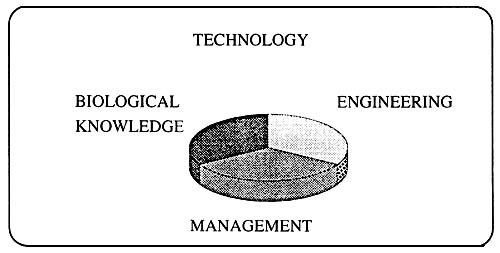
The main targets of technological innovation are:
THE OPTIMIZATION OF PRODUCTION PROCESS
• In increase efficiency of rearing practice, in terms of higher production per unitary volume and lower biological risk and production costs
THE PROPER UTILIZATION OF AVAILABLE RESOURCES
Technology and production Development in Aquaculture
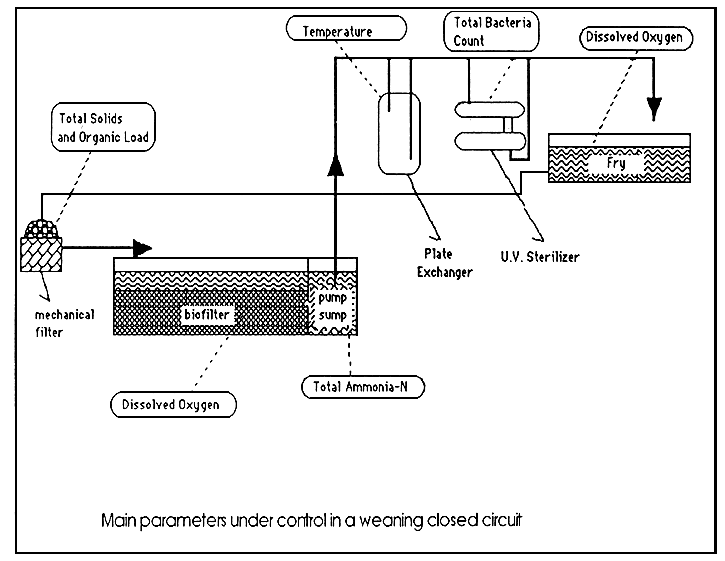
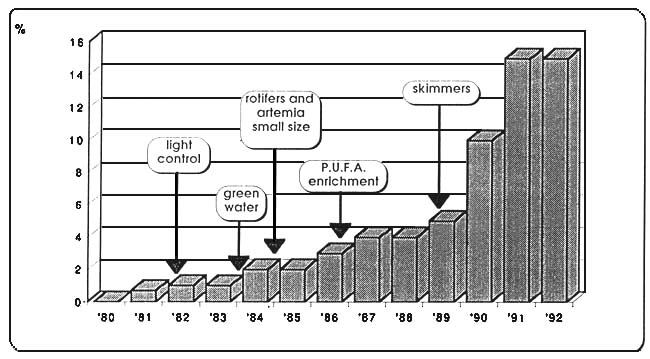
Evolution of sea bream average survival rate in hatchery and main breakthrough
Nutrition highlights in aquaculture
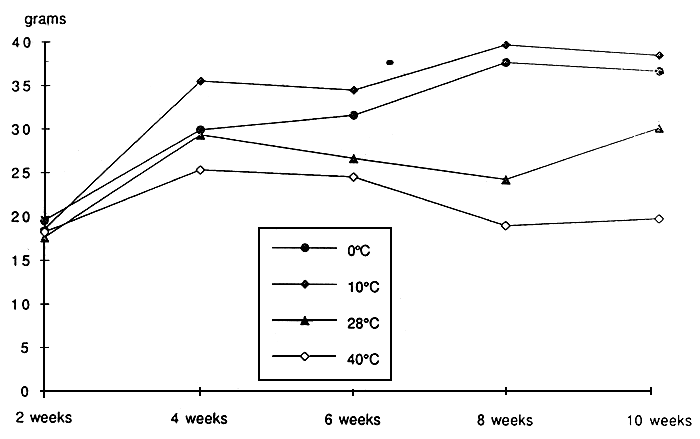
Effects of storage temperature on diets quality
Automation and control systems
by Dr James F MUIR,
Scotland
1. INTRODUCTION
The purpose and value of training:
- the specific, utilitarian, product/production oriented approach
- the wider, more altruistic, resource oriented view
- the pragmatic view, dictated by the availability of resources?
The role of people and their skills; importance for basic skill, potential job-satisfaction, productive reward, general motivation, capability for care, for ideas, improvements;
The different ideas of human involvement; the changes traditional agrarian, traditional craft, industrial productive e.g. Marxist units of labour, deskilled, post-industrial, e.g. Japanese/Swedish work-group ideas.
The changing history of training, from generalised ideas, simple ‘learning by looking’ or ‘learning by doing’ (‘sitting next to Jeanie’), to the present application of MBO type principles, i.e. the definition of needs, the setting of objectives, the specification of the inputs needed to meet these objectives, the monitoring, pre and post-hoc; the objective means by which attainment might be measured.
2 • Some definitions and concepts
- training/education/extension; more specific, usually practical aim of former, education more general, possibly theoretical, abstract skills; extension more the process of involving, motivating, passing on messages, ideas, skills of often diverse nature; Agricultural extension has been defined as “a service or system which assist farm people through educational procedures in improving farming methods and techniques, increasing production efficiency and income, bettering their levels of income, and lifting the social and educational standards of rural life” (Maunder, 1973).
- ‘technological transfer’ extension process is often so described; however limited component of process involving not only technology but social, cultural, political, economic and marketing aspects.
- in-service, experience; direct, day-release, part-time, correspondence, distance learning
- formal, informal; the increasing preference for the latter, understanding of its worth if controlled and managed properly within structured conditions:
- periodic, continuing; the nature of the type of skill involved; access to opportunity; the idea of progressive development;
- targeted, general; the problem of the scale of aquaculture; big enough for a wide range of specialist training? Better to poach from other fields?
- assessment, certification, re-testing; the importance for moral
3 Defining needs; general case
Essential before training/extension process initiated; mistake often made of preconceptions, or standardised approaches;
- strategic (sectoral) and specific (business-level); the usefulness of manpower planning; the logic of grouping by skills across the sector; the example of the FAO Malaysian assessment; the need within individual companies to plan training needs, skills, qualifications;
- the role of producers; in identifying skill requirements, assessing management and workforce structure; their current and future patterns; in understanding costs and values of training
- the role of specialists; in clarifying training needs, specifying qualitative aspects, defining costs, times, identifying mechanisms, preparing, developing media materials, carrying out training, training trainers:
- the recognition of need; important throughout the sector; as proactive and reactive response; the changing demands of technical change: e.g. hatchery skills, disease diagnosis and treatment; demands of legislative development - e.g. safety, environmental protection;
The primary activities of a training/extension programme, with specific reference to aquaculture, are:
- promote the creation and organisation of aquaculture production and distribution units in the community;
- get fish farmers conductive to acceptance of technological change;
- bring potential fish farmers into contact with sources of practical and useful information through organised action;
- assist people to acquire the necessary knowledge, skills and attitudes to utilise effectively information related to the culture of fish (i.e. the education process);
- communicate new, more productive and efficient technologies to the fish farmers;
- provide technological and diagnostic back-up service for fish farmers and a feedback of problems from farmers which require research or investigation;
- provide, in the short-term, the necessary inputs to initiate production and assist the farmer in becoming self-sufficient;
- help fish farmers gain improved management capability to operate in more productive ways in the longer term, by providing training and guidance in decision-making;
- promote the consumption of aquaculture products.
The structure, goals, strategies and organisation of any training/extension service vary according to a range of factors and objectives, e.g. as defined by government. A particular system tends to reflect underlying cultural, political, economic and social environment in which it evolves. Regardless of structure and activities of a training/extension programme, the principal measure of success is the degree to which specific aims, attitudes, practices are taken up by target groups. Within this specific training objectives need to be defined.
4 Defining needs; setting objectives
Once the overall aims, structure, general ideas of resources have been defined, it is appropriate to consider the specific, practical objectives;
- the need to define short and longer-term objectives
- the need to clarify these in terms of capacity, resources, time, consolidation, etc
- identifying specific individual needs; corresponding with externally perceived needs?
- preparing training plans
The example of objectives within extension programme:
Functions of aquaculture extension services
| Component | Objectives/Activities | |
| Community development | • Create awareness and participation among fish farmers, particularly in the lower social and economic strata, about all areas of work by means of individual contact and group meetings. | |
| • | Promote and create organisations. | |
| • | Strengthen the role of women by introducing and supporting income-earning activities such as subsistence level farming. | |
| • | Train link workers from communities. | |
| • | Participate in development and carrying out of non-formal education programmes with emphasis on vocational aspects and on changing unscientific and conservative attitudes views, norms and rituals. | |
| Technological transfer education | • Further dissemination and diversification of traditional technology. | |
| • | Introduce new appropriate technologies and methods. | |
| Supply of production inputs | Transport of materials, feeds and seed for fish farmers | |
| • | Provide materials, feeds and seed for production at no change, low-cost or credit basis | |
| Diagnostic services | • | Water quality analysis and recommendations, treatment required including fertilisers and liming. |
| • | Disease diagnosis and treatment recommendation | |
| Handling/processing | • | Improve existing, introduce new methods and technologies, such as use of ice after harvesting, improving hygiene and durability of fish products. |
| Marketing/distribution | • | Promote fish consumption including new methods and technologies, such as use of ice after harvesting, improving hygiene and durability of fish products. |
| • | Promote fish consumption including distribution of recipes; demons trate preparation methods for fish. | |
| • | Supply market information to fish farmers about wholesale and retail prices, potential markets, etc. | |
| • | Strengthen the position of fish farmers against middlemen by organisational and financial support of marketing through cooperatives. | |
| • | Promote and create marketing organisations. | |
| Credit and finance | • | Facilitate direct contacts between banks and fish farmers. |
| • | Facilitate indirect institutional finance through cooperatives, credit societies, etc. | |
| • | Promote institutional savings. | |
| Enforcing regulations | • | Regulate and enforce laws relating to fisheries and natural resources. |
5 Designing and quantifying
- skill definitions; existing and/or potential staff; costs availability
- understanding of processes; access, stimulus, reinforcement of response, relative power of
methods,
messages, enactors, etc;
- bases for assessment; generalised qualifications?
- extent of gain at each stage
- incorporating within ongoing programmes
6 Training decisions;
The primary decisions involved in training include:
- who: abilities, motivation, potential staff turnover;
- how; local, informal, with training staff, or via series of organised sessions, with optional outside people?
- where; on-site, ‘sandwich’ type training rooms, access; use of distance learning packages
- when
- how often
The selection of the most appropriate method requires careful consideration. Training methods are used to set up learning situations and to transfer as much information and skills as possible to the learners. Whilst planning the participation/learning situation, important that different steps in the adoption/teaching/learning process will require different techniques.
Generally, mass contact methods are useful at the attention and interest stage. They include the use of folders, campaigns, bulletins, leaflets, posters, exhibits, agricultural shows, mobile audio-visuals, radio and television. Group contact methods bring more specific information about the practices and help individuals through the desire stage to the conviction and action phase. Methods used include demonstration fish farms to highlight methods and results, training and visit techniques, meetings and group discussions, lectures, seminars and workshops, and field trips and tours.
Choice of training methods associated with different levels of response
| ATTENTION/AWARENESS | Mass contact methods |
| INTEREST | |
| DESIRE CONVICTION | Group contact methods |
| ACTION SATISFACTION | Individual contact methods |
Individual contact methods on the other hand are most relevant at the conviction and action phases, because of the effect of face-to-face interaction that is afforded. These methods include farm and home visits, office calls, correspondence and result demonstration fish farms.
Other criteria for the choice of methods are:
- the nature of the subject to be taught, e.g. its complexity;
- the availability of teaching or other media materials; and
- the individual ability and preference of the trainer.
Note all recipients will learn or take up ideas, skills, recommendations at the same speed, i.e. some may be at the awareness stage while some may have already adopted them. For this major reason a variety of teaching (communication) methods is most effective in bringing about the desired outcome.
The demonstration/teaching process
Demonstration is generally referred to as one of the cornerstones of training and extension practice
and has been widely successful. The method is based on the adage that ‘seeing is believing’. They
incorporate two main attribute, namely they “recognise the importance of demonstrated success on
any new technique and its subsequent adoption by farmers, and the importance of farmer of farmer
communication” (Engle and Stone, 1989).
Two types of demonstration exist: the method demonstration, which basically teaches skills (e.g. methods of liming and fertilisation of ponds fish handling, etc), and the results demonstration which shows the outcome of an idea or activity (e.g. the results of fertilisation of a pond after time).
The effectiveness of a demonstration depends on the effort put into its preparation, planning and implementation. When planning a demonstration one should clearly identify its objective as well as the skill to be taught. All the material and know-how necessary to conduct the demonstration should be gathered before-hand. Finally the presentation should be planned step-by-step and rehearsed. To maintain interest when implementing the activity a number of points should be addressed:
- the audience should be able to sec and hear all that is going on;
- explain the importance and need for the skill to be demonstrated; explain both the theory and procedure of the demonstration and what they should look for;
- involve the audience in demonstrating various aspects and allow some time for them to try out the skill;
- while conducting demonstrations; repeat difficult steps, answer questions and ask questions to
ensure the
message has been grasped;
- look out for the slow learners and offer special attention without necessarily embracing them;
- summarise the importance of the skill, the steps and the materials needed.
Once the demonstration is complete follow-up visits to interested parties are valuable. It is also important to evaluate the effectiveness of the demonstration by seeing how many people adopted the skill, what problems are faced and how successful the technique is in raising productivity. This information can be fed-back into future demonstrations to improve or adjust the message presented.
7 Key elements in aquaculture production
The main practical focus; i. e. primarily production-oriented
- basic technical skills;
mechanical repairs, pumps and engines
general workshop skills
electrician/electrical engineering
simple building and repair
earthwork
carpentry, pipework/plumbing
boat and vehicle handling
gear and net maintenance
- basic husbandry skills;
feed preparation and feeding practice
cleaning and hygiene
hatchery management
live food production
laboratory skills
stock handling skills
harvest skills
disease monitoring and treatment
environmental monitoring
- business/management skills;
personal management
dealing with others
presentation, negotiation
book-keeping and accounting
dealing with customers
office management
computing
report writing
Secondary issues
Other training areas, of increasing interest and relevance, particularly in developed areas where production
management and product liability is becoming increasingly rigorously defined;
- safety and safety management; COSHH
- environmental management; e.g. BS7750;
8 TQM - new ways of thinking?
- chain of quality control and quality procedures; audited system; specific responsibilities for specific aspects of business; UK is BS5750; now being insisted on by various retail customers; their own procedures increasingly demand inputs under at least as good a quality regime as their own-even for essentially ‘primary products’.
9 Selecting the product
External source training, often needed, particularly as initial stimulus, prior to establishment of local training system. General points concerning the selection of training choices:
- cost; relative to benefit, absence of losses?; how specialised, can product be sold elsewhere? relative costs of travel, accommodation, vs e.g. localised training; sending trainers to the location;
- quality; both absolute, and in terms of specific aims of training needs; i.e.
- relevance; immediate, and longer-term; particularly if more general activity for wider range of participants
- timing; with respect to overall plans, also e.g. seasonal needs, and internal schedules of training activity
- specialist or general training; former can be more targeted but usually needs minimum number to be viable; letter allows wider range of coverage, of use to wider range of participants;
Training centres
Aquaculture is often still a new technology and a novel concept. As a result there is a need for a great
deal of investment in training. One choice, often quite cost effective, is to establish a centre which
can be used for intensive training and extension personnel and to promote and educate farmers. Also
useful for group meetings, seminars and workshops. Training centres should be linked or in close
proximity to at least one demonstration fish farm which exhibits all the necessary technology.
It should have a classroom equipped with a range of audio visual equipment (overhead projectors, slide projectors, videos television) sufficient to deliver the massage in the most comprehensive manner possible. It possible, also enough accommodation to house trainers and a small number of participants. Attached to the classroom should be a small laboratory where its is possible to undertake basic water quality analysis, examination of biological material and general disease diagnosis. The laboratory can also be used as a basic extension back-up service. It is recommended that the senior officer is based at the centre as it will become a focal point for enquires and the other activities. Under no circumstances must the laboratory be used as a research facility as it will hinder the development of the training and extension services.
Demonstration Fish Farms
Two types of demonstration farms can be used; those owned and operated by the government and
those operated by the private sector but used by the extension services.
Government operated farms are useful because they act as models for presenting new technologies and ideas. It is important that the farm portrays as image of efficiency and success. It should be well-organised with no surplus equipment or rubbish lying around, all personnel should be active and show an interest in their job, it should be well stocked with healthy fish, produce copious quantities of fish and preferably be run at a profit. This latter point may not always be possible considering the monies required to continuously keep the farm up-to date with new technologies. There is a danger that the demonstration farm will turn into a research facility and not meet the demands of an effective extension service.
The use of private sector farms is perhaps slightly better orientated to the philosophies of rural development. When a new or existing technology has been developed by researchers to a point where there is good potential for success in particular region, it is selected for implementation on a cooperator's farm. The co-operator is selected on his or her willingness to devote time and space to the activity, and with the resources to meet the particular requirement of the new technology Implementation of technology demonstrates to the local farmers the viability and potential benefits In additions the local farmers believe they are involved in the process and are often more willing to adopt the technology more quickly. Consideration, however, must be given to compensating the farmer if the loses production through failure of the technology. This particular activity functions well when run in parallel with a training and visit scheme.
10 The organisation and the trainers
Organisation
For a training/extension system to function and operate successfully, organisation and management are important (Pollnac, 1985). Need to establish an efficient organisational set-up to achieve its primary objective of adoption of technological development by the farmers. The basic requirements can be summarised as follows:
- Regionally and hierachically differentiated structure with the hierarchical component directed towards action-orientated, systematic planning, budgeting, staff control and programme evaluation and the regional component geared to take into account local peculiarities and needs of the target group(s).
- Sufficient degree of decentralisation, especially in job areas such as programme planning and evaluation budgeting and staff control to ensure flexible programmes, realistic targets, need-orientated plans timely and full utilisation of inputs and funds and better co-ordination and increased initiative among local personnel.
- Well qualified generalists as local training/extension officers who receive regular in-service training and impact knowledge to interact with contact fish farmers, who again act as multiplicators.
- Subject matter specialist in all functions, who train the local level officers, assist in their practical field work and maintain contacts with research institutions.
This basic organisational framework decentralises the training/extension function. It makes the programme more responsive to local initiatives and allows more localised input into the development processes and activities. It does however require a central administration because provincial people will be divorced from up-to-date developments in aquaculture and of the political requirement of the region. Coupled with the decentralisation is the need for local control over aquaculture funding. As the local personnel should have a better understanding of the requirements of the area under their jurisdiction, this control allows the funds to be targeted toward those projects with the greatest chance of success.
Built into the organisation structure should be a two-way flow of both technical and management information. Whilst the service's primary function is to pass on important technological information to the farmers there must be feed-back to evaluate the effectiveness of the programme in terms of improved production, the problems that may have arisen and how the farmer coped with them, and to establish a route through which complex problems can be resolved by researchers or other agencies.
When establishing a development programme the central administration requires information about the rural community, its needs, concerns and priorities to formulate projects. This information must come from the interface between the farmers and the rural extension workers. There is little point in dictating policy about development projects to the rural communities if they do not address the needs and concerns of the local communities. Indeed, some of he most successful development efforts have been those that have involved the producers in the project formulation and planning.
Staffing
The heart of any programme is personal contact between the farmer and the agent. However, the criteria for selection of training/extension agents, particularly local workers, is usually a good academic education to university level. No consideration tends to be given to communication and social skills which are essential for the agent to function effectively. In the organisational structure outlined above, three tiers of personnel are involved; local workers, supervisory level staff, and headquarters staff.
Local workers require an education level marginally above the average for the population. They should have a good understanding of the local cultural and social backgrounds of their target audiences and be able to communicate with them. Formal training in aquaculture practices is achieved through continuous, quality, in-service training. This component is essential because poorly trained agents may justly feel inadequate and insecure in their knowledge and shy away from contact with the farmers. Similarly, inadequately trained staff can cause a lot of damage by giving the wrong information to farmers. This leads to loss of credibility by the farmers and failure of the service.
Supervisory staff would be posted at the main district town and responsible for no more than five lower tier staff. Their tasks should include modification of central programmers to local needs, development of detailed work plans, assist in field work, involvement in training, supervision of local workers, maintaining contact with local administration and budgeting. The number of supervisory levels required depends on the size and differentiation of the services. If it is small this tier can be excluded and the supervisory functions carried out by headquarters staff.
They should have a higher level of education, probably to university level. This should allow them a degree of specialisation in their background which should be useful to the service as a whole. The problem that tends to arise from appointing graduates is that they generally expect an office job and regard a position that is located in the rural community, or involves frequent travel to such places, as a demotion. Also they do not normally expect to do physical work of the type experienced by extension personnel.
An experienced, broadly qualified officer should be in charge of the aquaculture service and based at headquarters of the appropriate department. S/he may be assisted by deputies depending on the size and differentiation of the service. The following functions have to be performed at headquarters level : administration, personnel management, finance, programme planning, developing in-service training programmes, maintaining contacts with research institutions, and programme execution, implementation, monitoring and evaluation. According to the size of the service and the degree of differentiation, the subject matter specialists can be posted at headquarter level, at the district level or, if the extension service is very small, be drawn from other branches of the department. In the latter case they should be given training in training and extension techniques.
In-service training of the extension staff at all levels should be given by senior staff and specialist personnel. The latter may be researchers and, preferably, managers of government fish farmers who have the day-to-day expertise in up-to-date fish production techniques.
The role of women
In many countries women play an active role in fish farming and fish farming can be an important component in developing economic opportunities for women. In certain countries women working on fish farms can create problems because of cultural taboos associated with them working in the presence of men. Good management can easily resolve these problems and women can be actively encouraged to participate.
In those circumstances difficulties may arise from training women because most personnel are, by tradition, male. This can easily be overcome by appointing am appropriate number of female officers. If necessary, they can be centrally based to serve the requirements of the entire region. Even in the absence of cultural problems, it is often found that women respond better to learning and development when taught by someone of their own sex, not least because of the better levels of understanding of actual needs, and of the feedback needed in assessing the effectiveness of training. Thus when local training/extension officers recognise the need/desire of woman to become involved, women extension officers can be drawn upon to overcome cultural barriers and promote development. Such a mechanism has worked will in agricultural development and should be encouraged in aquaculture.
BY C.A.M. Hough
Belgium
1. OVERVIEW
1.1 Markets
The European fisheries sector developed initially in order to supply its own domestic markets but the combination of low catches (and the recognition of the effects of over-fishing) with the development of the logistic capacity to move fish around the world in an economic fashion has led to increased imports by the EC and enforced, reduced domestic catches. Concurrently, aquacultural production of fish has expanded, providing both marine and freshwater fish to a marketplace traditionally furnished by fisheries.
In addition, the EC market demand for fisheries products has changed considerably. The average consumer purchaser is moving away from whole fish, in the round, to fillets, particularly in the Northern part of Europe. Also, a distinct increase in the consumption of prawns and shellfish is evident.
The availability of similar products from other world regions has pushed even speciality fish into an overall commodity market where trading is the key word. Quality, price and surety of delivery are the essential components which puts considerable accent on marketing and trading efficiency. There is no doubt that the cost of freight can be a determining factor for the purchase of medium and low-value products, but good marketing and communications are also very important. The higher value products are much less affected by freight cost increases.
1.2 Products
Between 1987 and 1991, the EC imports of fresh fish increased by 25% (to 482.000 tons) where prices have risen by 10% (2.0 ECU/kg).
A developing sector of importance is ready-to-eat preparations which may be complete meals. Although many such products are frozen, new lines of non-frozen items (e.g. chilled or using Controlled Atmosphere packaging) are being introduced.
In respect of fisheries products, most points of sale now offer smoked fish, patés and mousses, pickled and marinated fish dishes in addition to canned or bottled products. The aspects of convenience and choice are essential elements within the marketing philosophy used. Increasingly, consumers are looking to purchase of “fresh” as opposed to “frozen”.
Nonetheless, the demand for choice convenience has also affected the frozen, processed sector where a much wider range of more elaborate products are being marketed (for example, a complete fish meal with a sauce, vegetables and rice a opposed to breaded, fish fingers). In France, such preparations have increased their market share from 21% in 1988 to nearly 30% in 1990, where overall fresh sea product consumption dropped from 40% in 1985 to 35% in 1990.
The consumer's acceptance of a brand name as a guarantee of quality is also a major element within a marketing programme (Iglo, Captain Birdseye, Frimo etc.). In fact, every fish processor within the SEM has to adhere to such marketing phenomena, putting more efforts into product presentation than ever before. Investments in packaging, advertising and quality control are inherent to success within the SEM due to increasing competition at the point of sale and through the lifting of internal trade barriers.
1.3 AQAUCULTURE
The measures for economic impact and quantitative production for aquaculture in Europe have not ceased to increase over the last decade, assisted by the imposition of quotas on fisheries.
Growing interest from both the public and private sectors, accompanied by extremely positive publicity on the dietary advantages of fish, have also contributed to this expansion.
In addition, investment and marketing assistance schemes have also played important roles in the development of aquaculture. These forms of assistance have been made available to projects through the Commission of the EEc and National or Regional Public Agencies.
With the benefit of hindsight, one can state categorically that the sector has also suffered from a healthy degree of over-optimism, particularly in respect of the profitability. Investment booms for marine salmon farming in the 70's and for sea-bass and sea-bream in the 80's are direct results of this phenomenon. The farming in fresh-water of trout and other species, by comparison, has involved more slowly but surely.
A Case History
Salmon farming is seen as being a victim of its own success where the remarkable production increase in Norway, Scotland and Ireland were accompanied by significant drops in the market values, particularly so in the early 90's. This effect considerably reduced the financial viability of many farms and, in certain circumstances, has led to bankruptcy. In the marketplace and in the eyes of the consumer, salmon is no longer the high value fish that it was only 5 years ago.
The position has also had knock-on effect on the markets and farming characteristics for trout. The main trout product is portion-size of 200–250 g. but during the 80's many of the EEC producers had increased their production of larger size pigmented trout (> 1. 000 g) to provide a competitive product to salmon (production increased from 2000 t in 1983 to > 12,500 t in 1990). The Scandinavian countries had specialised in large-size trout production since they have little or no market for portion-size fish. The drop in the wholesale value of salmon affected the value for large trout and consequently such producers moved over to producing portion-size fish which, when combined with existing production levels, resulted in a glut has had a negative effect on market values.
Presently, after a several years of sliding prices, the value of salmon is slowly climbing, reflecting a stabilisation of supply and demand after several years of oversupply. The need for increased sales volumes, accompanied by aggressive marketing, has allowed the establishment of new markets outside of those associated traditionally with salmon consumption (middle and northern Europe), particularly in Spain, Italy and Portugal.
Marketing strategies that have been used have included
clearer national identification of the product (in the consumer's eyes) i.e. from Scotland, Ireland, Norway etc with each producer country using advertising to his purpose (TV, press, tagging fish (red label)
improved packaging - notably for added - value products (e.g. smoked salmon)
wider product range - patés, mousses, prepared dishes
A similar position seems, to be developing for sea-bass and sea-bream which are traditionally “high-value” products.
The following table resumes the Greek position
Sea-Bass
| Year | Sales Price | Production Cost | Profit Margin |
| 1987 | 100 | 100 | 100 |
| 1988 | 95 | 109 | 78 |
| 1989 | 95 | 114 | 69 |
| 1990 | 94 | 115 | 70 |
| 1991 | 74 | 93 | 48 |
Sea-Bream
| Year | Sales Price | Production Cost | Profit Margin |
| 1987 | 100 | 100 | 100 |
| 1988 | 95 | 108 | 77 |
| 1989 | 93 | 112 | 71 |
| 1990 | 85 | 108 | 54 |
| 1991 | 63 | 88 | 29 |
Overall, in current terms, between 1987 and 1991, the profit margins have reduced from 43% to 28% for sea-bass and from 43% to 20% for sea-bream
These situations have arrived generally from supply exceeding demand in the traditional markets, misunderstandings of the needs of the market place and changes in the way that fish is sold.
Markets for Aquaculture Products
The most important markets for aquaculture products, in terms of volume include
| 1 | Trout | 150.000 |
| 2 | Carps | 28.000 (mainly Germany) |
| 3 | Eels | 10,000 |
| 4 | Salmon | >200,000 |
| 5 | Sea-bass/Sea-bream | > 20,000 |
Outside of the main species cited, the other aquaculture fish markets are limited, being measured in thousands of tons rather than tens of thousands.
3. OBSERVATIONS ON AQUACULTURE MARKETS
3.1 Processing & EC Operating Standards
The provision of products of high quality is a result of both public health policies and consumer demand, which are the major forces behind the instigation of new EC operating standards.
The directives for common operating standards will come into action within the EC on the 1st January 1993, a direct result of the SEM and which are directed towards an overall improvement and standardisation of manufacturing practices. In respect of fish products, the standards are wide-ranging but are mostly related to guaranteeing the provision of products of the highest quality to the consumer. These standards cover the materials that may be used in construction and operation, the conditions, under which processing may be done, including additive use, and allow for the use of experts for the allocation of manufacturing “licenses”.
In many senses, this action follows the referencing system adopted by US Food and Drug Administration (USFDA) which has long been the model for such action. However, it is to be noted that the regulations that apply to the major export markets are very similar in terms of the sanitary aspects.
The EC has recognised that difficulties will occur in implementing these directives and have given a 3 year grace period within which the companies concerned will have to make the necessary changes. However, it is the wish of the Community not to allow the import of products from third-party countries under conditions that would disfavour the European sector who are being forced to make new investments. Thus exporting companies will be subject to similar “licensing” approvals before entry into the SEM.
3.2 Market Structures within the EC
The traditional market structure for fish involved moving the product from the boat/farm to a wholesale market which would distribute to the retailer, generally the fishmonger, the processor or the institutionalised sales.
Changes in consumer habits towards buying processed products (Fish fingers, fillets etc.) and the impact of supermarkets in consumer purchase has had a drastic, negative effect on the fishmonger'S trade.
The major consumer fish purchases in northern EC countries are now made in the supermarkets and a similar trend is now being observed in the Mediterranean counties where, traditionally, fresh fish sales have dominated.
This situation has opened opportunities for increased sales volumes but with a detrimental effect on prices. It has also had a dramatic effect on the way in which fish sales are marketed, forcing the producers and the processors to understand the complexities of consumer demands - presentation, packaging and price.
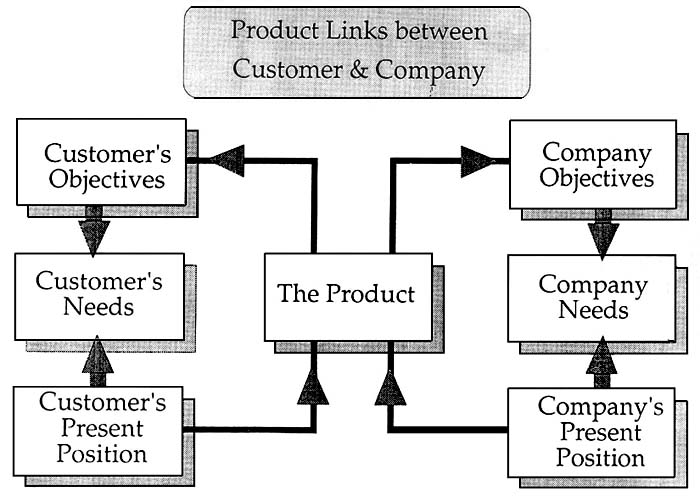
The establishment of the product links between the needs of the customer and the producer are the first elements in this process. (Diagram)
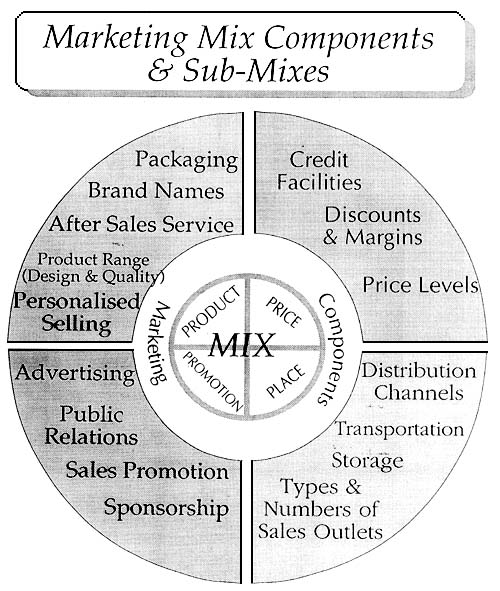
This is furthered by the definition of the “marketing mix” for a given product-the product can be the species or a product derived from whole fish. This is demonstrated in the following diagram (Diagram)/
It is essential that all those who are active in fish sales understand the basics of marketing fish and the success of individual producers and companies depends on this, perhaps even more than technical prowess.
The main principles adopted are
Quality - good quality is the basis of the reference image for live, fresh, frozen and processed products
Packaging - particularly important for processed products, reinforcing the quality image, hygienic and attractive
Product range - an individual species can find markets in a wide number of applications.
Example - trout (Diagram)
Trout
Trout forms a major market estimated at 150 000 tons annum, giving an average annual consumption within the EEC at ± 400 g per person, having an average ex-farm price of 4–5 DK/Kg. There is not too much seasonal variation in consumption. Staggered production throughout Europe and the year-round availability of fry allows year-round availability.
Trout is now presented in a number of different forms (live, fresh, frozen, whole, fillets etc.) Fillets and processed products are the subject of the largest recent market increases resulting from a drop in demand for whole fish. There is also a strong tendency towards the production of pigmented “salmonised” trout, where the pink flesh provides a comparison to salmon.
Live - stocking farms, restocking rivers, lakes, sport fisheries
Fresh, Frozen - wholesale, processors and the HOTECA trade
Processed - e.g. smoked - HORECA, delicatessen, supermarkets etc.
Added Value - e.g. patés, mousses roe - retailers, HORECA
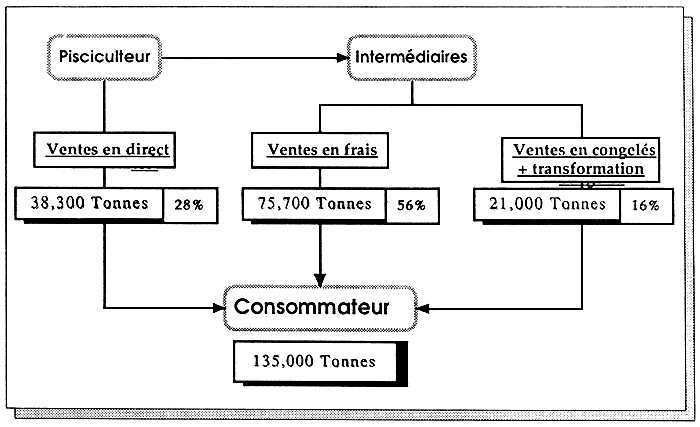
Sales to sport fisheries and direct to the consumer, at the farm gate, account for nearly 30% of the market whereas frozen & smoked fish equal 16% of the total Production is rising slowly (+/- 3–5% per annum) but profitability is stagnating due mainly to lower prices.
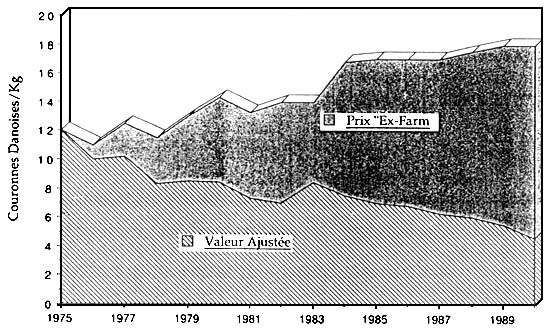
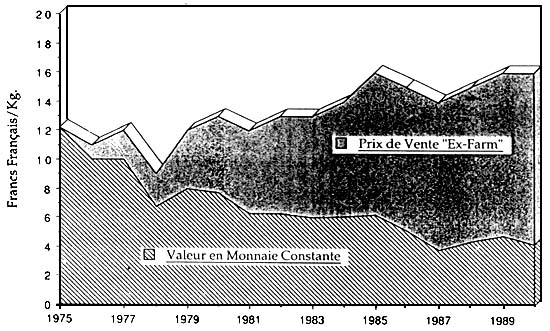
In analysing the evolution of the real price of trout, one can see from the following diagrams that, in nearly all of the countries in the EEC, stagnation or only slight rises can be observed for the sale price of trout; when adjusted for inflation, in nearly all cases, the real value of the product has dropped considerably. A similar situation is observed for the recent history of sea-bass and sea-bream.
This effect is the direct result of market forces and have directed the industry to being more productive and more efficient.
It is evident that the point of sale has a definite impact on the marketing strategy to be adopted and the sales value of the product.
Mention has been made of the effect of supermarkets on prices. Traditionally, a range of intermediaries would be involved in distribution of the product from the farm to the consumer. This is determined by the size of a farm and the manner in which sales are made; grouping of small farms into sales associated or co-operatives has been a solution for resolving marketing and distribution problems encountered by various sectors of the industry.
The overhead costs of bringing aquaculture products to the marketplace are numerous and depend on individual objectives and strategies.
In each case, however, there are creation common objectives:
Primary demand characteristics must be established
Appropriate information must be provided (quality, supply characteristics.)
Advertising should be used to reinforce consumers' appreciation and recognition of the product at varying levels (species, product, brand name.)
Increased acceptance and use of product
Increased number of points of sale
Established image for product and producer/marketing image.
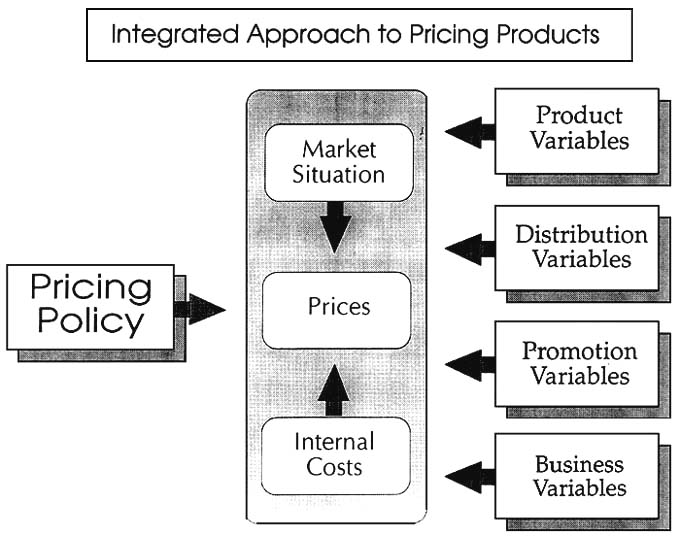
The factors that have to be taken into account are the major variables that effect both the production costs and the market situation (Diagram)- comprehension of these allows the development of an integrated approach to the pricing of the products.
Presentation
Every market study carried out on fish demonstrates the reluctance to eat fish (particularly where children are concerned) because of hones. One of the ways of established new markets is to present a boneless product, as a fillet or as a processed product.
For example, in the USA, all fish can be found as a boneless (25) product. In respect of trout, the head and the tail remain in the presentation but the bones have been removed. The product is sold as it is or with stuffing (Cheese, shrimps etc…)
This sector of development has resulted in the Gabriel company developing a complete range of trout-based products including mousses and patés, mixed presentations with other fish (e.g. smoked trout with salmon and halibut.).
The expansion of the markets for other fish species may well depend on the processor's ability to provide such an innovative approach to the product's marketing.
Product Promotion
It is only recently that the producer has had to rethink his sales strategy - previously what could be produced could be sold. For trout and salmon, this trend has been reserved and each producer now has to have a clear but flexible marketing strategy.
It is clear, for some species, that now it is easier to produce the fish than it is to sell it for a profit. Underestimation of the needs of effective marketing strategies could lead to a potential economic catastrophe for the producer.
The small size of many farms does not enable marketing actions to be done nationally (or even regionally) hence the accent towards the motivation of professional associations to be active to this sector.
Advertising is expensive but generic promotional campaigns and public media support for the products have contributed to keep salmon and trout, as the foremost examples, in the public eye.
The levels of production of the species cited and the constancy of supply allows continual presence in most EEC supermarkets throughout the year. However, the same is not true for nearly all the other species cited.
Product Quality
One cannot talk about marketing without referring to quality. Following the desires of the client, this factor can differ. A fisherman wants a lively fish, the gourmet wants taste and firmness of flesh, the processor wants a good meat/bone ratio.
The producer has to ensure that the quality of his product is that desired by his market.
3.2 The Future
Learning from past experience is properly the best means for predicting future situations.
High prices are generally applied to producers having a limited supply and that are considered to be gourmet products. In aquaculture, this can be reinforced by the difficulties obtained in rearing the species concerned.
Once the supply potential increases and traditional outlets can no longer accommodate the volumes supplied, the product has to find more market outlets and comes into competition with other products.
In addition, to be present in markets that are further afield means significant increases in the coasts of sales. This is refers to marketing and distribution costs but packaging, export-related expenditure and other associated variables have also to be taken into account.
The importance of regional and highly localised markets can also be the difference between success and failure. The Dutch catfish boom that occurred in the 80s banked on acceptance by the local market of the product at a relatively high price. Initial optimism was countered by poor consumer purchases which led to the disappearance of quite a few farms. However, those who have been able to market successfully have identified specific markets for a specific product (fresh, smoked, fillets…) where competition from cheap sources (Far East) is less important. As an example, we were offered 2 tons of catfish fillets from Thailand was made at 2.5 DFL/Kg.
The marketing edge can sometimes be gained by specialisation, a factor that is becoming more important in the success of an individual farm. Such specialisation can mean
It is often said that each farm has to find the niche that makes it different from others and this is becoming more so. The increased number of farms that have ventured into processing, either full or partial, refers the effect that market forces are having on the producer.
The lessons learned indicate that the most sensible approach for the development of aquaculture is to follow the market's requirements. Sometimes these may not be clear but, in each case, the technical assessment must be accompanied by a market study that has to ask and answer the questions-where, how and how much?
Thus the future should be regarded with cautious optimism. The technology for the major species exist and the sales outlets are there. The acceptance of fish as a consumer product has never been better. The reduction of overall margins imposes efficiency and structural support at the farm, forcing the producer to be more aware than ever of marketing conditions. The producer has to become an efficient financial and commercial manager. The future of aquaculture depends as much on recognising this change as on the improvements in rearing fish.
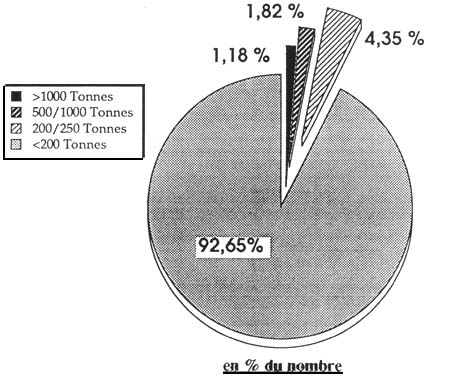
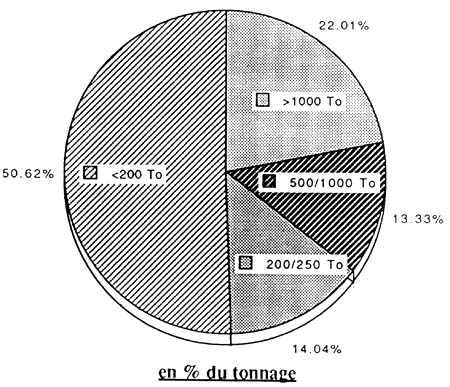
Distribution des pisciculture par nombre d'entreprises et leur taille.
Production évaluée à 143,595 tonnes (1989).
ANNEXE 12
Comparaison de Valeurs de la Truite Portion “Ex-Farm” et ajustées en Monnaie Constante
DANEMARK
FRANCE
Sources : FES et SUSAN SFAW 1986
CAMPAGNES PROMOTIONNELLES BUDGETS
1985
| Pays | Production (tonnes) | Prix au Kg Ex-farm | Chiffre d'affaires Ex-farm | Promotion (écus) | % du C.A (écus) |
| Dk | 21.300 | 2,08 écus | 44.304.000 | 101.899 | 0,23 |
| Fr | 25.000 | 2,13 écus | 53.375.000 | 448.350 | 0,84 |
| RFA | 14.000 | 3,06 écus | 42.875.000 | 72.888 | 0,17 |
| RU | 8.500 | 2,00 écus | 17.008.500 | 83.342 | 0,49 |
| It | 20.000 | 2,10 écus | 42.000.000 | 210.000 | 0,50 |
| Esp | 13.500 | 1,80 écus | 24.300.000 | 75.330 | 0,31 |
Le total du budget “promotion” en 1985 pour les pays cités était 991.809 écus ou 0,45% du chiffre d'affaires.
1989
| Pays | Production (tonnes) | Prix au Kg Ex-farm | Chiffre d'affaires (écus) | Promotion (écus) | % du C.A. (écus) |
| Dk | 25.000 | 2,34 écus | 58.500.000 | 93.600 | 0,16 |
| Fr | 29.000 | 2,24 écus | 64.960.000 | 734.050 | 1,13 |
| RFA | 15.000 | 3,23 écus | 48.510.000 | 97.020 | 0,20 |
| RU | 15.000 | 2,88 écus | 43.263.000 | 276.688 | 0,64 |
| It | 30.000 | 2,45 écus | 73.500.000 | 382.200 | 0,52 |
En 1989, les dépenses pour la promotion étaient de
1.583.558 écus pour les cinq pays cité (0,55%);
par rapport à 1985, ce chiffre a augmenté par 667.079 écus (+73%)
en se référant à une augmentation de la valeur de le production
de 89.171.000 é cus (+44%).
STRUCTURE DU MARCHE DE LA TRUITE
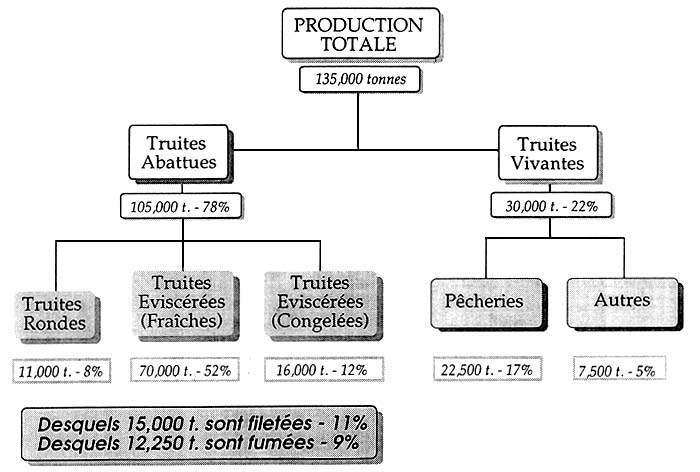
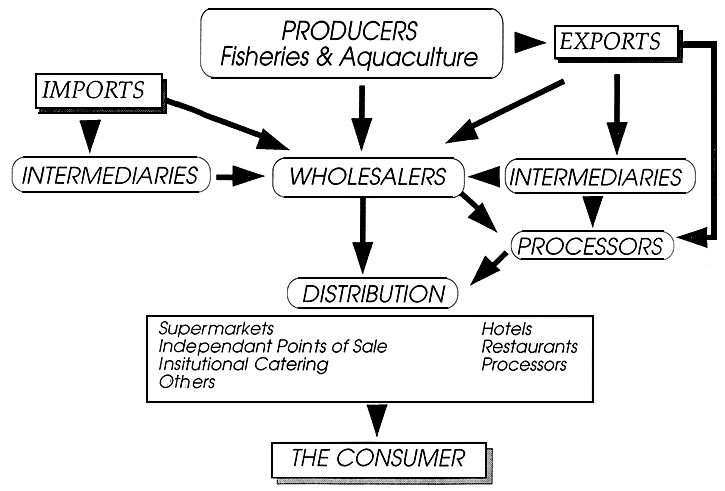
Schéma de la vente par canal de distribution.