


Slide 1
Support to National Forest Assessments
Support to National Forest Resources Assessment
Mohamed Saket
Support to National Forest Assessments
Outline
• What is national forest assessment (nfa)?
• Why we need nfa information
• Gaps in available data
• Approach for nfa
• Examples of nfa

Support to National Forest Assessments
What is national forest assessment (nfa)?
National Forest Assessment: A national process to collect, manage, make available and analyse information on forest resources, their management and use covering the entire country, including also analysis, evaluations and scenario development for use, e.g., in policy processes
National Forest Inventory: The principal activity to collect data within a National Forest Assessment. A NFI is based on systematic field sampling and can be complemented by remote sensing components.
Kotka IV, 2002
Support to National Forest Assessments
Why we need forest information?
Address sustainable development issues at national level
To better
• Preserve forests from degradation and deforestation?
• Control overexploitation and reduce the rate of deforestation?
• Improve productive function?
• Improve protective and environmental functions
• Improve social functions and contribute to food security
• Integrate forest resources in land use systems management
• Reduce environmental impacts of forests?
• Minimize threats to wildlife due to habitat destruction?
Support to National Forest Assessments
Why we need forest information?
-The United Nations Forum on forests, 2000
The Convention on Wetlands (Ramsar Convention), 1971.
Convention on Biological Diversity, CBD 1992.
UN Convention to Combat Desertification, UNCCD, 1994
Convention on International Trade in Endangered Species of Wild Fauna and Flora, CITES 1975
UN Framework Convention on Climate Change, 1992
Support to National Forest Assessments
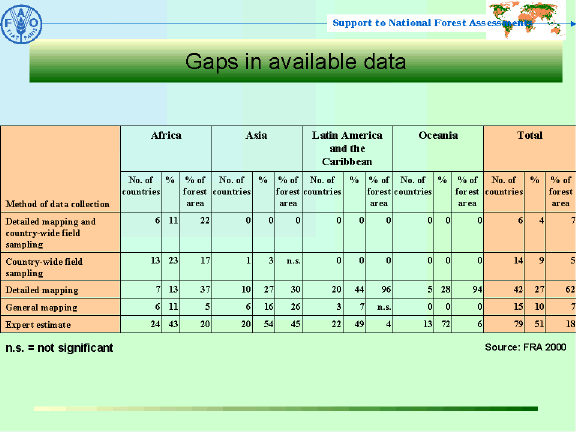
Gaps in available data
Method of data collection
Africa
Asia
Latin America and the Caribbean
Oceania
Total
No. of countries
%
% of forest area
No. of countries
%
% of forest area
No. of countries
%
% of forest area
No. of countries
%
% of forest area
No. of countries
%
% of forest area
Detailed mapping and country-wide field sampling
6
11
22
0
0
0
0
0
0
0
0
0
6
4
7
Country-wide field sampling
13
23
17
1
3
n.s.
0
0
0
0
0
0
14
9
5
Detailed mapping
7
13
37
10
27
30
20
44
96
5
28
94
42
27
62
General mapping
6
11
5
6
16
26
3
7
n.s.
0
0
0
15
10
7
Expert estimate
24
43
20
20
54
45
22
49
4
13
72
6
79
51
18
n.s. = not significant
Source: FRA 2000
Support to National Forest Assessments
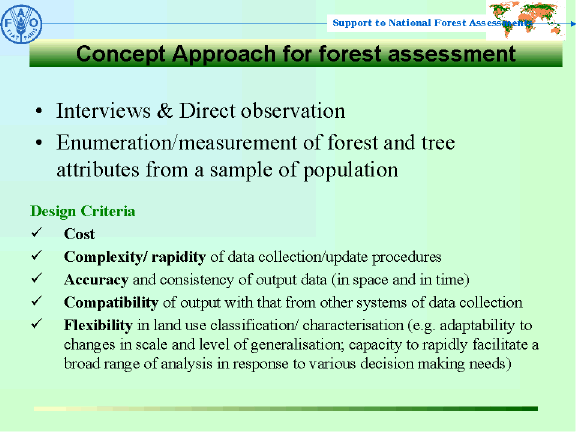
Concept Approach for forest assessment
• Interviews & Direct observation
• Enumeration/measurement of forest and tree attributes from a sample of population
Design Criteria
ü Cost
ü Complexity/ rapidity of data collection/update procedures
ü Accuracy and consistency of output data (in space and in time)
ü Compatibility of output with that from other systems of data collection
ü Flexibility in land use classification/ characterisation (e.g. adaptability to changes in scale and level of generalisation; capacity to rapidly facilitate a broad range of analysis in response to various decision making needs)
Support to National Forest Assessments
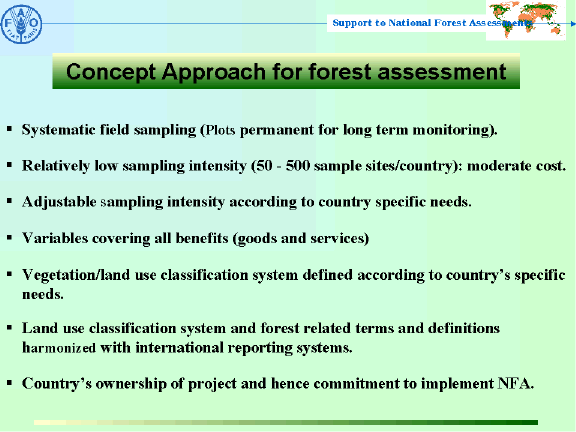
Concept Approach for forest assessment
§Systematic field sampling (Plots permanent for long term monitoring).
§Relatively low sampling intensity (50 - 500 sample sites/country): moderate cost.
§Adjustable sampling intensity according to country specific needs.
§Variables covering all benefits (goods and services)
§Vegetation/land use classification system defined according to country’s specific needs.
§Land use classification system and forest related terms and definitions harmonized with international reporting systems.
§Country’s ownership of project and hence commitment to implement NFA.
Support to National Forest Assessments
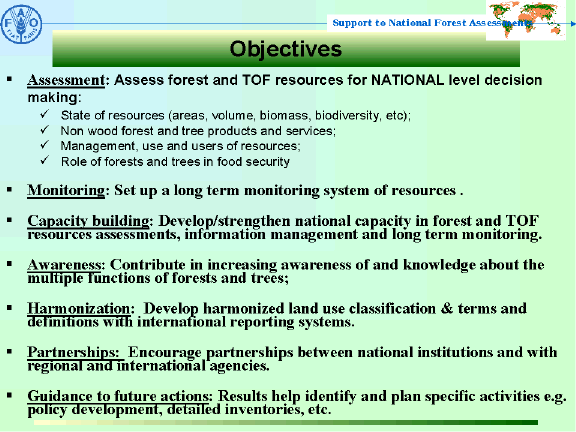
Objectives
§ Assessment: Assess forest and TOF resources for NATIONAL level decision making:
ü State of resources (areas, volume, biomass, biodiversity, etc);
ü Non wood forest and tree products and services;
ü Management, use and users of resources;
ü Role of forests and trees in food security
§ Monitoring: Set up a long term monitoring system of resources .
§ Capacity building: Develop/strengthen national capacity in forest and TOF resources assessments, information management and long term monitoring.
§ Awareness: Contribute in increasing awareness of and knowledge about the multiple functions of forests and trees;
§ Harmonization: Develop harmonized land use classification & terms and definitions with international reporting systems.
§ Partnerships: Encourage partnerships between national institutions and with regional and international agencies.
§ Guidance to future actions: Results help identify and plan specific activities e.g. policy development, detailed inventories, etc.
Slide 10
Support to National Forest Assessments
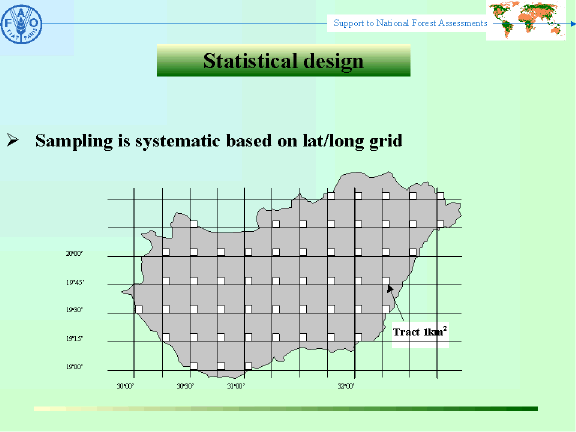
Statistical design
Sampling is systematic based on lat/long grid
20o00’
19o45’
19o30’
19o15’
Tract 1km2
19o00’
30o00’
30o30’
31o00’
32o00’
Slide 11
Support to National Forest Assessments
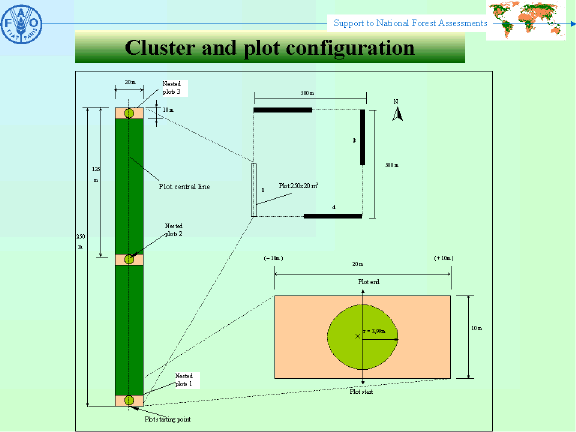
Cluster and plot configuration
20 m
Nested plots 3
500 m
10 m
N
3
125 m
500 m
Plot central line
1
Plot 250x20 m2
4
250 m
Nested plots 2
(− 10m)
20 m
(+ 10m)
Plot end
×
r = 3,99m
10 m
Nested plots 1
Plot starting point
Plot start
Slide 12
Support to National Forest Assessments
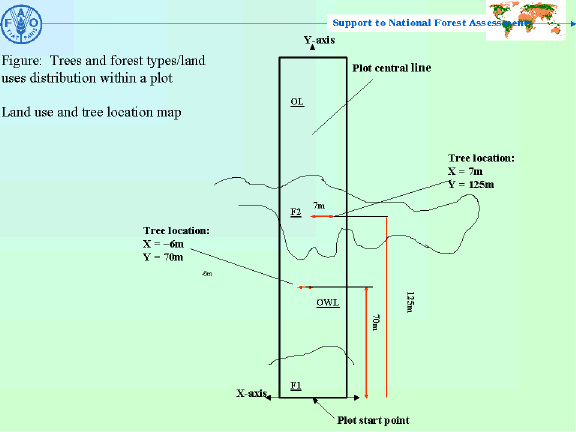
Y-axis
Figure: Trees and forest types/land uses distribution within a plot
Land use and tree location map
Plot central line
OL
Tree location:
X = 7m
Y = 125m
F2
7m
Tree location:
X = −6m
Y = 70m
-6m
70m
125m
OWL
X-axis
F1
Plot start point
Slide 13
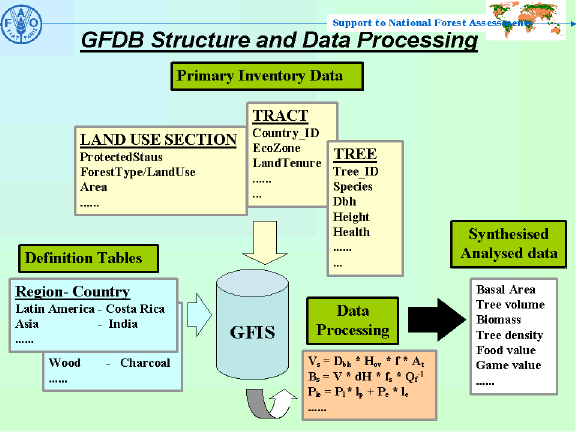
GFDB Structure and Data Processing
Support to National Forest Assessments
Primary Inventory Data
LAND USE SECTION
ProtectedStaus
ForestType/LandUse
Area
......
TRACT
Country_ID
EcoZone
LandTenure
......
...
Definition Tables
TREE
Tree_ID
Species
Dbh
Height
Health
......
...
Synthesised
Analysed data
Region- Country
Latin America - Costa Rica
Asia - India
......
Region- Country
Latin America - Costa Rica
Wood - Charcoal
......
GFIS
Data
Processing
Vs = Dbh * Hov * f * At
Bs = V * dH * fs * Qf-1
Ple = Pl * lp + Pe * le
......
Basal Area
Tree volume
Biomass
Tree density
Food value
Game value
......
Slide 14
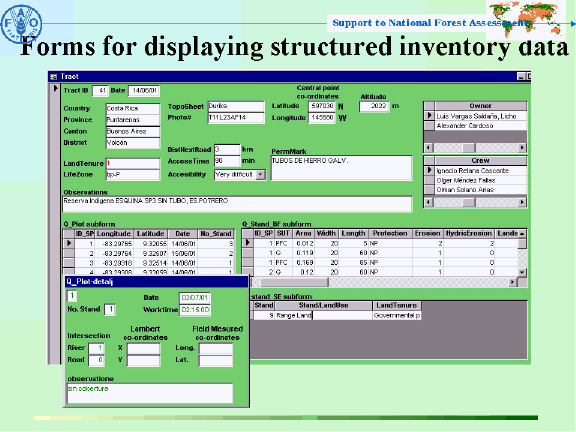
Forms for displaying structured inventory data
Support to National Forest Assessments
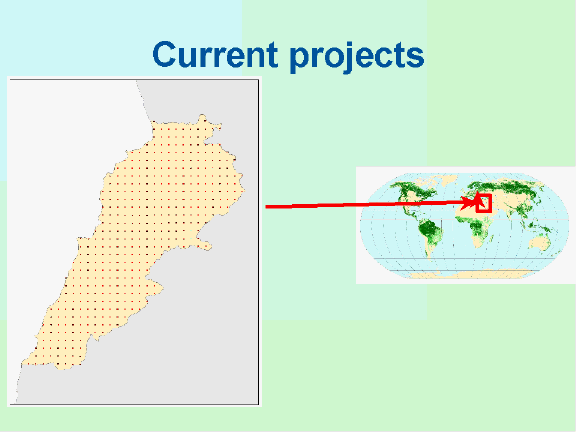
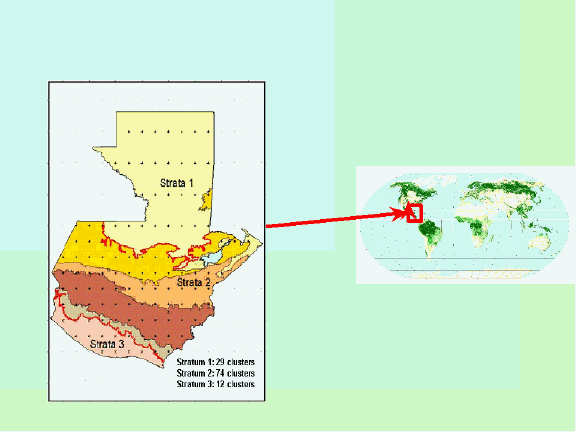
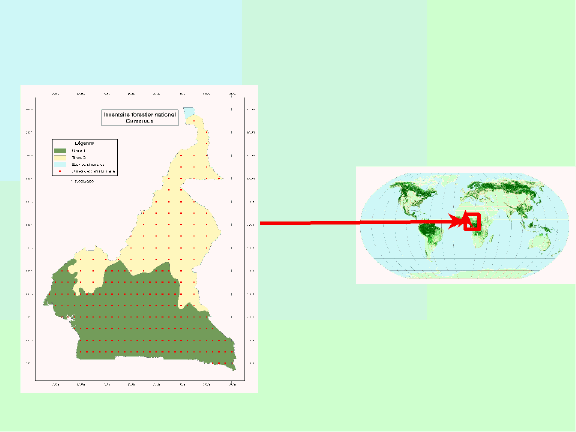
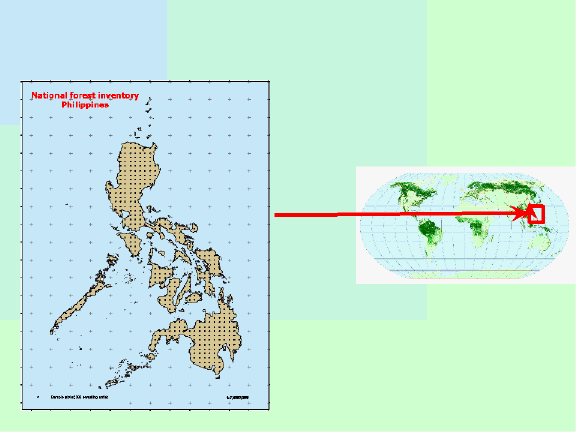
Current projects
Slide 16
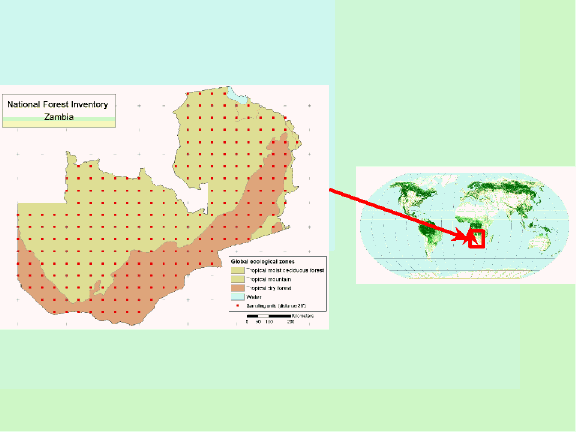
Slide 17
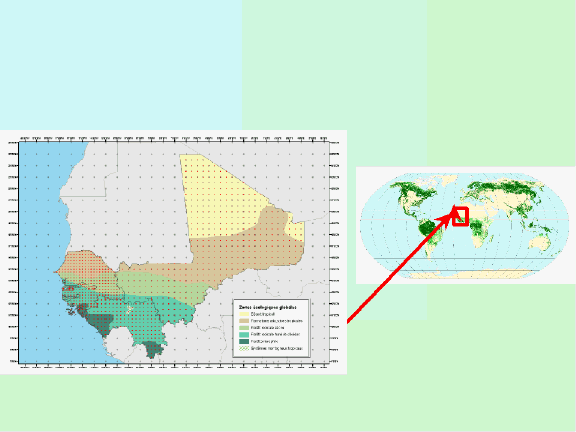
Slide 18
Slide 19
Slide 20
Slide 21

Thank you
