


In Zambia, the project document envisioned an operational partnership between WIN, the small-scale irrigation and water users’ project (SIWUP) and the Luapula integrated household food security and nutrition project (IHFSAN). However, both projects ended in WIN’s second year. Considerable experience had been gained by the two projects, in particular regarding treadle pumps, marketing, staff training in small-scale irrigation, and the organization of community groups. Activities to support sustainable livelihoods in Zambia had, to some extent, been started through the national government and GTZ, and this influenced the development of the WIN district teams.
The WIN project faced numerous challenges in introducing livelihoods diversification activities, including:
A widespread perception of farming as a subsistence, rather than an economic or business, activity.
A lack of clear information on marketing opportunities. Information enables farmers to effectively diversify their crop mix and to alter the production cycle in order to avoid flooding the market. This would increase food security and local incomes.
Overcoming the culture of free handouts and encouraging farmers to invest their own resources in the project’s activities.
Women’s lack of control over assets and incomes. This was particularly important in southern Zambia where polygamy is common.
By April 2004, the chief technical officer (CTA) and the national project staff recognized that the SIWUP PRA did not contain sufficient information about group dynamics and decision-making, land tenure, gender issues, the division of labor, access to assets and marketing processes, and other key issues in local livelihoods. The team thus reviewed the PRA methodology, basing a revised PRA on natural resource management (NRM) and sustainable livelihoods (SL) principles. The results that emerged highlighted the socio-economic constraints that needed to be overcome in order to improve local livelihoods, including HIV/AIDS, gender, the division of labor, and property rights. Major investment was needed in group strengthening, management, leadership and motivation, so the WIN project devoted considerable resources to these activities. Livelihoods diversification activities, therefore, were not introduced until the second phase of the project.
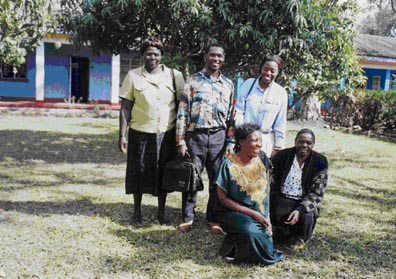
Photo: Choma District WIN team, Zambia, K. Eckman, February 2003
Food preparation and preservation
Seed and plant multiplication
Vegetable production
Home-based fish ponds
Food preparation and preservation
In the Kafue district planning workshop, it was recognized that while food processing and preparation activities had significant market potential, no one was engaging in them.
From April to November 2002, the programme against malnutrition (PAM) and the Ministry of Agriculture and Cooperatives (MACO) provided training for the local groups in food processing and preparation. The aim of the training was to create a better understanding of what constituted a healthy, balanced diet, with a focus on household nutrition, rather than on processing for sale and income-generation.
A shortage of raw materials meant that the WIN groups were unable to carry out market-oriented processing activities. However, many members of the groups were clearly satisfied with learning these new preparation and processing methods and such training could lead to these farmers initiating their own income-generating activities. Hence, these activities have the potential to increase local incomes as well as food security among vulnerable groups in Zambia.
Seed and plant multiplication schemes
Under the GTZ projects, seed multiplication and crop diversification had been identified as of interest to the local communities, and such activities had subsequently been initiated. The Choma district WIN team assessed the potential for these activities, carrying out consultative discussions with key local stakeholders.
Initially, WIN consulted PAM staff to discuss collaboration in expanding farmers’ seed multiplication and crop diversification activities, which led to PAM staff joining the national WIN steering committee. As PAM had been working in the propagation of sweet potato vines, they were in a position to provide WIN farmers with inputs and training, while the WIN teams focused on farmers’ group strengthening. Training was thus undertaken in July and August 2001. Seed multiplication activities were supported by the district subject matter specialist, who maintained contact with a number of agri-businesses at the project sites.
In Choma, the district WIN team initiated a successful seed multiplication scheme, by which farmers were identified and trained to produce high quality seeds for sale to other farmers. This proved to be an important step as southern Zambia was entering a period of severe drought, with seeds not easily available.
Diversified vegetable production by WIN groups
The Choma district workshop, in September 2001, identified several diversification activities, including value-added crop production and post-harvest technologies, which were of interest to local farmers. Key constraints were preventing farmers from entering local markets, however, including a lack of marketing skills, transport problems, government pricing policies, and technical knowledge. The WIN project, therefore, focused on capacity building of farmers in marketing skills, group leadership and gender sensitization.
The objective of the training was to equip farmers to negotiate reasonable prices from buyers and to develop the skills to set the price of their produce. In carrying out market research, farmers were taught to be good listeners, to understand buyer and consumer preferences, to study competitor’s businesses, and to maintain and check records. Costing was also covered, with a focus on calculating direct and indirect costs for determining the sales price. This can help farmers to reduce and control costs, improving future planning and decision-making[10].
Key measures of success identified by the Choma groups were:
- Post-harvest wastage reduced from 79% to 65% in three months
- Sales improved (increase from 15 to 20 bags of maize per hectare sold in three months)
- Market glutting avoided by introducing three new crops in Gamela in the next year
- Number of market players in Choma increased from 20 to 30 in three months
In Kafue, the interest groups were already trained in vegetable production, market research and price negotiation skills. The main objective was sensitization of participants to the availability of market opportunities. The training aimed to enable farmers to identify the vast marketing outlets that exist and to be aware of market conditions in planning their production activities. Savings mobilization was also included in order to encourage farmers to build assets.
Traditionally, marketing in Zambia has been undertaken on an "each for himself", rather than group, basis. Key constraints facing women have included:
Transport-as women often have to walk long distances to markets on main roads, with their produce on their heads
Quantities-these tend to be small, so sourcing markets is problematic
Social difficulties arise when women leave their homesteads alone, which means that a number of women must be ready at the same time to travel to markets[11].
As such, women’s empowerment and effective utilization of available markets is limited.
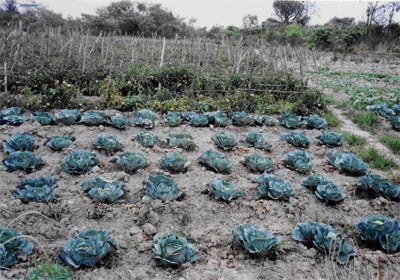
Photo: Cabbages grown through the WIN project, Zambia, K. Eckman, February 2003
Farmers must target markets where they can receive the best price for their produce, and some in Chipapa, Chilolo and Choma are already doing this. Women in Siakwafenda report a high demand from middlemen, noting that they can sell everything they transport to market. Naturally, prices vary according to season and abundance.
In spite of the WIN interventions, most income in the target communities continues to come from agricultural production. In all the sites, however, increased vegetable production led to increased incomes. At the 10 ha Chipapa garden, eleven members have, so far, managed to save K350.000 (US$74). Though difficult to verify, members appear to generate enough income to cover the costs of activities such as land preparation and seed purchase, as well as health and school fees[12]. Furthermore, the WIN interventions may have enabled farmers in the southern province to endure a two-year drought, through teaching them conservation farming techniques and the benefits of diversifying production.
Home-based fish ponds for local market production
In Mwense, the WIN team identified local groups who had been involved in the IHFSAN project, and a participatory planning workshop was organized in 2002, which involved key local stakeholders.
The Mwense East farmers’ group noted that they had identified weir construction and fish pond development ideas themselves in 1986. A total of twenty farmers were trained by the district team in fish pond pegging and construction. Sixteen 20 x 20 meter ponds were constructed and stocked in 2002 for the specific purpose of income generation. The ponds are hand-dug, and take approximately two weeks to construct. Ponds are constructed at the homestead, and are done on a family (rather than group) basis. Tilapia fingerlings were sold by the Peace Corps to farmers for 100 kwacha (US$ 0.02) per fingerling (each pond is stocked with 200 fingerlings). By May 2003 eleven of the ponds were completed and stocked, and farmers expected to harvest and sell the fish in approximately six months. They would be transported by bicycle to town markets.
The WIN team also trained and provide key support to the Mwense groups in irrigation, livestock raising and other activities.
Facilitating links between farmers and contractor out-grower schemes
Microfinance activities
Business skills development
Facilitating links between farmers and contractor out-grower schemes
The WIN PRA assessed the presence and capacity of the private sector in the project sites, interest and involvement in out-grower schemes, and local interest in growing paprika under rain-fed and integrated production methods, noting that farmers also needed training so as to enable them to better negotiate with commercial maize and vegetable buyers. Contact was then made to link the farmers to private agri-businesses, which led to the initiating of production contracts. The agri-businesses were then able to deal directly with the farmers and to provide inputs and extensions to those interested in growing paprika. Other farmers began to produce winter maize, tomatoes and cowpeas under out-grower contracts.
Microfinance
The depth of rural poverty in Zambia, particularly among women, is a major constraint to organizing microfinance schemes. Farmers need to be able to access credit[13] in order to adopt new technologies, acquire productive assets and initiate IGAs. Zambia’s history of government subsidies for agricultural inputs has led to a culture of dependency, with NGOs and development agencies providing credit and grants to mitigate the sudden withdrawal of the subsidies in the 1990s. However, many farmers have to borrow money to repay loans which leads them further into indebtedness. Thus, conventional credit schemes must be linked to community-based resource mobilization efforts if they are to be sustainable[14].
The WIN project document provided for financial support to economic activities through local financial institutions and, in their absence, revolving funds or credit lines.
The WIN Project Document provided for financial support for economic activities to be promoted by the project through local financial institutions or, in their absence, through revolving funds or credit lines. However, no clear distinction was made between commercial loans, grants and subsidized loans or revolving funds, and there was little detail of how micro-finance was to be organized. It was noted that US$7.000 (approx. K19 million) was to be made available per site, to be repaid to a women’s community fund, to provide credit for future beneficiaries. However, it is unrealistic to have such a large sum of money managed by any group without training, long-term experience and a village bank governed by clear rules and regulations[15].
Experience from IFHSAN and other projects showed that credit tends not to reach the poorest members of the community, instead going to the better-off. The provision and management of rural credit requires phased and long-term support, beginning with the mobilization of local savings. The target group may even need preparation to become grant-worthy. This was precisely the purpose of the micro-enterprise projects under IFHSAN. It was recommended that financial support be redirected to the resource poor, nutritionally vulnerable and food insecure households on a grant basis rather than as credit through the implementation of micro-projects focused on improvement of nutrition and food security, with clear community contributions and a plan for ensuring long term sustainability[16].
The PRAs had identified lack of financial resources, lack of information on market trends, and lack of technical knowledge about finance as reasons for insufficient investment by farmers in agricultural inputs. Of these, lack of productive resources was noted as the most difficult obstacle for farmers[17]. A brief microfinance consultancy mission[18] noted that training in business, organizational and management skills was needed for the WIN groups, and that small-scale savings would help to jump-start income-generating activities. Discussions were initiated with Micro Bankers Trust to identify means of group savings compatible with existing Zambian infrastructures.
WIN-Zambia examined means of providing treadle pumps on credit to farmers. The national coordinator, George Phiri, identified Kenyan Super Money-Maker Plus treadle pumps as more cost-effective and easier to use by women farmers. In 2002, WIN obtained a small number of Super Money Maker treadle pumps to conduct a feasibility study through the National University of Zambia, and to offer them on a trial basis for farmers wishing to use credit. The study confirmed the economic feasibility of Money Maker pumps over other available pumps.
The district workshops decided, in March 2002, that microfinance was not a priority as farmers had already received training from other sources and the WIN team were already under pressure with on-going production schedules[19]. However, some training of women farmers at Kafue took place in 2003, focusing on identification of marketing opportunities to assist farmers in planning production and marketing strategies for profitable returns. Ninety Super Money Makers were made available on loan to the groups with the hope of creating a revolving fund[20]. These arrangements have been continued through the African Development Bank (ADB)-funded smallholder irrigation project (SIP), which has absorbed many of the WIN project elements.
Business skills development
The PRAs noted that the capacity of the groups in Gamela and Siafakwenda to manage their IGAs needed strengthening. Training was therefore organized in collaboration with partners, and other NGOs operating in the area were contacted. Then, the type and availability of IGA training materials was assessed[21]. They recognized that capacity building of the groups was at least as important as the technical training provided to farmers by WIN[22].
The Zambian NGO Women for Change (WfC) was contracted to carry out gender sensitization, and training in leadership/supervisory management. Eventually, WfC conducted leadership training at Chipapa, Funzwe, Siafakwenda, and Gamela, and training assessments were done at new sites in Choma. The main topics were leadership, group decision processes, record keeping, costs of production, marketing, savings, and entrepreneurship. As a result of this management training, the groups gained the confidence to start up IGAs, mainly in diversified crop production. Several groups sunk hand-dug wells and began to produce high-value crops for market, using treadle pump irrigation. Another group extended a canal to produce a variety of seedlings and vegetables for market. New land was brought into production that had not been previously cultivated, and was controlled by the women’s group.
The diversification activities undertaken in Zambia emerged as a result of a multi-disciplinary and participative process which included stakeholders at all levels. The project’s key focus was on water resources and food security and so income-generating activities were not heavily promoted. Hence, many such activities were still in their formative stages when the project was terminated in December 2003. The sustainability of these activities in the long-term is unknown as yet. However, some good practices which fostered the emergence of IGAs under WIN can be identified:
Diversified vegetable production increased households incomes, improved nutrition and provided new links to local markets, enabling some households to move beyond subsistence level.
Fish production increased the availability of protein at household level, and provided participants with a high value product to sell at local markets.
Multiplication of seed and planning materials ensured that households had access to quality inputs even during serious drought, allowing them to harvest good quality vegetable crops.
Food preservation and post-harvest value-added processing contributed to improved nutrition and had potential for sale in local markets.
There are a number of reasons that these methods worked:
The iterative PRA process, facilitated by experienced staff, yielded a baseline database and understanding of local gender, labor and property relations linked to production systems.
Community action planning enabled the project to identify an IGA which the women had the capacity to invest in, and to identify crops with market potential.
Groups were able to plan and budget for the future and to keep basic records as a result of empowerment and strengthening activities in business, marketing, leadership skills and record keeping.
Technical training in various production elements increased participants’ knowledge base and enabled them to try new crops and to harvest good quality vegetables acceptable at local markets.
The increased ability of groups to create commonly-held assets (modest savings and new land opened up to production) created an opportunity to acquire small-scale irrigation technologies on a group basis, possible reducing the likelihood of confiscation by their husbands.
Diversification of production (fish and vegetables) enabled producers to enter the market with new products, attract buyers, and avoid seasonal gluts.
Community seedling gardens ensured that all households had access to good quality planting materials all year round, reducing risk and building a sense of community inter-dependence.
The provision of simple micro-credit, enabling farmers to purchase treadle pumps.
Feasibility study of treadle pump models and an experimental shaduf helped to identify cost-effective and labor-conserving technologies, and to ensure that the pumps were gender appropriate.
Contacts facilitated with agro-businesses needing raw materials led to guaranteed buyers, and better knowledge of prices and market demands.
Collaboration with partners brought strong synergies, built on previous community activities and avoided duplication.
District workshops with all stakeholders fostered a sense of mutual support, clarified respective roles and responsibilities and built an awareness of the utility of joint action planning.
Farmer exchange visits provided a hands-on introduction for groups to directly visualize the IGAs and production techniques introduced at other sites, and created a sense of friendly competition between WIN groups.
WIN-Zambia’s diversified project steering committee brought considerable real-world business and marketing expertise to project staff.
The income-generating activities undertaken through WIN were not all successful, and below is an overview of some of these:
Off-farm sales were very limited in the first year of launching the vegetable operations.
Control of IGA revenues and technologies (e.g. treadle pumps) was uncertain.
The greater involvement of women in the management of SIWUP irrigation schemes did not occur.
Preserved and processed foods were mainly consumed at the subsistence level and did not reach the marketplace.
The outcome and sustainability of the IGAs are uncertain due to the incipient nature of the groups and their activities.
A limited impact in microfinance
Poor linkage and integration of local entrepreneurial groups and district teams with decentralized government structures.
There are a number of reasons which can explain the lack of success of these activities:
WIN-Zambia’s focus was primarily on household food security in the context of protracted drought and widespread HIV/AIDS infection, rather than on LDED.
There was a lack of LDED/IGA expertise on the national and district WIN teams.
The national teams were unaware of the normative work in LDED at FAO and other organizations.
At the beginning, groups were still learning productive and marketing skills and had little experience.
A result of prevailing socio-economic conditions, property rights and gender relations.
Gender sensitization training was attended mainly be women, with few male community members taking part.
There were severe pre-existing problems with SIWUP design and implementation, as well as a poor reception on the part of SIWUP management given to WIN.
WIN-Zambia’s intent was to target HIV-AIDS affected households, with improved nutrition and "power foods" for PLWA, rather than as an IGA.
No prior financial analysis or marketing strategy was done.
WIN’s project cycle and timeframe were too short to foster people-centered, participatory activities and precluded further iterative support to producer groups.
A lack of a bridging phase and a failure to identify funding for further work effectively ended WIN’s presence at the project sites.
The national project coordinator decided that microfinance was not a major focus of WIN-Zambia, except for credit extended to purchase treadle pumps.
There was no microfinance expertise on the national WIN team.
There is an inadequate microfinance infrastructure in Zambia.
This was not a priority of the steering committee or of the national WIN team.
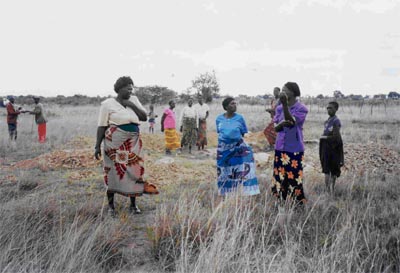
Photo: Women farmers in Siakafwenda, Zambia, K. Eckman, February 2003
|
[10] WIN-Zambia, December
2003 WIN-Zambia 2003 Annual Report Lusaka: FAO and MAFF [11] Imbwae, E. WIN-Zambia PRA, Extension and Gender Report December 2003:15 (Lusaka: FAO) [12] WIN-Zambia, Report of WIN-Zambia National Summative Workshop November 2003: 6 (Lusaka: FAO) [13] E. Chilolo, CTA Field Notes II, 1998-1999 (Rome: FAO) [14] Rim, Ji-Yeun Draft Recommendations, WIN-Zambia, 2002 (Lusaka: FAO) [15] Callens, K. Back-to-Office Report, Zambia 1999 (Rome: FAO) [16] Callens, 1999, ibid. [17] Rim, Ji-Yeun, 2002, ibid. [18] Rim, Ji-Yeun, 2002, ibid. [19] Bakker, M. Report of the Kafue District Workshop, March 2002; April 2002 (Kafue: FAO WIN Project) [20] WIN-Zambia, WIN-Zambia 2003 Annual Report, December 2003 (Lusaka: FAO and MAFF) [21] Bakker, M. Handing Over Notes, April 2001 (Lusaka: FAO) [22] Imbwae, E. Personal Communication, 27.05.2001 |
