


The complexity of the WIN design and its four different project objectives resulted in three very different national experiences, as each country team used somewhat different strategies. Only one of the objectives related specifically to livelihoods diversification and its design was weak. Thus, WIN’s LDED activities were under-emphasized and poorly supported administratively. It is, therefore, all the more notable that LDED activities did emerge at the local level. This section will explore some of the factors that may have contributed to or hindered the emergence of LDED activities, comparing the experiences in the three countries.
6.1.1 Participation
a) Using People-Centered Approaches: WIN highlights the importance of local people recognizing that change can only come from within their communities. Local people must be seen as real partners at every stage of the development process. Thus, it is clear that WIN’s multi-disciplinary approach works well as a demand-driven process. Ideas and methodologies imposed by FAO HQ or other staff often result in confusion and resentment among stakeholders.
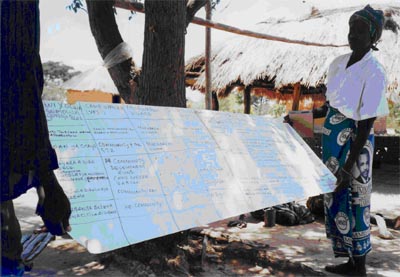
Photo: Planning in Mufwafwi, Zambia, WIN project, K. Eckman, 2002
WIN established and strengthened local groups, empowering them through a range of training activities. These groups are now effectively carrying out their own local action plans, particularly in Nepal and Zambia. Multi-disciplinary approaches require a great deal of flexibility in training methods and locations. These projects require more time than conventional projects but can have significant positive outcomes as regards local capacities for self-help.
From WIN it is clear that the impacts of diversification activities may not emerge until the second year of the project, and may not become fully apparent until the third or fourth year. It takes time for groups to mature, to learn technical and business methods, to assert control and to have a sense of genuine ownership over their activities. When this occurs, however, the groups become agents for change in their community. Thus, WIN’s experience has shown that the duration of future livelihood diversification projects should be between three and four years to ensure long-lasting and positive outcomes.
In Nepal, a key lesson was that these types of projects facilitate communication and sharing. Through this process it is possible to explore all existing local resources-human, social, natural, financial and physical-and to mobilize them to bring the maximum benefit to the community.
b) Targeting: An inclusive strategy was observed to have the most positive outcome. WIN-Nepal and WIN-Zambia intentionally targeted the most vulnerable communities and ethnic minorities, including HIV and AIDS-affected households, Dalits, freed Kamayats (laborers released from bondage) and minority Tharn women and girls. The benefits of development are available to these groups only if they are specifically targeted at them.
National staff consulted available data, including VAM data from WHO, in order to better inform the project’s activities. District team members with knowledge of "pockets of poverty" and local NGOs were also consulted. The most marginalized of households were best identified with the active participation of the local community, and using locally-derived criteria.
Furthermore, the Zambian and Nepali teams diverged from the project document in order to reach those households within irrigation schemes but lacking access to productive resources or to reach groups not directly associated with irrigation but with critical water needs. In both countries, marginalized women were specifically targeted as economic actors. This allowed previously disenfranchised women to start and manage their own IGAs. While the enterprises are still in their formative stages, further investments in training for business and management skills, as well as in long-term monitoring, are needed.
c) Iterative PRA methods and Community Action Plans: Each country used variations of participatory assessment and community action planning methods, including Farmer Field Schools (FFS), seasonal planning, nutritional education, gender sensitization, gender action planning, and community action planning. In the case of Cambodia, the identification of income-generating activities was not done with the active involvement of the local communities in decision-making, planning or management. In contrast, in Nepal and Zambia the methods and tools were adapted.
In these countries, facilitators avoided a "shopping list" approach to PRA and encouraged local stakeholders to reach a consensus about, and to take responsibility for, the next steps. PRA was viewed as a first step in an iterative planning process leading to facilitated problem-solving, consensus-building, action planning and capacity building. PRAs developed differently in each case but broadly followed the sequence illustrated below:
|
WIN’S PARTICIPATORY PROCESS Formation and training of multidisciplinary district WIN teams PRA training (local stakeholders) PRA field work Build local consensus about problems and
opportunities Community action planning, gender action planning, and/or farmer seasonal planning Gender sensitisation Selection of LDED activity by participants (in Zambia, the selection of an economic "interest" and formation of "interest groups") Assessment of feasibility of the LDED activity or "interest" Assessment of training needs Preparation of district work plans Preparation of district monitoring frameworks and indicators with local stakeholders |
d) Group Formation and Strengthening: In Zambia and Nepal, the majority of LDED activities were organized on a group basis. WIN-Nepal worked with existing Water Users Associations (WUAs) in irrigation schemes, but also with marginalized women’s groups without access to irrigation. Likewise, both country teams took a measured, step-by-step approach to group formation and strengthening, working with both old and new groups. They invested a significant portion of resources in building the capacities of the groups before beginning IGAs.
WIN-Cambodia worked mainly with the SPFS water user associations, but also targeted numerous individual households, often with free input distributions (latrines, biogas digesters, livestock, seeds, fertilizer, etc). Better-off farmers were targeted here and they benefited from these inputs, intended as both demonstration and motivation. However, this strategy was not proven to be effective.
e) Social Mobilizers: The social mobilizers trained by WIN-Nepal have empowered other women to be better organized and to access productive resources through the district-level service providers, and are a useful model for other LDED initiatives. Social mobilizers have been crucial and are the backbone of organizational efforts at the group level[35]. Capacity building of the social mobilizers was first done by the women’s development officer (WDO), the WIN district teams, and partnering NGOs.
Social mobilizers have assisted in the formation of thirteen new women’s groups in Rupandehi district, and in organizing group meetings among the existing 75 women’s groups. They have participated in conveying extension messages, monitoring, and in facilitating group discussions. Some of the discussions have dealt with the improvement of livelihoods and social conditions, including HIV-AIDS, violence against women, legal rights, and other issues. In addition, the mobilizers and WDOs provided literacy and numeracy training to the groups to enhance their ability to calculate prices and expenses.
f) Exchange Visits: All three countries organized exchange visits for the groups to share experiences and production methods, and to motivate new groups into beginning IGAs. These were effective in demonstrating newly introduced practices, and were greatly valued by the participants.
6.1.2 Diversification and Enterprise Development
WIN was not originally conceived of as an LDED project, and its operational dependence on pre-existing larger projects has meant that early activities did not have a specific LDED focus. The hybrid project document imposed a number of complexities and rigidities, which were unfavorable to LDED activities. Inter-disciplinary, people-centered projects, such as WIN, are better suited to project designs and documents that encourage flexible interpretation, work plans and budgets.
a) LDED Entry-Point: WIN’s entry-point was to be the already existing irrigation or SPFS projects using the SISTAPE methodology. However, SISTAPE had not evolved to accommodate the dimensions of sustainable livelihoods and diversification, although it had incorporated gender issues. Furthermore, the Zambian and Nepali teams faced difficulties in adapting SISTAPE to emerging income-generating activities and to the newly formulated government decentralization processes. There were serious design, management and implementation problems in OFWM and SIWUP, which hindered the introduction of WIN at these sites. In Zambia and Nepal, WIN eventually found alternative entry-points through partnership with NGOs.
b) Identification of LDED Activities: The identification of diversification activities was largely dependant on the strategies and influences of WIN’s in-country partners. As has become clear in the previous sections, there were significant variations in the ways in which LDED activities were initiated in the three countries.
In Cambodia, IGAs were primarily an extension of SPFS activities. Although PRAs were carried out, the identification of activities was undertaken by the national project management. Other activities, such as food processing and storage, mushroom production and agro-forestry, were suggested by international consultants, core team members and the CTA. Most were never taken up as there was no perceived need for them, although food processing was introduced at the instigation of the national coordinator.
The LDED activities in Zambia and Nepal emerged through a bottom-up, facilitated problem-solving process at the local level. There were dynamic group discussions and exchanges, with a key role played by the district teams and key NGO partners. As such, the source of IGAs was the local community.
The means of distributing inputs heavily impacted on the sustainability of the activities. In Cambodia, for example, it is clear that the distribution of inputs, such as seeds, livestock, fertilizer and equipment, created disincentives for participants to invest their own time and resources into the IGAs. As one participant noted: "Why should I spend my own time and money to build a latrine, when WIN will build one for me?"
c) Type of LDED Activity: In all three countries, the focus was on the diversification of agricultural production, and particularly the introduction of vegetables. This was intended to promote a more diverse diet and, thus, improve nutrition among the local population. A side-effect was that excess produce could be sold for income generation. Livestock was promoted in Nepal and Cambodia, as a means of diversifying the household farming system. In Nepal, livestock had multiple benefits, adding protein to diets, building household productive assets, and teaching marketing skills. In Zambia, WIN promoted fish pond construction and fish farming to diversify diets and to generate income through sales of fish products.
Seed multiplication was also introduced in Zambia and Nepal, with community gardens allowing vulnerable groups to access high quality materials, such as seeds, sweet potato cuttings, and vegetable seedlings. Trained local volunteer technicians tended to the gardens. Furthermore, these gardens were seen as an insurance policy for those households who might temporarily leave their homes during periods of insecurity or drought.
Food preparation and processing, and other value-added activities, were initiated in Cambodia and Zambia. District-based food processing training was undertaken in Cambodia, while in Zambia the focus was on preparing high-energy foods for HIV and AIDS-affected households.
d) Determining Feasibility of LDED Activities: PRAs and community action planning allowed local groups to identify IGAs and products which they regarded as having local market potential, and in which they were willing to invest resources. However, there were no proper economic feasibility studies carried out on the products, nor were there detailed marketing plans drawn up. This was largely due to a lack of budgetary support and expertise for such activities. In Nepal and Zambia, assessing feasibility was generally a matter of informal discussion between stakeholders and partner NGOs.
In some cases, feasibility studies were carried out on specific technologies. For example:
University of Zambia-TDAU’s study of treadle pumps and the shaduf.
IDE’s study of treadle pumps in Nepal.
FAO’s food processing mission in Cambodia.
Some key gaps in LDED activities included:
An absence of backstopping support in feasibility, marketing and other business aspects.
A lack of focus on business management.
Only in the case of Zambia, where the team facilitated contracts between local farmers and agri-businesses, did the WIN project foster linkages with the private sector.
e) Identifying Support for Potential LDED Activities: In Nepal and Zambia, the teams built on the experience of their partners, GTZ and WfC, in identifying products with a potential in local markets. These organizations also assisted in providing some training. The Zambian steering committee did include business and marketing professionals who provided some advice, however, in all three countries there was inadequate technical support for the activities which emerged. There needs to be a greater emphasis on identifying expertise at local, national, regional and international levels.
At the group level, there was some limited support provided by the project in the form of micro-credit to purchase micro-irrigation equipment, with the groups expected to cover operation and maintenance costs. In Nepal, one volunteer member per group was trained in equipment maintenance and repair to ensure sustainable use of the technology. This was done despite the recommendation of the mid-term evaluation not to use WIN resources for irrigation equipment or maintenance.
6.1.3 Multi-disciplinary Approach
WIN district teams were made up of government extension staff from various line ministries, who worked closely with local partners, and were supported by the WIN national teams. The exact size and composition of the teams depended on government staff appointments. In Nepal and Zambia, effective teams emerged that were able to support, facilitate and backstop the local groups in a variety of activities, with communication across government line ministries at district level greatly improved.
In all cases, the district teams underwent training in participatory methodologies, group facilitation, and gender sensitization. They organized exchange visits, as well as providing technical information and training activities. Over time, the knowledge, confidence, and capacity of the local groups improved, as a result of the support of the district teams.
6.1.4 Capacity Building
In all three countries, WIN organized and implemented comprehensive multi-disciplinary training activities, which varied according to local need and experience[36].
There were opportunities for professional growth through comprehensive training programs, study tours, exchange visits, dialogues with international consultants, and direct interaction between the three WIN teams. The two international WIN conferences provided a unique opportunity and forum for the teams to exchange ideas and information.
WIN’s investments in capacity building at all levels have meant that at least some structure is in place to continue and to sustain LDED activities. Most WIN groups have been able to mobilize resources and build group assets (such as savings and some technologies) which are shared among group members. The group structures that were strengthened through WIN and WIN’s partners remain in place, and group activities are still ongoing. Many of these groups and activities, however, are still in the formative stages and need ongoing technical backstopping and further training. Marketing and small business skill development for most groups remains a serious challenge.
a) Assessing Training Needs: WIN-Cambodia’s experience demonstrated that there was a general lack of understanding of financial planning, management and bookkeeping among the participants. The national team lacked a clear vision as to how to initiate and promote LDED activities and how to support local groups in the effective management of their own IGAs. No training needs assessment was carried out for the SISTAPE and LDED activities undertaken under WIN-Cambodia. Farmers often attended the same training sessions over and over, in order to receive free inputs.
In Nepal and Zambia, however, training needs assessments were carried out, which shaped all training activities to the needs of the different groups. This resulted in the trainees applying their newly-acquired knowledge in practice.
Overall, there were hundreds of training activities carried out by WIN and its partners in the three countries. More details on these activities can be found in the annual progress reports, as well as in the numerous training documents and curricula prepared by the national teams.
b) Asset Creation: WIN enabled many groups and households to increase their productive assets, including:
Improved access to capital through group savings.
In Nepal and Zambia, access to land and irrigation for groups who previously did not have access.
The building of social capital through the formation and strengthening of effective producer groups.
Increased capacities to initiate and carry-out a variety of income-generating and diversification activities (particularly in Nepal and Zambia).
Although these gains were modest, they did occur in a variety of economic and cultural settings.
WIN assisted local groups in building productive assets, such as livestock, particularly in Nepal. WIN-Nepal combined limited "gift exchanges" with a clear expectation that these were to benefit the entire community over time, not just the better-off farmers. In contrast, WIN-Cambodia’s emphasis on free inputs acted as a disincentive for farmers to invest their own resources in improving their livelihoods.
c) Microfinance: The provision of microfinance was foreseen in the WIN project document, but without any details as to what form this might take. Although all three countries did promote some form of microfinance activity, the results tended to be modest at best.
Livestock banking, whereby animals were given to participants with offspring then passed on to other participants, was undertaken in Cambodia and Nepal.
In Zambia and Nepal, groups’ savings were promoted as a means to build group assets for investment in future income-generating activities. In both countries, considerable resources were invested in group strengthening, leadership and management, as well as training in small business development skills, record keeping, marketing, and other areas.
Nevertheless, WIN had only limited success in microfinance, largely due to a lack of staff experience in the area. Only WIN-Cambodia had a team member with experience in microfinance.
6.1.5 Partnership Building
All three WIN countries learned the importance of partnerships, especially with NGOs, national institutions, and other organizations already working in the areas where WIN had a limited capacity. In both Zambia and Nepal, the teams developed a good working relationship with multiple agencies. WIN-Nepal developed a productive cost-effective and job-sharing relationship with GTZ, employing its lead consultant on a 50: 50 basis with GTZ.
As evidenced by WIN’s experience, partnerships with such organizations can lead to greater synergies and to more sustainable outcomes. There was little or no organizational conflict or misunderstanding between the collaborating partners in any of the WIN sites, probably because the coordinating line industries were closely involved in implementation.
Collaborating with other projects also led to strong synergies among partners, particularly as regards gender issues. As yet, these synergies have not led to a strong sense of collaboration in LDED activities.
One drawback of partnership is that it can often be difficult to separate out the impacts of particular interventions when multiple agencies are involved. This was especially true in the case of Cambodia, where WIN and the SPFS operated as one project.
6.1.6 Management and Policy Aspects
a) Leadership and Team Building: As expected, the leadership styles of the WIN coordinators differed. WIN-Cambodia relied upon conventional management structures and centralized planning, while, in Nepal and Zambia, the emphasis was on decentralized grassroots planning and on building local groups’ capacity to manage their own activities. Although there were disagreements between team members at the different levels over strategies and actions, a strong sense of ownership and personal commitment to the WIN process emerged. This was particularly noticeable in Zambia and Nepal, where this commitment gave the teams incentives to continue their work at WIN sites, even after the conclusion of the project.
The teams were supported by a visiting, part-time CTA, who encouraged decentralized project management and team building at all levels. The CTA rarely made unilateral decisions, preferring a consultative process. The CTA also functioned as a liaison and facilitator between the national teams and the project core team.
Team building efforts were undertaken by the CTA and the national coordinators in Nepal and Zambia, with the aim of strengthening solidarity and the management capacities of the teams at national and local levels, as well as to enable teams to become more responsive to bottom-up initiatives and communications.
b) Innovation by National Teams: Some of the national teams were more willing to deviate from the project document and to support the ideas emerging from the community. For example, the Zambian team was more innovative in its interpretation of the project document and, as such, experimented with several potential LDED activities. This led to the promotion of a wider range of activities and technologies than in either of the other countries. The mid-term evaluation, however, found fault with the Zambian team, criticizing their relatively late start, perceived low number of field activities, and certain irrigation technologies. It was later seen, however, that being flexible as regards a pre-determined work plan had led to many positive long-term outcomes. It is likely that there would have been little activity on livelihoods diversification and enterprise development had the teams not been innovative.
c) National Project Steering Committees: Nepal and Cambodia both had conventional project steering committees, mainly composed of staff from the technical departments of national agricultural ministries. Both had problems in gaining timely approval from their ministries for the involvement of staff from other ministries. As such, both steering committees were strongly focused on assessing the progress of the SISTAPE training and on other agricultural topics, although this did change with time.
In Nepal, they did eventually succeed in bringing in a diverse mix of representatives from government ministries, which greatly benefited WIN’s implementation. The steering committee was supportive of livelihoods diversification activities, offering supplemental government funding for WIN’s bridging phase.
WIN-Zambia benefited from a diverse and actively involved steering committee. Represented on the committee were the Ministry of Agriculture, the Ministry of Health, the Zambian Chamber of Small and Medium Businesses (ZCSMB), Women for Change, the Programme Against Malnutrition, and other NGOs. The steering committee was actively involved in the emergence of LDED activities, and provided useful backstopping support to the national and district teams. Committee members made field visits to the sites, interacting with farmers and advising them on their enterprises. ZCSMB and WfC provided guidance to farmers and staff in facilitating contacts with agri-businesses and in organizing training in business skills for women’s groups.
As such, the WIN experience demonstrates the advantages of having an inclusive steering committee, rather than limiting membership, as this facilitates information exchange in support of LDED-related activities.
d) Scaling-up: The most promising results and experiences emerged in the final year of WIN’s implementation. Discussions were initiated as to how to scale-up the WIN approach. Each WIN team and local stakeholders put forward strategies for scaling-up, generally focusing on expansion to new districts where a significant need had already been identified by the national government. Such expansion was to be undertaken through targeting vulnerable groups, facilitated PRAs, community action planning and other such processes. WIN’s donor further requested that there be some regional scaling-up, with expansion to neighboring countries with similar food security and capacity building needs.
However, WIN’s resources had been exhausted by December 2003, and the project was concluded, primarily as a result of budget constraints. The approach has since been taken up by the Government of Nepal, which has committed government funds to continuing activities at a local level. In Zambia and Cambodia, elements of the WIN approach have been carried forward in SPFS and SIP.
e) Monitoring and Evaluation: Although monitoring systems were established in all the cases, it proved difficult to monitor the progress of the IGAs[37]. Zambia was perhaps the most successful in building the capacity of the district WIN teams to monitor outcomes and to provide local stakeholders with a means of informing national staff about progress and problems.
Participatory evaluation was a key feedback mechanism. In each of the countries, the WIN M&E system was decentralized, with monitoring plans and indicators prepared during the district stakeholder workshops. However, in all cases, a lack of resources prevented effective monitoring. Insecurity was a further problem in Nepal. As such, monitoring was never ideal, with problems experienced in transport and the sharing of information. Despite this, both Nepal and Zambia managed to conclusively document the PRA results, methodologies used, and project outcomes (both qualitative and quantitative), and to establish monitoring practices with local stakeholders.
WIN carried out a series of self-evaluations at mid-term and termination. These informal activities were invaluable in assessing progress and adapting strategies. However, budgetary limitations at FAO HQ restricted the participation of farmers in some workshops, particularly the Zambian national summative-cum-evaluation workshop.
The following practices have been identified through a review of the WIN documentation and experiences. These practices were all iterative and were not employed in isolation. It must also be noticed that none of these are exclusive to WIN, and have been widely used in other settings:
6.2.1 Participation
Decentralized targeting practices enabled marginalized groups to enter the marketplace as economic actors in their own right. In Nepal and Zambia, the national teams additionally targeted other groups who had not been specified in the project document, including ethnic minorities and poorer households without access to water resources. As such, the national and district staff actively sought to reach the most vulnerable groups, consulting local governments, communities and NGOs in the process. This ensured the participation of the poorest groups in LDED activities.
The iterative PRA process used in Nepal and Zambia was facilitated by experienced staff, provided a broad database, and resulted in a better understanding of gender, labor and property relations in local production systems.
Community action planning enabled the project and groups to identify IGAs which the women had time to invest in, to form interest groups, and to identify products with market potential. This also led to the building of consensus and development of a sense of local ownership of the process.
Training of social mobilizers to empower local groups led to increased solidarity and confidence, collective decision making and sharing of tasks in the group enterprise. The social mobilizers remain active in their communities even after project termination.
Community seedling nurseries, community gardens and crop diversification schemes ensured that all households in the community had access to good quality planting materials year-round, reducing risk and building a sense of community independence. Such community resources ensured that all households in a community have access to these resources.
6.2.2 Diversification and Enterprise Development
Technical training in various production aspects increased the knowledge base of participants, enabled them to try new crops, and to harvest vegetables of better quality for sale in local markets and to agribusinesses.
The project promoted diversification of production, and enabled producers to enter the market with new products, attract new buyers, and avoid seasonal gluts.
Provision of simple micro-credit enabled farmers in Zambia and Nepal to purchase small-scale irrigation equipment to expand the area under cultivation and to harvest higher-quality produce. This was done on a limited basis, and management of such credit needs to be addressed. Nevertheless, the most marginalized farmers became capable of production for local markets.
Feasibility studies and discussions with knowledgeable partners helped to identify proven cost-effective, labor-conserving technologies, ensure that technologies were gender-appropriate, assess the potential financial viability of some IGAs, and to test technologies before promotion to groups. While feasibility studies were done in only a few instances, they indicated whether a technology would be profitable and labor-saving before it was promoted to the groups.
Contacts facilitated with agribusinesses led to guaranteed buyers, and to better knowledge on the part of farmers of prices and market demands. In some cases, the agribusinesses provided technical support directly to farmers.
6.2.3 Multidisciplinary Approach
Establishment and training of multi-disciplinary teams of district-level extensionists and line-agency staff improved support to local producers. The training meant that groups were able to harvest good quality vegetables acceptable at local markets. The district teams were able to provide information in a wider range of areas. For example, the district health officer was able to demonstrate composting in her home garden, and the district irrigation officer was able to provide male farmers with information about HIV-AIDS prevention. National governments saw the teams as synergistic and cost-effective.
6.2.4 Capacity Building
Capacity-building of the groups in basic business skills including literacy, numeracy, accounting, leadership, management, record keeping, and other skills enabled the groups to plan financially, budget for the future, and to keep their own basic records.
Asset creation through modest savings and expansion of land under cultivation enabled the WIN groups in Zambia and Nepal to diversify their production strategies and to invest in small-scale technologies. Savings also gave the groups more confidence, creating pride in their joint ability to save, and motivating them to work together.
Exchange visits provided hands-on opportunities for groups to directly view the IGAs and production techniques introduced at other WIN sites, and created a sense of friendly competition between WIN groups.
6.2.5 Partnership Building
Collaboration with NGO partners brought strong synergies and complementarities, built on previous community activities and avoided duplication. Partnerships were most effective in identifying and working with marginalized groups overlooked by large irrigation projects.
Frequent district-level workshops involving all stakeholders fostered a sense of mutual support; clarified respective expectations, roles and responsibilities; built a sense of local ownership of the IGAs; and created a sense of transparency and accountability.
6.2.6 Management and Policy
In Zambia, membership of the project steering committee was expanded to include representation from the business community, LDED-oriented NGOs and other specialized organizations. This made professional business and marketing expertise readily available, broadening the focus of the steering committee and enabling business experts to interact directly with farmers and support staff.
Building effective support and linkages at the policy level has helped to sustain LDED efforts and raise awareness at upper levels of government in Nepal. Senior officials have a better sense of the importance of economic and market forces in the agricultural sector, and appreciation for poorer women as effective producers.
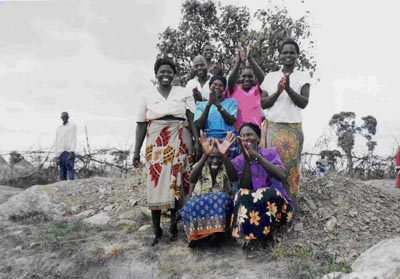
Photo: Women well-diggers in Siafakwenda, WIN-Zambia, K. Eckman, 2003
|
[35] Lama, undated,
ibid. [36] Details of these activities can be found in the annual WIN progress reports prepared by the national teams, as well as the annual WIN report to UNF [37] See the WIN Progress Reports for further details on the project monitoring systems |
