


4.1 Fertility and infants mortality in rural areas
4.2 Family structure and type in rural areas
A large part of rural women live in a family, whether it be her family or in the family which she has formed. This chapter will attempt to profile rural families through deduction, through different events occurring within the family: fertility, infant mortality, family group composition, marriage and power relationships between men and women established in the family.
Regional fertility rates have experienced great changes in recent decades. Since 1965, some countries exhibited changes in fertility which gradually extended to the rest of the countries. While around 1950 the average fertility rate was extremely high, 6 children per women, in the 1985-1990 period, the Regional average was 3.4 children per woman (CEPAL/CELADE, 1993). Therefore, the first affirmation regarding families in Latin America and the Caribbean is that they now have less family members than in the past.
The aforementioned does not imply that there has been a reduction in births: due to the fact that the decline in fertility is relatively recent and the structure per ages of many countries is still young, annual births increased from 7 to 12 million between 1950-1955 and 1985-1990 which, in absolute terms, implies an increase in the population in the majority of the countries (CEPAL/CELADE, 1993). This is to say that there are more inhabitants, but grouped in families that have, on the average, less children.
The decrease in fertility rates results from a number of socioeconomic and cultural factors which limit the exposition to sexual relationships, conception and pregnancy; such as the educational level attained, area of residency, occupation, health coverage, union (marriage) standards: These are the main ones, and they act over a group of variables denominated "intermediate variables" or "proximate determinants" which affect fertility at the same time12.
12 For more information see: Davis and Blake, 1967: Sociological factors of Fertility. Colegio de Mexico/CELADE, Mexico. Bongaarta, 1976: "A framework for analyzing the proximate determinants of fertility", Population and Development Review, vol. 4, No. 1, March.
Decreased fertility is a general phenomenon in the Region, but the transition of fertility has shown heterogeneity's among the countries as well as in them. Furthermore, it is recorded in a wider process known as "demographic transition" meaning that fertility changes are accompanied by mortality variations.
The "demographic transition" alludes to the change process of the population observed in western societies, and consists of the evolution from high fertility and mortality rates to low once. These occurrences are related to the social and economic transformations derived from industrial modernization (CEPAL/CELADE, 1993).
According to gross birth and mortality rates observed in the 1985-1990 period, the Regional countries are classified into four demographic transition stages13 (CEPAL/CELADE, 1993):
- Group I: Incipient Transition. Countries with high birth and mortality rates and moderate natural population growth rate around 2.5%: Bolivia and Haiti.
- Group II. Moderate Transition. Countries with a high birth rate and moderate mortality rate which lead to a high natural population growth rate, close to 3%: El Salvador, Guatemala, Honduras, Nicaragua and Paraguay.
- Group III. Full Transition. Countries with a moderate birth rate and a moderate to low mortality rate with a moderate natural population growth rate, close to 2% Brazil, Colombia, Costa Rica, Guyana, Ecuador, Mexico, Panama, Peru, Dominican Republic, Suriname, Trinidad, Tobago and Venezuela.
- Group IV: Advanced Transition. Countries with a low birth rate and a moderate to low mortality rate with a low natural growth rate of the population around 1%: Argentina, Bahamas, Barbados, Chile, Cuba, Guadalupe, Jamaica, Martinique, Puerto Rico and Uruguay.
13 It is expressed that these measures do not totally indicate fertility and mortality rates but that they determine the population growth and show the influence of the structure by ages. Additionally, they do not consider international migration due to its lesser influence in the growth evolution and the population structure.
A factor frequently associated with the demographic transition is urbanization, which permits stating that rural areas would systematically have greater fertility than urban areas. This comparison is based on theory and empiric experiences that generally evidence that the more urban the country, the more advanced its demographic transition. However, in some Regional countries this relationship is not casual: Bolivia is in the incipient transition category yet has an urban population percent higher than Costa Rica which is a country in full transition; Venezuela, the Latin American country with the second highest percent of urban population is not yet in the stage of advanced transition; Cuba, placed in the advanced demographic transition category has lower urbanization than the countries within the same group (Argentina, Chile and Uruguay). These cases show that the effects of urbanization on the transition phases are more related to the socioeconomic transformations of this process than to the concentration of the population in urban areas. (J. Chackiel and M. Villa, 1992).
The relationships between demographic transition and urbanization do not appear to be based on reason, but there are two clear differences between fertility and mortality between the urban and rural areas which are greater in those countries in the less advanced stages of transition. This is due to the fact that the demographic transition begins in the urban environment and in more comfortable social sectors and is then spread to the rest of the population.
Regarding fertility, in countries situated in an advanced demographic transition stage rural and urban fertility converges. For example, in Chile and Cuba, urban and rural families tend to have approximately 2 and 3 children. In full transition countries, this convergency is just beginning to profile itself. Finally, in the moderate to incipient transition countries, there is decreased fertility in capital cities yet these changes are not seen in rural areas (J. Chackiel and M. Villa, 1992).
With these reservations, rural women tend to have more children than city women. The National Demographic and Health Surveys conducted in some countries during the '80's reveal this fact (Table 11). A significant number of rural women systematically declare that a high proportion of their real pregnancies are unwanted; meaning that women have *had more children than they would have wanted (CEPAL/CELADE, 1993). In the majority of the countries where this information is available, the true unwanted pregnancies are, in fact, larger than those declared by city women (Table 12). This could indicate that women in rural areas have less access to family planning methods. It would be convenient to conduct specific studies in greater depth which would clear up the role that the cultural factors play in this and specifically the resistance to change. It is clear, though, that at least in some countries, there seems not to be a valid ideal of a numerous family; rather, that many births were unexpected or they were impossible to be avoided.
TABLE NO 11 LATIN AMERICA: GLOBAL BIRTH RATES PER AREA OF RESIDENCE
Aria of Residence | ||||
Country |
Period |
Urban |
Rural |
Total |
Guatemala |
1983-1987 |
4.1 |
6.5 |
5.6 |
Bolivia |
1984-1989 |
4.0 |
6.4 |
4.9 |
Paraguay |
1987-1990 |
3.6 |
6.1 |
4.7 |
Pew |
1984-1986 |
3.1 |
6.3 |
4.1 |
Mexico |
1984-1986 |
3.1 |
5.2 |
3.8 |
Dominican Republic |
1983-1986 |
3.1 |
4.8 |
3.7 |
Brazil |
1983-1986 |
3.0 |
5.0 |
3.5 |
Colombia |
1981-1986 |
2.8 |
4.9 |
3.3 |
SOURCE: CEPAL/CELADE, 1993: 47. Information based on National Reports of Demographic and Health Surveys.
TABLE N° 12 LATIN AMERICA: UNWANTED* BIRTH PERCENTAGE PER AREA OF RESIDENCE AREA OF RESIDENCE
Country |
Period |
Urban |
Rural |
Total |
Bolivia |
1989 |
35.0 |
35.9 |
36.0 |
Brazil |
1986 |
16.1 |
27.5 |
19.8 |
Colombia |
1986 |
12.3 |
20.7 |
15.9 |
Ecuador |
1987 |
16.2 |
17.6 |
17.1 |
E1 Salvador |
1985 |
14.6 |
25.0 |
27.0 |
Guatemala |
1987 |
63.3 |
10.8 |
12.5 |
Pew |
1986 |
21.9 |
42.3 |
35.9 |
Dominican Republic |
1986 |
21.9 |
31.3 |
26.3 |
* Unwanted birth. are calculated for a three-year period prior to the Survey, asking whether or not the children were wanted. The percentage corresponds to the proportion of unwanted pregnancies compared to the total.
SOURCE: CEPAL/CELADE, 1993: 46. Information based on National Reports of Demographic and Health Surveys.
In rural families in Latin America and the Caribbean, infant mortality is also higher than in urban families. In the incipient and moderate countries, close to two-thirds of infant deaths are produced in rural areas where also half or more of the births occur (J. Chackiel and M. Villa, 1992); and, likewise, infant mortality in the indigenous population is higher. A recent study conducted in indigenous groups in Chile found the infant mortality rate to be 45 per 1,000 for 1985 while nationally it was 20 per 1,000 and in the high income sectors of the country's capital it was less than 10 per 1,000. This is to say, almost five times less than the estimate for indigenous groups (UFRO/INE/FII/PAESMI/CELADE, 1990). Recent information from some countries reveal urban-rural differences in infant mortality (Table 13).
Urban-rural differences bear a special importance since the death of children under one year of age is strongly associated with exogenous factors regarding health. On a family level, financial resources, the mother's education and the type of attention and care given to the child, as well as beliefs regarding the origin and treatment of illnesses, and sanitary provisions in the house act over an number of intermediate variables which determine the health-illness process of the child (Behm-Rosas, 1990). The lack of land and high destitution levels in rural areas of the Region (aspects which are analyzed in Chapter 1) could be factors associated with high infant mortality rates. The fact that the definition of poverty and destitution is associated to income, however, ignores that portion of the rural population whose productive strategy centers on animal-vegetable diversification supplementation since there is evidence (Lanz-Valdivia, 1990) that it centers more on consumption and savings than on generating income. This focus generally leads to better nutrition of the family group thereby making it implicit the probability that in that particular group the infant mortality rates are lower.
In summary, a great part of rural families in Latin America and the Caribbean have entered the demographic transition phase in a heterogenous manner according to each country. Generally, they present fertility and mortality rates that are higher in rural areas. This is to say that there are changes, rural women live in smaller families, they want to control their fertility, but do not always have the necessary means to do so.
Looking at the future, demographic transition progress is expected in all of the Regional countries. Based on levels and trends in fertility, it is estimated that in the last five years of the century, women will have an average of 2.8 children and around the year 2020 this figure will decrease to 2.1; meaning the level required for the population to maintain its numbers. The analysis conducted per country reveals that those countries situated in Groups I and II will reach this level 10 years after the Regional average. The Bahamas, Barbados, Cuba, Martinique and Puerto Rico are currently at this level, while women in the rest of the countries in Groups III and IV will have, by the year 2010, an average number of children lower than 2.5.
TABLE N° 13 LATIN AMERICA: INFANT* MORTALITY RATES PER AREA OF RESIDENCE
Area of Residence | ||||
Country |
Period |
Urban |
Rural |
Total |
Bolivia |
1979-1989 |
79 |
112 |
96 |
Brazil |
1976-1986 |
76 |
107 |
86 |
Guatemala |
1983-1987 |
65 |
84 |
79 |
Pew |
1981-1986 |
54 |
101 |
76 |
Dominican Republic |
1976-1986 |
72 |
71 |
68 |
Mexico |
1982-1987 |
23 |
64 |
56 |
Colombia |
1976-1986 |
38 |
41 |
39 |
Paraguay |
1980-1990 |
32 |
38 |
35 |
* Rate per 1,000
SOURCE: CEPAL/CELADE, 1993: 47. Information based on National Reports of Demographic and Health Surveys.
Notwithstanding these projections, the influence that development strategies and continuous expansion of the media in many countries have over the ever-growing social sectors cannot be discarded. This promotes the idea of a small family through diffusing established standards of consumption and living and the generalized access to family planning methods (CEPAL/CELADE, 1993).
Independent from the aforementioned, the diffusion of cultural standards tending to reduce fertility and extend family planning programs could play important roles in rural areas, specifically in the countries found in Group I and II. When these elements are absent, current rural fertility tendencies in these countries indicate that they would remain above urban averages for decades.
In Group III countries, a gradual decrease should come about between the rural and urban differences, while Group IV shows certain convergence in the fertility of both areas. However, it must be born in mind that the average behavior hides the heterogeneities within the countries, thereby ignoring the presence of social sectors which could require as much attention as shone bearing significant weight in the countries in Groups I and II.
The estimates regarding infant mortality indicate that only 8 countries in Latin America reached the WHO goal known as "Health for All in the Year 2000": infant mortality rate below 30 per 1,000. In the Caribbean, the majority of the countries have reached this goal with rates under 20 per 1,000, with the exception of Guyana (56 per 1,000) and Suriname (33 per 1,000) (CEPAL/CELADE, 1993).
Regarding rural areas, it is important to consider that the reduction of infant mortality in the Region has had a common characteristic in 811 countries: the conduction of mass vaccination and oral rehydration programs and the spreading of health services and coverage. Furthermore, fertility rate reduction has played an important role in decreasing the proportion of the births with greater fatal risk (CEPAL/CELADE, 1993). In addition to the motivation of similar initiatives for rural areas, it would be recommendable to verify in a broader context if, in effect, the productive examples based on manual labor-intensive programs with diversified production strategies have lead to families with lower mortality rates. These results could set some grounds for policies recommendations in the Regional countries.
In recent decades profound changes in the rural family features in Latin America and the Caribbean have been experienced. These changes have implied the modification of the stereotypes of large families with young marriages, high levels of fertility and the large permanence of its members under the authority of the "father of the family". Today, there is the following trend:
- increase in the number of small families and decrease in the incidence of large families;
- increase in one member and incomplete families; decrease in or delay of marriages;
- decrease in the birth rate;
- the female heading the home;
- the proletarization of women;
- the lack of parents and emigration (CEPAL, 1986).
Although this cannot be fully applied to all Regional countries, nor to all geographic areas within each country, it may be claimed that the tendency in rural family organization will continue in such direction, basically related to the predominance of small families.
In Latin America and the Caribbean small families are more diffused. This is not a recent occurrence: figures for Chile, Argentina, Brazil, Costa Rica and Guatemala show that this trend was already prevailing in the '60's and '70's representing approximately between 50% and 58% of the total number of families. The percent of large families is between 20% and 35% and composed families between 12% and 19% (CEPAL, 1993).
A notable occurrence contradicting the normally used givens is that the preeminence of small families is generally associated with modernity, industrialization and urbanization; that is to say, categories that are the opposite to the rural world. However, in the Regional rural areas, small families prevail and even their proportion has become greater than in the urban areas. In Peru, small families in 1984 represented 53.4% in urban areas and 58.0% in rural areas (Market: "Family, sexuality and Family Planning. Basic Population Educational Texts"; CEPAL, 1993). In the Dominican Republic, as per the 1981 census, in urban zones, 47% of the families were small, 34% were large and 9% were mixed; rural areas, in turn, represented 55% as small families, 28%, as large and 5% as mixed. (Durate and Gómez: "The Family in the Dominican Republic: trends and features", CEPAL, 1993).
The fact that there are more small families in rural areas than in urban areas does not hold true in all countries. In Uruguay, for example, in 1985, there was a greater percent of small families in urban areas than in the rural ones despite that in both contexts small families prevails: 59.3% and 56.5%, respectively. Large families represented 19.9% in the urban area and 17.2% in the rural area while mixed families were more in the latter area (10.5% against 5.8%). More recent figures from Venezuela (1990) show similar characteristics, meaning that the majority of the rural families (51.8%) corresponds to small families, but that in the urban areas this percentage is slightly higher: 54.8%. Larger and mixed families represent practically the same percentage in both zones: 26% and 12% (Women's Institute, Spain-FLACSO Chile, ed. 1993. Volumes correspond to each country).
As it can be seen, families in rural areas of the Region are predominantly small for which one may believe that this type of family is the ideal, even though some people cannot achieve this. Notwithstanding, the portion of non-small families is important, especially the larger ones. Approaching this, the question arises as to whether or not the extended family exists because it is impossible to survive any other way or if it constitutes a family living option. It would seem that larger families respond to a survival strategy. In this regard, it has been claimed that rural families related to the working market tend to be smaller. Those that participate in production processes internal consumption prefer to use family manual labor which leads to mixed or larger families (CEPAL, 1986).
Conforming to the aforementioned, a study wee conducted analyzing three lives of rural people in Central Chile revealed that the rural family over recent decades appeared as a refuge against economic deterioration, as a place to retain manual labor given that urban and rural employment opportunities obstructed migration and independence of the younger homes. The family became a place to resist economic crises which spread throughout the country in the '80's tending to transform it into larger families whenever wages or family production required Valdés 1992).
Rural women form their families at an earlier age than urban women although both start at a relatively early age. Considering the average age for their first marriage as an indicator, available data for some countries show differences of about 2 years. The average age in rural areas is from 19 years old in the Dominican Republic to 21.7 years in Peru. In urban areas, the ages are from 20.8 in the Dominican Republic to 23.3 in Costa Rica. However, in the Caribbean (Guyana, Jamaica and Trinidad Tobago) the average age for the first marriage in rural areas is relatively older than in urban areas (around 0.6 years, Table 14).
TABLE N° 14 LATIN AMERICA AND THE CARIBBEAN: AVERAGE AGE OF FIRST MARRIAGE PER AREA OF RESIDENCE 1975-1980
Area of Residence |
||||
Country |
Period |
Urban |
Rural |
Difference |
Colombia |
1976 |
22.7 |
20.6 |
2.1 |
Costa Rica |
1976 |
23.3 |
20.8 |
2.5 |
Dominican Republic |
1975 |
20.8 |
19.0 |
1.8 |
Ecuador |
1979/80 |
22.9 |
21.1 |
1.8 |
Guyana |
1975 |
19.8 |
20.3 |
-0.5 |
Haiti |
1977 |
22.3 |
21.5 |
0.8 |
Jamaica |
1975/76 |
18.9 |
19.5 |
-0.6 |
Mexico |
1976/77 |
22.6 |
20.6 |
2.0 |
Panama |
1975/76 |
22.2 |
19.6 |
2.6 |
Paraguay |
1979 |
23.2 |
21.1 |
2.1 |
Pew |
1977/78 |
23.2 |
21.7 |
1.5 |
Trinidad and Tobago |
1977 |
20.7 |
21.5 |
-0.8 |
Venezuela |
1977 |
22.2 |
19.9 |
2.3 |
SOURCE: United Nations. Population Division, "Fertility Behaviors in the Context of Development. Evidence from the World Fertility Survey" Population Studies Series No. 100. United Nations: Patterns of First Marriages timing and prevalence, New York, 1990: 155.
The differences in the average age of the first marriage for rural and urban women is explained by factors that rest on the idea that the marrying age of women is related to education, area of residence and the type of occupation they perform: the highest age for marriage occurs with women who attained a higher education, who reside in cities and are employed in modern occupations (CEPAL, 1993).
The average age considers all types of "marital unions", for which it is interesting to center on the types of existing unions: it would seem that the difference is related to cultural factors; such as, for example, ethnic group customs (United Nations, 1990).
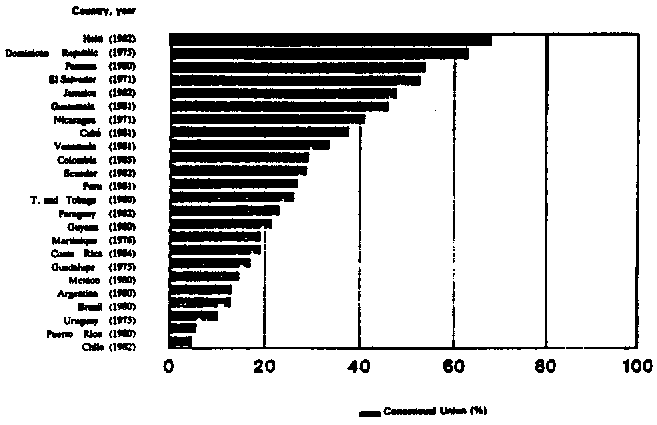
Latin America and the Caribbean is the continent of the world where living together or consensual union is the greatest. This cannot be considered as, in general, a signal of emancipation from women rather, quite the opposite of their poverty and low contractual power (CEPAL, 1993). Consensual undone are greater in Haiti, Dominican Republic, Panama, and El Salvador. In the remainder of the countries, important proportions are appreciated excepting in Puerto Rico and Chile where this type of marriage is minimal: 5.4% and 4.6%, respectively (Table 15, Graph 10).
Charbit ("Famille et nupcialité dans la Caraïbe", 1987, CEPAL, 1993) upon analyzing the important proportion of consensual fond in the Caribbean, indicated that the main determining factor of these unions is poverty. The author formed and interesting description regarding women'. life cycle in consensual unions, particularly those who have children from many partners; the above, based on in-depth interviews, confirmed by quantitative data: it generally concerns poor, uneducated women who lack knowledge on sexuality and family planning for which they tend to have early, unwanted pregnancies. Furthermore, they have scarce work training and do not see themselves as self-sufficient workers. Therefore' they center there trust and aspirations on marriage. They do not propose demands on the man, either before or after their sexual or conjugal relationship, since they assume that bearing a child will ensure the support of their partners.
Regarding the duration of consensual unions, they tend to be more unstable than legal marriages in more relative developed countries such as Costa Rica and Colombia. In less developed countries, such as Mexico and Peru, they can be more permanent due perhaps to the influence of sociocultural factors, especially in the indigenous population which grant greater social support (Krumholz and Alcántara: "Marriage patterns: age at marriage and marriage stability" 1982, CEPAL, 1993).
TABLE N° 15 LATIN AMERICA AND THE CARIBBEAN: WOMEN IN CONSENSUAL UNIONS* (%)
Country |
Year |
% |
Argentina |
1980 |
13.0 |
Brazil |
1980 |
12.7 |
Chile |
1982 |
4.6 |
Colombia |
1985 |
29.1 |
Costa Rica |
1984 |
19.0 |
Cuba |
1981 |
37.5 |
Ecuador |
1982 |
28.6 |
El Salvador |
1971 |
52.6 |
Guadeloupe (1) |
1975 |
16.9 |
Guatemala |
1981 |
45.9 |
Guyana (2) |
1980 |
21.3 |
Haiti |
1982 |
67.6 |
Jamaica |
1982 |
47.5 |
Martinique (1) |
1976 |
19.1 |
Mexico |
1980 |
14.4 |
Nicaragua |
1971 |
40.8 |
Panama |
1980 |
53.5 |
Paraguay |
1982 |
22.8 |
Peru |
1981 |
26.7 |
Puerto Rico |
1980 |
5.4 |
Dominican Republic |
1975 |
62.6 |
Trinidad and Tobago |
1980 |
26.1 |
Uruguay |
1975 |
10.0 |
Venezuela |
1981 |
33.4 |
* Percent of women in this type of union as compared to women from 15 - 49 years of age who are married in some manner
(1) includes all women in consensual union, de facto, not considering their current civil status
(2) women who did not go to primary or secondary school full time
(3) includes unions without common residency and those who have had a child during the census year without having been married or living together
SOURCE: "Patterns of first marriage: timing and prevalence", United Nations, 1990: 135
Graph 10 Latin America and the Caribbean women in consensual union (%)
Source: Table 15
Available information for some countries show diverse situations in unions of rural women. In Cuba and Guatemala, for example, the majority of women between 15 and 49 years of age have a partner (about 65%). However, while in Cuba 25.0% of women are married and 43.2% are "united" (1987); in Guatemala (1989), 25.9% are women who live with someone and 40.3% are married (Women's Institute, Spain-FLACSO, Chile, ed. 1993. Volumes correspond to each country). In Colombia, in small and large families, 70% of the unions are legal and 30% are de facto (FAO, 1991d). In El Salvador, 61.7% of the unions conducted in rural areas are free unions and in Venezuela they are a common rule (FAO 1991b). Legally, de facto relationships are acknowledged in Guatemala and Cuba, while in Colombia, although there is no legal acknowledgment, there is a favorable jurisprudence in this regard (FAO, 1991b).
A topic that has acquired special importance in recent decades is the feminine leadership of the home, which similarly to consensual unions, could be either a sign of feminine power and autonomy or vulnerability. There are no official statistics for both the Region and rural areas; however, there seems to be a consensus that between 20%-40% of the Latin American and Caribbean homes are lead by women (CEPAL/CELADE, 1993:65). FAO (1992b:43) indicates that Latin American homes under female leadership range from 15%-30%, and that a large number of these homes is located in rural areas. According to the same source, in the Caribbean, female heads of households represent 40% or 50%.
Available information for 12 countries in the Region reveals that the feminine leadership of the home is greater in urban areas. In rural areas, it varies between 11% and 19% (Table 16). This shows that feminine leadership in the home pertains more to the urban environment than the rural areas.
In response to the question of what is the significance of feminine leadership, one could reply that, more than anything else, it is a sign of poverty. Female household leaders tend to belong to poor homes and tend to duplicate this poverty throughout generations. As per various studies, this is due to the fact that they tend to have more dependents, their low income and their performing economic and domestic functions. The latter limits their possibilities of job selection and schedules, since they must be balanced with the children's care and therefore these women must accept lower wages (CEPAL/CELADE, 1993).
TABLE N° 16 LATIN AMERICA: FEMALE HEADS OF HOUSEHOLDS PER AREA (%)
Country |
Year |
Urban |
Rural |
Total |
Brazil |
1989 |
--- |
--- |
20.1 |
Costa Rica |
1992 |
24.2 |
16.3 |
20.0 |
Cuba |
1981 |
34.1 |
14.0 |
28.1 |
Chile |
1989 |
--- |
--- |
21.0 |
Ecuador |
1989 |
18.3 |
--- |
--- |
Guatemala |
1987 |
21.0 |
11.0 |
15.0 |
Panama |
1990 |
--- |
--- |
22.3 |
Paraguay |
1990 |
20.1 |
13.4 |
17.0 |
Peru |
1991 |
19.3 |
15.9 |
17.3 |
Dominican Republic |
1984 |
29.2 |
18.6 |
24.1 |
Uruguay |
1985 |
--- |
--- |
23.0 |
Venezuela |
1990 |
--- |
--- |
21 3 |
SOURCE: Based on "Latin American Women Statistically Speaking. FLACSO-CHILE, WOMEN'S INSTITUTE, SPAIN, 1993 (Volumes correspond to each country)
Given the traditional definition of men leading the house, it is logical to expect that the majority of the women who head their households do not have a partner. For example, in Costa Rica, of the total female household heads in rural areas in 1984, 10.8% were married and 5.4% declared to have some type of union. Widows and single women showed similar percentages: 30.6% and 30.1%, respectively. Divorces reached 4.0%, and separations represented 19.1% of the total women in charge of their homes. (Women's Institute, Spain-FLACSO Chile, ed. 1993, Costa Rica). A similar situation is found among indigenous groups in Chile, where women in charge of their homes were mostly widows (59.7%), 25.5% were single women and those who maintained some type of partner (living together, civil marriages or by Mapuche law) represented only 7.1% (UFRO/INE/FII/PAESMI/CELADE, 1990).
These figures reveal that the majority of women who are in charge of the house do not have a partner and when adding those who are married and in some way united in Costa Rica about 16% of these women have partners, while in Chile, 7.1% of the indigenous women have a partner. Although they may constitute the minority, they in some way represent a unique situation as these are homes in which although there is a man, the woman assumes the role as head of the house. Given that there is no further information in this regard, one could think that declaring a civil marriage status or living together is merely an acknowledgment and that in reality the man is absent from the home. These figures could also indicate that, at least among these women, the traditional power relation is questioned among these couples which is a matter of interest to be investigated.
An important aspect to be considered is the structure of the relationships within the rural family, specifically in the productive environment and the work division per gender. In general, a clear division of roles by gender and age is seen. In Bolivia, for example, rural families articulate the productive and reproductive work for family survival. Families have a patriarchal structure and the work division is based on a gender and age distribution of the work. The family is organized in communities where men assume the representation of the family (FAO, 1991b).
In homes under feminine leadership, one could think that women assume the productive role which was previously performed by the man. However, a study of three homes headed by women, located in Santa Ana, El Salvador, revealed a different reality (Lok, 1993). On the farms where there was no husband or partner, whether due to death, abandonment or temporary migration, no radical changes in the work division of gender are observed. Changes do apply in the distribution of time dedicated to the farm tasks and the role that the woman in charge of the household plays in decision making: generally, women seek other men to perform those tasks which were performed by their husband (brother, neighbor, day worker) while they play a dominating role in decision making.
The above forces us to classify (Bernstein, 1987) or divide the private and public world, and men and women who mold work distribution within the rural families. This is seen also in another study conducted in two municipalities of the Jutiapa department, Guatemala (Urueta and Karremans, 1993), where there wee a very clear delimitation of gender roles: women act in a domestic sphere while those activities less related to the home are performed by men. The domestic sphere does not exclude women from income-generating activities (for example, breeding smaller animals, or post-harvest processing) but they do not always make the decisions regarding the use of their earnings since men consider that making the most important decisions on the farm is their own right. Children help their parents indiscriminately in the beginning, but later they begin to center on defined activities belonging to their gender: boys, between 8 - 10 years old and girls at the age of 11. Women work on so-called masculine jobs when there is scarce masculine manual labor, however they abandon said activities when such need disappears.
According to the authors, rural economy in general demonstrates its flexibility in the productive strategies minimizing risks and covering the lack of lands or manual labor at specific times. Such flexibility is noted in the changes of tasks assigned to each sex and to those who are under age. However, the authors indicate that this does not imply that a new task, resulting from innovation, will be developed by any other member of the family: "...under "normal" conditions, men dedicate to what is traditionally theirs and women to theirs" (op. cit. pg. 106). Flexibility would imply the possibility of changes in work divisions, but, as per the authors, a division in responsibilities and income favoring women should be based on the existing cultural standards that are shared by men and women.
This last proposal is contradictory and in the long run, it will consecrate immovability. To allow women to accede power and decision-making roles would imply questioning existing cultural standards. One cannot ask that which is to be changed, i.e. the traditional work division standards between the sexes, also be the change factor at the same time. On the contrary, historically, the changes in the gender roles definition were never produced at the same time in men and women. The questioning of the discriminatory cultural standards towards women should, in the first place, start by the women's own initiative.
Regarding large families, the referenced study stated that in these type of homes crop production is performed separately while stock management is shared. Women cooperate among themselves in other activities: meal preparation, care of children when one is unable to, and similar tasks.
Currently, families are smaller than they were fifty years ago and even ten years ago. There are more inhabitants in Latin America and the Caribbean but the family groups, on an average, are smaller. This is due to the fact that the birth rate has decreased: in 1950, women averaged 6 children while nowadays, the average is 3.4 children. This does not imply a reduction in birth rates: annual births increased from 7 to 12 million between 19501955 and 1985-1990 which translated into an increase in the population in the majority of the countries.
A decreased in the number of births is related to socioeconomic and cultural factors which act over a number of "intermediate variables" which influence their behavior. Furthermore, it rests on the process known as "demographic transition" which has been experienced differently by each country of the Region.
Demographic transition is a process that was historically observed first in western societies and consists of the changing from high mortality and birth rates to low levels. This is associated with sociocultural and economic changes derived from industrial modernization.
Regional countries have been classified into four stages within the demographic transition according to their current mortality and birth rates. Bolivia and Haiti are in the "incipient transition" stage; Argentina, Bahamas, Barbados, Chile, Cuba, Guadalupe, Jamaica, Martinique, Puerto Rico and Uruguay are in the "advanced transition" stage. The rest of the countries are situated mainly in the "full transition" stage with moderate birth rates and moderate and low mortality rates.
Theoretically is it hoped to find an association between urbanization and demographic transition, but in some countries in the Region, there is no relationship between both phenomena; therefore, demographic transition is due to other socioeconomic and cultural transformations.
The demographic transition begins in well-off urban sectors and then spreads to the other sectors. According to the statistics, rural women in Latin America and the Caribbean have more children than do urban women. This, of course, does not consider abortion which presumably is higher in the city than in the country, where a more solid criteria regarding unborn human life is stronger. The differences between birth and mortality rates in urban and rural areas are greater in countries found in the less advanced stages of demographic transition.
Rural women on an average have more children than do urban women; a percentage of them, varying per country, and considering 8 of the Region's countries, declares that some children were not wanted. This could mean that the idea of a small family is growing or that survival conditions in the country have deteriorated.
Rural families tend to have more children, but also, as a rule, infant mortality is also greater in the indigenous population. This is due to the deficient living conditions of rural families which affect the health of the children: scarce economic resources in the home, sanitary deficiencies in housing, low educational levels of rural mothers, popular beliefs that are not always correct regarding the origin and treatment of the illnesses.
It is predicted that in the majority of the countries in Latin America and the Caribbean, fertility will have to stabilize during the second decade of the coming century with an average of 2.1 children per woman. However, countries placed in the "incipient " and "moderate" demographic transition, and particularly rural areas of the other countries would not reach that average if there are no cultural communications leaning towards reducing birth rates and over all if the coverage and quality of family planning programs is not extended. If no effort is made regarding family planning matters, the current fertility rates in rural areas will remain above urban levels for various years.
Many children die in the rural areas in Latin America and the Caribbean and estimates regarding infant mortality are not encouraging. They indicate that only 8 countries in Latin America will reach a rate lower than 30/1,000 by the end of the century while the countries of the Caribbean, excepting Guyana and Suriname, present a better situation.
Infant mortality will remain high as well in rural areas unless the coverage in widened, health services are broadened and mass vaccination and oral rehydration programs are applied.
Rural families have experienced profound changes over recent decades, modifying cultural patterns centered on large, large families, early marriages and strong paternal authority. Currently, behaviors are oriented towards similar patterns to urban areas; which is to say, there is a trend towards smaller families, couples with less children, and delaying the marrying age. Currently, official statistics bring to light that there are homes under feminine leadership and responsibility.
A noteworthy phenomenon is that the rural families of this Region are predominantly small and in some countries the proportion of these families is even higher in the country than in urban areas. This shows that the predominant family ideal in rural areas is that of a smaller one and it questions the givens associating small families with modernity, industrialization and urbanization which is to say, categories that are opposite to the rural world.
Although small families prevail in rural areas, there is an important portion of large families whose existence seems to answer - as in the cities - strategies of family survival in the country more than a family living conception.
The age of forming a couple is higher when women have higher educational levels, reside in cities and work in a modern occupation. These issues do not apply to rural environments, thereby explaining why rural women in Latin America and the Caribbean tend to find a couple at an earlier age than do urban women.
A Regional peculiarity refers to the type of union; this is the continent with the highest rate of consensual unions, although differences between the countries are observed. Consensual unions are more common in Haiti, the Dominican Republic, Panama and El Salvador while they bear minimal importance in countries like Puerto Rico and Chile. Regarding their duration, they tend to be less stable in countries with greater relative socioeconomic development. In less developed countries, many times they respond to cultural and indigenous patterns which grants a greater social support and, therefore, stability.
Differences in the proportion of consensual unions in rural areas among the different countries in the Region do not appear to obey a reasonable pattern and it is a matter which could be interesting to explore in greater depth. For example, in Cuba 25% of the women who have a partner are married and 43.2% are "united" while in Guatemala 25.9% are living together and 40.3% are married; in Colombia 70% of the unions are legal and 30% are de facto unions; in El Salvador, 61.7% of the unions are free and in Venezuela the latter is the common rule. Perhaps the differences are explained by greater or lesser adhesion to the norms of the Catholic Church but not to the fact that consensual unions are legally acknowledged or not. Countries where there is legal recognition of consensual unions reveal very different proportions of the same in rural areas.
The feminine leadership of the house in rural areas of the Region has acquired growing interest recently even if there are no official figures which estimate its scope. However, based on information from some countries, it is seen that the feminine leadership of the household is more frequent in the urban environment and in rural areas it comprises between 11% and 19% of the homes.
The majority of the female heads do not have a partner. However, there is a low portion, although not irrelevant, of women who claim to be the heads of the home with a partner, which would indicate an error or voluntary distortion in declaring the civil status or rather an indicator that shows their questioning the traditional relationships of power within the couple. This point would also be interesting to investigate more.
These women tend to belong to poor homes and tend to pass on their poverty for generations. Considering the unfavorable conditions already described that women face in rural society in their productive insertion, it is easy to understand the close relationship between poverty and feminine dominance in the home, particularly when the family sustenance depends exclusively on her. In this regard, female leadership in the home constitutes a specific target group to be considered as a priority when forming policies for rural women.
As it has already been analyzed in the chapter on productive insertion of rural women, the structure of productive relationships within rural families is based on gender and age roles where men assume family representation and decision making. It has been observed that in time of crises this division la modified, but later is resumed when the crises has been overcome.
This points to the foundations of the traditionally assigned roles to each gender in the family. It also suggests that in order to overcome the rigid limitations in the private and public environment, the members of the family must be aware of this aspect as well as the organizations and institutions which contribute to the socioeconomic and cultural development of the rural areas of the Region.
The most efficient actions to achieve effects in the families would be indirect actions, meaning these that have a material, solid base. For example, programs linked to agricultural production improvement. Another manner to create awareness of equal opportunities in the family should be made through the formal educational system modifying the different studies and adjusting them to a new family concept.
