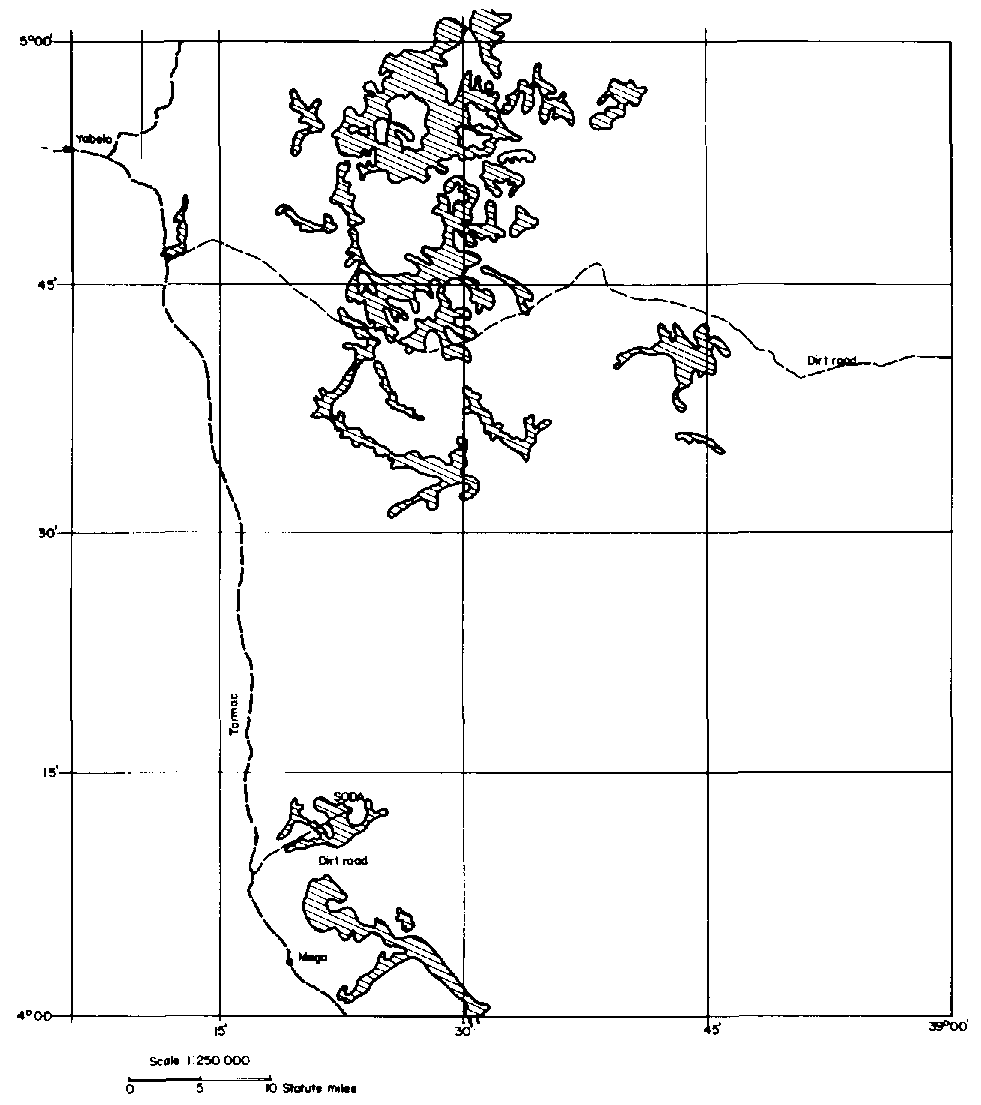
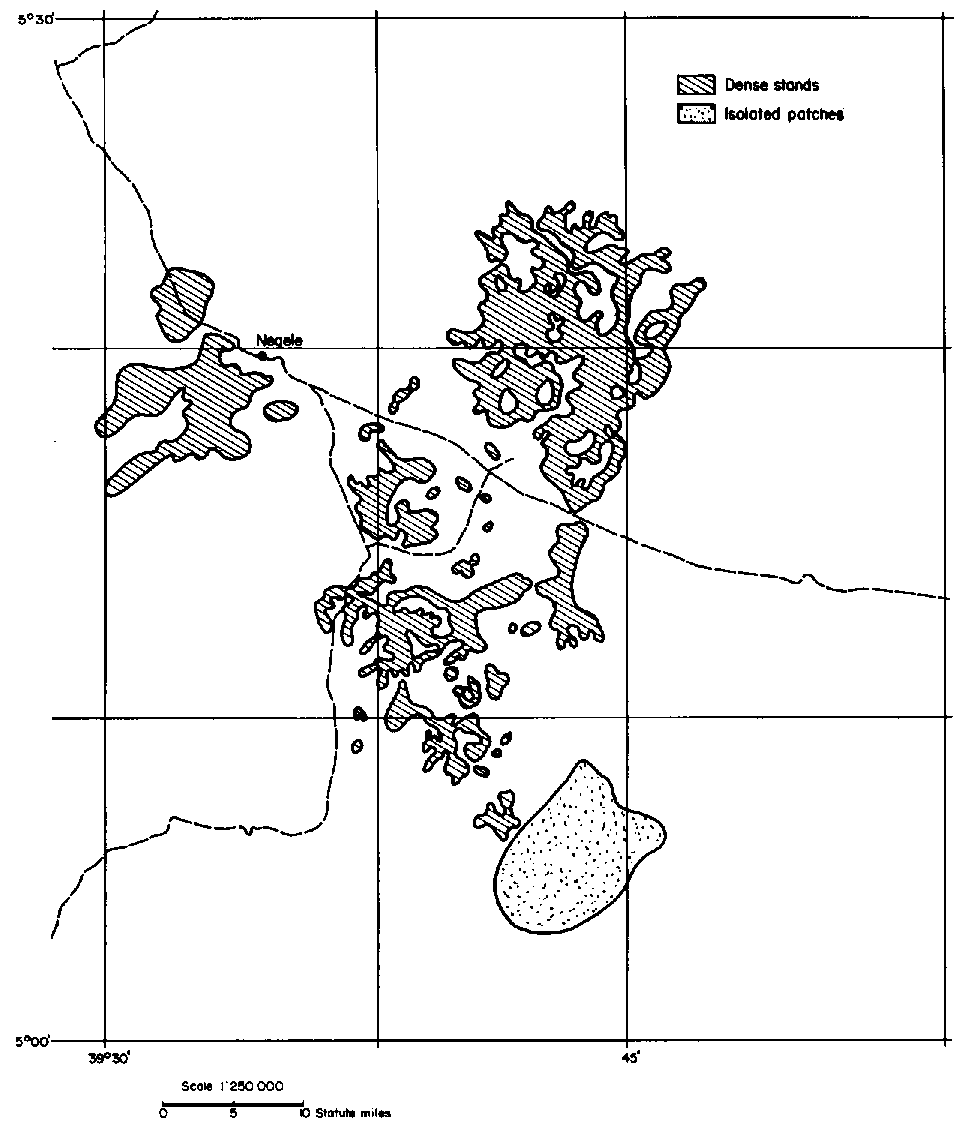
Table B1. Distribution of six agro-ecological zones within 29 madda or madda groups in the southern rangelands.
Table B2. Per cent average basal cover for herbaceous (grass, legume and forte) and small shrub. vegetation on and off protected calf pastures (kalo) in the southern rangelands.
Table B3. Average per cent feeding time (±SE) spent on various browse species by camels in the Beke Pond region of the southern rangelands during four seasons in 1985-86.
Table B4. Average percent feeding time (±SE) spent on various browse species by goats at the Beke Pond region of the southern rangelands during four seasons in 1985-86.
Table B5. Average per cent feeding time (±SE) spent on various browse species by sheep in the Beke Pond region of the southern rangelands during four seasons in 1985-86.
Table B6. Summary of population trend, diet preference for livestock and abundance of browse species in the Beke Pond area of the southern rangelands.
Table B7. Scientific and vernacular name, growth form, importance value and traditional household uses of native plants in the southern rangelands.
Table B8. Occurrence of apparently encroaching woody species on the central Borana Plateau as recorded in a survey of 801 field sites in 1989.
Table B9. Principal grass and shrub forages for hand-reared and grazing calves curing dry seasons of average rainfall, dry and drought years in the southern rangelands as ranked by 32 Borana herd owners in 1988.
|
Madda |
Agro-ecological zones |
|||||
|
Subhumid |
Upper semi-arid |
Lower semi-arid |
Arid |
Bottomlands2 |
||
|
Basement complex soil |
Mixed soils |
|||||
|
Arbele |
0 |
<1 |
4 |
56 |
40 |
0 |
|
Arero |
41 |
43 |
4 |
0 |
0 |
12 |
|
Bidiru |
0 |
0 |
0 |
84 |
8 |
8 |
|
Cheri Liche |
0 |
37 |
0 |
35 |
28 |
0 |
|
Dibegayo |
5 |
39 |
5 |
49 |
5 |
0 |
|
Did Hara |
1 |
70 |
6 |
0 |
1 |
21 |
|
Did Yabelo |
46 |
47 |
1 |
0 |
0 |
6 |
|
Dilo Goraye |
<1 |
0 |
2 |
34 |
60 |
3 |
|
Dokole |
38 |
10 |
10 |
42 |
0 |
0 |
|
Dubluk |
<1 |
0 |
79 |
20 |
0 |
0 |
|
Elwaya |
0 |
4 |
11 |
77 |
0 |
8 |
|
Gelchet |
0 |
5 |
9 |
40 |
41 |
5 |
|
Gobso |
22 |
6 |
16 |
50 |
3 |
3 |
|
Gololcha |
52 |
11 |
12 |
16 |
9 |
0 |
|
Harwe-U/Deritu |
20 |
6 |
23 |
46 |
3 |
1 |
|
Hidi Lola |
0 |
65 |
10 |
20 |
0 |
4 |
|
Hobok |
0 |
0 |
2 |
6 |
88 |
4 |
|
Kadim |
0 |
0 |
1 |
23 |
76 |
0 |
|
Marmaro |
0 |
8 |
0 |
87 |
<1 |
5 |
|
Medecho |
0 |
14 |
54 |
19 |
2 |
11 |
|
Orbate Gedi |
3 |
11 |
7 |
50 |
26 |
3 |
|
Orbate Oli |
13 |
2 |
0 |
31 |
46 |
7 |
|
Roms/Mega |
2 |
0 |
25 |
42 |
9 |
22 |
|
Saki/Megado |
0 |
4 |
0 |
58 |
38 |
0 |
|
Sarite |
5 |
7 |
0 |
32 |
15 |
41 |
|
Soda/lgo |
0 |
7 |
72 |
3 |
1 |
17 |
|
Votalo |
63 |
23 |
14 |
0 |
0 |
0 |
|
Web/Gayu/Melbana |
0 |
25 |
54 |
0 |
<1 |
21 |
1 See text for description of agro-ecological zones. See Figure 2.10 and Figure B1 for map details.2 Includes Vertisols.
Source: D. L. Coppock (ILCA, unpublished data based on results from Assefa Eshete et al (1986)).
|
Local no. |
Kalo |
Per cent average basal cover |
||||
|
Grass |
Forbs |
Legume |
Total herbaceous |
Shrub |
||
|
1 |
Off |
40.4 |
2.0 |
0.0 |
42.5 |
57.5 |
|
On |
56.1 |
0.0 |
3.2 |
59.3 |
40.2 |
|
|
2 |
Off |
39.7 |
0.2 |
3.8 |
43.7 |
55.8 |
|
On |
50.9 |
0.4 |
4.5 |
55.8 |
43.7 |
|
|
3 |
Off |
37.0 |
0.2 |
10.8 |
51.6 |
48.0 |
|
On |
35.0 |
2.1 |
9.8 |
20.5 |
46.9 |
|
|
4 |
Off |
31.1 |
3.5 |
28.4 |
63.1 |
28.4 |
|
On |
50.2 |
0.4 |
3.3 |
45.7 |
53.8 |
|
|
5 |
Off |
67.4 |
0.3 |
9.5 |
77.2 |
22.3 |
|
On |
69.6 |
1.0 |
19.4 |
90.5 |
9.5 |
|
|
6 |
Off |
40.8 |
0.2 |
5.6 |
46.6 |
53.4 |
|
On |
65.5 |
0.2 |
0.3 |
66.5 |
33.4 |
|
|
7 |
Off |
30.7 |
0.1 |
0.2 |
31.3 |
68.7 |
|
On |
64.8 |
0.0 |
0.9 |
65.7 |
34.3 |
|
|
8 |
Off |
39.3 |
3.4 |
28.2 |
70.8 |
29.2 |
|
On |
29.5 |
6.7 |
16.9 |
53.6 |
46.4 |
|
1 Where protected sites had been removed from continuous grazing pressure for at least seven years. Cover was determined using the method of Daubenmire (1959) with 60 plots/site.Source: Menwyelet Atsedu (1990).
|
Species |
Season2 |
|||
|
Cool dry |
Short rains |
Warm dry |
Long rains |
|
|
Acacia brevispica |
23±31 |
67±11 |
10±16 |
56±15 |
|
Rhus natalensis |
32±5 |
10±10 |
3±10 |
4±14 |
|
Grewia tembensis |
2±3 |
4±4 |
- |
11±9 |
|
Commiphora africana |
- |
2±6 |
- |
3±3 |
|
Acacia etbaica |
- |
3±6 |
- |
3±2 |
|
Acacia tortilis |
- |
- |
6±6 |
2±2 |
|
Cadaba farinosa |
6±12 |
- |
17±14 |
- |
|
Dichrostachys cinerea |
1±12 |
1+2 |
- |
4±4 |
|
Ormocarpum mimosoides |
1±2 |
- |
- |
1±1 |
|
Euclea shimperi |
1±3 |
1±3 |
5±6 |
- |
|
Balanties spp |
- |
1±12 |
17±9 |
- |
|
Acacia seyal |
- |
- |
1±2 |
2±1 |
|
Phyllanthus somalensis |
4±8 |
- |
- |
- |
|
Acacia nilotica |
2±2 |
- |
- |
1±2 |
|
Acacia goetzii |
4±5 |
- |
- |
- |
|
Boscia angustifolia |
- |
3±3 |
4±5 |
- |
|
Albizia amara |
6±6 |
- |
- |
- |
|
Acacia drepanolobium |
3±3 |
4±4 |
- |
- |
|
Caucanthus auriculatus |
1±2 |
- |
- |
2±4 |
|
Commiphora habessinica |
- |
- |
- |
2±2 |
|
Grewia bicolor |
2±5 |
- |
- |
- |
|
Vemonia cinerascens |
- |
- |
- |
4±5 |
|
Dahlbergia microphylla |
- |
- |
- |
2±2 |
|
Capparis tomentosa |
5±11 |
- |
- |
- |
|
Acacia bussed |
- |
- |
- |
2±4 |
|
Total per cent identified |
93 |
96 |
63 |
99 |
1 See text for methodological details.2 The cool dry season is from July to September, the short rains occur in October and November, the warm dry season is from December to March and the long rains occur in April to June.
Source: Woodward (1988).
|
Species |
Season2 |
|||
|
Cool dry |
Short rains |
Warm dry |
Long rains |
|
|
Acacia brevispica |
27±15 |
40±12 |
16±15 |
34±8 |
|
Rhus natalensis |
19±5 |
12±9 |
12±5 |
4±5 |
|
Grewia tembensis |
- |
10±9 |
1±2 |
9±5 |
|
Commiphora africana |
- |
2±3 |
1±3 |
3±2 |
|
Acacia etbaica |
5±9 |
4±6 |
3±4 |
9±8 |
|
Acacia tortilis (leaf) |
- |
- |
3±6 |
3±2 |
|
Acacia tortilis (flower) |
- |
- |
36±37 |
- |
|
Cadaba farinosa |
2±3 |
- |
5±7 |
- |
|
Dichrostachys cinerea |
- |
2±3 |
2±2 |
3±3 |
|
Ormocarpum mimosoides |
- |
3±7 |
- |
9±7 |
|
Euclea shimperi |
2±2 |
- |
6±7 |
- |
|
Balanites spp. |
2±2 |
1±2 |
- |
- |
|
Acacia seyal |
- |
- |
2±3 |
3±2 |
|
Phyllanthus somalensis |
4±5 |
2±3 |
- |
- |
|
Acacia nilotica |
- |
- |
- |
2±3 |
|
Acacia goetzii |
4±5 |
- |
2±5 |
- |
|
Boscia angustifolia |
- |
- |
2±4 |
- |
|
Albizia amara |
2±3 |
- |
- |
- |
|
Acacia drepanolobium |
3±4 |
- |
- |
- |
|
Caucanthus auriculatus |
5±8 |
- |
- |
- |
|
Commiphora habessinica |
2±4 |
- |
- |
- |
|
Grewia bicolor |
6±8 |
- |
- |
- |
|
Vemonia cinerascens |
- |
2±3 |
- |
4±5 |
|
Lannea floccossa |
- |
- |
7±15 |
1±3 |
|
Plectranthus ctilongipes |
- |
2±3 |
- |
- |
|
Total per cent identified |
80 |
80 |
98 |
84 |
1 See text for methodological details.2 The cool dry season is from July to September, the short rains occur in October and November, the warm dry season is from December to March and the long rains occur in April to June.
Source: Woodward (1988).
|
Species |
Season2 |
|||
|
Cool dry |
Short rains |
Warm dry |
Long rains |
|
|
Acacia brevispica |
14±13 |
11±13 |
5±10 |
34±21 |
|
Rhus natalensis |
14±9 |
9±14 |
7±11 |
- |
|
Grewia tembensis |
- |
6±11 |
1 ±4 |
11 ±7 |
|
Commiphora africana |
- |
2±3 |
- |
4±9 |
|
Acacia etbaica |
- |
- |
- |
1±2 |
|
Acacia tortilis (leaf) |
- |
- |
4±10 |
- |
|
Acacia tortilis (flower) |
- |
- |
58±45 |
- |
|
Cadaba farinosa |
3±7 |
- |
- |
- |
|
Dichrostachys cinerea |
- |
6±9 |
2±2 |
43±7 |
|
Ormocarpum mimosoides |
- |
- |
- |
9±16 |
|
Euclea shimperi |
- |
- |
1 ±4 |
|
|
Acacia seyal |
- |
1 ±2 |
- |
1 ±3 |
|
Phyllanthus somalensis |
1 ±3 |
- |
1 ±3 |
2±2 |
|
Albizia amara |
1 ±2 |
- |
- |
- |
|
Acacia drepanolobium |
3±2 |
- |
- |
- |
|
Caucanthus auriculatus |
4±7 |
- |
- |
- |
|
Grewia bicolor |
3±4 |
- |
- |
- |
|
Vemonia cinerascens |
- |
- |
2±5 |
- |
|
Lannea floccossa |
- |
- |
1±1 |
- |
|
Dahlbergia microphylla |
1±4 |
- |
- |
- |
|
Cordia gharaf |
- |
- |
3±3 |
- |
|
Capparis tomentosa |
- |
11±15 |
- |
- |
|
Combretum moue |
- |
- |
- |
2±4 |
|
Total per cent identified |
44 |
46 |
85 |
68 |
1 See text for methodological details.2 The cool dry season is from July to September, the short rains occur in October and November, the warm dry season is from December to March and the long rains occur in April to June.
Source: Woodward (1988).
|
Plant species |
Indicators |
|||||||
|
Trend |
Preference |
Abundance |
||||||
|
Hill |
Low |
CD |
SR |
WD |
LR |
>10%V |
>10%D |
|
|
Acacia brevispica |
S |
- |
N |
S |
S |
S |
X |
X |
|
Acacia drepanolobium |
I |
I |
- |
A |
A |
- |
X |
|
|
Acacia etbaica |
I |
- |
N |
N |
N |
N |
|
X |
|
Acacia tortilis |
I |
- |
- |
- |
N |
N |
|
X |
|
Albizia amara |
- |
I |
A |
A |
- |
- |
X |
|
|
Balanites spp |
- |
- |
- |
N |
S |
- |
|
X |
|
Cadaba farinosa |
- |
- |
S |
- |
S |
- |
|
X |
|
Capparis tomentosa |
- |
- |
- |
- |
S |
- |
|
X |
|
Commiphora africana |
I |
- |
A |
A |
- |
A |
X |
|
|
Dichrostachys cinerea |
I |
- |
A |
- |
N |
N |
|
X |
|
Euclea shimperi |
- |
I |
A |
A |
N |
- |
X |
X |
|
Grewia bicolor |
- |
- |
S |
- |
- |
- |
|
X |
|
Grewia tembensis |
I |
I |
N |
N |
- |
S |
|
X |
|
Lannea floccossa |
I |
- |
A |
A |
N |
A |
X |
|
|
Ormocarpum mimosoides |
- |
- |
- |
N |
- |
N |
|
X |
|
Rhus natalensis |
I |
S |
S |
S |
S |
N |
|
X |
1 Where trend is segregated according to hillsides (Hill) or flats and depressions (Low) and S indicates a stable population, I indicates increasing populaition (larger percentage of smaller individuals); - indicates very low abundance such that trend could not be determined. Preference according to season (where CD = cool dry; SR = short rains; WD = warm dry; and LR = long rains) and ranked as N (neutral; no preference), S (selected for), A (avoided) or - (insufficient data). Abundance categorised as relative occurence in vegetation (V; greater than 10% of cover) or occurrence in diet (D; greater than 10% of diet); × indicates species equalled or exceeded 10% in the respective category.Source: Woodward (1988).
|
Scientific name |
Vernacular name |
Growth form2 |
Value3 |
Traditional utilisation |
|
Acacia brevispica4 |
hamaresa |
S |
VI |
Wood for construction (termite resistant); root extracts have medicinal value. |
|
Acacia bussei4,5 |
halo |
T |
VI |
Extracts for tanning, pigments; hard wood for fencing, firewood and utensils; indicator of onset of wet seasons by green flush; bark strips for rope and matting. |
|
Acacia drepanolobium4 |
fulesa |
T |
- |
Edible gum during drought. |
|
Acacia elatior |
- |
T |
I |
Firewood; fencing. |
|
Acacia etbaica |
alkebesa |
T |
I |
Firewood; fencing; shade tree |
|
Acacia goetzei |
bura |
T |
VI |
Wood for fencing and incense; ceremonial and shade tree; bark extracts for red dyes; charcoal for fumigation of milk utensils and people (sauna). |
|
Acacia mellifera |
sapansa |
T |
I |
Bark burned for fumigation; wood for fencing. |
|
Acacia nilotica |
burquqe |
T |
Vl |
Firewood; fencing; bark extract for red dyes; pod extract for black dyes. |
|
Acacia nubica |
wanga |
T |
- |
Bark extract has medicinal value (boiled for colds); bark tied around fence at encampment for disease prevention (spiritual belief). |
|
Acacia reficiens4 |
sigirso |
T |
I |
bark and cortex; wood for corral doors. |
|
Acacia Senegal |
hidado |
T |
VI |
Gum Arabic; firewood; fencing. |
|
Acacia seyal5 |
wachu |
T |
VI |
Extracts for red pigments; bark extracts to make paint for wooden handicrafts; fencing; firewood; gum; root has medicinal value for camels. |
|
Acacia tortilis |
tedecha |
T |
VI |
Shade tree; wood for axe handles. |
|
Acacia tortilis |
urbu |
P |
VI |
Soup from boiled seeds and pods for people during drought. |
|
Acacia fruticosa |
diri-boranto |
S |
- |
Ceremonial branches; construction wood for making weapons and traditional beds. |
|
Albizia anthelmintica |
wachu |
S |
- |
Root extracts used for treatment of tape- worm and roundworm. |
|
Aloe sp |
hargessa |
F |
- |
Pith chewed for snakebite cure; sap protects wounds; root extracts in milk as medicine for colds, flu; extracts for stomach ache, eye drops; when a son is born, a piece of Aloe will be placed on the top of the hut. |
|
Alysicarpus sp |
bobra |
F |
- |
Edible roots. |
|
Amaranthus hybridus |
rafu |
F |
- |
Edible leaves. |
|
Asparagus |
ergemsa |
F |
Vl |
Root fibres for weaving milk containers; other ceremonial values |
|
Balanites aegyptica5 |
badana okolo/luo |
T |
Vl |
Leaves of new shoots chewed into paste for application for lesions; edible fruit; scent wood; gum; fumigation wood for milk containers; wood for utensils like butter whisk and butter spoons; construction wood firewood. |
|
Boscia angustifolia |
kalkacha |
T |
Vl |
Carving wood for mortars and pestles for grinding grain and making coffee cups; twigs used as cleaning utensils. |
|
Boscia coriacea |
kalkacha |
T |
- |
Carving wood; twigs used as cleaning utensils. |
|
Boswellia hildebrantii |
dakara |
T |
Vl |
Bark extracts for medicines, paste and dyes; edible root; incense; good firewood. |
|
Cadaba heterotrichaduse |
duse |
T |
- |
Shade tree. |
|
Calotropis procera |
boa |
S |
- |
Ceremonial grave marker; medicinal sap; leaves used in milk processing. |
|
Canthium bogosensis |
laden |
S |
- |
Edible fruit; incense; charcoal for fumigation of milk utensils and people (sauna); wood made into butter pots. |
|
Canthium schimperianum |
galle |
S |
- |
Edible root and fruit; fibres for utensils, containers, binding and home construction |
|
Canthium setiflorum |
laden |
S |
- |
Edible fruit; scent wood; fumigation wood. |
|
Capparis tomentosa |
gore gel |
S |
- |
Fruit has medicinal value. |
|
Carissa edulis |
dagamsa |
S |
- |
Edible fruit; spines for utensils and piercing ears; seed for dyes; medicine for toothaches. |
|
Carissa schimperi |
quararu |
T |
- |
Cortex fibres for rope; edible fruit; bark extracts for emetics; firewood; poison sap for arrows from female fruit; male fruit is edible. |
|
Carthamus tinctorius |
boria |
F |
- |
Medicinal sap for stomach problems. |
|
Catha edulis |
chati |
S |
- |
Leaves chewed as a stimulant. |
|
Caylusea abyssinica |
erenchi |
F |
- |
Edible leaves and stems. |
|
Ceropegia sp |
kakalla |
S |
- |
Edible roots which contain water in dry seasons |
|
Coleus ignarius |
abune |
S |
- |
Dried leaves chewed as a tobacco-like stimulant; root extracts have medicinal value for children. |
|
Combretum molle |
rukesa |
T |
Vl |
Scent wood; shade tree |
|
Commiphora africana4,5 |
hamessa |
T |
- |
Live fencing; wood for utensils like coffee cup, camel bell, milk pots and bowls. |
|
Commiphora campestis5 |
- |
T |
- |
Wood for carving milk pots. |
|
Commiphora crenulata4 |
siltacho |
T |
I |
Leaves for fumigation; wood for incense and fencing; charcoal for fumigation of people (sauna); sticks rubbed together can make sparks to start a fire. |
|
Commiphora fluviflora4 |
chalaka |
T |
I |
Live fencing; sap used as soap; fibers to construct milk pots and coffee cups; spines are poisonous. |
|
Commiphora paolii4,5 |
agarsu |
T |
Vl |
Branches to line well paths; bark extracts have medicinal value to accelerate delivery of human after-birth, diluted bark extracts as tick repellent; edible fruit; carving wood to make camel bell; sap as glue for arrows; edible gum; extracts for camel skin disorders; wood for fencing; fibres for weaving milk containers. |
|
Commiphora rivae4 |
agarsu |
T |
I |
Live fencing; wood for utensils. |
|
Cordia africana |
kilta |
T |
Vl |
Shade tree; edible fruit; wood for utensils; presence indicator of close water table; sticky gum for adhesive. |
|
Cordia gharaf4 |
medera |
S/T |
Vl |
Edible fruit important in drought; gum is chewed; wood for fencing; carving wood for ceremonial sticks. |
|
Cordia ovalis5 |
medera |
S/T |
Vl |
Carving wood; wood for sticks; edible fruit; wood for fencing. |
|
Croton macrostachys |
mekanisa |
S |
I |
Extracts have medicinal value for venereal disease. |
|
Cucumis sp |
burate |
F |
- |
Edible fruit. |
|
Cyphostemma sp |
chobi loni |
F |
- |
Edible fruit and leaves; root extracts have medicinal value for cattle. |
|
Datura stramonium |
qobo/sunki |
S |
- |
Extracts for poison; other extracts for wound healing. |
|
Delonix baccal |
balanji |
T |
Vl |
Fencing; wood for utensils like pestle; firewood; shade tree. |
|
Delonix elata5 |
sukela |
T |
Vl |
Wood carved into mortars used for pounding grain, household containers, camel bells, coffee bowls and milk jugs; shade tree. |
|
Dichrostachys cinerea |
jirme |
T |
- |
Firewood; fencing; carved into utensils such as pestles; seed extracts for black dyes; extracts have medicinal value. |
|
Dobera glabra |
gerse |
T |
Vl |
Hard seed boiled for food; edible fruit; shade tree; wood for utensils such as stools; extracts have medicinal value. |
|
Dombeya schimperania |
darissa |
T |
- |
Edible tuber. |
|
Dracaena sp5 |
ergamsa |
T |
- |
Root fibres woven into milk containers (gorfa). |
|
Ehretia cymosa |
ulaga |
S |
- |
Bark strips for construction. |
|
Endostemen tereticaulis |
urgo |
F |
- |
Branches used for sweeping; fumigation wood. |
|
Entada sp |
sokela |
T |
- |
Wood carved into household utensils. |
|
Erythrina melanacantha5 |
walensu |
T |
Vl |
Wood carved into big stools, big milk jugs (amuyou), coffee cups, butter pot (dibe). |
|
Euclea shimperi |
miesa |
S |
I |
Important ceremonial (Jila) plant, root extracts as medicine; edible fruit; wood for construction. |
|
Euphorbia tirucalli |
ano |
Su |
. |
Live fencing; sap used to heal wounds |
|
Euphorbia candelabrum |
adama |
T |
Vl |
Wood for troughs; sap for skin sores; wood beams used to split rocks for well construction. |
|
Ficus glumosa |
kilta |
T |
Vl |
Edible fruit; sap produces salivation response. |
|
Ficus sycomorus |
ode |
T |
Vl |
Edible fruit; wood for utensils; indicator of accessible water table; seed and root extracts have medicinal value for women after they have given birth. |
|
Ficus thoningii |
dembi |
T |
Vl |
Ceremonial grave marker; edible fruit; indicator for high water table; bark extracts for red dyes. |
|
Gardenia volkensii |
gambeela |
S |
- |
Wood used for carving utensils; edible fruit; shade tree. |
|
Gnidia stenophylloides |
arsa-arsita |
F |
- |
Extract added to milk as medicine for stomach ailments. |
|
Grewia tembensis |
deeka |
S |
Vl |
Edible fruit; branches used for arrows and construction. |
|
Grewia tenax |
deeka |
S |
Vl |
Similar to Grewia tembensis. |
|
Grewia bicolor |
aroresa |
S |
Vl |
Edible fruit; wood used for construction, spears and sticks; tea from boiled seeds; fibre for rope. |
|
Grewia villosa |
ogombi |
S |
Vl |
Edible fruit; fibres used for weaving; edible root during drought. |
|
Hibiscus micranthus |
bungala |
S |
- |
Edible fruit. |
|
Indigofera suaveolens |
agagaro |
S |
- |
Twigs for toothbrush. |
|
Ipomea sp |
baate |
S |
- |
Incense; fumigation charcoal for animal skins used for bedding. |
|
Juniperus procera |
hindesa |
T |
Vl |
Trunks for urban house posts (termite resistant); incense; fencing; shade tree; firewood. |
|
Lannea floccosa |
handaraka |
T |
Vl |
Edible fruit; wood carved into utensils; extracts as medicinal stomach anti-acid; ceremonial sticks. |
|
Lantana vibumoides |
midan dubera |
S |
- |
Edible fruit. |
|
Lawsonia inermis |
elam |
S |
- |
Extracts for hair dye. |
|
Mariscus sp |
qundi |
- |
- |
Extracts for perfume used with butter for skin; scent wood; fibres for rope. |
|
Maytenus senegalensis |
jimma |
T |
- |
Edible portions; extracts have medicinal value for eye infections. |
|
Mimusops kummel |
bururi |
T |
- |
Edible fruit; shade tree. |
|
Ocimum hadiense |
urgo dada |
S |
I |
Leaves added to butter to improve taste. |
|
Ocimum suave |
anchabi |
S |
- |
Edible leaf extracts as a tobacco-like stimulant. |
|
Olea africana |
ejersa |
T |
- |
Edible fruit;- bark strips for construction; fumigation wood; firewood; strong construction wood; shade tree; sticks have ceremonial value. |
|
Oncoba spinosa |
akoku |
S |
- |
Edible fruit. |
|
Ormocarpum mimosoides |
butiye |
S |
I |
Wood for fencing; extracts have medicinal value. |
|
Pappea capensis |
bike |
T |
- |
Edible fruit; firewood; shade tree. |
|
Pennisetum mezianum |
ogondo |
G |
- |
Used for thatching roofs of huts. |
|
Phyllanthus sepialis |
diri-werses |
S |
- |
Bark strips for fencing and bed construction; fibres for construction and weaving water containers. |
|
Phyllanthus somalensis |
diri-wersesa |
S |
I |
Similar to Phylanthus sepialis. |
|
Pittosporum viridifolium |
sole |
- |
- |
Leaf extracts have medicinal value for toothache. |
|
Plectranthus sp |
baranbaressa |
S |
I |
Twig extracts have medicinal value for punctures and cuts. |
|
Premna resinosa |
tateesa |
S |
- |
Edible fruit; fumigation wood. |
|
Rhus natalensis |
debobesa |
S |
I |
Edible fruit; Extracts have medicinal value. |
|
Ricinus communis |
qobbo |
S |
- |
Seed extracts have medicinal value for venereal disease. |
|
Salvadora persica |
ade |
T |
- |
Twigs for toothbrush; extracts have medicinal value; fault fermented for local alcoholic beverage. |
|
Sansevieria abyssinica5 |
alge/chake |
Su |
Vl |
Sisal - like fibres woven into roofing mats for Gabra huts; bark strips for construction; source of water in dry seasons. |
|
Sansevieria robusta5 |
alge/chake |
Su |
- |
Similar to Sanseviera abyssinica. |
|
Securinega virosa |
damela |
S |
- |
Edible fruit; wood carved into containers. |
|
Solanum somalense |
hidi gage |
S |
- |
Seed and root extracts have medicinal value. |
|
Sterculia rhynchocarfa |
qarare |
T |
Vl |
Edible fruit; fibres for woven containers; bark straps for well-ladder construction. |
|
Tagetes minute |
sunki |
F |
- |
Exotic poisonous weed in cultivated fields. Extracts can heal camel wounds. |
|
Talinum portulacifolium |
tuma |
S |
- |
Root extracts have medicinal value for colds and for livestock. |
|
Tamarindus indica |
rokha |
T |
Vl |
Edible fruit; fruit; extracts as a cleanser and laxative; wood carved for utensils; extracts have medicinal value for women after birth. |
|
Terminalia brownii |
biresa |
T |
Vl |
Incense; fumigation wood; bark extracts for yellow dyes; wood carved into pestles; bark extracts for medicine; shade tree. |
|
Terminalia orbicularis |
bissiqa-i |
T |
- |
Wood burned to fumigate utensils; edible root (tuber). |
|
Veronia amygdalina |
ebicha |
S |
- |
Pith used as soap; flowers source of carbohydrate for honey production. |
|
Vigna vexillata |
singo |
F |
- |
Edible wild "onion" important in drought; extracts for medicine to cure foot-and-mouth disease in livestock. |
|
Vigna sp |
chame |
F |
- |
Edible root. |
|
Ximenia americana |
huda |
S/T |
- |
Edible. |
|
Zaleya pentandra |
arado |
F |
- |
Edible leaves; medicine for calves and sheep to kill worms in nasal cavities. |
|
Ziziphus mauritiana |
kukura |
T |
- |
Edible fruit; shade tree. |
1 Borana Oromigna.2 Where growth form is indicated as S (multi-stemmed shrub), T (single-stemmed tree), P (pods or dry. dehiscent fruits), F (herbaceous forte or dicot), and Su (succulent).
3 Where value is categorised as VI (very important) or I (important) according to Borana informants. Blanks suggest moderate or minor importance. Values are scored for use by people. Use by livestock as forage is reviewed in Section 3.3.5.1: Livestock food habits.
4 Considered as an encroaching species in the rangelands.
5 Economic value for handicrafts.
Source: Wilding (1984) and Tesfaye Wogayehu (CARE-Ethiopia, unpublished data).
|
Species |
Number of observations |
Frequency (%) |
|
Commiphora spp |
99 |
30.7 |
|
Acacia brevispica |
63 |
19.5 |
|
Acacia nubica |
29 |
9 |
|
Acacia nilotica |
23 |
7.1 |
|
Acacia drepanolobium |
18 |
5.6 |
|
Acacia seyal |
17 |
5.3 |
|
Acacia horrida |
17 |
5.3 |
|
Dicrostachyus cinera |
15 |
4.6 |
|
Acacia mellifera |
14 |
4.3 |
|
Lannea spp |
10 |
3.1 |
|
Acacia bussed |
8 |
2.5 |
|
Boswellia sp |
5 |
1.5 |
|
Aspelia sp |
5 |
1.5 |
|
Total |
323 |
100 |
1 This list omits A. horrida which is an encroaching species on the western side of the study area (Solomon Kebede, 1989) and A. reficiens which occurs in more arid locations (Pratt, 1987a). It also omits Albizia amara which is regarded as an encroacher in wetter locations (Michel Corra, ILCA, personal communication).Source: Hacker (1990).
|
Species names |
Seasons2 | |||||||
|
Vemacular3 |
Scientific |
WDA |
WDD |
WDDR |
CDA |
CDD |
CDDR | |
|
Grasses |
|
|
|
|
|
|
| |
|
|
- ogondo |
Pennisetum spp |
2.53w |
1.97w |
1.9w |
2.37w |
1.71w |
2.23w |
|
|
- alelo |
Chrysopogon sp |
4.13x |
5.98x |
6.18x |
4.34x |
6.03x |
6.15xy |
|
|
- metagudessa |
Cenchrus ciliaris |
5.16xy |
6.34y |
- |
6.34wx |
6.35x |
6.5yz |
|
|
- hido |
Cynodon sp |
5.94xy |
5.95xy |
6.18x |
6.34xy |
6.29x |
6.15xy |
|
Shrubs |
|
|
|
|
|
|
| |
|
|
- bike |
Pappea capensis |
- |
- |
6.21xy |
- |
- |
6.18xy |
|
|
- ogomdi |
Grewia spp |
- |
- |
6.34xy |
- |
- |
6.31yz |
1 Herd owners were asked to rank forages from most important (1) to least important (6) for various dry seasons. Entries in each column accompanied by the same letter (w, x, y, z) were not ranked significantly different (P>0.05) according to Friedman's test (Steel and Torrie, 1980).2 Where WDA = warm dry season (December to March) of a year having average rainfall; WDD = warm dry season of a lower-than-average rainfall year; WDDR = long dry season of a drought year; CDA = cool dry season (October to November) of a year having average rainfall; CDD = cool dry season of a dry year; and CDDR = cool dry season of a drought year.
3 Borana Oromigna.
Source: Menwyelet Atsedu (1990).