Abstract
Introduction
Climate
Landscape
Soils
Plant growth
Animal growth
Socio-economic constraints
Definition of zones
Highlands
Humid zone
Subhumid zone
Semi-arid zone
Arid zone
References
Appendix I.
A. Blair-Rains
Rosebank, Queen Street, Castle Douglas,
Kirkudbrightshire, UK
This paper considers plant growth in relation to the soil. Socio-economic factors affect most farming systems and often prevent the adoption of methods that would ameliorate some of the soil-related constraints to crop and animal production. Aspects of land use in five agro-ecological zones are described.
Climate and soil are the major factors influencing plant growth, while animal life (secondary production) is dependent on the energy captured by plants. The soil provides the physical conditions for root development and anchorage and supplies the inorganic nutrients and moisture required by the plant. Nutrient deficiencies limit plant development; deficiencies and imbalances of nutrients that have an adverse effect on plants have been identified and remedies (application of fertilizer, soil amendments, drainage and irrigation) for some conditions are available.
Because of socio-economic factors the majority of farmers in sub-Saharan Africa are unlikely to use these remedies in the foreseeable future and will continue to rely on traditional practices for soil management, including clearing and burning the natural vegetation, limited disturbance of the soil, applying organic waste and fallowing. With increasing population density some of these practices have become less practicable. However, alternating periods of cultivation and non-cultivation seems the most realistic way of maintaining soil fertility on cultivated land, although manuring with household refuse allows continuous cropping near compounds and villages.
Climatic conditions in sub-Saharan Africa are frequently harsh. Rainfall varies from low and variable to very high; intense storms are common. Temperatures are generally high, although in some regions seasonal and diurnal variations are large. Insolation is intense.
Sub-Saharan Africa is a region of enormous diversity and includes extensive plains, mountain heathlands and rain forests. However, there are areas of up to 250,000 km that are remarkably uniform in climate, geology and landform.
Steepness and length of slope are important factors affecting soil erodibility and must be included in land evaluation assessments.
A large number of soil types have been described and mapped in sub-Saharan Africa and most are highly weathered and inherently infertile. In terms of their potential for arable farming the more important associations are: ferralsols (Oxisols1), luvisols (Alfisols), nitosols (paleudults and paleustults), Vertisols, fluvisols (fluvents), cambisols (tropepts) and acrisols (Ultisols).
1. The names in brackets are the USDA Soil Taxonomy equivalents.
Appendix I gives brief descriptions of these soils.
The parent material and the degree of weathering determines the level and availability of nutrients, and the type of clay minerals; these in turn largely determine cation exchange, base saturation, the adsorption, and sometimes fixation, of P. texture, permeability, moisture retention and the stability of soil aggregates.
As a result of its chemical and physical properties, a soil may harden on drying, form a surface crust that restricts the entry of water and air and inhibits seedling emergence, develop a subsurface layer or pan that restricts root growth, be susceptible to erosion, become acid on drying, or have a subsurface horizon that hardens irreversibly on exposure.
Soil constraints to plant growth may be summarised as:
Inadequate moisture
Deficiencies/imbalances in nutrients
Low cation exchange capacity
Low base saturation
Waterlogging: impeded drainage: poor aeration
Fixation of P
Low pH (acidity)
High pH (alkalinity)
Salinity
Impermeability
Shallowness
Textural problems (crusting, hardening, stoniness)
Physical loss of soil
Induration of subsurface horizon
Temperature
Plant growth depends on the assimilation of carbon dioxide and the uptake from the soil of inorganic nutrients. A number of organisms can use atmospheric N. Nutrients are absorbed selectively as either anions or cations, although tropical grasses absorb both NH4-N and NO3-N. An excess of some elements can cause imbalances in or deficiencies of others.
Nutrients are lost from the soil by leaching, which may be accompanied by a decrease in soil PH.
Plants absorb and accumulate elements which do not appear to play any role in their nutrition and development but some of which are esential in animal nutrition, e.g. sodium and cobalt2.
2. Cobalt is involved in rhizobial activity.
Elements that are essential for plant growth are often described according to the relative amounts required by plants as 'major' (N. P. K), 'secondary' (Ca, Mg, S) and 'trace' (Mn, Fe, B. Cu. Zn, Mo, I).
Animals obtain energy and water and other substances necessary for growth and maintenance of body function by ingesting plant materials. In many regions of sub-Saharan Africa the levels of energy, protein and P in the natural herbage are inadequate for many categories of domesticated ruminant stock; seasonally, these deficiencies may be very severe. However, it is relatively unusual for other nutrients to be deficient when the levels of energy and N in a feed are adequate. Herbage growing on certain types of soil may be deficient in essential elements, or other elements may reach toxic levels. By selective grazing the animal obtains a better diet. The leaves and fruits of woody plants can provide a valuable supplement to herbage, which may be nutritively poor. Certain elements constitute interrelated groups in the nutrition of the animal and the Patio as Well as the level of the elements in these groups is important.
The mineral elements that are essential for animal Nutrition include: Ca, C1, Mg, P. K, Na, S. Co, Cu. I, Fe, an, Go, En and Se. Aluminium, F, Mo and Se can be toxic above certain levels. Animals also require small amounts of a number of complex organic compounds or related substances (precursors).
In sub-Saharan Africa, fares are generally small and in the Majority of countries most farmers use only hand tools. Land tenure varies among ethnic groups and cultures. In some countries land is bought and sold but generally individuals or families cannot claim a permanent and exclusive right to land, although for practical purposes they have security of tenors, this sincerity may depend on regular cultivation of.
The practices and farming systems developed by the Cultivator are intended to ensure his survival and normally provide the maximum return for the minimum effort.3 Good practices have sometimes been discontinued either because of shortage of labour or because they were perceived to be no longer necessary or they were no longer enforced. Some practices became less appropriate with increasing pressure on the land or because their continued use jeopardized future generations.
3. For this reason 'minimum tillage' can be expected to be welcome by the farmer.
Following is the most widely used method of maintaining fertility and has been effective and satisfactory over a very less period.
In a system found in many countries, the farmer partly clears an area by felling and burning the woody vegetation, disturbs the soil and usually attempts to bury herbaceous vegetation. The land is then cropped until either yields decline or the work involved in weeding becomes more daunting than the task of clearing another area; the farmer then abandons the land, which is recolonised by coppicing stumps and a succession of herbaceous species.
The ratio of cultivated to non-cultivated land has been defined by Allan (1965) as:
L = (C+F)/C
where
L = land use factor
C = length of cropping period
F = length of the fallow period
and by Ruthenberg (1976) as:
R = (C x 100) / (C+F)
where
R = cultivation factor (years of cultivation as % total cycle)
C and F as above
Ruthenberg defines
R < 30 as shifting cultivation;
R 30 -70 as semi-permanent cultivation;
R > 70 as permanent cultivation.
The cultivation factor varies with the type of soil and with levels of inputs. With increasing pressure on the land the fallow period usually becomes shorter.
Houses and compounds have considerable permanency and this involves the farmer in longer journeys as the land near the compound goes out of production. More distant farms are more difficult to protect from pests and these are often allocated to migrant farmers in exchange for their labour. The migrant farmers may also work for the settled farmers in exchange for food. Share cropping is not widely practiced.
Strategies for increasing agricultural production based on increased consumption and increased efficiency in the use of fertilizer frequently fail to recognise the farmers' lack of capital or credit facilities, the lack of an effective extension service and the absence of price incentives or marketing facilities for farm produce. Until agrochemical inputs are reliably available to the farmer the maintenance of soil fertility will continue to depend on fallowing.
The farming systems of most regions are usually described in terms of a small number of crops. The majority of farming families, however, grow a wide variety of crops. Interplanting two, three or more crops is widespread and appears to be soundly based4. This practice confuses attempts to identify and describe rotations. Ownership of livestock is widespread and there are various reasons for ownership and many different forms of management.
4. More effective use of aerial space, crops are sometimes partly complementary in nutrient requirements, it minimises the effects of pest and disease attacks, combined yields usually higher than the yields of individual crops and the soil is covered for a longer period by the combination of crops.
In tsetse-free regions of Africa the integration of crop husbandry and animal husbandry has been advocated for reasons which include the maintenance of soil fertility.
Proponents of integrated farming have frequently had a very restricted concept, e.g. 'mixed farming of northern Nigeria', and have failed to recognize that integration can occur in various forms and may involve different ethnic groups; sometimes there is little or no contact between the groups. Large-scale arable farming schemes have had a disappointing record in Africa. Yields have rarely been sufficient to justify the high cost of mechanized cultivation, while other problems have included weed infestation, pests and diseases and sometimes a succession of unfavourable seasons.
Different workers have adopted different criteria for defining climatic zones, including annual rainfall, the length of the growing season, months with less than 25 mm rain and months with mid-day relative humidity less than 55%. Annual rainfall and length of growing season cannot be exactly equated but they are relatively easily understood. Single peak and bimodal rainfall patterns and the seasonal occurrence of low temperatures are complicating factors.
Highlands
The highlands comprise land above 1500 m and include a number of very extensive areas as well as small scattered uplands.
Humid zone
Annual rainfall >1200 mm
Growing season > 270 days
The humid zone includes land that originally carried tropical evergreen and semi-deciduous forests; in West Africa it also includes the derived Savannah.
Subhumid zone
Annual rainfall = 600 - 1200 mm
Growing season = 120 - 270 days
The subhumid zone includes areas with both single peak and bimodal rainfall patterns. The alternation of seasons is usually well defined and the dry season is frequently severe. The original vegetation in these areas was woodland with medium to tall grass ground cover.
Semi-arid zone
Annual rainfall = 400 - 600 mm
Growing season = 90 - 120 days
(exceptionally, 150 days)
In the semi-arid zone the dry season is long and severe. The vegetation is mainly grassland with scattered trees. Both arable farming and pastoralism are important activities; in some areas human and livestock population densities are high.
Arid zone
Annual rainfall = < 400 mm
Growing season = < 90 days
Rainfall is very variable in the arid zone and vegetation is sparse. Arable farming is unreliable, and pastoralism requires mobility.
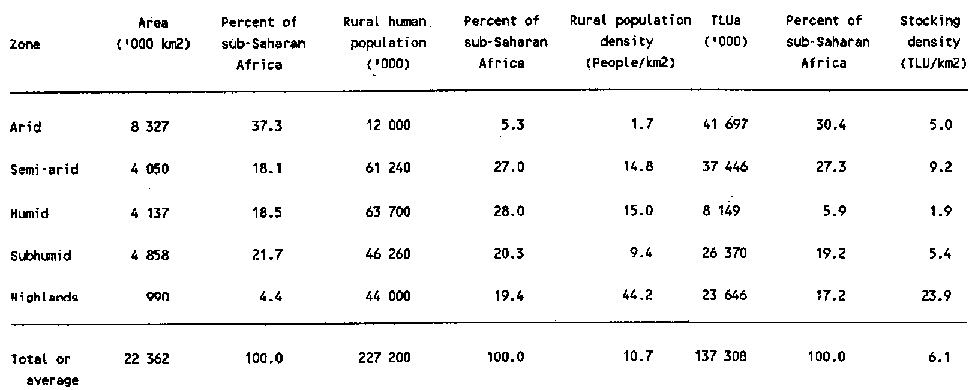
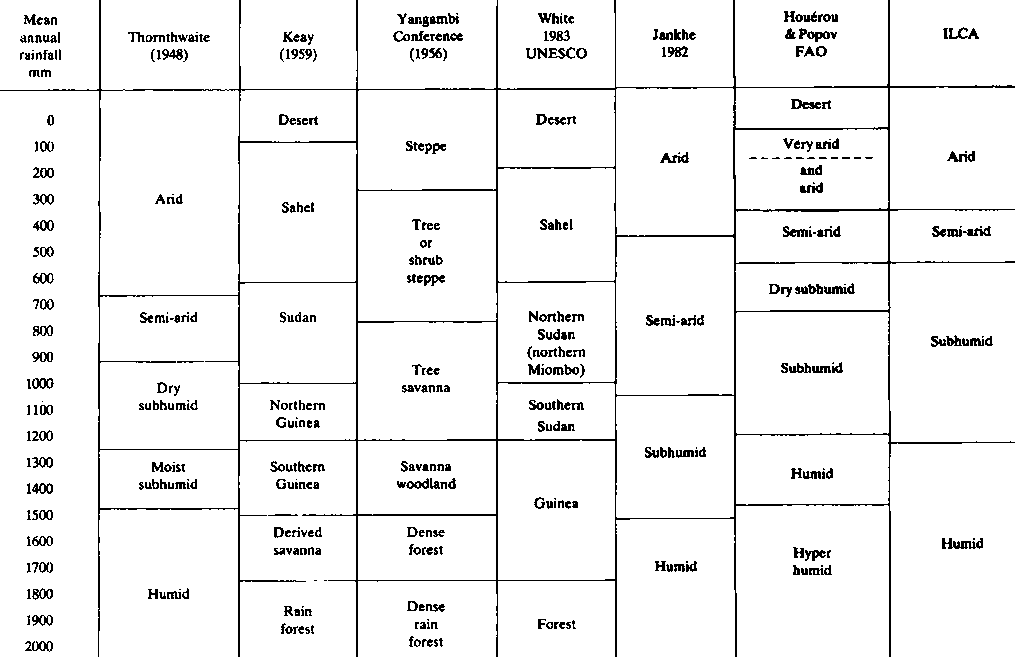
Land area, human population and livestock densities by climatic zone are shown in Table 1. The relationships between some climatic classifications and ecological zones are shown in Appendix 2.
The main highland areas in sub-Saharan Africa are in Ethiopia, Kenya, Uganda, Rwanda, Burundi, western Zaire, Tanzania, Angola and Lesotho. There are also many other areas above the 1500 m contour and some of these afford tsetse-free grazing, e.g. Fouta Djallon and Bamenda. The highland areas vary in climate, topography, soils and land use.
Temperatures in the highlands are lower than in lowland areas at the same latitudes. Precipitation is often high but, depending on the aspect of the land and the prevailing wind, can be low. Topography varies from gently rolling hills to deeply incised valleys and steep slopes. Soils are sometimes deep and fertile but shallow soils of inherently low fertility are widespread. In many mountain grassland soils only a very shallow surface horizon is fertile. Undisturbed upland areas are normally stable, although some soils exhibit 'slumping' even where undisturbed. Cultivating the so-called 'duplex' soils5 and soils that form a surface crust on slopes results in high run off and torrents of water carrying large amounts of soil, unless soil conservation measures are taken.
5. Subsurface horizon of poor permeability.
Table 1. Land area, human population and livestock densities by climatic zones.
Many upland areas appear once to have been well-wooded, while in other areas trees have been confined largely to valleys and stream lines. In many countries these forest resources have been exploited for charcoal and timber, which has destabilised many areas, increased the rate of stream flow (flash floods) and reduced the flow of perennial streams. In the absence of wood, dung, straw and grass are used as fuel for heating and cooking.
The farming systems of the African highlands are determined by the climate. A variety of subtropical and temperate crops, including small grains, are grown. Coffee and tea are important crops in some regions; it is more appropriate to grow these crops than arable crops on sloping land. In West Africa, earlier hill-dwelling peoples constructed elaborate terraces and maintained soil fertility by diligently composting all organic waste.
The absence of animal disease, particularly trypanosomiasis, in the uplands has attracted livestock owners. Milk collection schemes and dairying projects based on temperate breeds have been attempted with varying degrees of success. In the more extreme (latitude and altitude) conditions of Lesotho the use of many upland areas is restricted to summer grazing (transhumance) for wool sheep and angora goats. Grazing has altered the botanical composition of upland grasslands, sometimes unfavourably, e.g. when they are invaded by unpalatable shrubs, but sometimes resulting in very productive 'awards' with Trifolium species.
Certain farming practices result in soil being left bare for long periods. In Ethiopia, soil is gathered into heaps and burned (guie) to promote the release of nutrients. Although this practice is of temporary benefit, it results in serious loss of organic matter, N and 5 from the soil. In West Africa, farmers concentrate the fertility of the surface horizon by forming a ridge with turves from two wide strips; as a result some of the ground remains exposed even when the crop canopy is fully developed.
Getahun (1984) suggested ways of reducing the instability in the cereal-livestock ecosystem of the central and northern Ethiopian highlands, including the use of improved crop varieties and fertilizer, soil conservation methods and breed improvement. New crop varieties are unlikely to contribute to increased production unless fertilizer is applied correctly and regularly, but it seems unlikely that there will be the necessary increase in the use of inorganic fertilizer. Traditional soil conservation methods have a poor record in Africa; conservation farming, which includes keeping the ground covered and returning organic waste, is probably more appropriate. Establishing trees and wood lots for fuel, poles and fodder (agroforestry) should lessen the use of organic matter as fuel and increase its return to the soil.
Before embarking on breeding and distributing improved livestock, it is essential that the amount of animal feed available is increased. Many indigenous breeds respond spectacularly to modest improvements in their nutrition.
Many upland communities are partly dependent on nonagricultural income and employment. In many countries there is no certainty that such employment opportunities will continue. The need to improve agricultural production, and to develop markets and rural agro-industries in upland regions is urgent.
The humid zone-is found at low latitudes, north and south of the equator. soils include ferralsols, acrisols and luvisols, the last of which are commonly encountered at the forest-savannah boundary. The natural vegetation is tall, closed forest which may be evergreen or semi-deciduous and is often floristically rich. The herbaceous vegetation often contains large amounts of the major nutrients. The top soil contains relatively large amounts of organic matter, which markedly improves its characteristics. Removal of the trees interrupts the nutrient cycle.
Tree crops, including oil palm, cocoa, rubber and plantains, are ecologically similar to the forest vegetation and are grown both in plantations and associated with food crops on small scattered farms. There are few livestock in the humid zone.
Land is cultivated by hand. In the absence of herbaceous vegetation, clearing the land is relatively easy. The soil is exposed for only brief periods and the cultivation period is normally short. In some parts of the humid tropics, crops are grown on mounds which provide better aeration and more nutrients but their construction involves greater disturbance of the soil.
Increasing population density has shortened fallow periods. Mechanical cultivation may result in soil compaction, erosion and the exposure of subsurface soil. Using inorganic fertilizer to extend the cultivation period may lead to the depletion of base cations and lower the pH of the soil.
The value of minimum tillage systems has been demonstrated, although not all soils are suitable for zero-tillage systems, e.g. clays without natural filth-forming properties. Cover crops and alley farming companion crops provide both cover and organic matter for the soil. Small dressings of lime (1 t/ha) have sometimes shown benefit but excess lime may induce trace-element deficiencies on luvisols and acrisols.
Within the climatic definition, this is a very varied zone in terms of climate, soils and land use. Luvisols and cambisols occur widely. Parent material is often strongly weathered, the levels of mineral nutrients are low and the clay fraction is of low activity. Cambisols have fewer constraints to plant production than the older, more weathered soils. With their high base status, there is adequate Ca and no constraint due to low pH. The fertility of many soils is low and their structural stability is poor; they crust and harden when dry. Leaching of NO3 is accompanied by the loss of cations and P is adsorbed.
The natural vegetation is a medium-height or low woodland with understory shrubs and a ground cover of medium to tall, mainly perennial, grasses; Hyparrhenia spp. are common.
A wide range of crops is grown, including yams, sweet potatoes, maize, sorghum, soya bean, grain legumes, cotton, and sesame. Intercropping is usual. The incidence of Glossina spp. (tsetse) restricts livestock populations. Most settled families have smallstock; ownership of cattle and the use of animal-drawn implements vary between and sometimes within countries. This zone often provides grazing for large populations of transhumant cattle whose movements reflect seasonal variations in the severity of the tsetse challenge.
Cultivation involves clearing or, more frequently, partly clearing woody vegetation by ring barking and/or felling trees and burning. It is not possible to plough (ridge) or hoe the soil until sufficient rain has fallen to soften it. Considerable disturbance of the soil is needed to bury the herbaceous vegetation or, after burning, root material. In the first year of cropping, the decomposition of organic matter 'locks-up' N. and farmers will choose crops that either can be planted late or are less adversely affected by low levels of N. In subsequent years, levels of P in the soil may be low.
Herbicides will be essential if minimum tillage methods are adopted in the subhumid zone.
Newly cultivated soils will often appear to have a good filth but this is quickly lost and severe crusting occurs. Crusting hinders seedling emergence and reduces the entry of water and air. Unless such measures as tie-ridging are used severe run-off of water can occur, which may result in soil erosion. Well grown crops protect the soil and their roots improve the soil texture and increase infiltration of water in the same and in the following year. Organic matter reduces the strength of crusts; farmers recognize the value of manure in improving crop yields.
In many subhumid areas the control of weeds, particularly grass weeds, is the most difficult of the farmers' tasks, and the increase in the weed population is often the principal reason for abandoning a farm. Weeds on fallow land are often grazed eagerly by stock. In addition to upland and sometimes flood-plain grazing, other sources of feed for livestock are cereal and grain-legume crop residues and the leaves and fruit of a variety of woody plants (browse). The nutritive value of upland perennial grassland is adequate for a short period early in the wet season only and subsequently its nutritive value declines rapidly. For much of the year the straw-like material is of little value. The level of protein in the herbage reflects the level of available N in the soil. At the beginning of the wet season there is a flush of N. as a result of rapid mineralisation of organic matter exposed during the dry season. Subsequently, mineralisation is less rapid and soil micro-organisms compete with the grass for the NH4 -N.
Grazing the grass results in the regrowth of young material of higher nutritive value and also extends the vegetative phase by delaying the development of flowering stems.
The low nutritive value of the natural herbage for much of the year is the most serious constraint to animal production in this zone. Improvement of fodder quality is one of the benefits of conventional integrated crop and animal husbandry. The availability of manure for crops is often considered to be the principal advantage of integrated systems.
In some areas, farmers allow pastoralists to graze their cattle on crop residues, thereby benefiting from the manure. Money, food and milk may also be exchanged. Where root crops are grown in West Africa no edible crop residues are produced and there is little contact between the cultivator and the pastoralist. As a result, crop-livestock integration would appear to be non-existent. However, in parts of the Nigerian tsetse belt increased cultivation has eliminated the tsetse fly and pastoralists can remain year-round. The benefit to the cultivator is that the fertility of fallow land increases more rapidly under grazing than that of ungrazed areas, which are swept by fires in the dry season in most years. In this situation the number of cultivators and the intensity of land use are critical, and a further increase in the number of cultivators is likely to jeopardise the continuation of this unplanned system of soil fertility maintenance.
The low rainfall and the long dry season make the semi-arid zone a relatively healthy environment for man and his livestock. Arenosols and cambisols are widespread and include coarse sandy soils, fine sands, and loamy sandy soils. Water retention is poor and nutrient contents, including N, P and S levels, are low. The permeability of the undisturbed soil is good. Algal skins contribute to the formation of surface crusts. The natural vegetation is an open, low-tree grassland but has been severely modified in many regions.
Population density in the semi-arid zone is very variable but is high in West Africa and in some areas in East Africa. Crops include sorghum, millet, grain legumes and groundnuts. In areas close to markets, tomatoes, onions and vegetables are grown on land that can be watered in the dry season. Livestock are owned by settled farmers and by semi-settled pastoralists. The livestock population is often large and is frequently swelled by the influx of transhumant cattle herds. Animals are widely used for cultivation.
Although nutrient levels are low, inadequate soil moisture is probably the most serious constraint to crop production. Periods of more than three or four days without rain result in the death of seedlings and also cause stress in older crops, resulting in reduced yields.
Fertility is maintained by applying compound waste and animal manure to the land and by fallowing. The benefit of fallowing seems mainly to be in the accumulation of P and other nutrients, including S. Trees such as Acacia albida contribute to the fertility of arable land. Cultivated land remains bare for many months between short cropping periods.
The production of herbage is correlated with rainfall and is spatially and seasonally variable in amount and quality. The level of protein in the dry-season herbage is better than that in the subhumid zone and is supplemented by the leaves and fruit of a variety of shrubs and trees which are browsed; crop residues are also a valuable source of fodder. Overgrazing and overbrowsing is resulting in the deterioration of the forage resources in many parts of semiarid Africa. Termites and harvester ants discourage attempts to grow forage/fallow crops. In many areas trees have been exploited for fuel or ruthlessly lopped for fodder; the need for fuel is likely to result in little organic matter being returned to the soil.
Rainfall is low and extremely variable in the arid zone. The sandy soils (arenosols) are weakly differentiated and are often of aeolian origin. Water and air move freely through the soils, which are low in all nutrients. The vegetation consists of scattered shrubs in a sparse cover of mainly annual grasses. Arable farming is unreliable and restricted to opportunistic cultivation of short-season millets, except in topographically favourable sites. Mobile herds of sheep, goats, cattle and camels utilise the herbage and shrubs. Pastoralists frequently use these arid zones seasonally and have a well-defined system of transhumance. The quality of the herbage is inversely correlated with rainfall. The herbage remains palatable in the dry season but much is destroyed by wind and by termites. In the arid zone it may be more appropriate to estimate carrying capacity on the protein content of the herbage rather than on the quantity of herbage. Overgrazing reduces the ground cover of the herbage and adversely affects the botanical composition. Investments other than the development of water and stock-handling facilities are unlikely to be cost-effective.
The number of people that the pastoral systems in the arid zone can support is low and increased numbers of pastoral people have already jeopardised the continuation of this way of life in a number of countries. It will not be easy to identify acceptable strategies to ensure their survival but in the absence of such strategies our current ability to monitor the forage resources of arid and semi-arid Africa will only provide a record of increasing desertification and chart the demise of the pastoralist.
Allan W. 1965. The African husbandman. Oliver and Boyd. Edinburgh.
Dabin B. 1980. Phosphorus deficiency in tropical soils as a constraint on agricultural output. In: Drosdoff M, Zandstra H and Rockwood W G (eds). Priorities for alleviating soil-related constraints in the tropics. International Rice Research Institute, Los Banos, Laguna, the Philippines.
Dudal R. 1980. Soil-related constraints to agricultural development in the tropics. In: Drosdoff M, Zandstra H and Rockwood W G (eds). Priorities for alleviating soil-related constraints in the tropics. International Rice Research Institute, Los Banos, Laguna, the Philippines.
FAO (Food and Agriculture Organization). 1978. Report on the agro-zones project. Vol. 1. Methodology and results for Africa. FAO, Rome.
FAO (Food and Agriculture Organization). 1983. Guidelines: Land evaluation for rainfed agriculture. FAO, Rome.
Getahun A. 1984. Stability and unstability of mountain ecosystems in Ethiopia. Mt. Res. Dev. 4(1): 39-44.
Grigg D B. 1974. The agricultural systems of the world. Cambridge University Press, London.
Jahnke H E. 1982. Livestock production systems and livestock development in Tropical Africa. Kieler Wissenschaftsverlag Vauk, Kiel.
Jones M J and Wild A W. 1975. Soils of the West African savanna. The maintenance and improvement of their fertility. Soils Tech. Comm. 55. CAB, Farnham Royal, UK.
Kekum A J, van. 1984. A land evaluation study in the Mount Kulal-Marsabit area, northern Kenya. In: Siderius W (ed.). Proceedings of the workshop on land evaluation for extensive grazing (LEEG). ILRI, Wageningen, The Netherlands.
Krantz B A. 1978. Soil and water conservation and utilisation for increased food production in the semiarid tropics. ICRISAT, Hyderabad, India.
Lal R. 1983a. No-till farming. Monograph No. 2. IITA, Ibadan, Nigeria.
Lal R. 1983b. Soil erosion in the humid tropics with particular reference to agricultural land development and soil management. In: Proceedings of the Hamburg Symposium. IAHS Publ. No. 140.
Lopes A S. 1980. Micronutrients in soils of the tropics as constraints to food production. In: Drosdoff M, Zandstra H and Rockwood W G (eds). Priorities for alleviating soil-related constraints in the tropics. International Rice Research Institute, Los Banos, Laguna, the Philippines.
Moorman F R and Greenland D J. 1980. Major production system related to soil properties in humid tropical Africa. In: Soil-related constraints to food production in the tropics. International Rice Research Institute, Los Banos, Laguna, the Philippines.
Nestel B. 1984. Development of animal production systems. Elsevier, Amsterdam, The Netherlands.
Nye P H and Greenland D J. 1960. The soil under shifting cultivation. Soils Tech. Comm. 51. CAB, Farnham Royal, UK.
Penning de Vries F W T and Djiteye M A. 1982. La conductivite des paturages saheliens. Centre for Agricultural Publishing and Documentation, Wageningen, The Netherlands.
Ruthenberg H. 1976. Farming systems in the tropics. Clarendon Press, Oxford.
Sanchez P A. 1976. Properties and management of soils in the tropics. John Wiley, New York, USA.
Sys C and Riquier J. 1980. Ratings of FAD/UNESCO soil units for specific crop production. In: Land resources for population of the future. FAO/UNFPA Expert Consultation, FAO, Rome.
Underwood E J. 1981. The mineral nutrition of livestock. FAD/CAB, Farnham Royal, UK.
Young A and Wright A C S. 1980. Rest period requirements of tropical and subtropical soils under annual crops. In: Land resources for populations of the future. FAO/UNFPA Expert Consultation, FAO, Rome.
Acrisols
Extremely leached soils with low nutrient levels. Argillic B horizon reduces permeability and root development and increases susceptibility to erosion.
Arenosols
Coarse sandy soils with low water retention and low in nutrients. Susceptible to wind and water erosion.
Cambisols
Mostly young soils with fewer constraints than older weathered soils. Fine sandy soils and loamy sandy soils are common.
Ferralsols
Old weathered soils poor in plant nutrients; low CEC and deficient in bases. Fixation of phosphate occurs in clayey fine-textured soils. Aluminium and micro-element toxicites may occur. Coarse textured soils are susceptible to erosion.
Fluvisols
Young soils whose characteristics depend on the parent material, which is mainly alluvium. Inundation and waterlogging are common. Thionic fluvisols (acid sulphate soils) require skilled management as drainage and aeration result in extreme acidity.
Luvisols
Very varied soils occuring in both subhumid and semi-arid zone. More strongly weathered in the subhumid zone than in the semi-arid zone and the degree of weathering affects the level of plant nutrients. Low aggregate stability, surface sealing and erosion susceptibility are common. Poor retention of water; pH falls with continuous use.
Nitosols
Permeable soils with good moisture holding capacity to deep argillic B horizon. Weatherable minerals present and less acute nutrient deficiencies than the ferralsols. Low CEC phosphorus fixation is common.
Vertisols
Dark expanding clay soils; intractable as a result of their texture. Base saturation is high. High water retention but moisture stress is common.
APPENDIX 2. Classification of climatic and vegetation zones in Africa.