Views expressed in this paper are not to be considered as representing the official policy of Kenya Agricultural Research Institute or the Government of Kenya.
H.L. Potter
Kenya Agricultural Research Institute
P.O. Box 21, Kikuyu, Kenya
Introduction
Methods
Results
Discussion
References
Abstract
Results from 13 years of continuous grazing of a semi-arid grassland by beef cattle are presented. Liveweight gain per head was found to be independent of stocking rate in the range 2-5 ha per animal. This is because grazing selection to improve dietary intake quality above the gross level in the sward was possible even at the highest stocking rate. Analysis of the rainfall and growth data for the 37 seasons of the study to date showed that 78% of the variation in liveweight gain could be accounted for by the relationship:
Liveweight gain per day (g/hd) = 247.5 x rainfall (mm/day) - 44.5
where the liveweight gain and rainfall figures are derived from the average for each season. The relevance of such a predictive relationship to requirements of settled pastoralists for methods of objective estimation of the long term productive potential of their holdings is discussed.
Approximately 85% of Kenya can be classified as arid to semiarid, receiving less than 750 mm rainfall in four out of every five years (Griffiths, 1962). The traditional land use in these areas has been nomadic pastoralism, as with the unacceptably high risk of crop failure, settled crop production was not practicable under the low and very variable rainfall regime. However, nomadic pastoralism can only provide for security of food supply in such a very inhospitable environment if the necessary free movement of people and their stock is possible through low population density and where the land is not registered for ownership (Henning, 1960; Allan, 1965). Efforts by both Government and private development agencies towards improvement of human health and veterinary services, particularly over the last 30 years have considerably increased the pressure on the land in the arid and semi-arid regions of Kenya. This has been combined with the efforts by the Government to register land titles, either on an individual or group basis, in order to provide collateral for development loans and to make the provision of government services easier in a settled situation. A major result of these actions has been to limit the possibilities for movement as a strategy to cope with the effects of drought on feed and water supply to stock. Problems of periodic shortages of grazing; and of water under the settlement programme have to be dealt with on the individual holding in situ.
Although the subsistence requirements for the settled pastoralists in the semi-arid areas are likely to remain centred on milk, there is evidence that provision of good marketing facilities can result in stock sales and considerable changes in herd management and in food purchases and consumption patterns (White and Meadows, 1981). Past strategies of maintaining apparently high stock numbers to reduce the risks of complete stock losses in drought, together with a high proportion of mature - females in the herd to provide for milk production on a year-round basis are less justifiable or practical in a settled situation. Where stock numbers are high in a settled situation, drought effects may be expected to be severe, so it is desirable that the long-term animal production potential of particular land holdings are estimated using objective methods. This may provide a basis for recommendations as to the stock numbers and herd structure appropriate to the level of risk acceptable to those depending on the holding for their livelihood.
The present paper presents data from a long-term study in a semi-arid area of Kenya of the growth of beef steers in relation to the pattern of rainfall distribution and amounts. It will be suggested that the results of the study indicate a possible methodology for the objective assessment of the long-term production potential of such rangeland sites, where the climatic database is adequate.
Field data were collected-at the Rohet Ranch sub-station of the Kenya Agricultural Research Institute, situated about 15 km from the Athi River Township (Lat. 1°20'S Long. 37°05'E). The site is about 1500 m altitude. Rainfall is bimodal, falling mainly in November/December and March/April/May with an average of about 580 mm being recorded over a period of fifteen years. The rainfall is typically highly variable both annually and seasonally, and vegetation growth closely follows its distribution. Evaporation potential is generally high, with less than 5% of the months having a Rainfall/Eo ratio greater than unity. Under the existing standard classification of East African rangelands the site lies in Ecozone IV (Semi-arid) (Pratt et al, 1966). In the more recent agro-ecological zone classification adopted by the Kenya Soil Survey the site lies on the boundary between the Livestock-Sorghum Zone (UMS) and the Upper Midland Ranching zone (UM6) (Jaetzold and Schmidt, 1983).
The soils at the site are generally shallow sandy-clay loams derived from transported materials (Scott, 1962; Sombroek et al., 1982). Vegetation is an open grassland dominated by Themeda triandra Forsk. The conditions at the site are representative of extensive areas of Kajiado, Narok and parts of Machakos districts, traditionally used by the Maasai tribe.
The work was designed to measure the growth performance of beef steers under a range of set stock rates. For the first eleven years of the trial rates were 2, 3, 4 and 5 hectares per steer. For reasons which will be discussed further below, these stocking rates were increased to 1.33, 2.0, 2.67 and 3.33 hectares per head thereafter. The initial rates were chosen following discussions with local ranchers and extension personnel and agree with the estimates made for ecozone IV (Pratt et al., 1966; Jaetzold and Schmidt, 1983) and with estimates based on rainfall distribution (Jahnke, 1982).
The animals used were F1 cross steers from Bos indicus (local Boran type) dams and Bos taurus (Hereford type) bulls, such crosses being typical of the type of animals to be found in the commercial ranch in this part of Kenya. The animals entered the trial at about 15 months of age and were removed at about 33-36 months or at a weight of 450-500 kg. Liveweight gain of the animals was considered a good indicator of pasture condition. During the 13 years of the trial, eight series of animals were used. Set stocking was used throughout the trial as the limited data available from tropical areas did not show any evidence in favour of rotational grazing ('t Mannetje et al., 1976).
Also, set stocking relates closely to current land usage and will provide baseline data, with the more resource-demanding rotational systems being tested in later studies. Because of predator risks the experimental animals were removed to a secure night paddock during darkness, so they grazed from 0630 to 1830 hours each day.
For reasons of cost and availability of land, only a single paddock for each stocking rate was used, with four animals per stocking rate initially, raised to six in the twelfth year. All animals were sprayed against ticks twice weekly and were routinely vaccinated against prevalent diseases. Weights for each animal were recorded at the same time each week following overnight fasting and withdrawal of water.
Samples for estimation of dietary composition were obtained from oesophageal fistulated animals similar to those used in the grazing study. Sampling was carried out for about 30 minutes at each sampling, with either three or four animals being used twice a day for three days.
Analysis of the collected material was confined to laboratory chemical analysis using standard methods (Van Soest 1963, and AOAC, 1970) with the data being calculated on an ash-free basis in an attempt to reduce the effects of salivary contamination (Marshall et al., 1967). Twenty 2 m x 1 m sample quadrats were harvested at random per paddock by cutting at about 5 cm height to give an indication of the composition of the overall sward at the time of the oesophageal sampling.
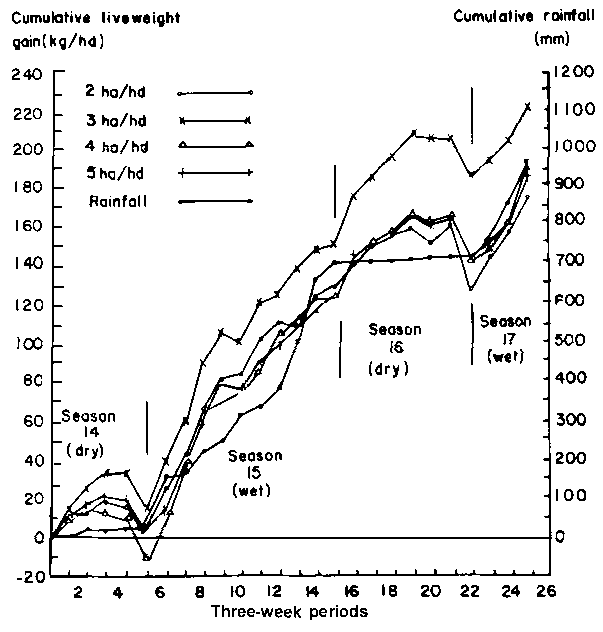
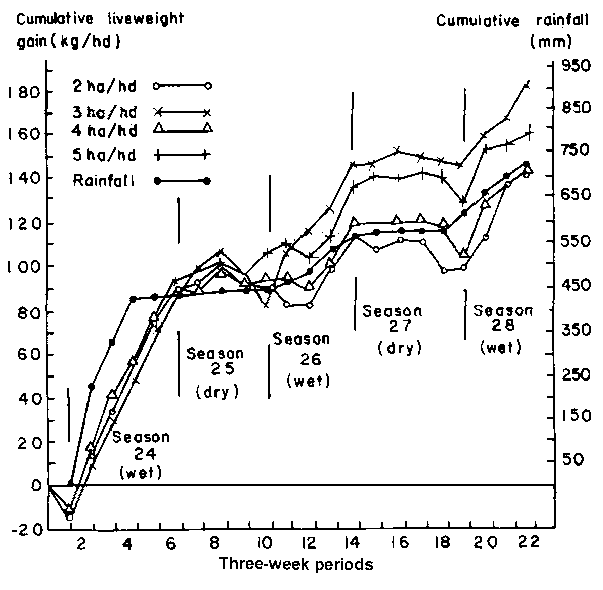
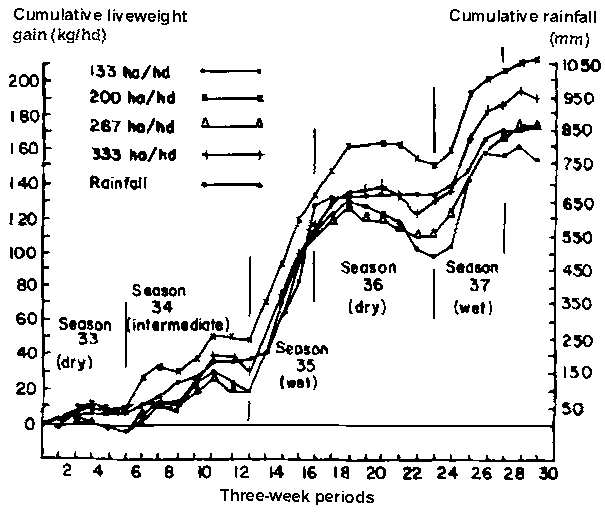
Figures 1 to 8 indicate the trend of liveweight gain for each of the eight series of animals for the four stocking rates used, with the cumulative rainfall being also shown on each of the figures for the relevant period. The weights are indicated on a three-week basis for clarity of presentation. The generally close similarity in performance between steers on the different stocking rates is notable. The pattern of growth was closely associated with the pattern of rainfall.
Figure 1. Liveweight gain/rainfall, animal series 1 (3.6.74 - 20.1.75).
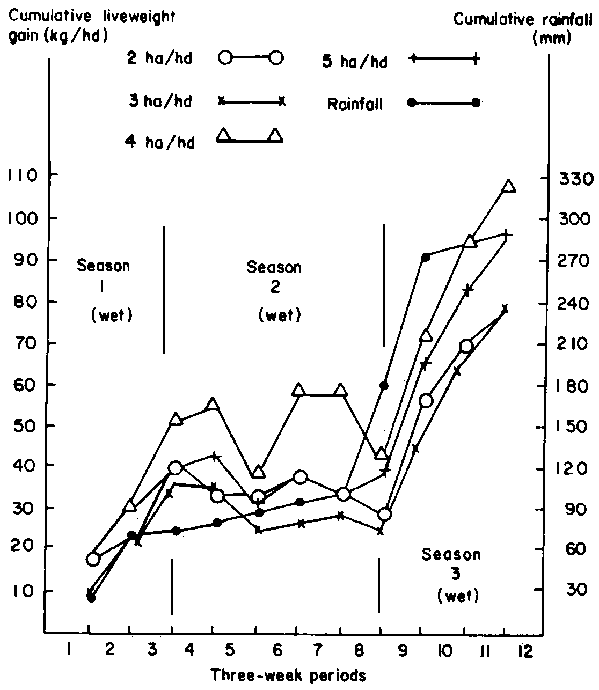
Figure 2. Liveweight gain/rainfall, animal series 2 (17.2.75-30.8.76).
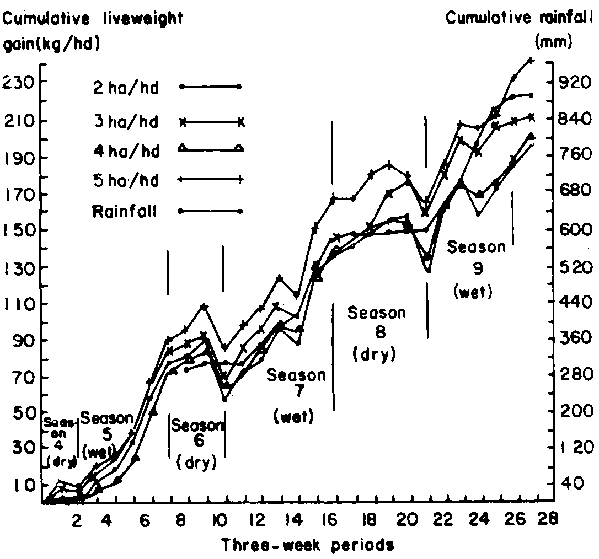
Figure 3. Liveweight gain/rainfall, animal series 3 (20.7.77-11.9.77).
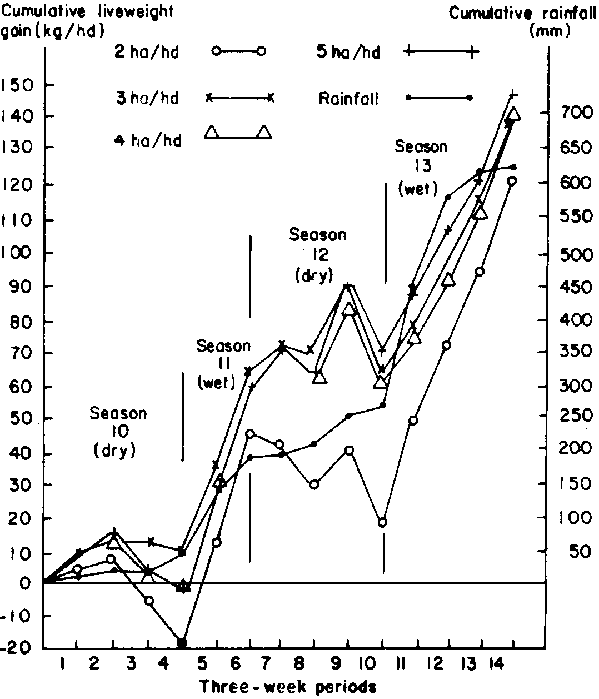
Figure 4. Liveweight gain/rainfall, animal series 4 (1.8.77-8.1.79)
Figure 5. Liveweight gain/rainfall, animal series (11.1.79-22.3.81).
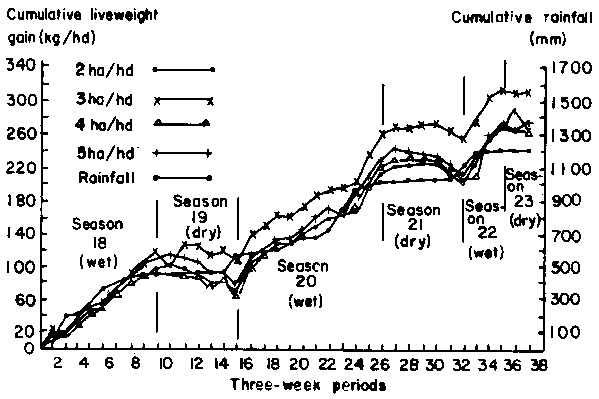
Figure 6. Liveweight gain/rainfall, animal series (16.3.81-21.6.82).
Figure 7. Liveweight gain/rainfall, animal series (12.7.82-23.7.85).
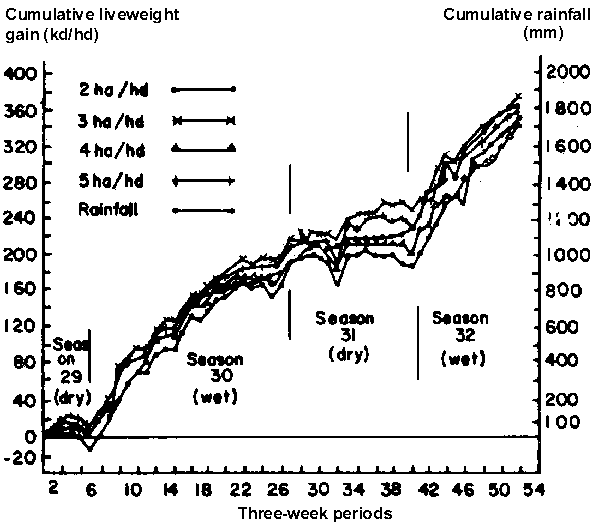
Figure 8. Liveweight gain/rainfall, animal series (9.7.85-30.3.87).
Tables 1 to 6 indicate the results of the dietary quality examination, using crude protein as the quality parameter, derived from the fistula samples, together with an indication of dietary selection practised by the animals as represented by the differences between sward and fistula samples.
Table 1. Protein content of sward and oesophageal fistula samples, June 1974.
|
Component |
Stocking rate ha/head |
||||||
|
(Ash free basis) |
2 |
3 |
4 |
5 |
Mean |
S.E. |
|
|
Crude protein |
|||||||
|
|
% fistula |
8.0a |
8.2a |
8.5b |
8.1a |
8.2 |
0.1 |
|
|
% sward |
5.8a |
6.0a |
6.0a |
5.9a |
5.9 |
0.1 |
|
|
% increase |
37.9 |
36.7 |
41.7 |
37.3 |
37.0 |
- |
Table 2. Protein content of sward and oesophageal fistula samples, October 1974.
|
Component |
Stocking rate ha/head |
||||||
|
(Ash free basis) |
2 |
3 |
4 |
5 |
Mean |
S.E. |
|
|
Crude protein |
|||||||
|
|
% fistula |
4.5a |
5.3b |
6.2c |
4.7a |
5.2 |
0.1 |
|
|
% sward |
3.5a |
3.5a |
3.8a |
3.4a |
3.6 |
0.2 |
|
|
% increase |
28.6 |
54.4 |
63.2 |
38.2 |
44.4 |
- |
Table 3. Protein content of sward and oesophageal fistula samples, May 1975.
|
Component |
Stocking rate ha/head |
||||||
|
(Ash free basis) |
2 |
3 |
4 |
5 |
Mean |
S.E. |
|
|
Crude protein |
|||||||
|
|
% fistula |
12.1a |
12.4a |
11.1b |
12.6a |
12.1 |
0.3 |
|
|
% sward |
9.4a |
9.5a |
9.5a |
9.6a |
9.5 |
0.3 |
|
|
% increase |
28.7 |
30.5 |
16.8 |
31.3 |
27.4 |
- |
Means with the same subscript letter do not differ significantly at P=0.05 (Duncan, 1955).
Table 4. Protein content of sward and oesophageal fistula samples, August 1975.
|
Component |
Stocking rate ha/head |
||||||
|
(Ash free basis) |
2 |
3 |
4 |
5 |
Mean |
S.E. |
|
|
Crude protein |
|||||||
|
|
% fistula |
6.2ab |
6.5b |
6.6b |
5.5a |
6.2 |
0.3 |
|
|
% sward |
4.1a |
4.2a |
4.4a |
4.1a |
4.2 |
0.3 |
|
|
% increase |
51.2 |
54.8 |
50.0 |
34.1 |
47.6 |
- |
Table 5. Protein content of sward and oesophageal fistula samples, September 1974.
|
Component |
Stocking rate ha/head |
||||||
|
(Ash free basis) |
2 |
3 |
4 |
5 |
Mean |
S.E. |
|
|
Crude protein |
|||||||
|
|
% fistula |
7.3a |
8.0b |
8.1b |
6.8a |
7.6 |
0.3 |
|
|
% sward |
5.1a |
6.2b |
5.4a |
5.1a |
5.5 |
0.3 |
|
|
% increase |
43.1 |
29.0 |
50.0 |
33.3 |
38.2 |
- |
Table 6. Protein content of sward and oesophageal fistula samples, June 1977.
|
Component |
Stocking rate ha/head |
||||||
|
(Ash free basis) |
2 |
3 |
4 |
5 |
Mean |
S.E. |
|
|
Crude protein |
|||||||
|
|
% fistula |
10.9a |
10.8a |
10.5b |
10.5a |
10.7 |
0.3 |
|
|
% sward |
8.4a |
8.5a |
8.6a |
8.5a |
8.5 |
0.4 |
|
|
% increase |
29.8 |
27.1 |
22.1 |
23.5 |
25.9 |
- |
Means with the same letter do not differ significantly at P=0.05 (Duncan, 1955).
The results for the dietary composition and selection presented in Tables 1 to 6 indicate that there was apparently very little difference in the quality of diet eaten by the animals on the different stocking rates at different seasons of the year covering dry, wet and intermediate season conditions. Throughout the whole of the initial eleven years of the trial there was no indication of any statistically significant differences in per animal performance across the stocking rates so that performance at 2 hectares per head was as good as at 5 hectares. The inference to be drawn from this is that quality of the diet had the greatest effect on performance, with quantity of herbage available being of lesser importance, provided it was sufficient so that dietary selection could be practised effectively. It has been suggested that the relationship between animal performance and stocking rate would be highly site-specific and not conform to the simpler linear (Jones and Sandland, 1974) or curvilinear (Most, 1960) relationships proposed earlier. To test what would happen to the sward and animal performance an increase in stocking rate in the present trial was made at the end of the eleventh year in order to determine whether selection would still be effective at higher stocking rates. Since long-term degradation of the sward had not been observed up to that point it was postulated that it might occur as at higher stocking rates together with sward damage by trampling and soiling by dung and urine.
The results of the eighth series of animals to date (Figure 8) do not show any clear indication of a reduction of performance in the 1.33 ha/head stocked paddock so that the effects just mentioned may not yet become evident over the time span of 18 months.
The general association between the performance of the animals and the pattern of rainfall distribution suggests that a predictive relationship may be derived from the results so far obtained. The growth curves were broken down into a series of wet seasons associated with the presence of rainfall, interspersed with periods of little or no rainfall in the dry seasons, the seasons being indicated in Figures 1 to 8. An earlier analysis of the growth and rainfall data (Potter, 1985) indicated a time lag effect in the relationship between rainfall and liveweight gain. Due to the time taken for the vegetation to respond to the onset of the rains, any rain falling in the three-week period immediately before the weight measurements appeared to be less influential than rain that had fallen three weeks earlier, that is from three to six weeks before weighing. Indeed, the analysis indicated that rainfall in the period immediately before the weighing was negatively correlated with growth. This may be explained by a loss in weight associated with the onset of rains resulting from a combination of reduced temperatures and a great change in the solid/water ratio and nutritive content of the diet (French, 1956; Denis et al., 1976).
Using a three-week lag as discussed above, the data presented in Figures 1 to 8 were analysed further by examination of the growth rates in particular seasons in relation to the quantity of rainfall during the season. The seasons used are indicated on the respective growth curves as indicated on the figures. Since the results for all four stocking rates were combined, analysis of variance for the performance of the separate rates for each series of animals indicated no statistically significant differences (P=0.05). Eq. 1 indicates the relationship derived between daily rainfall during the seasons and liveweight gain per day. The data for the eighth series of animals were included in the derivation of the relationship even though the mean stocking rate was 2.33 ha per head as opposed to 3.66 ha per head for the earlier series as analysis indicated that all eight series could be considered part of one homogeneous data set.
Y = 247.5 (S.E. 22.4) X - 44.5 (S.E. 49.9)
(-Equ. 1) R² = 0.78
where Y represents daily liveweight gain in grammes per head and X represents daily rainfall in mm. A linear relationship, which accounts for 80% of the variation in liveweight gain suggests that rainfall data may be useful as a basis for predicting animal performance. Kenya is fortunate among developing countries in having a relatively large database of long-term rainfall records (up to 80 years) even in some of the semi-arid areas.
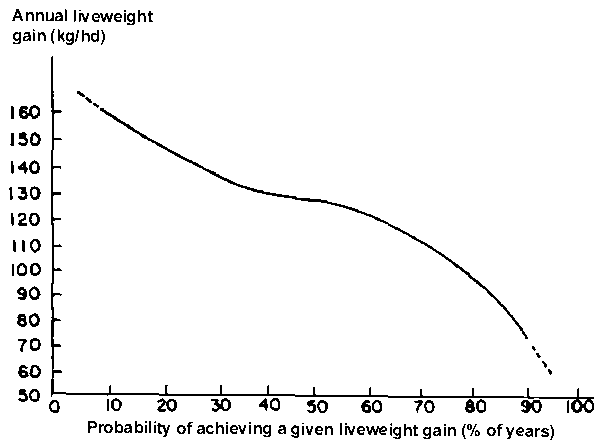
Even though there may be an element of bias in the siting of the rainfall stations in positions which may be somewhat wetter than the surrounding area (Potter, 1987), the data were used to calculate the probability of seasonal rainfall for the Rohet Ranch site combined with the Athi River Railway Station site some 15 km distant over a period of 65 years. Using a relationship derived as above the probability of annual livestock production levels were calculated on a long-term basis. Figure 9 indicates the probability of achieving a particular level of annual productivity per animal using the long-term rainfall data.
Figure 9. Long-term probability estimate for annual liveweight gain per head for beef steers at Rohet Ranch.
The above analysis assumes that the quantity of herbage available to the animal is not limiting selective grazing during any one year. Up to the highest level of stocking used to derive the relationship (Eq. 1) no restriction in selective ability was evident, at least for the first eleven years of the study. The term changes in the sward vigour which may result in a decline in quantity of production or alteration in sward composition and therefore selection possibilities, but to date these have not become apparent. Direct measurements of sward productivity may not be adequate to indicate any such decline as the method of harvest may have a considerable effect on the yield figure measured. This point has been discussed in a related paper (Potter and Said, in press).
It is intended that this study will be followed by others which will provide the necessary data to test the methodology at other sites, as no similar data are at present available from any similar long-term study in the region. Should the methodology prove to be generally applicable, even outside East Africa, the potential productivity for sites will be predictable to a level of accuracy useful for management planning recommendations.
Allan, W. 1965. The African husbandman. Oliver and Boyd, Edinburgh and London.
AOAC. 1970. Official methods of analysis of the Association of Official Analytical Chemists, 11th Edition. Edited by W. Horowitz. AOAC, Washington.
Denis, J.P., Blancou, J. and Thiongane, A.I. 1976. Note preliminaire sur la "crise de juillet". Resultats de l'experience 1976 au C.R.Z de Dahra. Research Note C.R.Z. Dahra, Senegal. (mimeo)
Duncan, D.B. 1955. Multiple range and multiple F tests. Biometrics 11:1-42.
French, M.H. 1956. The importance of water in the management of cattle. E. Afr. Agric. F. J. 21:171-181.
Griffiths, J.F. 1962. The climate of East Africa. In: W.E. Russell (ed.), The natural resources of East Africa. D.A. Hawkins Ltd. in association with East African Literature Bureau, Nairobi.
Henning, R.O. 1960. Range management in the pastoral areas of Kenya. J. African Admin. 13.
Jaetzold, R. and Schmidt, H. 1983. Farm management handbook of Kenya: Natural conditions and farm management information. Ministry of Agriculture, Nairobi.
Jahnke, H.E. 1982. Livestock production systems and livestock development in tropical Africa. Kieler Wissenschaftsverlag, Kiel.
Jones, R.J. and Sandland, R.L. 1974. The relation between animal gain and stocking rate. Derivation of the relation from the results of grazing trials. J. Agric. Sci. (Camb.) 83:335-342.
't Mannetje, L., Jones, R.J. and Stobbs, T.H. 1976. Pasture evaluation by grazing experiments. In: H.H. Shaw and W.W. Bryan (ed.), Tropical pasture research. W.W. Bull. 51. Commonwealth Bureau Pastures and Field Crops, Hurley, U.K.
Marshall, B., Torell, D.T. and Bredon, R.M. 1967. Comparison of tropical forages of known composition with samples of these forages collected by oesophageal fistulated animals. J. Range Mgmt. 20:317-320.
Mott, G.O. 1960. Grazing pressure and the measurement of pasture production. Proc. 8th Int. Grassld. Cong., Reading. pp. 606-11.
Potter, H.L. 1985. Aspects of climate, herbage growth and animal production in a semi-arid area of Kenya. Ph.D. thesis, University of Nairobi, Kenya.
Potter H.L. 1987. The effects of climatic variability on livestock production. In: M.M. Parry, T.R. Carter and N.T. Konijn (eds), The impact of climatic variations on agriculture. Volume 2. Assessments in semi-arid regions. Reidel, Dordrecht, The Netherlands.
Potter, H.L. and Said, A.N. (in press). Effects of defoliation on vegetation growth in a semi-arid area of Kenya. 1. Annual dry matter production. E. Afr. Agric. For. J.
Pratt, D.J., Greenway, P.J. and Gwynne, M.D. 1966. A classification of East African rangeland - with an appendix on terminology. J. Appl. Ecol. 3:369-382.
Scott, R.M. 1962. The soils of East Africa. In: E.W. Russell (ed.), The natural resources of East Africa. D.A. Hawkins in association with East African Literature Bureau, Nairobi.
Sombroek, W.G., Braun, H.M.H. and van der Pouw, B.J.A. 1982. Exploratory soil map and agro-climatic zone map of Kenya 1980, Kenya Soil Survey, Rep. EI, Nairobi.
Van Soest, P.J. 1963. The use of detergents in the analysis of fibrous feeds. II. A rapid method for the determination of fibre and lignin. J. Ass. Off. Agric. Chem. 46:829-835.
White, J.M. and Meadows, S.J. 1981. Evaluation of the contribution of group and individual ranches in Kajiado District, Kenya, to economic development and pastoral production strategies. Min. of Livestock Development, Nairobi.